 Bity

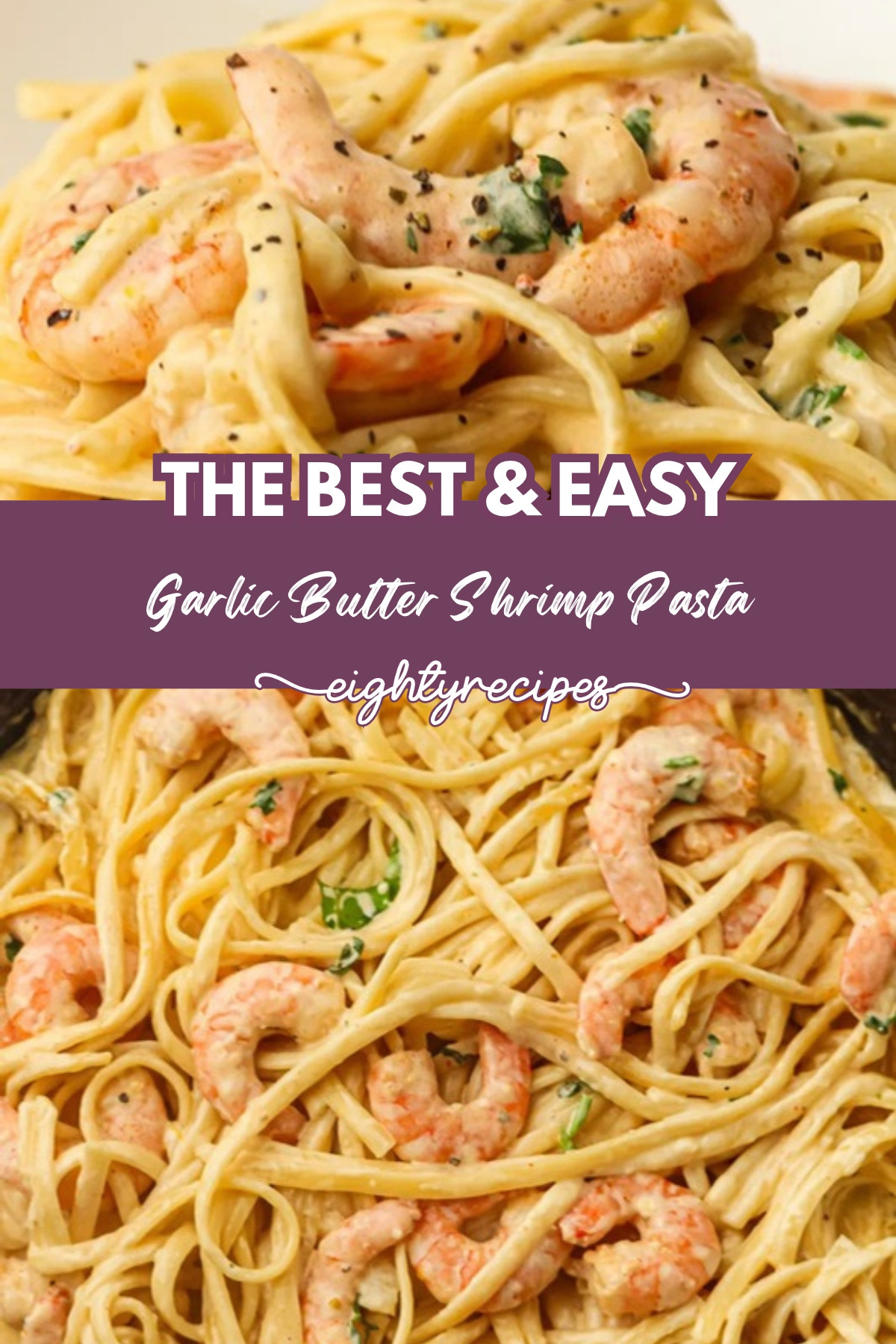
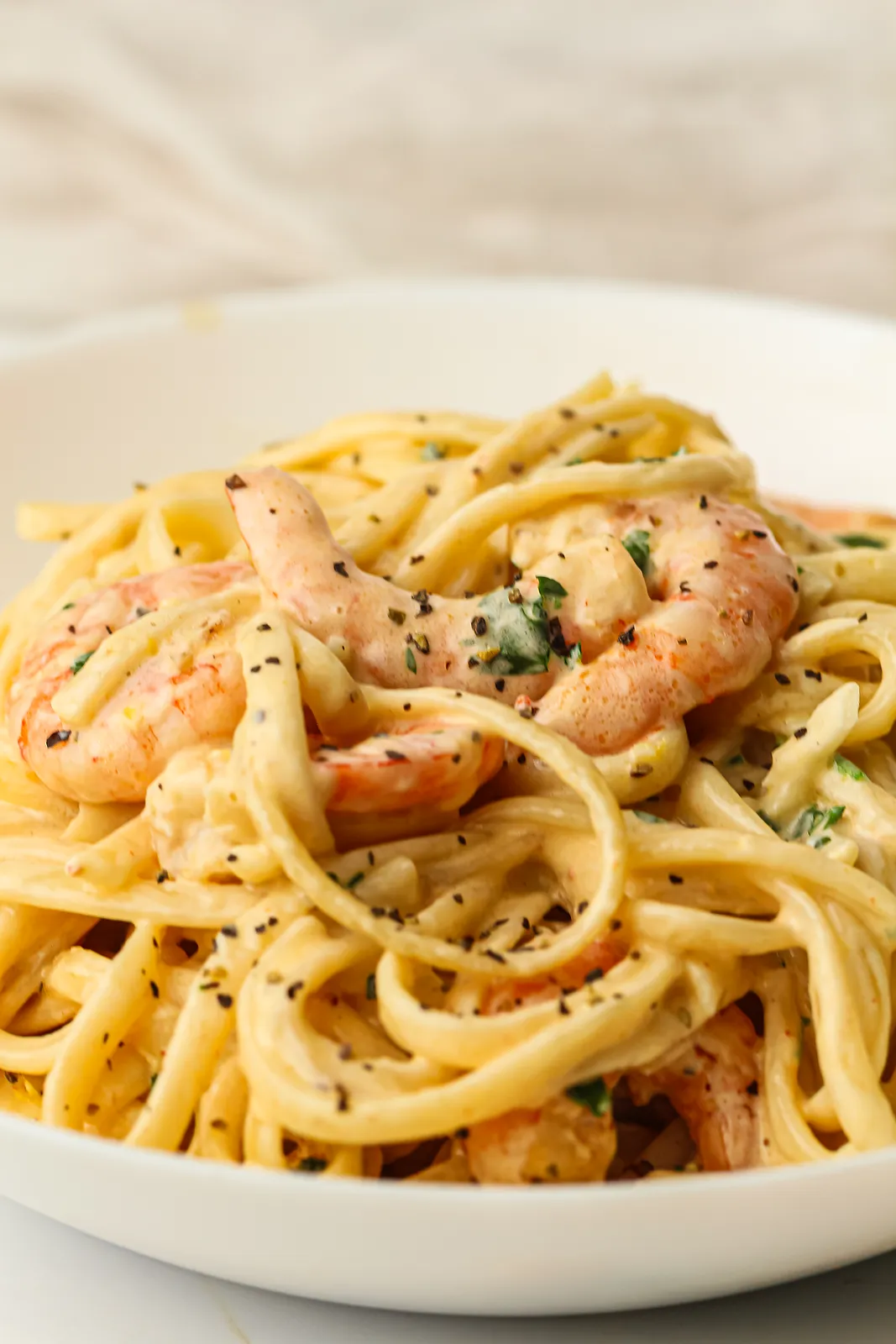
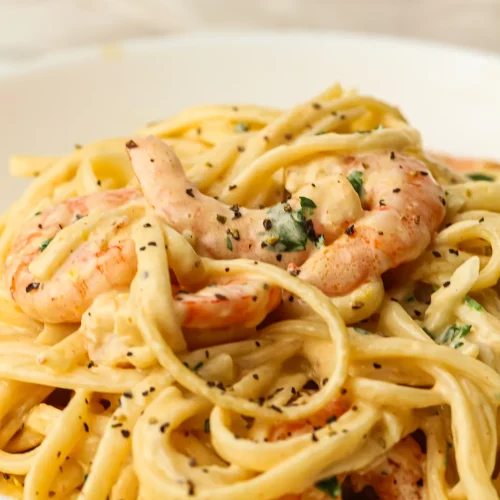
This creamy garlic butter shrimp pasta wraps linguine in a silky sauce of butter, garlic, shallot, cream, cream cheese and Parmesan, then tosses in juicy paprika seared shrimp right at the end. It is a restaurant style dinner that comes together in 35 minutes.
In short, this shrimp pasta is linguine in a lemony garlic cream sauce with seared shrimp. It uses 12 ounces of linguine and 1 pound of large raw shrimp, seared in butter and olive oil, with a sauce built from shallot, 5 garlic cloves, broth, heavy cream, 2 ounces of cream cheese, Parmesan, lemon and Italian seasoning. It takes 35 minutes, serves 4 and comes to about 820 calories per serving.
The shrimp spend only a couple of minutes in the pan, come out, and go back in at the very end. That one move keeps them tender while the sauce gets all their flavour.
Quick Breakdown
Why You’ll Love This Shrimp Pasta
- Tender, never rubbery. The shrimp are seared first and returned only to warm through.
- A sauce that clings. Cream cheese and a little starchy pasta water make it glossy and thick.
- Garlic butter flavour. Butter goes in three times: to sear, to start the sauce and to finish it.
- Bright and balanced. Lemon juice and zest lift all that richness.
- 35 minutes. The sauce cooks while the linguine boils.
Ingredient Notes
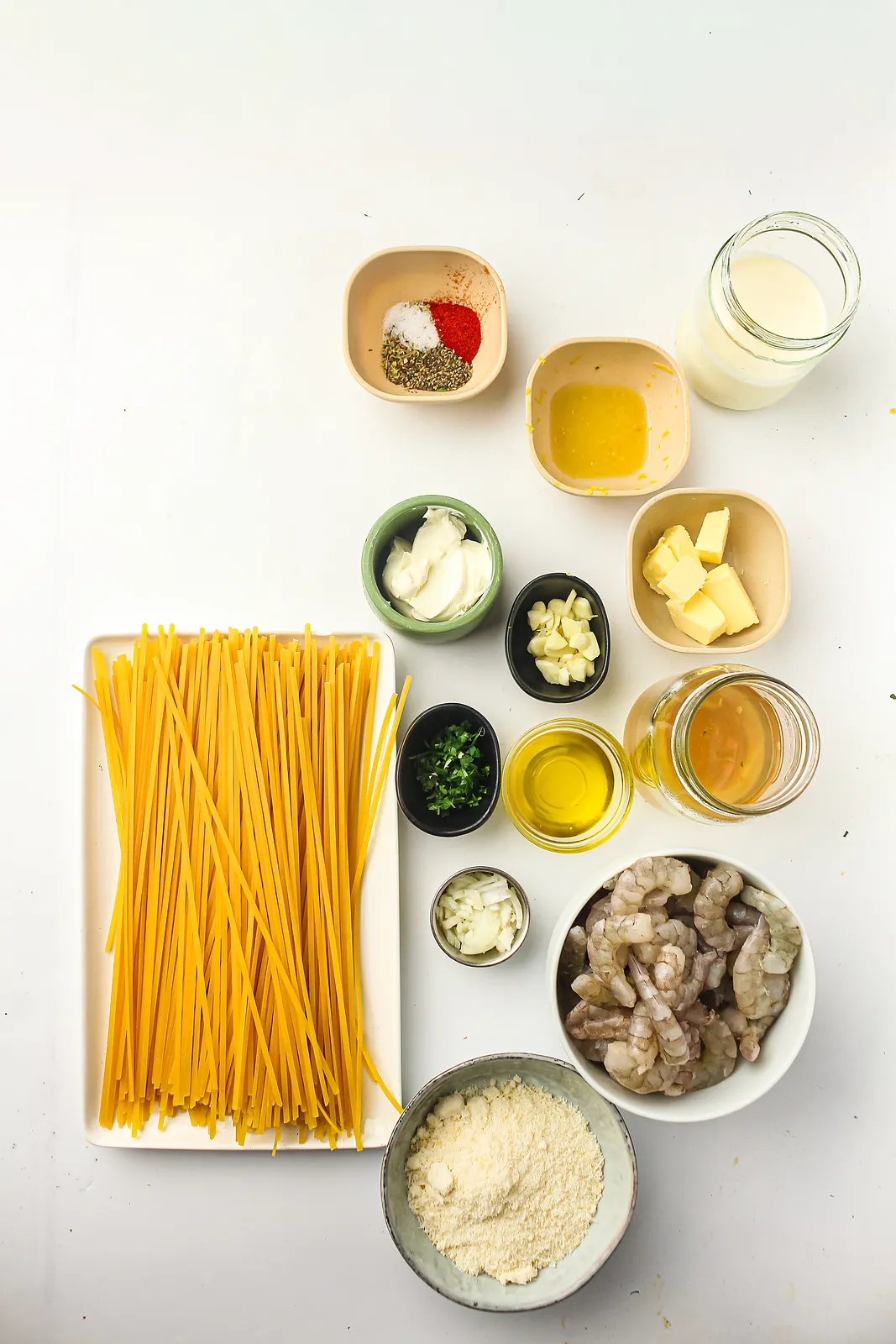
- Linguine. 12 ounces. Fettuccine, spaghetti or penne work with the same dry weight.
- Shrimp. 1 pound of large raw shrimp, peeled and deveined. Tufts Health and Nutrition Letter explains that shrimp is a lean, high protein seafood that is very low in saturated fat, which is part of why it pairs so well with a creamy sauce.
- Butter and olive oil. 3 tablespoons unsalted butter, divided, and 1 tablespoon olive oil.
- Aromatics. 5 garlic cloves, finely minced, and 1 small shallot, finely diced.
- Sauce base. 3/4 cup low-sodium chicken broth, 1 cup heavy whipping cream and 2 ounces softened cream cheese.
- Parmesan. 1/2 cup, freshly grated.
- Lemon. 1 tablespoon fresh juice and 1 teaspoon finely grated zest.
- Seasoning. 1/2 teaspoon each of smoked paprika, Italian seasoning and kosher salt (plus more for the pasta water), 1/4 teaspoon black pepper and 2 tablespoons chopped parsley.
- Pasta water. Reserve 1/2 cup before draining; you may not need it all.
How To Tell When Shrimp Is Cooked
Shrimp are done when they turn from grey and translucent to pink and opaque all the way through and curl into a loose C shape. Clemson’s Home and Garden Information Center notes that raw shrimp turn pink and firm when cooked, and the safe internal temperature for seafood is 145°F.
| Shrimp size | Sear time per side | Look for |
|---|---|---|
| Medium | About 1 minute | Pink, just opaque |
| Large | 1 to 2 minutes | Pink, opaque, loose C shape |
| Jumbo | About 2 minutes | Opaque in the thickest part, 145°F |
How To Make Shrimp Pasta
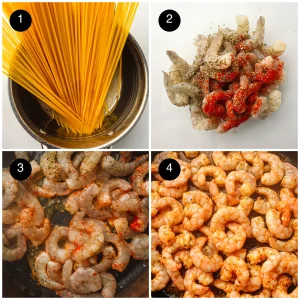
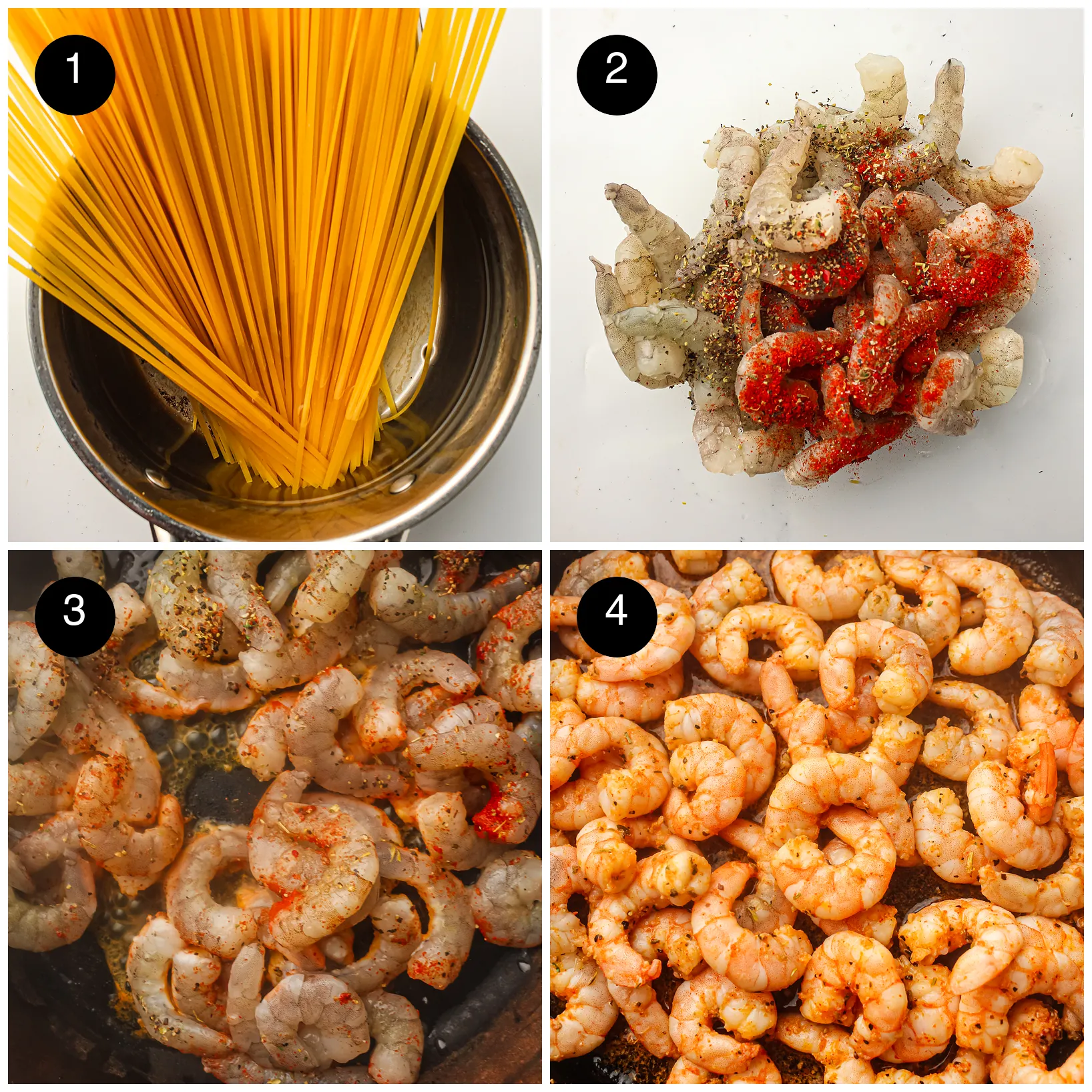
1. Boil the linguine. First, bring a large pot of salted water to a boil and cook the linguine to the package directions until al dente. Scoop out 1/2 cup of the cooking water, then drain.
2. Season the shrimp. Meanwhile, pat the shrimp dry and toss with the smoked paprika, 1/2 teaspoon salt and the pepper.
3. Heat the pan. Warm the olive oil and 1 tablespoon of butter in a large, deep skillet over medium-high heat.
4. Sear. Next, cook the shrimp in a single layer for about 1 to 2 minutes per side, depending on size, until opaque throughout and 145°F. Move them to a clean plate.
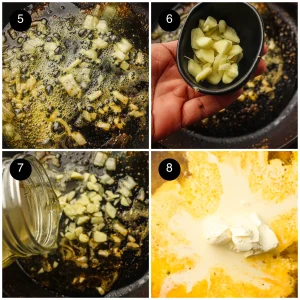
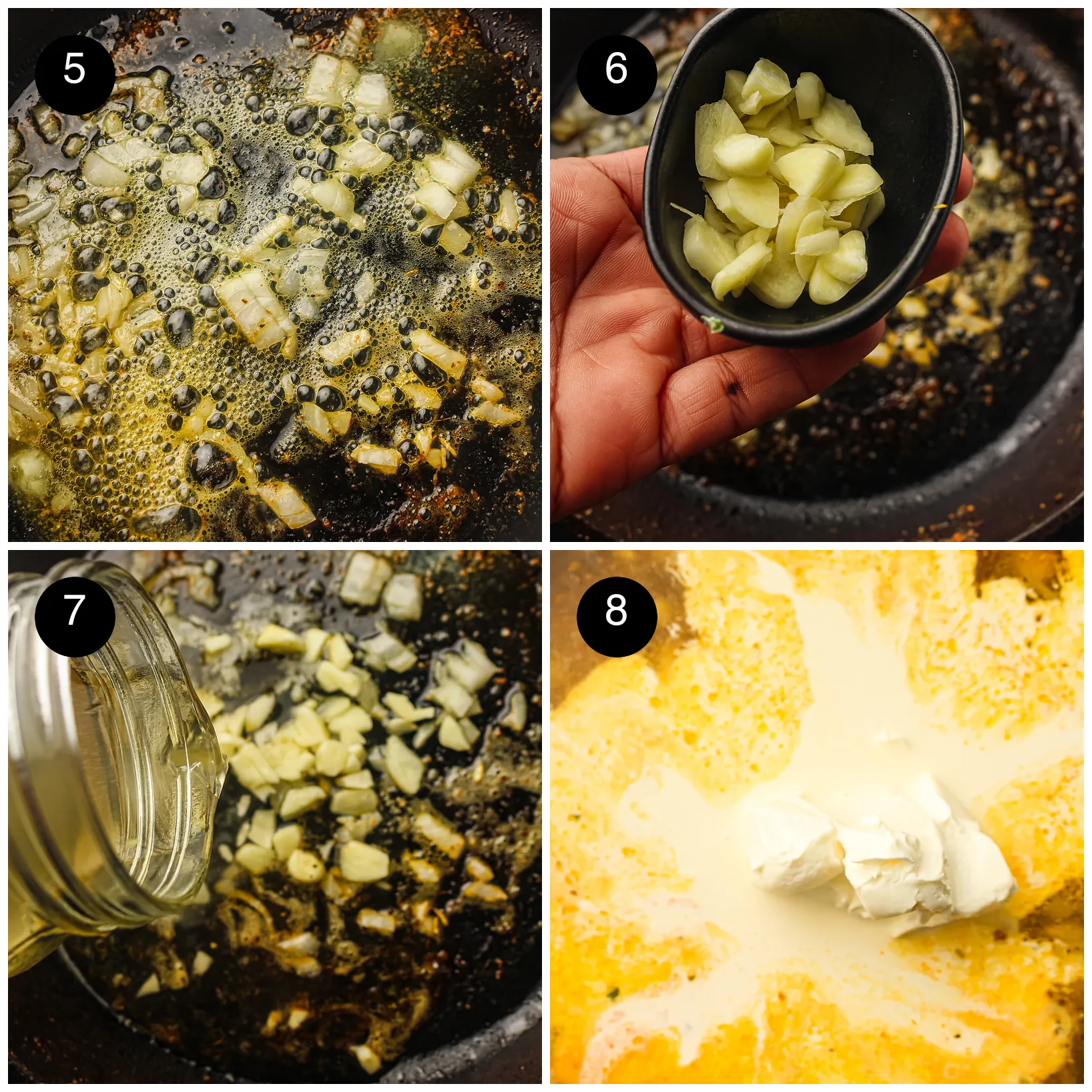
5. Shallot. Lower the heat to medium-low, add another tablespoon of butter and the shallot, and cook for about 2 minutes until soft.
6. Garlic. Add the garlic and stir for about 30 seconds, until fragrant.
7. Deglaze. Then pour in the broth, scrape up the browned bits and simmer gently for 2 to 3 minutes.
8. Cream. Stir in the cream, the softened cream cheese and the Italian seasoning. Keep the heat low and stir until smooth.
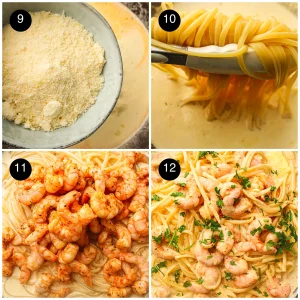
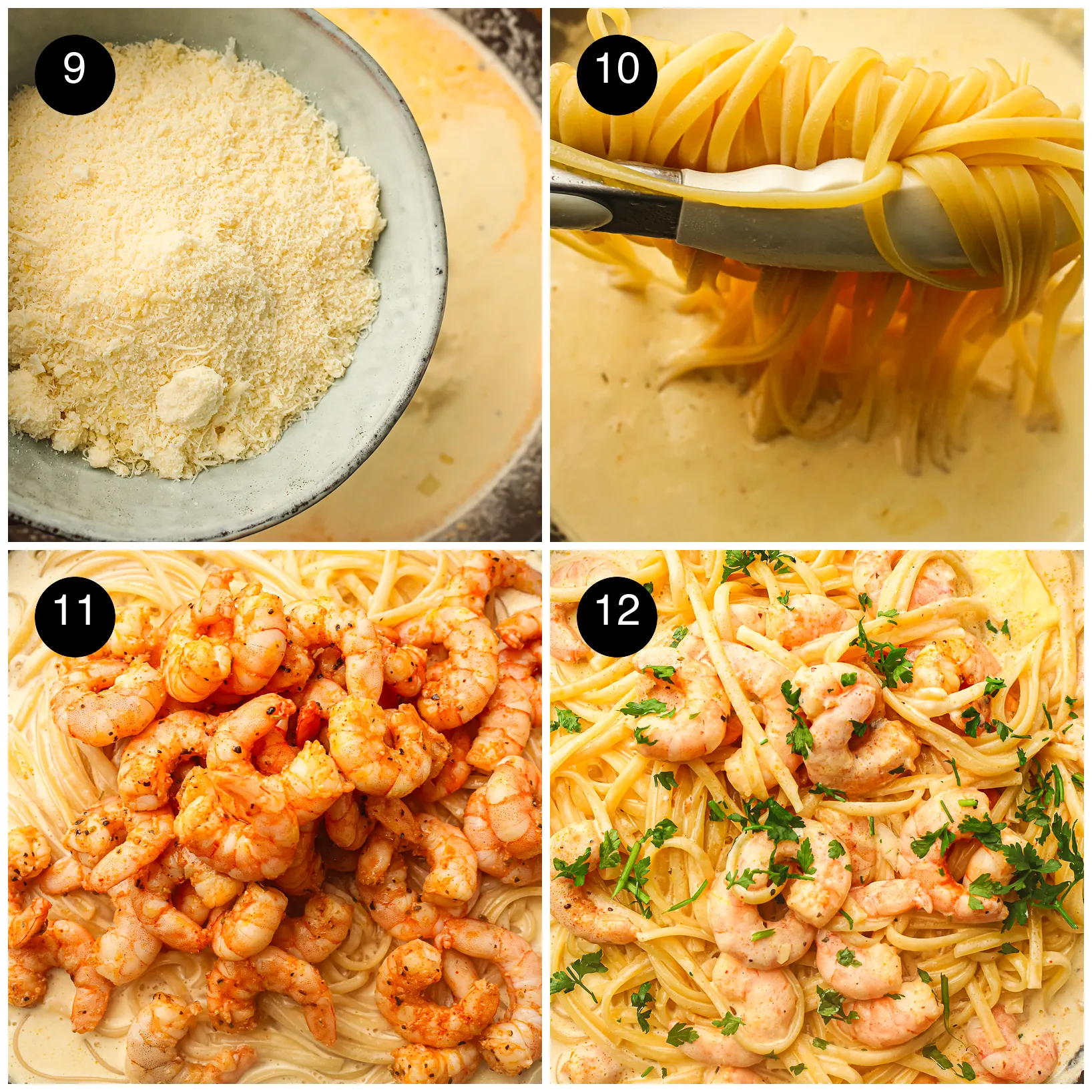
9. Parmesan. Add the Parmesan gradually, stirring between additions until melted. Warm gently for 2 more minutes without boiling.
10. Lemon. Stir in the lemon juice and zest, then taste and adjust the seasoning.
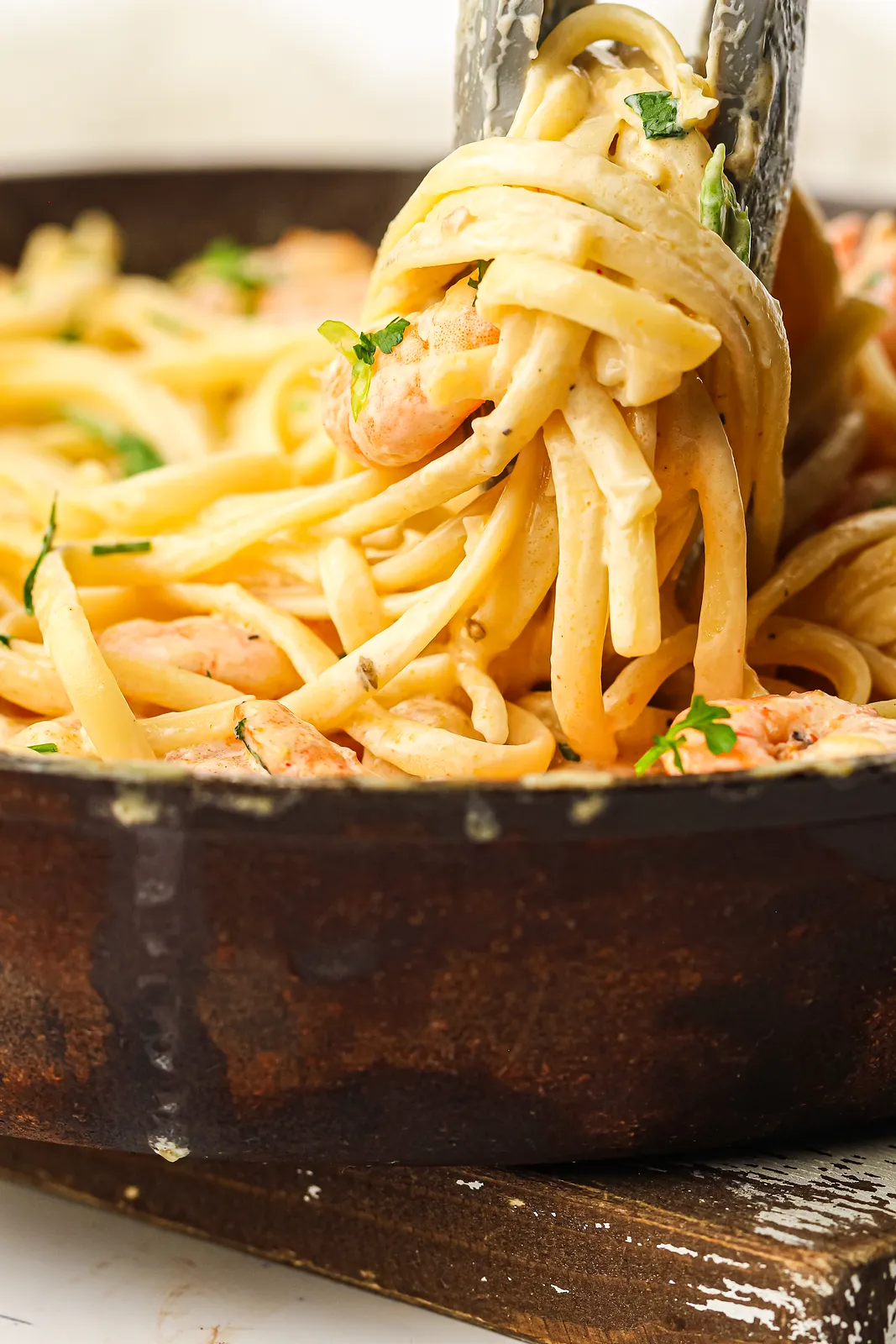
11. Toss the linguine. After that, add the drained linguine and toss with kitchen tongs until coated, loosening with reserved pasta water as needed.
12. Return the shrimp. Add the shrimp and any juices and toss gently over low heat for about 1 minute, until warmed through.
13. Finish with butter. Add the last tablespoon of butter and toss until melted.
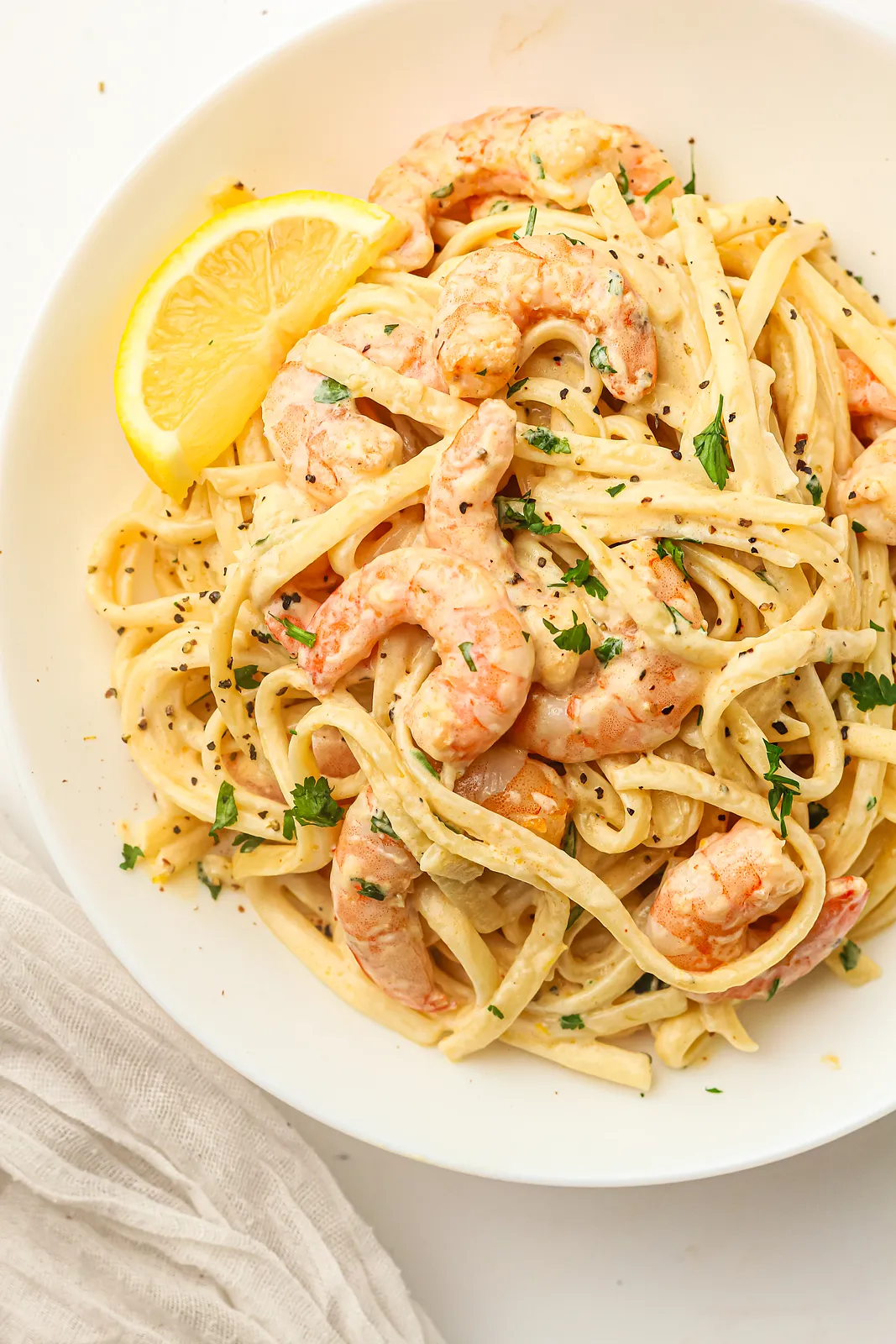
14. Serve. Finally, off the heat, scatter with parsley and serve.
Why Is My Shrimp Rubbery?
Rubbery shrimp are overcooked shrimp. They need only a minute or two per side, then a brief warm through in the sauce. Here are the other usual snags.
- Rubbery shrimp. Take them out as soon as they turn opaque and add them back only at the end.
- Pale, steamed shrimp. They were wet or crowded. Dry them well and sear in a single layer.
- Thin sauce. Simmer the cream a little longer before the Parmesan, or use less pasta water.
- Grainy sauce. The sauce boiled after the cheese went in. Keep it on low.
- Clumpy cream cheese. Soften it and cut it into small pieces so it melts evenly.
Tips for the Best Shrimp Pasta
- Dry the shrimp thoroughly so they sear rather than steam.
- Soften the cream cheese and cut it into small pieces before it goes in.
- Add pasta water a splash at a time; you may not need all of it.
- Return the shrimp near the end so they do not overcook.
- Zest the lemon with a fine zester before you juice it.
Storage and Reheating
- Fridge. Refrigerate in an airtight container within 2 hours, at 40°F or below. It keeps for 3 to 4 days, with the best texture in the first 1 to 2 days.
- Freezer. Not recommended. Freezing softens the pasta and can split the sauce.
- Reheat. Warm gently in a skillet with a splash of water or cream until the leftovers reach 165°F. Avoid long cooking, which toughens the shrimp.
- Make ahead. It is best served right away, but you can chop the shallot and garlic and grate the cheese ahead, and keep them refrigerated separately.
Variations and Substitutions
- Frozen shrimp. Thaw according to the package, drain and pat dry before seasoning.
- Precooked shrimp. Skip the searing step and add them at the end just until hot. Season the sauce with the paprika, salt and pepper to taste.
- Other pasta. Fettuccine, spaghetti or penne, using the same dry weight.
- No cream cheese. The sauce will be less thick, so simmer the cream gently to reduce it before adding the Parmesan.
- Add vegetables. Wilt spinach into the sauce, or toss cooked broccoli in with the linguine. Roasted air fryer asparagus also works.
What to Serve With It
A slice of cheesy garlic bread is ideal for mopping up the sauce, and a crisp green salad keeps things light. Love shrimp? Try air fryer shrimp for a quick appetiser, or pick another creamy skillet dinner such as garlic parmesan chicken.
Frequently Asked Questions
Ingredients and Swaps
Can I use frozen shrimp for shrimp pasta?
Yes. Thaw the shrimp according to the package directions, then drain and pat them very dry so they sear well.
Can I use precooked shrimp in garlic butter shrimp pasta?
Yes. Skip the searing step and add the precooked shrimp at the end only until hot, seasoning the sauce with the paprika, salt and pepper.
What pasta is best for shrimp pasta?
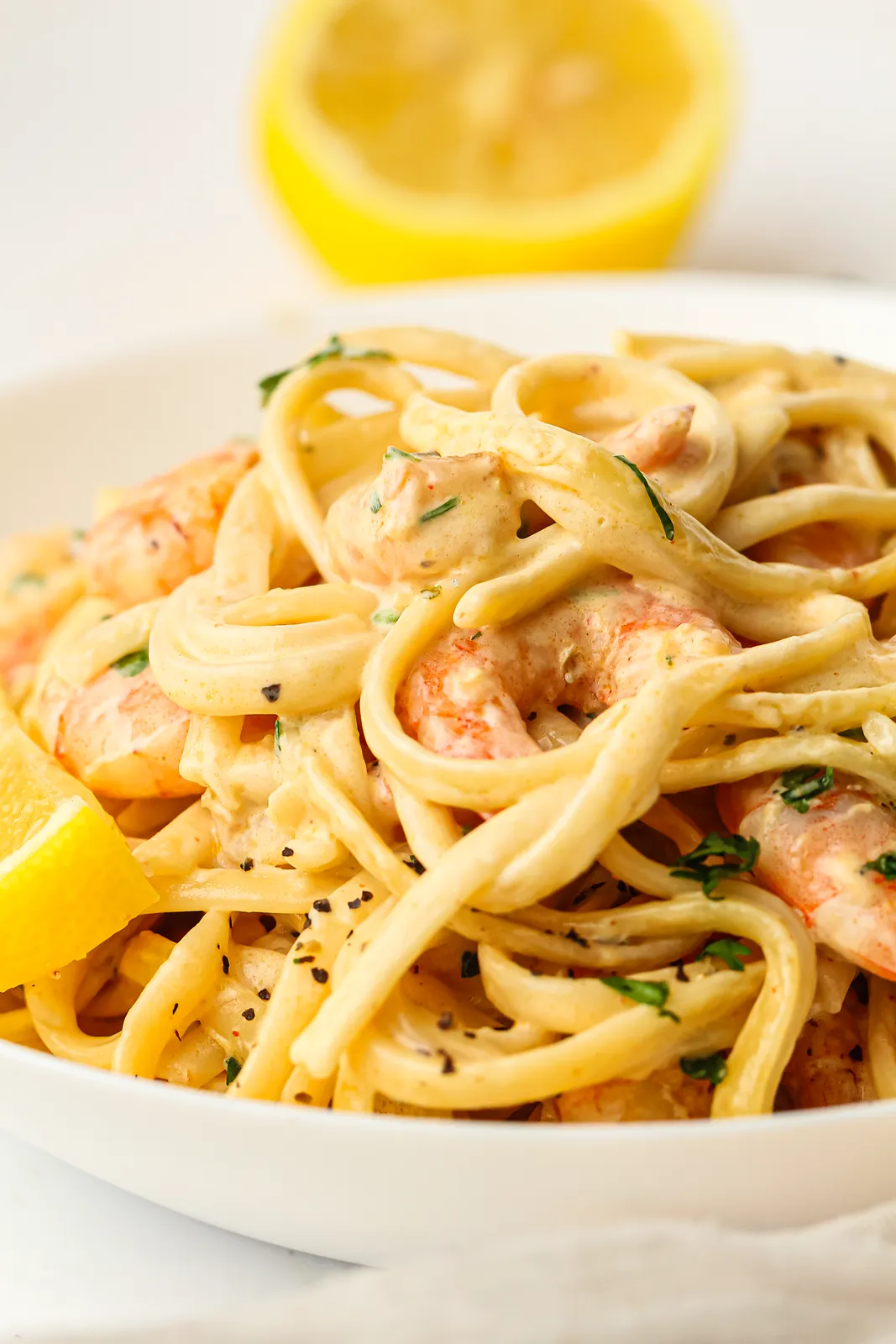
Linguine is ideal because the flat strands hold the cream sauce. Fettuccine, spaghetti or penne also work using the same 12 ounce dry weight.
How many calories are in this shrimp pasta?
About 820 calories per serving, and the recipe serves 4. That is an estimate.
Cooking and Storage
What temperature should shrimp be cooked to for shrimp pasta?
145°F. At that point the shrimp are pink and opaque all the way through; take them out of the pan right away so they stay tender.
How long does shrimp pasta last in the fridge?
3 to 4 days in an airtight container at 40°F or below, with the best texture in the first 1 to 2 days. Refrigerate it within 2 hours.
Can you freeze shrimp pasta?
It is not recommended. Freezing softens the linguine and can split the cream sauce, so keep leftovers in the fridge instead.
Can you make shrimp pasta ahead of time?
It is best served immediately. To save time, chop the shallot and garlic and grate the Parmesan ahead, and refrigerate them separately until you cook.
Ingredients
- 12 ounces linguine pasta
- 1 pound large raw shrimp peeled and deveined
- 3 tablespoons unsalted butter divided
- 1 tablespoon olive oil
- 5 garlic cloves finely minced
- 1 small shallot finely diced
- 3/4 cup low-sodium chicken broth
- 1 cup heavy whipping cream
- 1/2 cup Parmesan cheese freshly grated
- 2 ounces cream cheese softened
- 1 tablespoon fresh lemon juice
- 1 teaspoon lemon zest finely grated
- 1/2 teaspoon smoked paprika
- 1/2 teaspoon Italian seasoning
- 1/2 teaspoon kosher salt plus more for the pasta water
- 1/4 teaspoon black pepper freshly ground
- 2 tablespoons fresh parsley finely chopped
- 1/2 cup reserved pasta cooking water as needed
Instructions
- Bring a large pot of salted water to a boil and cook the linguine to the package directions until al dente. Reserve 1/2 cup of the cooking water, then drain.
- Meanwhile, pat the shrimp dry and toss with the smoked paprika, 1/2 teaspoon salt and the black pepper.
- Heat the olive oil and 1 tablespoon of the butter in a large, deep skillet over medium-high heat.
- Cook the shrimp in a single layer for about 1 to 2 minutes per side, depending on size, until opaque throughout and 145°F. Move to a clean plate.

- Lower the heat to medium-low. Add another tablespoon of butter and the shallot and cook for about 2 minutes, until softened.
- Add the garlic and stir for about 30 seconds, until fragrant.
- Pour in the chicken broth and scrape up the browned bits. Simmer gently for 2 to 3 minutes.
- Stir in the heavy cream, softened cream cheese and Italian seasoning. Keep over low heat and stir until smooth.
- Add the Parmesan gradually, stirring between additions until melted. Warm gently for 2 more minutes without boiling.
- Stir in the lemon juice and zest, then taste and adjust the seasoning.
- Add the drained linguine and toss with tongs until coated, adding reserved pasta water a little at a time to loosen the sauce.
- Return the shrimp and any juices to the skillet and toss gently over low heat for about 1 minute, until warmed through.
- Add the remaining tablespoon of butter and toss until melted.
- Take the pan off the heat, sprinkle with parsley and serve immediately.