 Bity

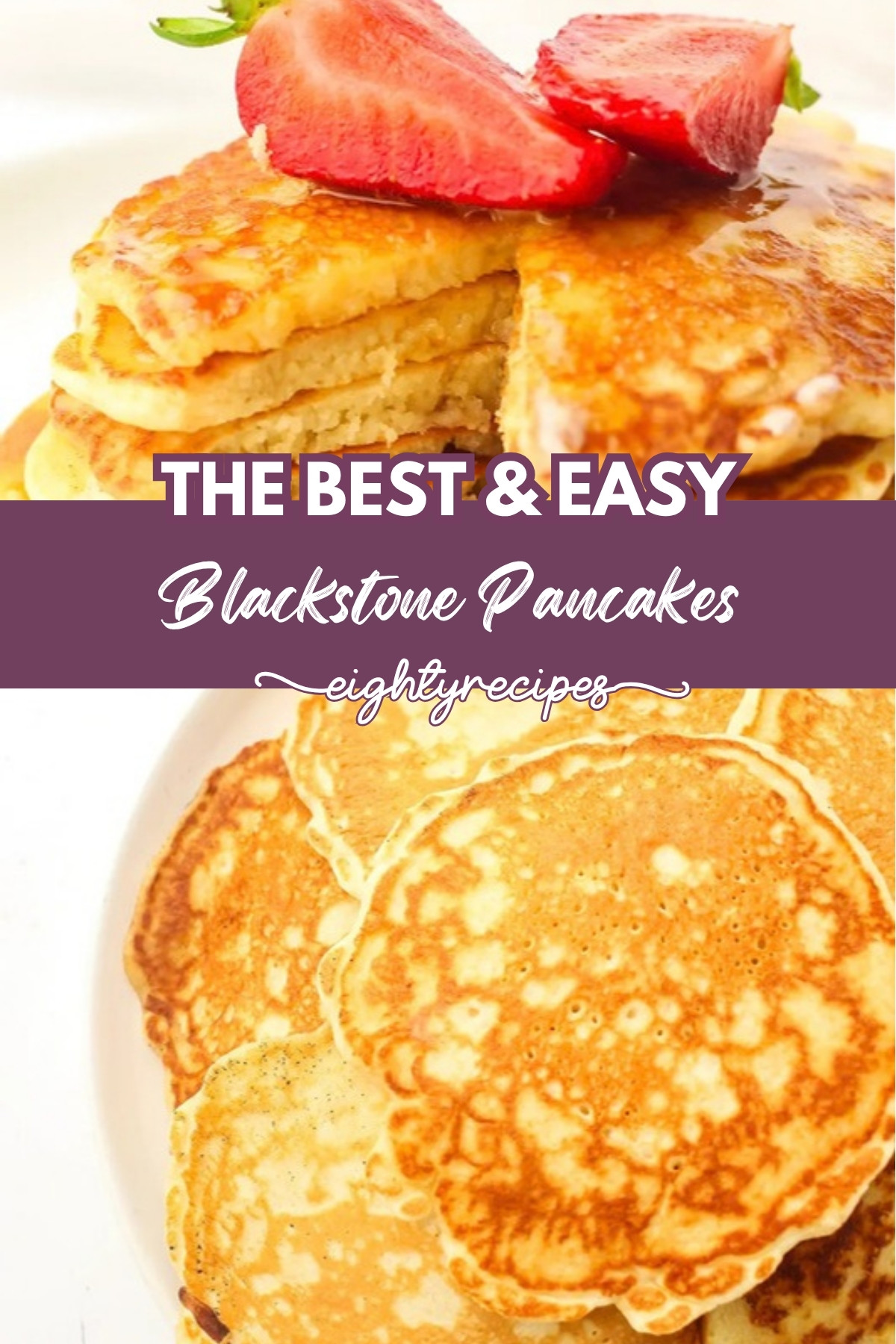
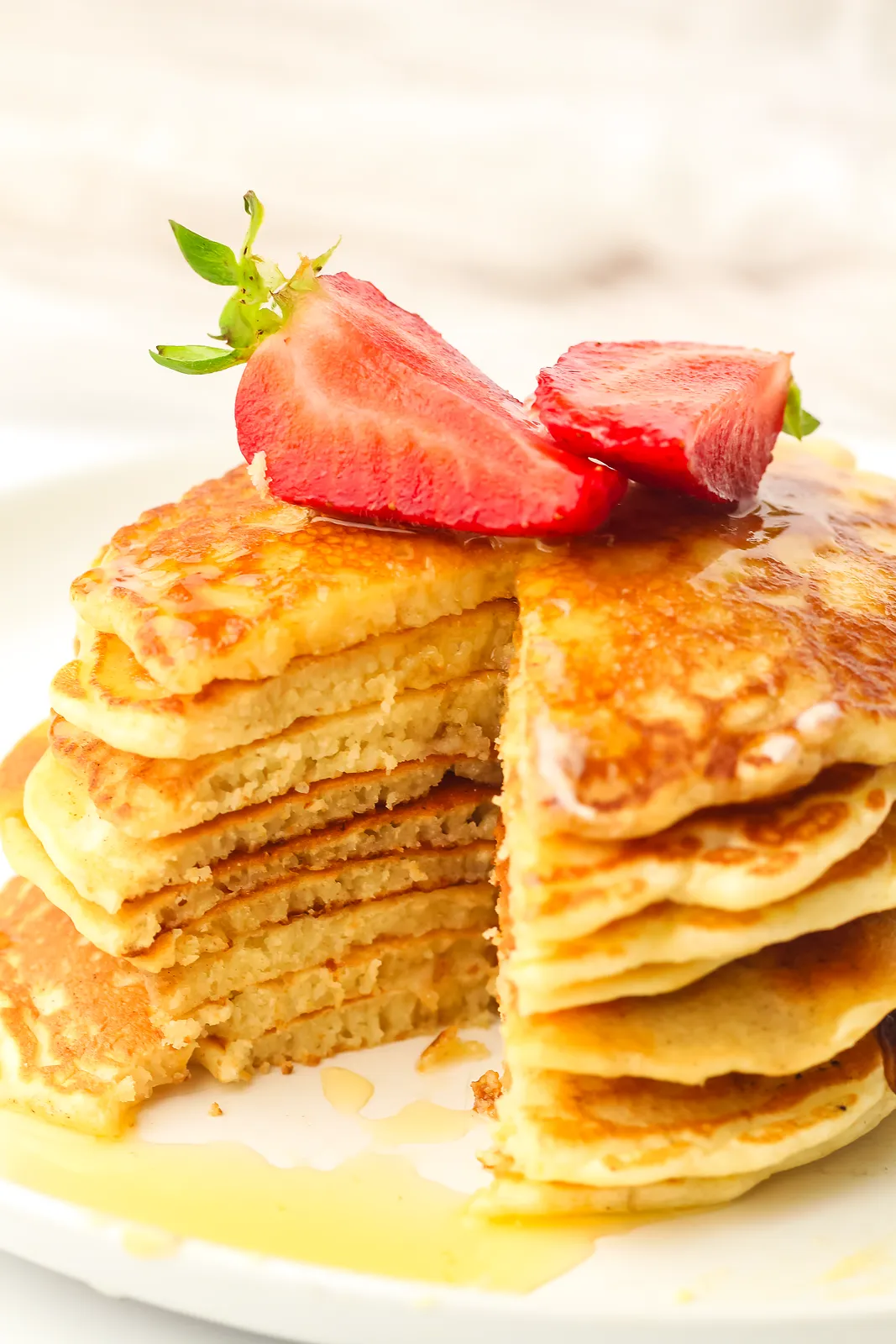
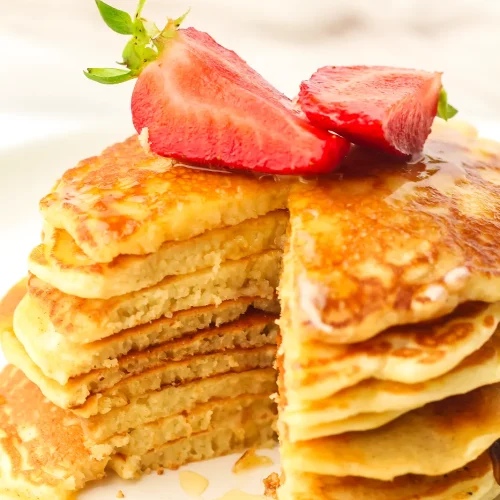
These fluffy Blackstone pancakes are my favourite reason to fire up the griddle on a Saturday morning. The big flat top lets you cook eight golden pancakes at once, so everybody eats together instead of waiting in turns by the hob.
The batter is simple and made from cupboard basics: flour, sugar, baking powder, eggs, milk and melted butter. However, the real secret isn’t the recipe, it’s the heat. Once I learned to keep my griddle at a gentle medium-low, the pale, raw-middled first batch became a thing of the past. Here’s everything I’ve learned from far too many weekend breakfasts outside.
In short, Blackstone pancakes are classic fluffy pancakes made from flour, sugar, baking powder, salt, eggs, milk and melted butter, cooked eight at a time on a griddle at medium-low, roughly 350 to 375°F. Each one needs 2 to 3 minutes before flipping and 1 to 2 minutes after, so a batch of 8 is on the table in about 20 minutes, at about 196 calories per pancake.
Quick Breakdown
Why You’ll Love These Blackstone Pancakes
- A whole batch at once. The griddle fits all eight pancakes, so breakfast is on the table in about 20 minutes.
- Even, golden colour. A flat top holds steady heat across the surface, which gives that lacy, diner-style finish.
- Pantry ingredients. No buttermilk or special mix needed; you probably have everything already.
- Fluffy, not flat. A gentle stir and the right heat keep them thick and tender.
- Easy to customise. Blueberries, chocolate chips or banana slices all go on straight from the griddle.
Ingredient Notes
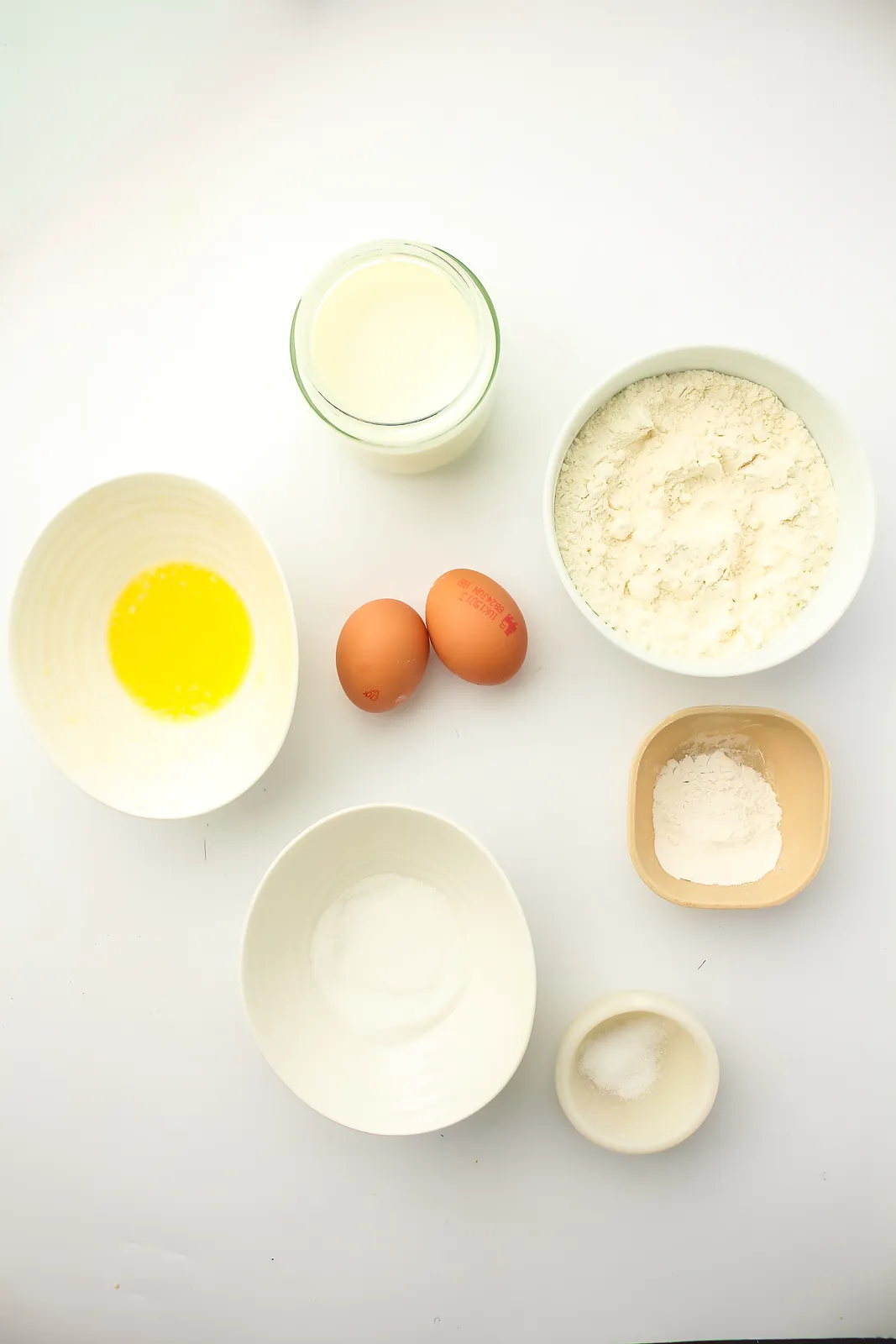
- All-purpose flour. 2 cups, or 250 g. Spoon it into the cup and level it off, because packed flour makes the batter too thick.
- Sugar. 2 tablespoons (25 g). Just enough to sweeten and help the outside caramelise.
- Baking powder. 2 teaspoons (8 g). This is what makes them rise, so check it’s fresh. A spoonful dropped into hot water should fizz straight away.
- Salt. 1/2 teaspoon (3 g) balances the sweetness.
- Eggs. Two large eggs, at room temperature if you remember.
- Milk. 1 1/2 cups, or 360 ml. Whole milk gives the richest result, but semi-skimmed works fine.
- Melted butter. 2 tablespoons (28 g) in the batter, plus a little for greasing the griddle and for serving.
Best Griddle Temp for Pancakes
On a Blackstone, set the burners to medium-low and give the steel 10 minutes to preheat. If you have an infrared thermometer, you’re aiming for a surface temperature of roughly 350 to 375°F (175 to 190°C). Much hotter and the outside browns before the middle cooks; much cooler and they turn pale and tough.
Because griddles have hot spots, check a few places, especially near the burners. Then cook one of your Blackstone pancakes as a test. If it’s dark in under two minutes, turn the heat down. For a foolproof check, ThermoWorks recommends cooking pancakes to at least 190°F (88°C) in the centre for the lightest, fluffiest result.
| Griddle setting | Surface temp | What happens |
|---|---|---|
| Low | Under 325°F | Pale, flat and slightly chewy |
| Medium-low | 350 to 375°F | Golden, fluffy, cooked through |
| Medium-high | 400°F and above | Dark outside, raw middle |
How To Make Blackstone Pancakes
1. Preheat the griddle. First, turn your Blackstone griddle to medium-low and let it heat while you make the batter.
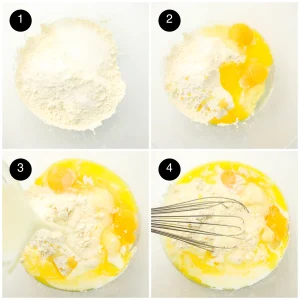
2. Whisk the dry ingredients. Next, whisk the flour, sugar, baking powder and salt together in a large bowl.
3. Add the wet ingredients. Then add the eggs, pour in the milk and add the melted butter.
4. Stir until just combined. Whisk gently, only until no dry flour remains. A few lumps are good; they mean you haven’t overworked the batter.
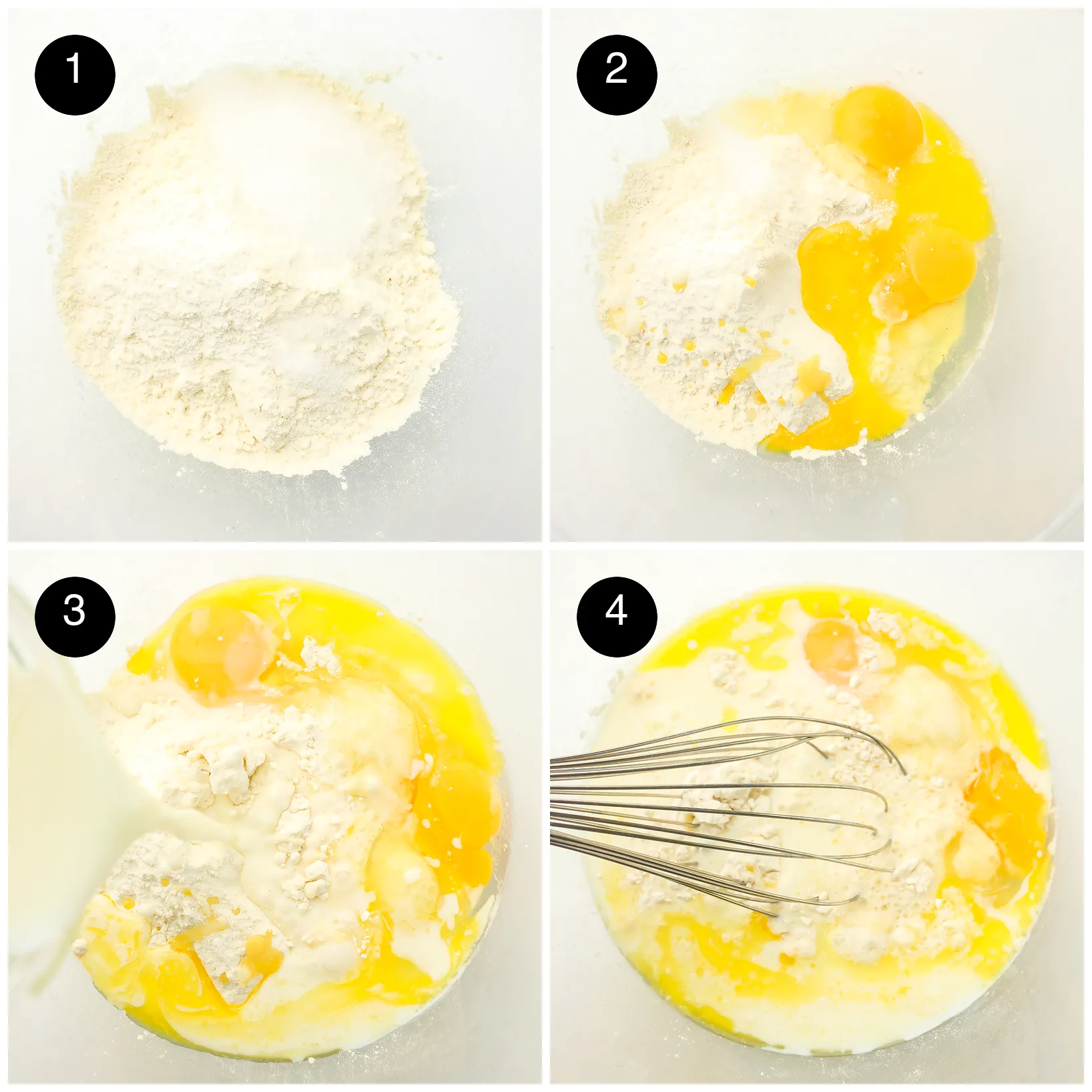
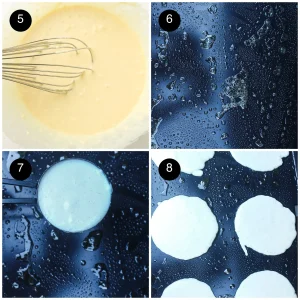
5. Grease the griddle. After that, wipe a thin layer of butter or oil over the hot surface with a paper towel. You want a sheen, not a puddle.
6. Pour the batter. Using a 1/4 cup measure, pour the batter onto the griddle, leaving a few centimetres between each one so they don’t merge.
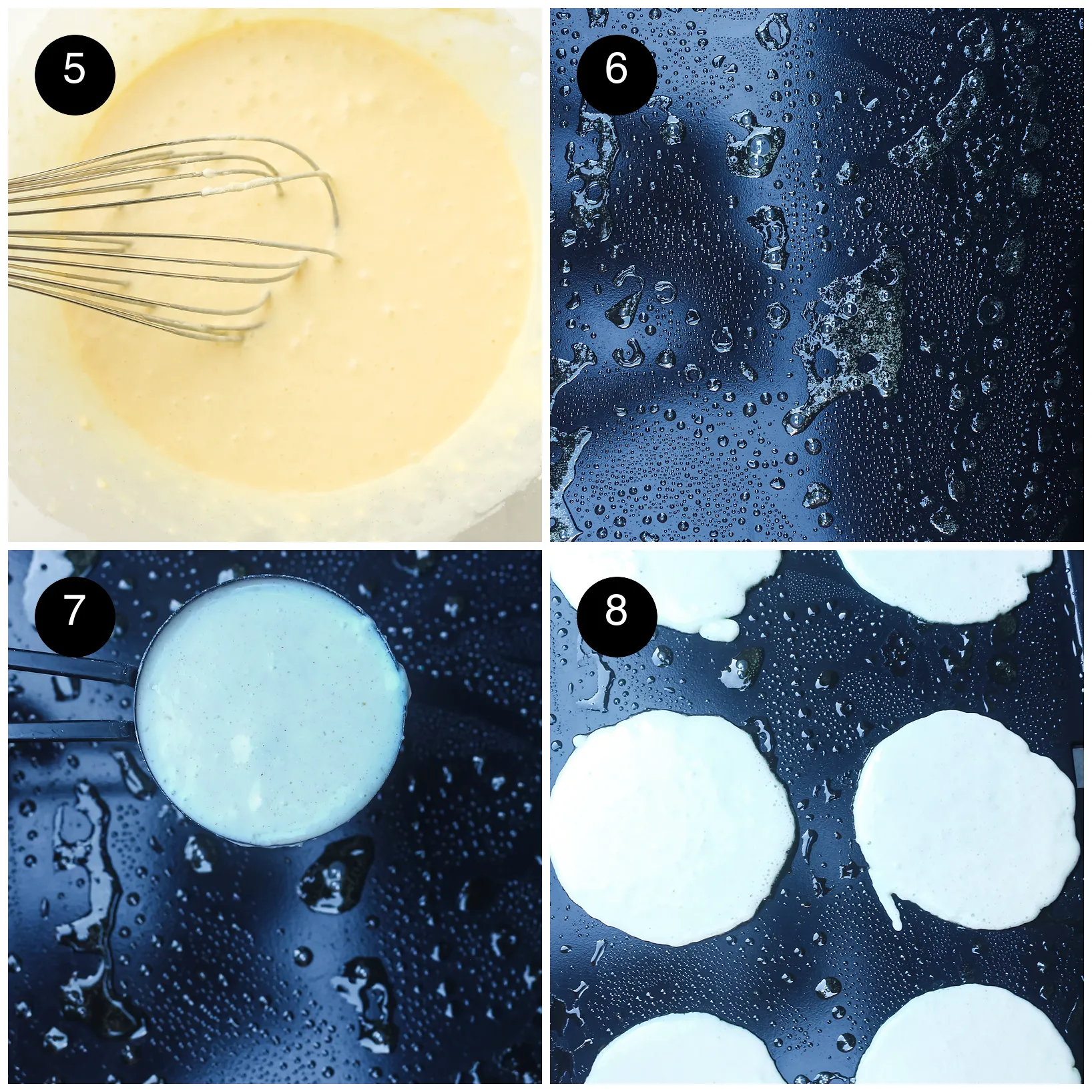
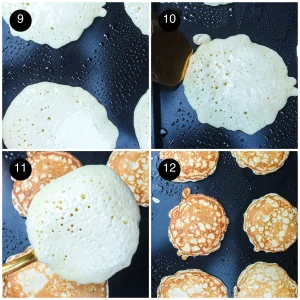
7. Wait for the bubbles. Cook for about 2 to 3 minutes, until bubbles appear across the surface and start to pop, and the edges look matte rather than wet.
8. Flip and finish. Then flip each one with a wide spatula and cook for another 1 to 2 minutes until golden brown on both sides.
9. Serve warm. Finally, stack them up and serve warm with butter and maple syrup.
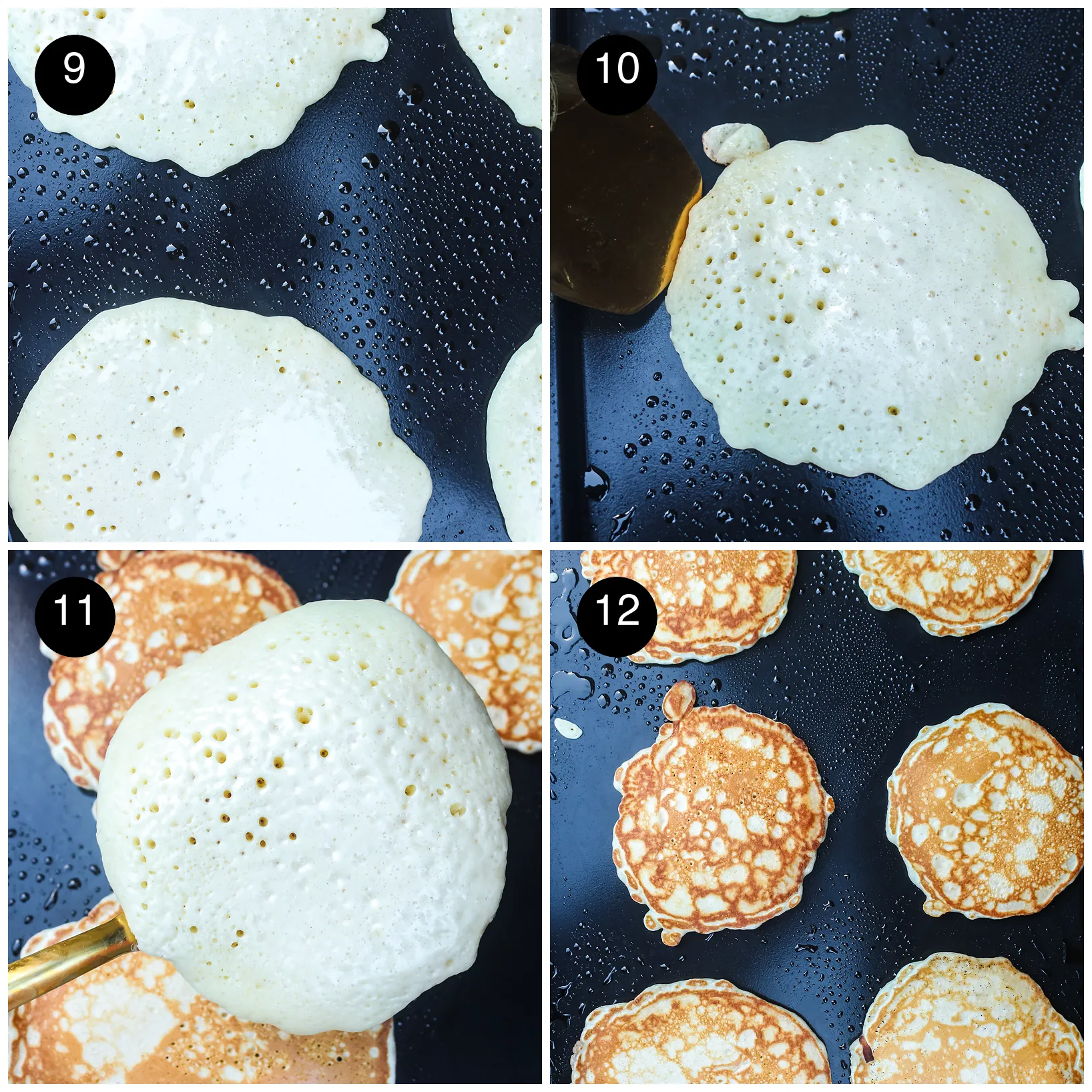
Keeping the oil in a squeeze bottle next to the griddle makes greasing easy: a thin zigzag, a quick wipe with paper towel and you have just the right sheen.
When I am cooking for a crowd, a pancake batter dispenser makes pouring eight even rounds quicker than a measuring cup, with far fewer drips on the steel.
Why Are My Blackstone Pancakes Flat?
Blackstone pancakes usually turn out flat because the batter was overmixed. Old baking powder, too much grease, a griddle that is too cool or pressing them down are the other common causes:
- Overmixing. This is the most common cause. Too much whisking develops gluten, which can result in dense, gummy pancakes. Stir until just combined and stop.
- Old baking powder. If it’s been open for more than six months, test it in hot water before you start.
- Too much grease. A thick layer of butter fries the edges and makes the batter spread thin.
- Heat too low. A cool griddle lets the batter run before it sets. Preheat properly.
- Pressing them down. Never squash them with the spatula after flipping; it pushes the air out.
Tips for the Best Blackstone Pancakes
- Let the batter rest for 5 minutes while the griddle heats. King Arthur’s pancake expert swears by this short rest for a better rise.
- Use a measuring cup or a large cookie scoop so every pancake is the same size and cooks in the same time.
- Cook in rows, starting from the hottest side, so you know which ones to flip first.
- Add blueberries or chocolate chips on top of the batter once it’s on the griddle, rather than stirring them into the bowl. That way they don’t sink or turn the batter grey.
- Keep finished batches warm on a baking tray in a low oven at 200°F (95°C) while you cook the rest.
Storage and Reheating
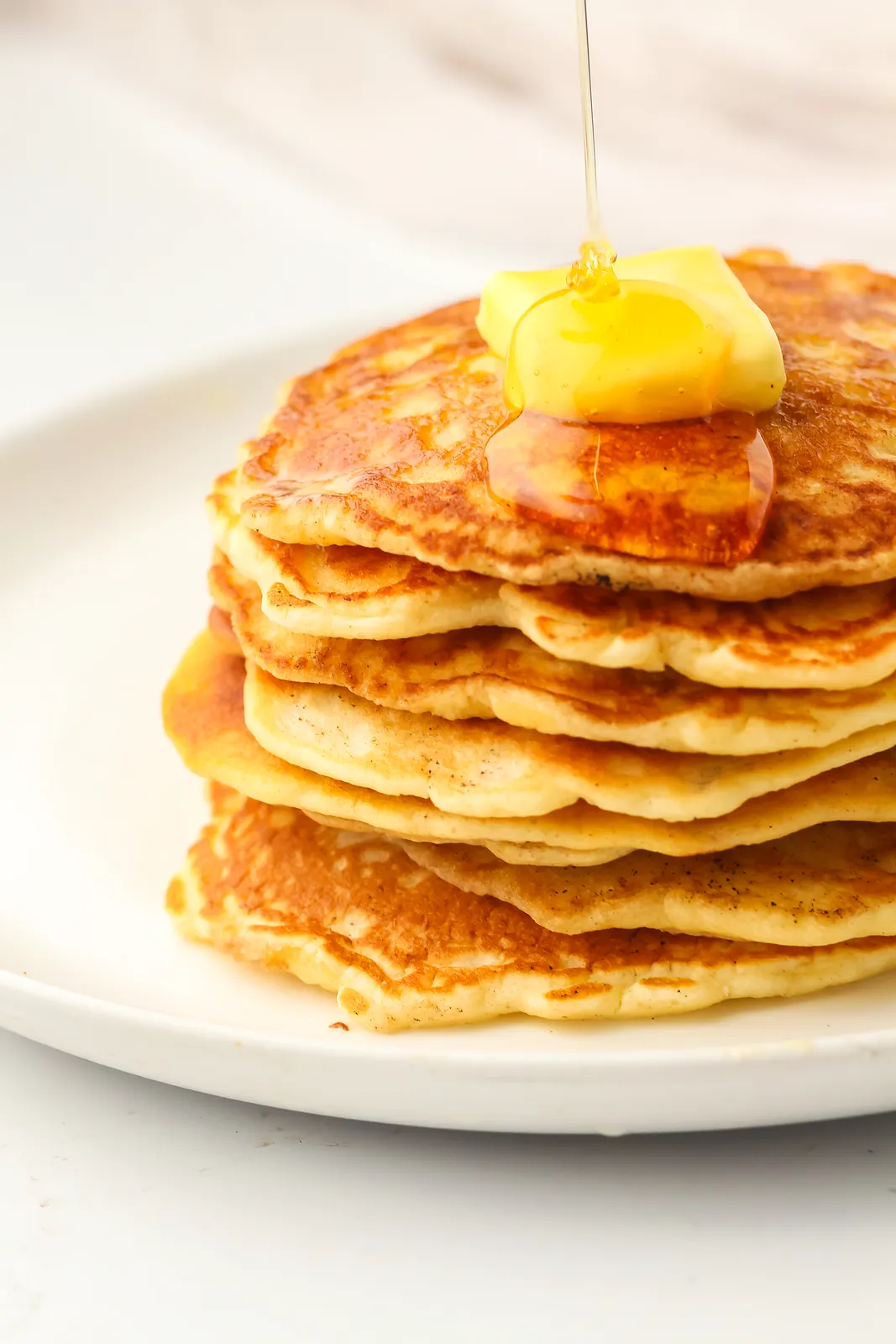
- Fridge. Store leftover Blackstone pancakes in an airtight container in the refrigerator for up to 3 days.
- Freezer. Freeze between sheets of parchment paper for up to 2 months, so you can pull out just one or two.
- Reheating. Pop them in the toaster, warm them on the griddle for a minute per side, or microwave for 20 to 30 seconds.
- Make-ahead batter. Fresh batter works best, but it can be refrigerated for a few hours. Give it one gentle stir before cooking.
Variations and Substitutions
- Blueberry. For blueberry Blackstone pancakes, scatter fresh blueberries over each one as soon as it hits the griddle.
- Chocolate chip. Definitely! Drop a few chips onto the batter just before flipping.
- Buttermilk. Swap the milk for buttermilk and add 1/2 teaspoon of bicarbonate of soda for a tangier, taller stack.
- Feeding a crowd. If you’d rather not stand at the griddle at all, my sheet pan pancakes bake a whole tray in the oven, and my freezer pancakes are perfect for busy school mornings.
What to Serve With Blackstone Pancakes
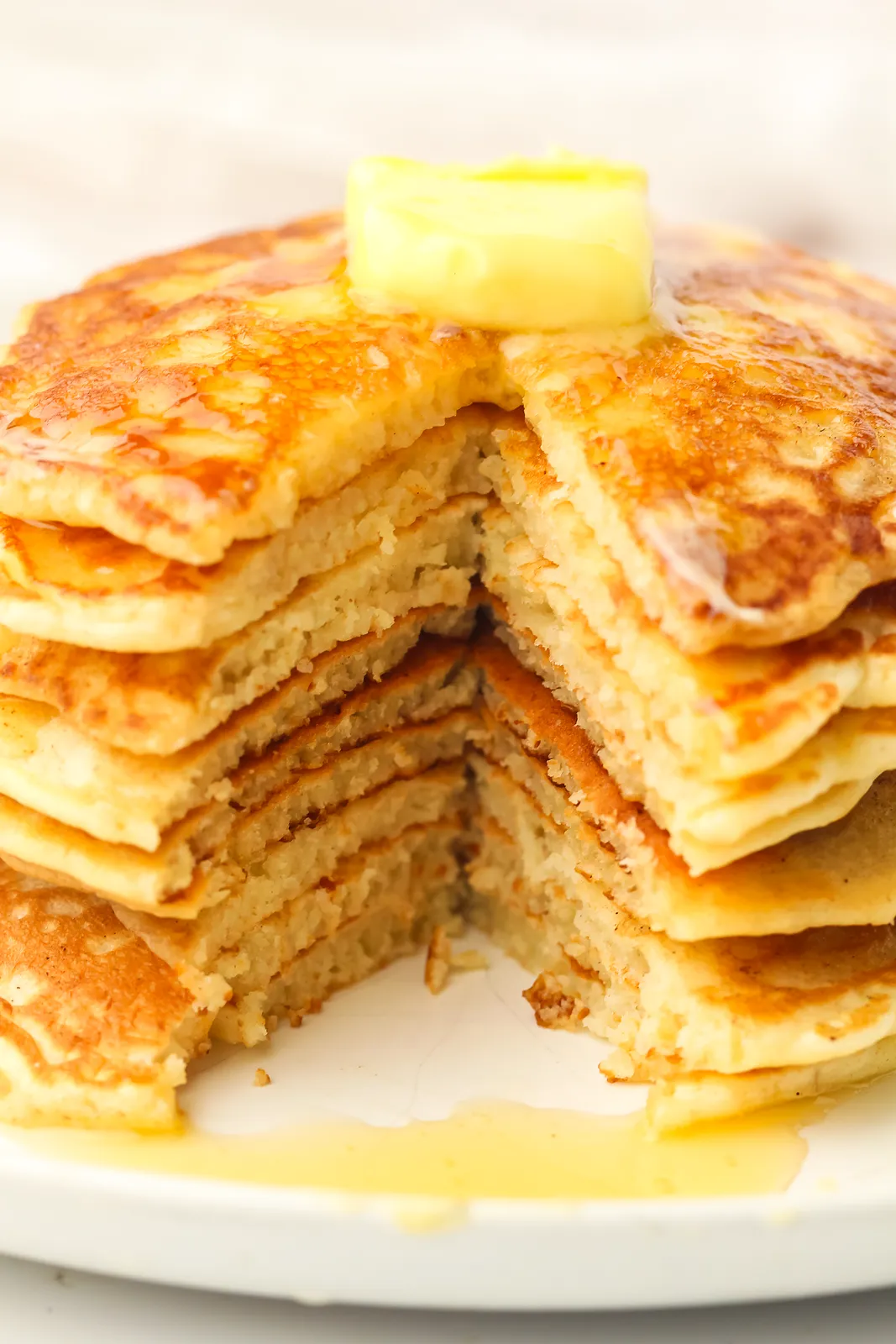
Maple syrup and butter are a must in our house, but fresh fruit, whipped cream or a spoonful of Greek yoghurt are lovely too. For a full fry-up style breakfast, add sausages or my crispy air fryer bacon on the side.
Once breakfast is done, the griddle is already hot. In summer we often keep it going for lunch and cook a round of Blackstone smash burgers for the grown-ups.
Frequently Asked Questions
Batter and Ingredients
Can I make Blackstone pancake batter ahead of time?
Only by a few hours. Fresh batter works best, but it can be refrigerated for a few hours and given one gentle stir before cooking. The baking powder slowly loses its puff, so don’t leave it overnight.
Can I add blueberries or chocolate chips to Blackstone pancakes?
Definitely! For the best results, scatter them over the batter once it’s on the griddle rather than stirring them into the bowl, so they don’t sink or turn the batter grey.
Can I use boxed pancake mix on a Blackstone griddle?
Yes. Any boxed mix works on the griddle; cook it at the same medium-low heat, roughly 350 to 375°F, and flip when bubbles pop and the edges look matte.
Cooking and Serving
What temperature should my Blackstone be for pancakes?
Medium-low, which is roughly 350 to 375°F (175 to 190°C) on the surface. Preheat for about 10 minutes first, then cook one test pancake; if it is dark in under two minutes, turn the heat down.
How long do you cook pancakes on a Blackstone?
About 2 to 3 minutes on the first side, until bubbles pop and the edges look matte, then 1 to 2 minutes after flipping. For the fluffiest result, the centre should reach at least 190°F (88°C).
Why are my griddle pancakes flat?
Usually overmixing, which develops gluten and can result in dense, gummy pancakes. Old baking powder, too much grease, a griddle that is too cool or pressing them with the spatula can also be to blame.
What should I serve with Blackstone pancakes?
Butter and maple syrup are the classic toppings. Fresh fruit, whipped cream, Greek yoghurt, sausages or crispy bacon all pair well for a bigger breakfast.
How long do Blackstone pancakes last?
Up to 3 days in an airtight container in the fridge, or up to 2 months in the freezer between sheets of parchment paper. Reheat them in the toaster, on the griddle for a minute per side or in the microwave for 20 to 30 seconds.
Ingredients
- 2 cups all-purpose flour 250 g
- 2 tablespoons sugar 25 g
- 2 teaspoons baking powder 8 g
- 1/2 teaspoon salt 3 g
- 2 eggs
- 1 1/2 cups milk 360 ml
- 2 tablespoons melted butter 28 g
Instructions
- Preheat the Blackstone griddle to medium-low heat.
- In a large bowl, whisk together the flour, sugar, baking powder and salt.

- Add the eggs, milk and melted butter.
- Stir until just combined.
- Lightly grease the griddle.
- Pour about 1/4 cup of batter for each pancake.
- Cook until bubbles appear on the surface.
- Flip and cook until golden brown.
- Serve warm with butter and maple syrup.