 Bity

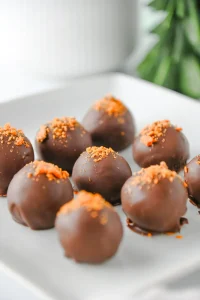
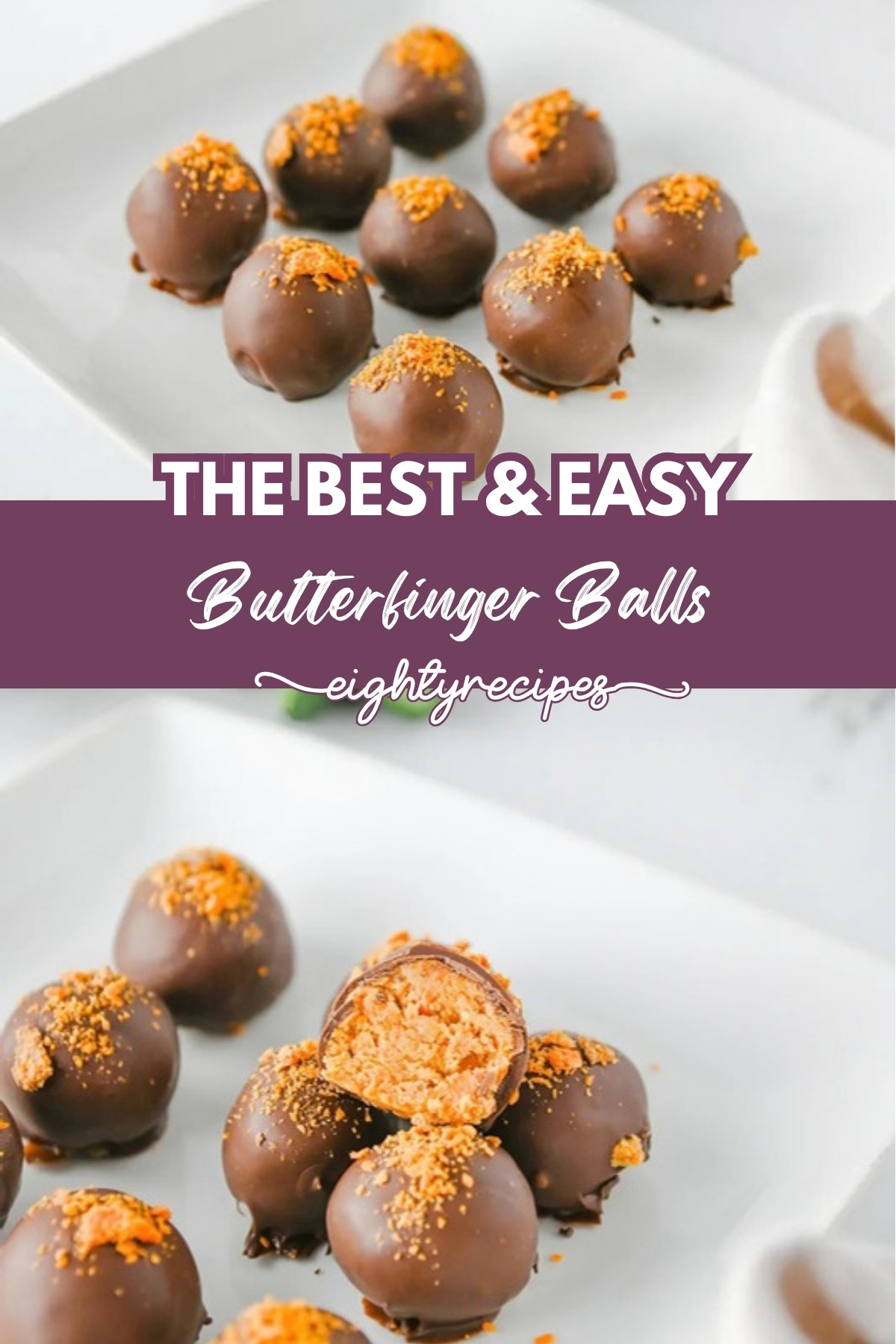
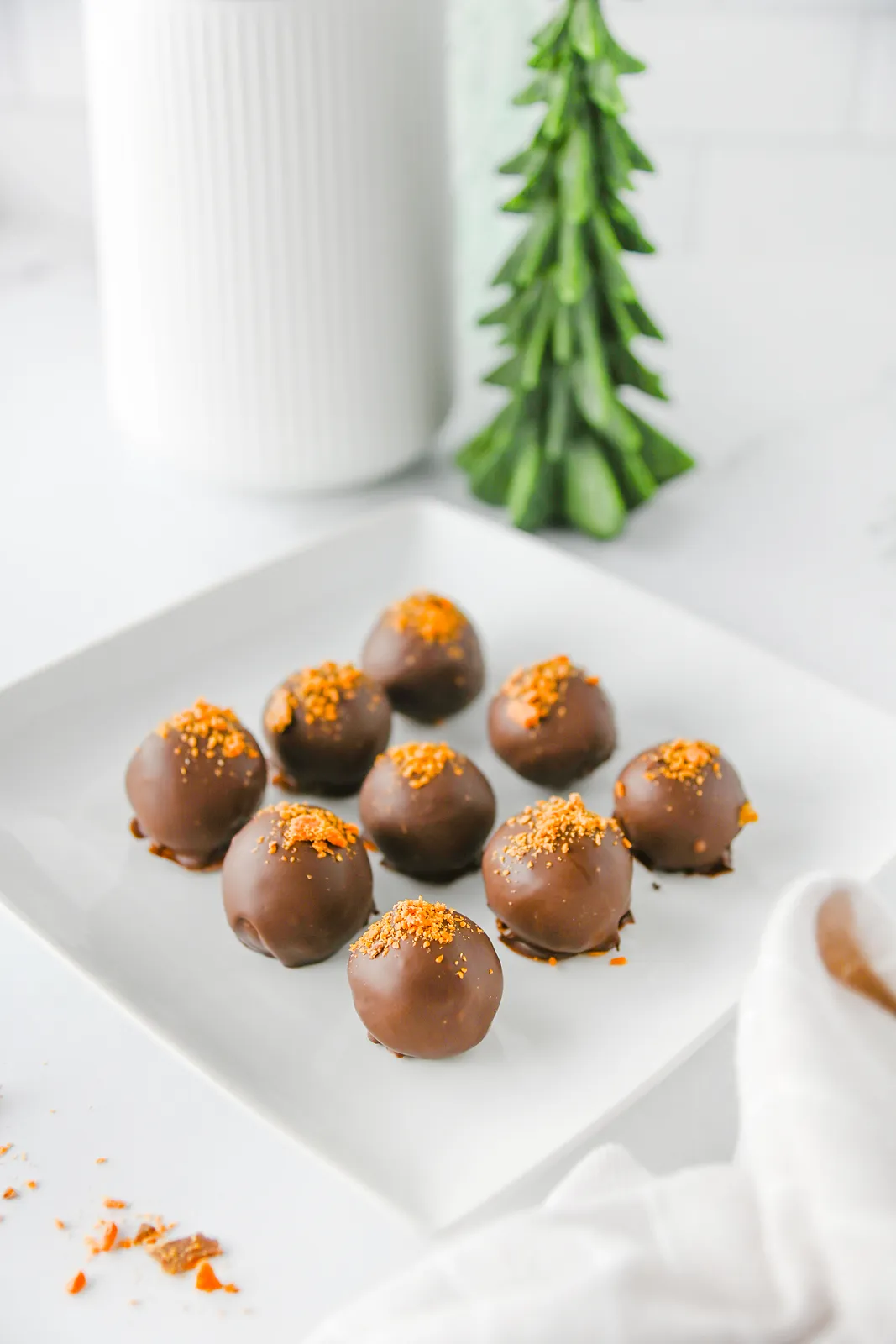
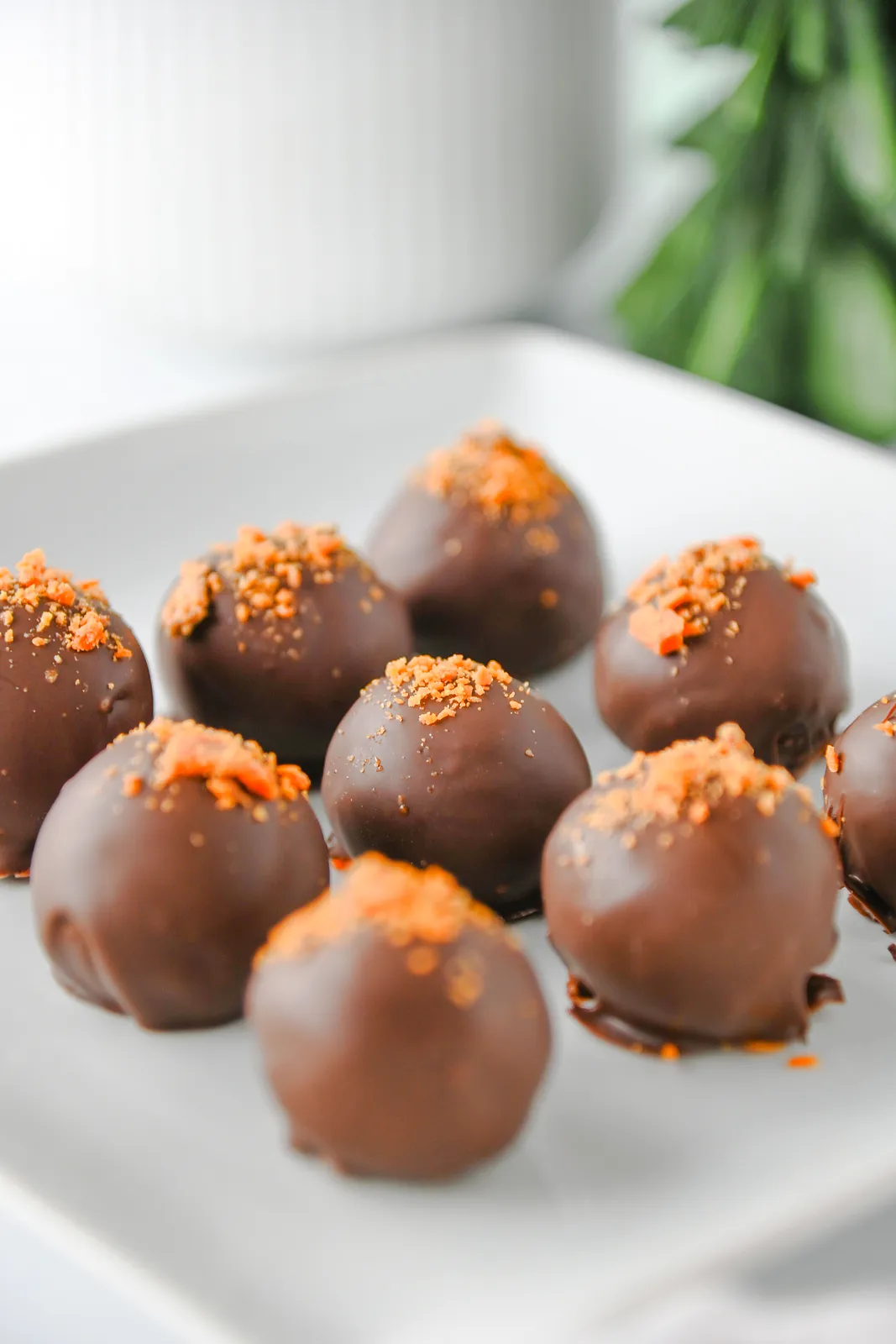
These butterfinger balls are the no-bake candy I make when I want something that tastes like a candy bar but feels homemade. Creamy peanut butter, crushed Butterfinger and graham cracker crumbs get rolled into little rounds, chilled, then dunked in chocolate almond bark.
I first made them for a cookie swap, and honestly, they vanished before anyone touched my “proper” baking. That said, they take about twenty minutes of hands-on work, and the freezer does the rest.
In short, Butterfinger balls are a no-bake candy of peanut butter, butter, powdered sugar, graham cracker crumbs and crushed Butterfinger, rolled into 1 inch rounds, frozen for 30 minutes and dipped in melted chocolate almond bark. It takes 20 minutes hands on and about 1 hour 50 minutes in total, including freezing and setting. One batch makes 20, at about 245 calories each.
Quick Breakdown
Why You’ll Love These Butterfinger Balls
- No oven needed. Everything happens in one bowl, on one tray and in the microwave.
- Crunchy and creamy at once. The flaky candy bar pieces give a crackle inside a soft peanut butter centre.
- A smooth chocolate shell. Almond bark melts thin and sets glossy without any tempering fuss.
- Perfect for gifting. They hold their shape in a tin, so they travel well to parties and teachers.
- Make-ahead friendly. Because they keep for weeks in the freezer, you can make a batch long before the busy season.
Ingredient Notes
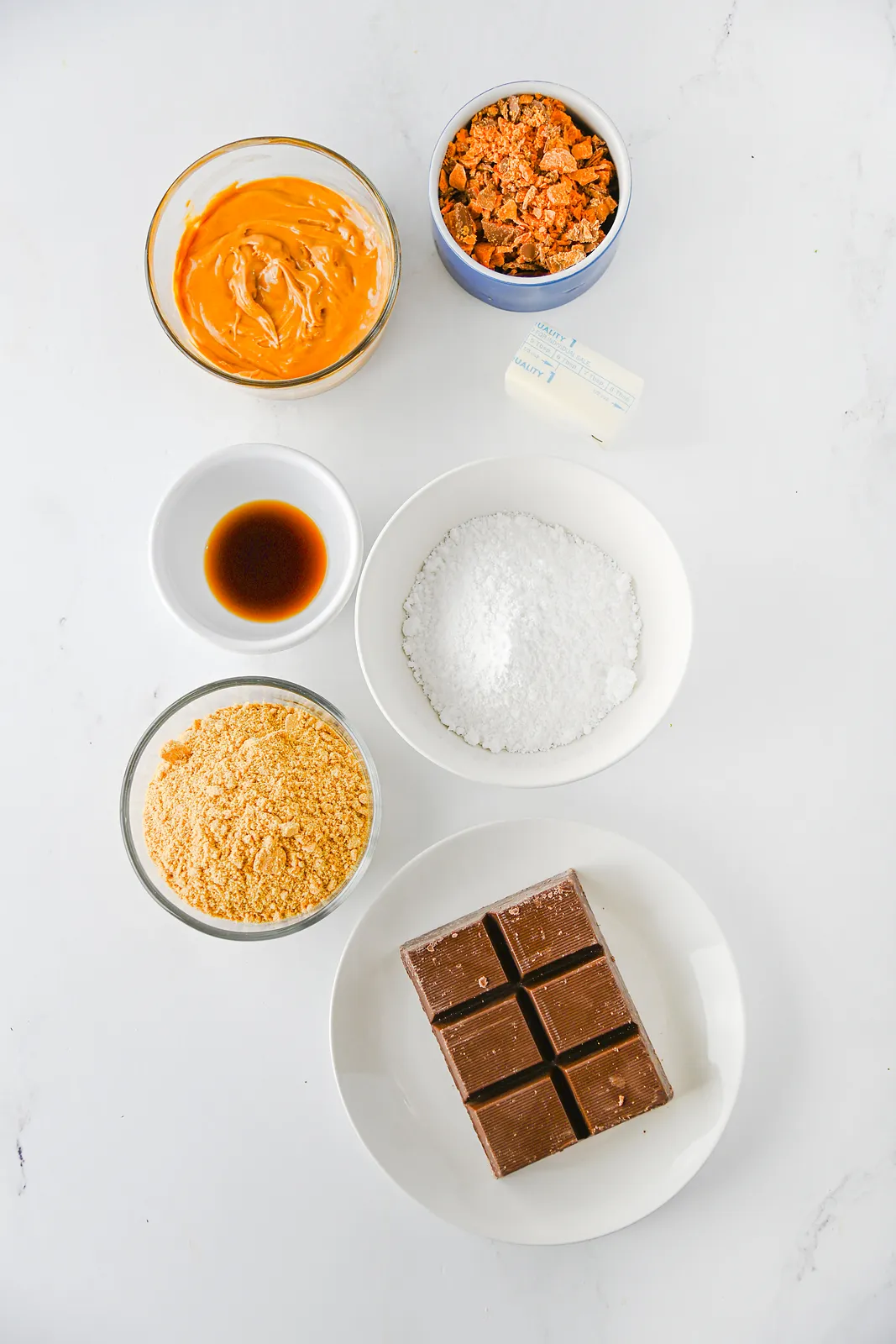
- Creamy peanut butter. One cup (about 250 g). A standard shop-bought jar works best; natural peanut butter separates and makes the mixture greasy.
- Unsalted butter. Four tablespoons (56 g), properly softened so it blends in without lumps.
- Vanilla extract. Half a teaspoon rounds out the sweetness.
- Powdered sugar. One cup (about 120 g). It sweetens and firms the filling at the same time.
- Graham cracker crumbs. Three quarters of a cup. They soak up the oils so the centres hold together. Digestive biscuits are a fine swap in the UK.
- Crushed Butterfinger. Half a cup, plus extra for the tops. I bash the bars in a freezer bag with a rolling pin.
- Chocolate almond bark. Twelve ounces (340 g). It’s made for coating, so it melts smoothly. If you only have chips, King Arthur Baking explains how to melt chocolate without it seizing.
What Are Butterfinger Balls?
Butterfinger balls are a no-bake peanut butter candy, a close cousin of buckeyes. Instead of a plain peanut butter centre, the filling is packed with crushed Butterfinger bars and graham cracker crumbs, which gives it that flaky, toffee-like crunch the candy bar is known for.
Some people call them Butterfinger truffles or Butterfinger bites. Either way, the idea is the same: a sweet, crunchy filling wrapped completely in chocolate, so every bite tastes like the real thing, only fresher.
How To Make Butterfinger Balls
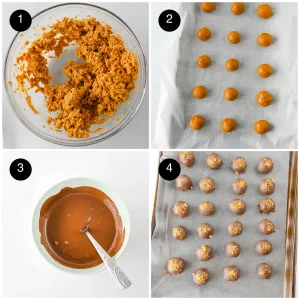
1. Mix the filling. First, add the peanut butter, softened butter, vanilla, powdered sugar, graham cracker crumbs and crushed Butterfinger to a large bowl. Mix until everything is well combined and the dough holds together when squeezed.
2. Line a tray. Next, line a baking sheet with parchment paper so nothing sticks later.
3. Roll the dough. Then roll the mixture into balls about 1 inch (2.5 cm) wide and set them on the parchment. You should get around 20.
4. Freeze. After that, freeze the tray for 30 minutes. Cold centres are far easier to coat because they won’t soften in the warm chocolate.
5. Melt the almond bark. Meanwhile, put the almond bark in a microwave-safe bowl and heat it in 30 second bursts, stirring well between each one, until smooth.
6. Coat each one. Now drop the chilled rounds into the chocolate one at a time, lift them out with a fork and let the excess drip back into the bowl.
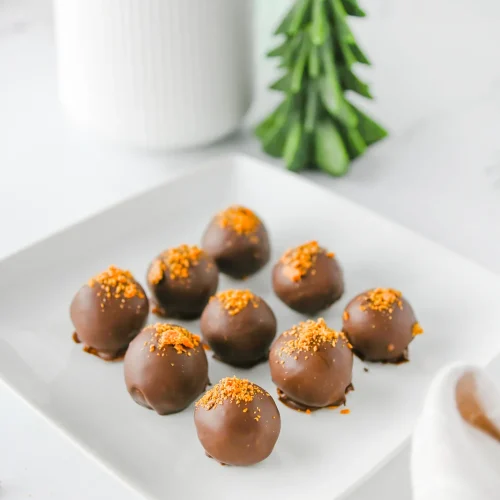
7. Top and set. Finally, return them to the parchment, sprinkle with extra Butterfinger crumbs straight away, and let the coating set for about an hour before serving.
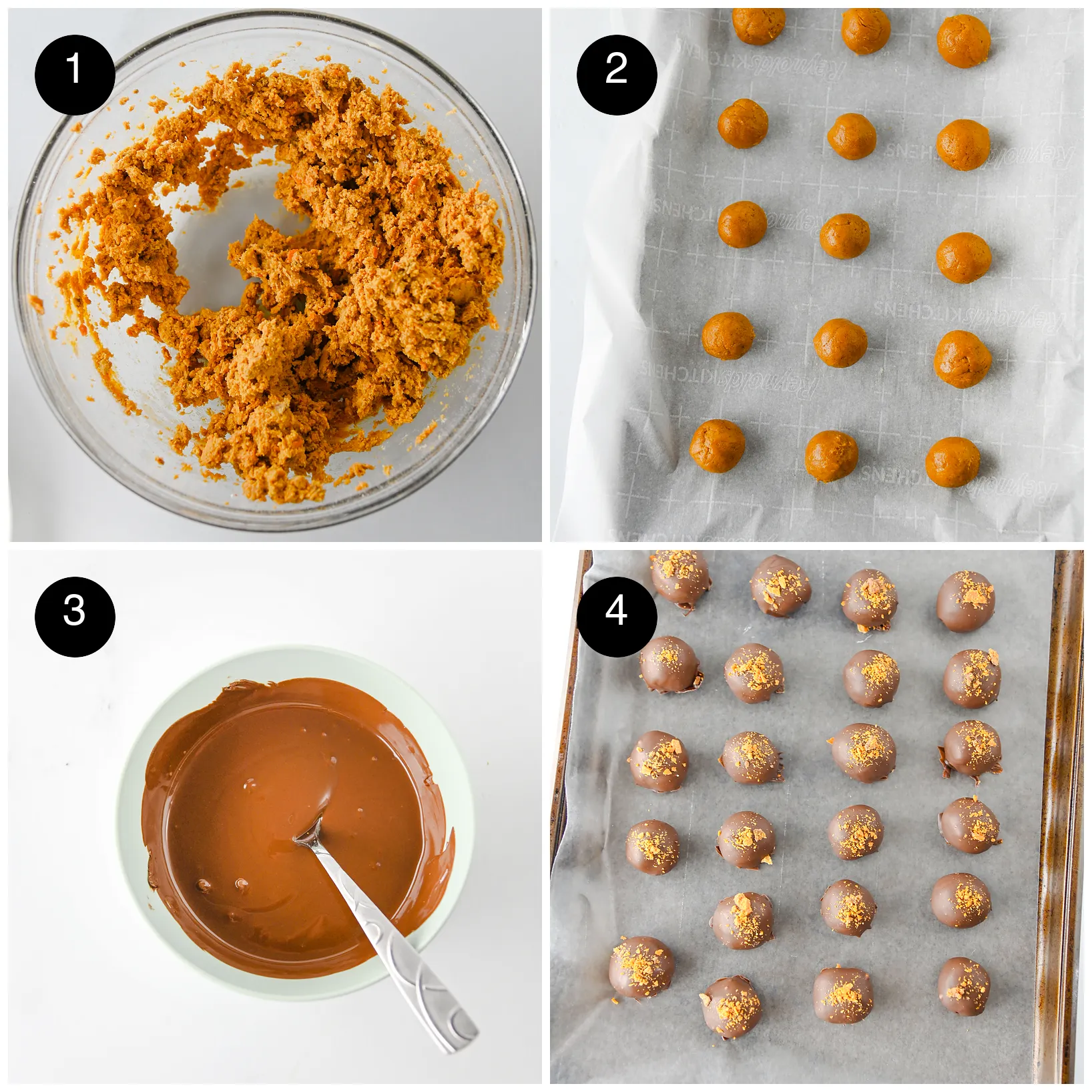
Parchment is all you need, although a half sheet silicone baking mat works just as well and the set chocolate pops straight off it.
Common Mistakes to Avoid
- Skipping the freeze. Soft centres fall apart on the fork and leave crumbs in your chocolate.
- Overheating the coating. Long blasts in the microwave scorch almond bark and make it thick and grainy. Short bursts and plenty of stirring keep it fluid.
- A sticky, wet filling. If the dough clings to your hands, add a spoonful more graham crumbs or powdered sugar.
- Waiting to add the topping. The crumbs only stick while the shell is wet, so sprinkle each one as you go.
Tips for the Best Butterfinger Balls
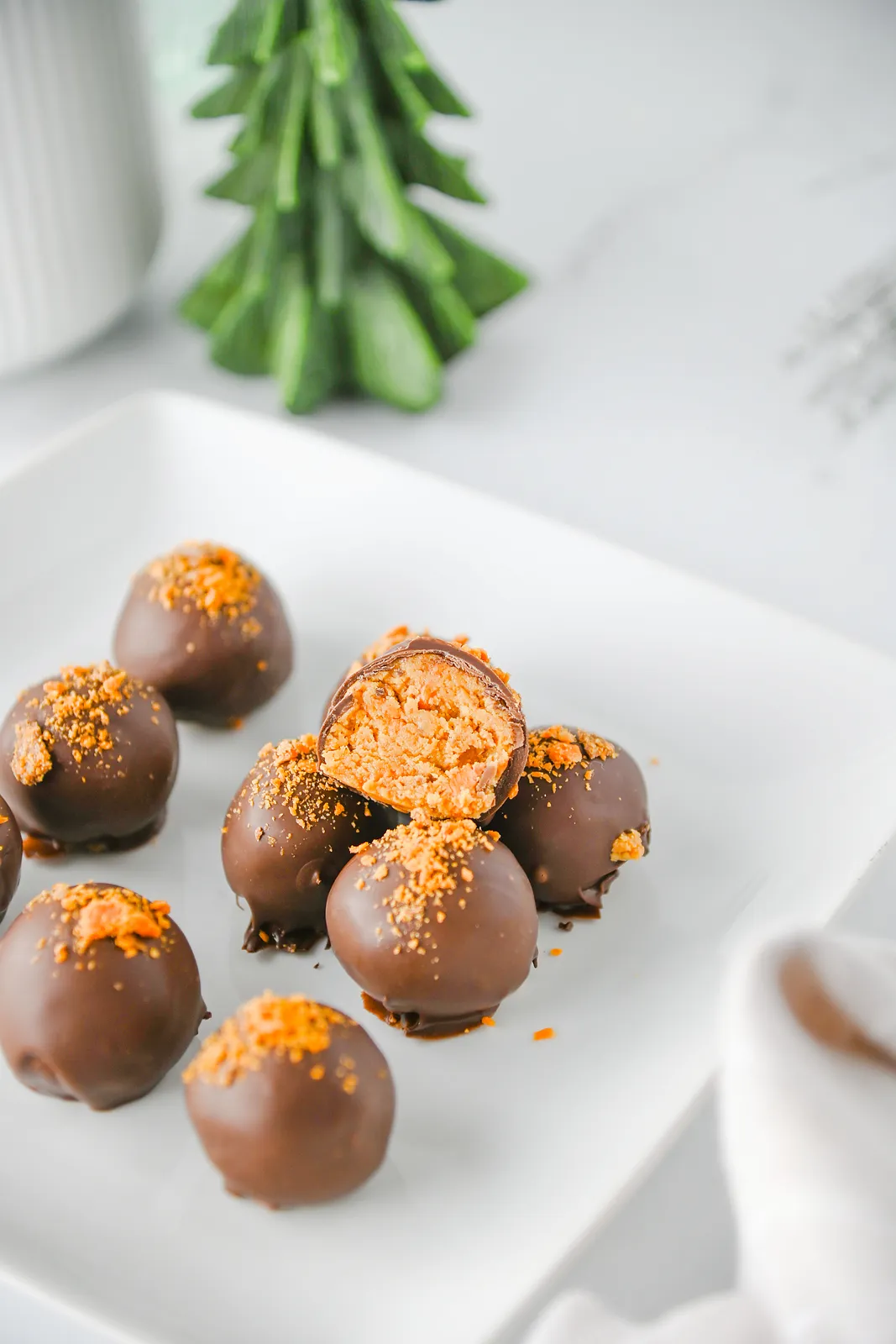
- Crush the candy bars finely for the filling, but leave the topping crumbs a little chunkier so they show.
- Use a small cookie scoop so every round is the same size and sets at the same time.
- Work in batches of five or six, leaving the rest in the freezer while you coat.
- Rest the fork on the rim of the bowl for a second to let the excess drip away; otherwise you get a puddle of chocolate at the base.
- If the almond bark starts to thicken, give it another 15 seconds in the microwave and stir.
A fork does the job, but a set of candy dipping tools makes it far easier to lift each ball out cleanly and let the extra coating drip away.
Storage and Make-Ahead
I keep these in an airtight container in the fridge, where they stay crisp and fresh for up to two weeks. Of course, they’re fine at room temperature for a day or two on a party table, although the shell softens a little in a warm kitchen.
For longer storage, freeze them in a single layer until hard, then pack them into a freezer bag with parchment between the layers. They keep for up to three months. In fact, I often eat them straight from the freezer, because the centre turns fudgy and the shell snaps.
Variations and Substitutions
- Buckeye style. Leave a small circle at the top uncoated so a bit of the peanut butter centre peeks through.
- Different chocolate. White or dark almond bark both work. A drizzle of white over milk chocolate looks lovely on a gift plate.
- Crunchy peanut butter. Swap it in for extra texture; the filling will be a touch less smooth.
- A lighter take. If you love the flavour but want fewer sweets around, my no-bake chocolate caramel bars borrow the same idea with wholesome ingredients.
- Allergy note. These are full of peanuts, so label them clearly when you share them. KidsHealth has a helpful guide to peanut allergy if you’re hosting children.
What to Serve With Butterfinger Balls
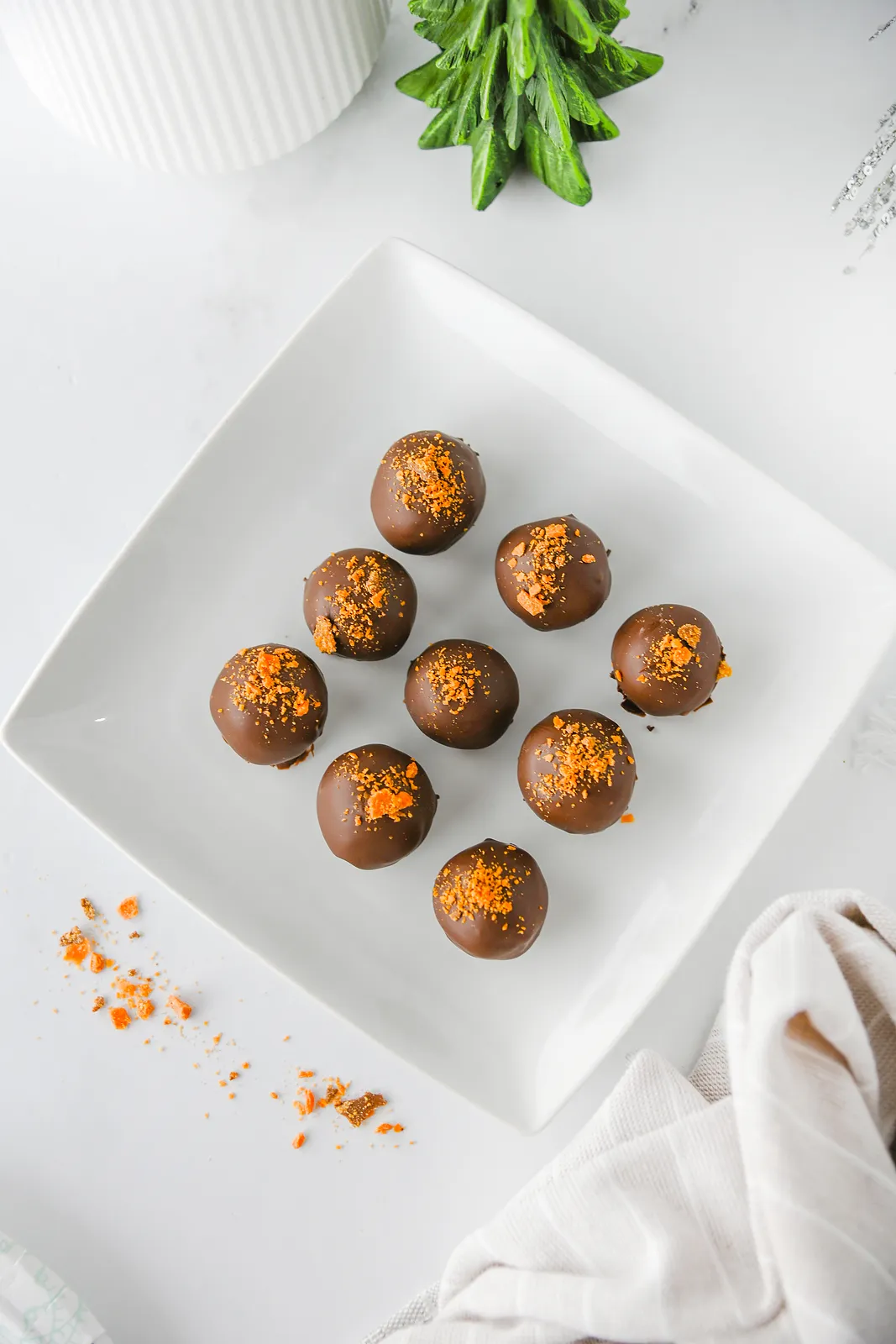
On a holiday sweets platter, I put them next to my no-bake peanut butter oat balls and a tray of freezer cookie dough balls baked fresh, so there’s something chewy alongside all that crunch.
For a lunchbox or afternoon snack, a couple of my energy balls make a good partner. Meanwhile, a strong cup of coffee or a glass of cold milk cuts through the sweetness nicely.
Frequently Asked Questions
Making Them
Can I use chocolate chips instead of almond bark for Butterfinger balls?
Yes. Chips are thicker when melted, so stir in a teaspoon of coconut oil or vegetable oil to help them coat smoothly.
How do I crush Butterfinger bars for candy balls?
Use a rolling pin. Put them in a sealed freezer bag and tap with a rolling pin. Fun-size bars are the easiest to measure.
Why is my peanut butter candy filling too soft to roll?
The butter was probably very soft or the kitchen is warm. Chill the bowl for 15 minutes, then roll. If it is still sticky, add a spoonful more graham crumbs or powdered sugar.
Storing and Serving
How long do Butterfinger balls last?
Butterfinger balls keep up to two weeks in the fridge and up to three months in the freezer, stored airtight.
Do Butterfinger balls need to be refrigerated?
They’re best kept chilled in an airtight container, where they stay crisp for up to two weeks. They’re fine at room temperature for a day or two on a party table, although the shell softens in a warm kitchen.
How many Butterfinger balls does one batch make?
About 20 at 1 inch (2.5 cm) each. Make them smaller for a bigger platter.
Are Butterfinger balls gluten free?
No, not as written. Graham cracker crumbs contain wheat, and digestive biscuits do too. Gluten free graham style crackers can be swapped in, but check the labels on the candy bars and almond bark as well.
How many calories are in a Butterfinger ball?
About 245 calories per ball, based on a batch of 20, with roughly 15 g fat and 19 g sugar. This is an estimate.
Ingredients
- 1 cup creamy peanut butter about 250 g
- 4 tbsp unsalted butter softened (56 g)
- 1/2 tsp vanilla extract
- 1 cup powdered sugar about 120 g
- 3/4 cup crushed graham crackers
- 1/2 cup crushed Butterfinger candy plus extra to top, optional
- 12 ounces chocolate almond bark 340 g
Instructions
- In a large mixing bowl, mix together the peanut butter, softened butter, vanilla extract, powdered sugar, graham cracker crumbs and crushed Butterfinger. Mix until well combined.

- Line a baking sheet with parchment.
- Roll the mixture into about 1 inch balls. Place onto the parchment.
- Freeze the balls for 30 minutes.
- Add the almond bark to a microwave safe bowl. Heat for 30 second increments, stirring well in between, until melted.
- Dip the balls into the almond bark to coat, letting the excess drip away.
- Place onto the parchment and sprinkle with extra Butterfinger crumbs.
- Allow the candy to set for about an hour, then enjoy.