 Bity
Bity
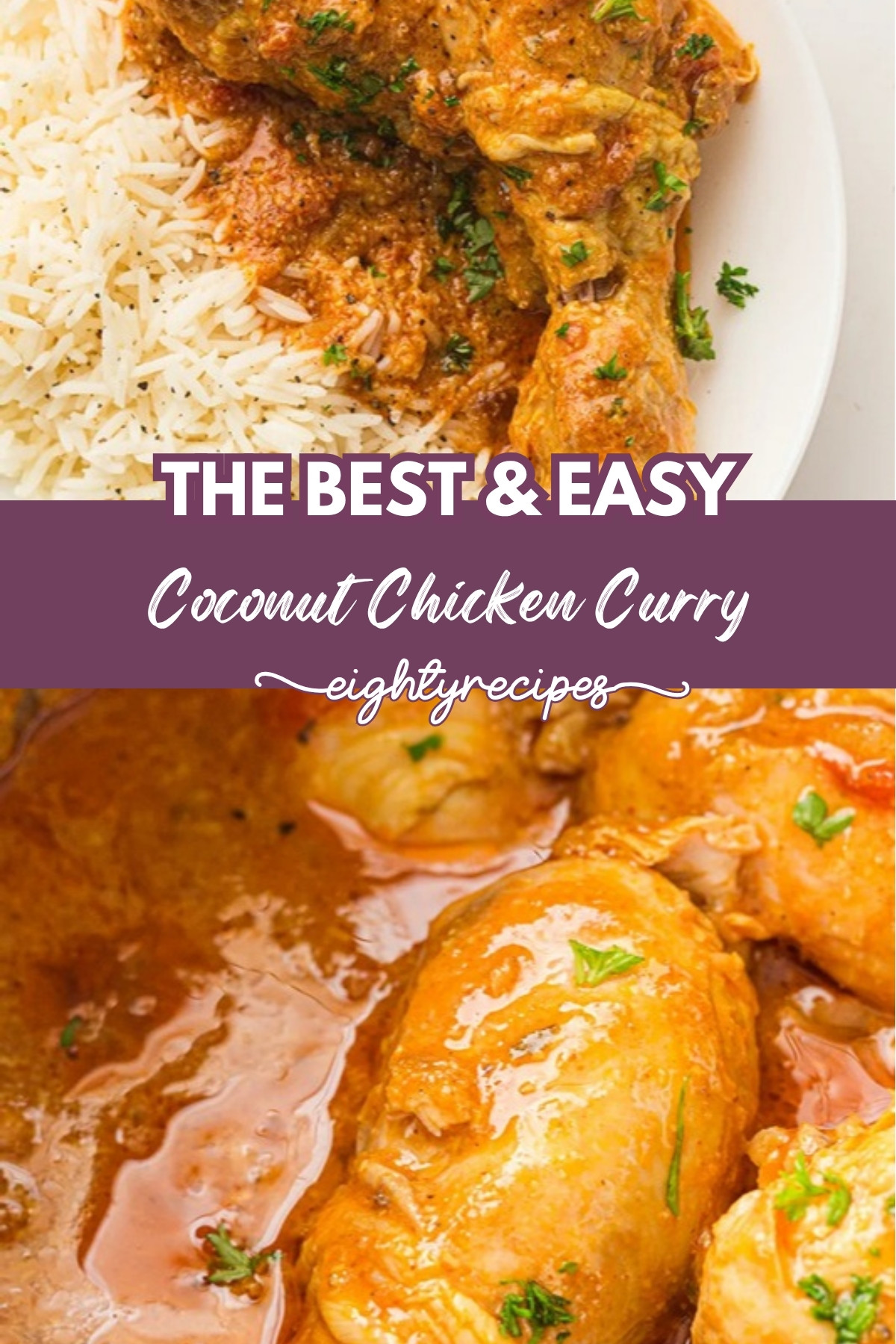
My coconut chicken curry is built on drumsticks and a block of creamed coconut, which is not how most recipes start, and I would argue that is exactly why it tastes better. Bone-in chicken gives the sauce something to hold onto over thirty five minutes of gentle simmering.
The creamed coconut is the other half of it. Dissolved in boiling water before it goes anywhere near the pan, it makes a sauce with far more body than a tin of coconut milk ever manages, and it never splits.
Quick Breakdown
Why You’ll Love This Coconut Chicken Curry
- One pot, forty five minutes. Because the drumsticks brown in the same pan as the sauce, there is nothing extra to wash.
- A sauce that clings. Creamed coconut is concentrated, so the finished curry coats rice instead of running off it.
- Cheap cuts, big flavour. Drumsticks cost a fraction of breast and give you far more from a long simmer.
- Mild enough for children. In fact, the heat here comes from curry powder rather than fresh chillies, so you decide how far to push it.
- Better the next day. Meanwhile the spices settle overnight and the sauce thickens further.
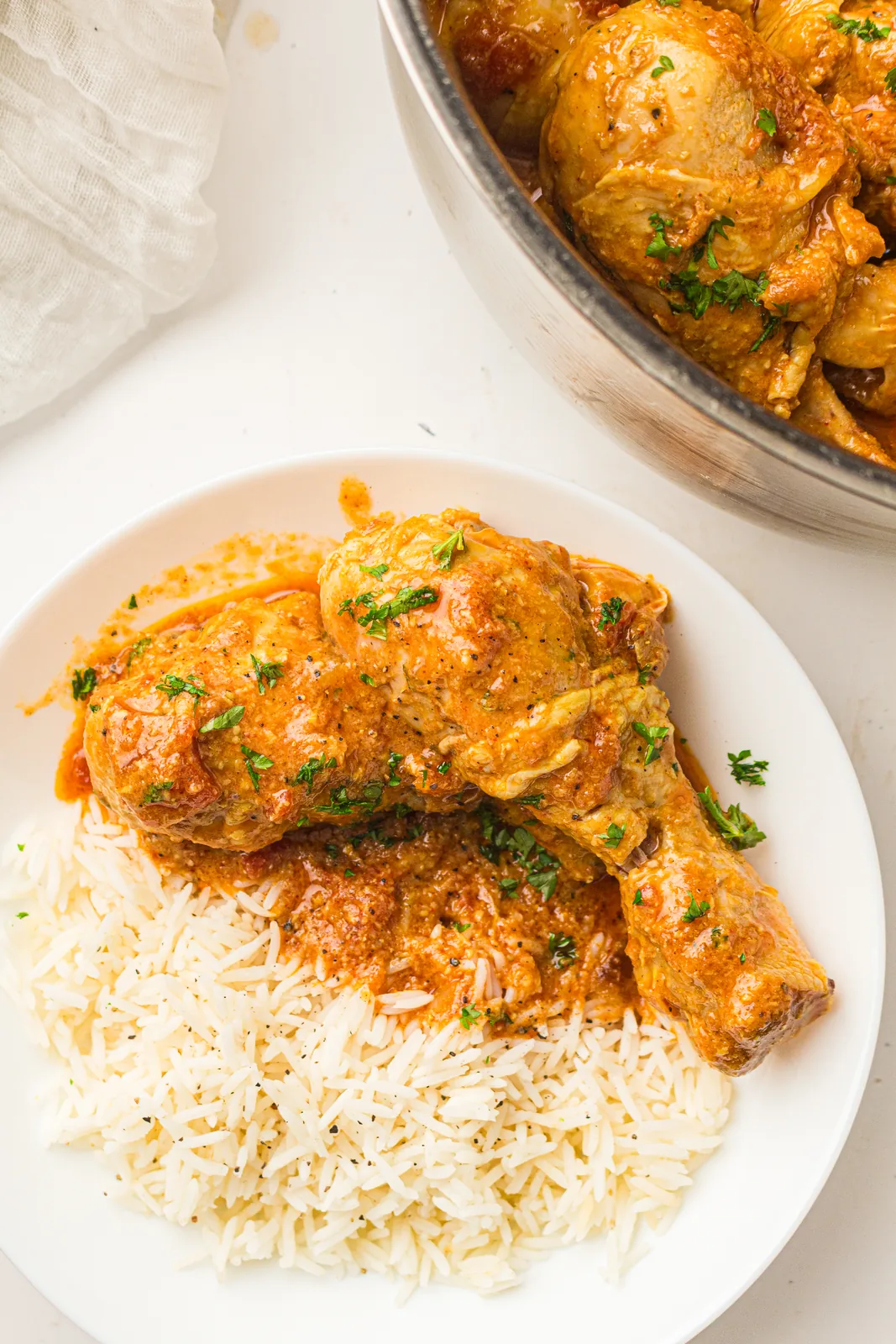
Ingredient Notes
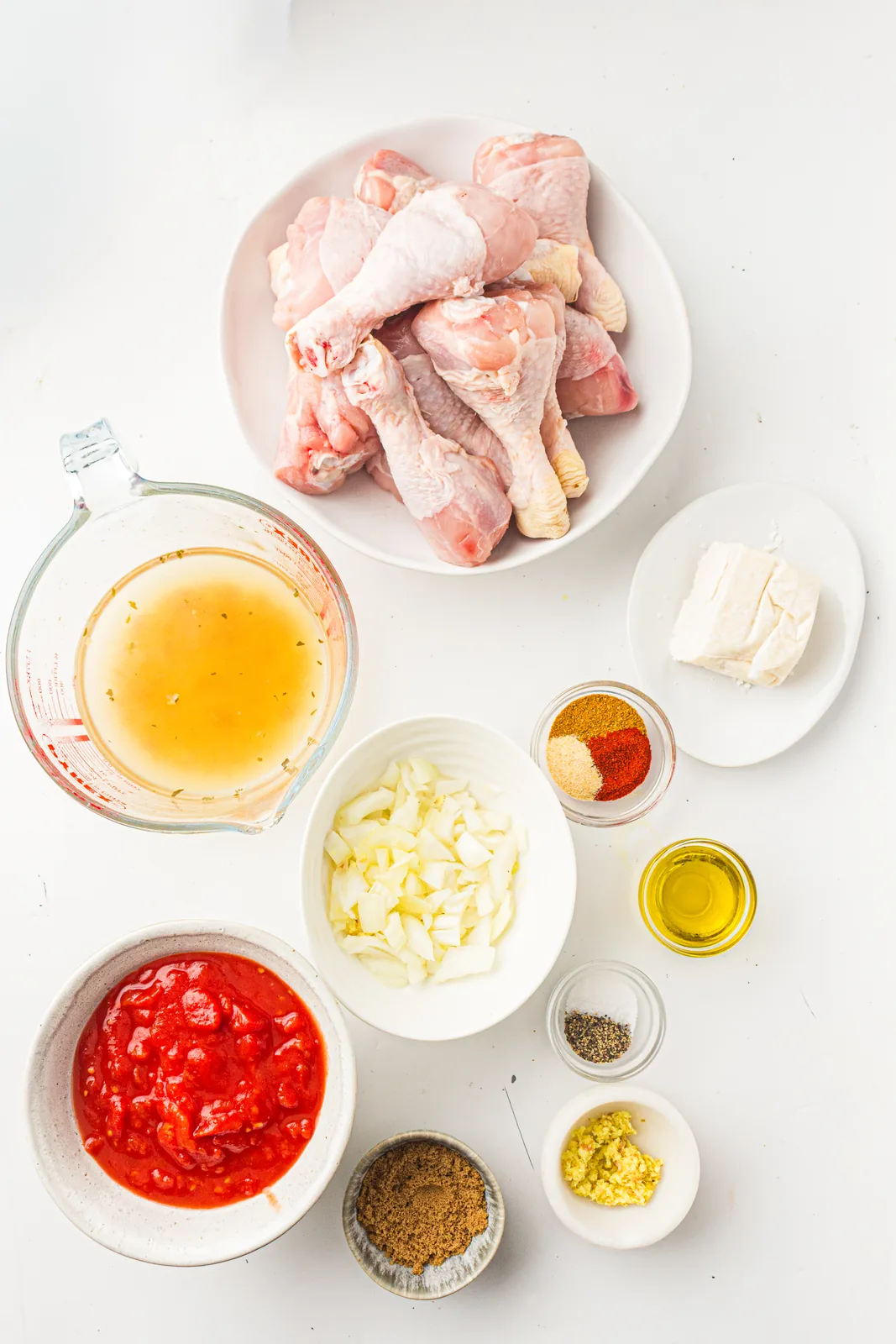
- Chicken drumsticks. Eight to ten, skin on. The skin renders into the sauce during browning and the bones add body you cannot fake.
- Creamed coconut. This is the solid block, not the tinned milk. Chop it and dissolve it in a cup of boiling water first, because dropping it in whole leaves stubborn white lumps.
- Curry powder. Two full tablespoons, and use a brand you like. However, toast it in the hot oil for thirty seconds before any liquid arrives or it will taste dusty.
- Fresh ginger and garlic. Grated rather than crushed, so they melt into the sauce. Still, jarred paste will do on a weeknight.
- Chopped tomatoes. One tin. They bring the acidity that stops the coconut fat sitting heavily on the tongue.
- Coconut, generally. It is high in saturated fat, and the Harvard Nutrition Source sets out where the evidence currently stands on that. As a result I treat this as a weekend dish rather than a nightly one.
Creamed Coconut, Coconut Milk, or Coconut Cream
These three are not interchangeable, and picking the wrong one is the most common reason a curry sauce ends up thin. Creamed coconut is a hard block of pure ground coconut flesh, so you control exactly how much water goes back in.
Coconut milk comes ready diluted, which means a tin brings roughly 350 ml of water into your pan along with the fat. That is fine, provided you cut the added liquid right back. Coconut cream sits between the two and works well if you thin it slightly.
So if you only have a tin of full fat coconut milk, use one and skip the extra water entirely. Meanwhile the block, dissolved in exactly the amount of water you choose, is what gives this coconut chicken curry its thickness.
Why Drumsticks Work Better Than Breast Here
Breast meat is done in twelve minutes and dry by twenty, which is a problem for a coconut chicken curry. Because this sauce needs half an hour to reduce and mellow, breast simply cannot stay in the pan long enough to be part of it.
Drumsticks are the opposite. Connective tissue and collagen break down slowly, and by the thirty minute mark the meat is falling off the bone while the sauce has picked up gelatine and gloss. Boneless thighs are the next best thing if you want something easier to eat.
How To Make Coconut Chicken Curry
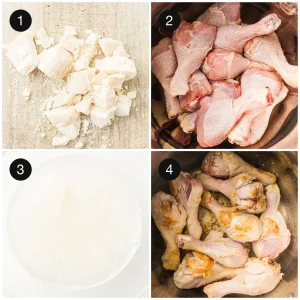
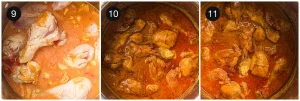
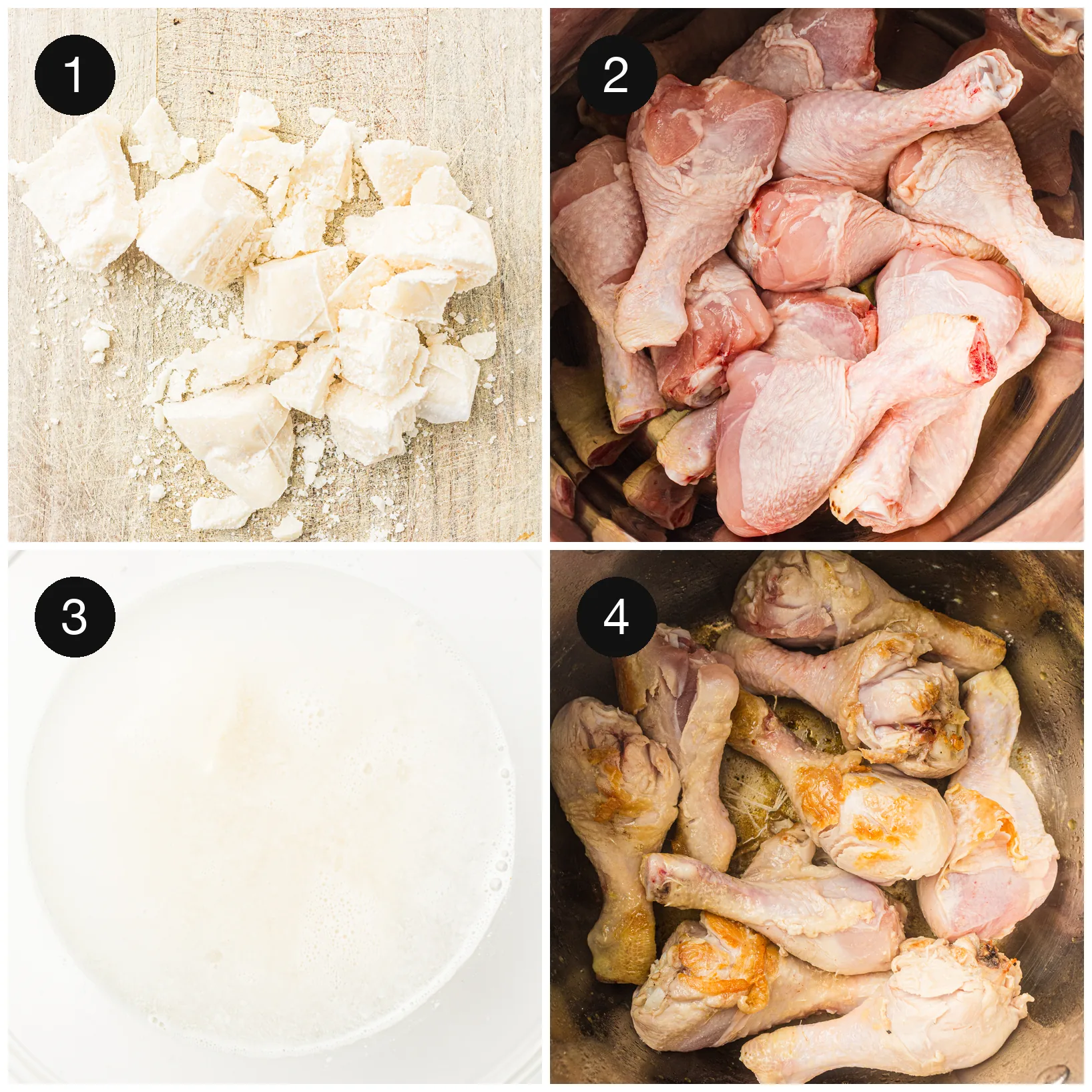
1. Dissolve the coconut first. First chop the creamed coconut into small cubes, tip them into a jug, pour over about a cup of boiling water, and stir until completely smooth. Set it aside.
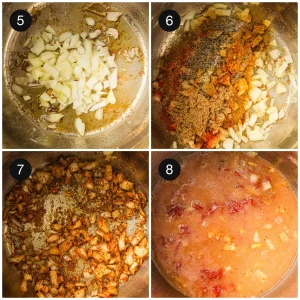
2. Brown the drumsticks. Next heat the oil in a large pot over medium heat and colour the chicken lightly on all sides. Then lift the pieces out onto a plate.
3. Soften the onion. Then add the diced onion to the same pan and cook it for about five minutes until soft and translucent, scraping up anything stuck to the base.
4. Toast the aromatics and spices. After that stir in the garlic and ginger for a minute, then the curry powder, paprika, salt, and pepper for another thirty seconds. It should smell fragrant rather than raw.
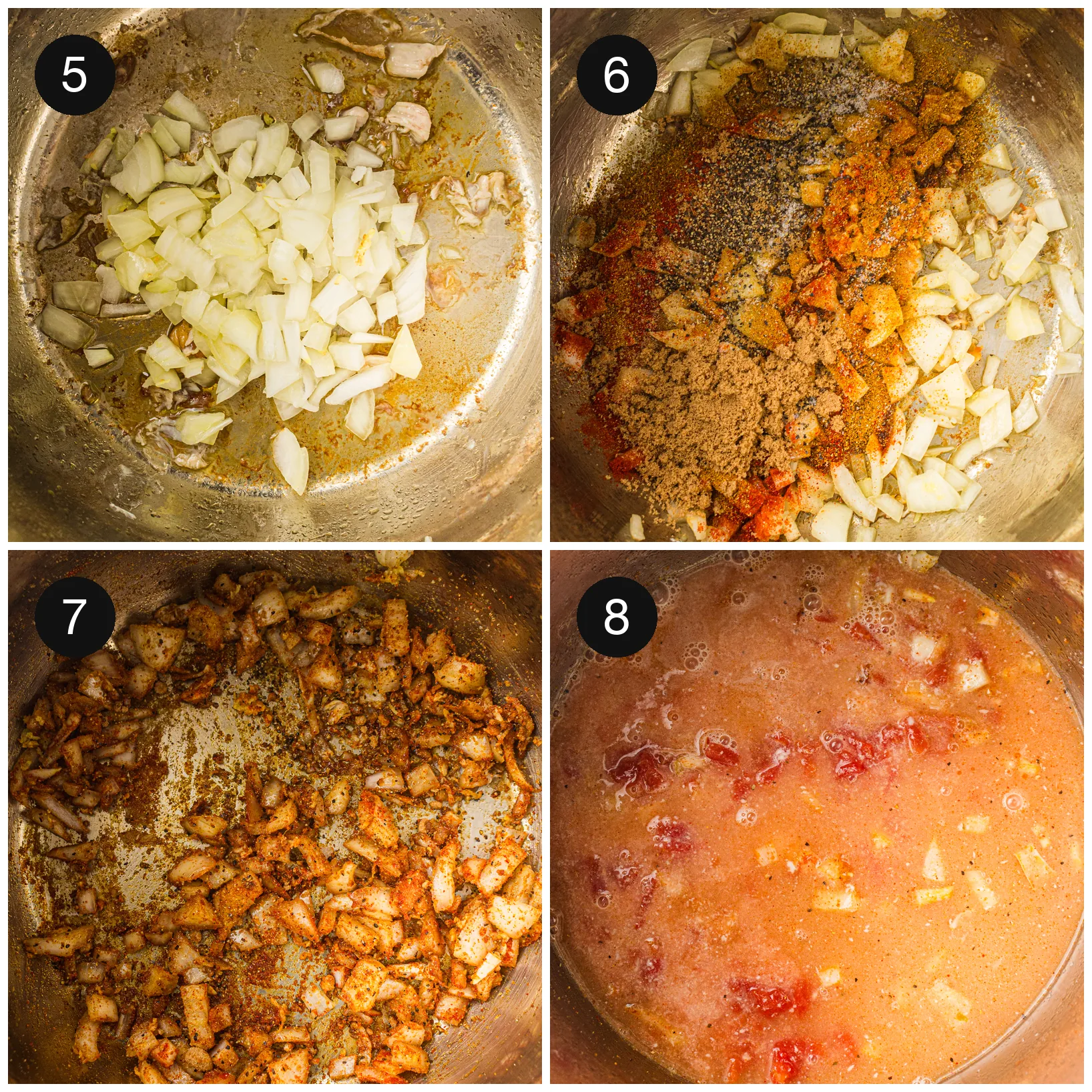
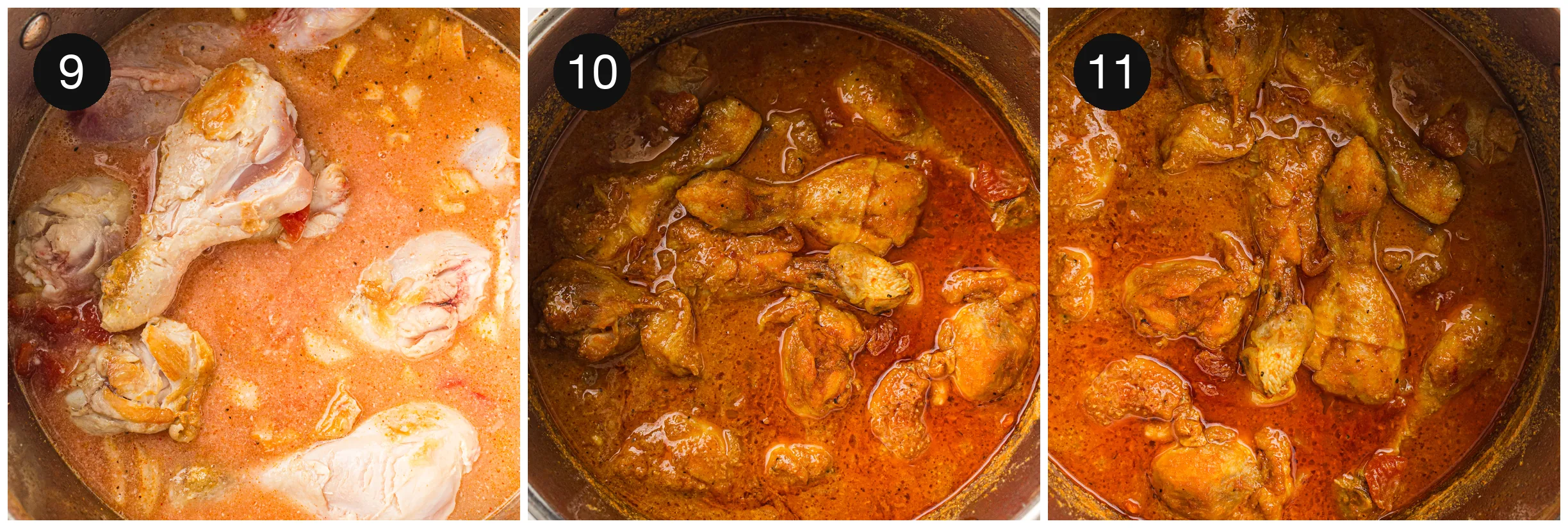
5. Build the sauce. Meanwhile add the chopped tomatoes and the dissolved coconut mixture, then loosen with hot water or broth until the sauce moves easily in the pan.
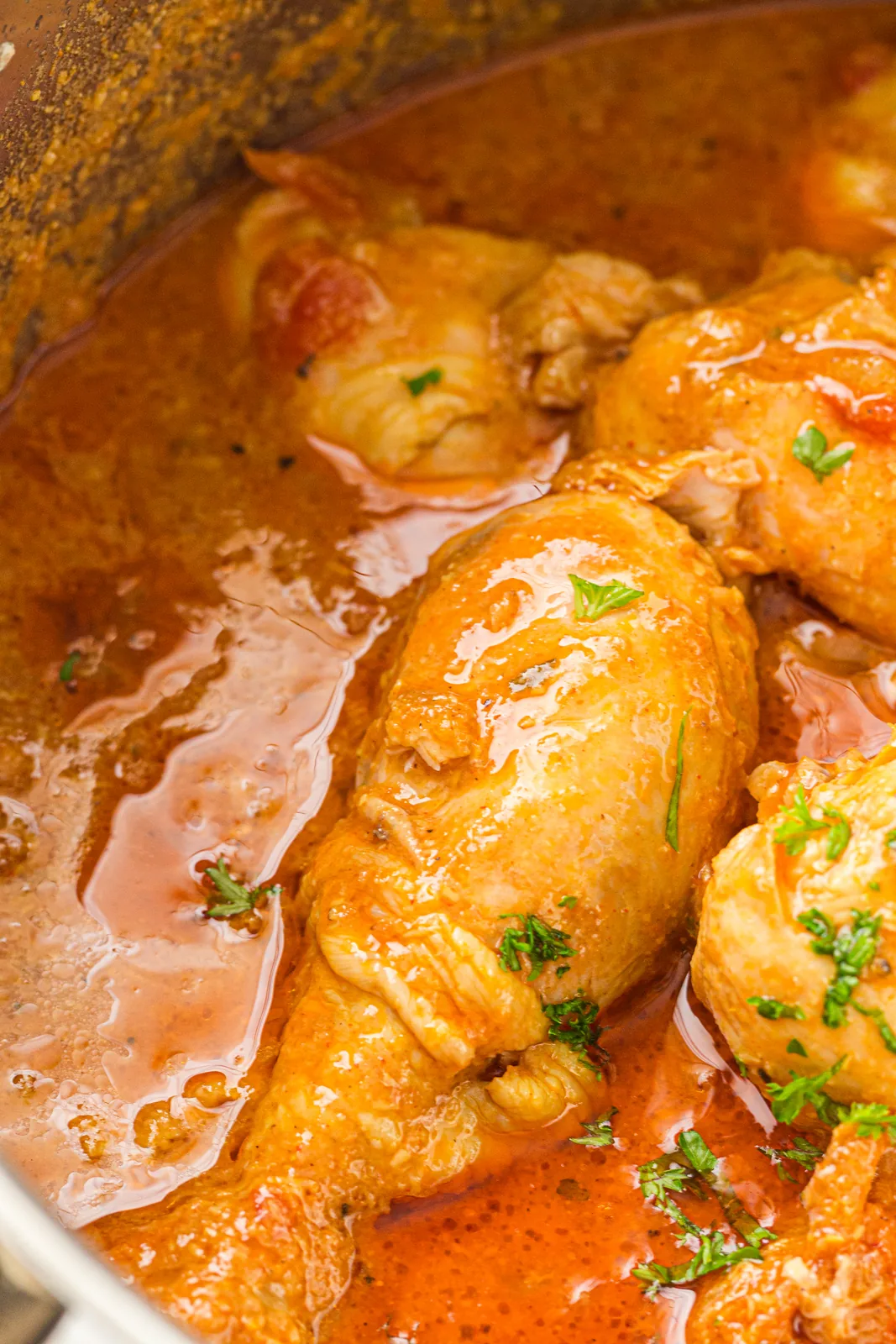
6. Simmer it down. Finally return the drumsticks, cover, and cook gently for 30 to 35 minutes until the meat is tender. Taste, add the brown sugar if the tomatoes are sharp, and adjust the salt.
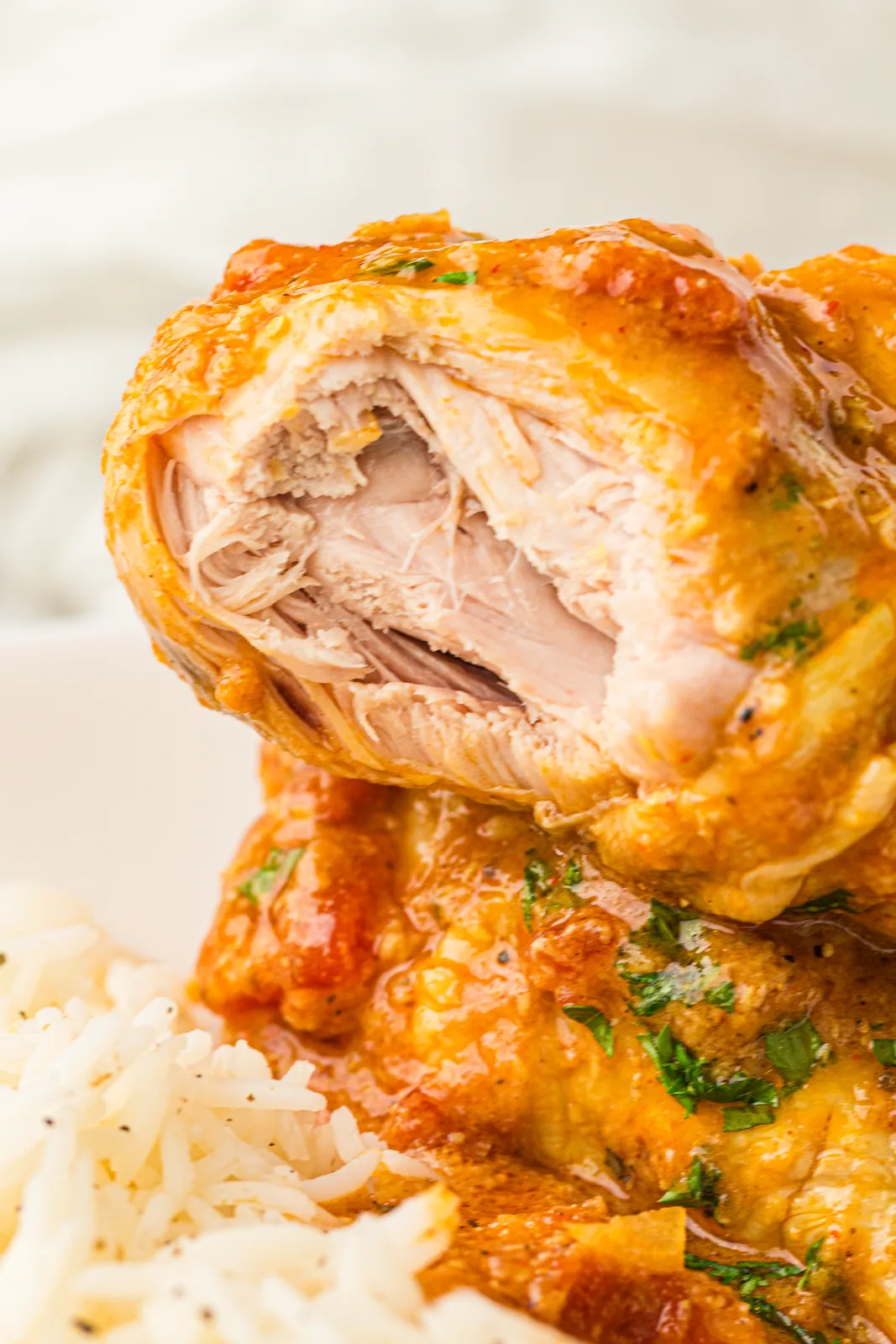
With bone in pieces I like to check the thickest drumstick with an instant read thermometer, away from the bone; around 175°F is where the meat pulls away cleanly.
Curry Mistakes Worth Avoiding
- Adding the coconut block whole. It never fully dissolves in a busy pan and you end up chasing white lumps around the sauce.
- Skipping the browning. Because the colour on the skin is where a lot of the flavour comes from, pale chicken gives a flatter curry.
- Dumping in raw curry powder with the liquid. Untoasted spice tastes chalky and stays that way.
- Boiling instead of simmering. A hard boil can split the coconut fat and toughen the meat at the same time.
- Salting only at the end. Season the onion stage too, or the sauce tastes seasoned on the surface and bland underneath.
Tips for the Best Coconut Chicken Curry
- Slash each drumstick twice down to the bone before browning. As a result the sauce gets right into the meat.
- If the sauce looks thin at the end, lift the lid for the last ten minutes and let it reduce.
- A teaspoon of brown sugar is not about sweetness. In fact, it balances tinned tomato acidity and makes the whole pan taste rounder.
- Finish with a squeeze of lime and a handful of coriander. Otherwise a coconut sauce can feel one-note.
- Let the coconut chicken curry sit off the heat for ten minutes before serving. Meanwhile the sauce thickens and the flavours settle.
Storage and Reheating
- Fridge. Cool the coconut chicken curry quickly, then store it in an airtight container for up to 3 days. However, the flavour genuinely improves overnight.
- Freezer. Freeze for up to 2 months. Because there is no dairy here, it thaws cleanly without splitting.
- Reheating. Warm gently on the hob with a splash of water. Meanwhile avoid a hard boil, which can make the sauce grainy.
Variations and Substitutions
- Boneless thighs. Cut into chunks and reduce the simmer to about 20 minutes. Easier to serve to children.
- Add vegetables. Diced potato or sweet potato goes in with the tomatoes, while spinach wilts in at the very end.
- Make your own broth. Instant pot chicken stock instead of water makes a noticeable difference to the sauce.
- Same cut, different treatment. If you have drumsticks and want them crisp instead of saucy, try fried chicken drumsticks or air fryer chicken drumsticks. Coconut has a long history in cooking beyond curry, and Cleveland Clinic runs through what the flesh, water, and milk each bring.
What to Serve With This Curry
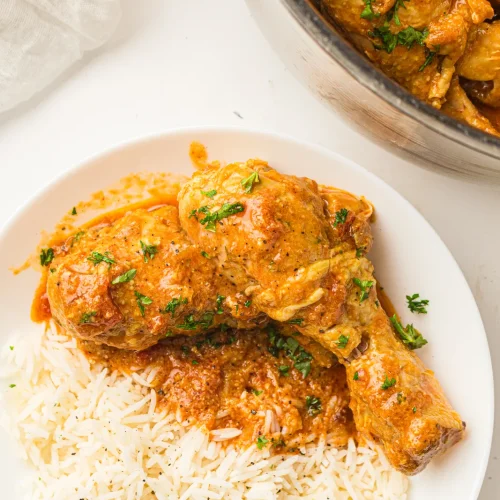
Coconut chicken curry wants rice, obviously, and the plainer the better so it can soak up the sauce. Instant pot white rice is ready in the time the curry rests, which is how I usually time it.
Warm naan or flatbread for mopping is the other essential. In addition, something sharp on the side helps, whether that is a cucumber and yoghurt raita or simply a wedge of lime.
If you would rather not watch a pan of rice at all, a small rice cooker does it for you and keeps it warm while the curry rests.
Frequently Asked Questions
Ingredients and Method
What does coconut do for a chicken curry?
Fat and body. It carries the fat soluble flavour compounds in the spices, and it softens the acidity of the tomatoes. Because of that, the sauce tastes rounder than a tomato-only curry.
Can I use coconut milk instead of creamed coconut?
Yes. Use one full fat tin and skip the extra water entirely, since the tin already contains plenty.
Why dissolve the creamed coconut first?
It is concentrated and solid at room temperature. Instead of melting evenly in a busy pan, it clumps, so a jug of boiling water and a spoon sorts it out in advance.
Is this curry spicy?
Coconut chicken curry is mild as written here. Still, curry powders vary a lot, so taste yours first and add cayenne or a chopped chilli if you want more.
Troubleshooting and Storage
My curry is too thick. What now?
Add hot water or broth a splash at a time until it loosens. Meanwhile check the salt again, because thinning it also dilutes the seasoning.
Why did my sauce split?
Almost always too high a heat. Coconut fat separates under a hard boil, so keep it at a lazy simmer and it will stay together.
Can I make it ahead?
Of course, and I would. Cook it a day early, cool it, and reheat gently. The spices deepen overnight.
Ingredients
- 8 to 10 chicken drumsticks skin on
- 1 tablespoon oil
- 1 large onion diced
- 3 cloves garlic minced
- 1 tablespoon ginger grated
- 2 tablespoons curry powder
- 1 teaspoon paprika
- 1 teaspoon salt
- 1/2 teaspoon black pepper
- 100 g creamed coconut the solid block, chopped
- 1 can chopped tomatoes 400 g
- 1 to 1 1/2 cups hot water or chicken broth 240 to 360 ml
- 1 teaspoon brown sugar optional
Instructions
- Chop the creamed coconut into small cubes and place it in a bowl. Pour over about 1 cup of boiling water and stir until fully dissolved and smooth.

- Heat the oil in a large pot over medium heat.
- Add the chicken drumsticks and brown them lightly on all sides, then remove and set aside.
- Add the diced onion to the pot and saute for about 5 minutes until soft.
- Stir in the garlic and ginger and cook for 1 minute until fragrant.
- Add the curry powder, paprika, salt, and black pepper and cook for about 30 seconds to toast the spices.
- Add the chopped tomatoes and the dissolved creamed coconut mixture.
- Add additional hot water or chicken broth if needed so the sauce is loose enough to simmer.
- Return the chicken drumsticks to the pot.

- Cover and simmer gently for 30 to 35 minutes until the chicken is fully cooked and tender.
- Taste the sauce, stir in the brown sugar if the tomatoes are sharp, and adjust the seasoning.