 Bity

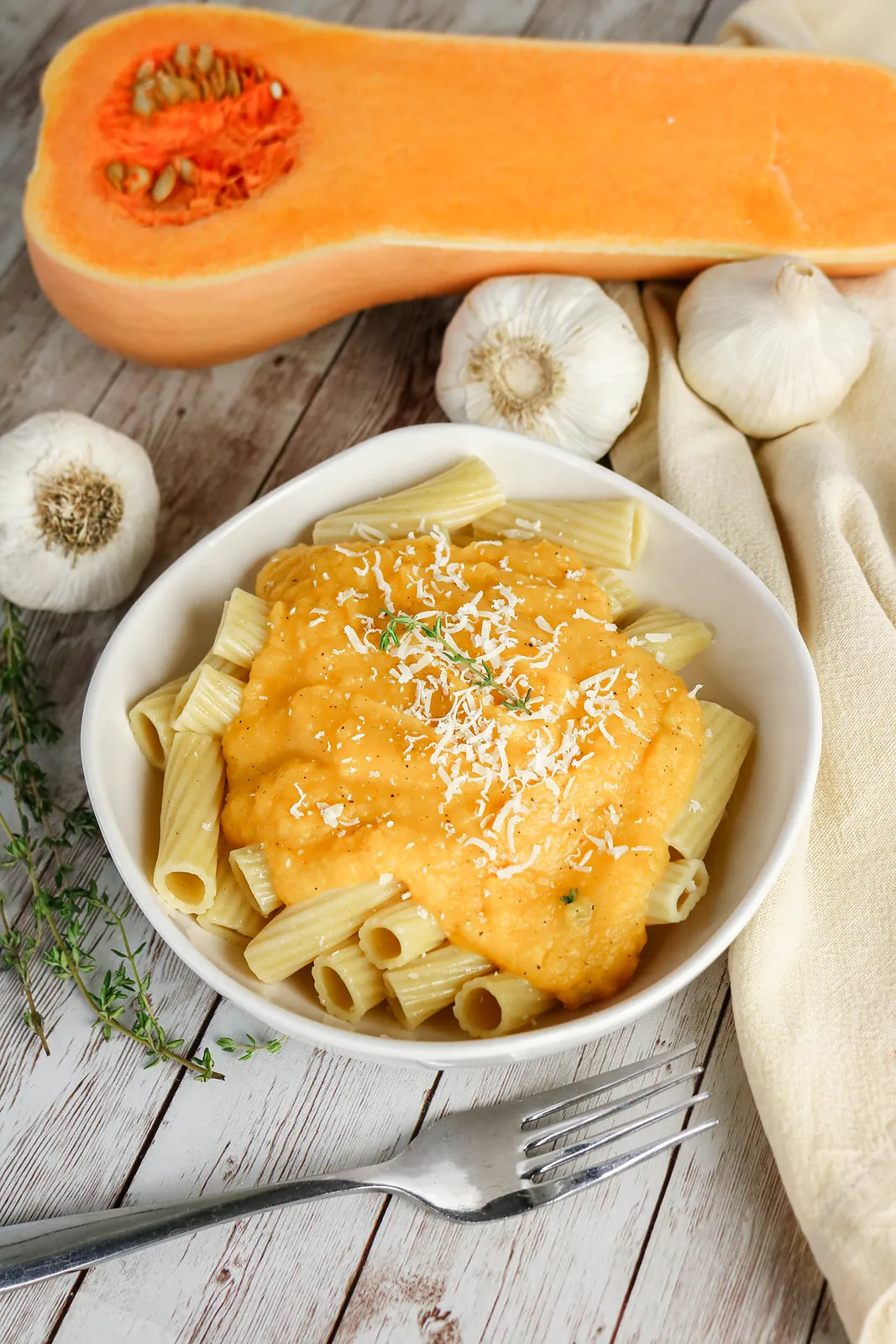
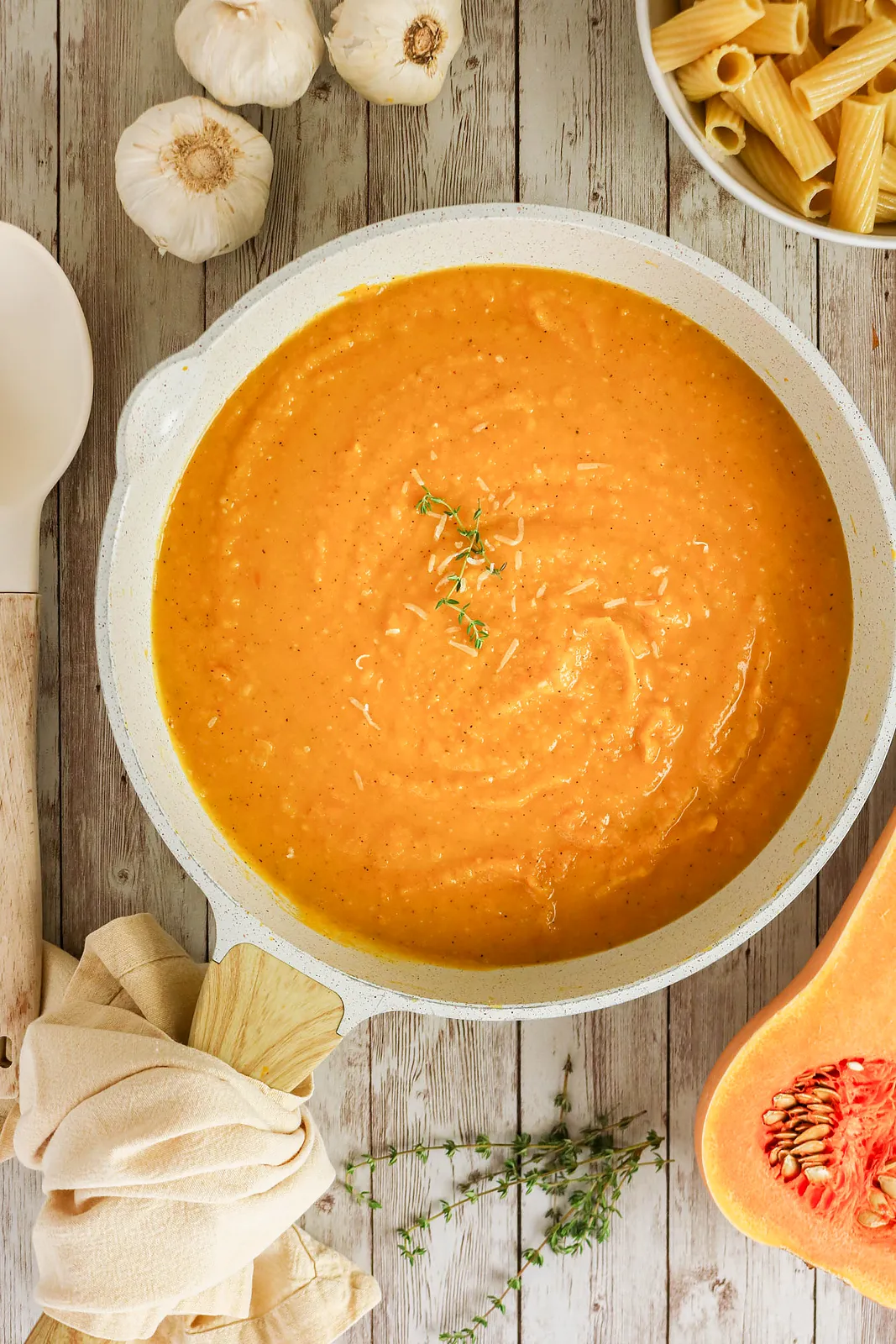
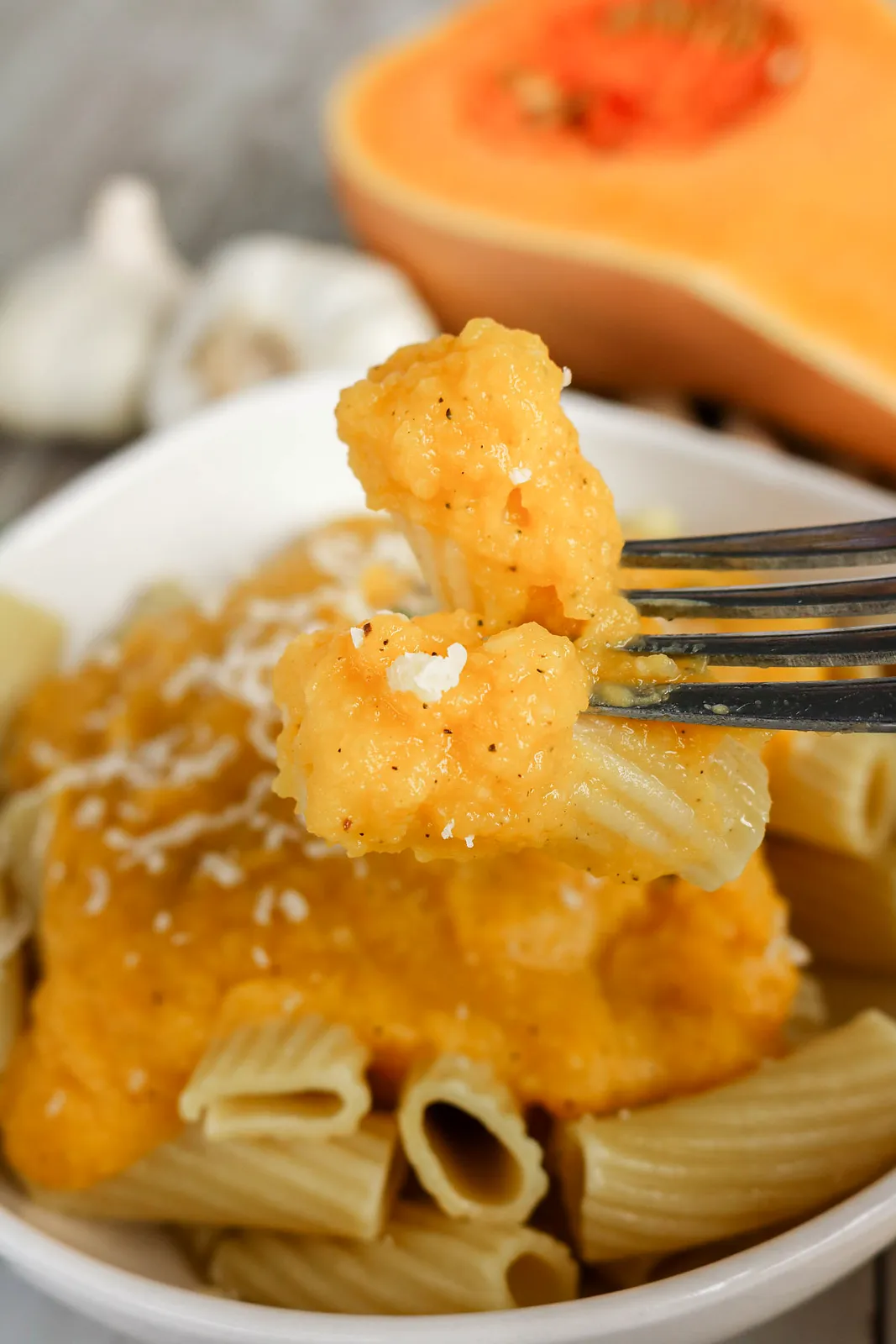
This roasted butternut squash pasta sauce is what I make when I want something creamy and comforting but cannot face another pot of tomato sauce. Sweet caramelised squash, soft onion and garlic are blended with stock until velvety, then finished with a splash of milk, Parmesan and a whisper of nutmeg. It is rich without a drop of heavy cream.
In short, this is a roasted squash sauce: cubed butternut squash is roasted at 400°F (200°C), blended with softened onion, garlic and broth, then simmered with milk and Parmesan. It takes 45 minutes, makes about 4 cups (6 servings) and comes to about 170 calories per serving for the sauce alone.
My children call it “orange pasta” and ask for it by name, which still surprises me, given that the whole thing is mostly vegetable. I love it because the oven does the hard work, the sauce freezes beautifully, and one medium squash makes about 4 cups, enough for dinner tonight and another next week.
Quick Breakdown
Why You’ll Love This Butternut Squash Pasta Sauce
- Creamy without cream. The blended squash gives all the body, so 1/2 cup of milk is plenty.
- Roasted, not boiled. Roasting concentrates the squash and browns its edges, which is where the deep, almost nutty flavour comes from.
- Hidden vegetables. It looks and eats like a cheese sauce, so fussy eaters rarely ask questions.
- Batch friendly. One recipe makes about 4 cups, which serves six to eight, and it freezes well.
- Easily vegetarian. Simply use vegetable broth in place of chicken.
Ingredient Notes
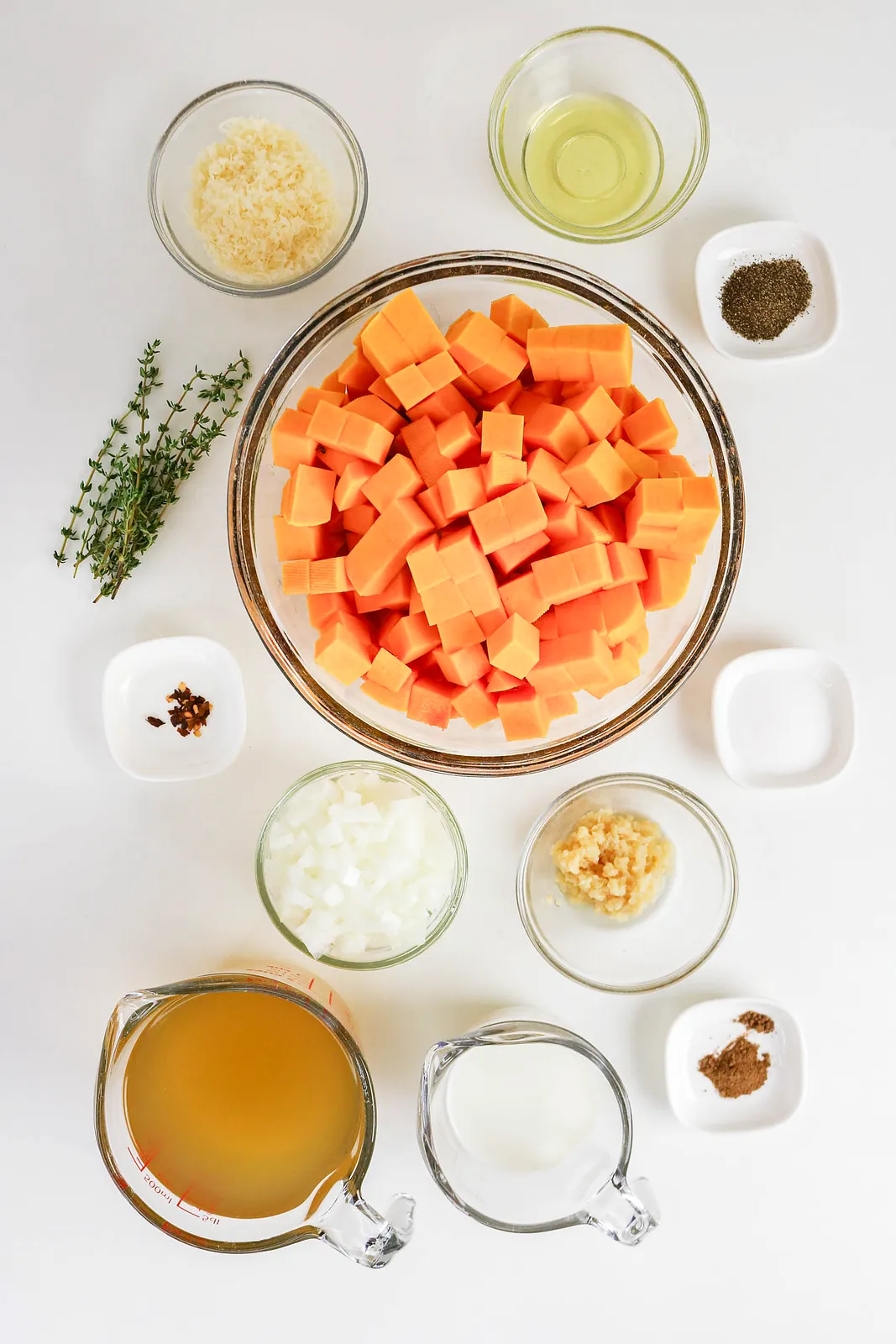
- Butternut squash. 1 medium squash, about 2 to 3 pounds (0.9 to 1.4 kg), peeled, seeded and cubed. Look for one that feels heavy for its size with matte, unblemished skin.
- Olive oil. 2 tablespoons in total, for roasting the squash and softening the onion.
- Yellow onion. 1 small, chopped. It adds a savoury backbone so the sauce is not one-note sweet.
- Garlic. 3 cloves, minced.
- Broth. 2 cups (480 ml) of chicken broth, or vegetable broth to keep it meat free.
- Milk or half-and-half. 1/2 cup (120 ml). Milk keeps it light; half-and-half makes it a touch more luxurious.
- Parmesan. 1/3 cup, grated. Freshly grated melts in smoothly, whereas the pre-grated kind can turn grainy.
- Seasoning. 1 teaspoon salt (adjust to taste), 1/2 teaspoon black pepper and 1/4 teaspoon nutmeg. The nutmeg is optional, but it adds a lovely warmth.
- Optional extras. A pinch of red pepper flakes for heat, and fresh sage or thyme for a herby finish.
Besides tasting good, butternut squash pasta sauce earns its place nutritionally. Cleveland Clinic explains that butternut squash is rich in vitamin A, fibre and potassium, which is a pleasing thing to know about a sauce this silky.
What Does Butternut Squash Sauce Taste Like?
Butternut squash pasta sauce sits halfway between a mild cheese sauce and a smooth soup. It is naturally sweet and a little nutty from the roasted squash, savoury from the onion, garlic and Parmesan, and gently warm from the nutmeg. Because there is no tomato, it is far less acidic than a marinara, so it suits anyone who finds red sauces sharp.
The Best Pasta for Butternut Squash Sauce
A thick, clingy butternut squash pasta sauce wants a shape with ridges or hollows to hold it. Here are my favourites and why they work.
| Pasta | Why it works |
|---|---|
| Rigatoni | Wide tubes and ridges trap the sauce inside and out |
| Penne | A weeknight staple that scoops up sauce in every piece |
| Fettuccine | Broad ribbons carry a creamy coating beautifully |
| Shells or orecchiette | Little cups that fill with sauce |
| Cheese ravioli or gnocchi | Turns the sauce into a richer, more filling dinner |
As a guide, this batch comfortably coats 1 pound (450 g) of dried pasta with a little left over.
How To Make Butternut Squash Pasta Sauce
Roast and Soften
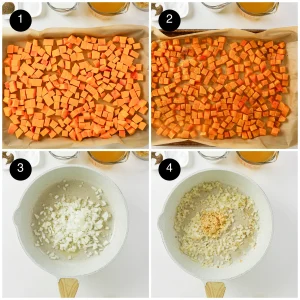
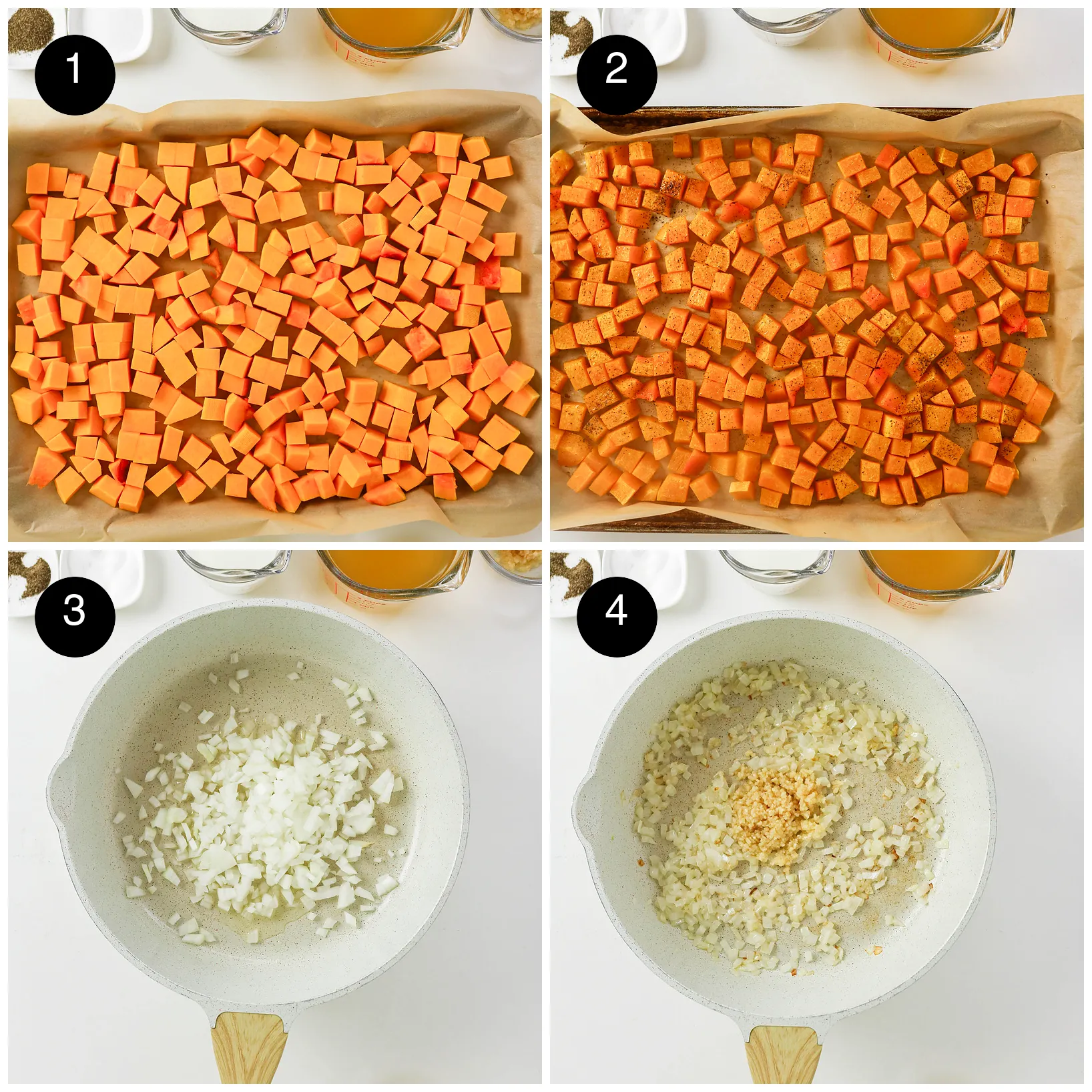
1. Roast the squash. First, heat the oven to 400°F (200°C). Toss the cubed squash with about half of the olive oil and spread it in a single layer on a half sheet pan; I line mine with parchment paper to save on washing up. Roast for 25 to 30 minutes, until the cubes are tender and lightly caramelised at the edges.
2. Soften the onion. Meanwhile, warm the remaining oil in a large skillet over medium heat. Add the onion and cook for 5 to 7 minutes, stirring now and then, until soft and translucent.
3. Add the garlic. Next, stir in the garlic and cook for 1 more minute, just until it smells fragrant. Garlic burns quickly, so do not walk away.
Blend and Simmer
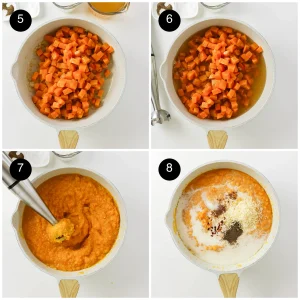
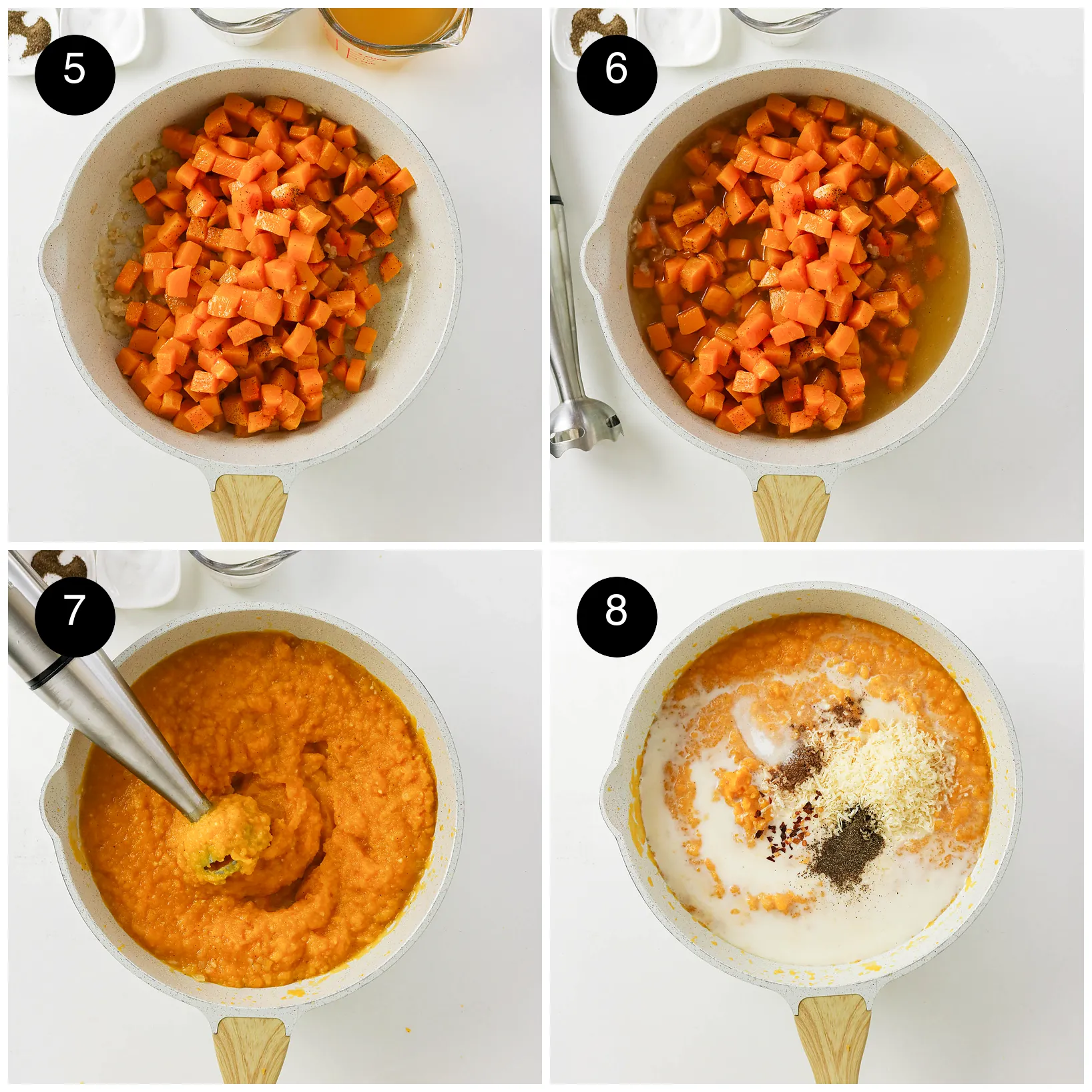
4. Blend until smooth. Then tip the roasted squash into the skillet with the onion and garlic and pour in the broth. Blend right in the pan with an immersion blender until completely smooth and creamy. Alternatively, transfer everything to a countertop blender, blend, and pour it back into a saucepan.
5. Finish the sauce. After that, set the pan over medium heat and stir in the milk, Parmesan, salt, pepper and nutmeg. Let it simmer gently for 5 to 10 minutes, until slightly thickened.
6. Taste and adjust. Add more salt or pepper if it needs it. If the sauce is too thick, loosen it with a splash of broth or some reserved pasta water.
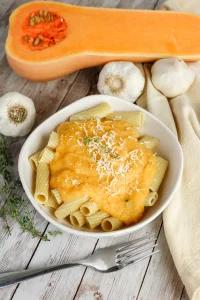
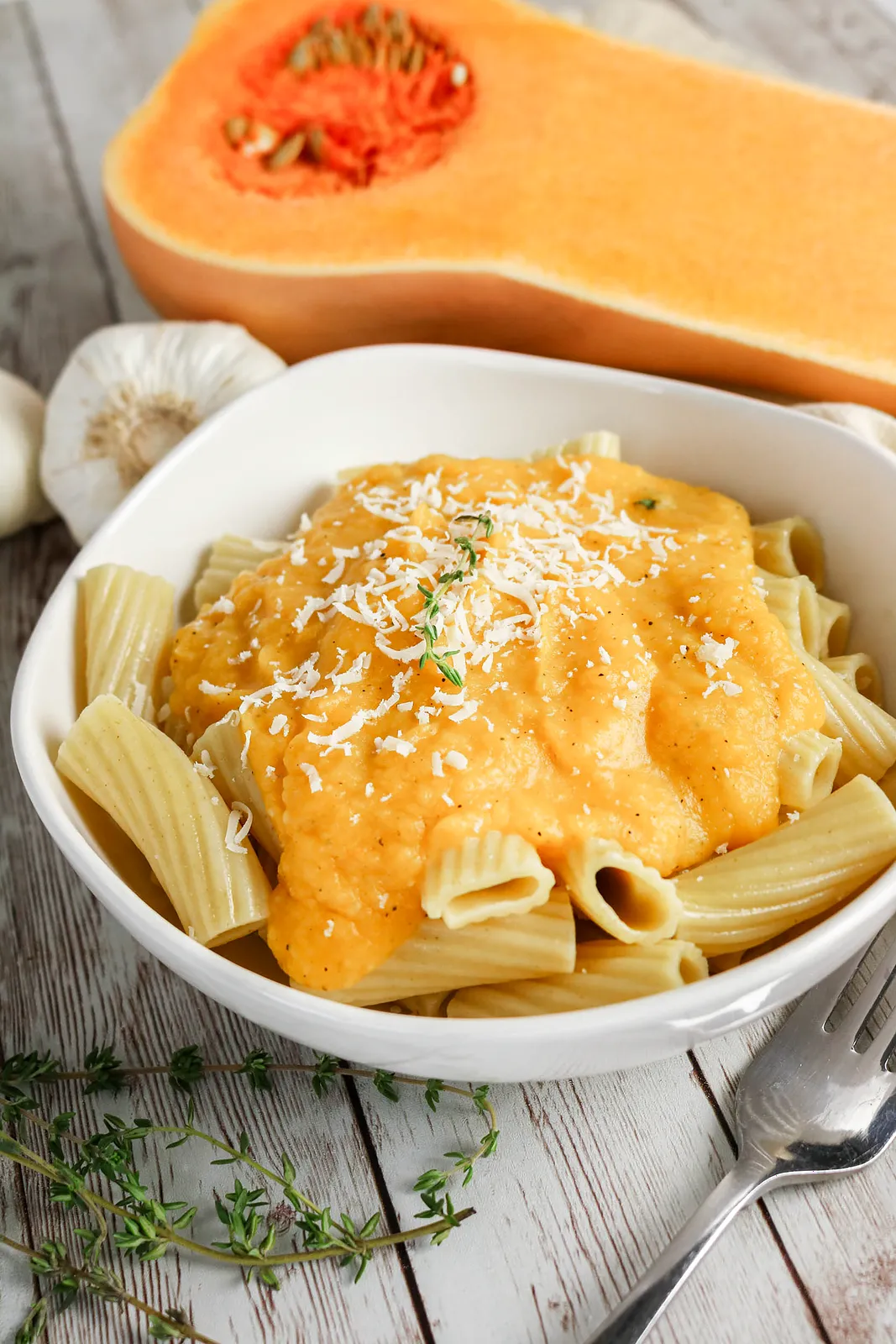
7. Toss with pasta. Finally, toss the sauce with hot cooked pasta such as penne, rigatoni or fettuccine, and finish with extra Parmesan and herbs if you like.
Troubleshooting: Too Thick, Too Thin or Too Sweet?
A squash sauce that is too thick needs a splash of broth or pasta water, one that is too thin needs a few more minutes of simmering uncovered, and one that tastes too sweet needs more salt, Parmesan or a squeeze of lemon. More detail on each:
- Too thick. Squash sizes vary, so a 3 pound squash gives a stiffer sauce than a 2 pound one. Whisk in broth or starchy pasta water a splash at a time.
- Too thin. Simmer it uncovered for a few more minutes. It also thickens as it cools and once it meets the pasta.
- Too sweet. Add a pinch more salt, an extra spoonful of Parmesan or a squeeze of lemon juice. Red pepper flakes help too.
- Grainy or stringy. The squash was underdone or the blending was rushed. Roast until a fork meets no resistance and blend for a full minute.
- Bland. It almost always needs salt. Season, stir, taste and repeat.
Tips for the Best Butternut Squash Pasta Sauce
- Do not crowd the tray. If the cubes are piled up they steam instead of browning, and the browning is the flavour.
- Cut the cubes to an even size, roughly 3/4 inch, so they are all tender at the same time.
- Save a mugful of pasta water before draining. Its starch helps the sauce cling and gives you an easy way to thin it.
- If you use a countertop blender, let the mixture cool for a few minutes and vent the lid, because hot liquids expand.
- Stir the Parmesan in off a fierce heat so it melts smoothly rather than clumping.
Storage, Freezing and Reheating
- Fridge. Keep cooled butternut squash pasta sauce in a sealed jar or container for up to 4 days.
- Freezer. Freeze it in portions for up to 3 months. I freeze it flat in bags so it thaws quickly.
- Reheat. Warm it gently in a saucepan, stirring, with a splash of broth or milk to bring back the silky texture.
- Make ahead. Since the sauce keeps for 4 days in the fridge, you can blend it at the weekend and simply warm it through while the pasta boils on a weeknight.
- Freezing cooked pasta too? The University of Nebraska Extension suggests cooking pasta al dente and tossing it with a little oil before freezing, so it does not clump or turn mushy later.
Variations and Substitutions
- Vegetarian. Use vegetable broth, and choose a vegetarian hard cheese if you avoid animal rennet.
- Dairy free or vegan. Swap the milk for unsweetened oat or cashew milk and the Parmesan for nutritional yeast.
- Brown butter and sage. Fry a few sage leaves in butter until crisp and spoon them over each bowl.
- Add protein. Stir in browned Italian sausage, crispy bacon or shredded chicken.
- Extra vegetables. Wilt a few handfuls of spinach into the hot sauce, or roast a carrot alongside the squash.
- Bake it. Toss with cooked pasta, top with cheese and bake until bubbling, in the spirit of my baked mac and cheese.
What to Serve With It
A bowl of pasta in butternut squash pasta sauce needs very little: a green salad with a sharp dressing and a slice of cheesy garlic bread for mopping up. If you enjoy vegetable-led pasta, my creamy pasta primavera is another favourite, and there are plenty more ideas in my round-up of vegetarian pasta recipes.
Got more squash to use up? Turn it into a sweet, pecan-topped butternut squash casserole for Sunday lunch.
Frequently Asked Questions
Making the Sauce
How do you turn butternut squash into pasta sauce?
Roast the cubed squash at 400°F (200°C) for 25 to 30 minutes, soften the onion and garlic, then blend everything with 2 cups of broth until smooth. After that, simmer it for 5 to 10 minutes with the milk, Parmesan and seasoning.
Can you use frozen or pre-cut squash for butternut squash sauce?
Yes. Pre-cut fresh cubes roast exactly the same way. Frozen cubes can be roasted from frozen, although they need a little longer and will brown less.
Do you need a high-powered blender for squash pasta sauce?
No. A stick blender or any standard blender gives a smooth result, provided the squash is properly soft.
Can you make butternut squash sauce without Parmesan?
Yes. Instead, add a spoonful of nutritional yeast or simply a little more salt, since the cheese brings saltiness as well as flavour.
Serving and Storing
How much pasta does this butternut squash sauce cover?
About 1 pound (450 g) of dried pasta, with some to spare. The recipe makes about 4 cups, which serves six to eight.
Can you make butternut squash pasta sauce ahead?
Yes. The sauce keeps for up to 4 days in a sealed container in the fridge, or 3 months in the freezer, and reheats well in a saucepan with a splash of broth or milk.
What else can you use butternut squash sauce for?
Plenty. It is lovely as a white pizza base, layered into lasagne, spooned over gnocchi or thinned with extra broth into a quick soup.
Is butternut squash pasta sauce vegetarian?
It can be. Use vegetable broth in place of the chicken broth, and choose a vegetarian hard cheese instead of Parmesan if you avoid animal rennet.
How many calories are in butternut squash sauce?
About 170 calories per serving for the sauce alone, based on 6 servings, with roughly 24 g carbohydrates, 5 g protein and 7 g fat. Pasta is extra, and these figures are estimates.
Ingredients
- 1 medium butternut squash about 2 to 3 pounds, peeled, seeded and cubed
- 2 tablespoons olive oil
- 1 small yellow onion chopped
- 3 cloves garlic minced
- 2 cups chicken broth or vegetable broth
- 1/2 cup milk or half-and-half
- 1/3 cup grated Parmesan cheese
- 1 teaspoon salt adjust to taste
- 1/2 teaspoon black pepper
- 1/4 teaspoon nutmeg optional
- 1 pinch red pepper flakes optional, for heat
- fresh sage or thyme optional
Instructions
- Heat the oven to 400°F (200°C). Toss the cubed squash with about half of the olive oil, spread it on a baking sheet and roast for 25 to 30 minutes, until tender and lightly caramelised.

- While the squash roasts, warm the remaining oil in a large skillet over medium heat and cook the onion for 5 to 7 minutes, until soft and translucent. Add the garlic and cook for 1 more minute.
- Add the roasted squash and the broth to the onion and garlic. Blend with an immersion blender (or in a countertop blender) until completely smooth and creamy.
- Warm the puree in the pan over medium heat. Stir in the milk, Parmesan, salt, pepper and nutmeg and simmer gently for 5 to 10 minutes, until slightly thickened.
- Taste and adjust the seasoning. Loosen with a splash of broth or reserved pasta water if the sauce is too thick.
- Toss with cooked pasta such as penne, rigatoni or fettuccine and finish with extra Parmesan and herbs if you like.