 Bity
Bity
The milk soak is doing more than you think. Popcorn chicken made without it is dry inside and the flour slides off in the oil, because there is nothing wet enough on the surface for the coating to grip.
Thirty minutes in salted milk, a firm press into seasoned flour, and four minutes in hot oil. That is the whole method, and it is closer to the takeaway version than anything I have made in an oven.
Quick Breakdown
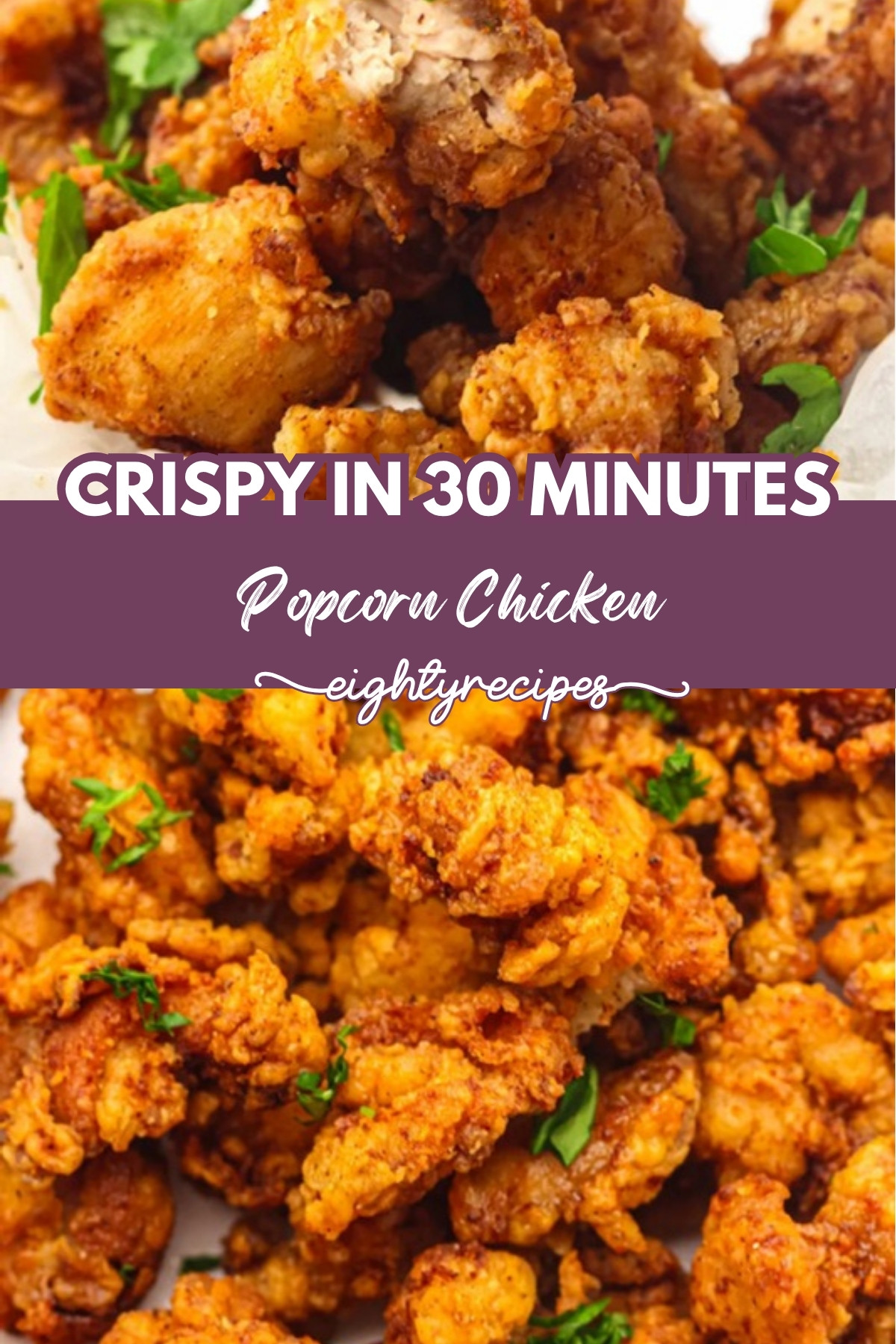
Why You’ll Love This Popcorn Chicken
- Nine ingredients. Chicken, milk, flour, salt, pepper, garlic powder, onion powder and oil.
- Four minutes a batch. Bite sized pieces cook faster than anything else you can fry.
- No egg wash. The milk marinade does that job and seasons the meat at the same time.
- It reheats crisp. Which almost nothing fried actually does.
- Thighs or breast. Both work, so you can use whichever is cheaper this week.
Ingredient Notes
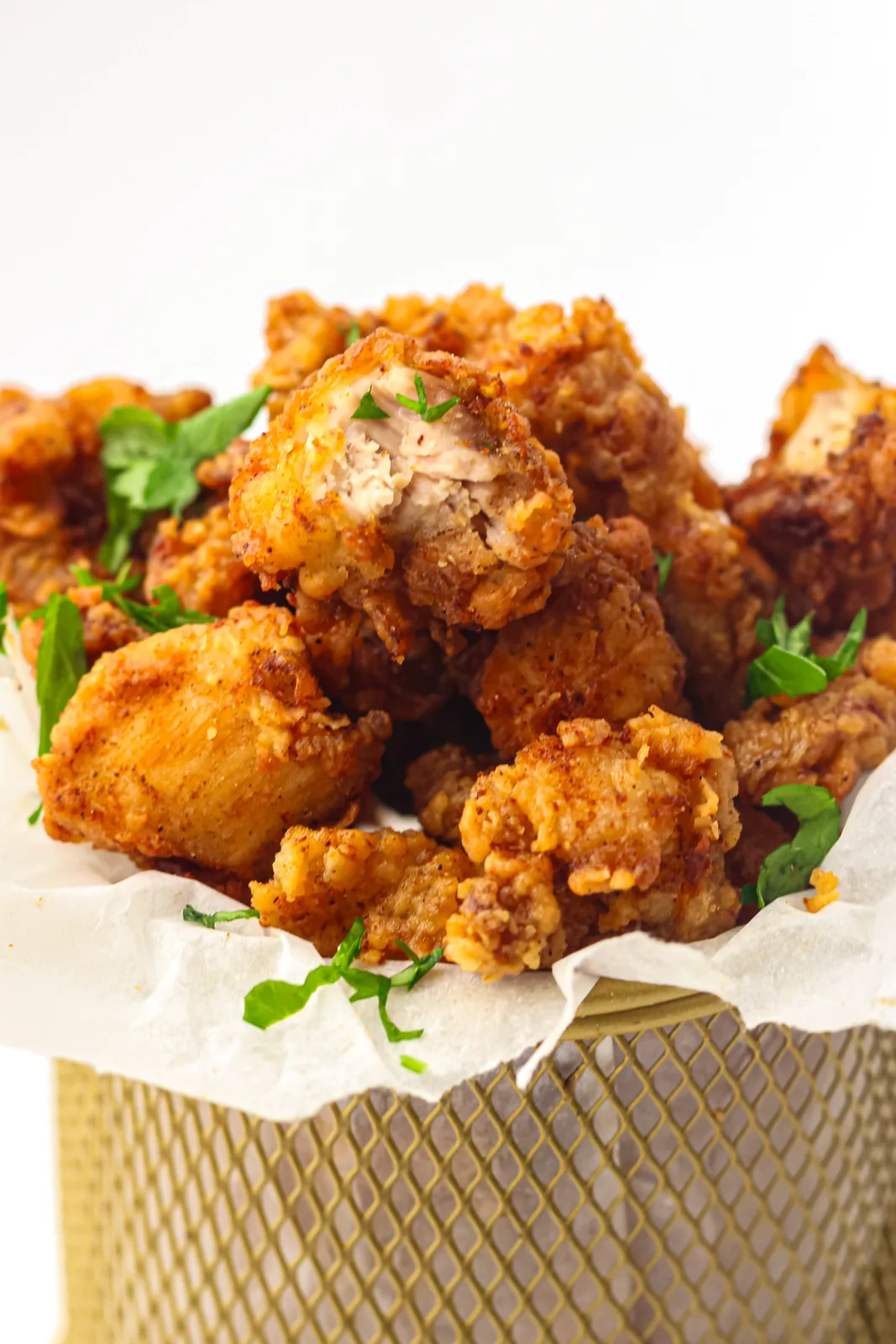
- Chicken. Six hundred grams, about 1.3 pounds, cut into pieces the size of a walnut. Thighs stay juicier, breast is leaner and faster.
- Milk. One cup, salted and peppered. Buttermilk works too and is slightly tangier, but plain milk is what most people have.
- Plain flour. Two hundred grams, roughly one and two thirds cups. No cornflour needed, since the pressing technique does the texture work.
- Garlic and onion powder. A teaspoon each. Powders rather than fresh, because fresh aromatics burn in hot oil within seconds.
- Salt and black pepper. In the marinade and again in the flour. Seasoning only one of the two leaves it tasting hollow.
- Neutral oil. Enough to come two inches up a heavy pan. Choose one that can take the temperature without smoking.
That last point matters more than the brand. Harvard Health notes that the sturdy oils for high heat cooking include avocado, canola, corn, grapeseed, peanut, rice bran, safflower, soybean and sunflower, while extra virgin olive oil is better kept for the salad.
Getting Popcorn Chicken Properly Crispy
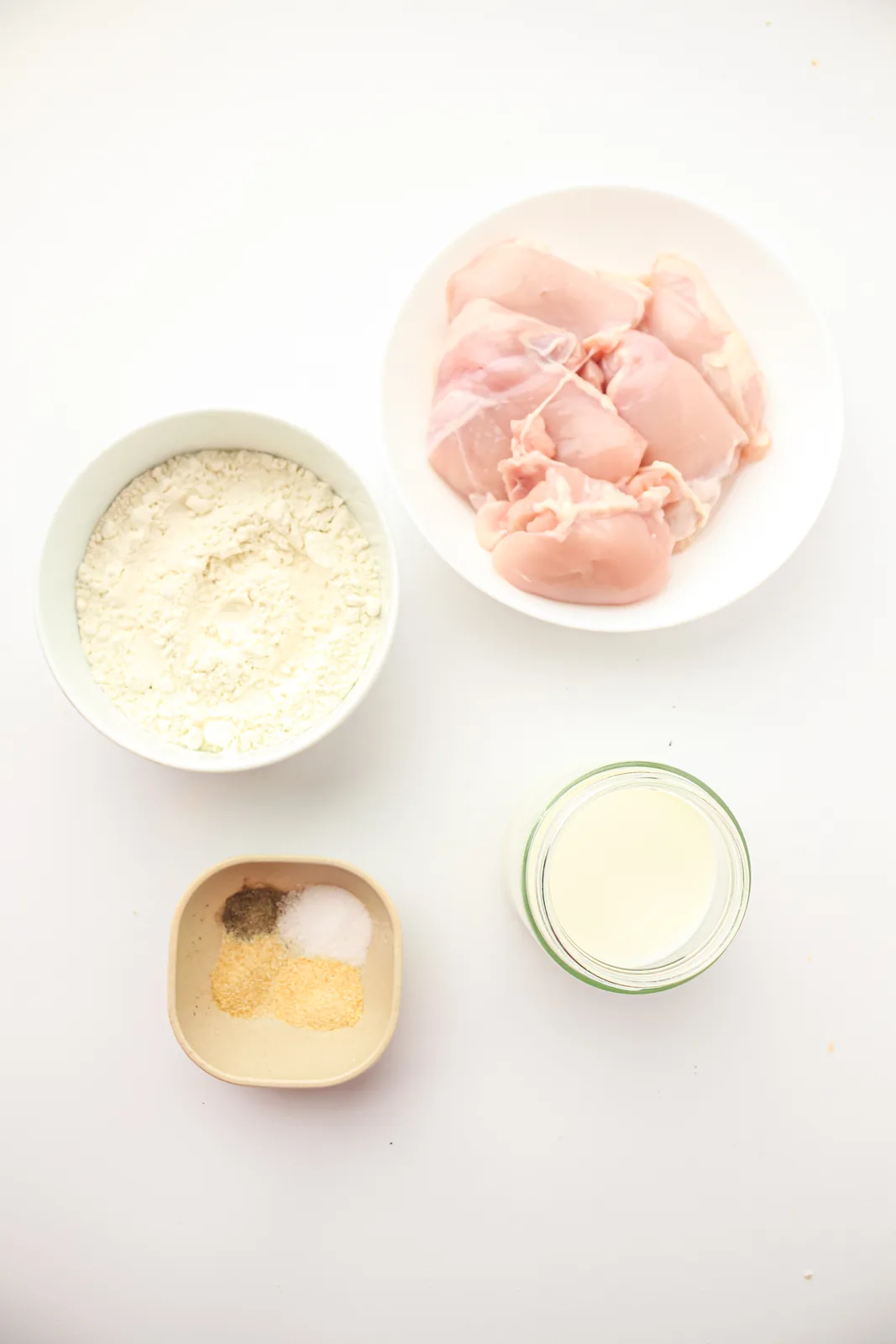
Crunch comes from three things, and none of them is a secret ingredient. The coating has to be pressed on rather than dusted on, the oil has to sit at 350°F, and the pan must not be crowded. Get all three right and the result is genuinely shattering.
Temperature is the one people get wrong. Too cool and the flour drinks oil before it sets, so the pieces come out heavy and greasy. Too hot and the outside colours in ninety seconds while the middle is still raw. In fact, most soggy fried chicken is just a thermometer problem.
| Oil temperature | What happens | Fix |
|---|---|---|
| Around 325°F | Pale, oily, heavy coating | Wait longer before the next batch |
| Around 350°F | Golden in four to six minutes | Nothing, this is right |
| Above 375°F | Dark crust, undercooked centre | Take the pan off the heat briefly |
Batch size is what keeps that temperature honest. Cold chicken dropped into hot oil pulls the temperature down immediately, and a big handful can knock off forty degrees in seconds. A heavy pan holds its heat better than a thin one, which is why a cast iron casserole is worth using here if you have one. Fry a third of the meat at a time, let the oil climb back to 350°F between batches, and every piece comes out the same colour.
How To Make Popcorn Chicken
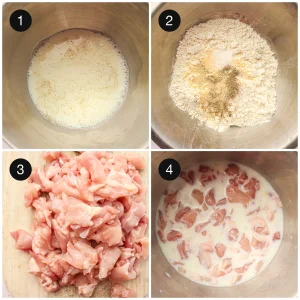
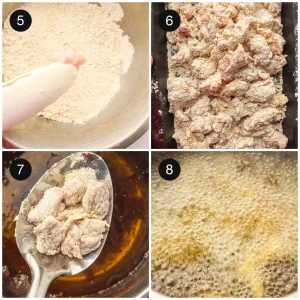
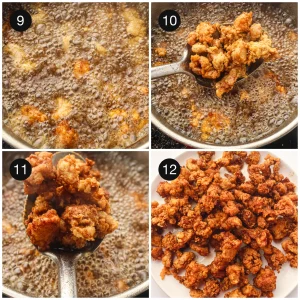
1. Marinate the chicken. First, mix the milk with the salt and black pepper, add the chicken pieces, and leave them for at least thirty minutes.
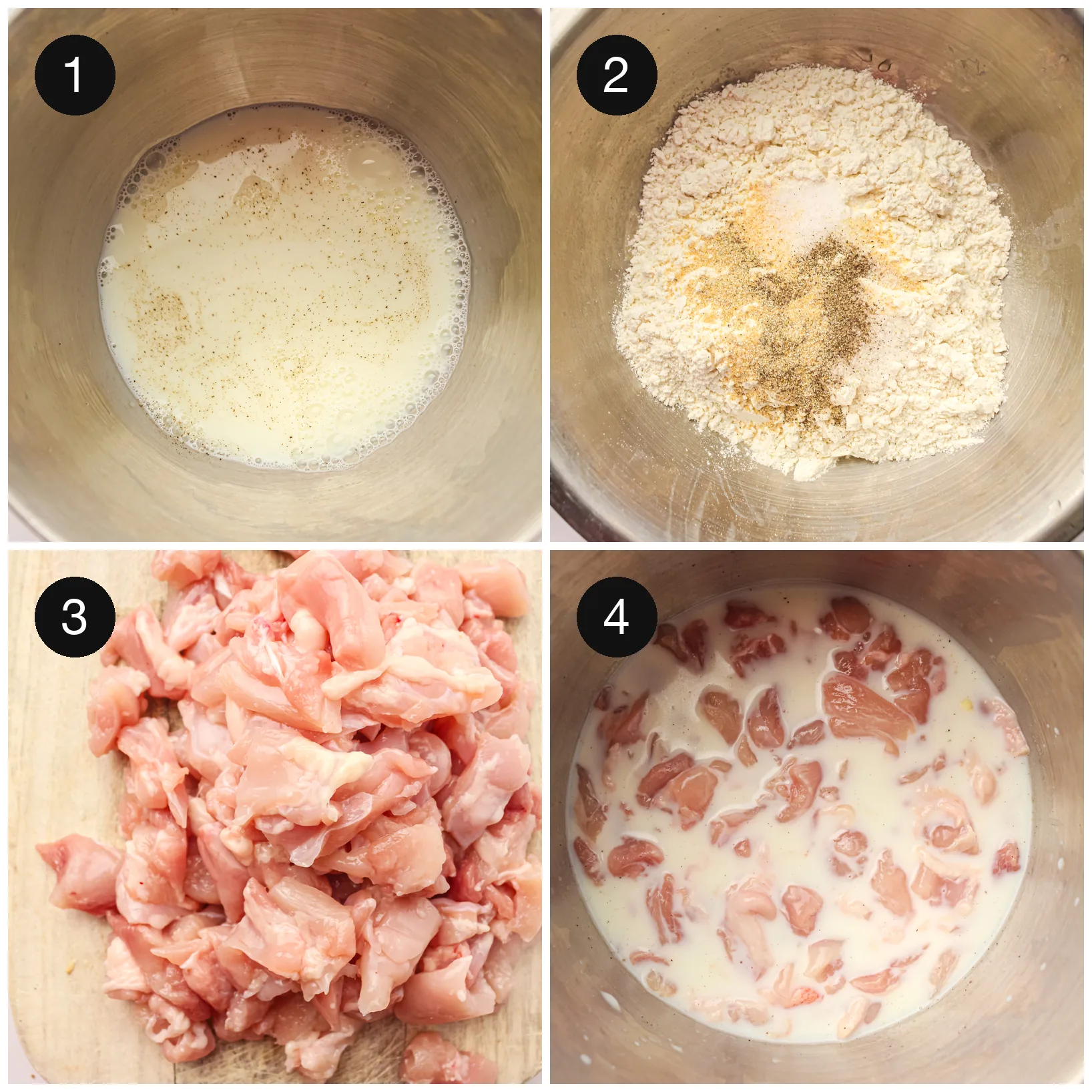
2. Season the flour. Next, combine the flour, salt, black pepper, garlic powder and onion powder in a separate bowl and mix it properly so the spices are evenly spread.
3. Coat and press. Then lift each piece straight from the milk into the flour and press the coating firmly onto it. Pressing is what builds the craggy surface that goes crunchy.
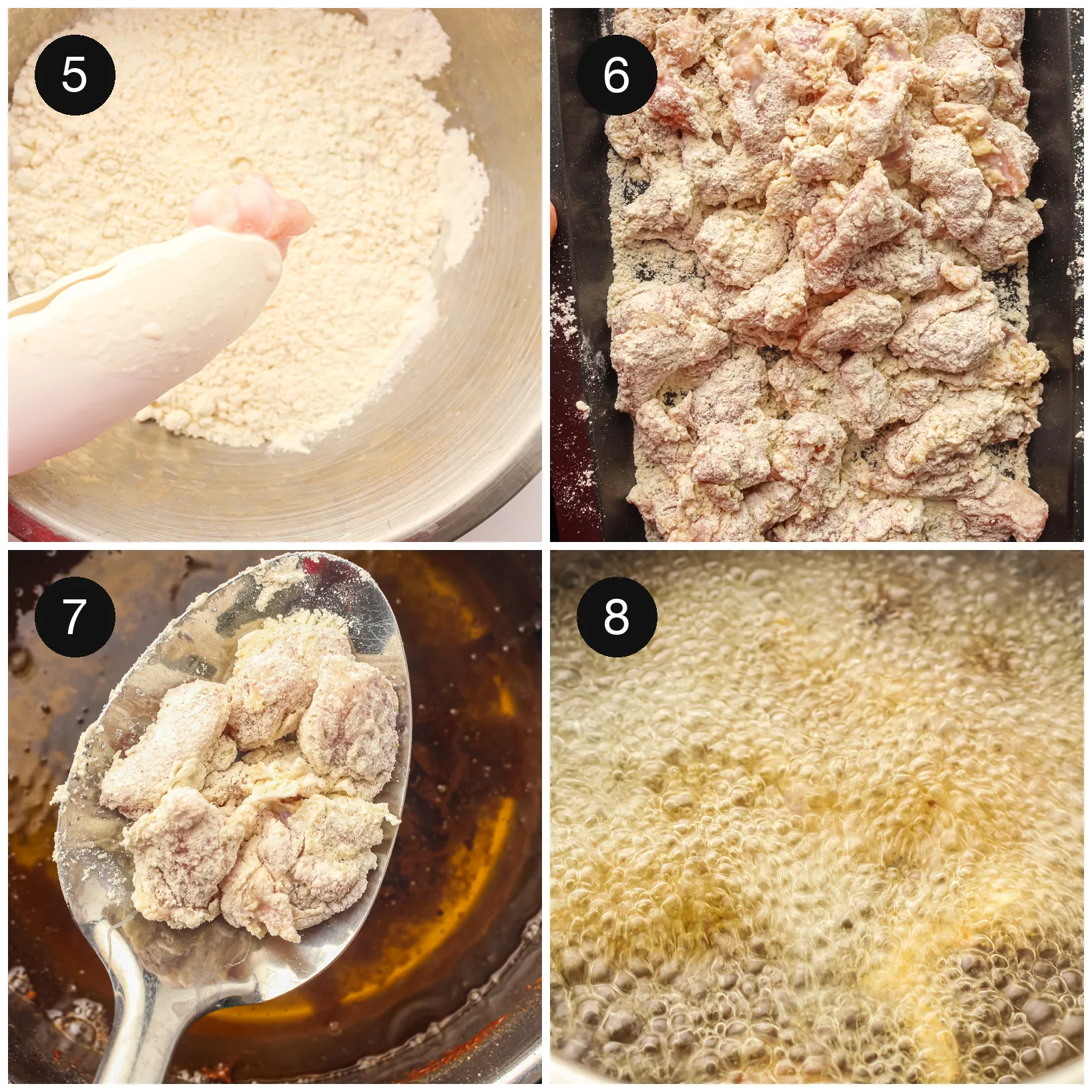
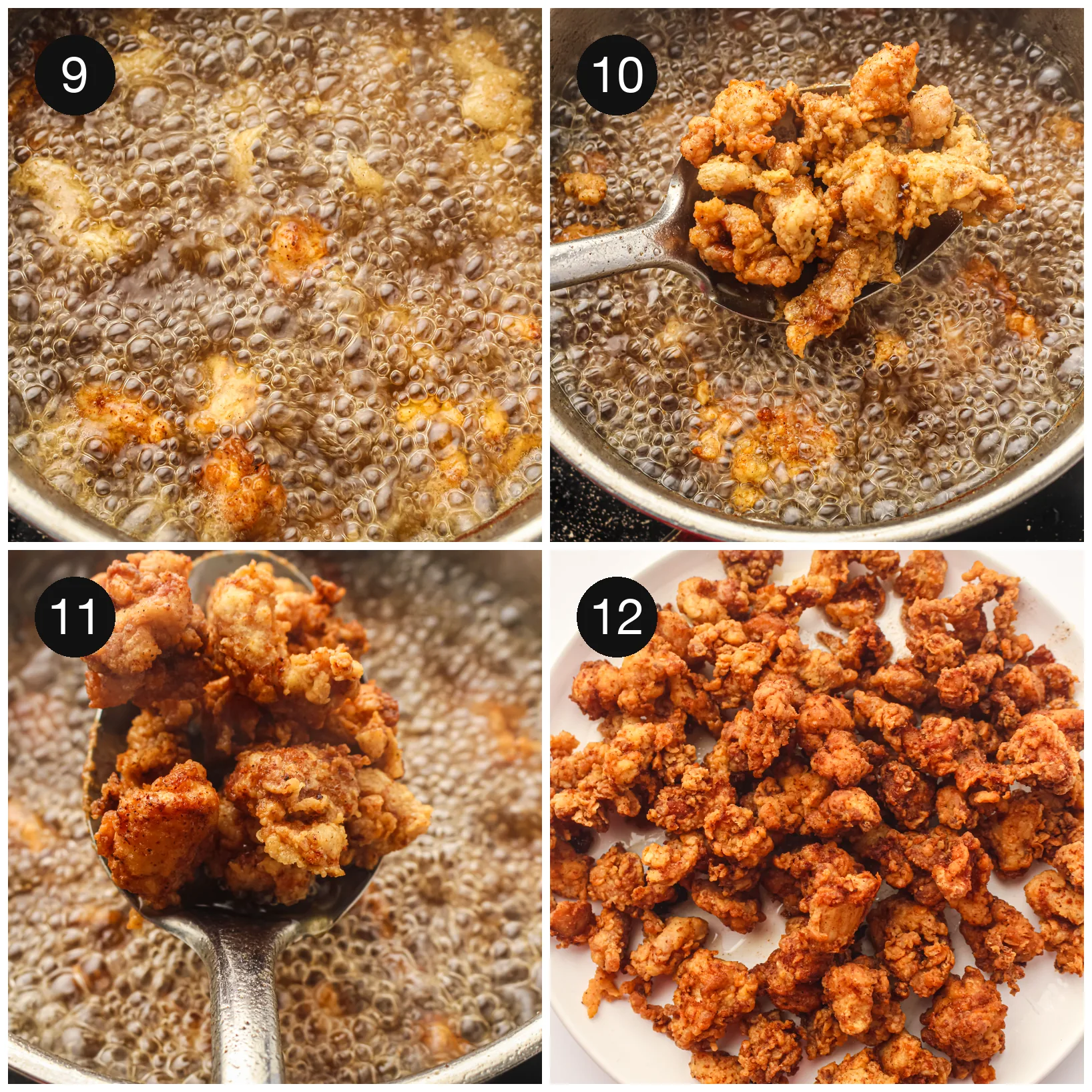
4. Heat the oil. After that, bring the oil to 350°F. A cube of bread should brown in about a minute if you have no thermometer.
5. Fry in batches. Fry for four to six minutes, until deep golden and cooked through. Crowding the pan drops the temperature and ruins the batch.
6. Drain properly. Finally, lift the pieces onto a wire rack rather than straight onto paper. Paper traps steam underneath and softens the base.
Biggest Mistakes to Avoid
- Skipping the marinade. Dry surfaces shed flour. Thirty minutes is the minimum for the coating to stick.
- Dusting instead of pressing. A light coating fries into a thin shell. Press it on and let it look untidy.
- Frying everything at once. The oil temperature crashes and every piece absorbs oil instead of crisping.
- Cutting the pieces too big. Anything larger than a walnut cooks unevenly and stops being popcorn chicken.
- Draining on paper towel. Use a rack. Steam has to get away from underneath.
- Salting only the flour. Season the milk as well, or the meat itself tastes of nothing.
Tips for the Best Popcorn Chicken
- Let the coated pieces rest for five minutes before they go near the oil. The flour hydrates and grips much better.
- Meanwhile, keep the oil temperature honest with a thermometer and let it recover between batches.
- Drizzle a tablespoon of the milk marinade into the flour and rub it through. Those lumps fry into extra craggy bits.
- Salt them the second they come out, while the surface is still hot enough to hold it.
- Thighs are more forgiving than breast, so if you are nervous about timing, start there.
- Popcorn chicken keeps its crunch on a rack in a warm oven while you fry the rest.
Storage and Reheating
- Fridge. Three days in an airtight container, once fully cooled.
- Freezer. Up to two months, cooked and frozen in a single layer first.
- Air fryer. 400°F for four to six minutes brings it back almost to new.
- Oven. 425°F for eight to ten minutes on a rack, so the heat gets underneath.
- Microwave. Avoid it. The coating softens immediately and goes soggy.
Variations and Substitutions
- Air fried. Spray lightly with a high heat oil and cook at 400°F for ten to fourteen minutes, shaking halfway.
- Spicy. A teaspoon of cayenne in the flour, or a splash of hot sauce in the milk.
- Buttermilk. Swap it straight for the milk. Slightly tangier and marginally more tender.
- Bigger pieces. The same coating works on air fryer chicken cutlets if you want a proper cutlet instead.
- On the bone. For a slower, meatier version, air fryer chicken drumsticks use the same seasoning profile.
What to Serve With It
Something to dip and something salty. A bowl of homemade sweet chilli sauce is the one that disappears fastest here, though honey mustard and barbecue both work. Pile it next to air fryer french fries for the full basket, or serve it over mashed potato with gravy if you are going down that road. Instead of a side, a plain slaw keeps it from feeling too heavy.
Frequently Asked Questions
Ingredients and Method
Can I use chicken breast?
Yes. Thighs are juicier and more forgiving, but breast works well as long as you cut it evenly and do not leave it in the oil too long.
Can I air fry this instead?
Yes. Spray lightly with a high heat oil and cook at 400°F for ten to fourteen minutes, shaking the basket halfway through.
How do I make it extra crispy?
Press the flour coating firmly onto each piece and let the coated chicken rest for five minutes before frying. That short rest is what stops the crust falling away in the oil.
Do I need a thermometer?
It helps enormously. Failing that, drop in a cube of bread and time it. Around a minute to golden means the oil is close to 350°F.
How much oil do I actually need?
Enough to come about two inches up a heavy pan, which is usually a litre or so. The pieces should float and move freely rather than sit on the bottom.
Storage and Troubleshooting
Can I freeze it?
Yes. Freeze the cooked pieces and reheat them straight from frozen in the oven or air fryer, which crisps them back up nicely.
Why did my coating fall off?
Either the chicken was not wet enough going into the flour, or the pieces were moved too soon in the pan. Let them set for a full minute before you stir them.
Why is it greasy?
The oil was too cool. Popcorn chicken dropped into oil below about 340°F soaks it up before the crust seals, so let the temperature recover between batches.
How long do leftovers keep?
Three days in the fridge. Reheat in an air fryer or a hot oven rather than a microwave, which softens the coating.
Can I reuse the frying oil?
Once or twice, provided you strain it through a fine sieve while it is still warm and store it somewhere dark. Once it smells sharp or looks cloudy, let it go.
Ingredients
Chicken
- 1.3 lb chicken thighs or breast cut into bite-sized pieces, 600 g
Marinade
- 1 cup milk 240 ml
- 1 teaspoon salt
- 1/2 teaspoon black pepper
Coating
- 1 2/3 cups plain flour 200 g
- 1 teaspoon salt
- 3/4 teaspoon black pepper
- 1 teaspoon garlic powder
- 1 teaspoon onion powder
Frying
- neutral oil for frying
Instructions
- In a bowl, mix the milk, salt and black pepper. Add the chicken and marinate for at least 30 minutes.

- In a separate bowl, combine the flour, salt, black pepper, garlic powder and onion powder.
- Remove the chicken from the marinade and coat each piece thoroughly in the flour mixture, pressing the coating on firmly for extra crispiness.
- Heat the oil to 350°F (175°C).
- Fry the chicken in batches for 4 to 6 minutes, until golden, crispy and cooked through.
- Transfer to a wire rack or a paper towel lined tray and salt immediately before serving.