 Bity
Bity
A dutch oven pot roast is the cheapest impressive dinner I know how to cook. A chuck roast costs a fraction of anything you would call a steak, and three hours in a low oven turns all that stubborn connective tissue into something you can pull apart with a spoon.
There is no clever technique here beyond browning the meat properly and then leaving it alone. So it suits a Sunday when you want the house to smell of dinner from lunchtime onwards without being tied to the kitchen.
Quick Breakdown
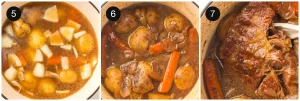
Why You’ll Love This Dutch Oven Pot Roast
- One pot, meat and vegetables together. The potatoes and carrots cook in the beef juices, which is the whole point.
- Six ingredients. Beef, potatoes, carrots, onion, stock, salt and pepper. That is genuinely it.
- Cheap cut, expensive result. Because chuck is worked muscle, it has the collagen that turns into silky gravy.
- Feeds six. Meanwhile leftovers make the best sandwiches of the week.
- Hands off for three hours. In fact once the lid goes on, the oven does everything.
Ingredient Notes
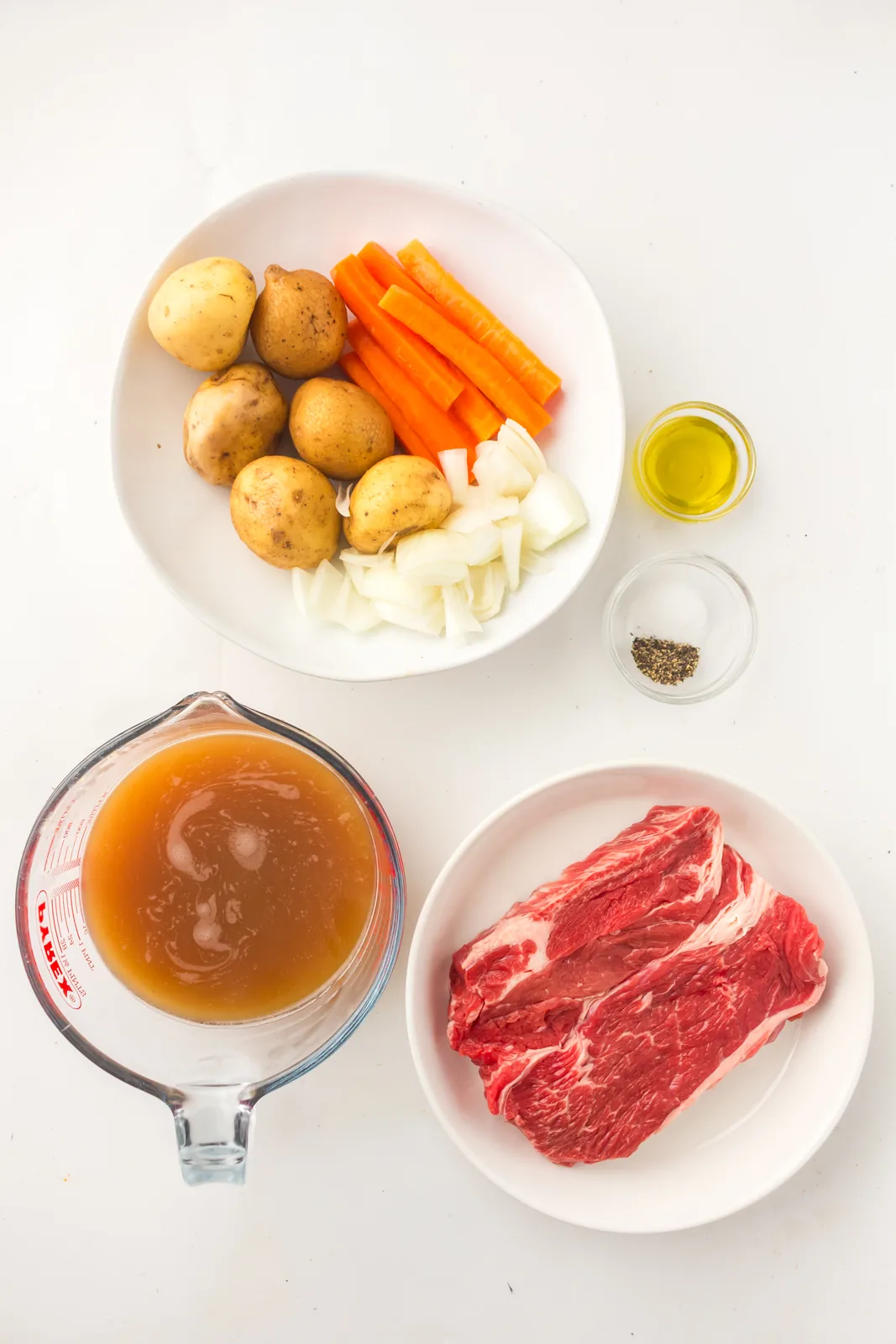
- Chuck roast. Three to four pounds, and look for one that is well marbled. Lean cuts like topside simply dry out over three hours because there is no fat and collagen to melt.
- Potatoes. Four or five, cut into large chunks. Big pieces survive the long cook, while small ones dissolve into the gravy.
- Carrots. Three or four, in thick batons. Root vegetables bring real sweetness to the pot, and Harvard Health has a fair-minded look at what they do and do not offer nutritionally.
- Onion. One large, sliced thickly. It melts almost entirely and thickens the sauce.
- Beef stock. Two cups, poured around the sides rather than over the crust you have just built.
- Salt and pepper. Season the raw beef heavily on every face. Under-seasoning is the most common fault with a big joint.
The Best Cut of Beef for a Pot Roast
Chuck, and it is not close. It comes from the shoulder, which works hard, so it is threaded with collagen. Slow moist heat melts that collagen into gelatin, and the meat goes from chewy to falling apart. No other cut gives a dutch oven pot roast that texture.
Brisket follows the same logic, since it is another tough cut that needs long, gentle cooking to turn tender. If you would rather go down that route, this Crockpot Brisket is a slow-cooked option to compare with the chuck method above.
| Cut | Verdict |
|---|---|
| Chuck roast | The best choice. Richly marbled and forgiving. |
| Brisket | Works well, though it slices rather than shreds. |
| Rump or round | Too lean. It goes dry and stringy instead of tender. |
| Silverside | Acceptable, but it needs longer and more liquid. |
How Long to Cook It, and Until When
Three hours at 325F for a three to four pound joint, covered. Bigger joints need roughly 45 minutes more per extra pound.
Time is only half the answer, though. Collagen starts breaking down around 160F and keeps going, so a dutch oven pot roast is properly done at about 195F to 200F in the centre, well past anything you would call medium. ThermoWorks explains exactly what heat is doing to those muscle fibres, and it is worth reading before you pull the joint early.
An instant read thermometer pushed into the thickest part takes the guesswork out, and you are looking for that 195F to 200F mark rather than anything that sounds like steak.
How To Make Dutch Oven Pot Roast
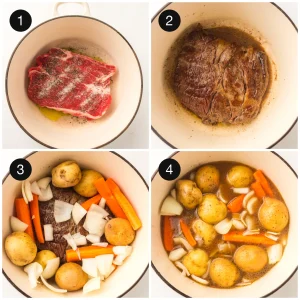
1. Heat the oven. First set it to 325F (165C) and season the chuck roast generously with salt and black pepper on every side.
2. Sear it hard. Next heat the olive oil in the pan over medium-high heat and brown the beef on all sides, about five minutes a face. Do not move it while it colours.
3. Add the vegetables. Then tuck the potatoes, carrots and sliced onion around the roast, filling the gaps.
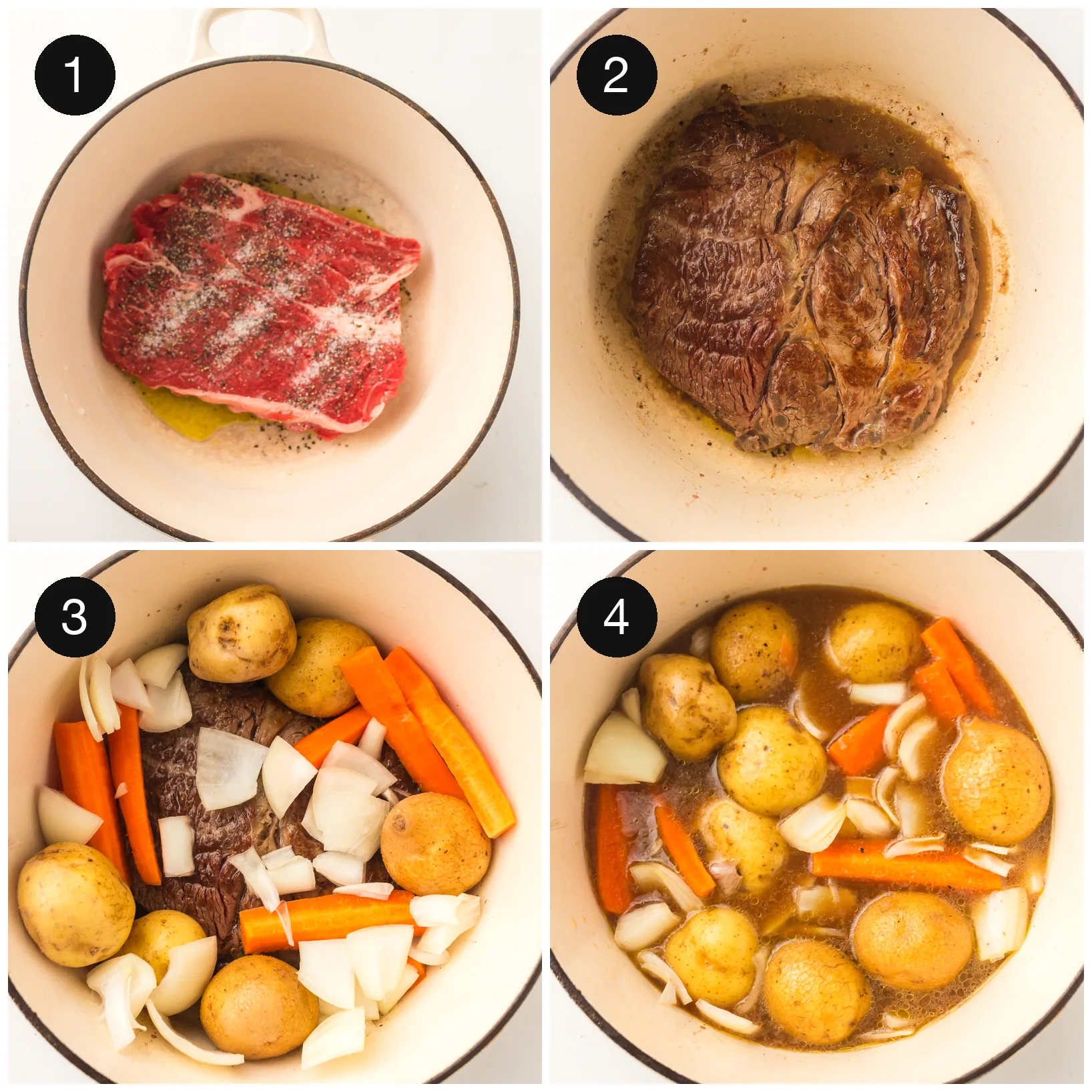
4. Pour in the stock. After that add the beef stock around the sides rather than over the top, so the crust you built stays intact.
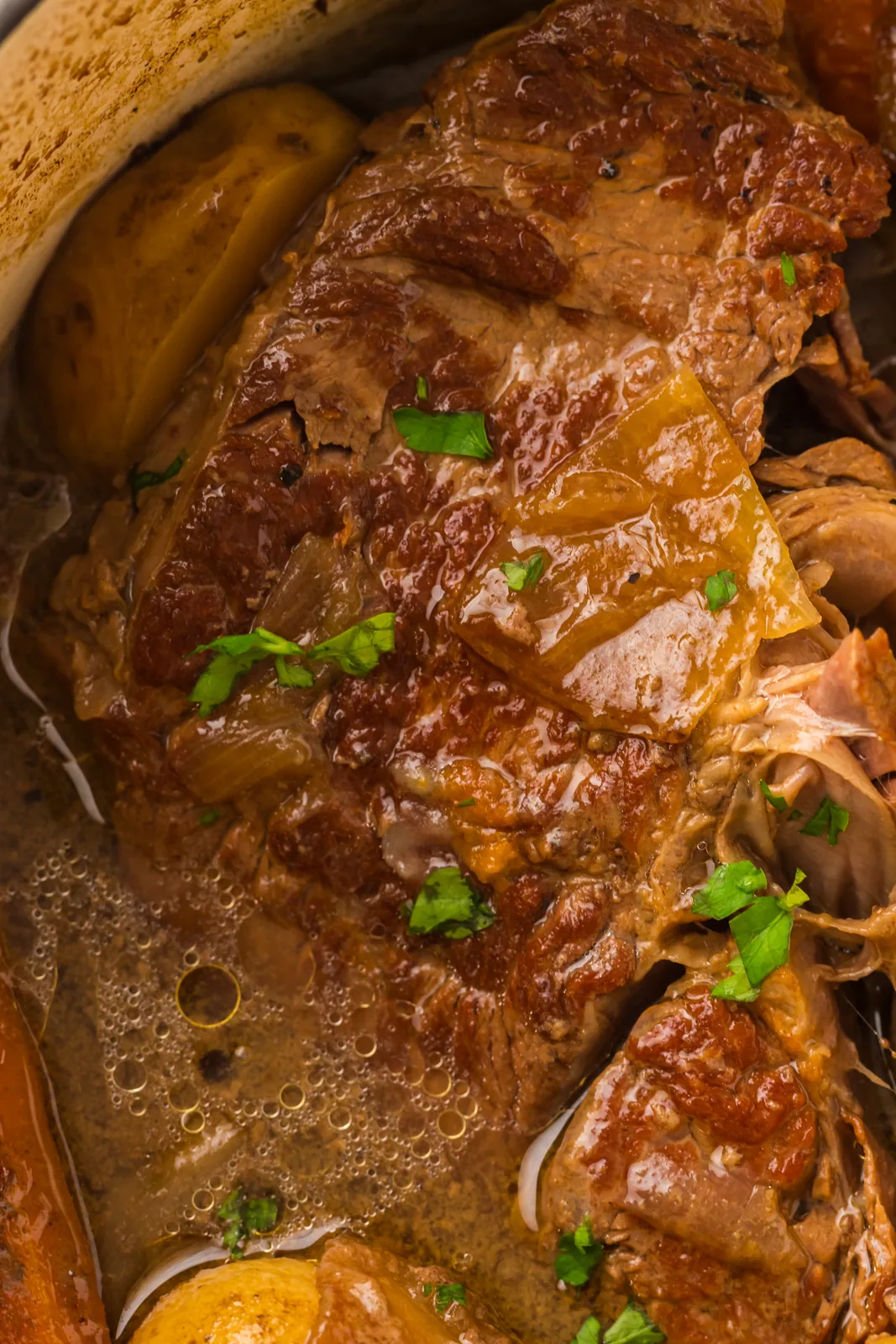
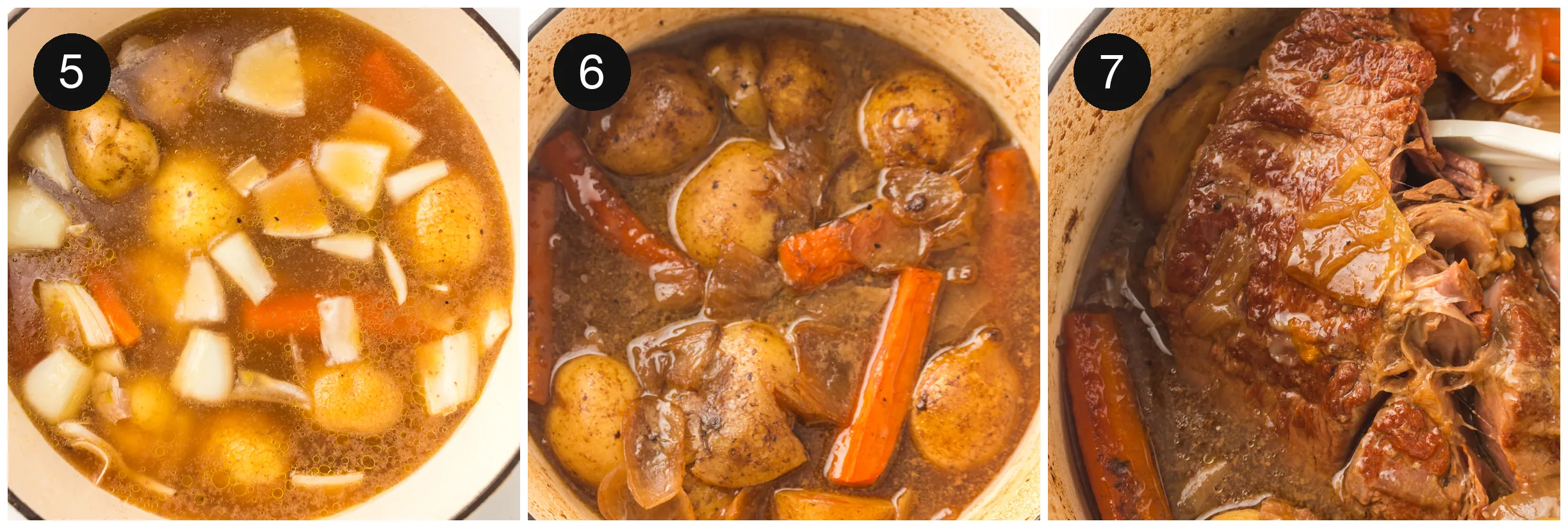
5. Cover and braise. Put the lid on and cook for 3 hours, until a fork twists in the meat with no resistance at all.
6. Rest, then serve. Finally leave it in the pan off the heat for 10 to 15 minutes before you slice or shred it, and spoon the juices over everything.
Why Pot Roast Turns Out Tough
A tough dutch oven pot roast is almost always undercooked, which feels counterintuitive with beef. A joint that is still firm at three hours has not finished breaking down, so the answer is another 45 minutes with the lid on rather than less time.
The second cause is the wrong cut. A lean roast has no collagen to convert, so it simply loses moisture and tightens no matter how long you give it. In addition, a loose lid lets steam escape and the pot dries out, so check the seal or lay foil under the lid.
This is where a heavy enamelled Dutch oven earns its place, because a tight fitting lid keeps the steam in for the full three hours.
Tips for the Best Dutch Oven Pot Roast
- Pat the beef completely dry before searing. Wet meat steams instead of browning.
- Never wipe the pan after searing. Those browned bits are the backbone of the gravy.
- Add the vegetables halfway through if you prefer them firmer rather than meltingly soft.
- For a thicker sauce, lift the meat out and simmer the juices uncovered for ten minutes.
- A dutch oven pot roast is better the next day, so make it ahead without guilt.
Storage and Reheating
- Fridge. Keep leftover dutch oven pot roast in its juices in a sealed container for up to 4 days.
- Freezer. Freeze portions with plenty of the liquid for up to 3 months.
- Reheating. Warm covered at 300F, or gently on the hob. Because the liquid protects the meat, it reheats far better than a roasted joint.
- Leftovers. Shredded pot roast on toasted bread with a spoonful of the gravy is the best lunch of the week.
Variations and Substitutions
- Red wine. Replace a cup of the stock with red wine and let it bubble for a minute after searing.
- Slow cooker. Sear first, then cook on low for 8 to 9 hours or high for 4 to 5.
- Herbs. A few sprigs of thyme and two bay leaves under the lid change the whole character.
- Cubed instead. Cut the same chuck into chunks and you are most of the way to my Instant Pot beef stew.
What to Serve With Dutch Oven Pot Roast
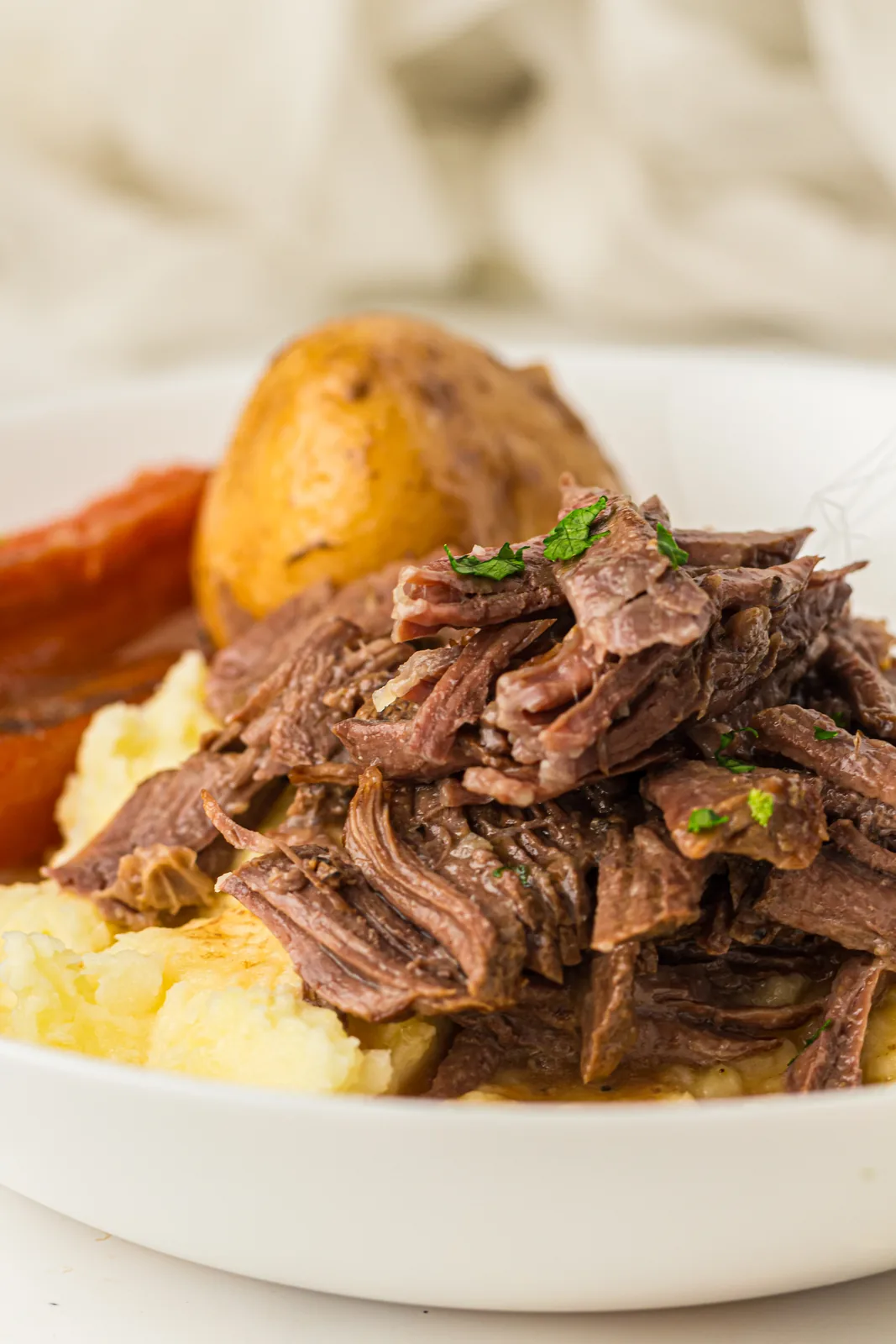
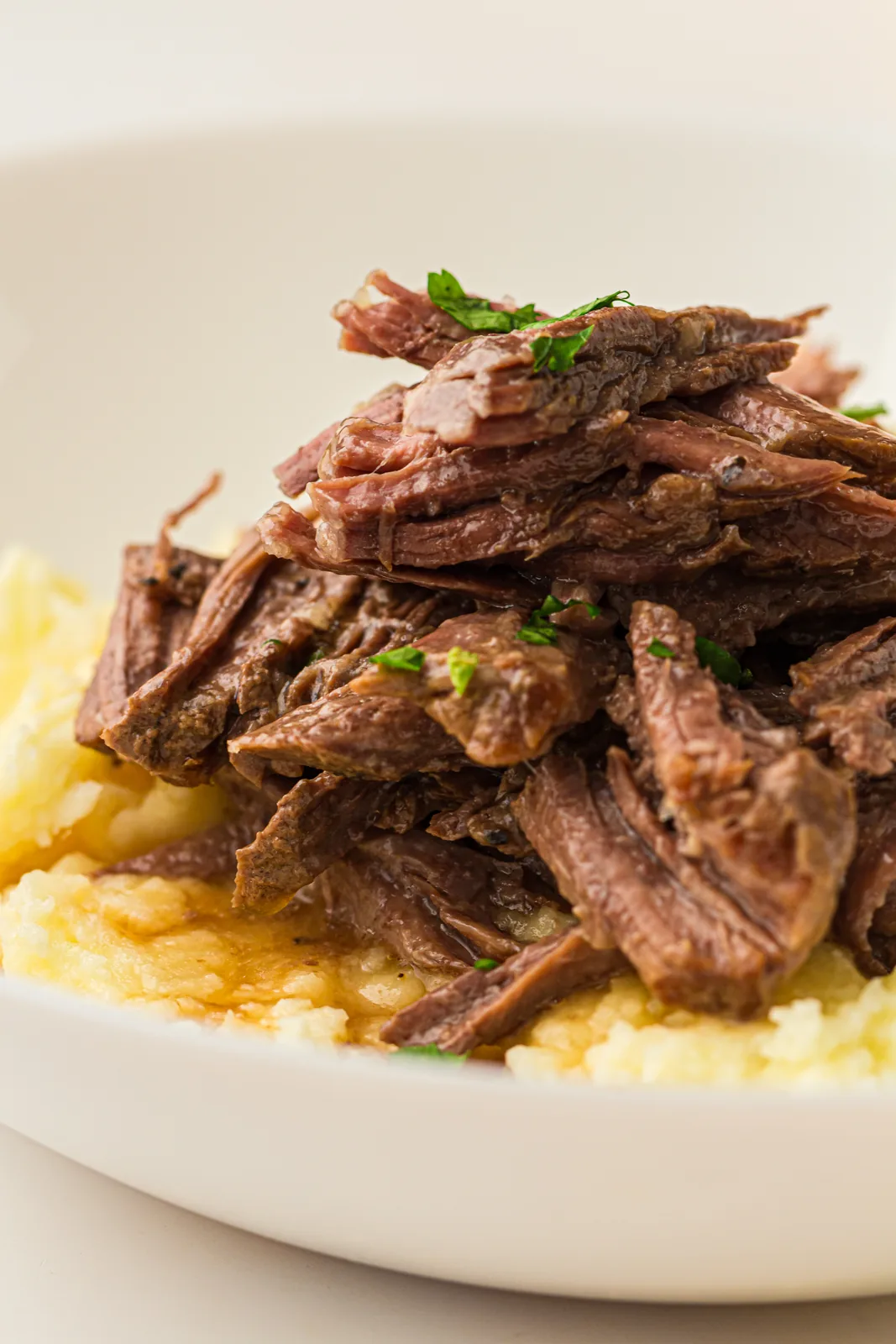
The potatoes are already in the pot, so anything else is a bonus. Even so, a bowl of buttery mashed potatoes underneath the shredded beef is the version my family asks for.
Add garlic butter green beans for colour and a little bite. Alternatively a basket of soft dinner rolls for mopping the gravy, which is what everyone reaches for anyway.
Frequently Asked Questions
Cut and Method
What cut of beef works best?
Chuck roast. The marbling and connective tissue are what melt into gelatin over three hours, which is exactly what makes the meat tender.
Do I have to sear the beef first?
You do not have to, but you should. Searing builds the browned crust and the fond in the pan, and both of those become the flavour of the gravy.
Should the lid stay on?
Yes, for the whole three hours. The trapped steam is what keeps the meat moist and stops the liquid boiling away.
Can I cook it in a slow cooker instead?
Of course. Sear the beef in a pan first, then cook on low for 8 to 9 hours or on high for 4 to 5.
Troubleshooting and Storage
Why is my pot roast tough?
It needs longer. Slow cooking breaks down connective tissue, so give it another 45 minutes covered rather than taking it out earlier.
How do I thicken the gravy?
Lift out the meat and vegetables, then simmer the juices uncovered for about ten minutes. A spoon of cornflour slaked in water works if you are in a hurry.
Can I make it ahead?
Yes, and it improves overnight. Cool it in the liquid, refrigerate, then reheat covered at 300F until piping hot.
Ingredients
- 3 lb chuck roast 3 to 4 lb
- 4 potatoes 4 to 5, cut into large chunks
- 3 carrots 3 to 4, cut into chunks
- 1 large onion sliced
- 2 cups beef stock
- 1 tablespoon olive oil 1 to 2, for searing
- salt and black pepper to taste
Instructions
- Preheat the oven to 325°F (165°C).
- Season the chuck roast generously with salt and pepper on every side.
- Heat the olive oil in a Dutch oven over medium-high heat and sear the roast on all sides until browned.

- Add the potatoes, carrots and onion around the roast.
- Pour the beef stock into the pot around the sides, not over the top.
- Cover and roast for 3 hours, or until the meat is fork tender.

- Rest for 10 to 15 minutes before slicing or shredding, then spoon the juices over.