 Bity
Bity
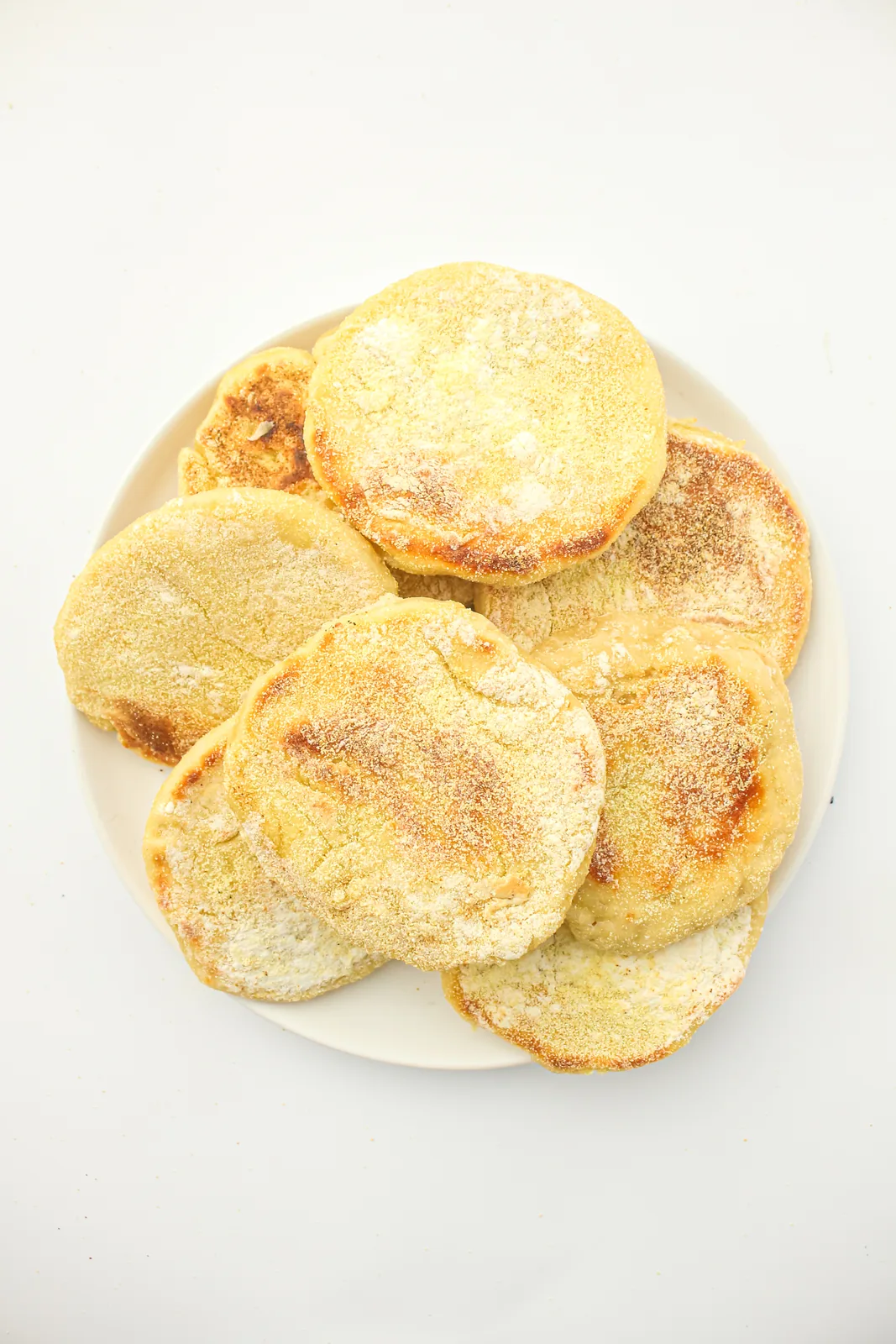
I started making sourdough english muffins because my starter kept outgrowing its jar and I was tired of throwing perfectly good flour away. What I did not expect was that they would be better than anything in the supermarket bread aisle, and that they would be cooked in a frying pan rather than an oven.
The dough goes together in fifteen minutes the night before, sits on the worktop while you sleep, and gets rolled, cut and griddled the next morning. So the hands-on time is tiny, even though the recipe technically takes twelve hours.

Quick Breakdown
Why You’ll Love These Sourdough English Muffins
- No oven at all. They cook in a dry pan on the hob, which is a gift in summer.
- Seven ingredients. Starter, milk, flour, butter, salt, a little sugar, and semolina for dusting.
- The overnight rise does the work. Because the fermentation is long and slow, the flavour is properly tangy.
- Eight muffins per batch. Meanwhile they freeze so well that I usually make a double batch.
- Real nooks and crannies. In fact splitting them with a fork gives you far better texture than any knife.
Ingredient Notes
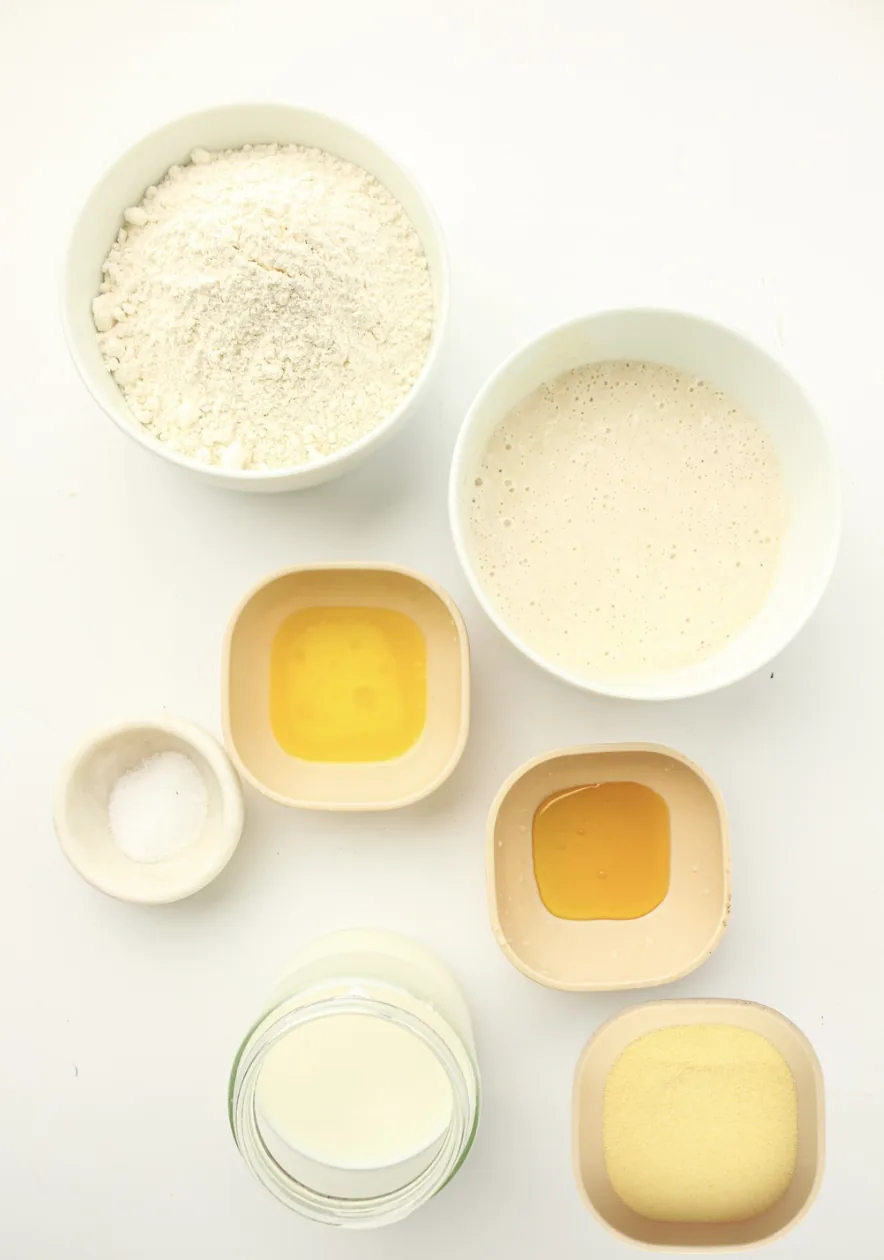
- Active starter. 240 g, bubbly and at its peak. A sluggish starter gives you flat, dense rounds, so feed it four to six hours before you mix.
- Milk rather than water. It softens the crumb and helps the outsides colour. Whole milk is best.
- Plain flour. 320 g. Bread flour works and gives a chewier bite, though plain flour is more traditional here.
- Butter or oil. Just 15 g, enough to enrich without making them cakey.
- Sugar or honey. A teaspoon or two, mostly to help the crust brown. Long fermentation is the interesting part nutritionally, and Harvard Health has a readable piece on what fermented foods actually do for you.
- Semolina. For dusting both sides. Cornmeal works too, and either one stops sticking while giving that gritty signature finish.
The Overnight Timeline
The schedule looks long on paper, but almost none of it needs you in the kitchen.
| When | What happens |
|---|---|
| Late afternoon | Feed the starter so it peaks by evening. |
| 9pm | Mix everything to a soft dough, cover, leave on the worktop. |
| 8am | Roll to 2 cm, cut rounds, dust with semolina. |
| 9am to 10am | Second rise until visibly puffy. |
| 10am | Cook in a dry pan, 6 to 8 minutes a side. |
A warm kitchen speeds the overnight stage up, so in summer eight hours may be plenty. Meanwhile a cold room may need the full twelve.
If you do not have a starter on the go yet, a sourdough starter kit is a tidy way to get set up before you try these.
Can You Use Sourdough Discard?
You can, and plenty of people do, but be honest with yourself about the result. Discard has spent its yeast, so the rise is slower and the crumb comes out denser and more sour.
If discard is what you have, add a quarter teaspoon of instant yeast to the mix and give the overnight rest the full twelve hours. Still, for the open, fluffy texture that makes sourdough english muffins worth the effort, an active bubbly starter is the one to use.
How To Make Sourdough English Muffins
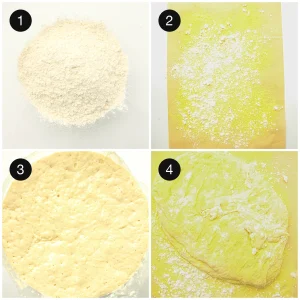
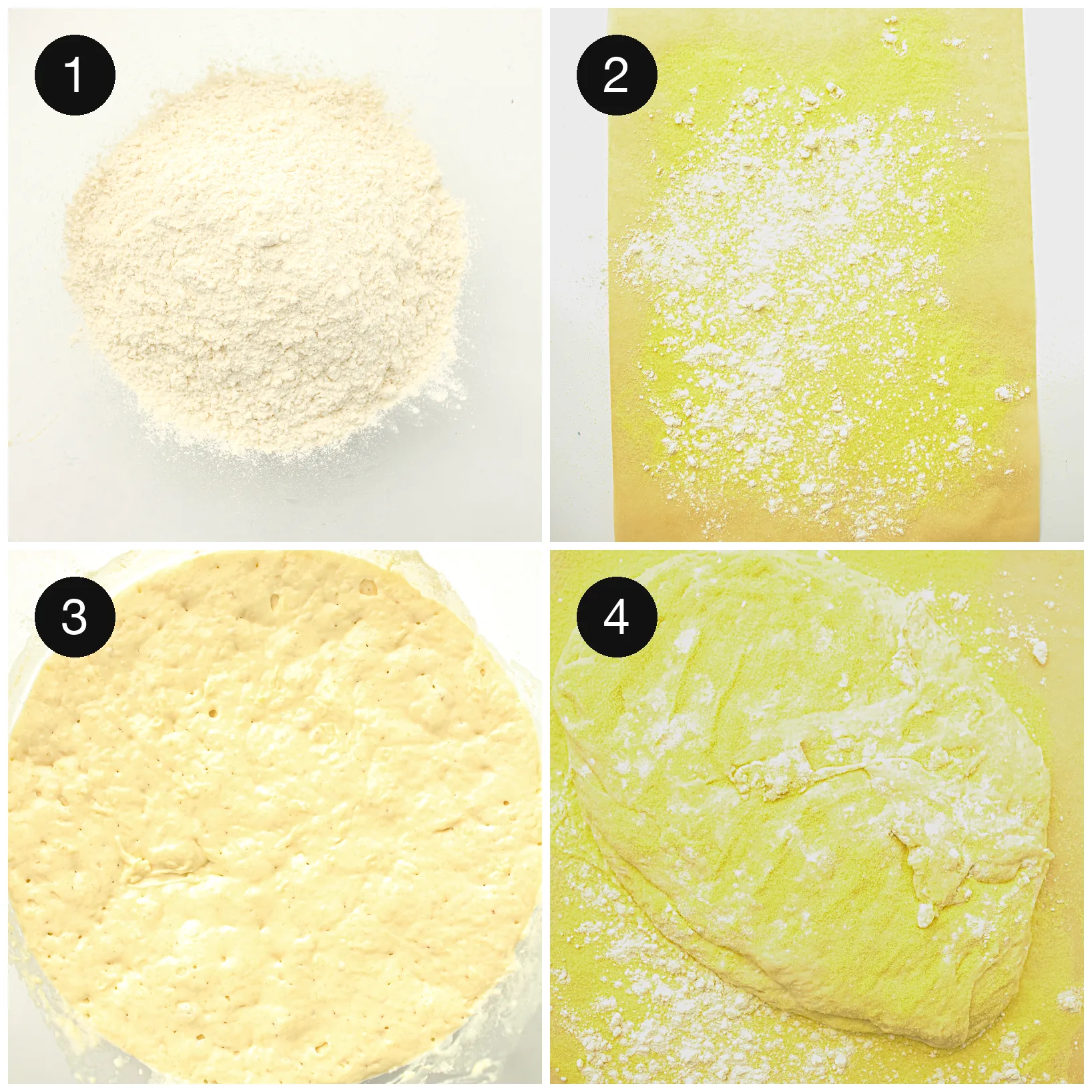
1. Mix the night before. First stir the starter, milk, flour, butter, salt and sugar together until a soft dough forms. It will be sticky, and that is exactly right.
2. Leave it overnight. Next cover the bowl and leave it at room temperature for 8 to 12 hours. By morning it should look domed and full of air.
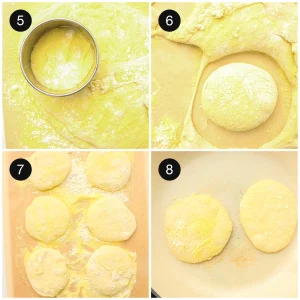
3. Roll it out. Then turn the dough onto a floured surface and gently roll it to about 2 cm thick. Handle it lightly so you keep the bubbles.
4. Cut and dust. After that cut rounds with a 9 cm cutter or a wide glass, and dust both sides generously with semolina.
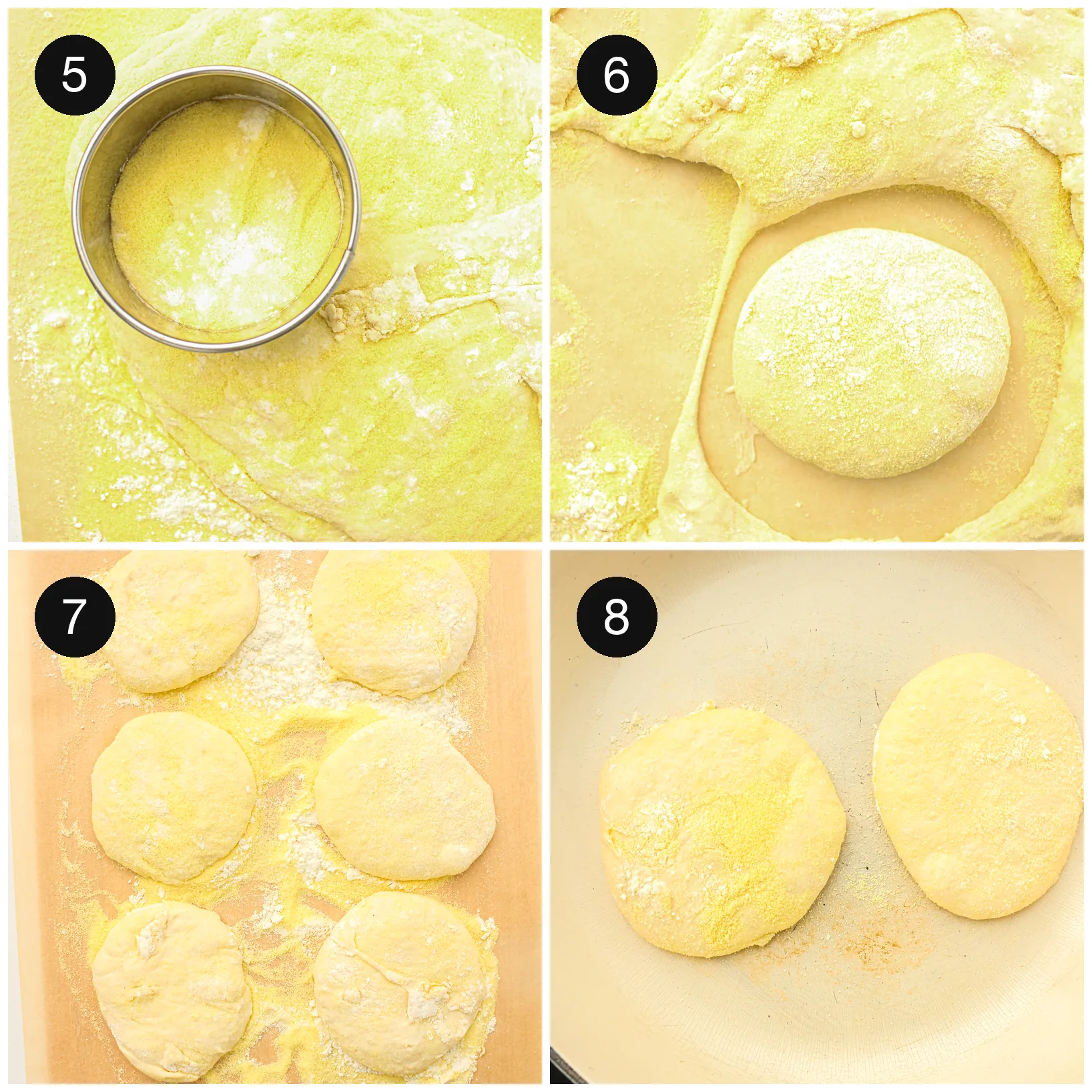
5. Second rise. Leave them on a lined tray for 1 to 2 hours, until they look puffy and feel airy when you nudge one.
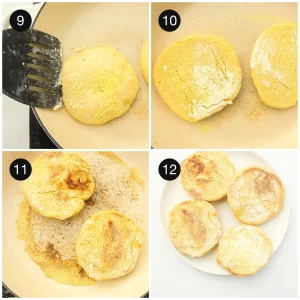
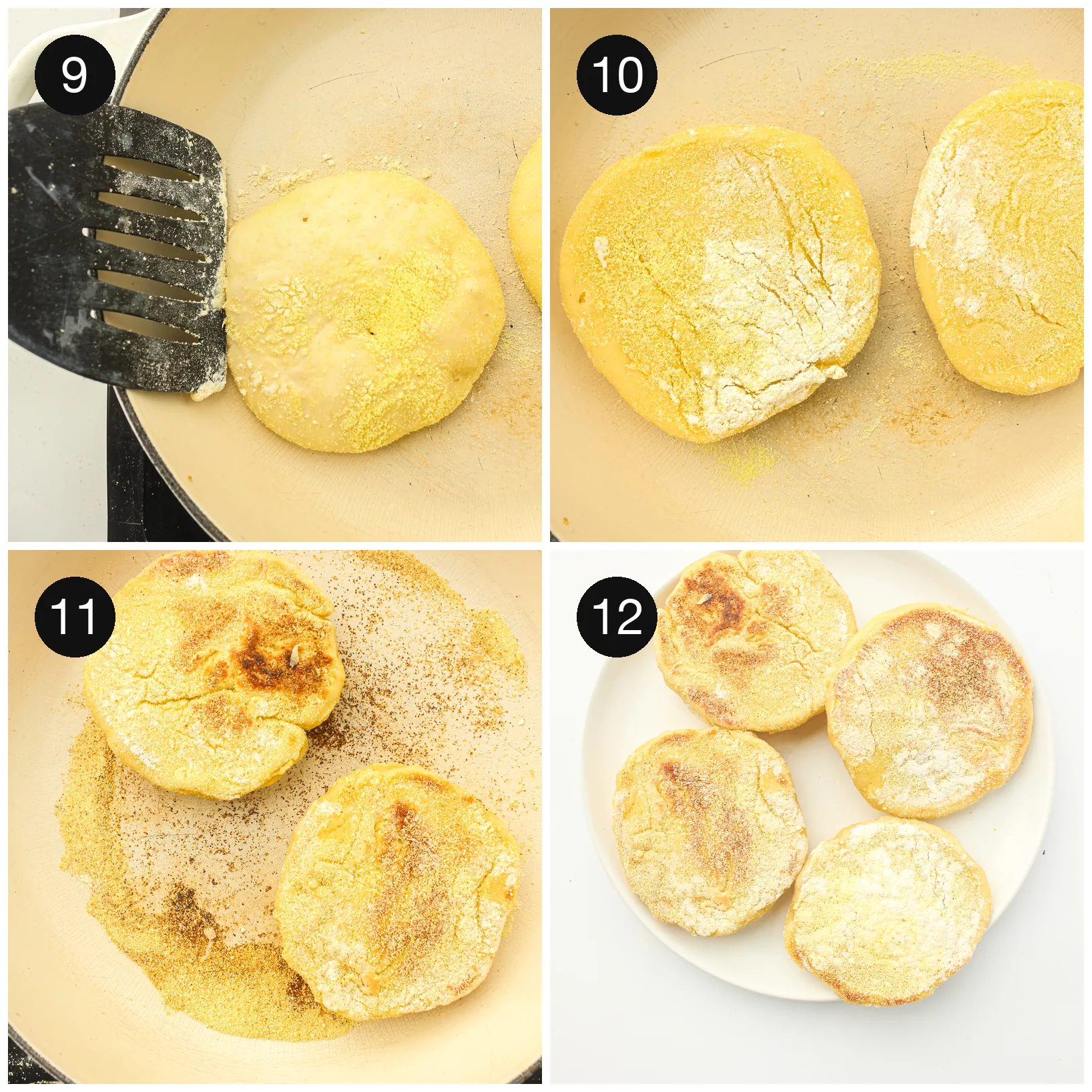
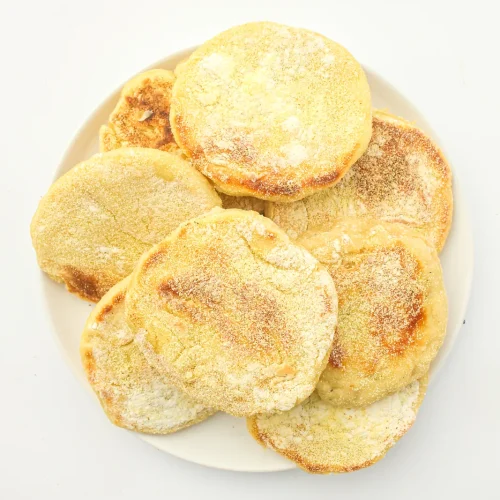
6. Cook low and slow. Finally cook in a dry pan over low to medium heat for 6 to 8 minutes a side, until deep golden and cooked through. Cool before splitting with a fork.
How to Get Real Nooks and Crannies
Two things create them, and neither is a special technique. The first is a wet dough, because a slack dough traps large irregular bubbles that a stiff one cannot hold. The second is splitting rather than slicing.
So push the tines of a fork all the way around the equator, then pull the halves apart with your hands. The tear follows the bubbles and leaves those craggy pockets that butter disappears into. A knife slices straight through them and gives you a flat, disappointing face.
Why They Come Out Doughy in the Middle
The heat is too high, almost every time. A hot pan browns the outside in three minutes while the centre is still raw, and there is no way to recover it afterwards.
Keep the pan on low to medium and be patient. Six to eight minutes a side sounds slow, and it is meant to. If you own a thermometer, the middle should read about 200F. In addition, cutting into one while it is hot makes even a properly cooked muffin look gummy, so let them cool for twenty minutes first.
Tips for the Best Sourdough English Muffins
- Weigh everything. Sourdough english muffins are sensitive to hydration, and cups vary too much.
- Do not grease the pan. A dry surface plus semolina is what gives the classic mottled finish.
- Press the cutter straight down without twisting, since twisting seals the edges and stops them rising.
- Re-roll the scraps once, no more. After that the dough toughens noticeably.
- Cook in batches with space between them so they can expand sideways.

Storage and Reheating
- Room temperature. Two days in a paper bag or a bread tin.
- Fridge. Up to 5 days in a sealed container, though the crumb firms up noticeably.
- Freezer. Split them first, then freeze for up to 2 months. Because they are already halved, you can toast them straight from frozen.
- Reheating. The toaster, always. A microwave turns them rubbery within seconds.
Variations and Substitutions
- Wholemeal. Swap a third of the flour. Harvard’s Nutrition Source explains what the bran and germ actually contribute, and the flavour suits the sourness well.
- Baked instead. Bake at 375F for 15 to 18 minutes if you would rather not stand at the hob. You lose some of the crust.
- Cinnamon and raisin. Work half a cup of raisins and a teaspoon of cinnamon into the dough before the overnight rest.
- Softer rolls instead. If you want an oven bake with the same overnight ease, my soft dinner rolls are the ones to make.
What to Serve With Sourdough English Muffins
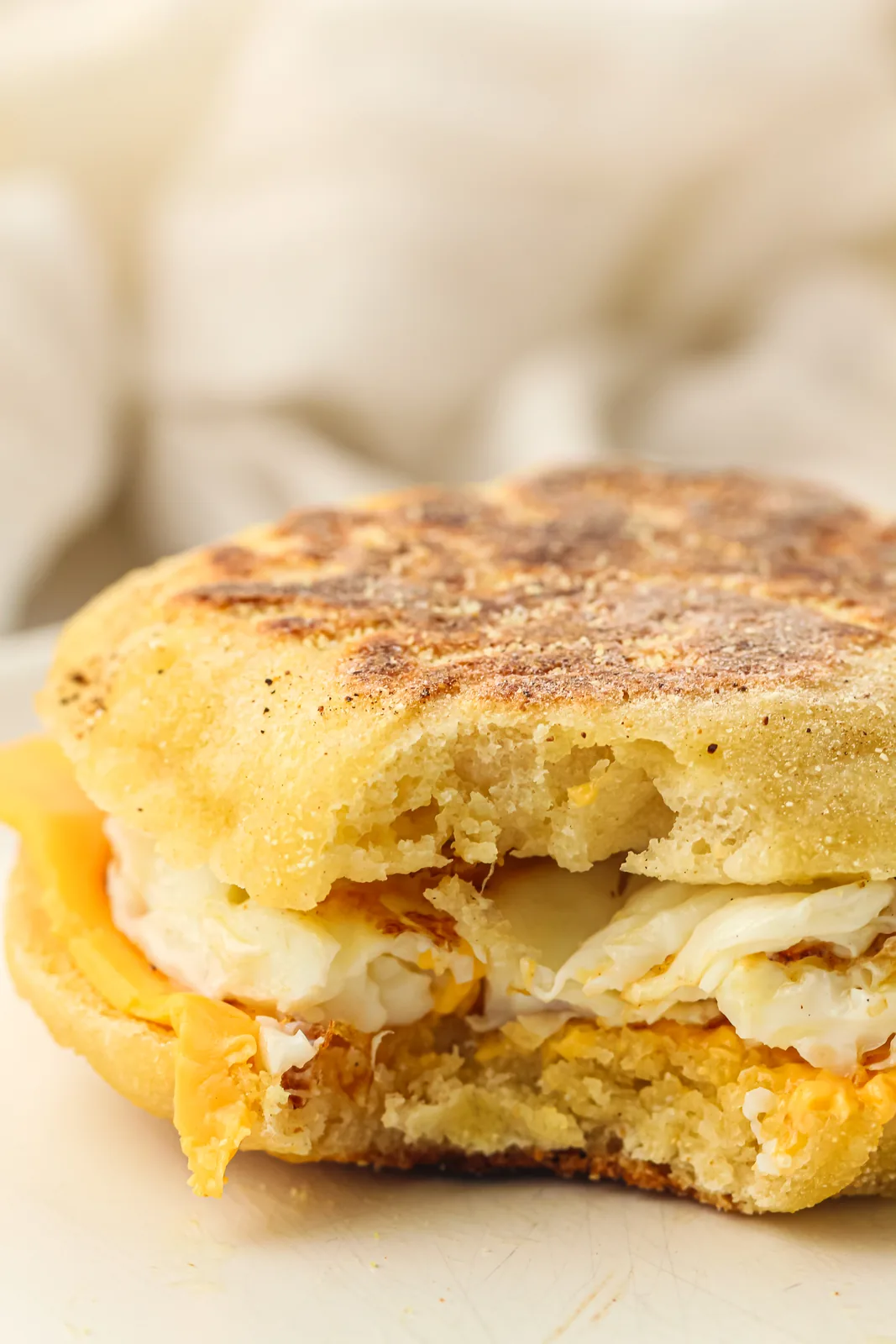
Butter and a good jam is hard to beat, but sourdough english muffins really shine as the base of a breakfast sandwich. Split, toasted, then loaded with egg and cheese, they hold together far better than a soft bun.
I make a batch of freezer breakfast sandwiches with them most months. For something lighter, spread them with homemade cream cheese and serve alongside homemade granola and fruit.
Frequently Asked Questions
Starter and Method
Can I use discard instead of active starter?
Yes, though they rise more slowly and come out denser. Add a quarter teaspoon of instant yeast and allow the full twelve hours overnight.
Why use semolina?
It stops the rounds sticking to the tray and the pan, and it gives the classic gritty crust. Cornmeal does the same job if that is what you have.
Can I bake them instead?
You can, at 375F for 15 to 18 minutes. However, the stovetop method is what produces the pale sides and flat griddled tops people recognise.
How thick should I roll the dough?
About 2 cm. Thinner and they turn out flat, thicker and the centres struggle to cook through before the outsides colour.
Troubleshooting and Storage
Why are mine doughy inside?
The pan was too hot. Cook them low and slow for six to eight minutes a side so the middle catches up with the crust.
How do I split them properly?
Prick all the way around with a fork, then pull the halves apart by hand. Tearing follows the air pockets, which is where the nooks come from.
Can I freeze them?
Absolutely. Split them first, bag them, and freeze for up to two months. Toast straight from frozen without thawing.
Ingredients
- 240 g active sourdough starter 1 cup, bubbly and at its peak
- 200 ml milk 3/4 cup plus 1 tablespoon
- 320 g plain flour 2 2/3 cups
- 15 g butter or oil 1 tablespoon
- 5 g salt 1 teaspoon
- 5 g sugar or honey 5 to 10 g, 1 to 2 teaspoons
- semolina for dusting
Instructions
- The night before, mix the sourdough starter, milk, flour, butter, salt and sugar until a soft dough forms.

- Cover and leave overnight at room temperature for 8 to 12 hours.
- The next day, turn the dough onto a floured surface and gently roll it to about 2 cm thick.
- Cut into rounds and dust both sides with semolina.
- Leave to rise for 1 to 2 hours, until puffy.
- Cook in a dry pan over low to medium heat for about 6 to 8 minutes per side, until cooked through and golden.
- Cool before splitting with a fork or a knife.