 Bity
Bity
The first pot of potato soup I ever made was thin, grey and honestly a bit sad. I had followed a recipe that opened with a flour and butter roux, and somewhere between the lumps and the scorched bottom I decided the whole thing was beyond me.
Then a friend who cooks in a pub kitchen showed me what she actually does. Because the spuds bring plenty of their own starch, you never need flour at all. You blend part of the pot and let it thicken itself. That is how this potato soup works: seven ingredients, thirty five minutes, one pan.

Quick Breakdown
Why You’ll Love This Potato Soup
- No roux, so no lumps. Because the thickening comes from the spuds themselves, there is nothing to burn and nothing to whisk out.
- Seven everyday ingredients. Spuds, onion, butter, stock, milk, salt, pepper. That is the whole list.
- Thirty five minutes start to finish. So it lands on the table on a Tuesday, not just a Sunday.
- You choose the texture. Blend a little for a chunky bowl, blend more for a silky one.
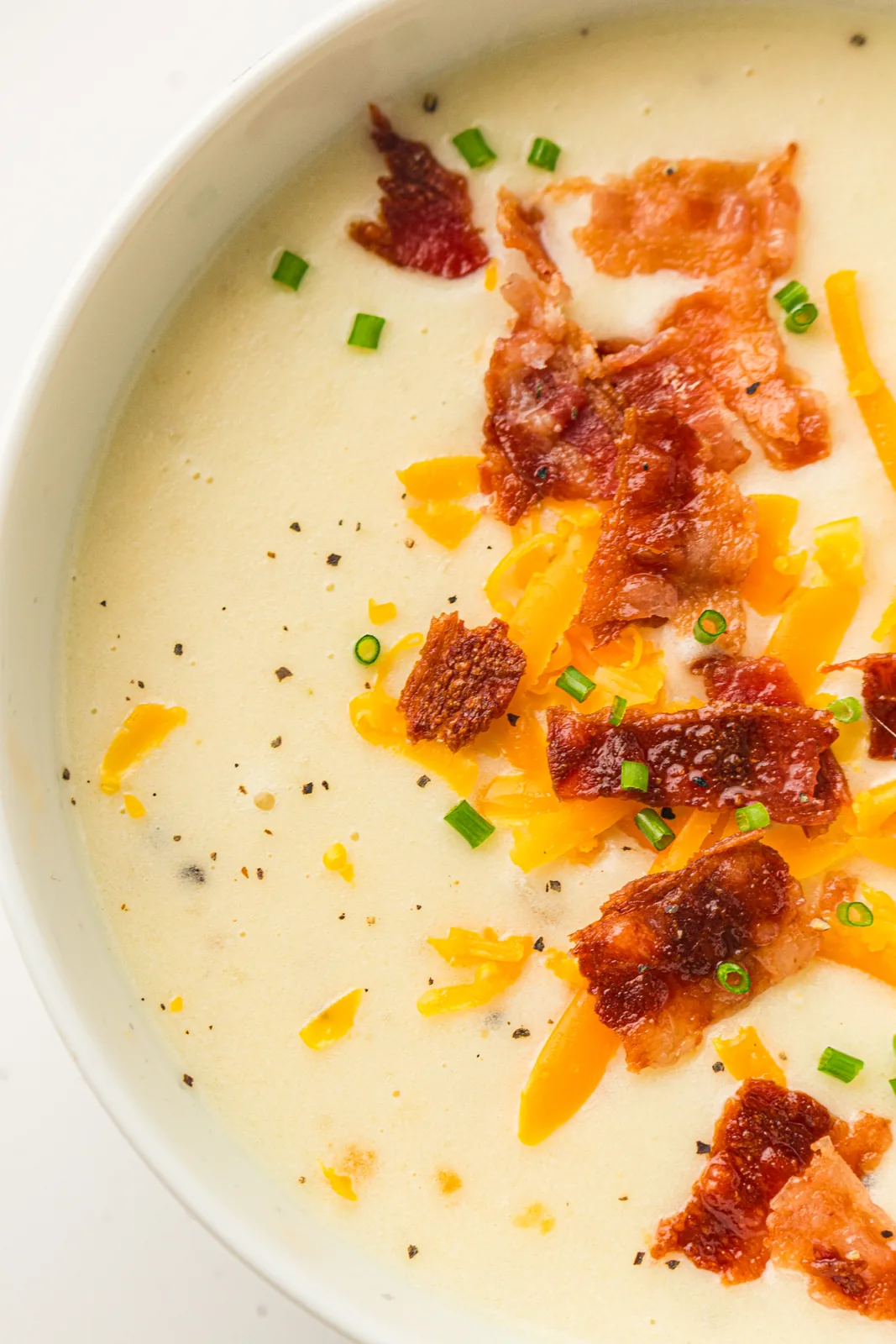
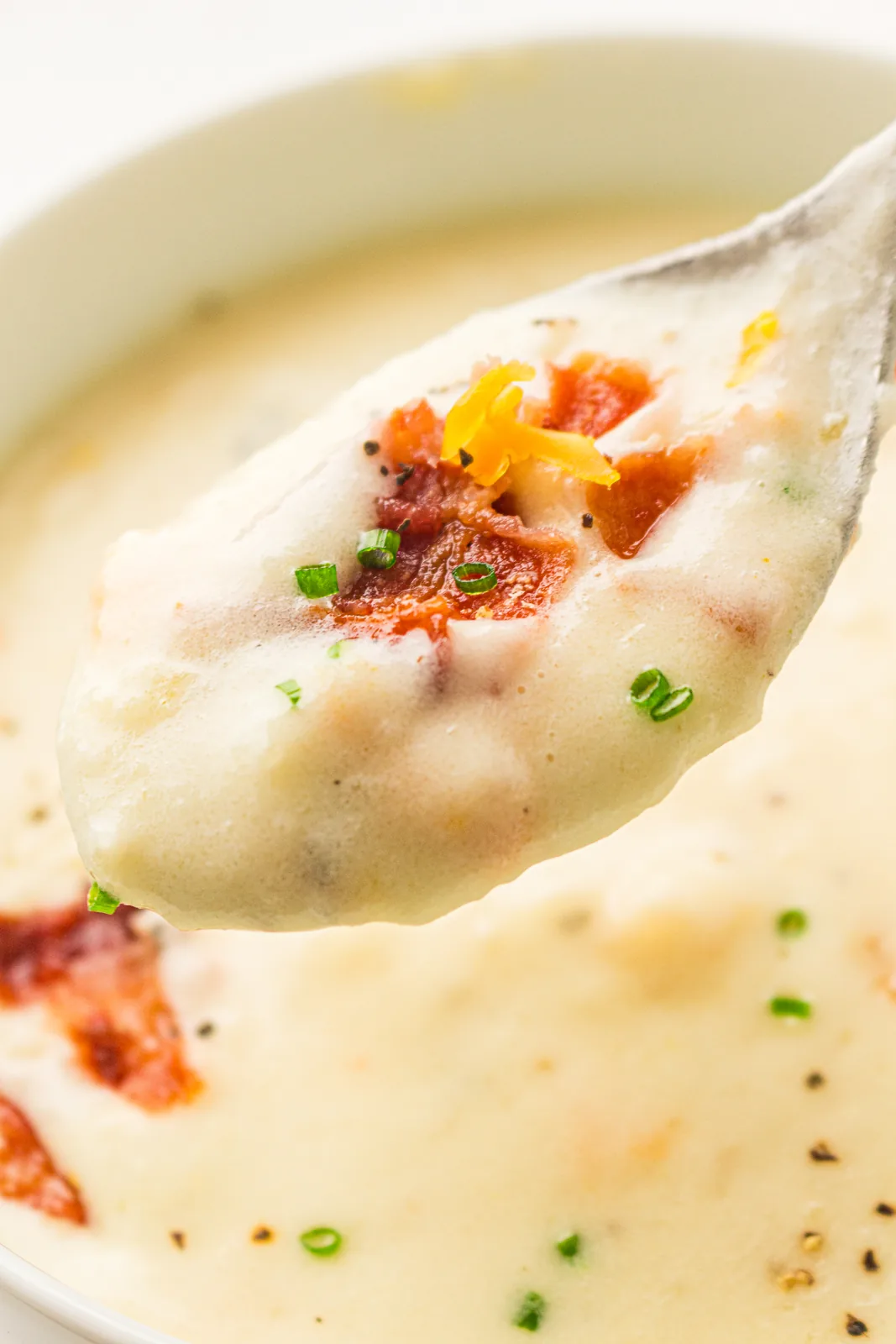
- It takes toppings beautifully. In fact, bacon and sharp cheddar turn a plain pot into the thing people ask you about.
Ingredient Notes
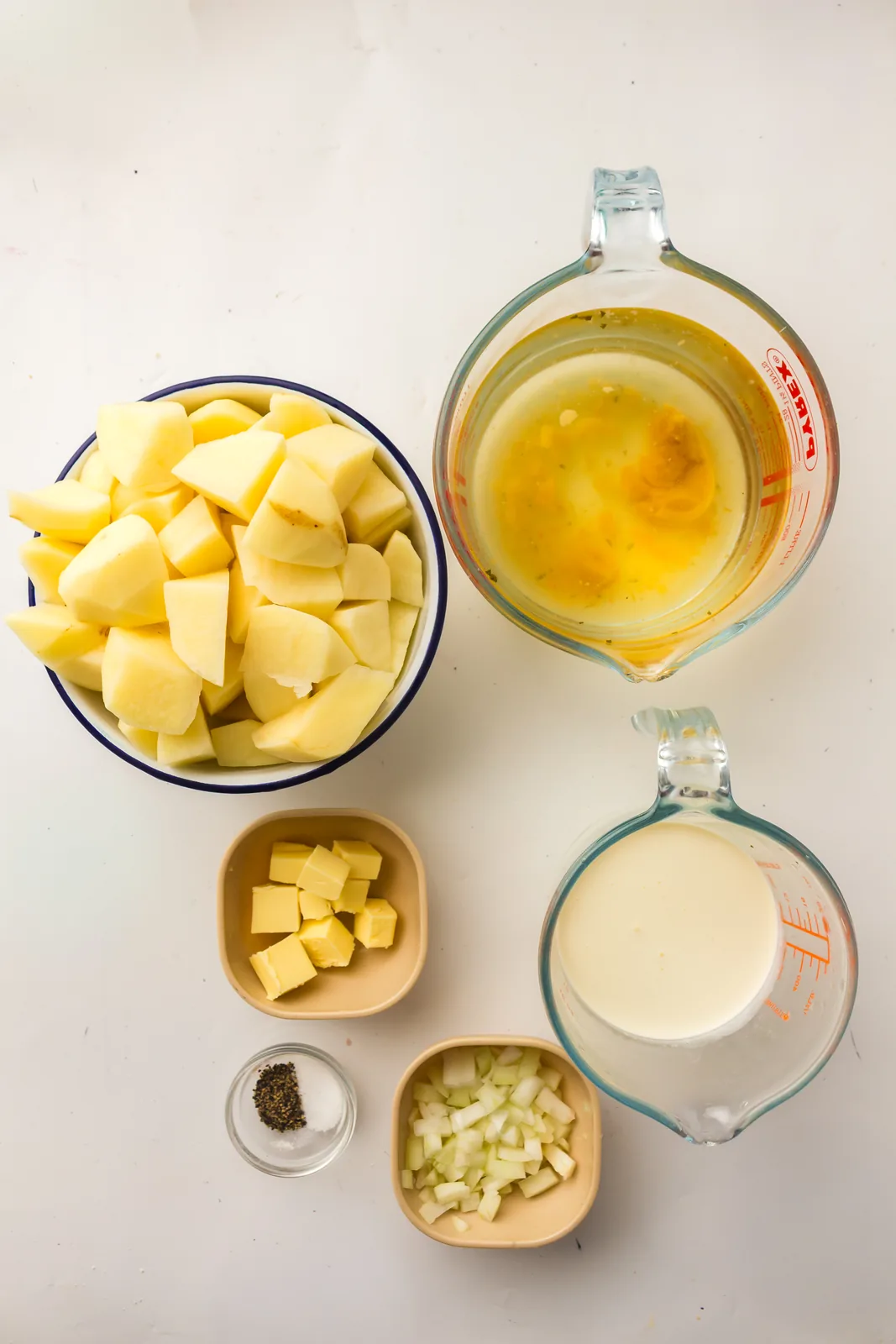
- Floury spuds. Maris Piper, King Edward or russets break down and release starch, which is exactly what you want here. Waxy salad varieties stay stubbornly firm. They are also a decent source of potassium and fibre when you keep the skins nearby, and Harvard’s Nutrition Source sets out where they sit in a balanced plate.
- One medium onion. Dice it small so it disappears into the background. However, do not rush the softening stage, since raw onion tastes sharp for the whole bowl.
- Butter. Two tablespoons is enough to sweat the onion and carry the flavour. Oil works, though you lose a little richness.
- Chicken stock. Use a good one, because in a potato soup this plain the stock does a lot of the talking. Vegetable stock makes this meat free.
- Milk or cream. Milk keeps it light, cream makes it luxurious. Either way it goes in at the very end and must never boil.
- Salt and pepper. Season at the start and again after blending. Starch dulls salt, so the second check matters more than you would think.
The Best Potatoes for Potato Soup
This is the single choice that decides your texture. Floury varieties are full of loose starch granules that swell and burst as they cook, so half of them practically melt into the liquid on their own. That is free thickening, and it is why the pot never needs flour.
Waxy types behave in the opposite way. Charlottes, new potatoes and most red skinned salad varieties hold their shape, which is lovely in a salad and disappointing in a bowl of soup. You end up with firm cubes floating in something thin.
All rounders such as Yukon Golds sit happily in the middle. Honestly, if that is what is in the cupboard, use them. Just blend a little more of the pot to make up the difference.
How to Thicken It Without Flour
Blending is what thickens potato soup here, and the amount you blend is the dial. Take a stick blender to roughly half the pot and you get a creamy base with recognisable chunks still in it. Take it to three quarters and the spoon starts to stand up.
Still too loose? Simmer it uncovered for another five minutes before the milk goes in, since evaporation concentrates everything. Too thick the next day is normal and expected, so loosen it with a splash of stock when you reheat.
How To Make Potato Soup
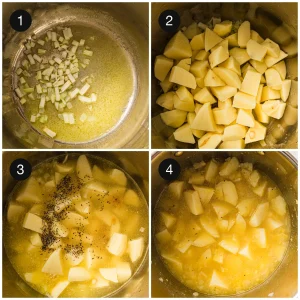
1. Soften the onion. First melt the butter in a large pot over medium heat, add the diced onion and let it cook gently for five to seven minutes until soft and translucent. It should never colour.
2. Add the spuds and stock. Next tip in the diced potatoes, the chicken stock, the salt and the black pepper, and give it one good stir.
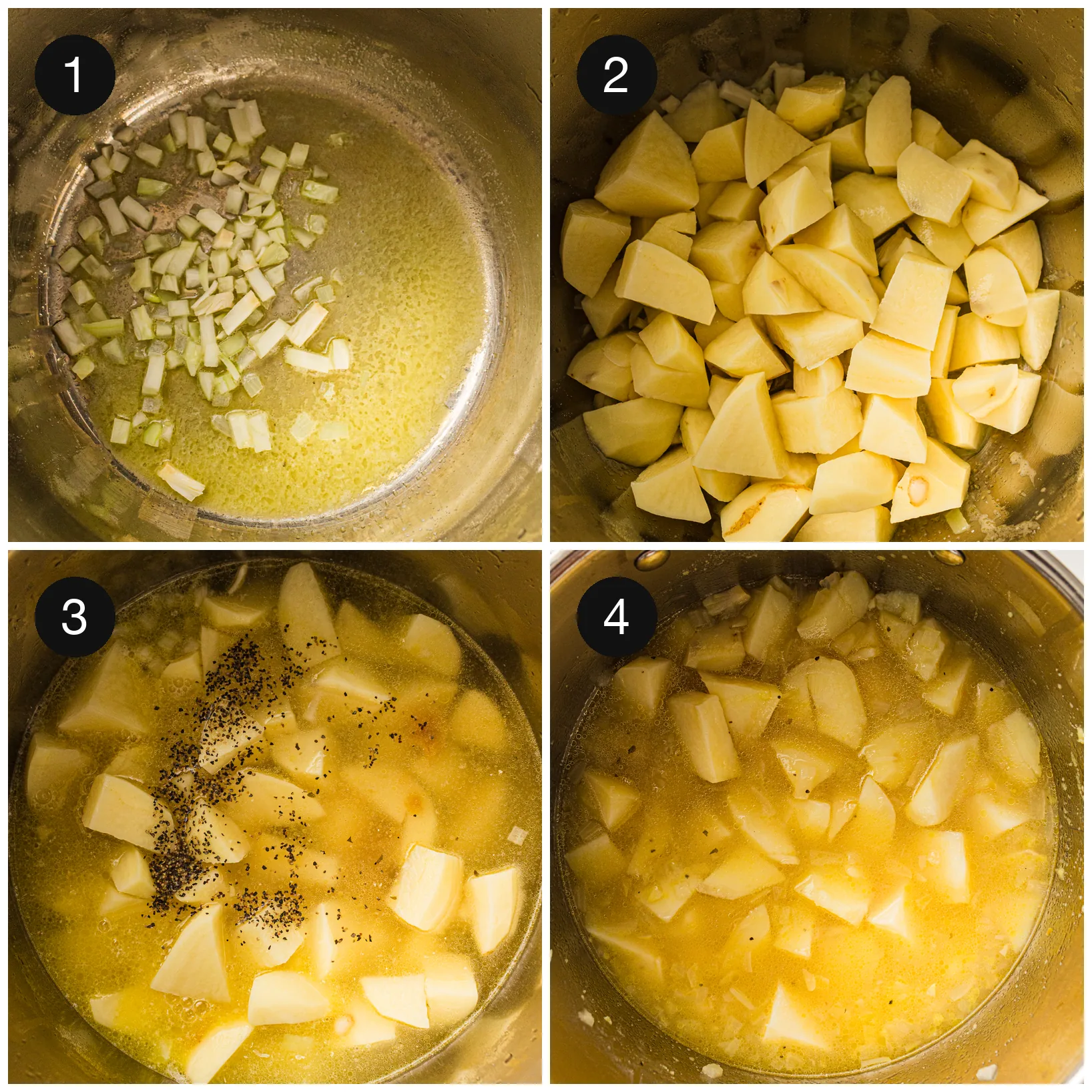
3. Simmer until tender. Then bring it to the boil, drop the heat and simmer for about twenty minutes. A knife tip should slide through a chunk with no resistance at all.
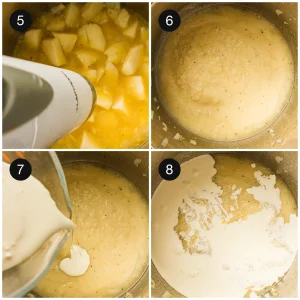
4. Blend part of the pot. After that, take the pan off the heat and blend roughly half of it with a stick blender, moving around so you leave plenty of texture behind.
5. Stir in the dairy. Meanwhile warm the milk or cream slightly, then stir it through over low heat. Do not let it boil, because boiled dairy splits and turns grainy.
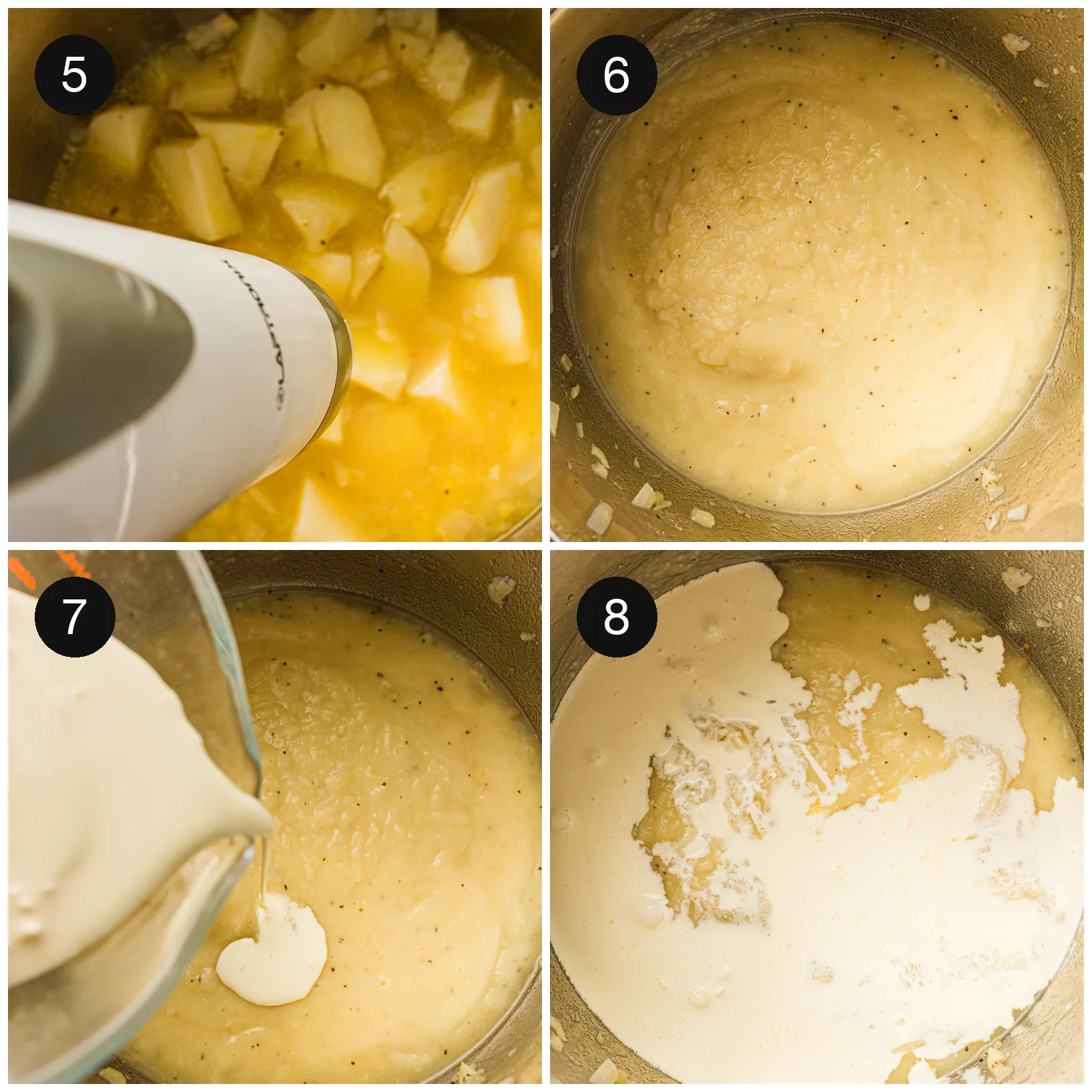
6. Taste and serve. Finally check the seasoning once more, ladle it out hot and pile on whatever toppings you fancy.
Biggest Mistakes to Avoid
- Boiling after the milk goes in. This is the big one. Dairy splits into grainy specks and there is no way back, so keep it at a bare simmer.
- Blending the whole pot. Because the starch turns gluey when it is overworked, a full blitz gives you wallpaper paste rather than potato soup. Stop while chunks remain.
- Cutting the pieces too large. Big chunks cook unevenly, so the outsides collapse while the centres stay hard.
- Underseasoning. Starch swallows salt. Taste at the end, not just at the start.
- Rushing the onion. Five minutes feels long when you are hungry. Still, undercooked onion gives the finished bowl a raw edge.
Tips for the Best Potato Soup
- Cut everything to a similar size, roughly two centimetres, so it all cooks at the same rate.
- Add the bacon after blending rather than before. Otherwise you blitz it into brown flecks.
- A bay leaf in the simmer costs nothing and adds a surprising amount of depth.
- For a smoky note, stir in a quarter teaspoon of smoked paprika with the pepper.
- Grate the cheese finely and add it off the heat. In addition, a squeeze of lemon at the end lifts the whole bowl.
Storage and Reheating
- Fridge. Cool it quickly, then keep it covered for up to four days. Because dairy is involved, get it chilled within two hours; the Academy of Nutrition and Dietetics explains why that window matters.
- Freezer. It freezes for up to two months, though the texture loosens slightly as the dairy separates. A brisk whisk on reheating pulls it back together.
- Reheating. Warm it gently on the hob with a splash of stock or milk. Meanwhile stir often, since a thick pot catches on the base quickly.
I portion leftovers into glass meal prep containers so each one reheats as a single lunch.
Variations and Substitutions
- Loaded style. Crisp bacon, sharp cheddar and spring onions on top. If you like that flavour in a jacket, my air fryer baked potato gets you there with a crackly skin.
- Sweetcorn version. Add a tin of drained sweetcorn with the stock for something closer to my ham and corn chowder.
- Leek and spud. Swap the onion for two sliced leeks and finish with chives.
- Meat free. Vegetable stock and a knob of extra butter, and nobody misses the chicken.
- Batch cooking. Double it and freeze half. My guide to how to freeze soup covers the containers and the thawing.
What to Serve With Potato Soup
Bread is the obvious partner for potato soup, and warm crusty sourdough with cold butter is hard to beat. For something more substantial, a bowl beside instant pot chicken noodle soup makes a proper soup and sandwich night for a crowd.
Otherwise keep it green. A sharp salad with mustard dressing cuts through all that cream, and roasted broccoli on the side works just as well.
Frequently Asked Questions
Ingredients and Method
What are the main ingredients?
Spuds, onion, butter, stock, milk or cream, salt and pepper. That is genuinely all seven, and everything else is a topping.
Do I have to peel them?
Not at all. However, skins leave flecks after blending, so peel if you want a smooth pale bowl and leave them on if you want a rustic one.
Can I use a jug blender instead?
Yes, but work in batches and never fill it more than half full. Hot liquid expands and lifts the lid, which is as messy as it sounds.
Can I make it dairy free?
Of course. Use oil in place of butter and unsweetened oat milk at the end, since oat has the closest body to dairy.
Texture and Storage
Why did mine turn gluey?
It was overblended. Potato soup goes elastic when the starch is worked too hard, so blitz less next time and stop while chunks remain.
How do I make it thinner?
Add hot stock a splash at a time until it pours the way you like. It thickens again in the fridge, so expect to do this on day two.
Does it freeze well?
It does, for up to two months. The dairy may separate slightly on thawing, though a whisk over low heat brings it straight back.

Ingredients
- 2.2 lb potatoes 1 kg, peeled and diced
- 1 medium onion diced
- 2 tbsp butter 30 g
- 3 cups chicken stock 750 ml
- 1 cup milk or cream 240 ml
- 1 tsp salt
- 1/2 tsp black pepper
Optional Toppings
- crispy bacon
- shredded cheddar
- chopped spring onions
Instructions
- Melt the butter in a large pot over medium heat.

- Add the diced onion and sauté gently for 5 to 7 minutes until soft and translucent.
- Add the diced potatoes, chicken stock, salt and black pepper.
- Bring to the boil, then reduce to a simmer and cook for 20 minutes, until the potatoes are tender.
- Blend about half the pot with an immersion blender, leaving plenty of texture.
- Stir in the milk or cream and heat through gently. Do not let it boil.
- Adjust the seasoning if needed and serve warm with your chosen toppings.