 Bity

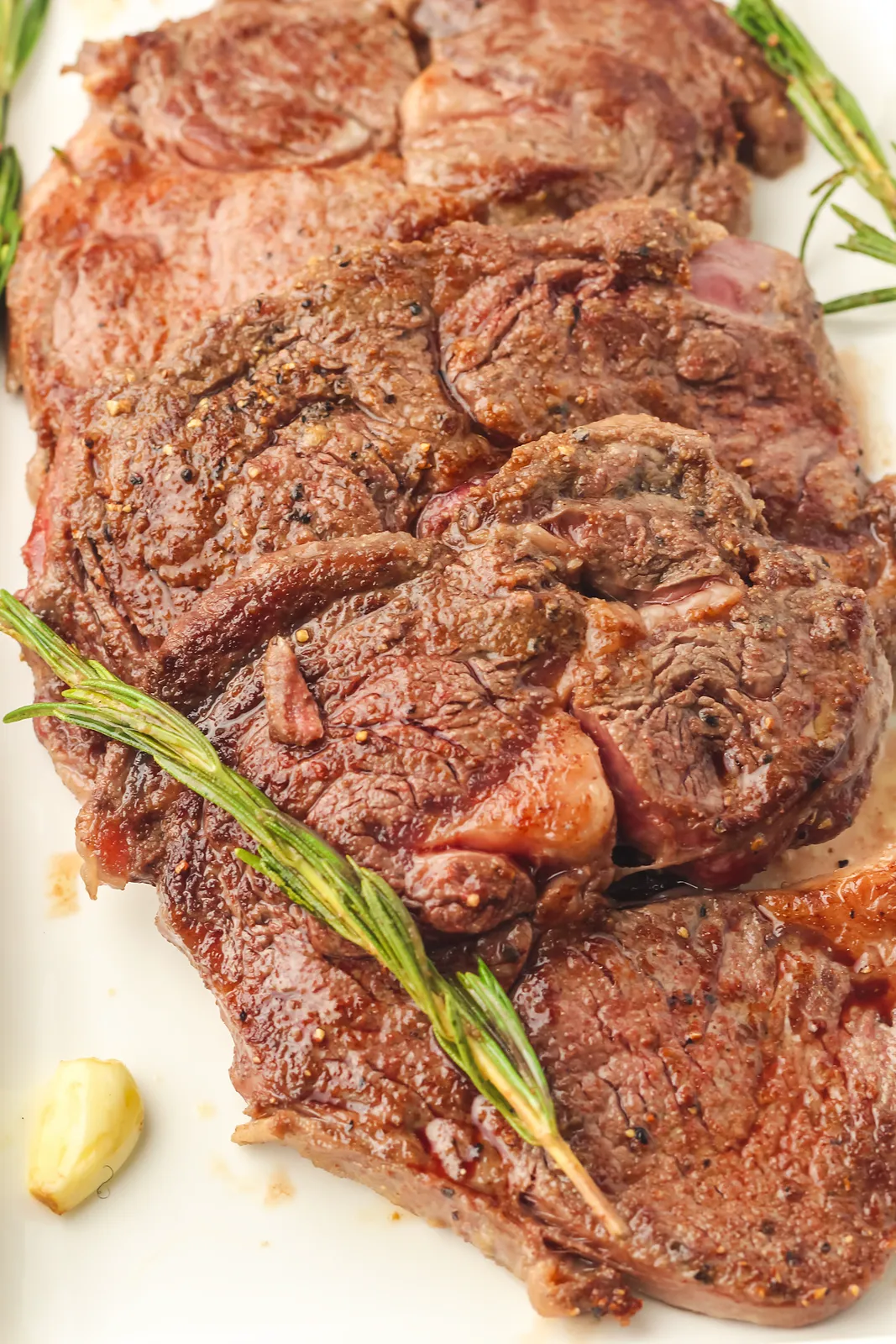
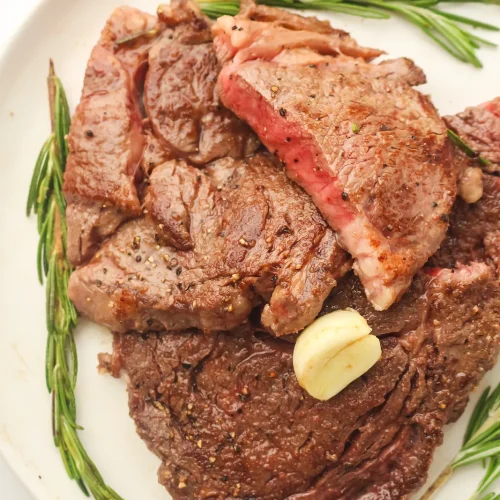
Cooking ribeye on Blackstone griddles has ruined restaurant steak for me. The whole steel surface gets screaming hot, so every bit of the steak touches heat at once and you end up with an even, deep brown crust from edge to edge, then a garlic and rosemary butter baste to finish.
The first time I did it, I was only trying to keep the smoke out of the kitchen. However, my husband declared it the best steak I had ever cooked, and he was right. Three ribeyes, ten minutes on the griddle, ten minutes resting, and dinner is done.
In short, a Blackstone ribeye is three 1 inch (2.5 cm) ribeye steaks rubbed with olive oil and a garlic powder, onion powder, salt and pepper seasoning, seared on a griddle preheated to medium high for 4 to 5 minutes per side for medium rare, then basted with garlic and rosemary butter and rested for 10 minutes. It takes about 30 minutes in total, including the rest, serves 3 and works out at about 780 calories per steak.
Quick Breakdown
Why You’ll Love This Ribeye on Blackstone
- A crust you cannot get in a pan. The flat top is big enough that the steaks never crowd or steam.
- Butter basting outdoors. All the steakhouse flavour of garlic and rosemary butter, with none of the smoke alarm drama.
- Simple seasoning. Garlic powder, onion powder, salt and pepper let the beef shine.
- Thirty minutes total. That includes the rest, which is when you can make a salad.
- Cooks three at once. Everyone gets a hot steak at the same time.
Ingredient Notes
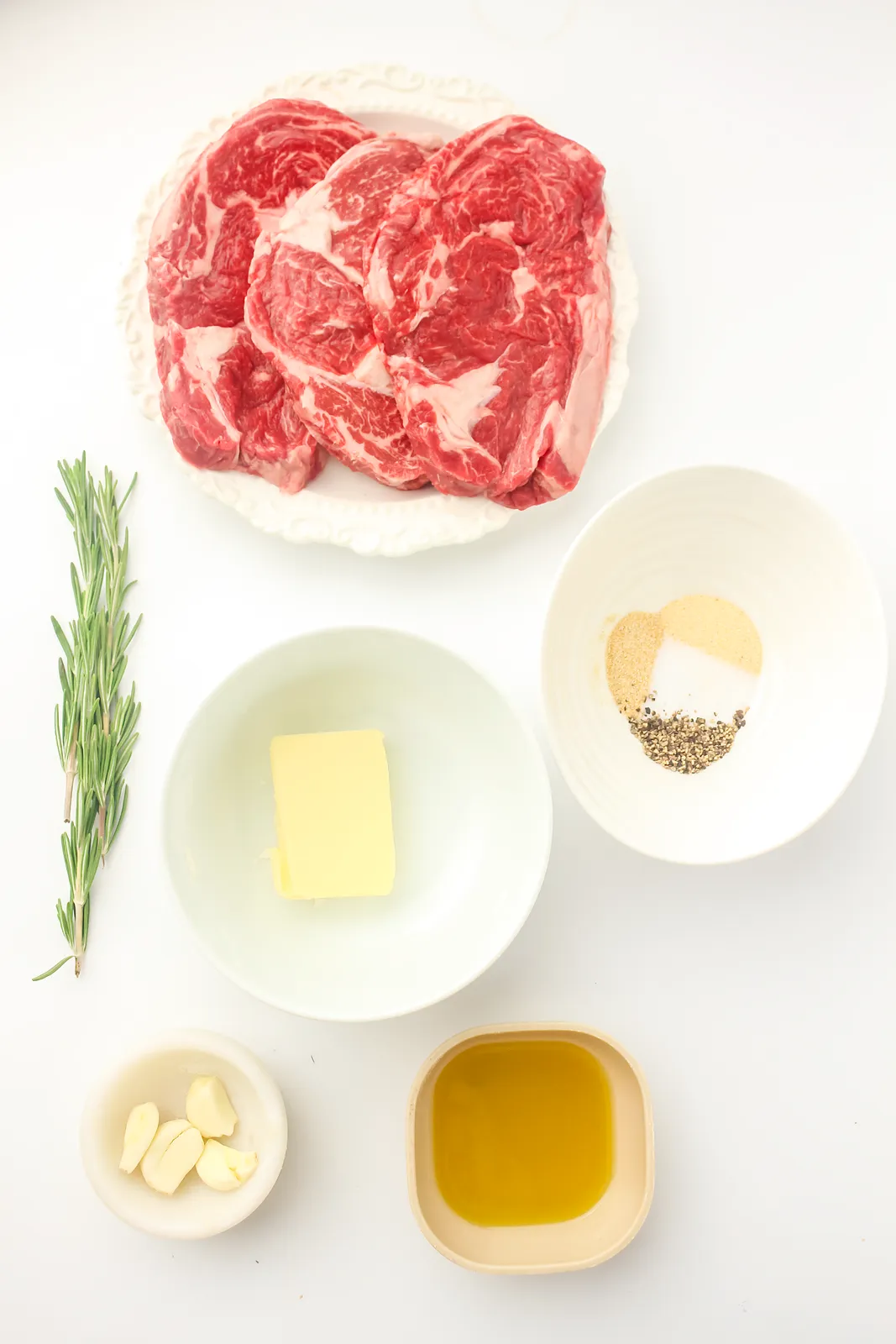
- Ribeye steaks. Three of them. Look for plenty of white marbling running through the meat, because that fat melts as it cooks and keeps the steak juicy. About an inch (2.5 cm) thick is ideal for the times below.
- Olive oil. Two tablespoons (30 ml), rubbed onto the steaks rather than the griddle so the seasoning sticks.
- Garlic powder and onion powder. One teaspoon (3 g) of each. Powders give a savoury base without burning the way fresh garlic would at this heat.
- Kosher salt. One teaspoon (5 g). Its coarse flakes are easy to sprinkle evenly.
- Black pepper. Half a teaspoon (1 g).
- Butter. Two tablespoons (28 g), for basting at the end.
- Garlic cloves. Four, smashed with the flat of a knife so they release their flavour into the butter.
- Fresh rosemary. Two sprigs. Thyme works too.
How Long to Cook Ribeye on Blackstone
When you cook ribeye on Blackstone griddles at medium high, an inch thick steak takes 4 to 5 minutes per side for medium rare. Thickness matters far more than weight, so use this as a starting point:
| Steak thickness | Time per side (medium rare) | Notes |
|---|---|---|
| 3/4 inch (2 cm) | 3 to 4 minutes | Check early, these overshoot fast |
| 1 inch (2.5 cm) | 4 to 5 minutes | The sweet spot for this recipe |
| 1 1/2 inch (4 cm) | 6 to 7 minutes | Sear the fat edge too, then move to a cooler zone |
Ribeye Doneness Temperatures
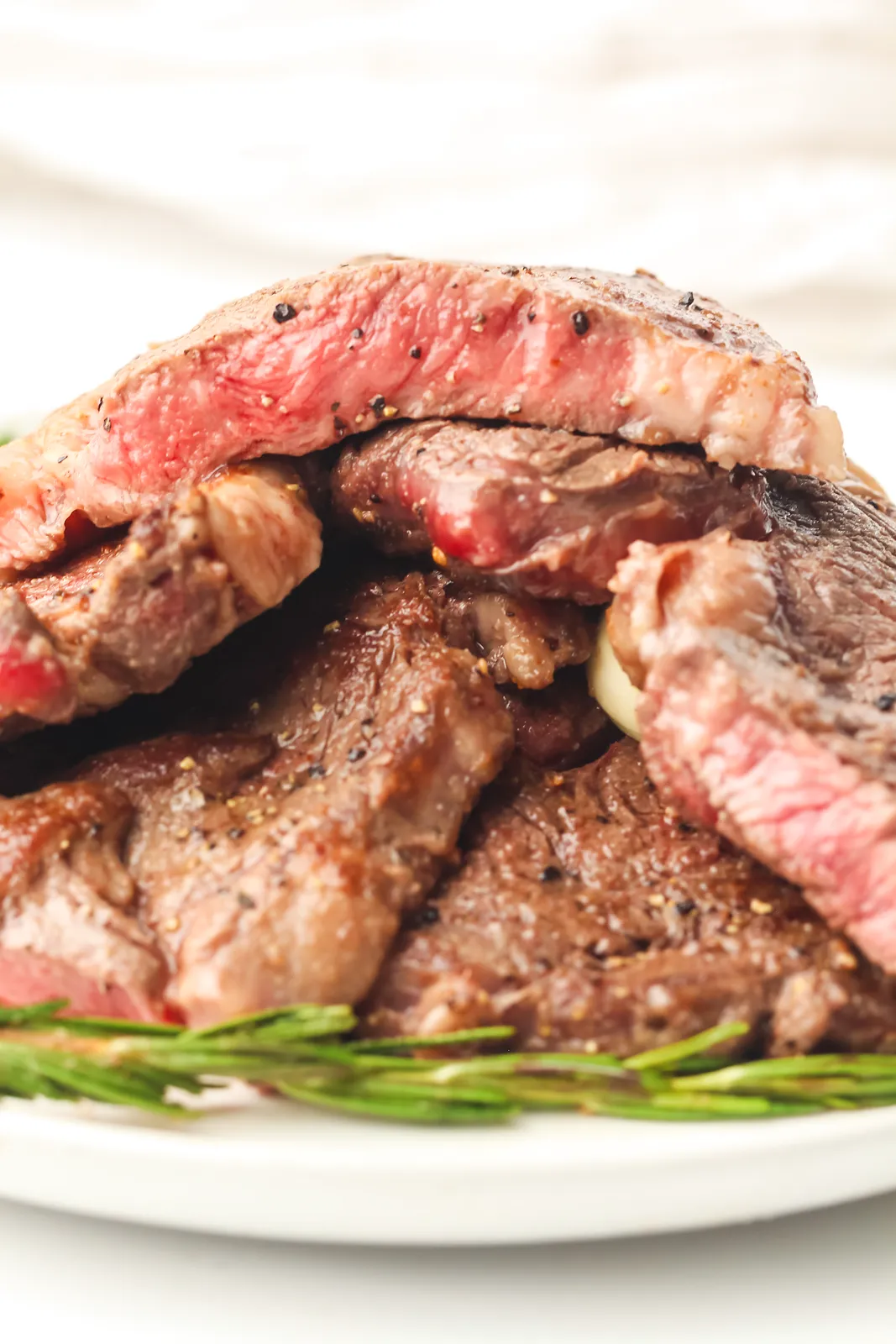
An instant read thermometer is the only way to be sure. Medium rare is approximately 135°F (57°C) once rested, so I take the steaks off a few degrees before that. ThermoWorks has a good guide to finding the true centre of a steak with a probe.
| Doneness | Take it off at | After resting |
|---|---|---|
| Rare | 120°F (49°C) | 125°F (52°C) |
| Medium rare | 130°F (54°C) | 135°F (57°C) |
| Medium | 140°F (60°C) | 145°F (63°C) |
| Medium well | 148°F (64°C) | 150°F (66°C) |
How To Cook Ribeye on Blackstone
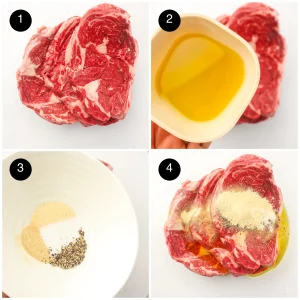
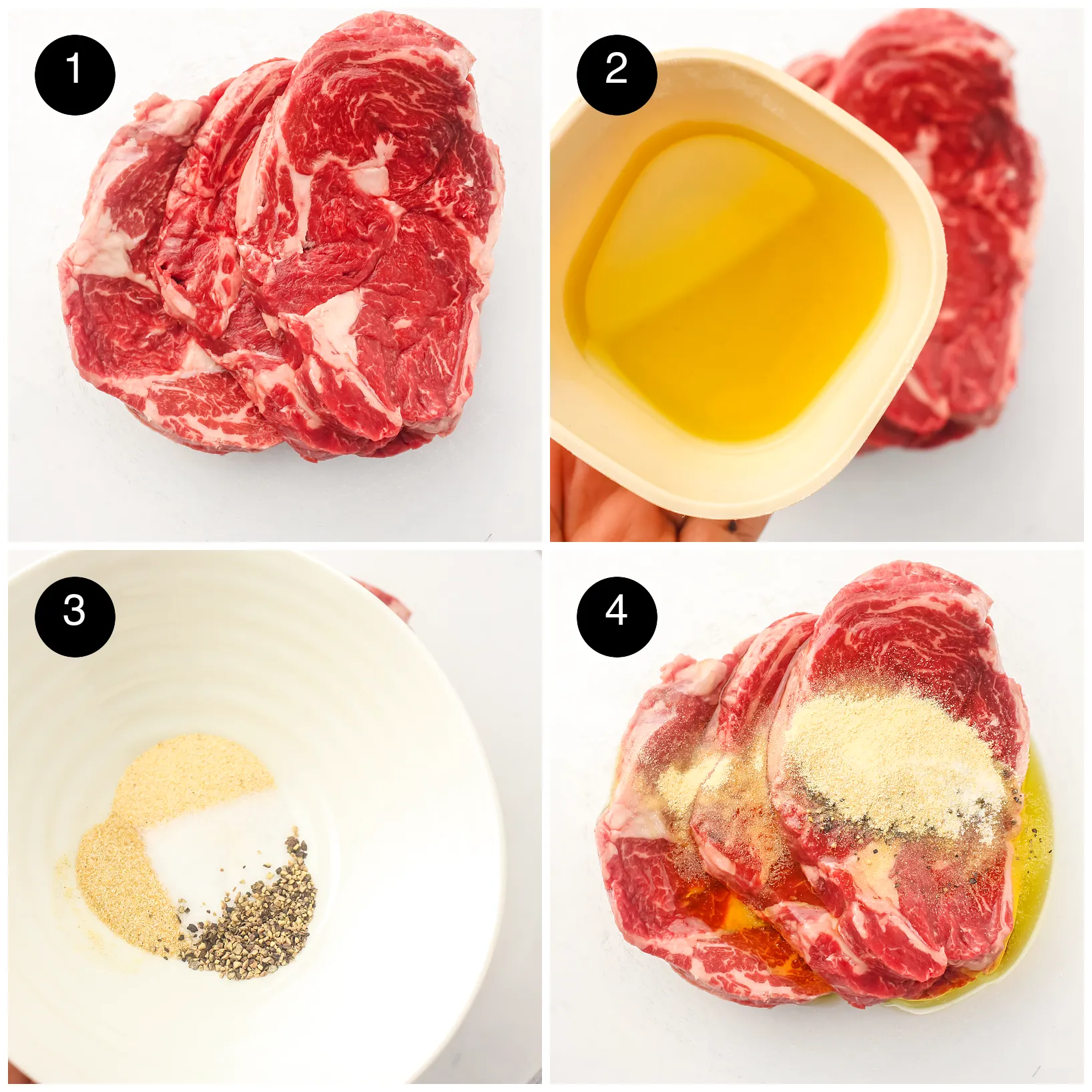
1. Preheat. First, heat the griddle on medium high for 10 to 15 minutes.
2. Pat dry. Next, blot the steaks all over with paper towels. A dry surface browns; a wet one steams.
3. Oil. Then rub both sides with the olive oil.
4. Season. Mix the garlic powder, onion powder, salt and pepper, and sprinkle it over both sides.
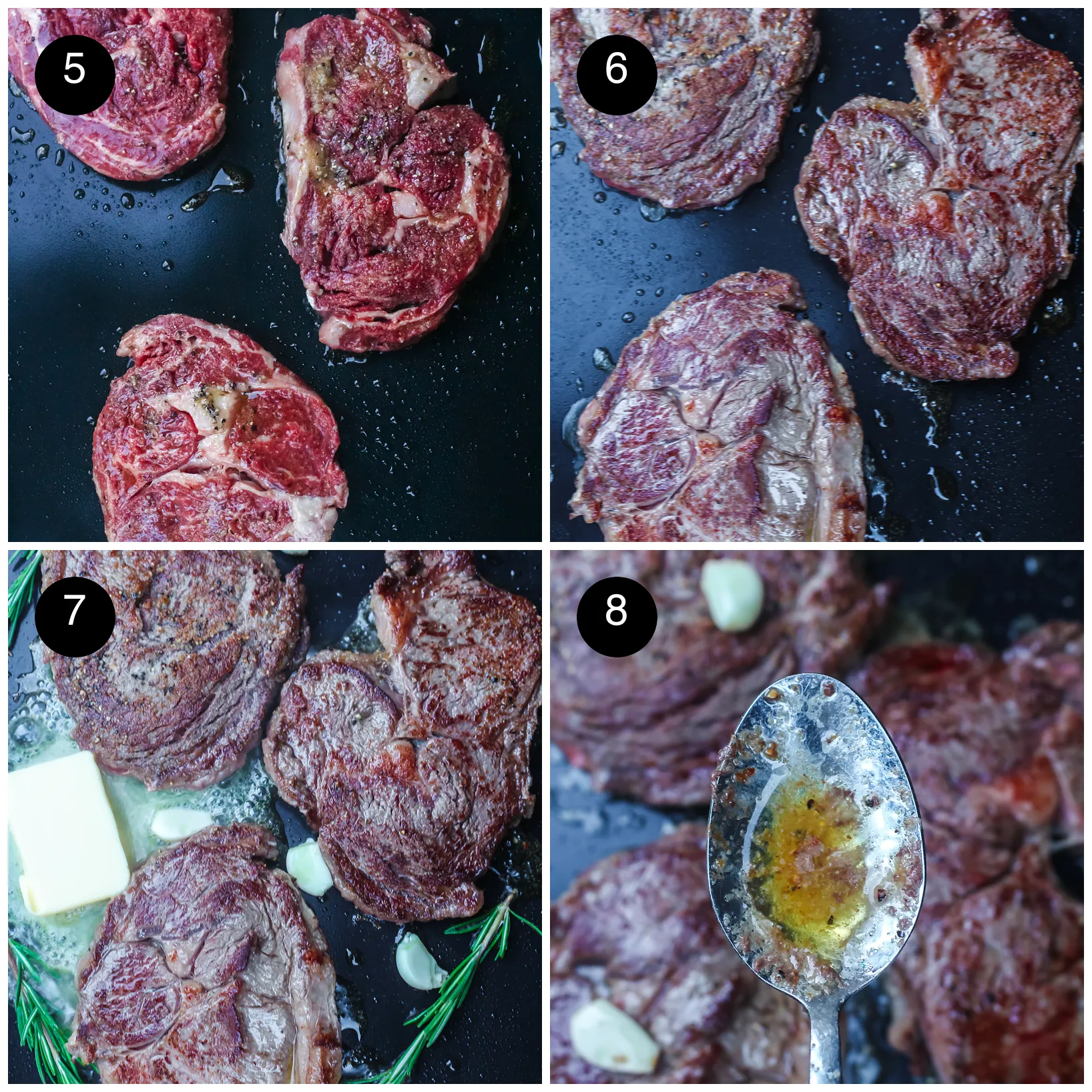
5. Lay them down. After that, place the steaks on the hot griddle with space between them.
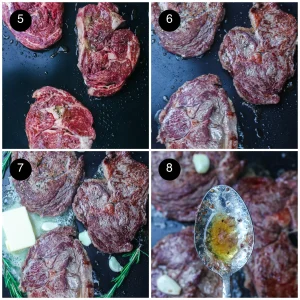
6. Sear the first side. Cook for 4 to 5 minutes without moving them, so the crust can form.
7. Flip. Turn them and cook for another 4 to 5 minutes for medium rare, or longer to your liking.
8. Add the aromatics. Now drop the butter, smashed garlic and rosemary on the griddle right beside the steaks.
9. Baste. As the butter foams, spoon it over the steaks again and again during the final minute.
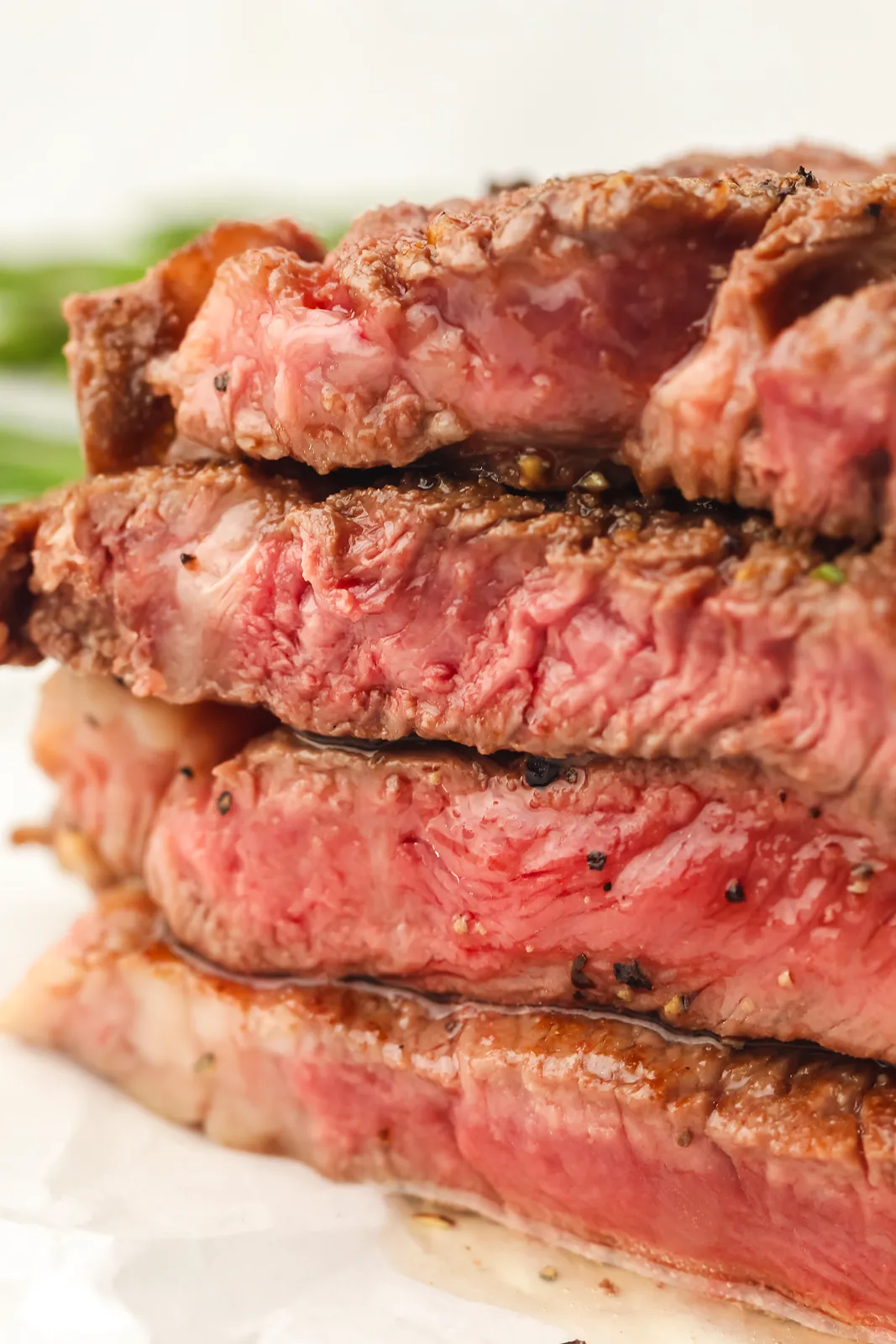
10. Rest. Finally, move the steaks to a board and let them rest for 10 minutes before slicing across the grain.
A sturdy griddle spatula slides cleanly under the crust when you flip, and its flat edge is handy for scraping the steel afterwards.
Why Resting Matters
Resting is not fussiness. While the steak sits, the muscle fibres relax and reabsorb juice, so less of it runs onto the board when you cut. The temperature also keeps rising a few degrees. As ThermoWorks explains in its piece on resting meat, that carryover is exactly why you pull the steak before it hits your target. Ten minutes on a warm plate, loosely covered with foil, is plenty.
Why Is My Steak Grey or Tough?
A ribeye turns grey or tough on a griddle when the steel is not hot enough, the steak goes on wet or it cooks past medium. Preheat on medium high for 10 to 15 minutes, pat the steaks dry and take them off at 130°F (54°C) for medium rare. The common causes:
- The griddle was not hot enough. Cooking ribeye on Blackstone steel that is only warm cooks the inside before the outside browns, leaving a thick grey band.
- The steak was wet. Always pat it dry first.
- It was moved too often. Leave it alone until it releases easily; if it sticks, it is not ready to flip.
- It was overcooked. Ribeye is forgiving thanks to its fat, but past medium it starts to toughen. Use a thermometer.
- It was sliced with the grain. Cut across the lines of the muscle for tender slices.
Tips for the Best Ribeye on Blackstone
- Take the steaks out of the fridge 20 to 30 minutes before cooking so they cook more evenly.
- Use tongs to stand each steak on its fat edge for a minute; it renders and crisps beautifully.
- Create a cooler zone on one side of the griddle for thick steaks to finish gently.
- Keep the butter away from the hottest part of the steel so the milk solids do not burn.
- Cook ribeye on Blackstone griddles in a sheltered spot if you can, because wind cools the steel noticeably.
- Scrape and oil the griddle while it is still warm afterwards, so it stays seasoned.
For a deeper garlic flavour, set a melting dome over the steaks and foaming butter for the last 30 seconds, so the aromatics steam right into the crust.
Storage and Reheating
- Fridge. Store leftovers in an airtight container for up to 3 days.
- Reheating. Warm slices briefly on a hot griddle or pan, or gently in a low oven at 250°F (120°C) until just warm, so they do not overcook.
- Cold. Honestly, leftover slices are wonderful cold in a salad or sandwich.
Variations and Substitutions
- Different cuts. New York strip, sirloin or filet all work. Leaner cuts cook a minute or so faster.
- Herb swap. Use thyme instead of rosemary, or both.
- Spicy rub. Add a pinch of smoked paprika or chilli flakes to the seasoning.
- Bite sized. If you want something quicker, my air fryer steak bites are made from ribeye cubes.
- More from the griddle. Keep the flat top going for my Blackstone smash burgers.
What to Serve With It
My classic pairing for ribeye on Blackstone nights is a big spoonful of mashed potatoes to catch the garlicky butter. For a steakhouse feel, add a side of air fryer mushrooms tossed in a little extra garlic butter.
In summer, I go for grilled vegetables, a crisp green salad or corn on the cob instead. Because the steak is rich, something fresh and sharp on the side keeps it balanced.
Frequently Asked Questions
Cooking and Doneness
What internal temperature is medium rare ribeye?
About 135°F (57°C) after resting, so take a ribeye off the griddle at around 130°F (54°C). The USDA safe minimum for beef steaks is 145°F (63°C) with a 3 minute rest, which is medium on the doneness chart.
What temperature should a Blackstone griddle be for steak?
Medium high. For ribeye on Blackstone griddles, aim for roughly 400 to 450°F (205 to 230°C) on the surface after 10 to 15 minutes of preheating.
Why is my steak sticking to the griddle?
Because it is not ready to flip yet. Leave the steak unmoved for the full 4 to 5 minutes; once the crust forms, it releases from the steel on its own.
How long should ribeye rest after cooking?
10 minutes, on a warm plate loosely covered with foil. Resting lets the muscle fibres relax and reabsorb juice, so less runs onto the board when you slice, and the centre rises a few degrees as it sits.
Cuts and Serving
Can I cook other cuts of steak on a Blackstone the same way?
Yes. New York strip, sirloin or filet all work with the same seasoning and butter baste. Leaner cuts cook a minute or so faster, so start checking the temperature early.
Can I cook bone in ribeye on a griddle?
Yes, bone in ribeye on Blackstone griddles works well. Add a minute or two per side and check the temperature near the bone, which cooks more slowly.
What should I serve with ribeye steak?
Mashed potatoes are the classic pairing, because they catch the garlic butter. Garlic butter mushrooms, grilled vegetables, a crisp green salad or corn on the cob also work well.
How long does leftover ribeye last in the fridge?
Up to 3 days in an airtight container. Refrigerate it within 2 hours of cooking, then warm slices briefly on a hot griddle or in a 250°F (120°C) oven so they do not overcook.
Ingredients
- 3 ribeye steaks
- 2 tablespoons olive oil (30 ml)
- 1 teaspoon garlic powder (3 g)
- 1 teaspoon onion powder (3 g)
- 1 teaspoon kosher salt (5 g)
- 1/2 teaspoon black pepper (1 g)
- 2 tablespoons butter (28 g)
- 4 garlic cloves smashed
- 2 sprigs fresh rosemary
Instructions
- Preheat the Blackstone griddle to medium-high heat.
- Pat the steaks dry with paper towels.
- Rub both sides with olive oil.

- Season with garlic powder, onion powder, salt, and pepper.
- Place the steaks onto the hot griddle.
- Cook for 4 to 5 minutes on the first side.
- Flip and cook for another 4 to 5 minutes for medium-rare, or longer to your preferred doneness.
- Add the butter, garlic cloves, and rosemary beside the steaks.
- Spoon the melted butter over the steaks during the final minute of cooking.
- Remove the steaks and allow them to rest for 10 minutes before serving.