 Bity
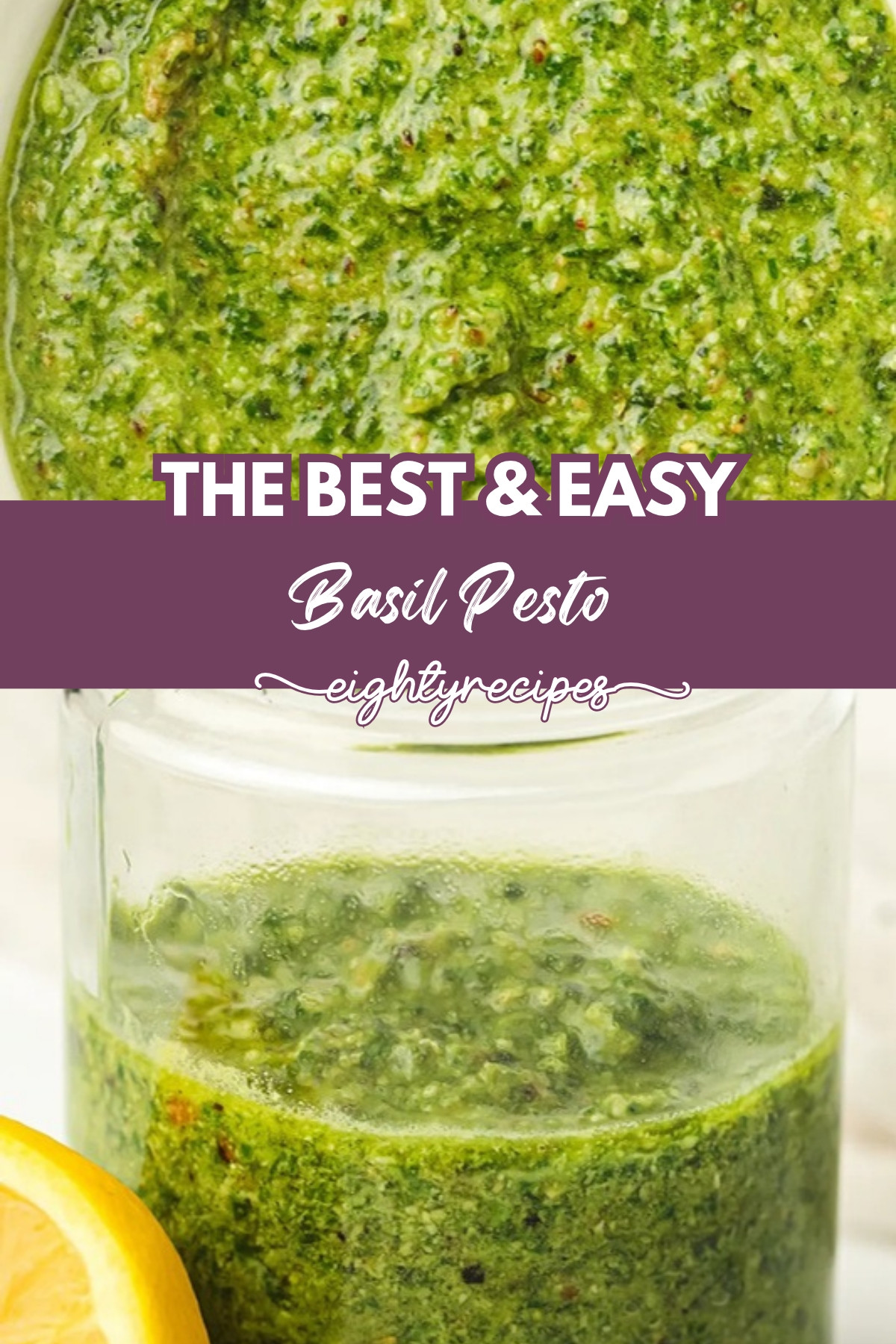
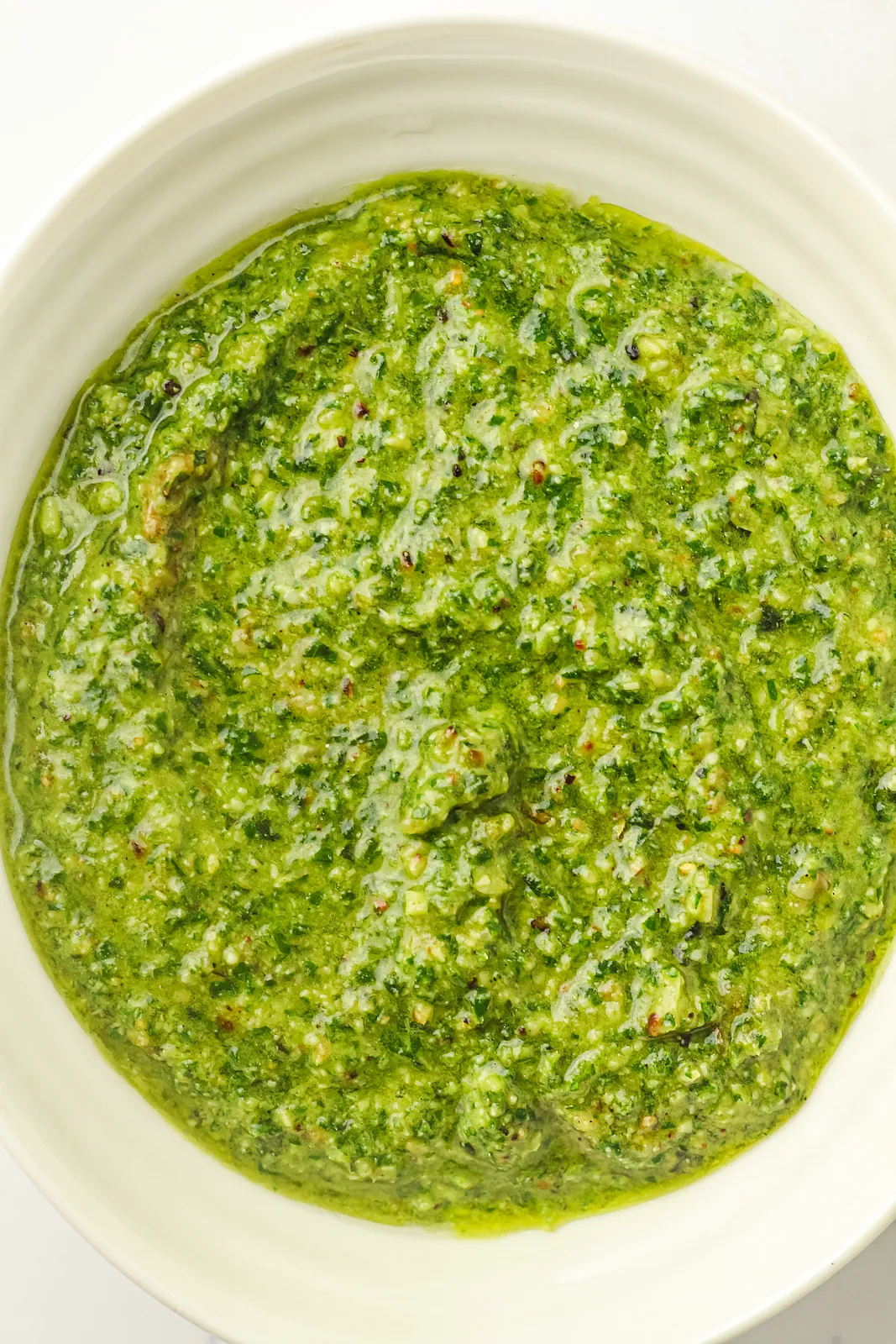
Fresh basil pesto takes 15 minutes, needs no cooking and tastes nothing like the jarred kind. Two packed cups of basil, pine nuts, Parmesan, garlic and good olive oil are pulsed together in a food processor, then brightened with lemon juice and zest for a vivid green sauce you can spoon over pasta, chicken, eggs or toast.
In short, basil pesto is an uncooked Italian sauce of fresh basil, pine nuts, Parmesan, garlic and extra virgin olive oil. This version adds 1 tablespoon of lemon juice and 1 teaspoon of zest, makes about 1 to 1 1/4 cups in 15 minutes, and works out at about 180 calories per 2 tablespoon serving.
The two things that matter most are dry leaves and a light hand with the processor. Wet basil dilutes the sauce, and over blending warms it and dulls the colour.
Quick Breakdown
Why You’ll Love This Basil Pesto
- 15 minutes, no stove. Everything happens in the food processor.
- Bright and fresh. Lemon juice and zest keep it lively and help the flavour stay clean.
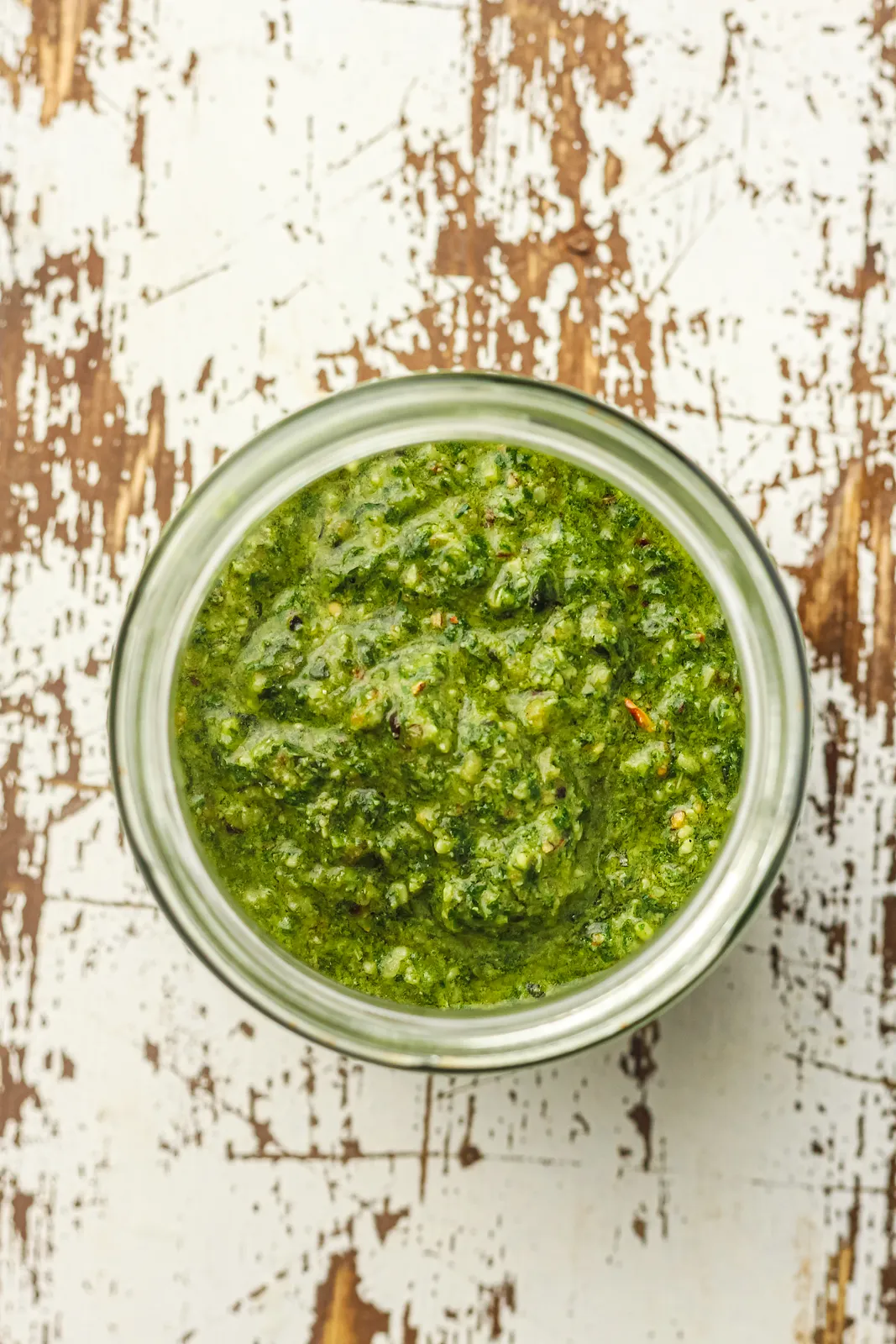
- Texture you control. Pulse for a rustic sauce or run it longer for a smoother one.
- Freezer friendly. Freeze it in small portions and you always have a quick dinner ready.
- Endlessly useful. Pasta, sandwiches, roast vegetables, salmon, soup and eggs all welcome a spoonful.
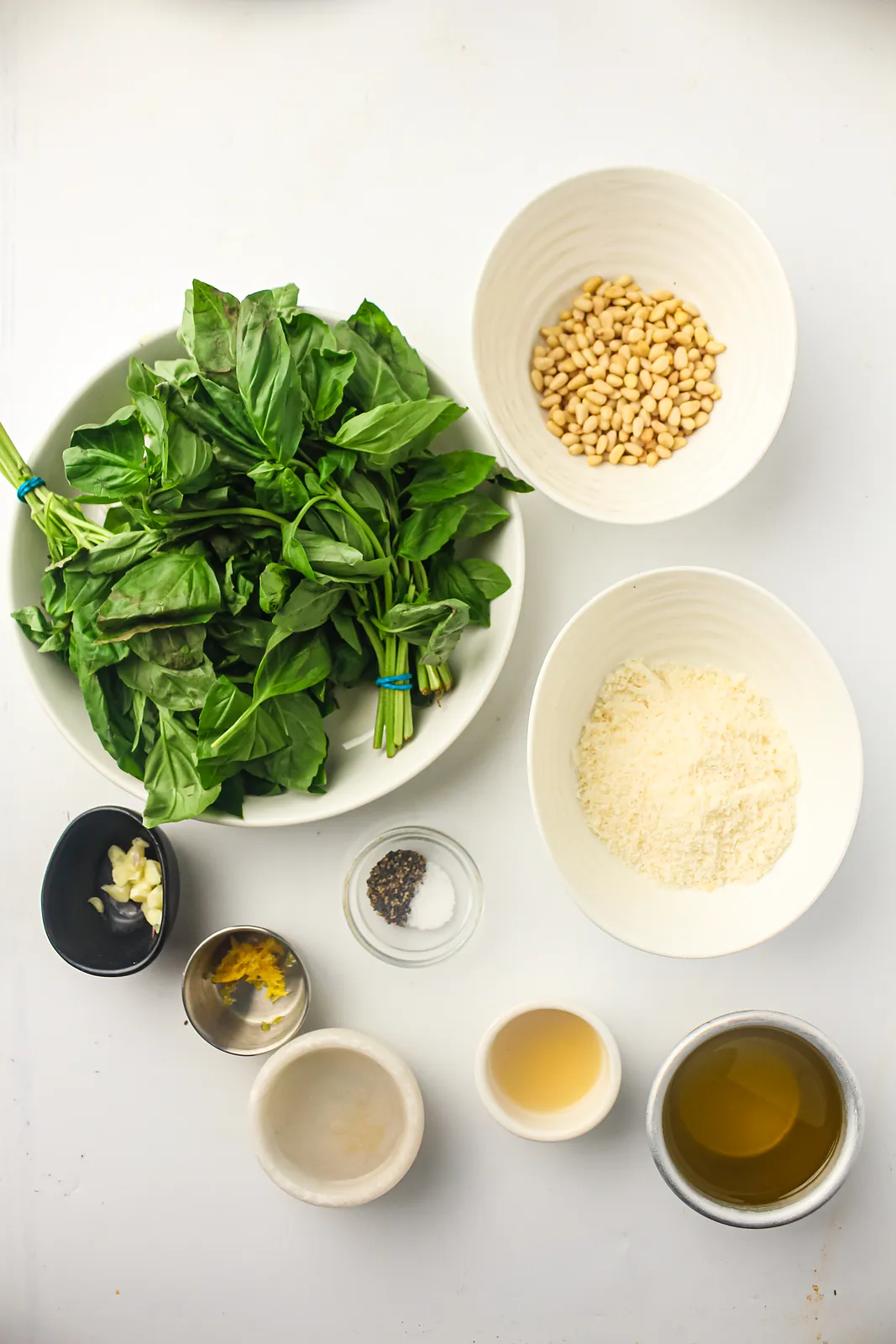
Ingredient Notes
- Fresh basil. 2 packed cups of leaves, measured after removing the stems. Rinse and dry them thoroughly.
- Pine nuts. 1/3 cup. Sunflower or pumpkin seeds can replace them; check labels if you are cooking for anyone with allergies.
- Parmesan. 1/2 cup, freshly grated.
- Garlic. 2 cloves, peeled and roughly chopped. Start with 1 for a milder sauce.
- Extra virgin olive oil. 1/2 cup. Its flavour carries the whole sauce, so use one you enjoy.
- Lemon. 1 tablespoon fresh juice and 1 teaspoon finely grated zest, avoiding the bitter white pith.
- Seasoning. 1/4 teaspoon salt, plus more to taste, and 1/4 teaspoon freshly ground black pepper.
- Cold water. 1 to 2 tablespoons, only if the sauce is too thick.
What Is Basil Pesto Made Of?
Classic pesto alla Genovese is made of basil, pine nuts, hard Italian cheese, garlic, salt and olive oil. Michigan State University Extension gives a similar base and notes that pesto freezes well for later in the year. This recipe keeps that classic core and adds lemon for brightness.
| Ingredient | Job in the sauce | Easy swap |
|---|---|---|
| Basil | Colour, aroma, body | Part spinach or arugula |
| Pine nuts | Creaminess and richness | Sunflower or pumpkin seeds |
| Parmesan | Salt and savoury depth | Dairy-free Parmesan or nutritional yeast |
| Garlic | Sharp bite | Use 1 clove for a milder sauce |
| Olive oil | Carries flavour, loosens | A little cold water for a lighter sauce |
| Lemon | Brightness | Leave it out; add water if needed |
How To Make Basil Pesto
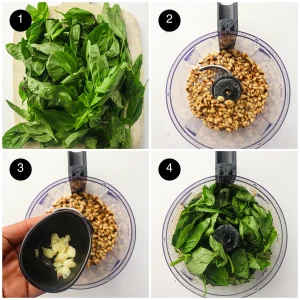
1. Prepare the basil. First, pick the leaves off the stems and discard the stems. Rinse the leaves, dry them thoroughly, then measure 2 packed cups.
2. Prep the rest. Peel and roughly chop the garlic. Finely grate the Parmesan and the lemon zest, steering clear of the white pith.
3. Pulse. Next, put the basil, pine nuts, Parmesan and garlic in a food processor and pulse until finely chopped, scraping down the sides as needed.
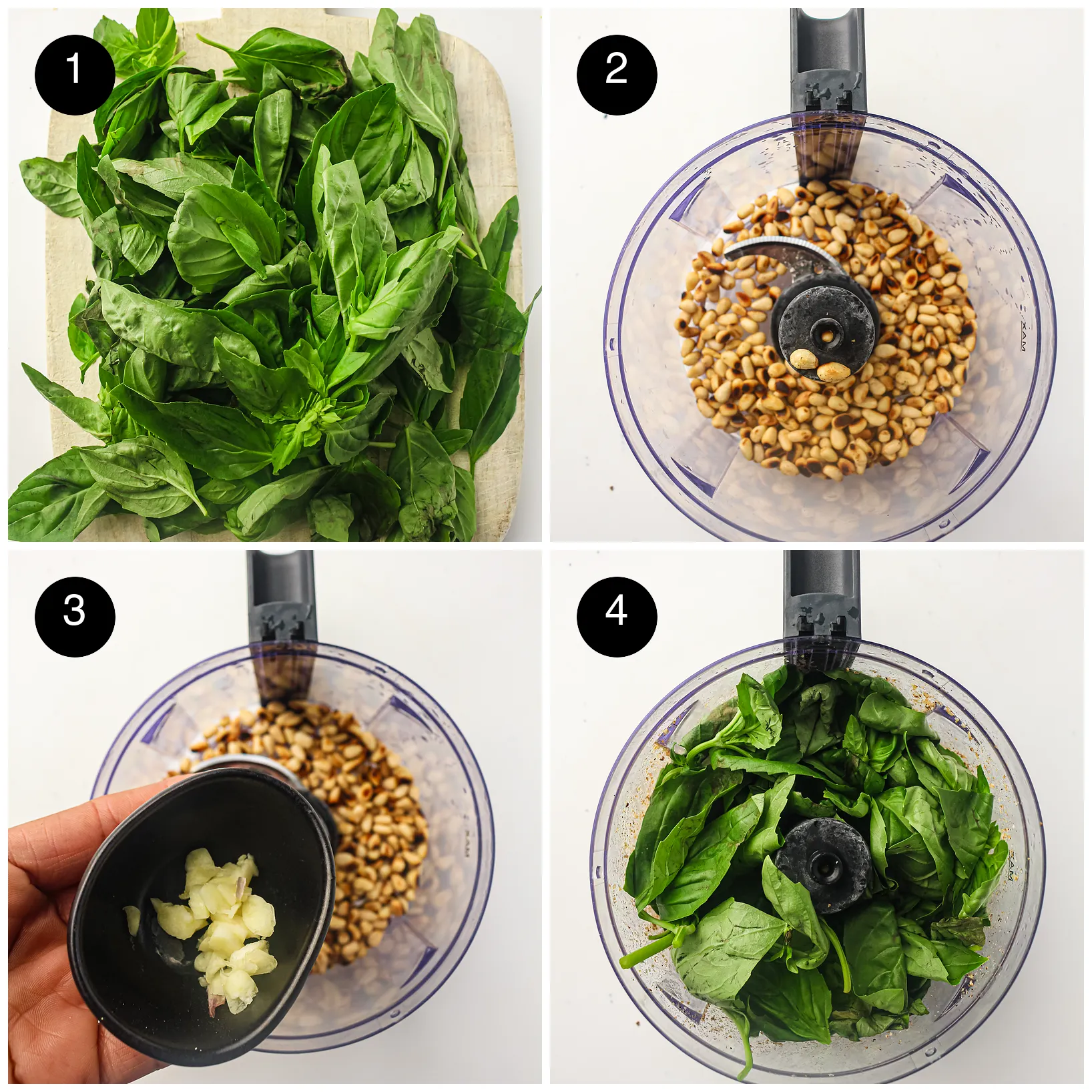
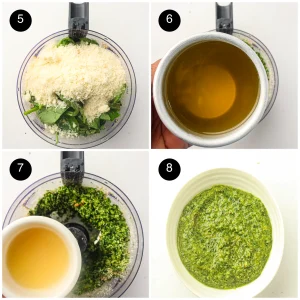
4. Stream in the oil. With the machine running, pour in the olive oil slowly. Process just until combined, leaving a little texture.
5. Season. Then add the lemon juice, lemon zest, salt and pepper and pulse briefly to mix.
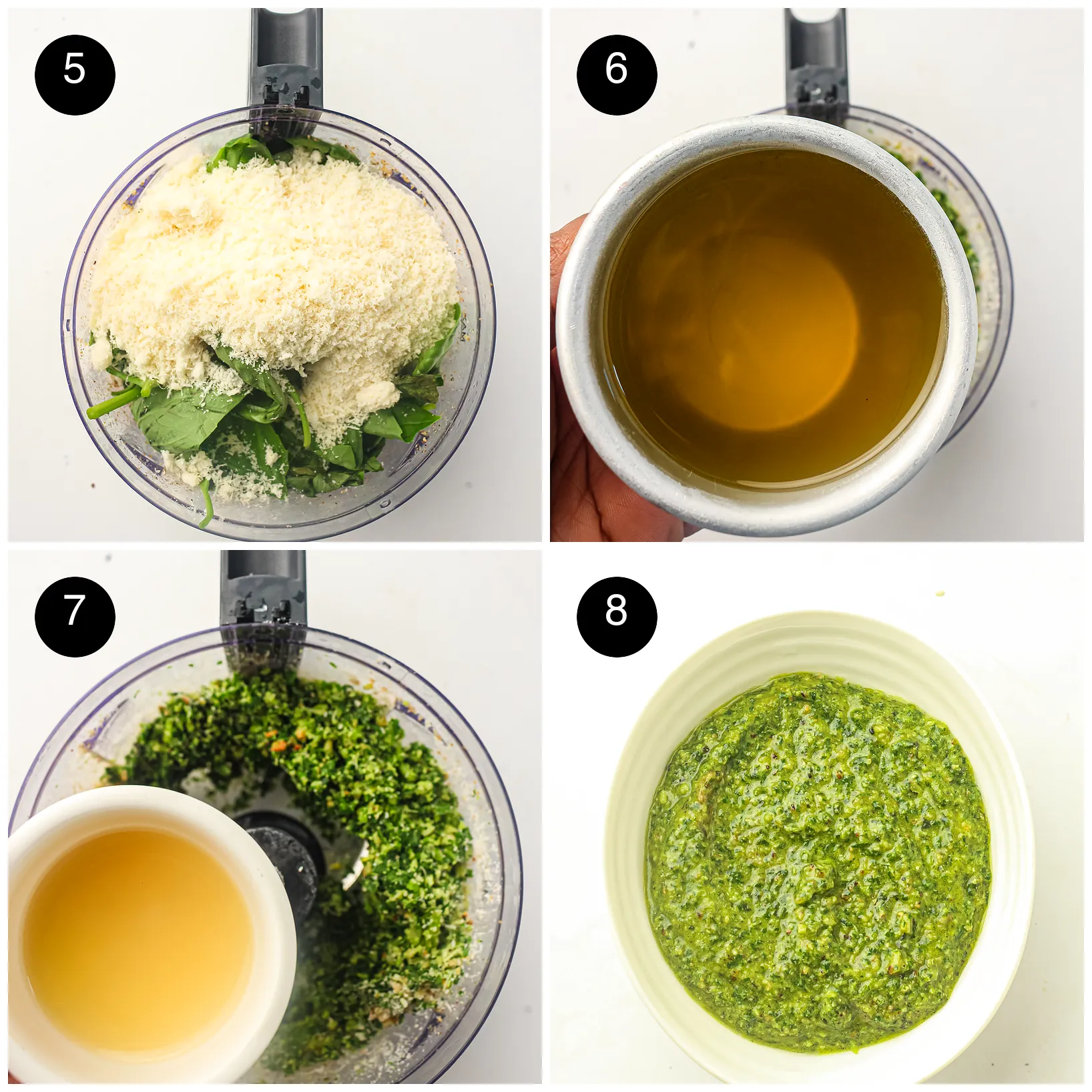
6. Adjust. If the sauce is too thick, add cold water 1 tablespoon at a time until it is as loose as you like.
7. Taste and store. Finally, taste and adjust the seasoning. Serve straight away, or spoon into an airtight container and refrigerate promptly.
Why Does My Pesto Turn Brown?
Pesto turns brown because cut basil darkens when air reaches it. The colour change is cosmetic, but it is easy to slow down.
- Brown on top. Press plastic wrap directly onto the surface before closing the container.
- Watery. The leaves were wet. Dry them completely with a salad spinner or towels.
- Dull and warm. It was processed too long. Pulse just until combined, and chill it if it has warmed.
- Too sharp. Too much raw garlic. Start with 1 clove next time and add more to taste.
- Too thick. Loosen with cold water, a tablespoon at a time.
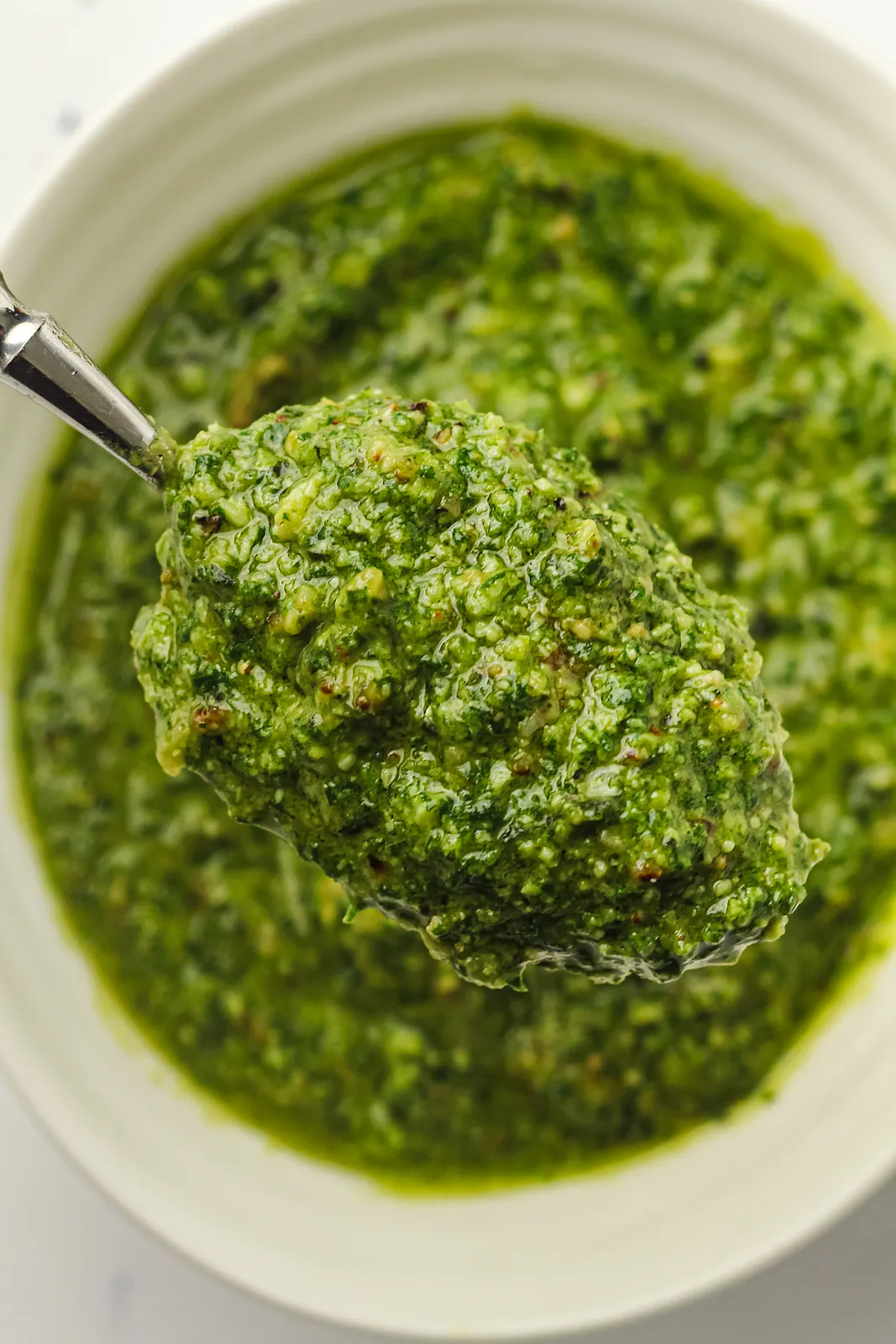
Tips for the Best Basil Pesto
- Measure the basil packed, and only after removing the stems.
- Dry the leaves completely; excess water makes the sauce watery.
- Pour the oil in slowly so it blends evenly.
- For pasta, save some cooking water and toss the pasta with the sauce off the heat, adding a splash of water to loosen it.
- A small blender also works for this quantity; scrape it down often.
Storage and Freezing
- Fridge. Keep in an airtight container at 40°F or below and use within 3 days.
- Freezer. Spoon into small containers or a silicone freezer tray, freeze, then move the portions to a labelled freezer bag. Use within 3 months for best quality.
- Thaw. In the fridge, then stir. Add a little olive oil or water to adjust the texture.
- Not shelf stable. Homemade pesto is not suitable for home canning or room temperature storage. Oregon State University Extension’s pesto recipe also suggests freezing any extra for later meals.
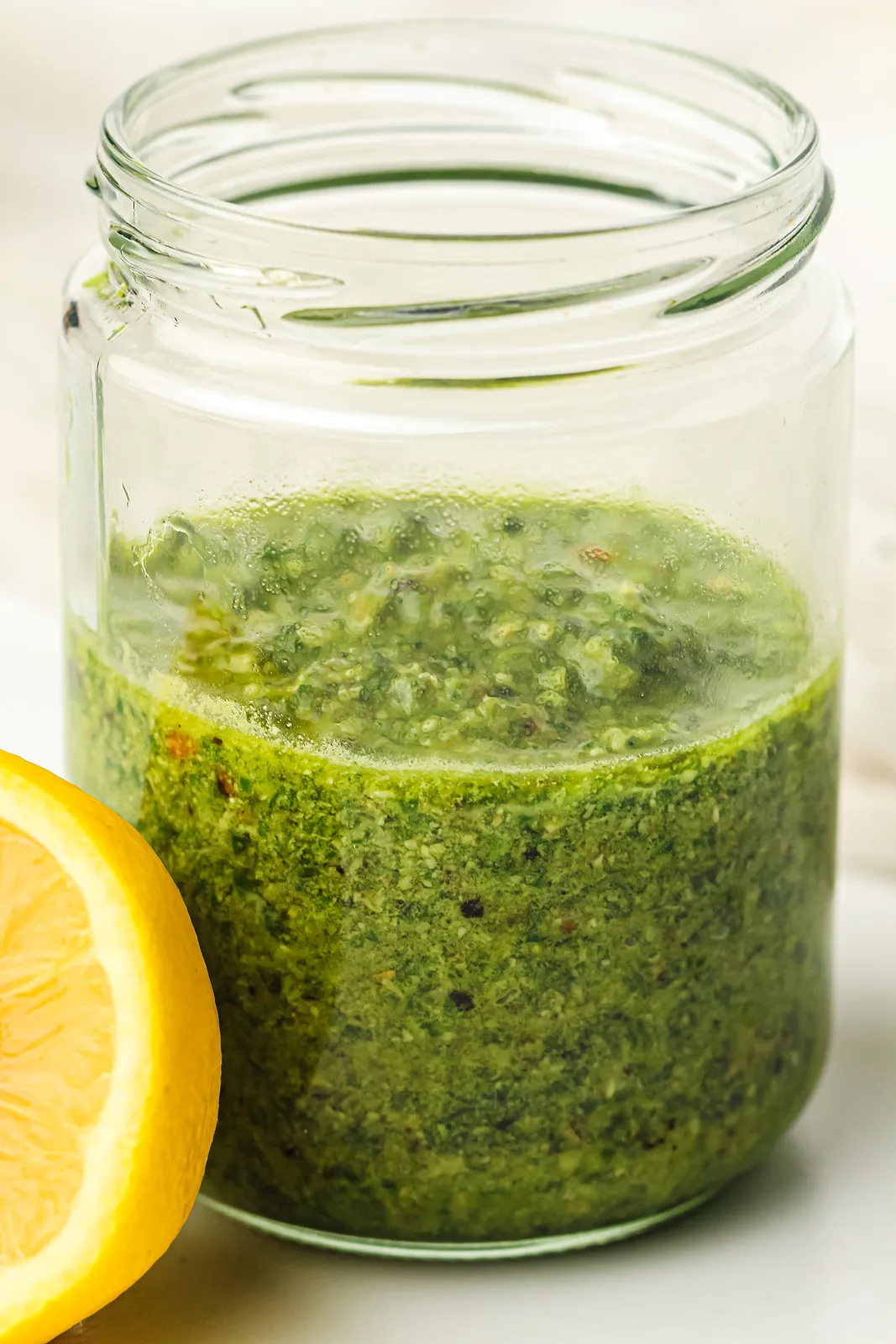
Variations and Substitutions
- Nut free. Use sunflower or pumpkin seeds instead of pine nuts. The flavour is slightly different.
- Dairy free. Swap in a dairy-free Parmesan alternative, or nutritional yeast to taste, starting with 2 tablespoons.
- No lemon. Leave out the juice and zest and add a little water if needed. Storage stays the same.
- Milder garlic. Start with 1 clove and add more to taste.
- Blender version. A small blender handles this quantity; stop and scrape down as needed.
How To Use Basil Pesto
Toss it through hot pasta with a splash of cooking water, or spread it on pizza in place of tomato sauce; this bread machine pizza dough is a good base. Spoon it over sheet pan salmon or sliced air fryer chicken breast, swirl it into soup, or brush it over warm crockpot focaccia bread. A spoonful also lifts a creamy dish such as garlic butter shrimp pasta.
Frequently Asked Questions
Ingredients and Swaps
Can I make basil pesto without pine nuts?
Yes. Use the same amount of sunflower seeds or pumpkin seeds. It tastes slightly different but is just as creamy; check labels if allergies are a concern.
Can I make basil pesto dairy free?
Yes. Replace the Parmesan with a dairy-free Parmesan alternative, or with nutritional yeast to taste, starting with 2 tablespoons.
Can I make basil pesto in a blender?
Yes. A small blender works best for this quantity. Stop and scrape down the sides as needed.
How many calories are in basil pesto?
About 180 calories per 2 tablespoon serving, based on 8 servings from the 1 to 1 1/4 cups this recipe makes. That is an estimate.
Is basil pesto gluten free?
Yes. Basil, pine nuts, Parmesan, garlic, olive oil and lemon are naturally gluten free; check the cheese label if you need to be certain.
Storage and Freezing
How long does basil pesto last in the fridge?
Up to 3 days in an airtight container at 40°F or below. Press plastic wrap onto the surface to keep it green.
Can you freeze basil pesto?
Yes. Freeze it in small containers or an ice cube tray, then move it to a labelled freezer bag and use it within 3 months for best quality.
Why did my basil pesto turn brown?
Air darkens cut basil. It is still fine to eat; press plastic wrap directly onto the surface before sealing to slow it down.
Can you can basil pesto at home?
No. Homemade pesto is not suitable for home canning or room temperature storage. Keep it in the fridge or freezer.
Ingredients
- 2 packed cups fresh basil leaves measured after removing the stems
- 1/3 cup pine nuts
- 1/2 cup Parmesan cheese freshly grated
- 2 garlic cloves
- 1/2 cup extra virgin olive oil
- 1 tablespoon fresh lemon juice
- 1 teaspoon lemon zest finely grated
- 1/4 teaspoon salt plus more to taste
- 1/4 teaspoon black pepper freshly ground
- 1-2 tablespoons cold water if needed
Instructions
- Pick the basil leaves off the stems and discard the stems. Rinse and dry the leaves thoroughly, then measure out 2 packed cups.
- Peel and roughly chop the garlic. Finely grate the Parmesan and the lemon zest, avoiding the white pith of the lemon.
- Put the basil, pine nuts, Parmesan and garlic in a food processor and pulse until finely chopped, scraping down the sides as needed.

- With the processor running, pour in the olive oil slowly. Process until combined, leaving a little texture.
- Add the lemon juice, lemon zest, salt and pepper and pulse briefly to combine.
- If the pesto is too thick, add cold water 1 tablespoon at a time until it reaches the consistency you like.
- Taste and adjust the seasoning. Serve immediately, or transfer to an airtight container and refrigerate promptly.