 Bity
Bity
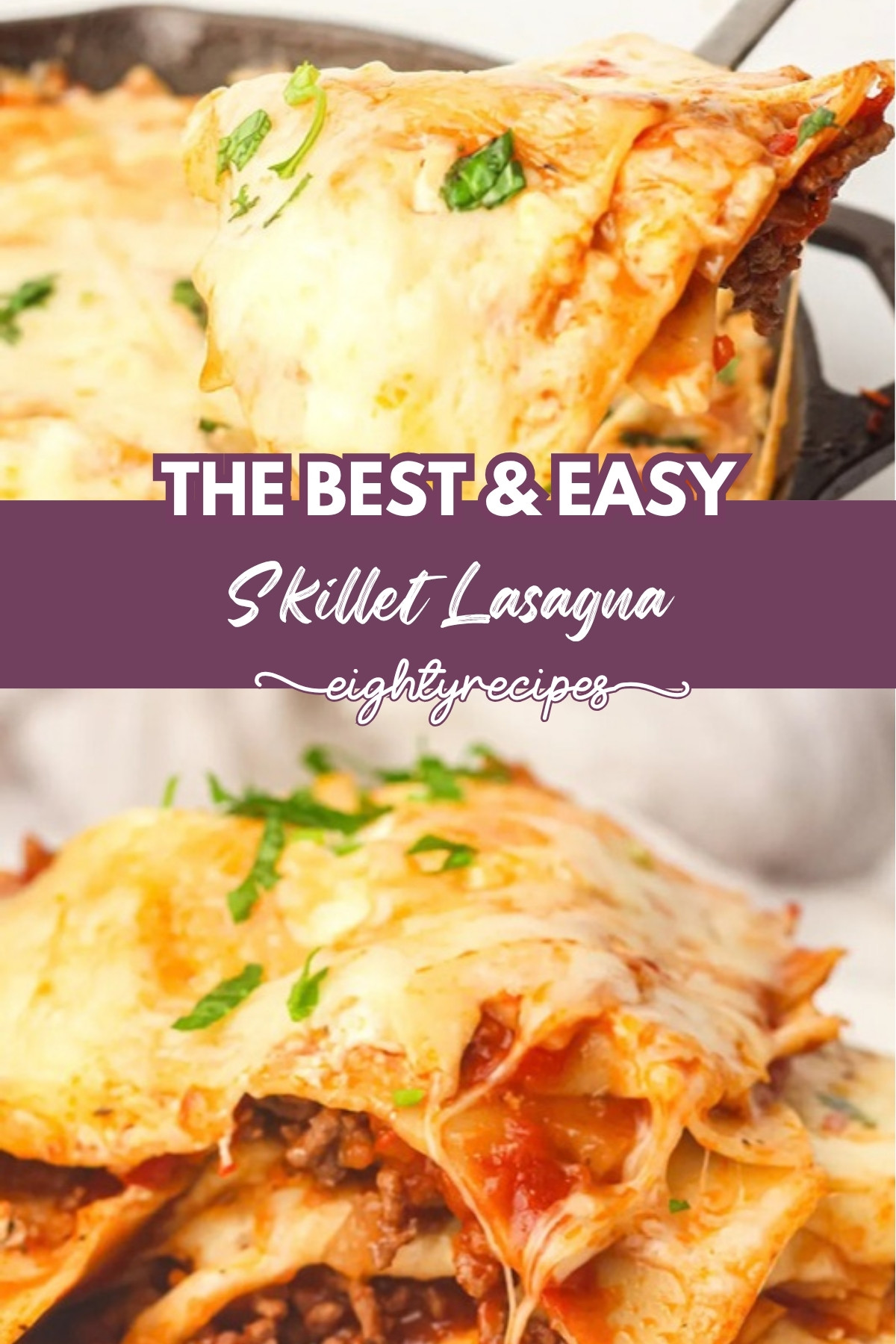
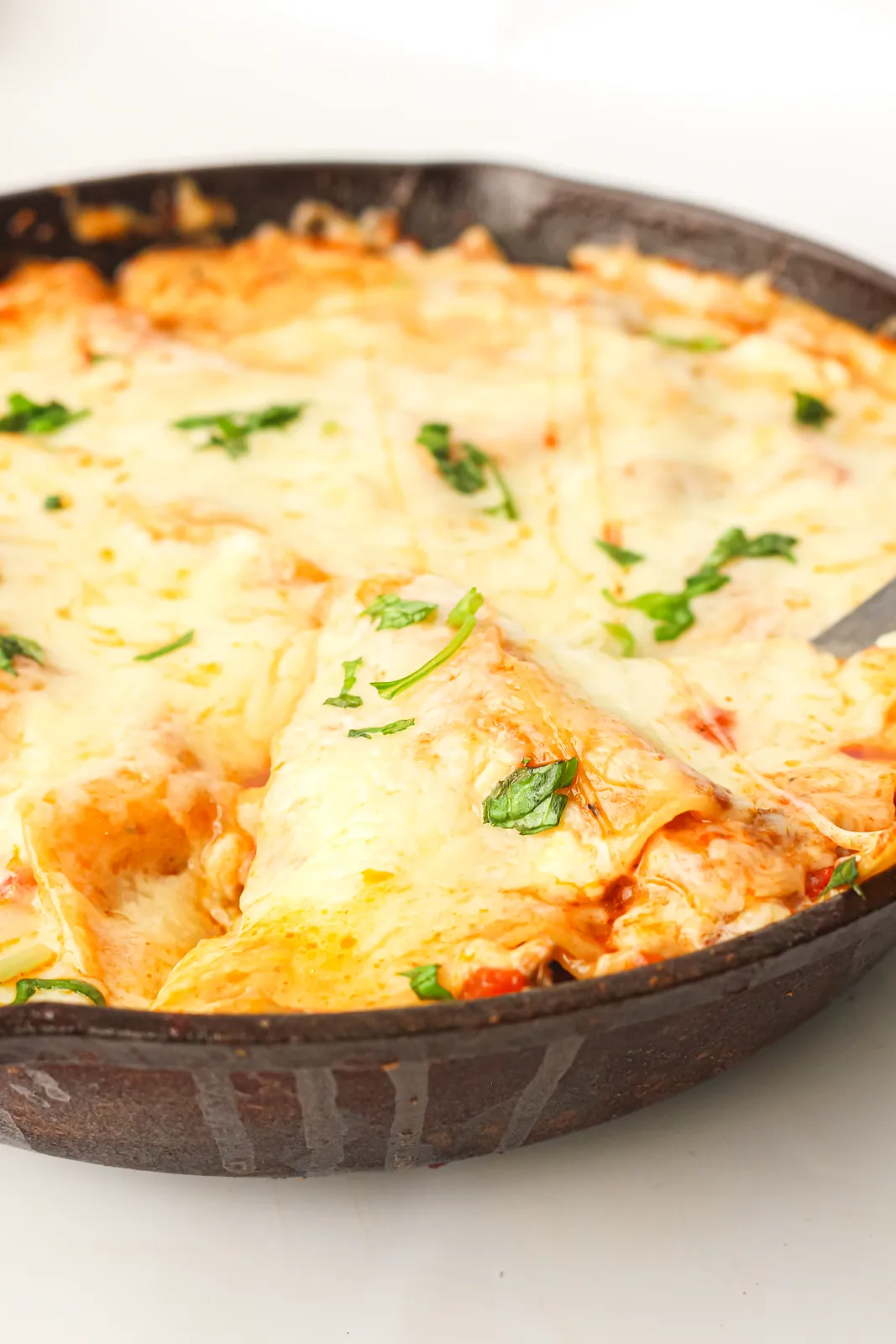
This skillet lasagna is what I make when the craving for proper lasagna hits on a Tuesday and I have neither the time nor the patience for layering, baking and resting. Everything happens in one deep pan on the hob, the pasta cooks right in the sauce, and dinner is on the table in about 40 minutes.
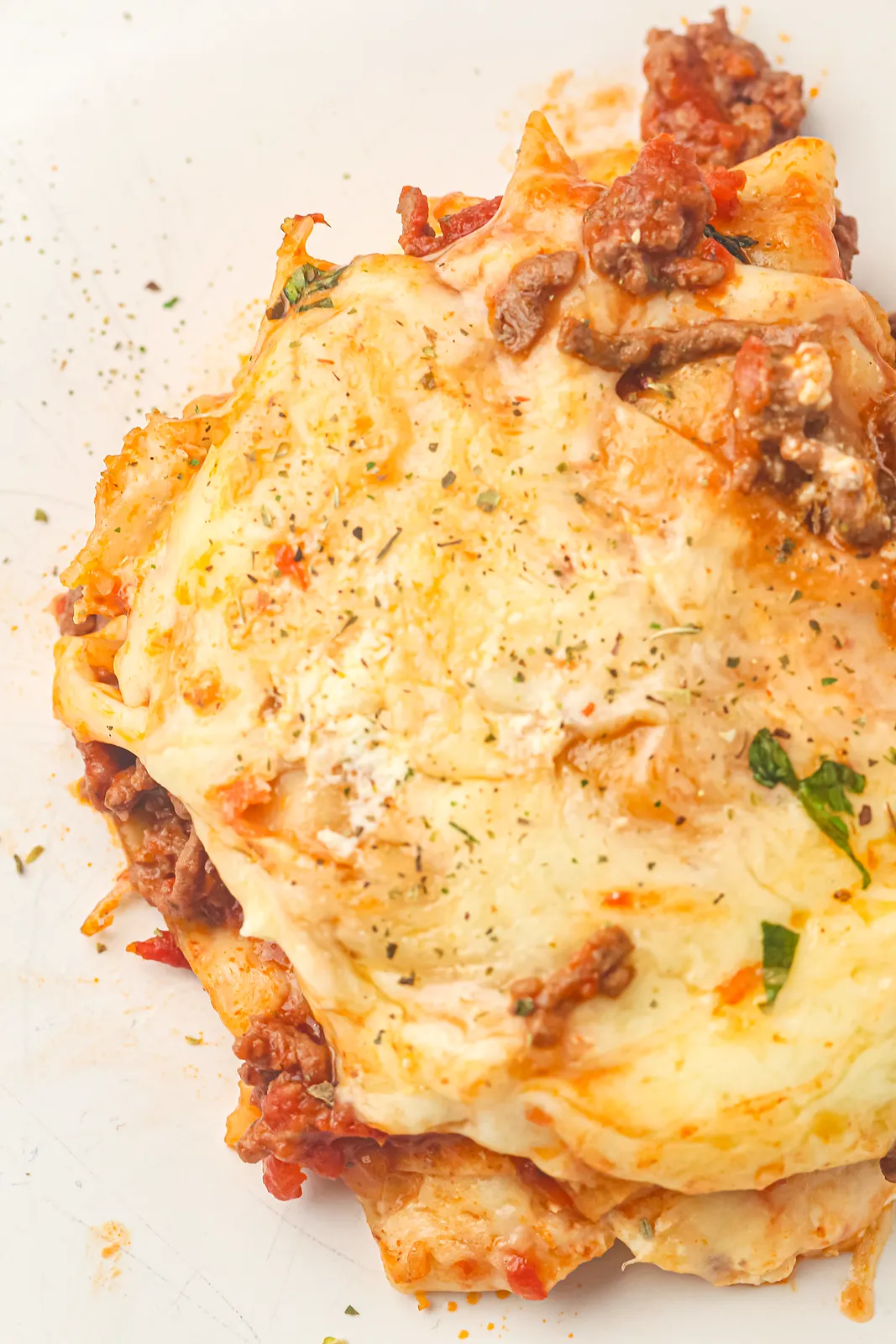
I first tried it after a long day when my daughter asked for “the cheesy one” and I only had a pound of mince and half a box of sheets. Honestly, I expected a compromise. Instead, we got soft ribbons of pasta in a rich beef ragu, pockets of creamy ricotta and a lid of melted mozzarella, and nobody missed the oven version at all.
Quick Breakdown
Why You’ll Love This Skillet Lasagna
- One pan, start to finish. The beef browns, the sauce simmers and the pasta cooks in the same skillet, so there is just one pan and a spoon to wash.
- No boiling the noodles. Broken sheets soften in the marinara and stock, and their starch thickens the sauce as they go.
- Forty minutes, not two hours. Ten minutes of prep, then about 30 on the stove while you set the table.
- All the classic flavours. Beef, garlic, tomato, ricotta, mozzarella and Parmesan, just arranged in a lazier way.
- Family friendly. In fact, it is mild, cheesy and soft, which makes it an easy win with fussy eaters.
Ingredient Notes
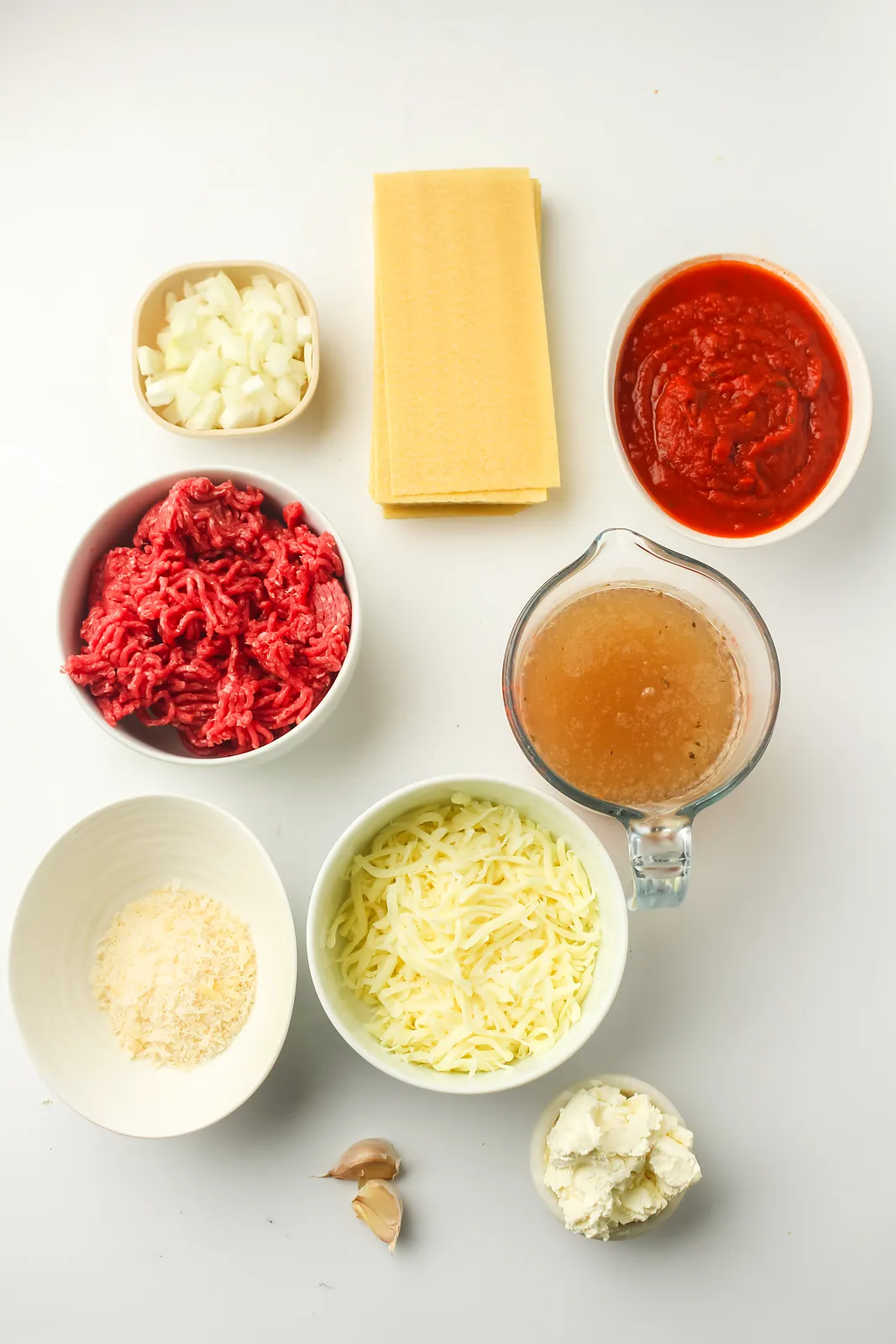
- Beef mince. One pound (450 g). I like 80/20 or 85/15 because a little fat carries flavour into the sauce. Ground beef should reach 160°F (71°C), and ThermoWorks has a clear guide to beef temperatures if you like to check with a probe.
- Onion and garlic. One medium onion, diced, and four cloves of garlic, minced. The onion browns with the beef; the garlic goes in later so it never turns bitter.
- Marinara sauce. A 24 ounce (680 g) jar. Use one you would happily eat on plain pasta, since it is the backbone of the dish.
- Beef stock. Two cups (480 ml). This is the cooking liquid for the pasta, so do not skip it or the sheets will stay hard.
- Lasagna sheets. Six ounces (180 g), broken into rough pieces. Regular dried sheets work best; no-boil sheets cook faster and can go soft.
- Ricotta. One cup (250 g), spooned on in dollops at the end so you get creamy pockets in every bite.
- Mozzarella and Parmesan. Two cups (225 g) of shredded mozzarella and a quarter cup (25 g) of grated Parmesan. Cheese is rich, but Harvard Health notes that a moderate daily amount of cheese can sit happily in a balanced diet.
Skillet Lasagna vs Baked Lasagna
People often ask me whether a one pan lasagna really tastes like the real thing. It does, but it is a different texture. Here is how the two compare:
| Skillet version | Baked version | |
|---|---|---|
| Total time | About 40 minutes | 2 hours or more, with resting |
| Pans to wash | One | Three or four |
| Pasta | Broken sheets, cooked in the sauce | Whole sheets, boiled or no-boil |
| Texture | Soft, saucy and spoonable | Firm layers that slice neatly |
| Best for | Weeknights and small households | Sunday dinners and feeding a crowd |
So, if you want tidy squares for a party, bake it. However, if you want lasagna flavour tonight with almost no washing up, the skillet wins every time.
What Pan to Use for Stove Top Lasagna
You need a large, deep skillet with a lid, ideally 12 inches across and at least 2 inches deep. The sauce and stock fill it right up before the pasta drinks the liquid down. My cast iron pan is lovely for browning the beef, while a deep nonstick sauté pan makes stirring easier. Either way, a lid that fits well is the key, because it traps the steam that cooks the sheets evenly.
How To Make Skillet Lasagna
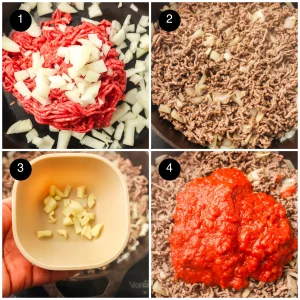
1. Heat the pan. First, set a large, deep skillet over medium high heat for a minute or two so the beef sizzles the moment it lands.
2. Brown the beef and onion. Next, add the beef mince and diced onion and cook for 6 to 8 minutes, breaking the meat up with a wooden spoon until no pink remains and the onion is soft.
3. Add the garlic. Then stir in the minced garlic and cook for just 30 seconds, until it smells sweet and nutty.
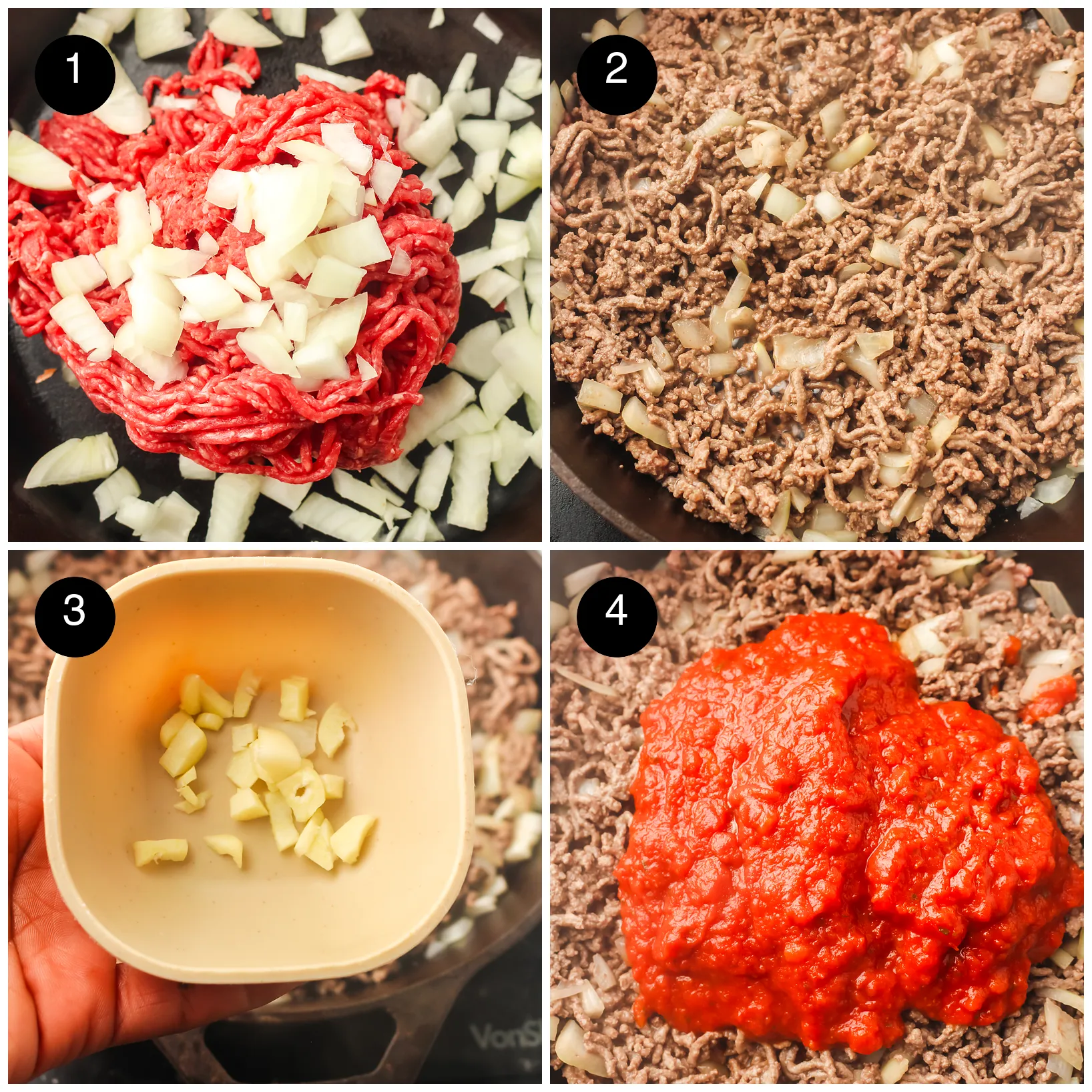
4. Pour in the sauce and stock. After that, add the marinara and the beef stock and stir well, scraping up any brown bits stuck to the bottom.
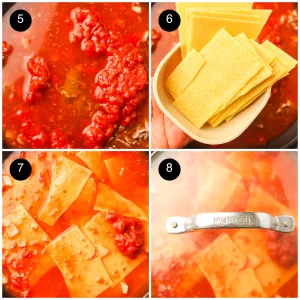
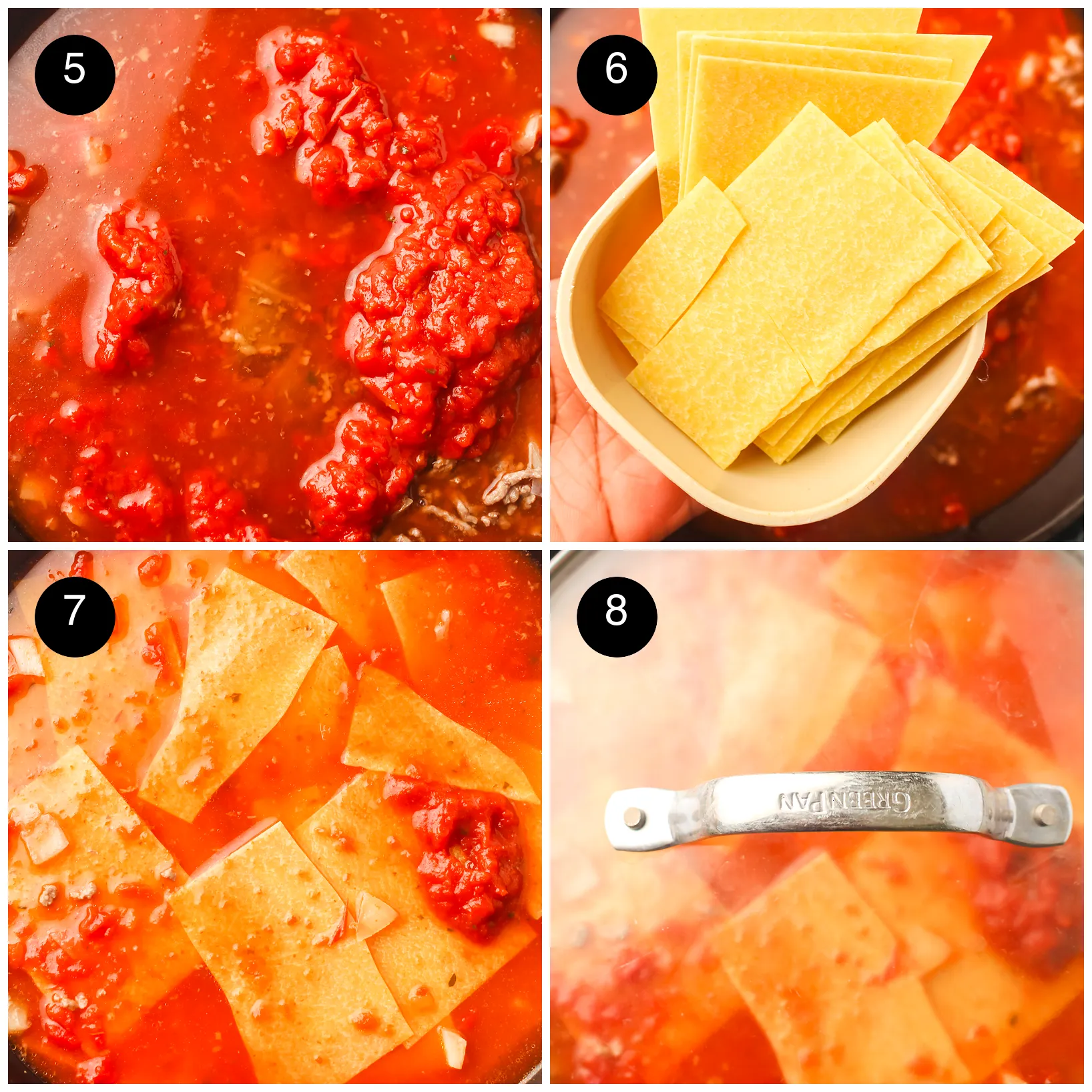
5. Add the pasta. Now break the lasagna sheets into rough pieces, about the size of a playing card, and stir them in. Push them under the liquid so none sit dry on top.
6. Bring to a simmer. Let the sauce come up to a gentle bubble.
7. Cover and cook. Put the lid on, turn the heat down so it simmers steadily, and cook for 18 to 20 minutes. Stir every 5 minutes so the sheets do not stick together or catch on the base.
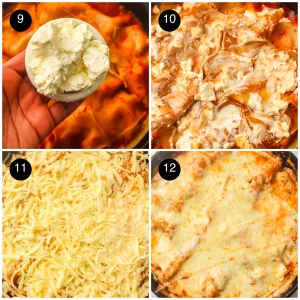
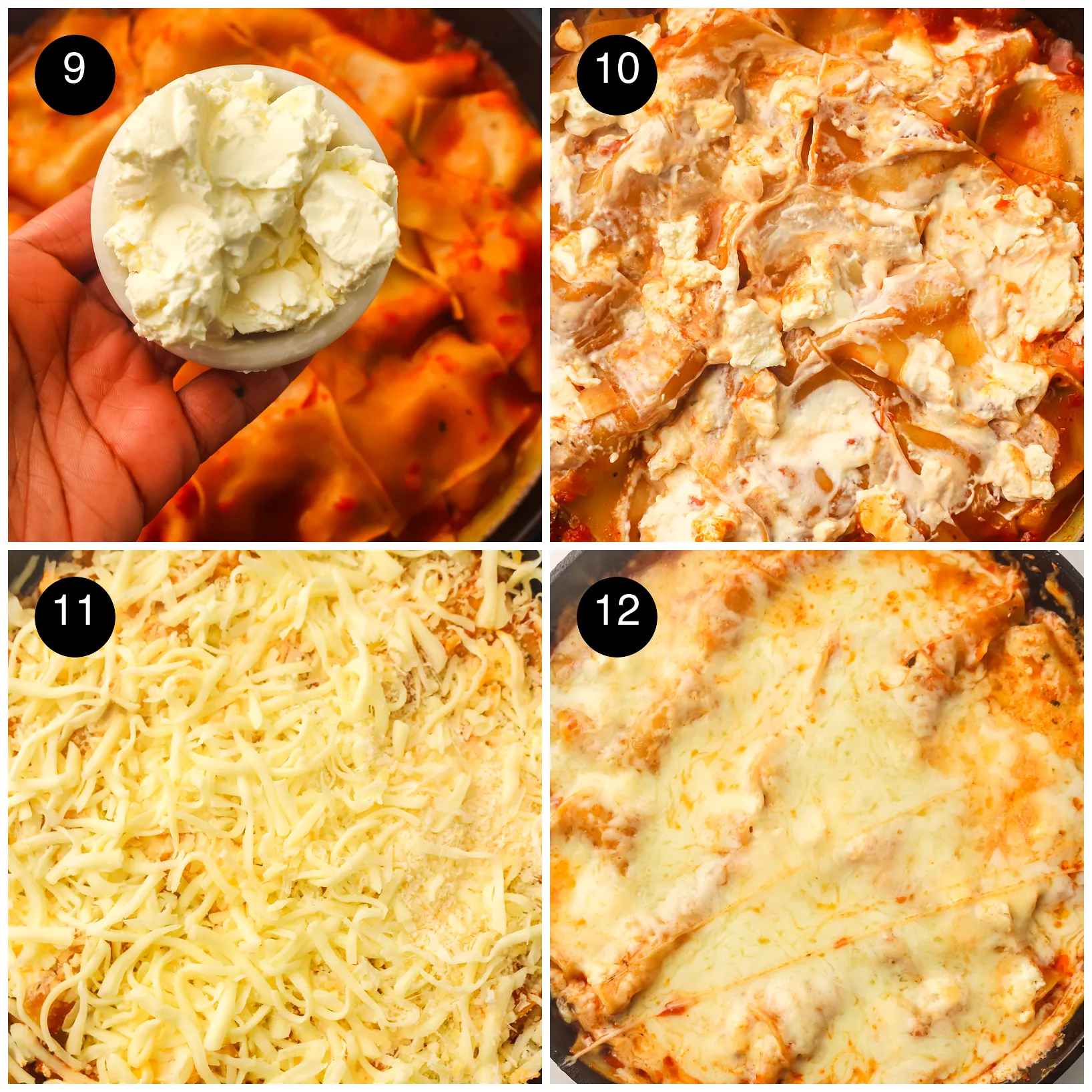
8. Dollop the ricotta. Once the pasta is tender, spoon the ricotta over the top in little mounds.
9. Add the cheese. Then scatter over the mozzarella and Parmesan in an even layer.
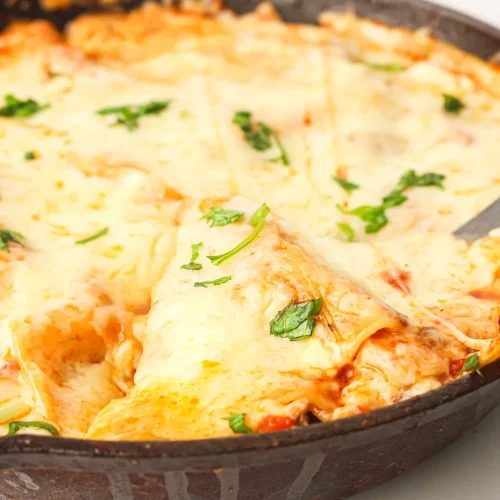
10. Melt. Cover again for 3 to 4 minutes, until the cheese has melted into a gooey blanket.
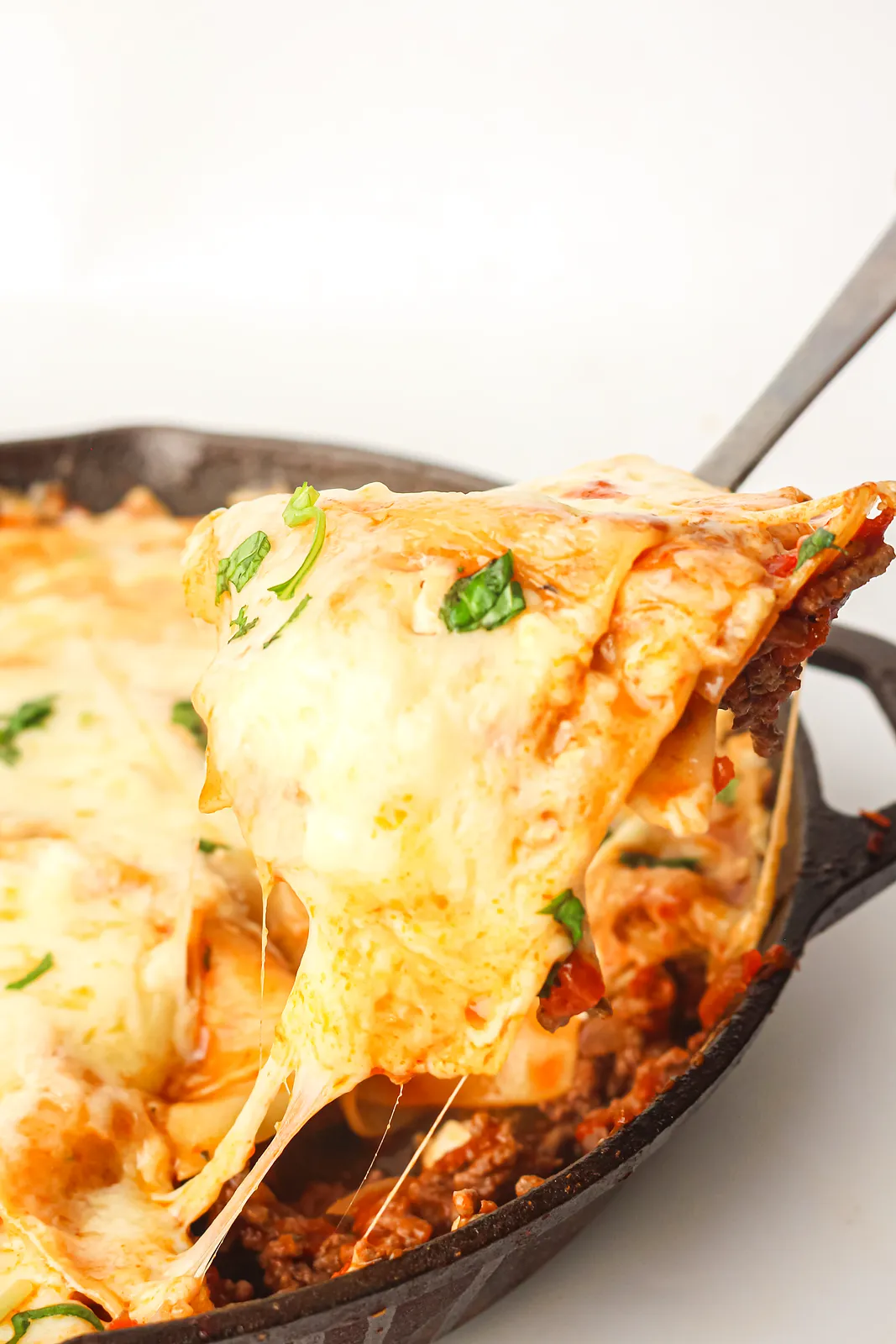
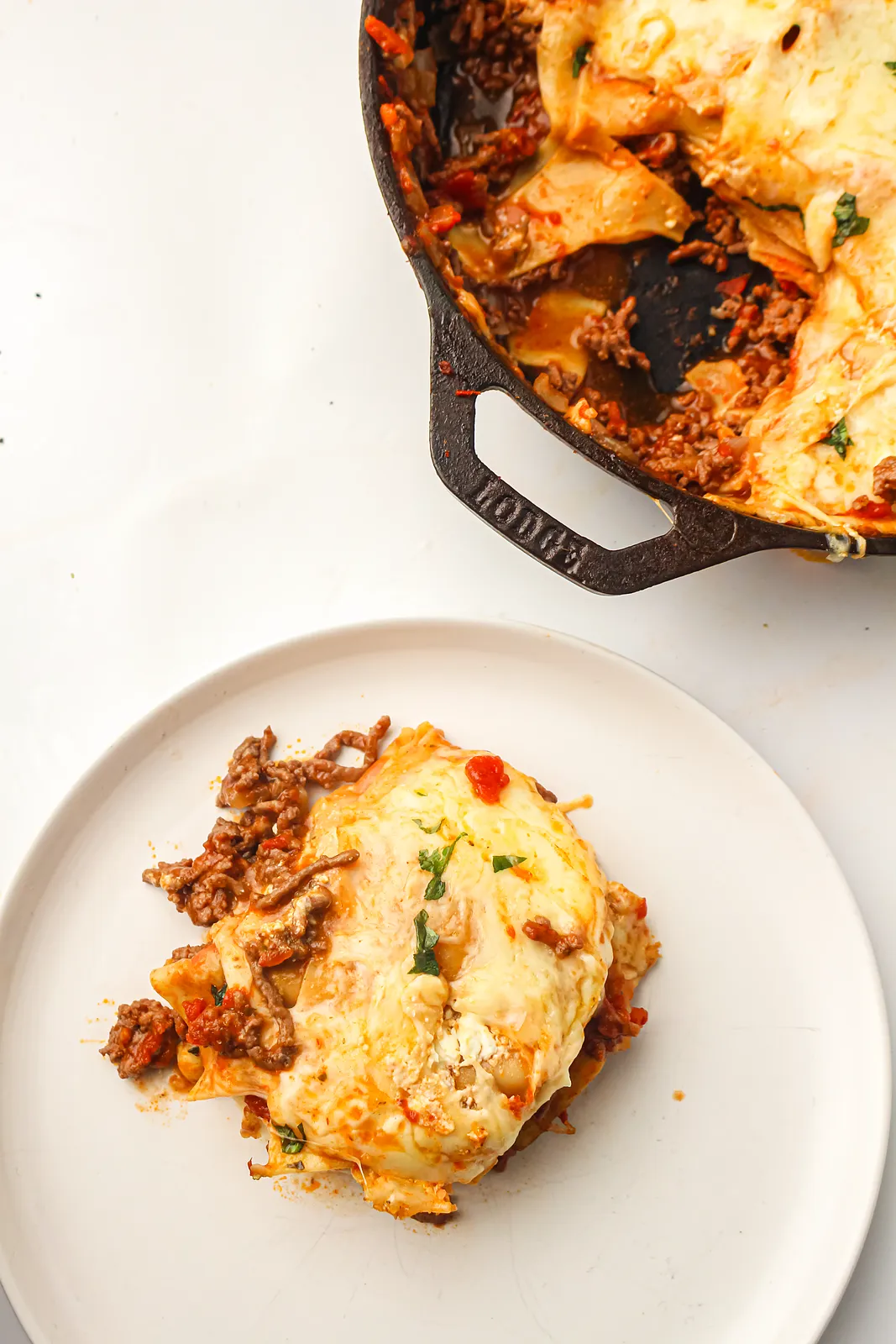
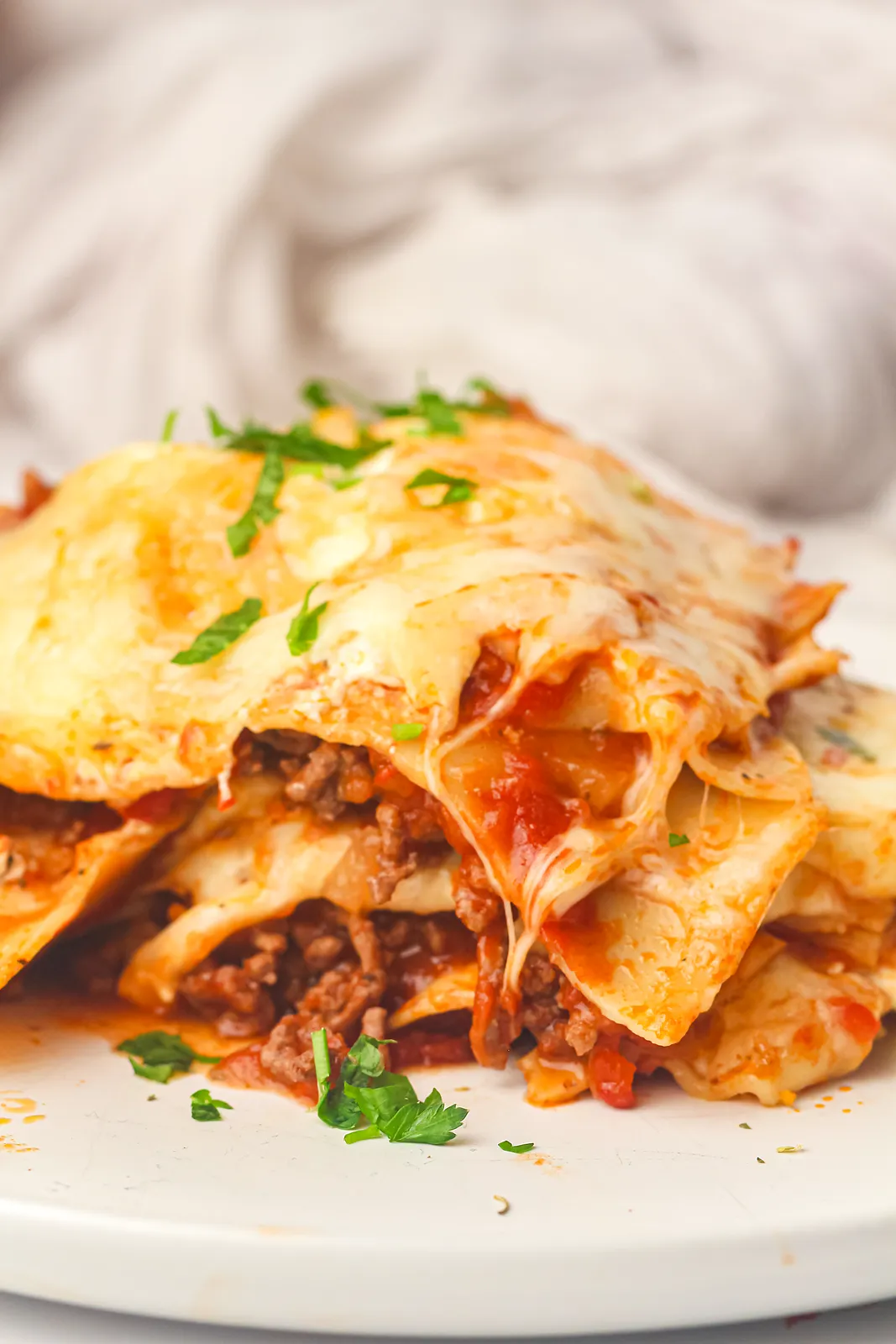
11. Serve. Finally, scatter over a little chopped parsley if you have it and serve straight from the pan.
Why Is My Pasta Still Hard or Sticky?
- The pasta is still firm. Skillet lasagna relies on liquid, so add a splash of hot stock or water, cover and give it another 3 to 5 minutes. Different brands of sheets vary a lot.
- The sheets stuck together. They were not stirred often enough in the first 10 minutes. Separate them with a spoon and keep stirring.
- It catches on the bottom. The heat is too high. A gentle simmer is plenty once the lid is on.
- It looks watery. Take the lid off for the last few minutes; the starch thickens the sauce as it bubbles.
- The cheese will not melt. The lid is the trick. Without it, the top stays cold while the base keeps cooking.
Tips for the Best Skillet Lasagna
- Brown the beef properly. Those crusty bits are flavour, so let it sit undisturbed for a minute before you break it up.
- Break the sheets into mixed sizes. Some big pieces give you that layered feel; small ones tuck into the gaps.
- Stir every 5 minutes. Honestly, this is the one habit that stops the pasta from sticking.
- Use ricotta at room temperature, so it warms through in the short melting time.
- Let it stand for 5 minutes off the heat before serving. The sauce settles and it is easier to scoop.
Storage and Reheating
- Fridge. Cool leftover skillet lasagna, then store it in an airtight container for up to 4 days.
- Reheating. Warm portions gently on the stove with a splash of water or stock, or in the microwave, covered, until piping hot.
- Freezing. Skillet lasagna freezes well in portions for up to 3 months. Thaw overnight in the fridge, then reheat as above.
- Make ahead. Because it reheats so well, I often cook it in the afternoon and warm it up at dinner time.
Variations and Substitutions
- Different pasta. Broken sheets give the most authentic texture, but mafaldine, rigatoni or bow ties work too; check them a few minutes early.
- Add vegetables. Mushrooms, spinach and peppers are all good. Stir spinach in at the end so it just wilts.
- Swap the meat. Turkey mince, Italian sausage or a half and half mix of beef and pork all work.
- Cottage cheese. Use it instead of ricotta for a lighter, higher protein version.
- Prefer the classic? My freezer lasagna is assembled raw and baked from frozen, which is brilliant for batch cooking. And if you have an Instant Pot, my Instant Pot spaghetti is another one pot meaty pasta the kids adore.
What to Serve With Skillet Lasagna
Garlic bread is non-negotiable in my house, because you need something to mop up the sauce. Warm, soft homemade dinner rolls brushed with garlic butter do the job beautifully.
For something green, a simple salad with a sharp lemony dressing cuts through the cheese. Alternatively, a pan of garlic butter green beans cooks in the time it takes the cheese to melt.
Frequently Asked Questions
Pasta and Method
Can I use a different pasta shape?
Yes. Broken lasagna sheets give the most authentic texture, but other shapes work too. Thicker shapes may need a little more stock and a few extra minutes.
Do I need to boil the lasagna sheets first?
No. They cook right in the sauce and stock, and their starch helps thicken it. That is the whole point of the method.
Can I use no-boil lasagna sheets?
You can, but start checking them after about 12 minutes. Because they are pre-cooked, they soften much faster.
Can I add vegetables?
Yes. Mushrooms, spinach and peppers work well. Brown mushrooms and peppers with the beef, and stir spinach in at the end.
Serving and Storage
Can I make this ahead?
Yes. Cool it, keep it in the fridge, then reheat gently on the stovetop or in the microwave with a splash of water.
How long does leftover skillet lasagna keep?
Up to 4 days in an airtight container in the fridge, or up to 3 months in the freezer.
What should I serve with it?
Garlic bread and a simple green salad are my favourites. Green beans or roasted broccoli are good too.
Can I double it?
Only if you have a very large, deep pan. Otherwise, cook two batches side by side so the pasta stays covered by liquid.
Ingredients
- 1 pound beef mince (450g)
- 1 medium onion diced (150g)
- 4 cloves garlic minced (20g)
- 24 ounces marinara sauce (680g)
- 2 cups beef stock (480ml)
- 6 ounces lasagna sheets broken into pieces (180g)
- 1 cup ricotta cheese (250g)
- 2 cups shredded mozzarella cheese (225g)
- 1/4 cup grated Parmesan cheese (25g)
Instructions
- Heat a large deep skillet over medium-high heat.
- Add the beef mince and onion and cook for 6 to 8 minutes until browned.
- Stir in the garlic and cook for 30 seconds.

- Add the marinara sauce and beef stock.
- Stir in the broken lasagna sheets.
- Bring to a simmer.
- Cover and cook for 18 to 20 minutes, stirring every 5 minutes.
- Once the pasta is tender, spoon over the ricotta.
- Sprinkle with the mozzarella and Parmesan cheese.
- Cover again for 3 to 4 minutes until the cheese melts.
- Serve immediately.