 Bity
Bity
Saturday mornings in this house run on sourdough discard waffles, and they have done ever since I worked out that the jar in the fridge was a breakfast waiting to happen. The batter takes about four minutes to whisk together, which is roughly how long the iron needs to heat up.
What surprised me was the texture. The acid in the starter reacts with the baking soda the moment they meet, so the batter lifts in the iron and sets into a shell that stays crisp on the plate. Honestly, they beat every buttermilk recipe I had been using.

Quick Breakdown
Why You’ll Love These Sourdough Discard Waffles
- No overnight rest required. Because the soda does the lifting, you can decide to make these at eight and be eating by half past.
- A whole cup of starter vanishes. So the discard jar gets emptied without a shred of guilt.
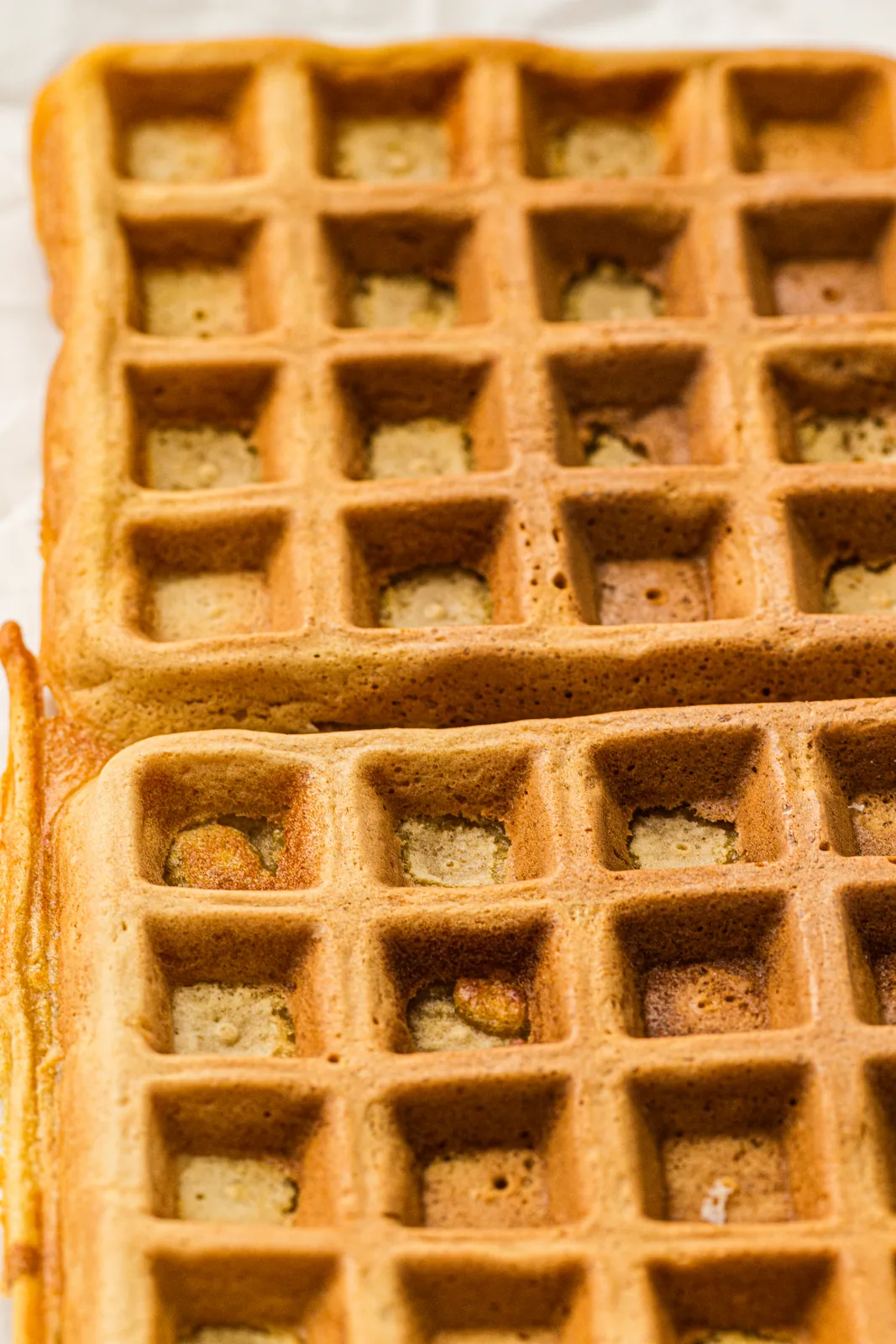
- Crisp outside, tender inside. That contrast is the entire reason to bother with a waffle iron.
- They freeze beautifully. Meanwhile the toaster turns a frozen one back into breakfast in three minutes.
- Mild tang, not sour. In fact, most people just say they taste richer without working out why.
Ingredient Notes
- Sourdough starter or discard. A full cup, about 240 g. Active starter gives a milder flavour, while unfed discard leans tangier. Both work.
- Milk. Whole milk gives the richest result. Buttermilk is even better if you have it, and Harvard’s Nutrition Source breaks down what is actually in a glass.
- Eggs. Two large ones, at room temperature so they blend in smoothly rather than seizing the melted butter.
- Melted butter. Four tablespoons. Let it cool for a minute before it meets the eggs.
- Sugar. Two tablespoons is optional, but it is what gives the surface its deep golden colour.
- Baking soda. Not baking powder. Soda needs the acid in the starter to work, and that reaction is the lift.
- Salt and vanilla. Half a teaspoon of fine salt, one teaspoon of vanilla. Small amounts, big difference.
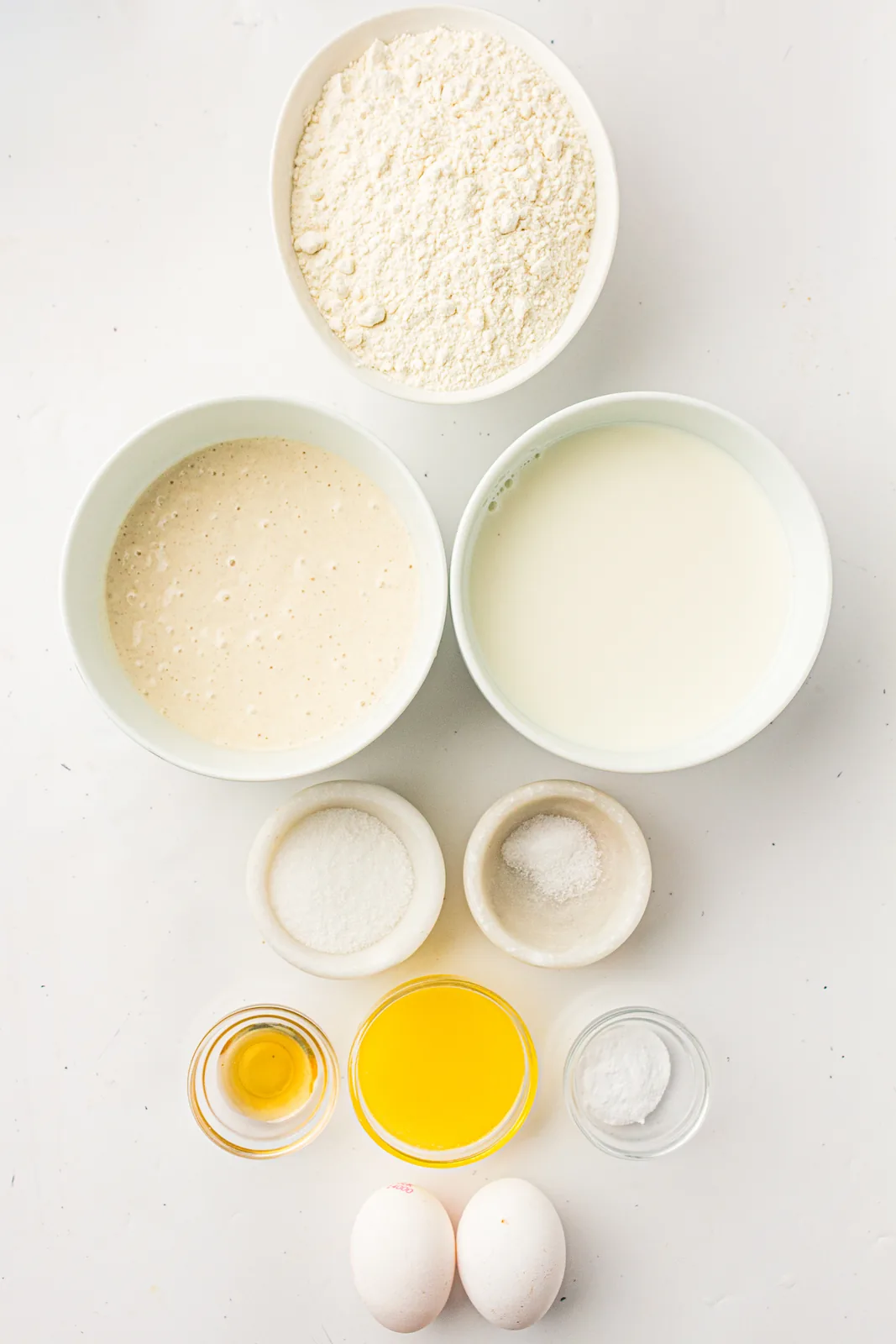
Discard or Active Starter for Sourdough Discard Waffles?
Both work, and the choice is really about how much tang you want on a Saturday. Unfed discard that has been sitting in the fridge for a week is properly acidic, so it reacts hard with the soda and tastes noticeably sour in a good way.
Active, bubbly starter is gentler. Use it and the result reads as a rich buttermilk waffle with something extra going on underneath. If you are cooking for children who are suspicious of new flavours, this is the version to start with.
What matters more than either is the soda. Sourdough discard waffles rely on that acid and alkali meeting, so mix the dry ingredients in last and get the batter into the iron reasonably quickly.
Can You Make the Batter the Night Before?
Yes, with one adjustment. Whisk the starter, milk, eggs, butter, sugar, and vanilla together, cover the bowl, and refrigerate it overnight. Then stir in the flour, soda, and salt in the morning, right before you cook.
Holding the soda back matters. If it goes in the night before, the reaction happens in the fridge and you lose most of the lift, which leaves you with dense, leathery squares. That said, a fully mixed batter still works if you use it within a couple of hours.
An overnight rest also deepens the flavour, since the starter carries on fermenting the flour in the milk. Better yet, it means less to do while everyone is standing around the kitchen waiting.
How To Make Sourdough Discard Waffles
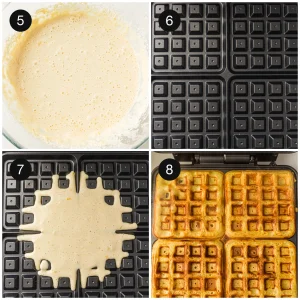
1. Heat the iron. First switch the waffle iron on and let it come fully up to temperature. Grease it lightly if yours is not properly non-stick.
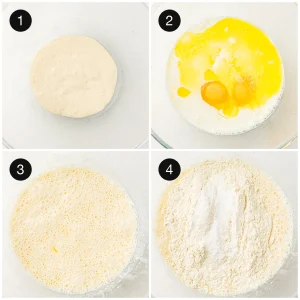
2. Whisk the wet mix. Then whisk the starter, milk, eggs, melted butter, sugar, and vanilla in a large bowl until smooth with no streaks of starter left.
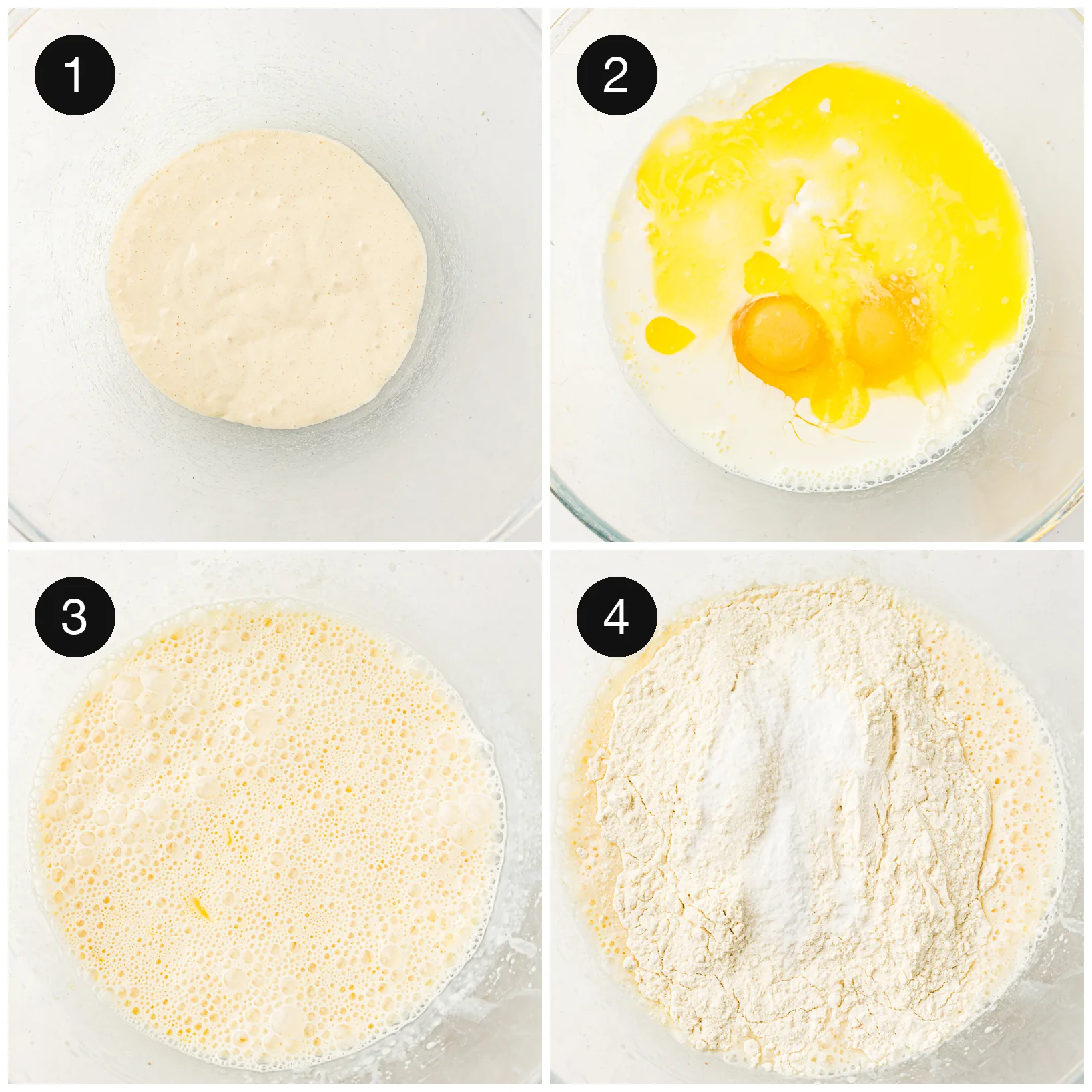
3. Add the dry ingredients. Next scatter the flour, baking soda, and salt over the surface and stir gently until only just combined. A few lumps are fine, and overmixing is what makes them tough.
4. Rest for five minutes. After that, leave the batter alone. It thickens slightly and the bubbles have time to form.
5. Cook until deeply golden. Pour in whatever your iron takes, close the lid, and cook for four to five minutes. Resist lifting the lid early, because that is how you tear the top off.
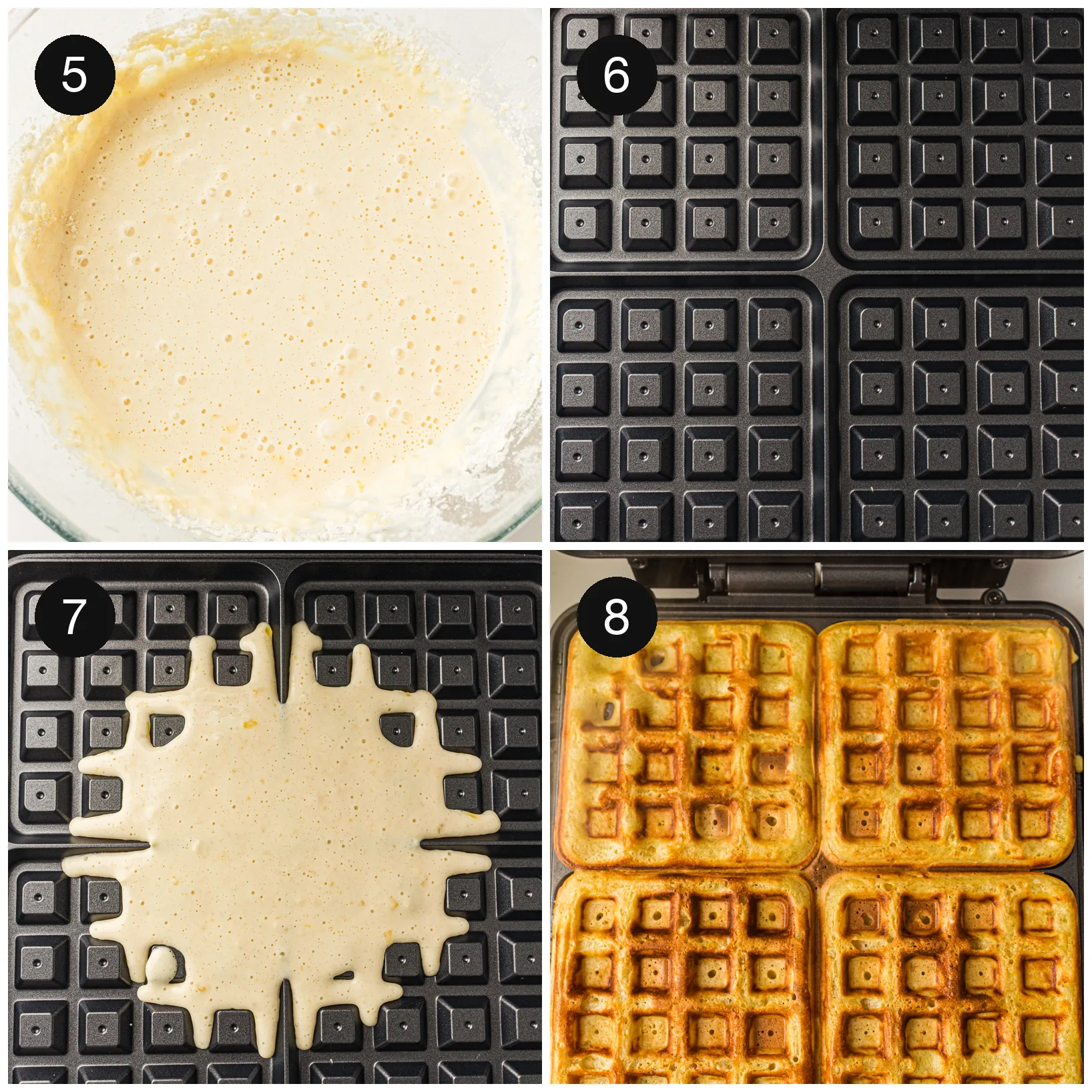
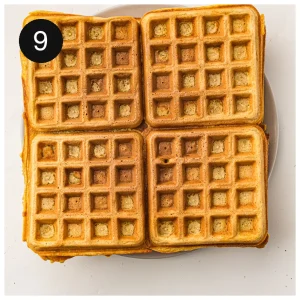
6. Rest on a rack. Finally move each one to a wire rack rather than stacking them. Stacking traps steam and softens the crust you just built.
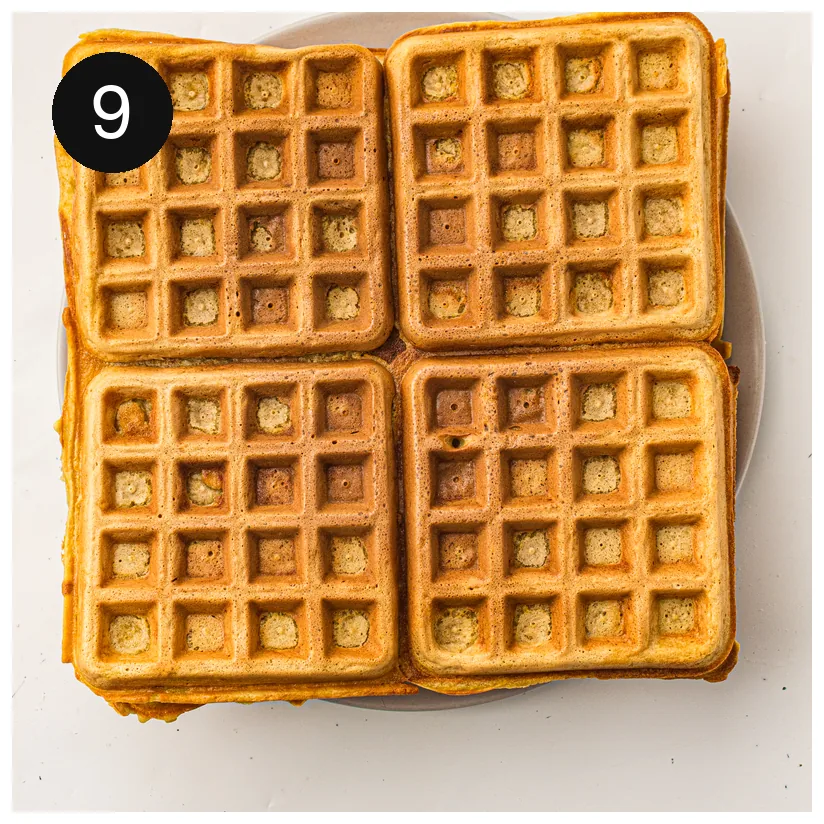
Why Are My Waffles Not Crispy?
- The iron was not hot enough. Wait for the indicator light, then wait another minute. A cool plate steams rather than sears.
- You stacked them. This is the most common mistake. Steam from the one below softens the one above within a minute.
- The batter was overmixed. Because gluten develops fast in a wet batter, stirring past the point of combining gives you chew instead of crunch.
- You opened the lid too soon. The crust sets in the last minute, so let it finish.
- No sugar in the batter. Sugar caramelises against the plate. Leave it out and you get a paler, softer surface.
Tips for the Best Sourdough Discard Waffles
- Keep a low oven on at 200F and park cooked ones on a rack inside it while you finish the batch.
- Weigh the starter. A cup is about 240 g, though a stiff starter weighs more per cup than a loose one.
- Use a ladle, not a jug. Of course a jug pours faster, but it also overfills the iron and pushes batter out of the sides.
- Melt the butter first so it has time to cool. Hot butter scrambles the eggs on contact.
- If the batter looks too thick to pour, loosen it with a splash of milk rather than water.
Storage and Reheating
- Fridge. Cool the sourdough discard waffles completely, then keep them in an airtight container for up to three days.
- Freezer. Layer with parchment between each one and freeze for up to two months.
- Reheating. The toaster is the right tool, straight from frozen. Alternatively spread them on a tray and warm at 350F for about eight minutes. Skip the microwave, which makes them limp.
Variations and Substitutions
- Berries. Fold them in gently at the very end so they do not bleed through the batter. For a version built around the fruit rather than dotted with it, try my raspberry sourdough waffles.
- Pancakes instead. Loosen the batter with an extra splash of milk and cook them on a griddle. My sheet pan pancakes use the same logic for a crowd.
- Savoury. Leave out the sugar and vanilla, then add grated cheddar and chopped chives.
- Dairy free. Oat milk and melted coconut oil work, though the crust browns a little less.
- Sweeter surface. Maple syrup can replace the sugar in the batter. Whether that is better for you than sugar is a fair question, and Cleveland Clinic gives a straight answer.
What to Serve With Them for Breakfast
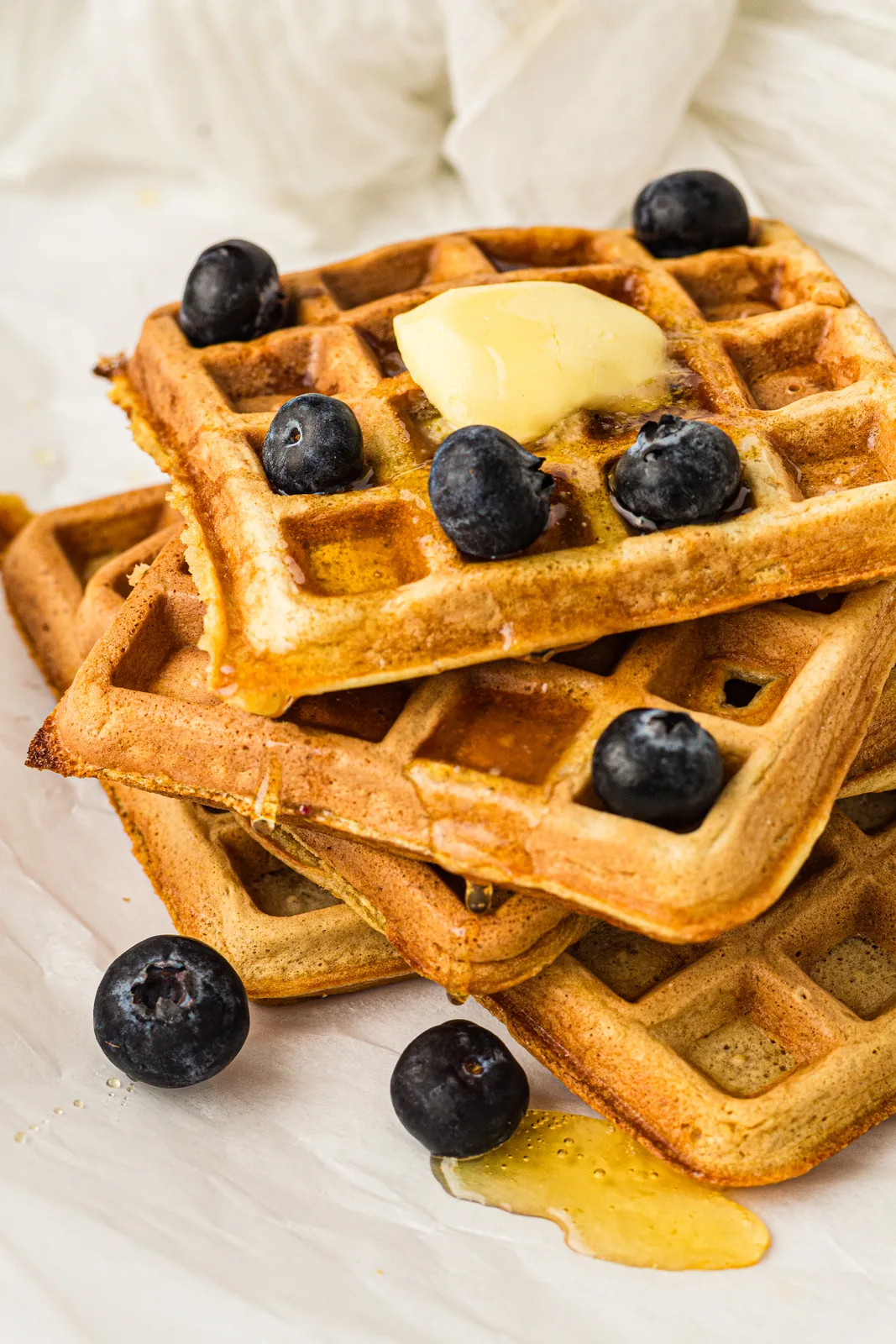
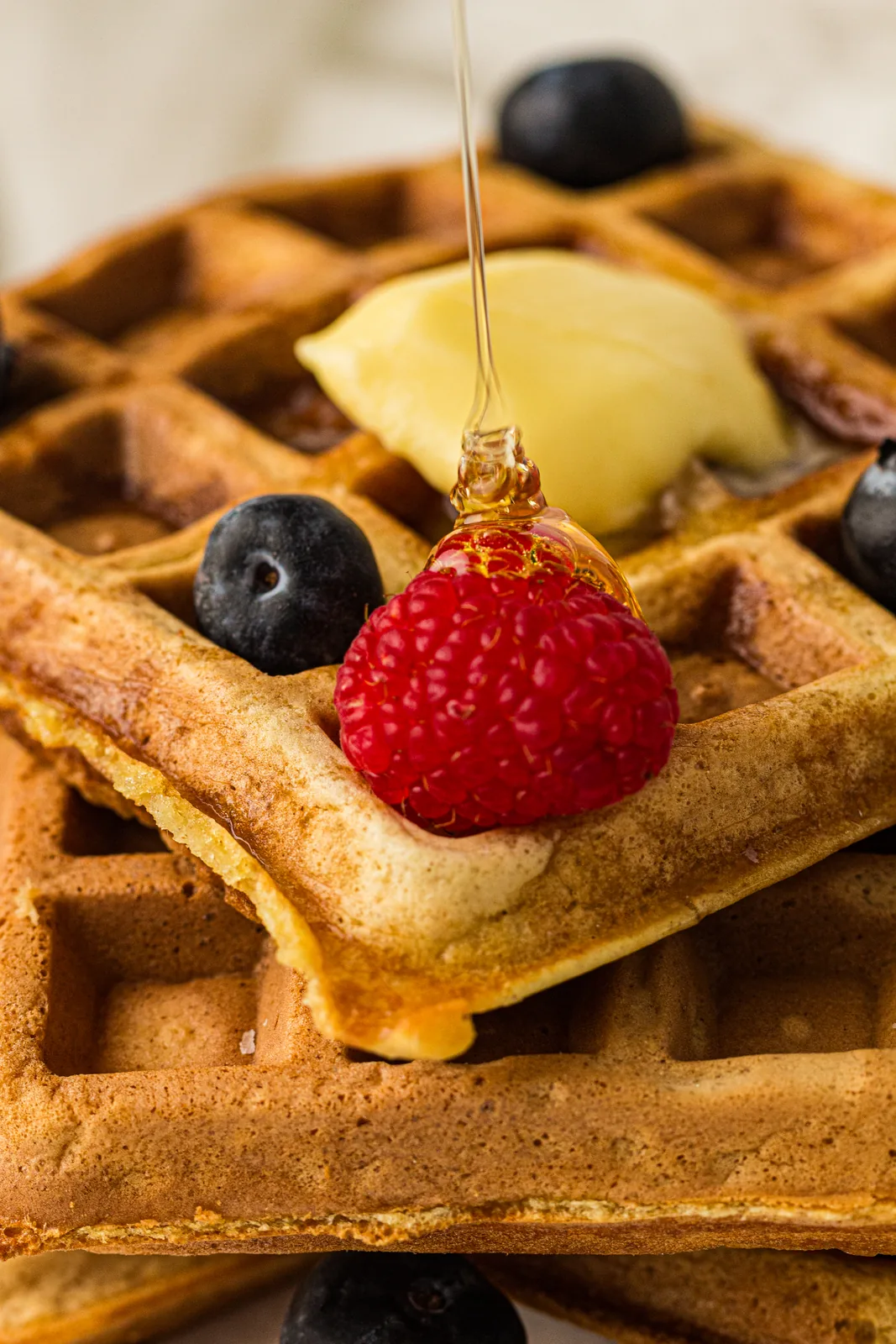
Butter and maple syrup on hot sourdough discard waffles is the honest answer, and it is what happens here most weekends. Still, a spoonful of thick yoghurt with berries turns it into something you can eat without needing a nap afterwards.
For a proper brunch, put a tray of freezer breakfast sandwiches alongside so there is something savoury on the table. A jar of homemade granola scattered over the top adds crunch, which sounds odd until you try it.
Frequently Asked Questions
Starter and Batter
Can sourdough discard be used in waffles?
Yes, and it is one of the best uses for it. The acid in the discard reacts with baking soda, so you get lift and flavour from the same ingredient.
Do I need to feed the starter first?
No. Unfed discard straight from the fridge is fine, and it makes tangier sourdough discard waffles than fed starter does.
Can I store leftover batter?
For up to two days in the fridge, though the lift fades. Because of that, hold back the baking soda until you are ready to cook if you know you will be storing it.
Can I use baking powder instead of soda?
You can, but you lose the reaction with the starter. The result is flatter and slightly metallic tasting, so soda is worth buying.
Cooking and Keeping
Are these healthier than regular ones?
They are not a health food, though the long fermentation of the starter does make the flour easier on some people. Treat them as breakfast, not medicine.
Why did mine stick to the iron?
Either the plate was not hot enough or it needed greasing. A thin brush of oil before the first one usually solves it for the whole batch.
How many does this make?
Four to six sourdough discard waffles, depending on how deep your iron is. A Belgian iron eats far more batter per round than a thin classic one.
Ingredients
- 1 cup sourdough starter or discard 240 g, discard for more tang
- 1 3/4 cups milk 420 ml
- 2 large eggs room temperature
- 4 tablespoons unsalted butter 56 g, melted and slightly cooled
- 2 tablespoons sugar optional, but it helps the browning
- 1 teaspoon vanilla extract
- 2 cups all-purpose flour 250 g
- 1 teaspoon baking soda not baking powder
- 1/2 teaspoon fine sea salt
Instructions
- Preheat the waffle iron according to the manufacturer's instructions. Lightly grease it if needed.
- In a large bowl, whisk together the sourdough starter, milk, eggs, melted butter, sugar and vanilla extract until smooth.

- Sprinkle the flour, baking soda and salt over the wet mixture.
- Gently stir until just combined. Do not overmix; the batter should be slightly thick but pourable.
- Let the batter rest for about five minutes while the iron finishes heating.
- Pour the batter into the preheated waffle iron according to your waffle maker's capacity.
- Cook until deeply golden and crisp on the outside, about 4 to 5 minutes.
- Carefully remove and place on a wire rack to keep them crisp while cooking the remaining waffles.