 Bity

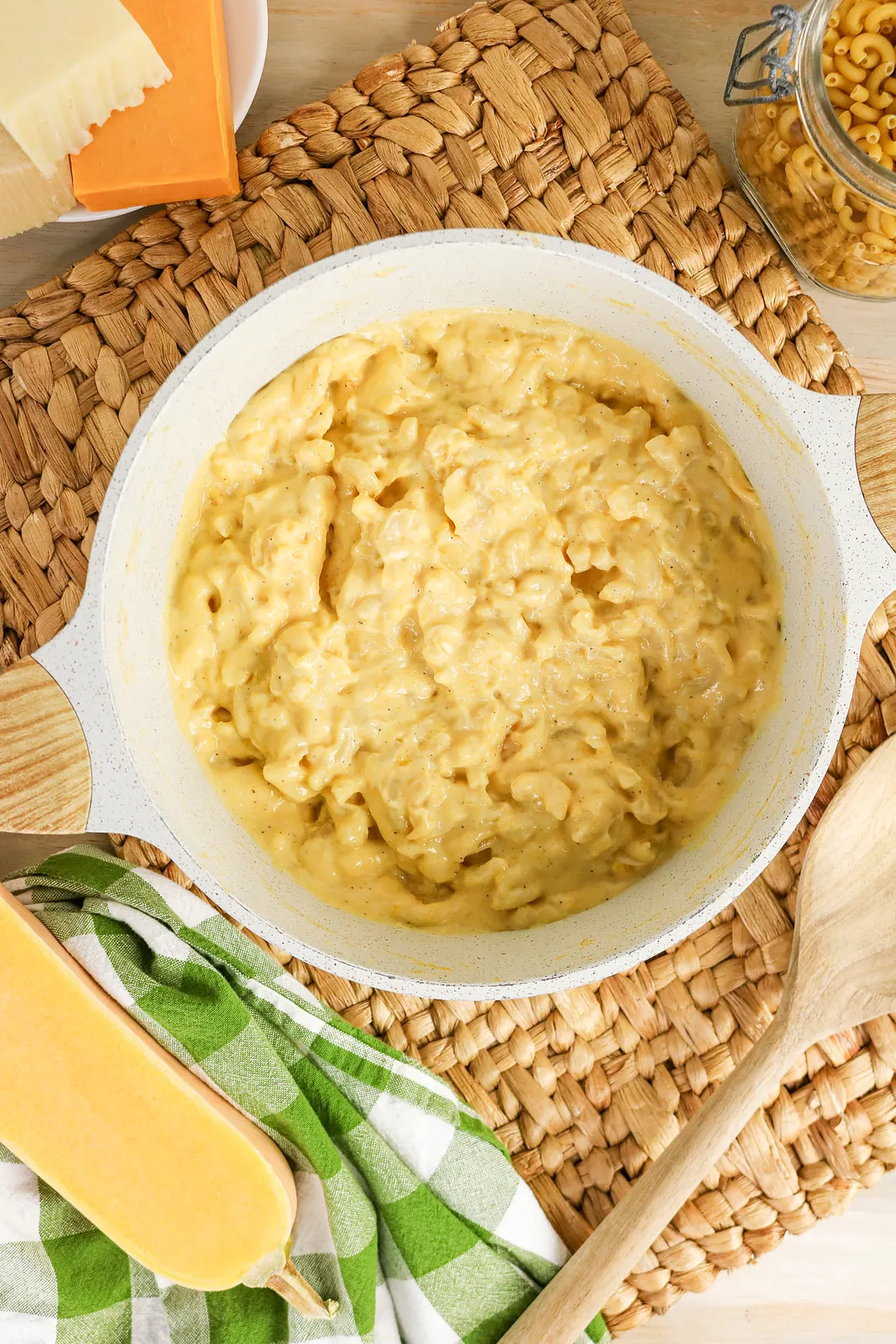
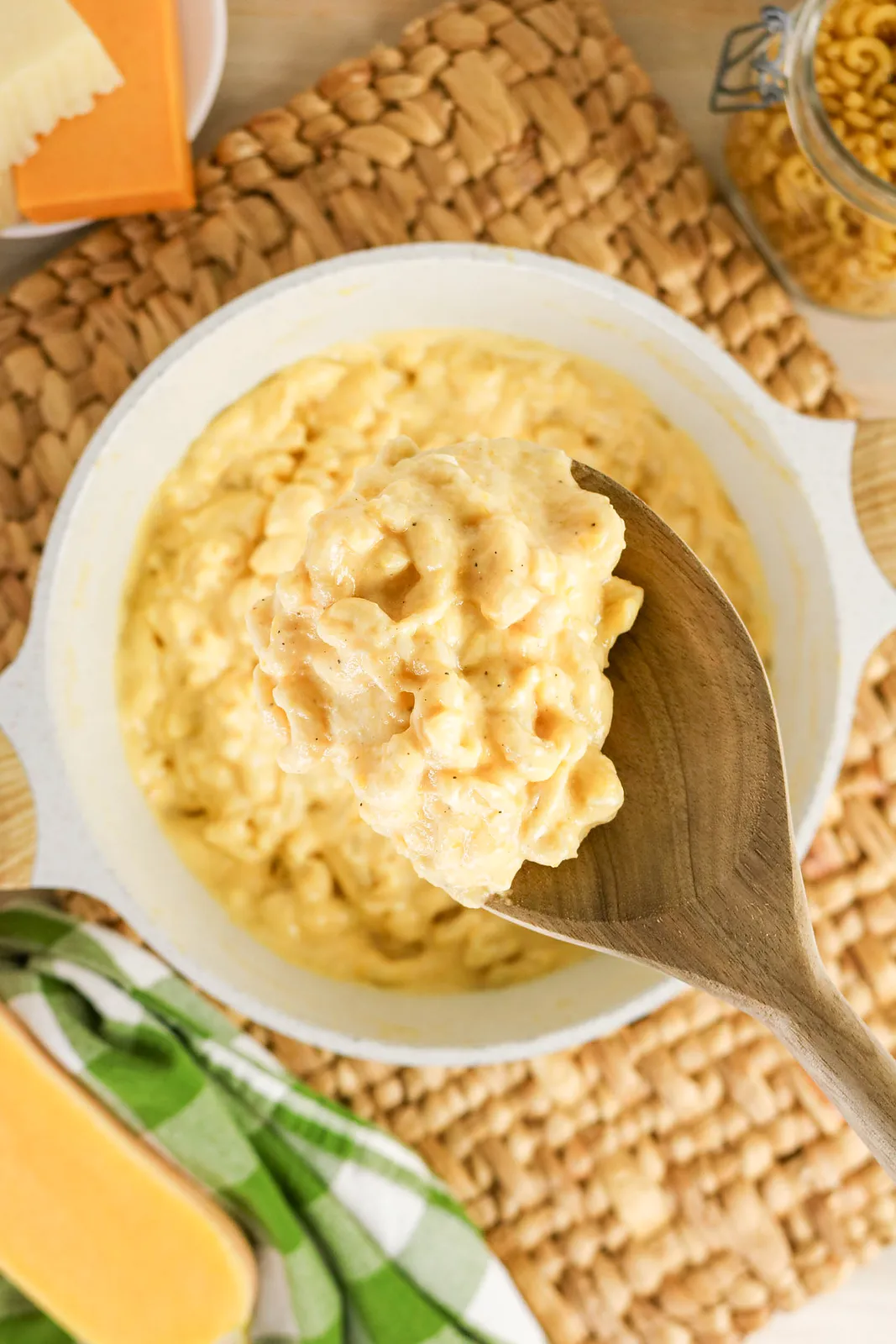
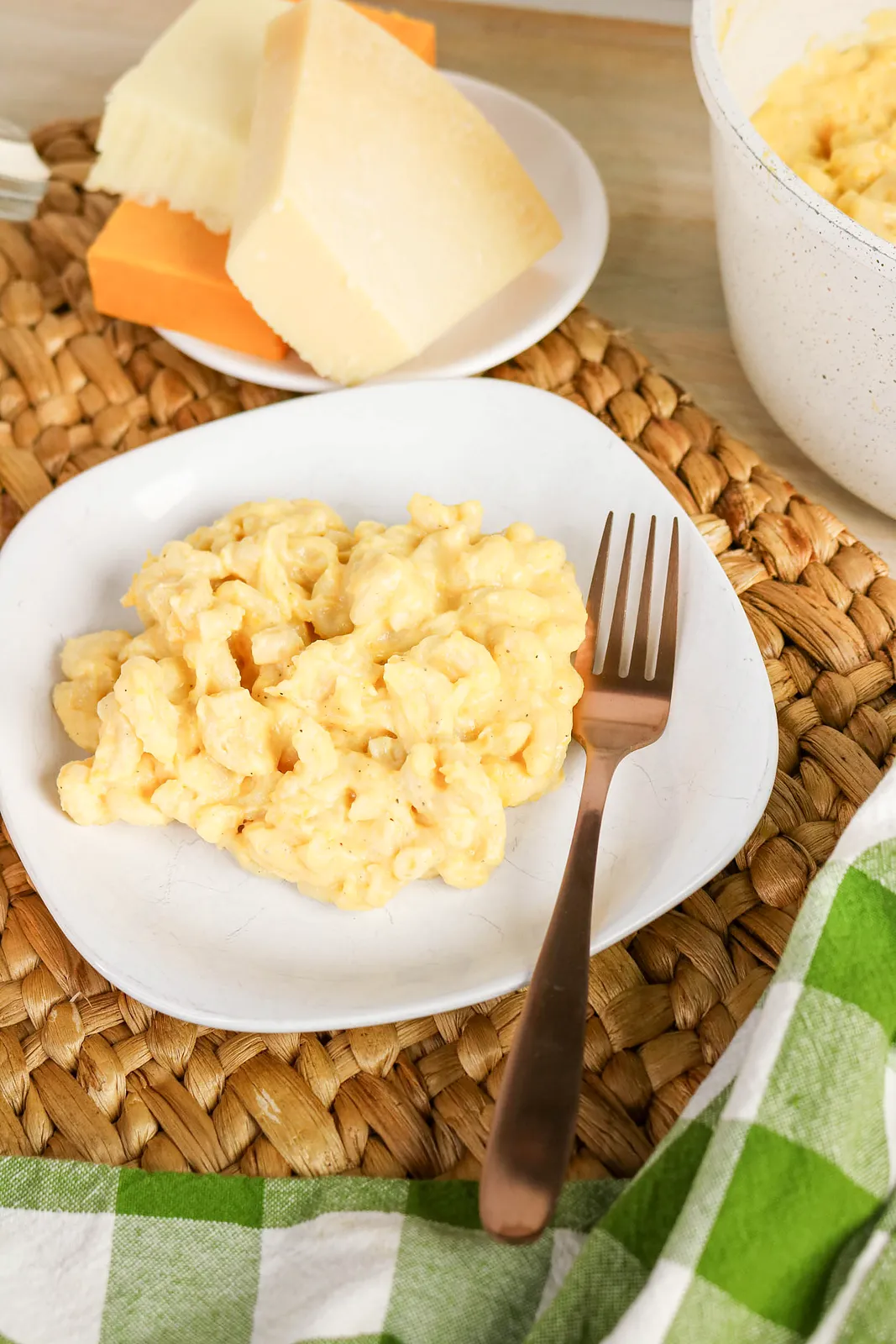
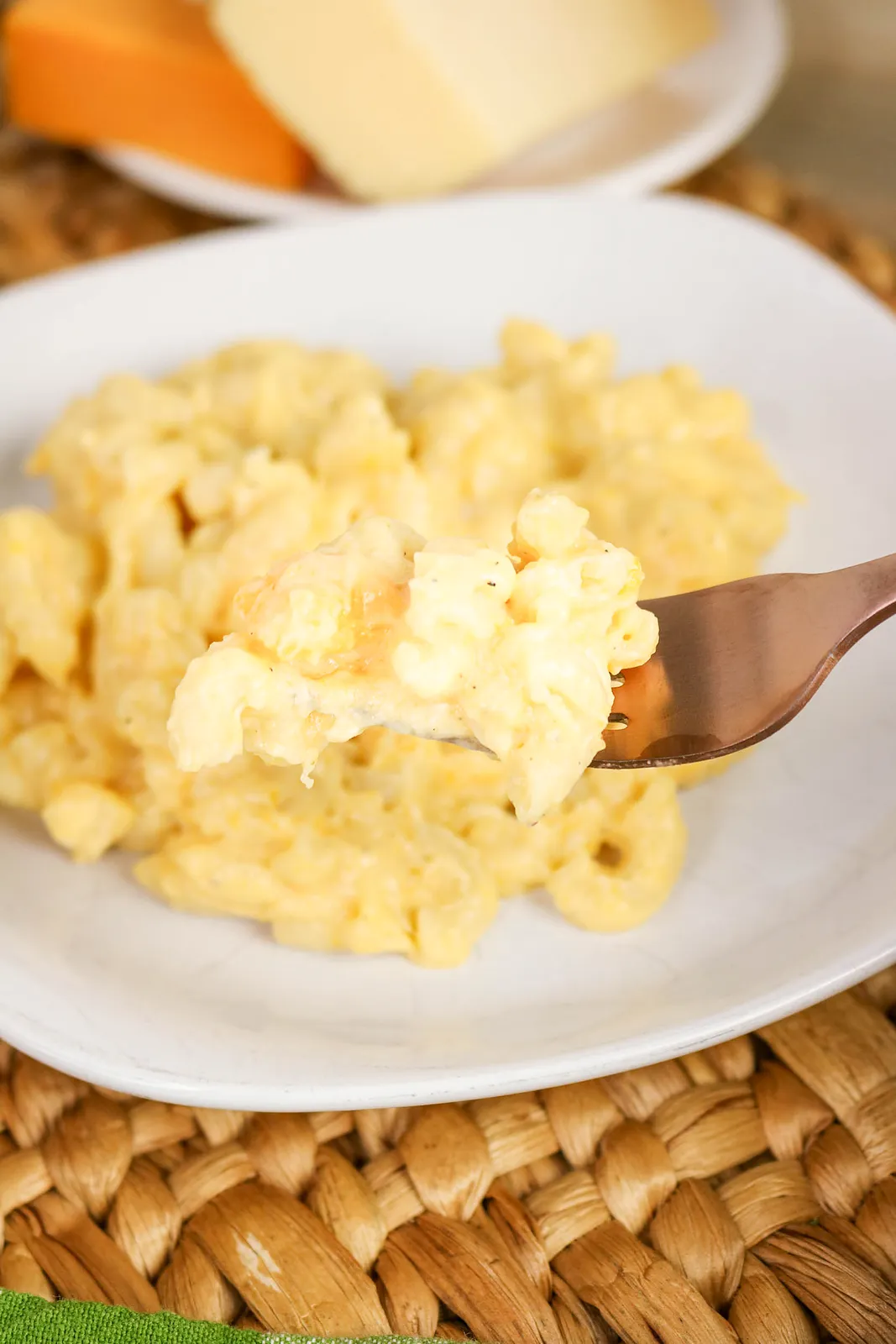
This butternut squash mac and cheese is what I cook when the evenings turn dark and I want a bowl of something golden. Soft squash is blitzed to a silky puree, then stirred into a proper cheese sauce with sharp cheddar, mozzarella and Parmesan, so every elbow of pasta ends up glossy and velvety.
In short, this is elbow macaroni folded into a stovetop roux and cheese sauce thickened with smooth butternut squash puree, sharp cheddar, mozzarella and Parmesan, with no baking. It takes 55 minutes, serves 6 as a main or 8 as a side and comes to about 335 calories per side serving.
I first made it to use up half a squash that had been rolling around my fridge drawer. Honestly, I expected a compromise. Instead, the squash made the sauce creamier and a little sweeter, and nobody at the table guessed there was a vegetable hiding in it. It has been on repeat ever since, and it takes under an hour.

Quick Breakdown
Why You’ll Love This Butternut Squash Mac and Cheese
- It is properly creamy. The puree thickens the sauce, so you get a velvety texture from only 2 tablespoons of butter.
- The sweetness is gentle. Sharp cheddar and salty Parmesan balance the squash, so it tastes savoury first and only faintly sweet.
- It all happens on the hob. There is no baking and no breadcrumb topping to fuss over. In fact, the sauce comes together in one pot.
- Children eat it happily. The colour is the same sunny orange as the boxed kind, which helps enormously.
- It fits a holiday table. Because it feeds 6 to 8, butternut squash mac and cheese sits comfortably next to the turkey as a side.
Ingredient Notes
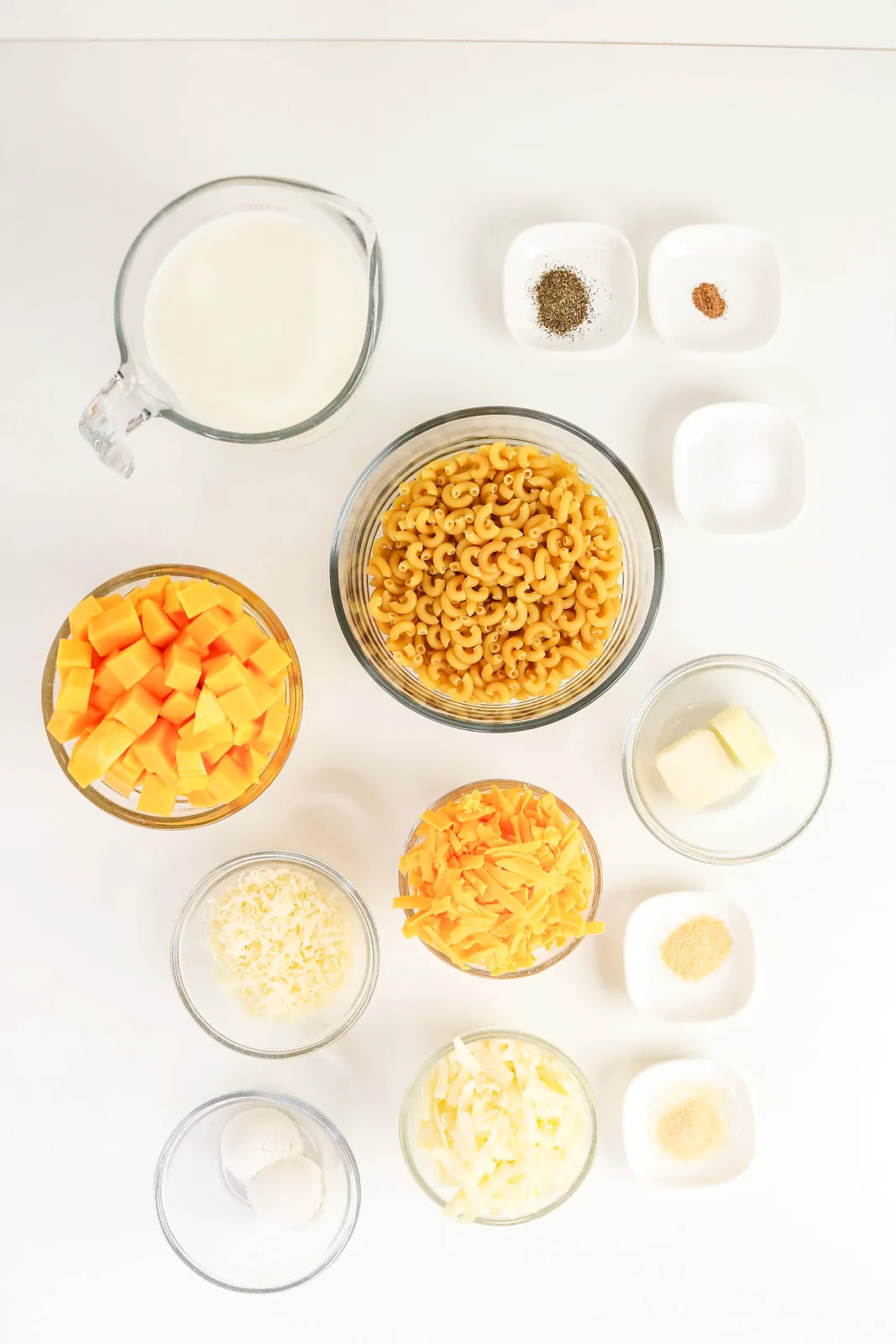
- Elbow macaroni. 12 oz (340 g). Small shells work just as well, because both shapes scoop up sauce.
- Butternut squash. 2 cups of peeled cubes (about 280 g). Cut them roughly 2 cm, so they soften evenly in 10 to 12 minutes.
- Butter and plain flour. 2 tablespoons of each. Together they form the roux that thickens the milk.
- Milk. 2 cups (480 ml), whole or 2%. Whole milk gives the richest sauce.
- Sharp cheddar. 1 cup, shredded. I grate it from the block on a box grater, because bagged shreds carry a starch coating that can turn a sauce grainy.
- Mozzarella. 1/2 cup, shredded, for stretch.
- Parmesan. 1/4 cup, grated, for a salty, nutty edge.
- Seasoning. 1/2 teaspoon salt, 1/4 teaspoon each of black pepper, garlic powder and onion powder, plus an optional pinch of nutmeg.
- Pasta water. Keep back 1/3 cup (80 ml) before you drain. It loosens the sauce without thinning the flavour.
The squash is doing more than adding colour. According to the Cleveland Clinic, one cup of raw butternut squash supplies up to half of your daily vitamin A, along with fibre and potassium.
What Cheese Goes With Butternut Squash?
Sharp, salty cheeses go best with butternut squash, and this recipe uses 1 cup of sharp cheddar, 1/2 cup of mozzarella and 1/4 cup of Parmesan. Squash is sweet and mild, so it needs cheeses with some attitude. This recipe uses three, and each one has a job. If you want to swap, replace like with like and keep the total at 1 3/4 cups.
| Cheese | Amount | What it does | Good swap |
|---|---|---|---|
| Sharp cheddar | 1 cup | Tang and the main cheesy flavour | Gruyere or smoked Gouda |
| Mozzarella | 1/2 cup | Melt and gentle stretch | Fontina or Monterey Jack |
| Parmesan | 1/4 cup | Salt and savoury depth | Pecorino Romano |
Fresh, Frozen or Canned Squash?
Fresh cubes give the brightest flavour. However, frozen cubes are a brilliant shortcut; simply boil them from frozen until they are very soft. You can also roast the squash for a deeper, caramelised taste, or stir in the same volume of canned squash or pumpkin puree when you are short of time.
How To Make Butternut Squash Mac and Cheese
1. Cook the pasta. First, bring a large pot of well salted water to the boil and cook the macaroni until it is only just al dente. Scoop out 1/3 cup of the cooking water, then drain the pasta and set it aside.
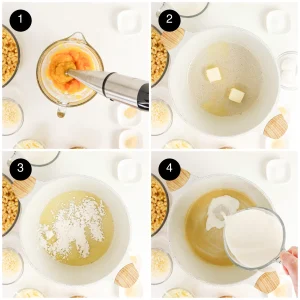
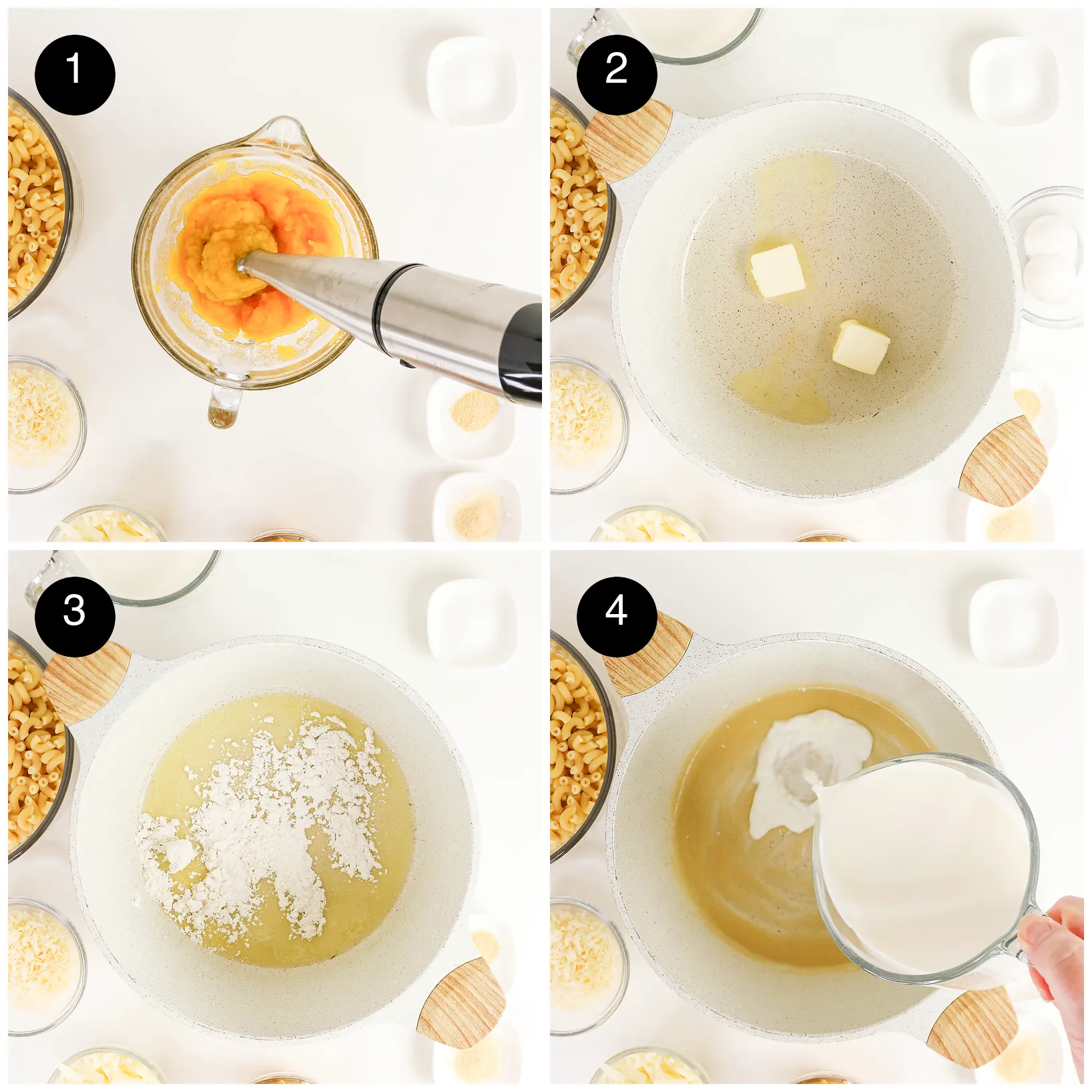
2. Soften and blend the squash. Meanwhile, steam or boil the cubes for 10 to 12 minutes, until a knife slides through with no resistance. Drain them, then blitz to a completely smooth puree. I use an immersion blender in a jug, although a standard blender does the same job.
3. Make the roux. Next, melt the butter in a saucepan or a wide enamelled pot over a medium heat. Whisk in the flour and cook the paste for 1 to 2 minutes, until it smells biscuity and looks lightly golden.
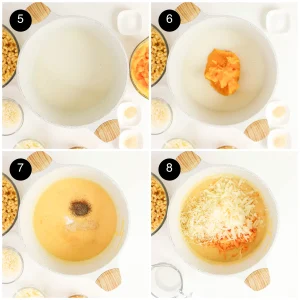
4. Whisk in the milk. Then pour in the milk a little at a time, whisking constantly so no lumps form. Keep stirring for 4 to 5 minutes, until the sauce coats the back of a spoon.
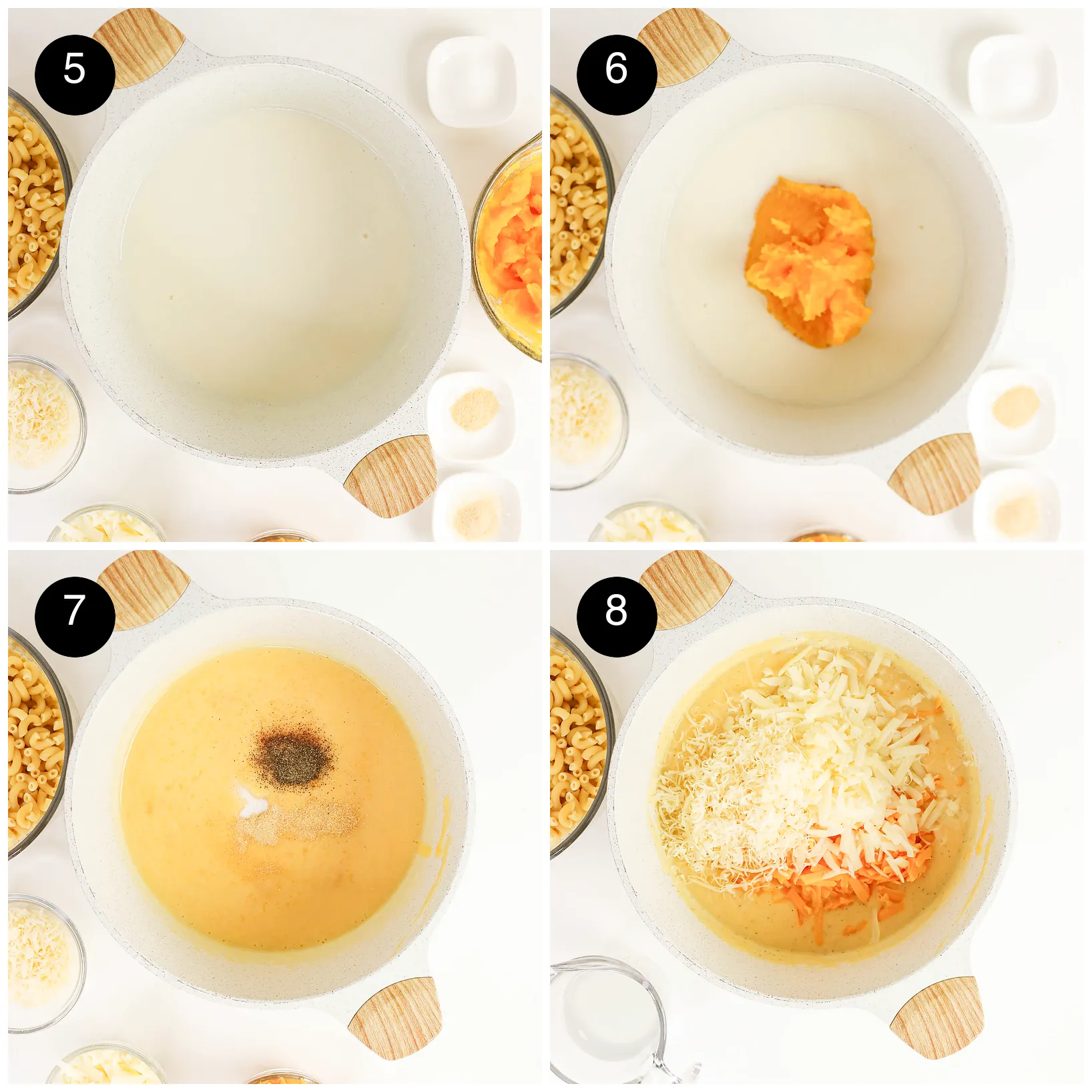
5. Add the puree and seasoning. After that, stir in the squash puree with the salt, pepper, garlic powder, onion powder and the nutmeg, if you are using it. The sauce will turn a deep, sunny orange.
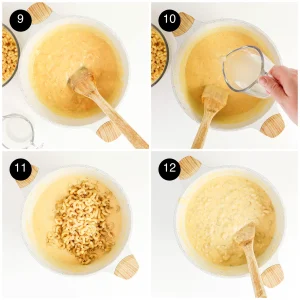
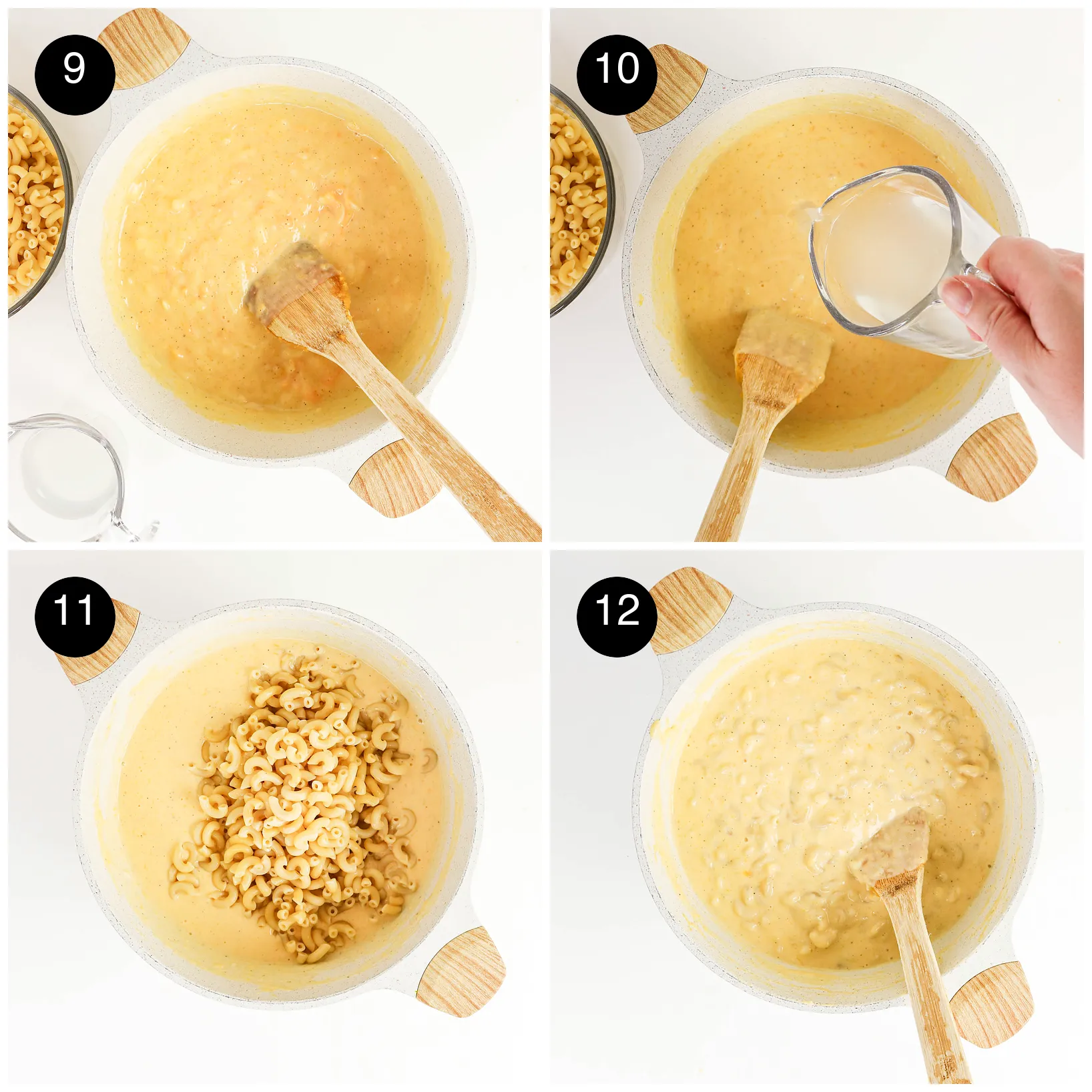
6. Melt in the cheese. Turn the heat down to low. Add the cheddar, mozzarella and Parmesan and stir gently until everything is melted and smooth. If the sauce feels too thick, loosen it with a splash of the reserved pasta water.
7. Fold in the pasta. Finally, tip the drained macaroni into the pot and fold until every piece is coated. Serve it warm, straight away, while the sauce is at its glossiest.
Why Is My Sauce Grainy, Thin or Bland?
A grainy sauce means the cheese went in over too high a heat, a thin sauce needs the full 4 to 5 minutes of simmering before anything else goes in, and a bland one needs more salt. Here is how to fix each problem:
- Grainy sauce. The heat was too high when the cheese went in. Always drop to low first, because boiling makes cheese proteins tighten and split.
- Stringy bits of squash. The cubes were undercooked. They should be soft enough to crush with a fork before you blend them.
- Sauce too thin. Simmer the milk and roux for the full 4 to 5 minutes before adding anything else. As a result, the flour has time to thicken properly.
- Sauce too thick. Stir in the reserved pasta water a tablespoon at a time. It keeps thickening as it sits.
- Bland flavour. Salt the pasta water generously, and taste the finished sauce before the pasta goes in.
Tips for the Best Butternut Squash Mac and Cheese
- Stop cooking the pasta a minute early. It carries on softening in the hot sauce.
- Do not rinse the drained macaroni. The surface starch helps the sauce cling.
- Warm the milk for a minute in the microwave first. Cold milk hitting a hot roux is the usual cause of lumps.
- Blend the squash longer than you think you need to. A truly smooth puree is what makes butternut squash mac and cheese taste creamy rather than vegetal.
- Add the nutmeg sparingly. A pinch lifts the sweetness; more than that takes over.
Storage and Reheating
- Fridge. Cool leftover butternut squash mac and cheese quickly, then keep it in a sealed container for up to 3 days.
- Reheating. Warm it gently in a pan with a splash of milk, stirring until it loosens. The microwave works too; stir every 30 seconds.
- Freezer. You can freeze portions for up to 2 months, although the pasta softens. Thaw overnight in the fridge and reheat with extra milk.
- Make ahead. The puree keeps for 3 days in the fridge, so you can cook and blend the squash in advance and make the sauce on the night.
Variations and Substitutions
- Baked version. Tip everything into a dish, scatter with buttered crumbs and brown it under the grill. For a full crumb crust, follow my baked mac and cheese method.
- Pressure cooker. If you would rather skip the roux altogether, my Instant Pot mac and cheese is ready in 15 minutes.
- Add greens. Stir a few handfuls of baby spinach or chopped kale into the hot sauce until wilted.
- Gluten free. Use gluten free pasta and a gluten free plain flour blend for the roux.
- Add protein. Crisp bacon, shredded chicken or browned sausage all work.
- Sage and brown butter. Fry a few sage leaves in the butter before adding the flour for a very autumnal flavour.
Of course, the squash also makes this a more filling bowl. Medical News Today notes that a cup of cooked butternut squash contains 6.6 grams of fibre, which ordinary cheese sauce cannot offer.
What to Serve With Butternut Squash Mac and Cheese
As a main course, I like something green and crisp alongside. A tray of air fryer broccoli has charred edges that cut through the richness. Garlic butter green beans are lovely too.
As a side, butternut squash mac and cheese sits happily next to roast chicken, pork chops or the Thanksgiving turkey. In addition, a sharp salad with a mustardy dressing balances the creamy sauce.
Frequently Asked Questions
Ingredients and Method
Can you taste the squash in this mac and cheese?
Only slightly. The 2 cups of pureed squash add a mellow sweetness and a silky body, but the sharp cheddar and Parmesan lead the flavour.
Can you use frozen butternut squash for mac and cheese?
Yes. Boil the cubes straight from frozen until they are very soft, drain them well, then blend as usual.
Do you need a blender for squash mac and cheese?
A blender or immersion blender gives the smoothest sauce. However, very soft squash can be pushed through a sieve or mashed thoroughly with a fork.
What pasta shape is best for squash mac and cheese?
Elbow macaroni and small shells are ideal, because their hollows trap the sauce; the recipe uses 12 oz (340 g). Cavatappi works well too.
Storage and Serving
Can you make squash mac and cheese ahead of time?
Partly. Cook and puree the squash up to 3 days ahead and keep it in the fridge, then make the sauce on the night. The finished butternut squash mac and cheese is best fresh, although leftovers reheat nicely with a splash of milk.
Why does mac and cheese sauce thicken as it sits?
Because the pasta keeps absorbing liquid. Stir in a little warm milk or reserved pasta water, a tablespoon at a time, to bring it back.
How many servings does this squash mac and cheese make?
Six generous main portions, or 8 smaller ones as a side dish, from 12 oz (340 g) of macaroni.
How long does squash mac and cheese last in the fridge?
Up to 3 days in a sealed container. Cool it and refrigerate within 2 hours, then reheat gently with a splash of milk until it is hot all the way through, 165°F (74°C).
Can you freeze squash mac and cheese?
Yes, for up to 2 months, although the pasta softens. Thaw it overnight in the fridge and reheat it in a pan with extra milk.
How many calories are in squash mac and cheese?
About 335 calories per serving when the recipe is split into 8 side portions, with roughly 14 g protein, 40 g carbohydrates and 13 g fat. These figures are estimates.
Ingredients
- 12 oz elbow macaroni (340g), or small pasta shells
- 2 cups butternut squash peeled and cubed
- 2 tablespoons butter
- 2 tablespoons all-purpose flour
- 2 cups milk (480ml), whole or 2%
- 1 cup sharp cheddar cheese shredded
- 1/2 cup mozzarella cheese shredded
- 1/4 cup Parmesan cheese grated
- 1/2 teaspoon salt
- 1/4 teaspoon black pepper
- 1/4 teaspoon garlic powder
- 1/4 teaspoon onion powder
- 1 pinch nutmeg optional
- 1/3 cup reserved pasta water (80ml), as needed for thinning
Instructions
- Boil the pasta in a pot of salted water until only just al dente. Save 1/3 cup of the cooking water, then drain the pasta and set it aside.
- Steam or boil the squash cubes for 10 to 12 minutes, until very soft. Drain, then puree until completely smooth with a blender or immersion blender.

- Melt the butter in a saucepan over medium heat. Whisk in the flour and cook the paste for 1 to 2 minutes, until lightly golden.
- Gradually whisk in the milk and keep stirring for 4 to 5 minutes, until the sauce thickens.
- Stir in the squash puree, salt, pepper, garlic powder, onion powder and the nutmeg, if using.
- Turn the heat to low. Add the cheddar, mozzarella and Parmesan and stir until melted and smooth. Thin with a splash of the saved pasta water if the sauce is too thick.
- Fold the drained pasta into the sauce until evenly coated. Serve warm.