 Bity
Bity
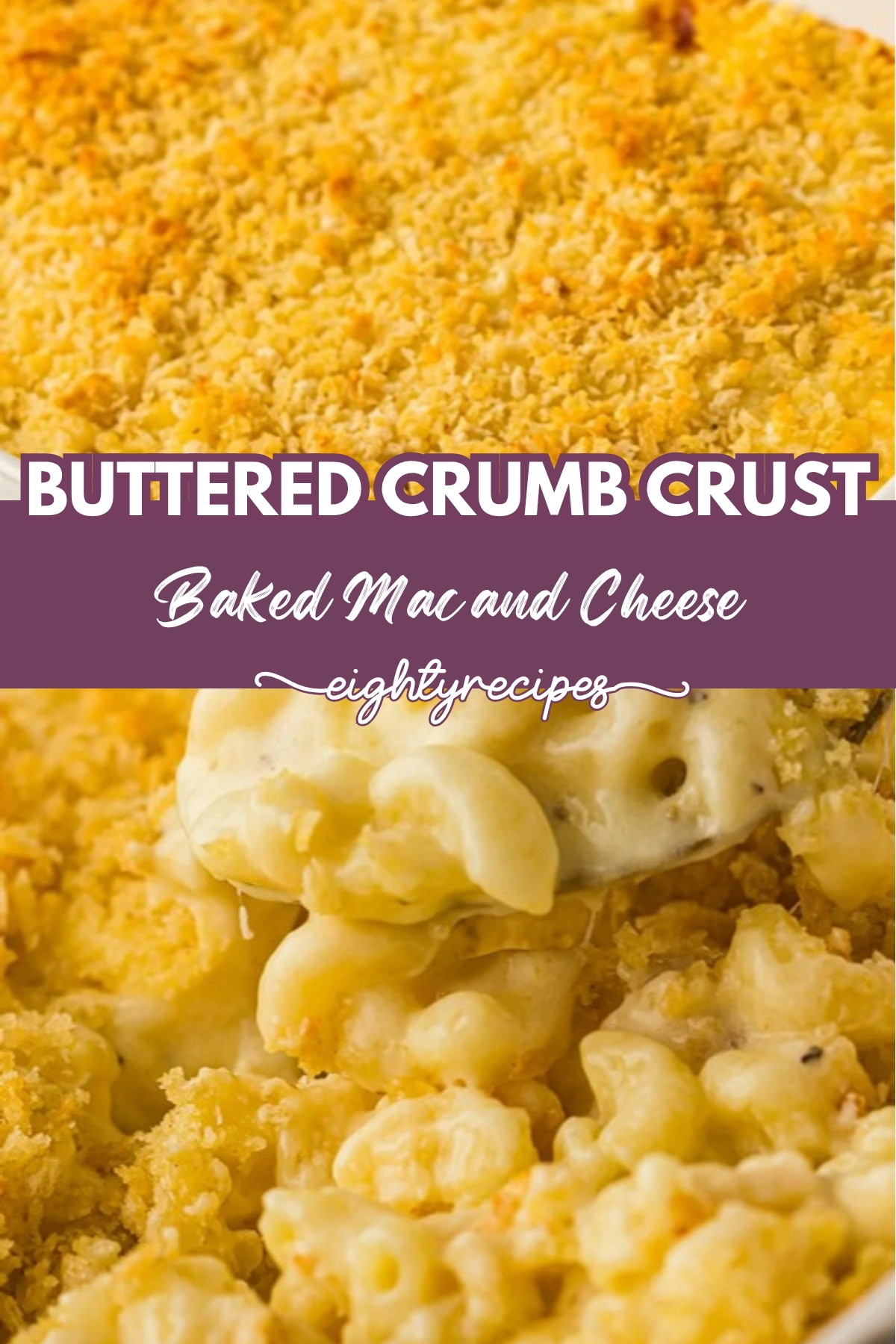
The crust is the whole reason to turn the oven on. Baked mac and cheese is not stovetop mac that happens to be hot, it is a dish with a crisp buttered lid on top and a soft, still creamy layer underneath, and those two textures together are the point.
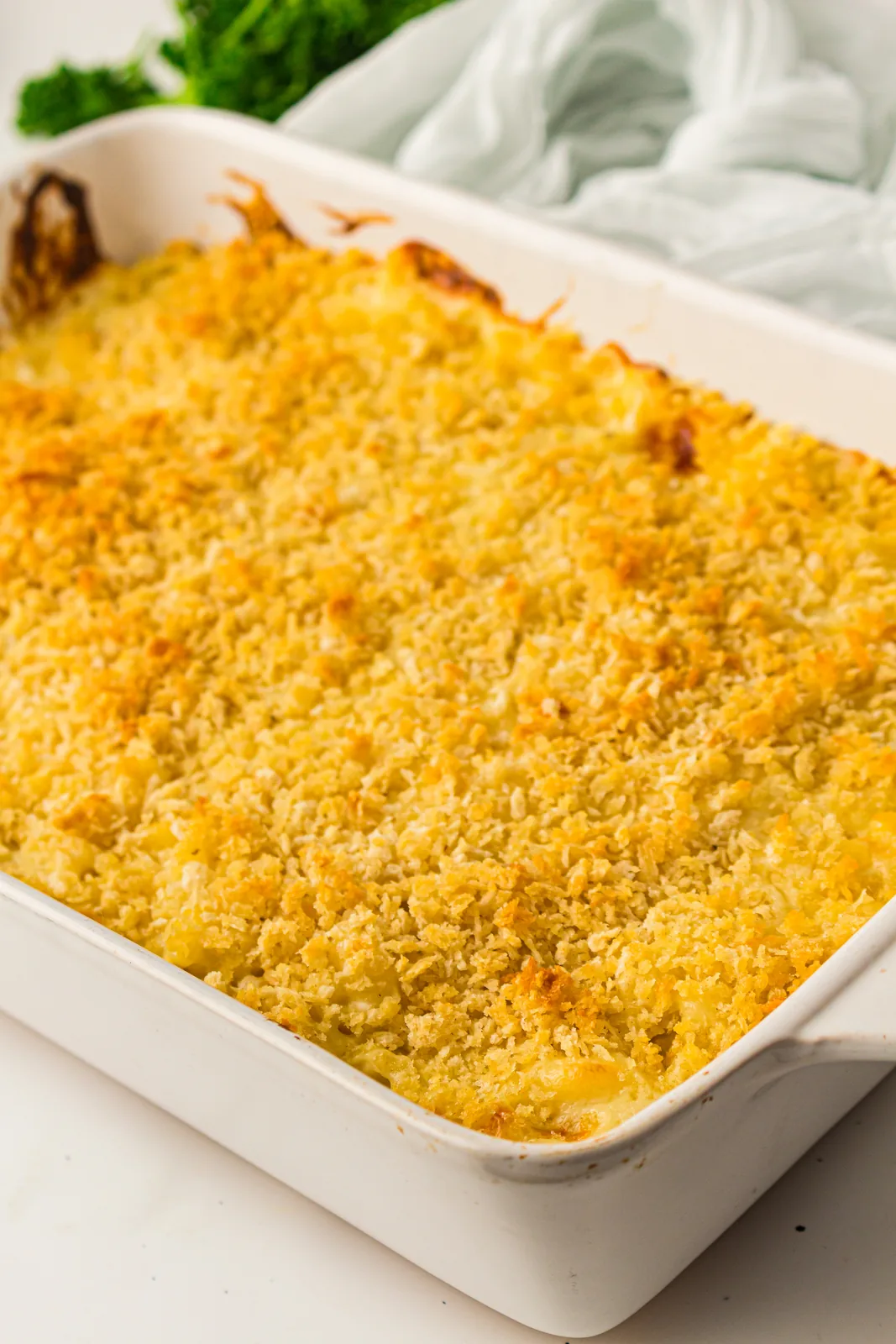
Three cheeses go into the sauce and buttered breadcrumbs go over the top. Half an hour at 375°F later the edges are bubbling up the sides of the dish and the middle is set but not stiff.
Quick Breakdown
Why You’ll Love This Baked Mac and Cheese
- A real crust. Buttered white breadcrumbs go golden and stay crisp, which a bare cheese top never does.
- Three cheeses. Sharp cheddar for flavour, mozzarella for stretch, Monterey Jack for melt.
- It feeds six. A pound of macaroni is a proper family dish, not a side portion.
- No cheese powder. A plain flour and butter roux does everything a packet does, and tastes of dairy.
- It travels. This is the pan you carry to a potluck and bring home empty.
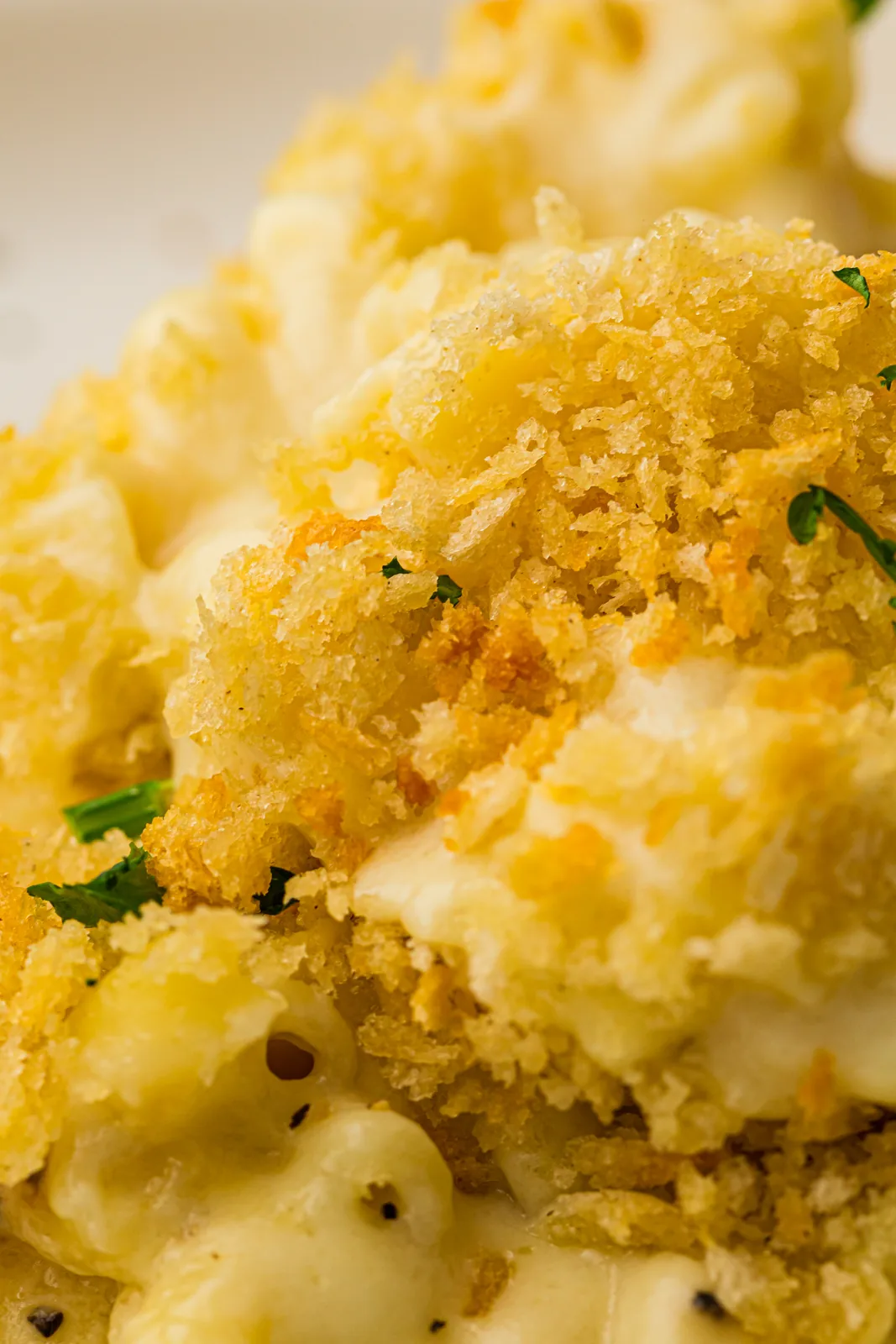
Ingredient Notes
- Elbow macaroni. Sixteen ounces. Cook it right to package time, not past it, because it keeps softening in the oven.
- Butter and flour. Four tablespoons and a quarter cup. This is the roux, and cooking it for a full minute is what stops the sauce tasting pasty.
- Whole milk. Three cups. Skimmed milk makes a thin, slightly grey sauce. Whole milk is worth it here.
- Sharp cheddar. One cup, shredded. Sharp rather than mild, because the milk and pasta flatten the flavour considerably.
- Mozzarella and Monterey Jack. One cup and half a cup. Mozzarella gives the pull, Jack melts smooth and stops the cheddar going grainy.
- White breadcrumbs and melted butter. One cup and two tablespoons. Toss them together properly, so every crumb is coated and none of them burn dry.
Cheese also pulls more weight nutritionally than its reputation suggests. In fact, Harvard’s Nutrition Source points out that one ounce of hard cheese carries about 120 calories, 8 grams of protein and 180 milligrams of calcium, which is a lot of calcium for a small piece.
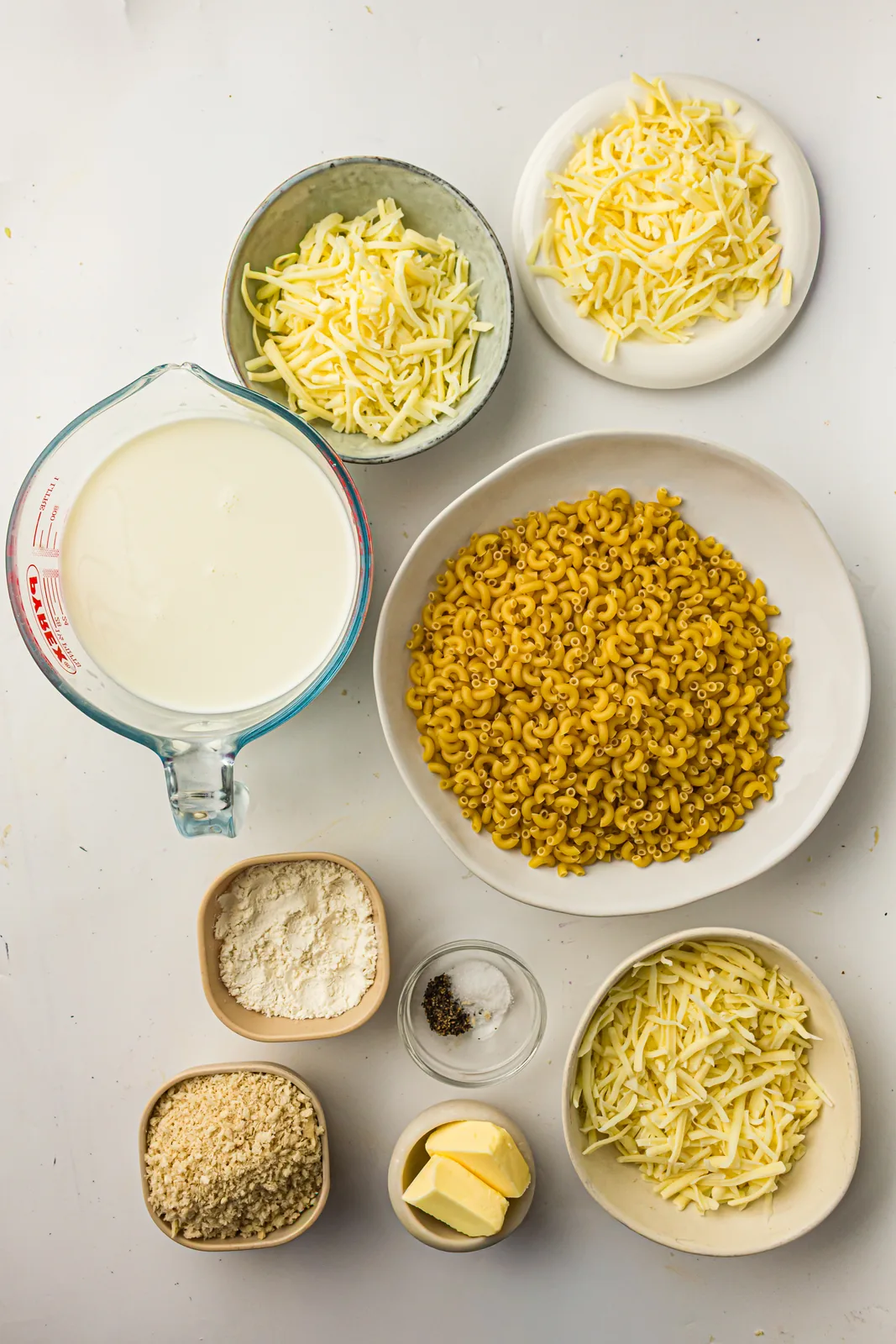
The Cheese Blend for Baked Mac and Cheese
One cheese rarely does everything you want. Cheddar has the flavour but it splits easily under heat, mozzarella stretches but tastes of almost nothing on its own, and Monterey Jack melts beautifully while contributing very little character. Together they cover each other’s gaps.
Shred your own if you can. Pre shredded bags are dusted with potato starch or cellulose to stop them clumping, and that coating is exactly what makes a sauce turn slightly gritty. That said, if a bagged blend is what is in the fridge, take the pan off the heat first and stir the cheese in off the flame.
| Cheese | What it brings | On its own |
|---|---|---|
| Sharp cheddar | Flavour and colour | Can split and go oily |
| Mozzarella | Stretch and body | Bland and rubbery |
| Monterey Jack | Smooth melt | Very mild |
How much sauce you make matters as much as which cheeses go into it. Three cups of milk for a pound of pasta looks generous when you pour it over, and it should. Dry macaroni carries on absorbing liquid for the entire half hour it spends in the oven, so a mixture that looks correct in the pan will look tight in the dish and dry on the plate. Aim for something that pools slightly when you level the top with a spoon.
How To Make Baked Mac and Cheese
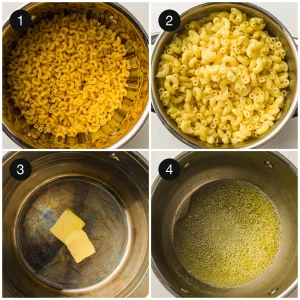
1. Heat the oven and boil the pasta. First, set the oven to 375°F and cook the macaroni to package directions. Drain it and leave it in the colander.
2. Start the roux. Next, melt the butter in a saucepan over medium heat, whisk in the flour and let it cook for one full minute. It should smell faintly biscuity rather than raw.
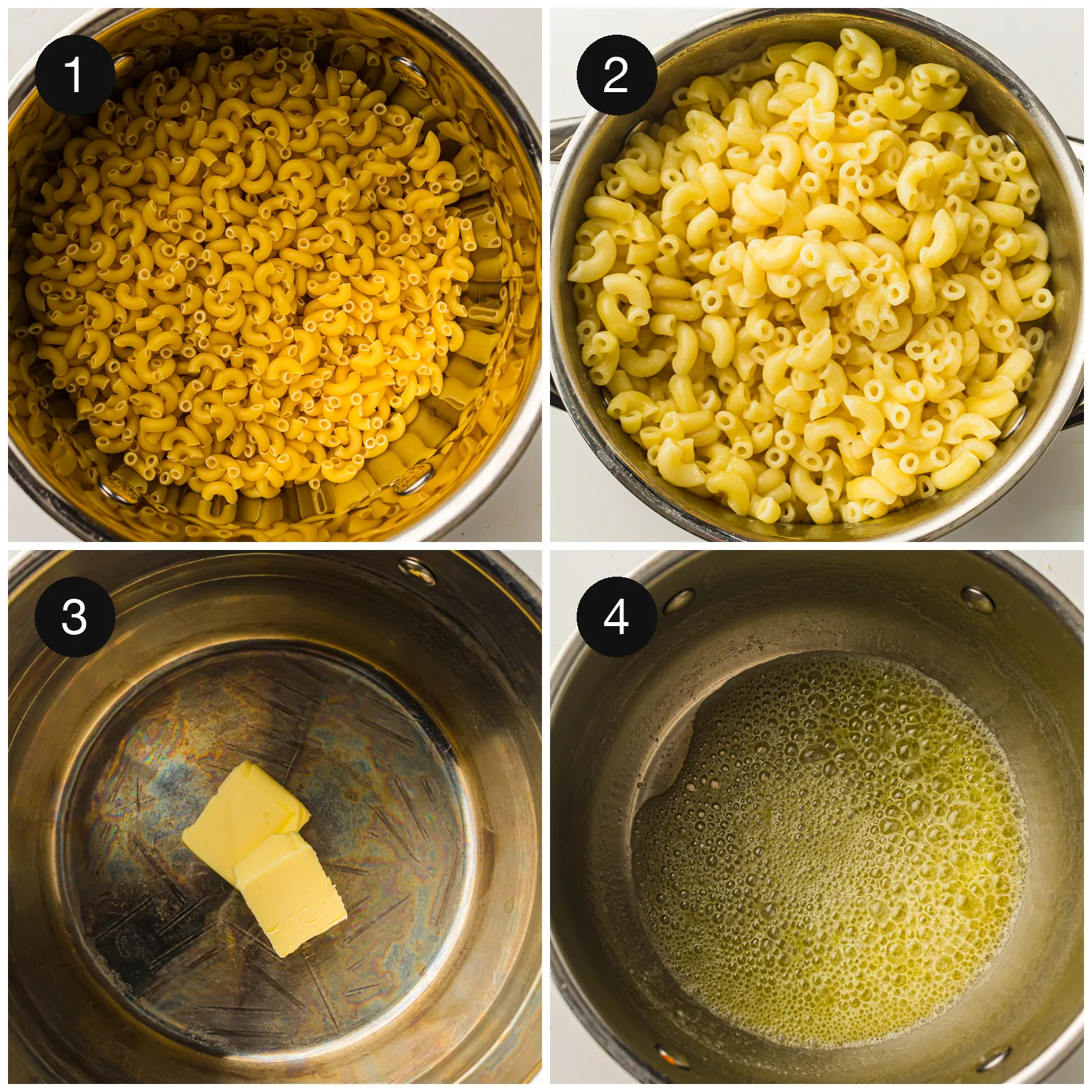
3. Build the sauce. Then add the milk gradually, whisking the whole time, until it is smooth and thick enough to coat the back of a spoon.
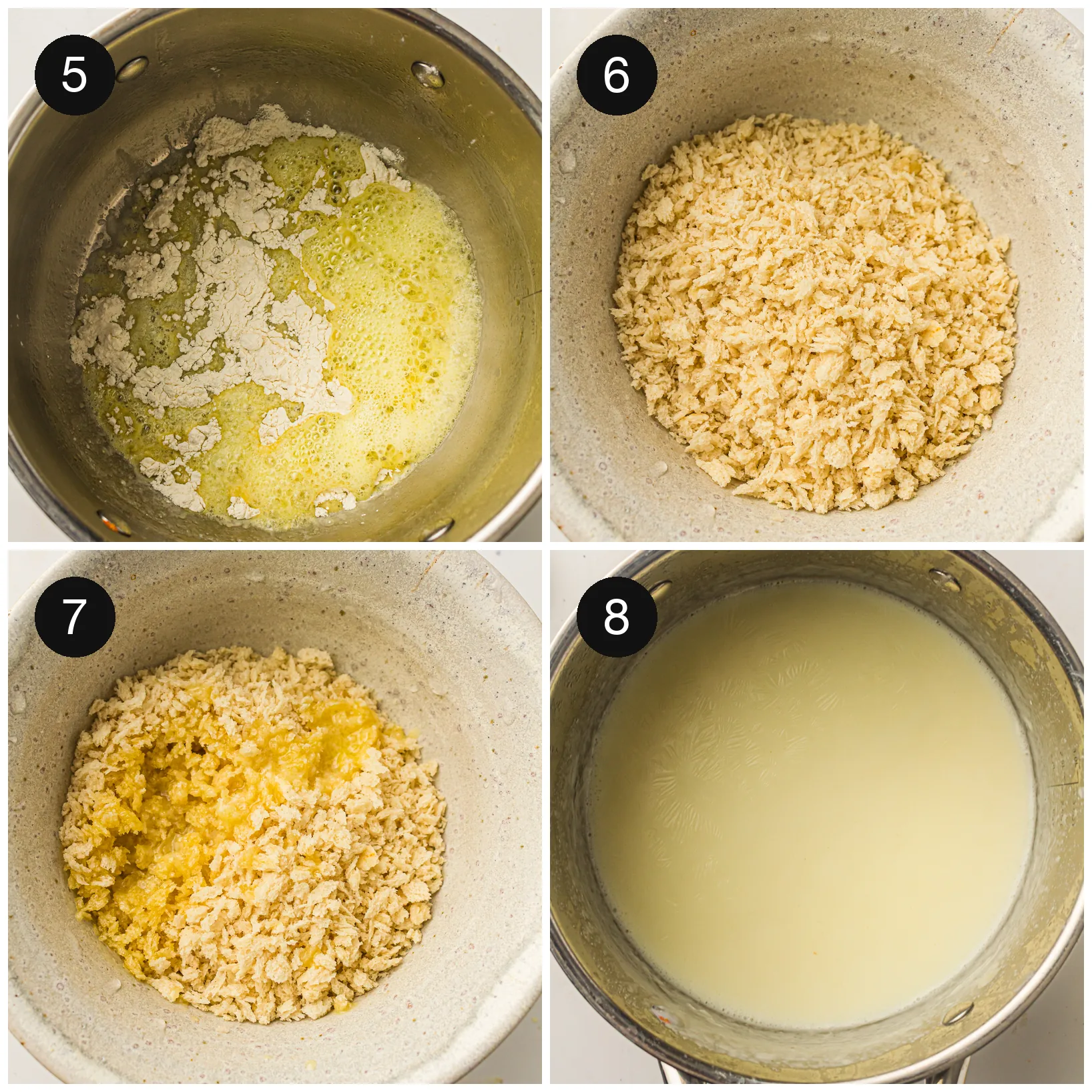
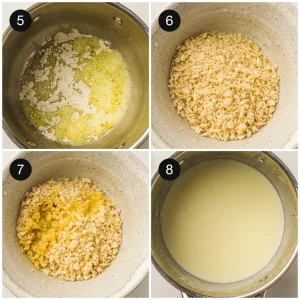
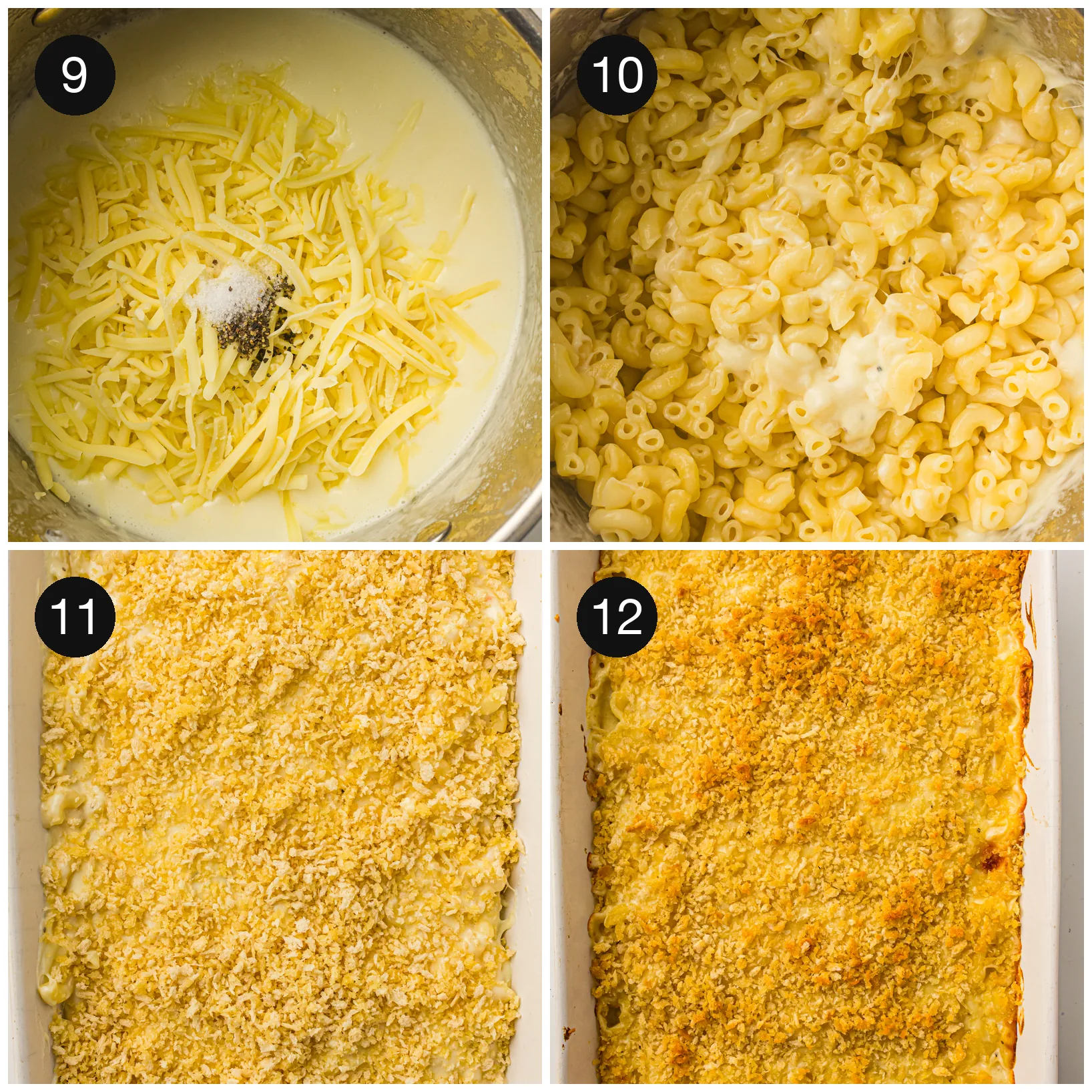
4. Melt in the cheese. After that, take the pan off the heat entirely and stir in the cheddar, mozzarella, Jack, salt and pepper until it is glossy. Direct heat at this stage is what splits a cheese sauce.
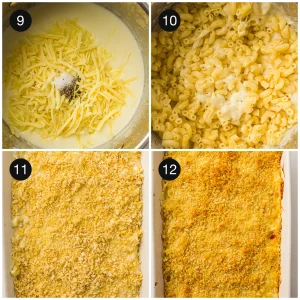
5. Combine and top. Fold the sauce through the drained pasta, tip it into a greased baking dish, then scatter over the breadcrumbs you have tossed with melted butter.
6. Bake and rest. Finally, bake for 25 to 30 minutes until it is bubbling at the edges and lightly golden on top. Give it ten minutes before serving, or it runs.
Biggest Mistakes to Avoid
- Cooking the pasta all the way. It gets another half hour in the oven. Drain it at package time, or slightly under.
- Adding cheese over the flame. The proteins tighten and squeeze out fat, which is why sauces go oily and grainy.
- Making the sauce too thick. It sets further as it bakes. If it holds a spoon upright, loosen it with a splash more milk.
- Dry breadcrumbs. Crumbs without butter go dusty and pale instead of golden.
- Serving it straight from the oven. Ten minutes of rest is what turns a loose pan into a spoonable one.
- Using a dish that is too deep. A tall casserole gives you very little crust per serving, which rather defeats the object.
Tips for the Best Baked Mac and Cheese
- Warm the milk before it goes into the roux. Cold milk hitting hot flour is how lumps start.
- Meanwhile, keep a mug of the pasta water. A splash loosens a sauce that has gone tight.
- Season the sauce harder than feels right. Pasta is bland and absorbs a surprising amount of salt.
- A grating of nutmeg is traditional in a white sauce and you will not taste it as nutmeg, only as depth.
- Baked mac and cheese browns unevenly in a glass dish. Metal or ceramic gives a more even crust.
- Still pale after 30 minutes? Broil it for 90 seconds and stand there while you do it.
Storage and Reheating
- Fridge. Up to three days in an airtight container.
- Freezer. Up to two months. Freeze it before baking for the best texture, or in portions after.
- Reheating. Cover with foil and warm at 350°F for 20 minutes, adding a splash of milk first to bring the sauce back.
- Microwave. Fine for a single portion. Stir in a spoonful of milk, cover, and go at half power.
- Make ahead. Assemble it fully, hold it in the fridge overnight, then add ten minutes to the bake.
Variations and Substitutions
- Other cheeses. Gouda, Gruyère or a ready blended bag all work. Smoked gouda in particular is very good with the crumb top.
- Panko instead of breadcrumbs. Coarser, crunchier, and it stays crisp longer if there are leftovers.
- Bacon or ham. Fold cooked pieces through before it goes in the dish rather than scattering them on top, where they burn.
- Lighter. For a low carb version entirely, cauliflower mac and cheese uses the same sauce over florets.
- Skip the oven. The sauce and pasta are good straight from the stovetop, though obviously you lose the crust.
What to Serve With It
It is rich, so it wants something sharp next to it. Creamy coleslaw with plenty of vinegar cuts through it well, and a tray of cheesy garlic bread turns it into the kind of dinner nobody complains about. As a side it belongs next to roast chicken, pulled pork or barbecue. For a cold summer table, macaroni salad covers the same craving without the oven.
Frequently Asked Questions
Ingredients and Method
Can I use different cheeses?
Yes. Gouda, Gruyère or a blended cheese mix all work well. Because cheddar splits more easily than most, keep at least one good melting cheese in the mix.
Can I skip baking it?
Yes. The mac and cheese can be served straight from the stovetop if you prefer. You lose the crumb crust, which for many people is the best part.
Do I have to shred my own cheese?
Not necessarily, but it helps. Bagged shreds are coated in starch to stop clumping, and that coating can make the sauce slightly gritty.
What size dish should I use?
A nine by thirteen inch dish is right for a pound of pasta. A deeper, narrower dish works but gives much less crust per serving.
Can I add anything to the sauce?
A teaspoon of mustard powder or a grating of nutmeg both work well. Neither one is recognisable in the finished dish, and both make the cheese taste more like itself.
Storage and Troubleshooting
Why did my sauce turn grainy?
The cheese went in over direct heat. Take the pan off the flame first and stir it in with the residual warmth, which melts it without tightening the proteins.
Why is it dry after baking?
Either the sauce was too thick going in or the pasta was overcooked and drank it. Baked mac and cheese should look slightly loose in the dish before it goes into the oven.
Can I freeze it?
Yes, for up to two months. Freezing it unbaked gives a better texture, since the pasta has not already been through a second cooking.
How do I reheat a whole dish?
Add a few tablespoons of milk, cover it with foil, and warm at 350°F for about 20 minutes. Take the foil off for the last five to crisp the top again.
Can I assemble it the night before?
Yes. Build it completely, cover it and refrigerate it overnight, then add about ten minutes to the bake because it is going into the oven cold rather than warm.
Ingredients
Pasta
- 16 oz elbow macaroni
Cheese Sauce
- 4 tablespoons butter
- 1/4 cup all-purpose flour
- 3 cups whole milk
- 1 cup sharp cheddar cheese shredded
- 1 cup mozzarella cheese shredded
- 1/2 cup Monterey Jack cheese shredded
- 1 teaspoon salt
- 1/2 teaspoon black pepper
Topping
- 1 cup white breadcrumbs
- 2 tablespoons butter melted
Instructions
- Preheat the oven to 375°F (190°C).
- Cook the macaroni according to the package directions. Drain and set aside.

- In a saucepan over medium heat, melt the butter.
- Whisk in the flour and cook for 1 minute, until it smells faintly biscuity rather than raw.
- Gradually whisk in the milk until smooth and thickened.
- Remove from the heat and stir in the cheddar, mozzarella, Monterey Jack, salt and pepper until fully melted.
- Combine the cheese sauce with the cooked pasta.
- Transfer to a greased baking dish.
- Toss the breadcrumbs with the melted butter and sprinkle them evenly over the top.
- Bake for 25 to 30 minutes, until bubbling and lightly golden.
- Rest for 10 minutes and garnish with chopped parsley before serving.