 Bity
Bity
Everyone blames the flour, and it is nearly always the oil. Fried chicken drumsticks come out pale and greasy because the pan was sitting at 300°F when the first leg went in, not because the coating was wrong.
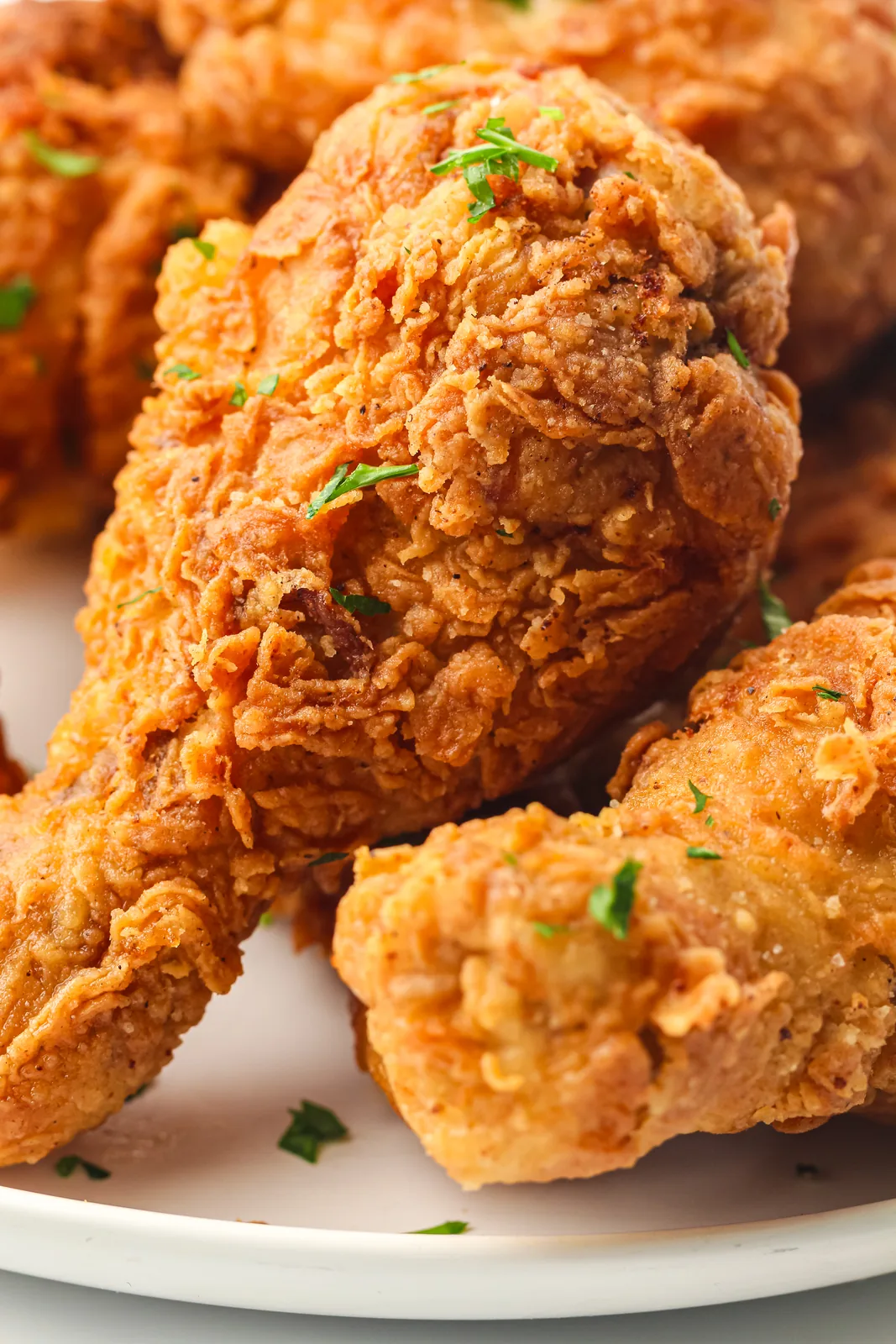
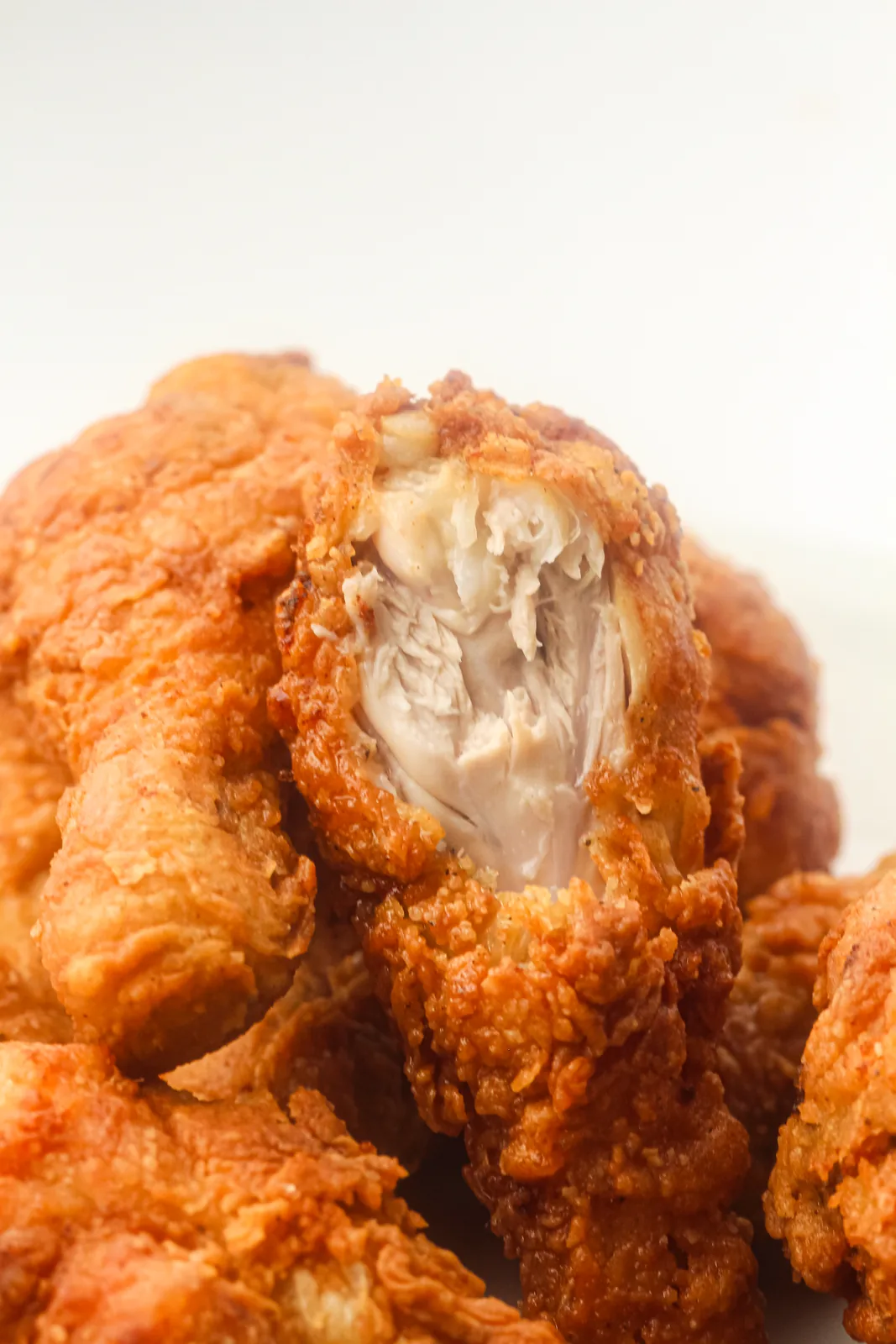
At a proper 350°F the surface seals within seconds, the crust sets before it can drink anything up, and the bone conducts heat inwards so the meat next to it actually cooks. Twelve to fifteen minutes later you have the sound that a good drumstick makes when you bite it. A cheap thermometer changed this dish for me more than any recipe ever did.

Quick Breakdown
Why You’ll Love These Fried Chicken Drumsticks
- Cheap cut, big result. Legs cost a fraction of breast and taste better fried.
- Five spices, no mystery blend. Salt, pepper, garlic powder, onion powder, flour.
- Hard to dry out. The bone and the skin protect the meat while the crust does its thing.
- Feeds four to six. Six to eight drumsticks off one pan of oil.
- Better cold. Genuinely. Picnic chicken is a legitimate reason to make this.
Ingredient Notes
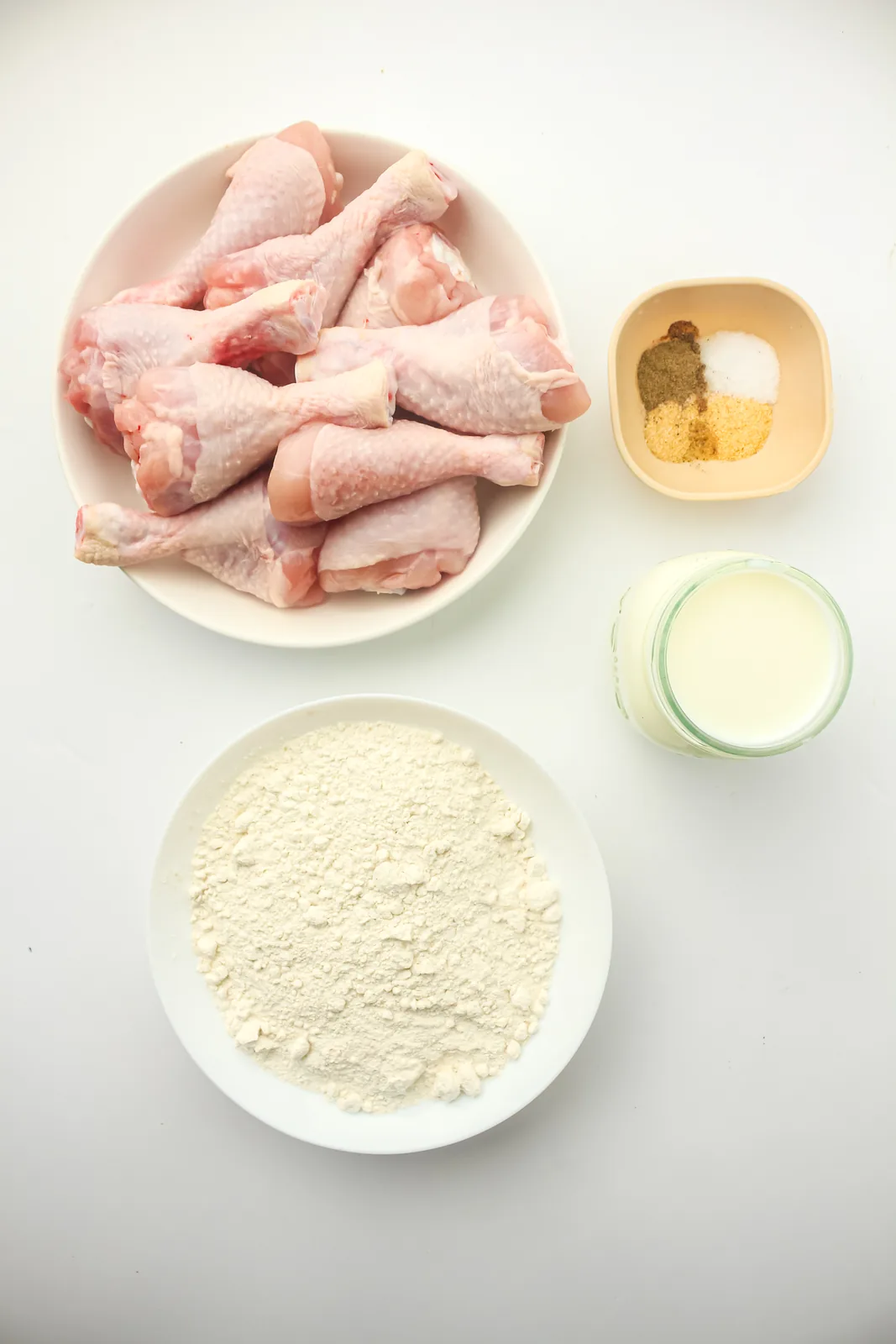
- Chicken drumsticks. Six to eight, roughly 1.2 to 1.5kg. Skin on, always. The skin renders under the crust and bastes the meat from the inside.
- Milk. Two cups for the marinade. Plain milk plus salt does most of what buttermilk does, and it is what is usually in the fridge.
- Plain flour. Two and a half cups, 300g. Sounds like a lot, and you need the depth to bury a whole leg properly.
- Salt. Two teaspoons in the marinade and one and a half in the flour. Seasoning in both places is what stops the meat tasting bland under a salty crust.
- Garlic and onion powder. A teaspoon each. Powdered, because fresh garlic burns black at frying temperature.
- Frying oil. Enough to at least half submerge the legs. Sunflower, rapeseed, peanut or refined avocado oil all cope with 350°F comfortably.
Handling raw legs deserves a word. Cleveland Clinic is blunt about this, advising that you should not wash meat or poultry because it spreads germs around your kitchen, and you should assume any board and utensils used for raw protein are contaminated. Dredge over one board, and keep the salad on another.
The Oil Temperature That Makes or Breaks Fried Chicken Drumsticks
For fried chicken drumsticks, three hundred and fifty degrees is not a suggestion. Below about 325°F the coating never seals, so oil soaks in through the flour and you get a heavy, oily crust that slides off the meat. Above about 375°F the outside goes dark long before the middle reaches a safe temperature, which is how people end up with burnt chicken that is pink at the bone.
The other half of the problem is recovery. Every cold leg you add pulls the temperature down by ten or twenty degrees, so a pan crammed with eight drumsticks can crash to 300°F and stay there. Fry three or four at a time instead, and let the oil climb back up between batches. In fact, that pause is a good moment to check the first batch with a thermometer.
| Oil temperature | What you get |
|---|---|
| Under 325°F | Greasy, pale, coating slips off |
| 340 to 360°F | Crisp crust, juicy meat, cooked through |
| Over 380°F | Dark crust, undercooked at the bone |
How To Make Fried Chicken Drumsticks
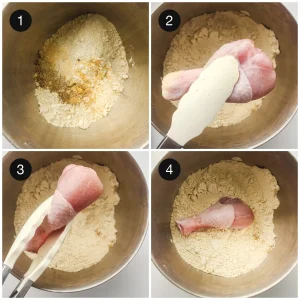
1. Marinate in salted milk. First, whisk the milk with two teaspoons of salt and three quarters of a teaspoon of pepper in a large bowl. Add the drumsticks, turn them until fully coated, cover and refrigerate for at least two hours or overnight.
2. Season the flour. Next, combine the flour with the remaining salt and pepper plus the garlic and onion powders in a wide bowl. Whisk it, because pockets of unmixed spice show up as bitter patches.
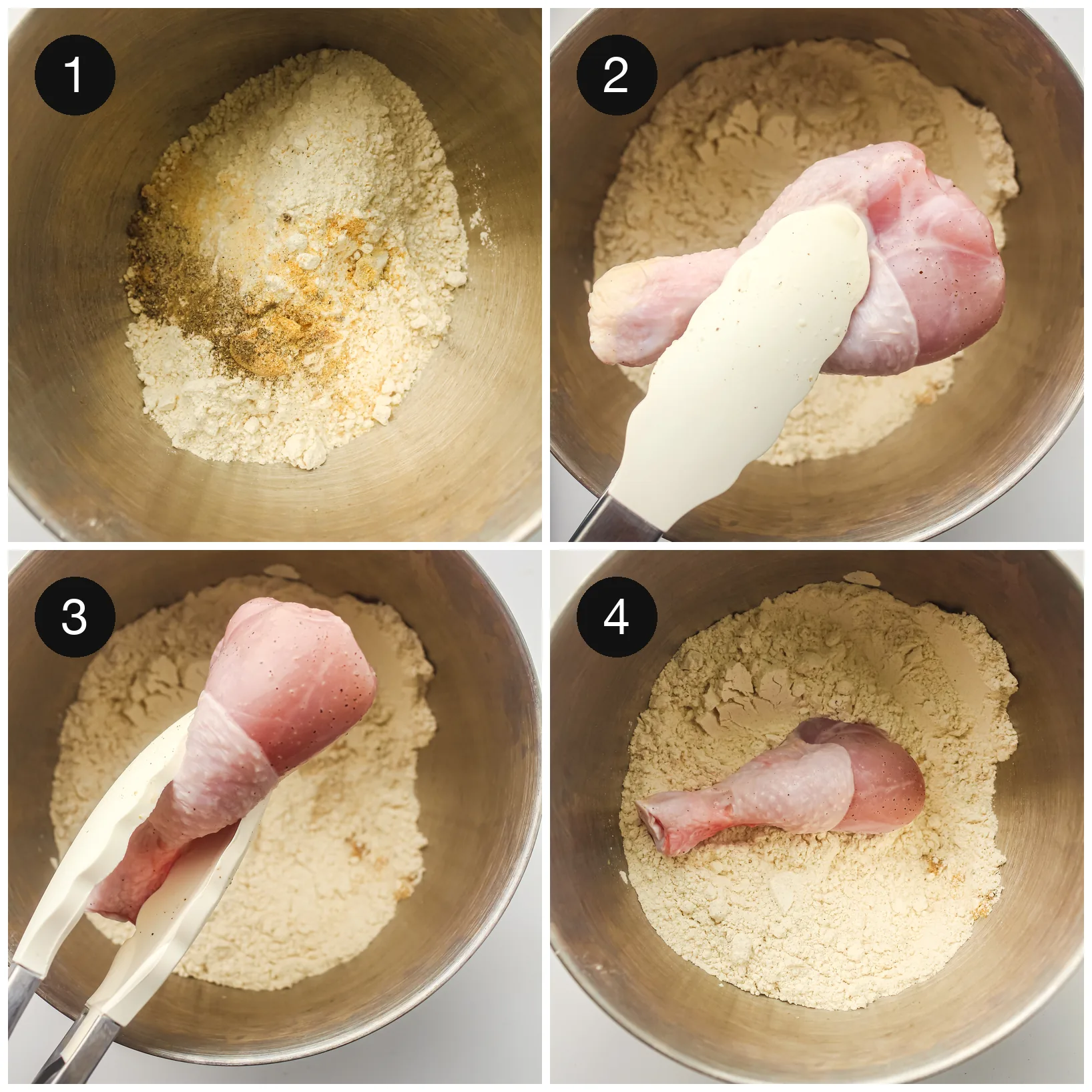
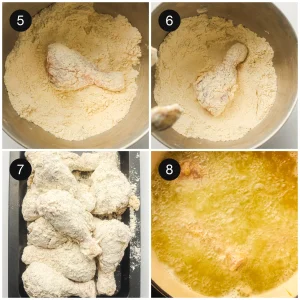
3. Dredge firmly. Then lift each leg out, let the excess drip briefly, and press it into the flour on every side. Press, lift, press again. Those loose clumps become the crunchy bits, so do not shake them off.
4. Heat the oil to 350°F. After that, bring the oil to 175°C (350°F) in a deep, heavy pan. Use a thermometer rather than guessing, since oil that shimmers can easily be 50°F short.
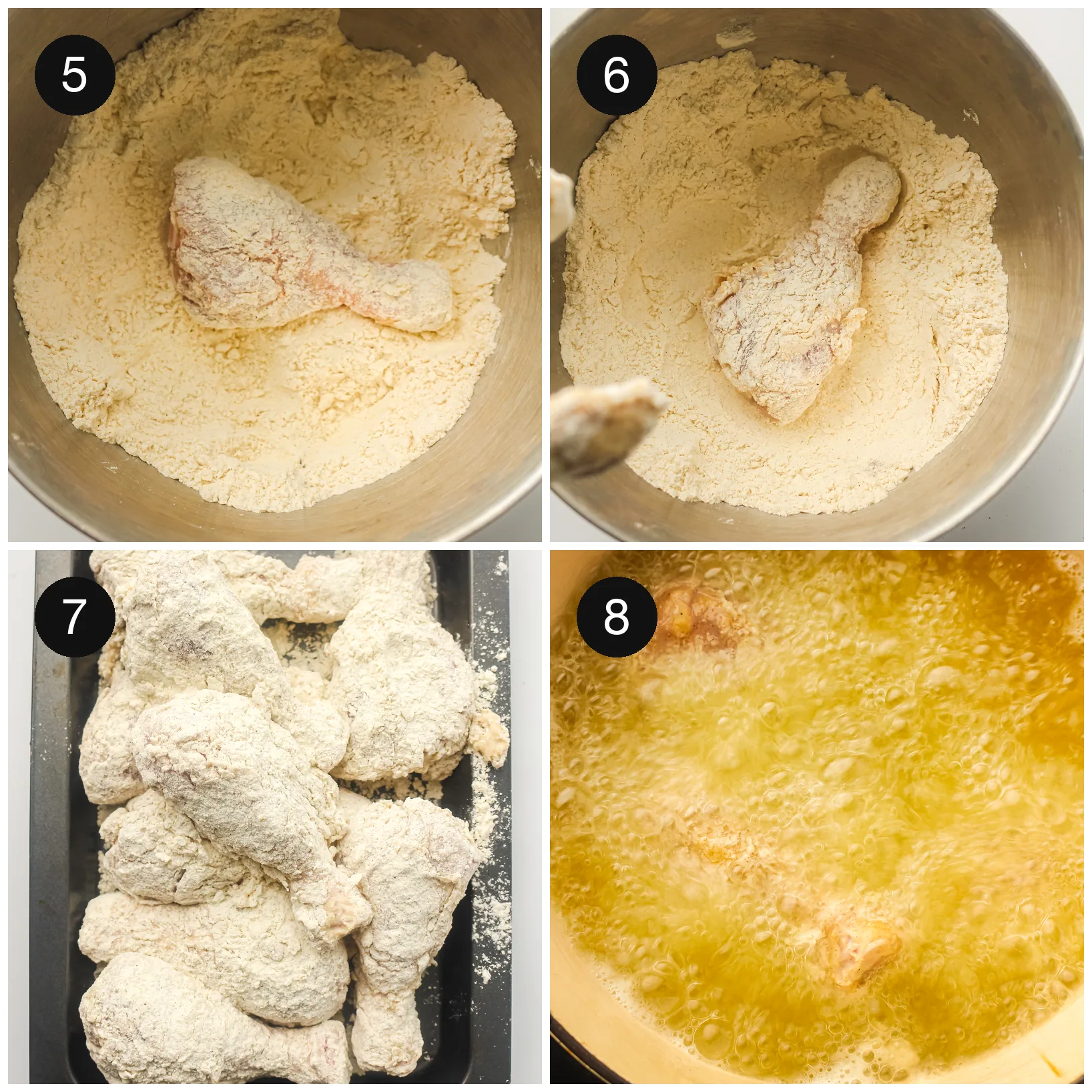
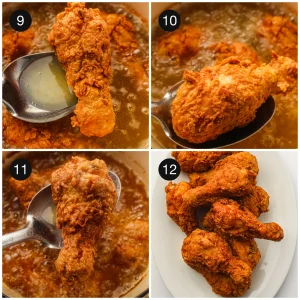
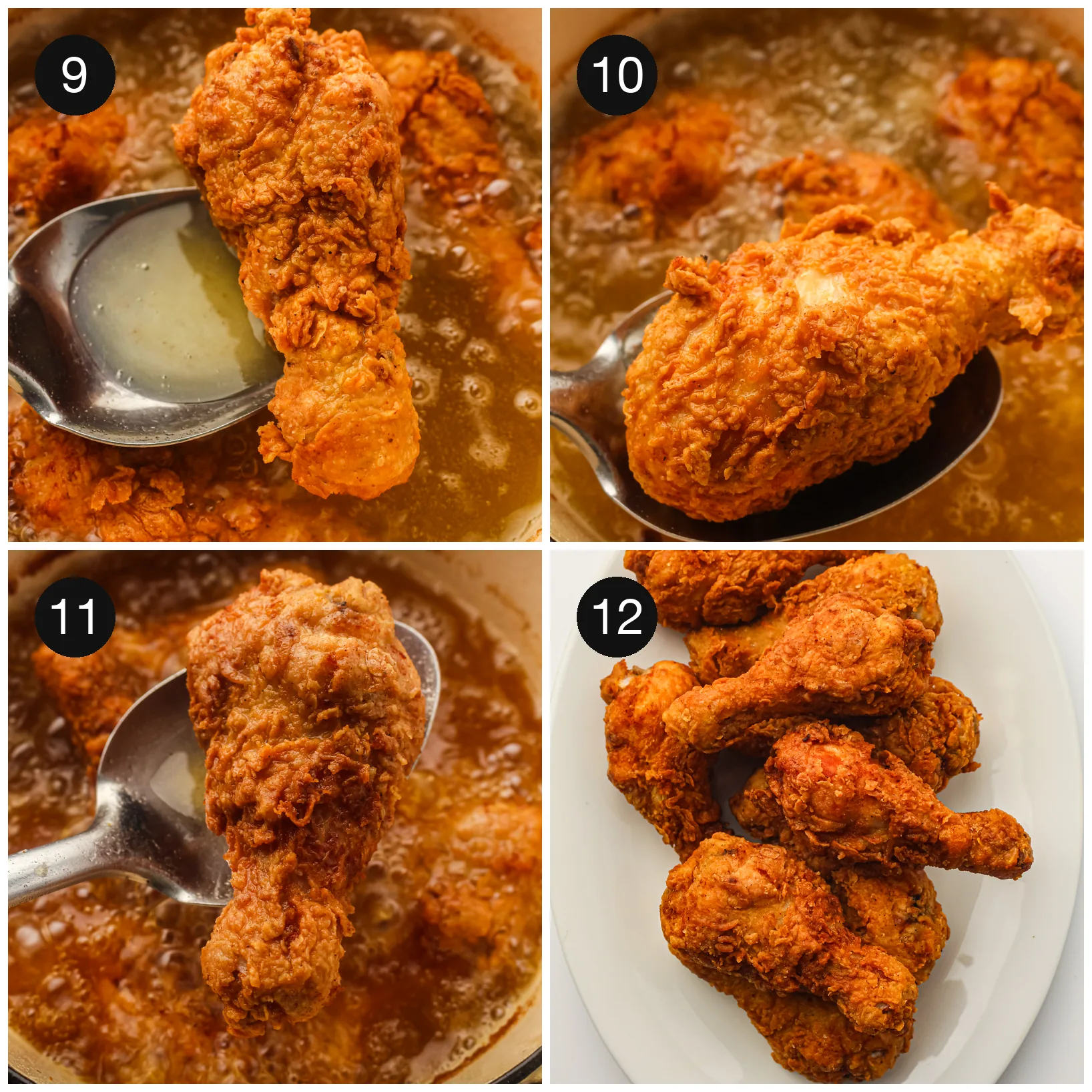
5. Fry for twelve to fifteen minutes. Lower three or four legs in away from you and turn them occasionally so every side browns. They are ready when the crust is deep golden and the thickest part reads 165°F (75°C).
6. Rest on a rack. Finally, lift them onto a wire rack, not kitchen paper, and rest for five minutes. The juices settle and the underside stays crisp instead of steaming.
For the chicken itself, an instant read thermometer pushed into the thickest part, away from the bone, gives you a reading in seconds.
Biggest Mistakes to Avoid
- Overcrowding the pan. The fastest way to greasy chicken. Three or four at a time, no more.
- Frying straight from the fridge marinade. Let the coated legs sit for five minutes so the flour hydrates and grips.
- Guessing the doneness. Colour lies on bone in chicken. Use a thermometer and look for 165°F at the thickest point.
- Draining on paper. The bottom half goes soft within a minute. A rack keeps air moving underneath.
- Washing the raw chicken first. It spreads bacteria across the sink and the worktop without making anything safer.
Tips for the Best Fried Chicken Drumsticks
- Keep one hand wet and one hand dry through the dredging. It saves the flour turning into cement on your fingers.
- Meanwhile, set the oven to 200°F so finished batches can wait without softening.
- Flick a spoonful of the milk marinade into the flour and rub it through. Those little lumps fry into the craggiest pieces of crust.
- Turn the legs every three or four minutes rather than leaving them, since the part above the oil line browns slowest.
- Let the oil come fully back to 350°F between batches. It usually takes about two minutes and it is worth every second.
Storage and Reheating
- Fridge. Fried chicken drumsticks keep up to three days in a sealed container. Cool completely first so condensation does not soften the crust.
- Reheating. Eight to ten minutes at 375°F (190°C) in the oven or air fryer brings the crunch back properly.
- Freezing. Two months. Freeze on a tray first, then bag, and reheat from frozen for about twenty minutes.
- Cold. That said, cold fried chicken straight from the fridge is a genuinely good thing and needs no reheating at all.
Variations and Substitutions
- Spicy. A teaspoon and a half of cayenne in the flour, or a good glug of hot sauce in the milk.
- Buttermilk. Swap the milk one for one for a tangier, slightly more tender result.
- Baked. Bake at 200°C (400°F) for thirty five to forty minutes, flipping halfway. Less crisp, much less oil.
- Thighs or wings. Same coating, same temperature. Thighs need a couple of minutes less and wings quite a bit less.
- Herby. A teaspoon of dried oregano and half a teaspoon of paprika in the flour changes the character completely.
If you would rather skip the pan of oil, the same seasoning works beautifully on air fryer chicken drumsticks, which are the weeknight version of this. For something saucier, try air fryer bbq chicken drumsticks, and in summer the barbecue route is grilled chicken drumsticks.
What to Serve Them With
With fried chicken drumsticks the classics earn their place. A bowl of creamy coleslaw and a dish of classic potato salad cover the cold, creamy side, and air fryer french fries handle the rest. In summer I add air fryer corn on the cob and call it dinner. Of course, a stack of paper napkins is not optional.
Frequently Asked Questions
Ingredients and Method
How do I know the chicken is fully cooked?
The internal temperature at the thickest part, away from the bone, should reach 165°F (75°C) and the juices should run clear. Because colour is unreliable on bone in pieces, a thermometer is the only honest answer.
Can I bake these instead of frying?
Yes. Bake at 200°C (400°F) for thirty five to forty minutes, flipping halfway. They will be less crisp than the fried version, though the flavour holds up well.
Can I marinate overnight?
Definitely, and it gives the best result. Overnight in salted milk seasons the meat right through and makes it noticeably juicier.
Can I use boneless chicken?
You can, but cut the frying time down since boneless pieces cook much faster. Start checking at six or seven minutes.
Storage and Troubleshooting
Why is my coating not crispy?
Almost always the oil temperature. Keep it around 350°F and fry in small batches, because every extra leg you add drops the heat and the crust starts absorbing oil instead of sealing.
Why did the coating fall off?
Either it was not pressed on firmly enough, or the legs went into the oil straight after dredging. Press hard, then let them sit for five minutes so the flour hydrates.
How long do leftovers keep?
Three days in the fridge. Reheat for eight to ten minutes at 375°F in the oven or air fryer rather than the microwave, which softens everything.
Can I reuse the frying oil?
Once or twice, yes. Cool it fully, strain it through a fine sieve or a coffee filter and keep it sealed in a dark cupboard. Instead of pushing it further, bin it once it smells stale or darkens.
Ingredients
Chicken
- 6-8 chicken drumsticks 1.2 to 1.5 kg / 2.6 to 3.3 lb
Marinade
- 2 cups milk 500 ml
- 2 teaspoons salt 8 g
- 3/4 teaspoon black pepper 3 g
Coating
- 2 1/2 cups all-purpose flour 300 g
- 1 1/2 teaspoons salt 6 g
- 1 teaspoon black pepper 4 g
- 1 teaspoon garlic powder 4 g
- 1 teaspoon onion powder 4 g
For frying
- oil for deep frying enough to submerge or half submerge the chicken
Instructions
- In a large bowl, mix the milk, salt and black pepper. Add the drumsticks and make sure they are fully coated. Cover and refrigerate for at least 2 hours, or overnight for the best result.
- In a separate bowl, mix the flour, salt, black pepper, garlic powder and onion powder.

- Remove each drumstick from the marinade, allowing the excess to drip off. Dredge in the flour mixture, pressing firmly to create an even coating.
- Heat the oil in a deep pan or pot to 175°C (350°F).
- Carefully place 3 or 4 drumsticks into the hot oil. Fry for 12 to 15 minutes, turning occasionally, until deep golden brown and fully cooked through.
- Remove and place on a wire rack or kitchen paper. Let rest for 5 minutes before serving.