 Bity
Bity
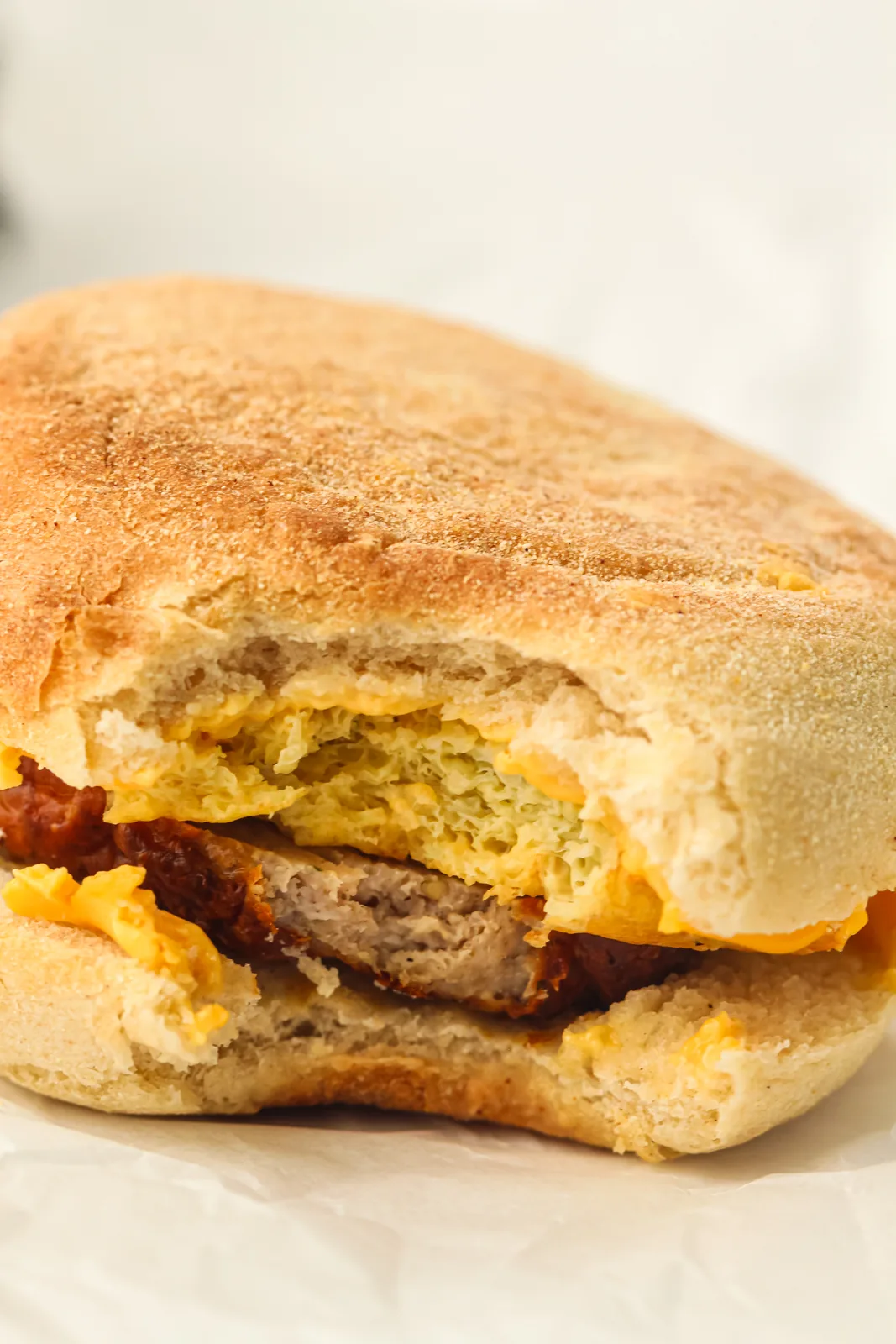
The step that decides everything happens after the cooking. Freezer breakfast sandwiches go soggy because they get wrapped while they are still warm, and the steam has nowhere to go but back into the muffin.
Let the whole tray cool to room temperature first, properly cool, not lukewarm, and the same sandwich comes out of the microwave two months later with a muffin that still has bite. Twelve of them take about half an hour of actual work on a Sunday, and then breakfast is a thing that happens to you rather than something you have to organise.
Quick Breakdown
Why You’ll Love These Freezer Breakfast Sandwiches
- Twelve at a time. One tray of eggs, one batch of assembly, two weeks of breakfasts.
- Two minutes in the morning. Unwrap, microwave, eat, leave the house.
- About 20g of protein each. Egg, cheese and sausage do the heavy lifting.
- Cheaper than the coffee shop. By a very long way, once you have made them twice.
- Endlessly adaptable. Bacon, no meat, different cheese, different bread. Same method.
Ingredient Notes
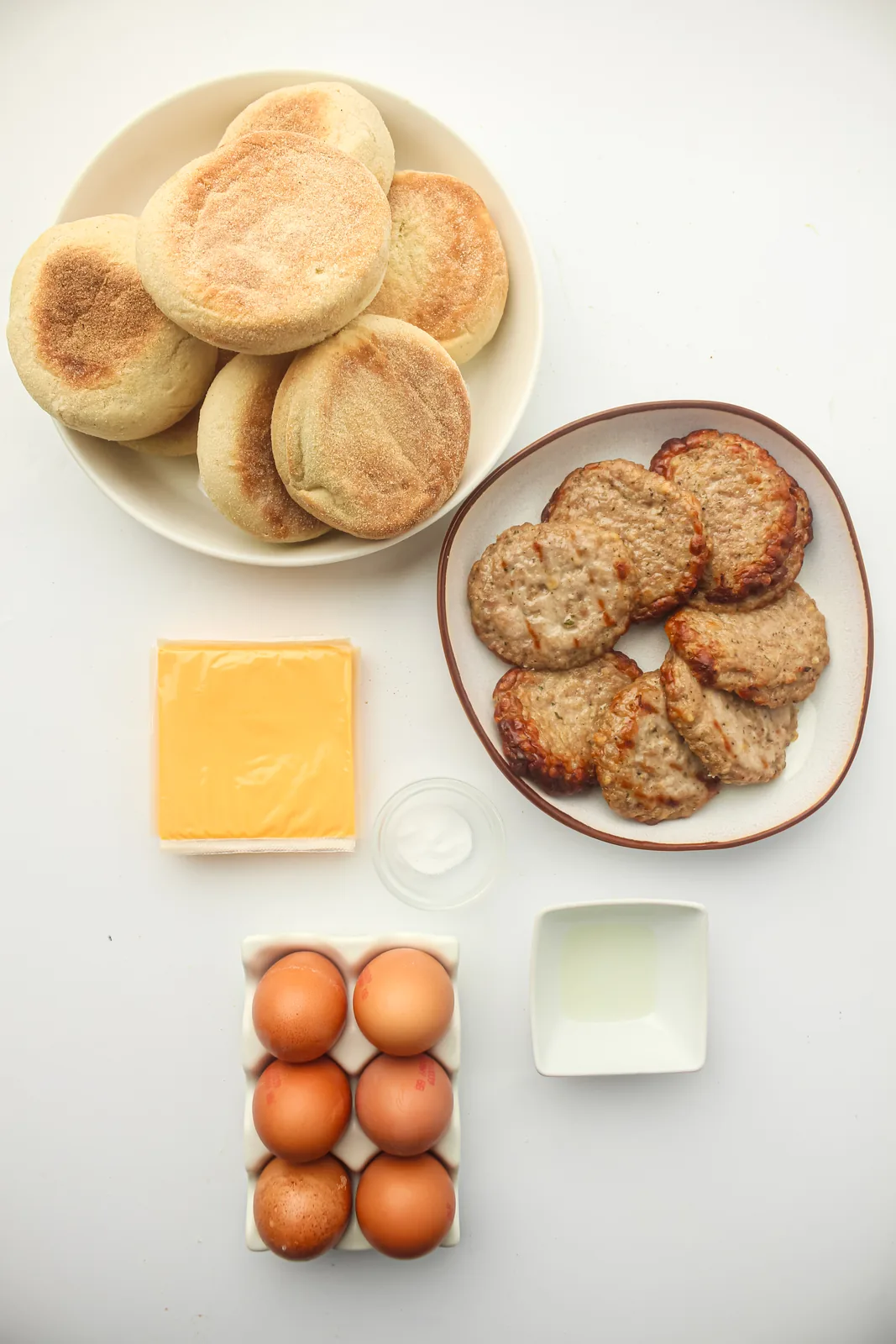
- English muffins. Twelve, split. They are the right choice because the tight, chewy crumb holds up to freezing far better than a soft brioche bun, which turns to paste.
- Eggs. Twelve large. Baked in a tin rather than fried, so they come out flat, square and stackable.
- Processed cheese slices. Twelve. Honestly, this is the one place where the plastic wrapped stuff beats the good stuff, because it melts smoothly after reheating instead of splitting into oil.
- Cooked sausage patties. Twelve, optional. Cook them fully before they go anywhere near the freezer.
- Butter or oil. Two tablespoons for greasing the tin. Be generous or the baked eggs weld themselves in.
- Salt and pepper. Season the eggs lightly before baking, since you cannot fix it later.
A protein heavy breakfast is not just gym advice. Medical News Today notes that a large egg provides 6.3g of protein along with vitamins A and B12, iron and zinc, and that higher protein breakfasts can blunt the post meal blood sugar rise, which is a fair argument for eggs over toast on a workday.
The Rule That Stops Freezer Breakfast Sandwiches Going Soggy
Everything that goes wrong with a batch of freezer breakfast sandwiches is a moisture problem. Warm food gives off steam, wrapping traps it, and freezing turns it into ice crystals sitting directly against the bread. When you reheat, that ice melts back into the crumb and you get a wet, heavy sandwich.
So the fix is dull and non negotiable. Cool the eggs on a rack, cool the assembled sandwiches on the counter, and only wrap once nothing feels warm to the back of your hand. Lightly toasting the cut faces of the muffins first helps too, because a toasted surface is drier and slightly sealed. However, do not toast them dark, since they get a second cooking on the way out.
| What you do | What happens on reheating |
|---|---|
| Wrap warm | Wet muffin, steamed texture |
| Cool fully, then wrap | Muffin holds its structure |
| Toast, cool fully, then wrap | Closest to freshly made |
How To Make Freezer Breakfast Sandwiches
1. Heat the oven and grease the tin. First, set the oven to 180°C (350°F) and butter a muffin tin or a small baking dish thoroughly, including the corners.
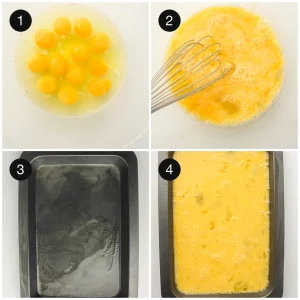
2. Add the eggs. Next, either crack one egg into each hole, or whisk all twelve and pour them evenly into a tray. Season lightly with salt and pepper.
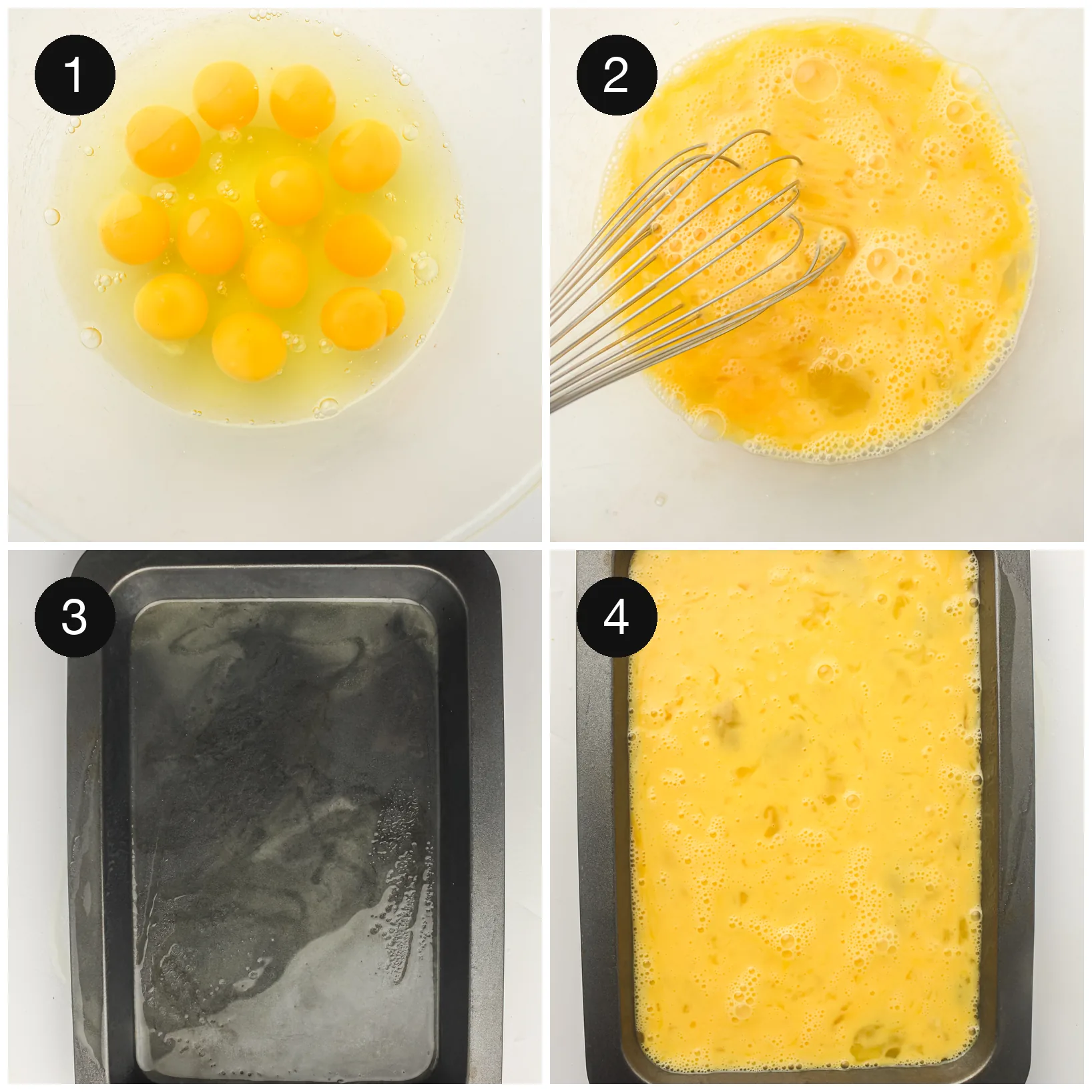
3. Bake until just set. Then bake for twelve to fifteen minutes. Pull them the moment the centres stop wobbling, because overbaked eggs turn rubbery on reheating and there is no coming back from that.
4. Toast the muffins. Meanwhile, split and lightly toast the English muffins. Pale gold is enough.
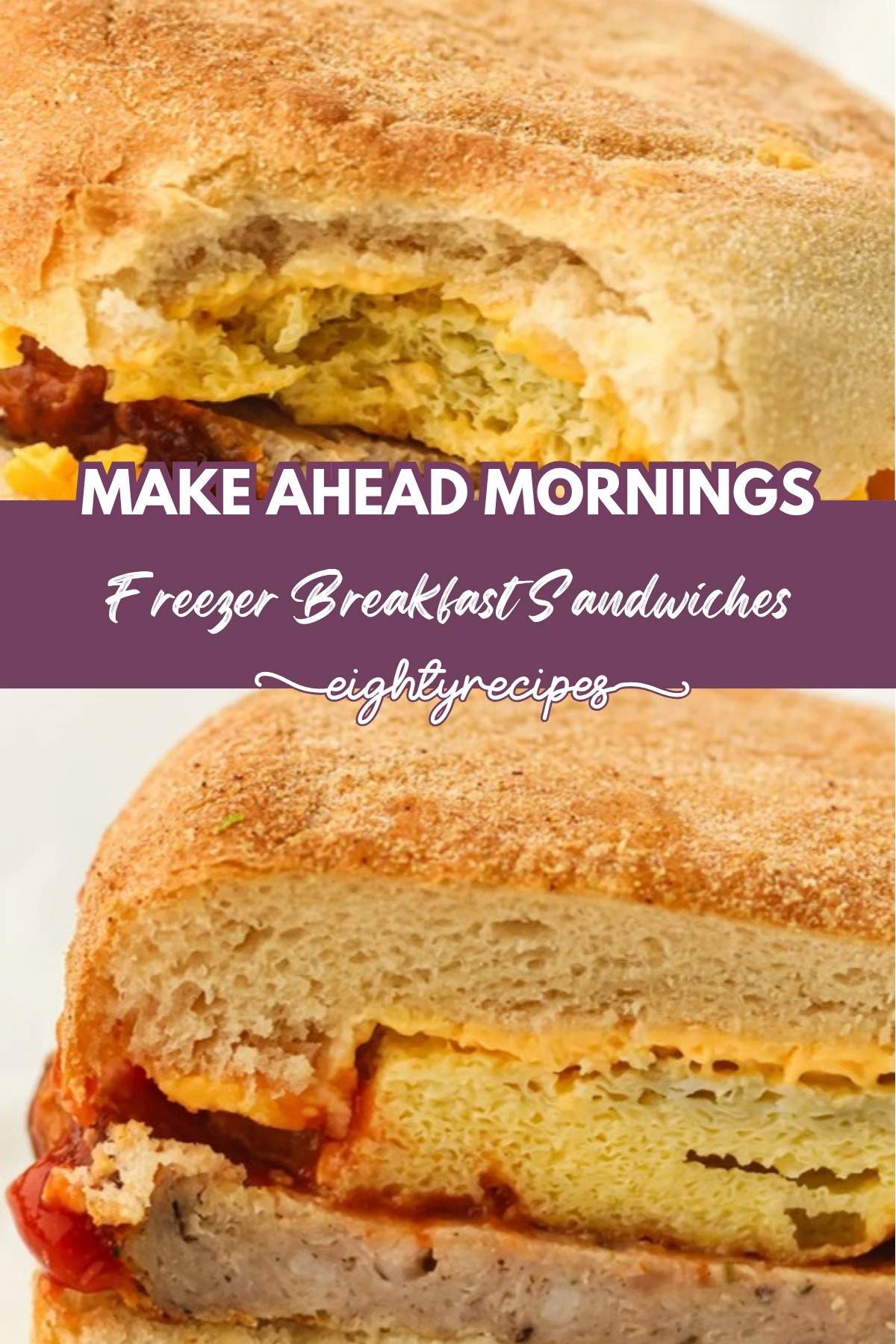
5. Assemble. After that, build each one in order: bottom muffin, egg, cheese, sausage patty if you are using it, top muffin. Cut the baked egg sheet into squares if you poured it into a tray.
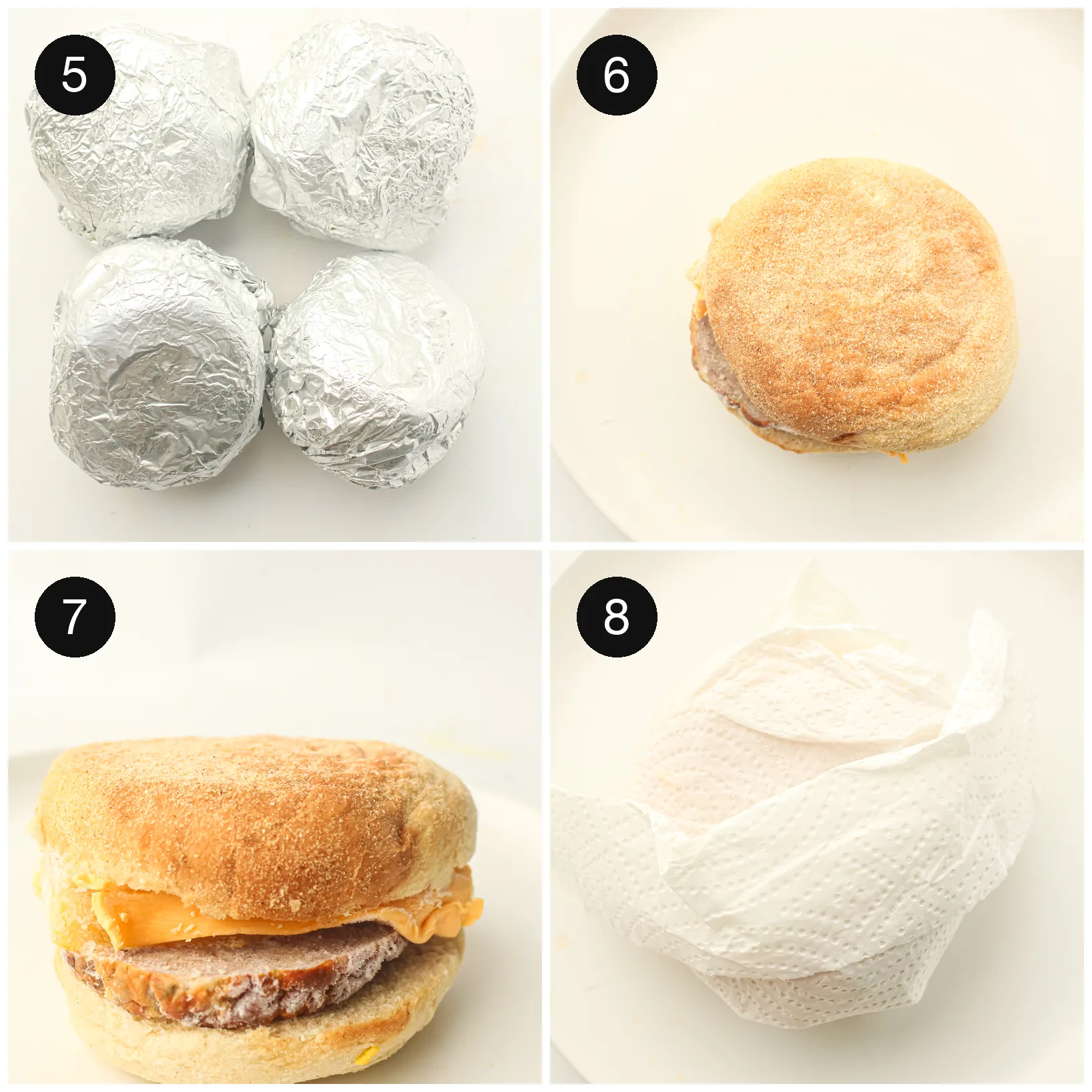
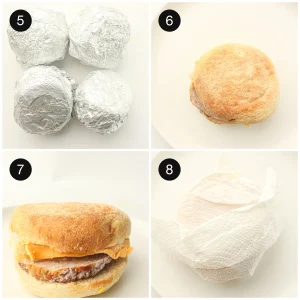
6. Cool completely, then wrap. This is the important one. Leave them on the counter until they are properly cold, then wrap each sandwich tightly in parchment, foil or cling film.
7. Bag and freeze. Finally, pack the wrapped sandwiches into a freezer bag or container, press the air out, label it with the date and freeze for up to two months.
How to Reheat Them
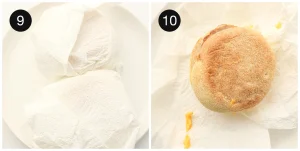
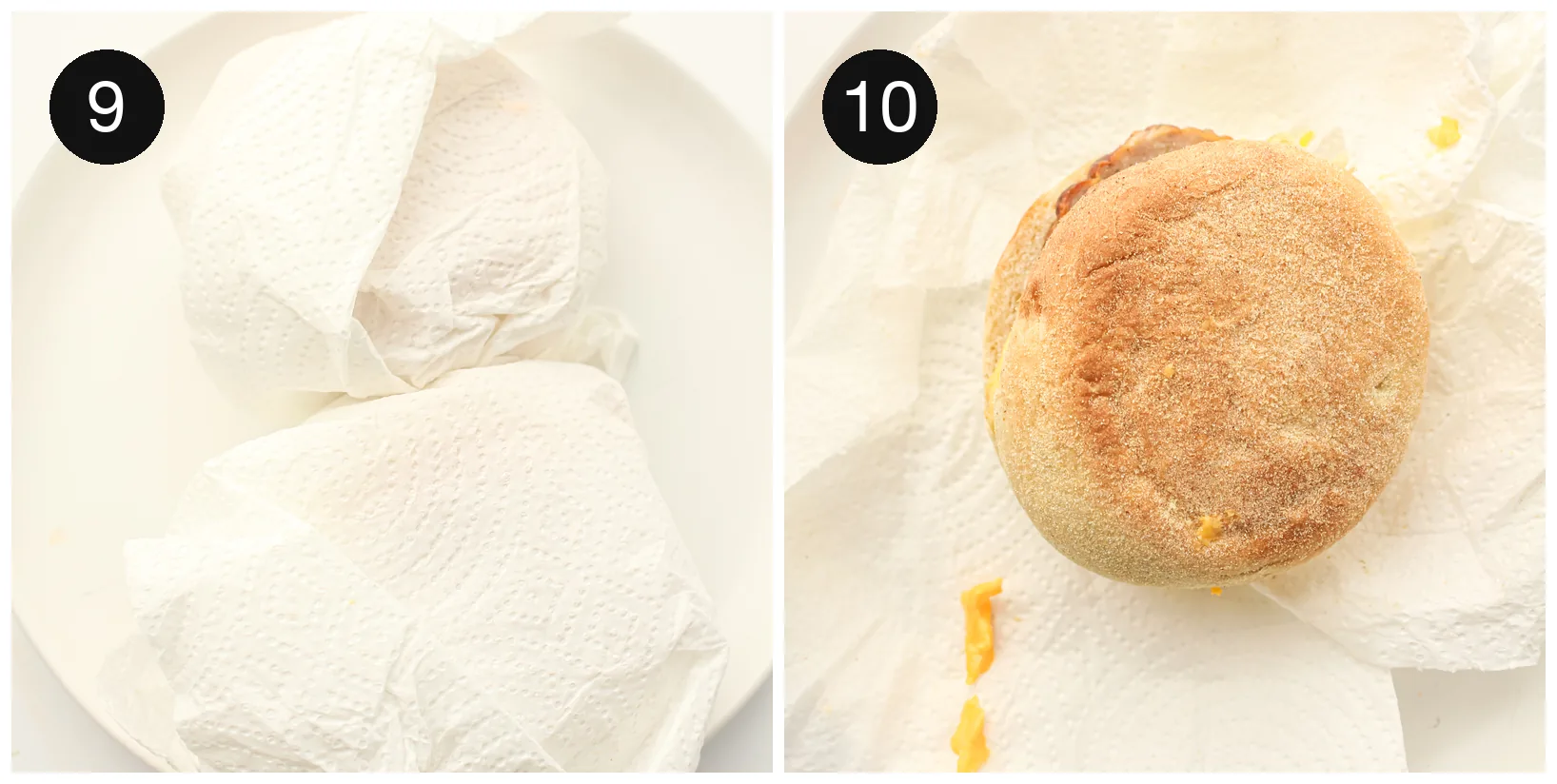
- Microwave, fastest. Unwrap, wrap loosely in kitchen paper, and heat for two to four minutes until hot through.
- Air fryer, best texture. Unwrap and cook at 160°C (320°F) for eight to ten minutes. The muffin crisps up properly this way.
- Oven. Wrapped in foil at 180°C (350°F) for fifteen to twenty minutes, which is the easiest route for several at once.
- From the fridge. If you moved one down the night before, cut all of those times roughly in half.
Biggest Mistakes to Avoid
- Wrapping while warm. The one mistake that ruins a whole batch. Wait.
- Overbaking the eggs. They cook again on the way out. Underdone is safer than firm.
- Using soft rolls. Brioche and burger buns collapse. English muffins, bagels and ciabatta survive.
- Skipping the outer bag. A single layer of foil in an open freezer picks up freezer burn within weeks.
- Freezing raw sausage. It has to be cooked through before assembly, since reheating only warms the sandwich.
Tips for the Best Freezer Breakfast Sandwiches
- Bake the eggs in a rectangular tray and cut them into squares. It is faster than filling twelve holes and the shape suits the muffin better.
- Meanwhile, put the cheese directly against the hot egg so it melts once and welds the layers together.
- Label the bag with the date and the filling. Two months goes quicker than you think.
- Freeze them flat on a tray for an hour first if your freezer is tightly packed, then stack them.
- Still cold in the middle after microwaving? Give it thirty seconds more rather than starting hotter, which just rubberises the egg.
Storage and Make Ahead
- Freezer. Freezer breakfast sandwiches keep two months wrapped and bagged. After that they are safe but the texture drops off.
- Fridge. Four days if you would rather not freeze them at all.
- Batch size. Twelve is the sweet spot for one tray of eggs. Double it and use two trays.
- Freezer discipline. Because everything in a freezer eventually becomes a mystery, keep these at the front where you can see them.
Variations and Substitutions
- Bacon instead of sausage. Cooked crisp bacon freezes and reheats very well inside freezer breakfast sandwiches.
- Vegetarian. Skip the meat, or use a veggie patty. Add a slice of tomato only after reheating, never before freezing.
- Bagels or ciabatta. Both hold up. Anything soft and enriched does not.
- Cheddar or Swiss. Sharper flavour, though they split slightly on reheating compared to processed slices.
- Spicy. A pinch of chilli flakes or a thin smear of hot sauce on the egg before assembly.
If you like the general idea of doing the work once, the same logic applies to how to freeze soup for lunches, and a tray of sausage hashbrown bites freezes just as neatly for weekend mornings.
What to Serve Them With
On a weekday, nothing. That is rather the point. At a slower weekend breakfast, put a plate of twisted bacon in the middle of the table and add a bowl of homemade granola with yoghurt for anyone who wants something lighter. A few air fryer hard boiled eggs in the fridge alongside these covers most of the week between them.
Frequently Asked Questions
Ingredients and Method
Can I freeze these with sausage?
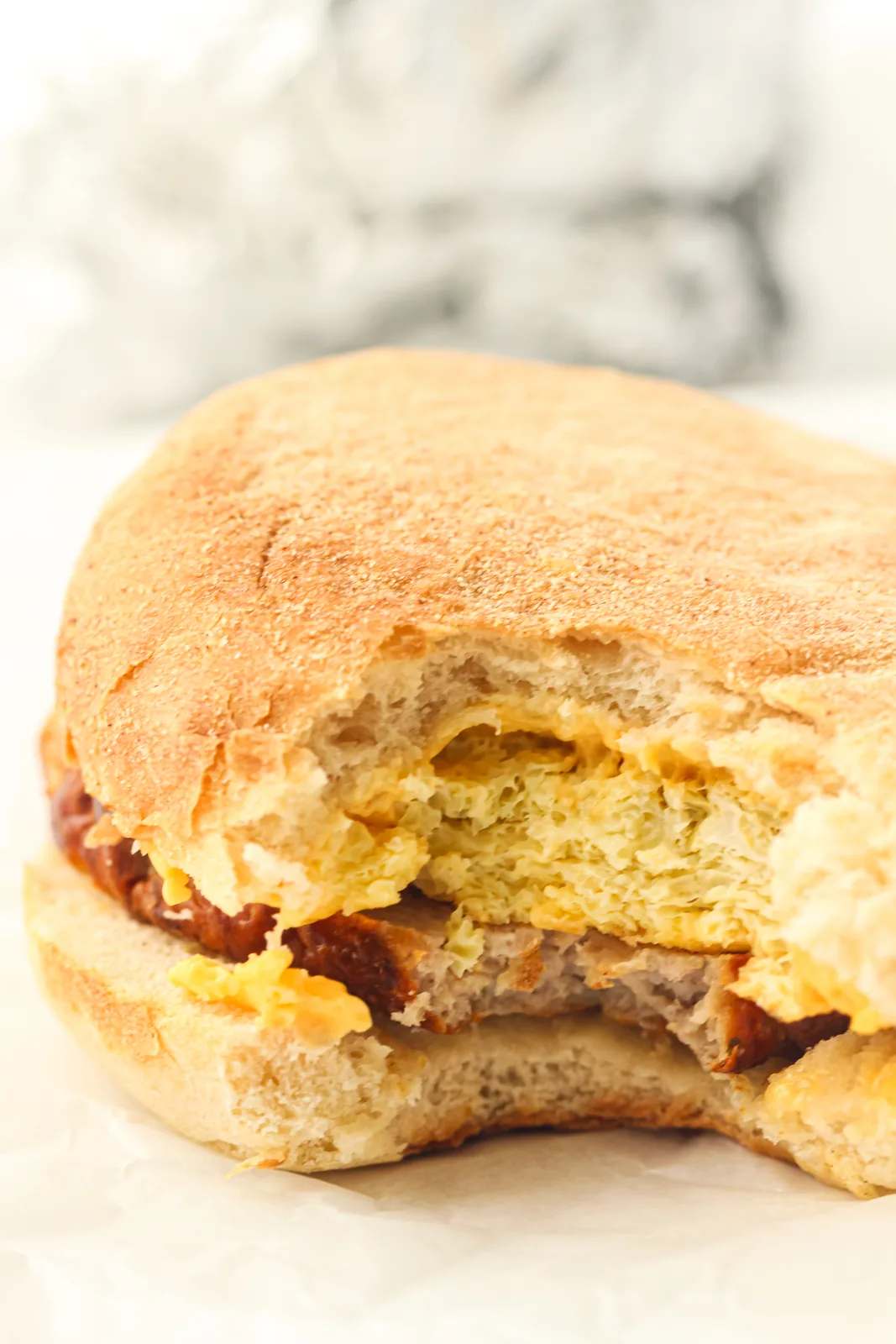
Yes, as long as the patties are cooked through first. Sausage freezes and reheats very well, and it is the filling that survives the process best.
Can I use bacon instead?
Absolutely. Cook it crisp, let it cool, then lay it flat inside. Because bacon softens slightly in the freezer, cook it a shade crisper than you normally would.
Can I make these vegetarian?
Easily. Leave the meat out altogether, or use a vegetarian patty. Avoid raw vegetables like tomato or spinach, since they release water as they thaw.
Can I use homemade English muffins?
Definitely, and they are noticeably better. Split and toast them exactly as you would shop bought ones.
Storage and Troubleshooting
What is the best reheating method?
The air fryer, at 160°C (320°F) for eight to ten minutes, gives the crispest muffin. The microwave is faster but softer, and the oven is best when you are heating several at once.
Why did mine turn out soggy?
They were almost certainly wrapped before they were completely cold. Trapped steam freezes against the bread and melts straight back into it on reheating.
Why are the eggs rubbery?
Overbaking. Pull the tray as soon as the centres are just set, because they get a second cooking every time you reheat one.
How long do they actually keep?
Two months in the freezer for good texture, and four days in the fridge if you skip freezing. Still, label the bag, because past two months they get progressively drier.
Ingredients
- 12 English muffins split
- 12 large eggs
- 12 slices processed cheese yellow American cheese
- 12 cooked sausage patties optional
- 2 tablespoons butter or oil 30 g, for greasing
- salt and pepper to taste
Instructions
- Preheat the oven to 180°C (350°F). Grease a muffin tin or small baking dish thoroughly.
- Crack the eggs into the tin, one per hole, or whisk them and pour evenly into the tray. Season lightly with salt and pepper.

- Bake for 12 to 15 minutes, until just set. Avoid overbaking, as the eggs cook again on reheating.
- Split and lightly toast the English muffins.
- Assemble each sandwich in order: bottom muffin, egg, cheese, sausage patty if using, then the top muffin.
- Allow the sandwiches to cool completely before freezing. This step is what prevents sogginess.
- Wrap each sandwich tightly in parchment paper, foil or cling film, then place in a freezer-safe bag or container. Freeze for up to 2 months.
- To reheat, microwave loosely wrapped in kitchen paper for 2 to 4 minutes, air fry at 160°C (320°F) for 8 to 10 minutes, or bake wrapped in foil at 180°C (350°F) for 15 to 20 minutes.