 Bity
Bity
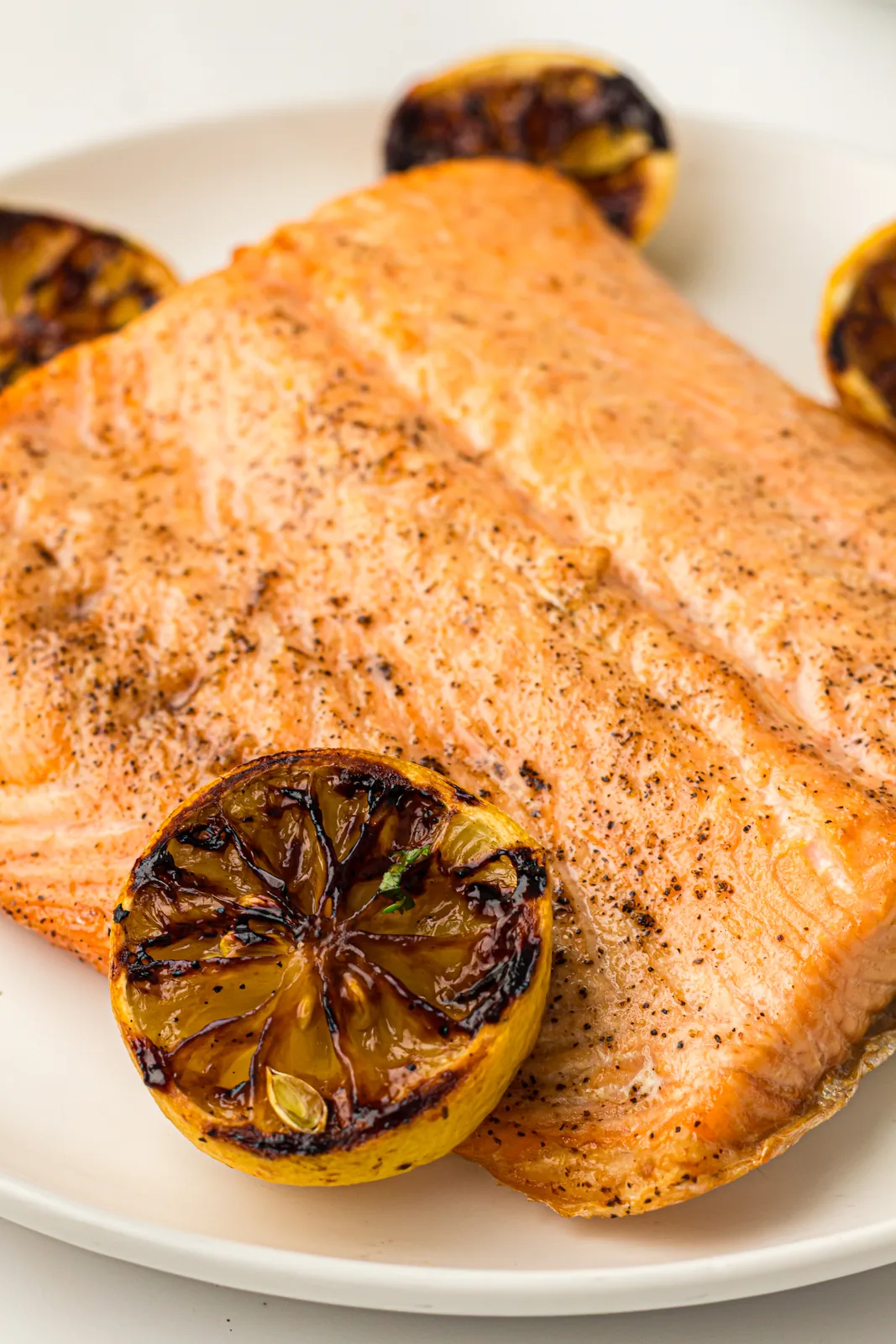
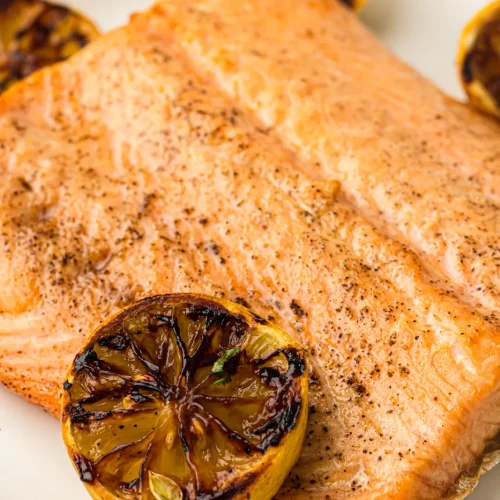
This smoked salmon comes off the Ninja Woodfire flaky, tender, and kissed with real wood smoke, and it’s ready in about 20 minutes. Honestly, it tastes like a restaurant plate, yet it could not be simpler. You smoke the fillet skin-side down on a sheet of foil, so cleanup is almost nothing and there’s no flipping to fuss over. A quick honey, garlic, and smoked paprika rub does the rest.
I reach for this one on busy weeknights when I want something that feels a bit special without the effort. My family loves it with fluffy rice and a squeeze of charred lemon, and any leftovers get flaked into salads and grain bowls the next day. So if you’ve got a Woodfire and a good piece of fish, dinner is basically handled.
Quick Breakdown
Why You’ll Love This Ninja Woodfire Smoked Salmon
Some dinners feel fancy but ask a lot of you in return. This one, though, hands you all the payoff for almost none of the work. Here’s why this smoked salmon has earned a regular spot on our table.
- Fast and hands-off. Flaky, smoky fish in around 20 minutes, with no flipping and no hovering.
- Barely any cleanup. You cook it on foil, then bin the foil once you’re done.
- That simple honey rub. Honey, garlic, and smoked paprika bring sweet, savoury, smoky flavour in one quick mix.
- Naturally good for you. The fish is rich in protein and omega-3s, so it’s a feel-good plate as well as a tasty one.
- Brilliant leftovers. Flake it through salads, pasta, wraps, and grain bowls all week.
Ingredient Notes
You only need a handful of everyday bits for smoked salmon, so here’s what to know about each one.
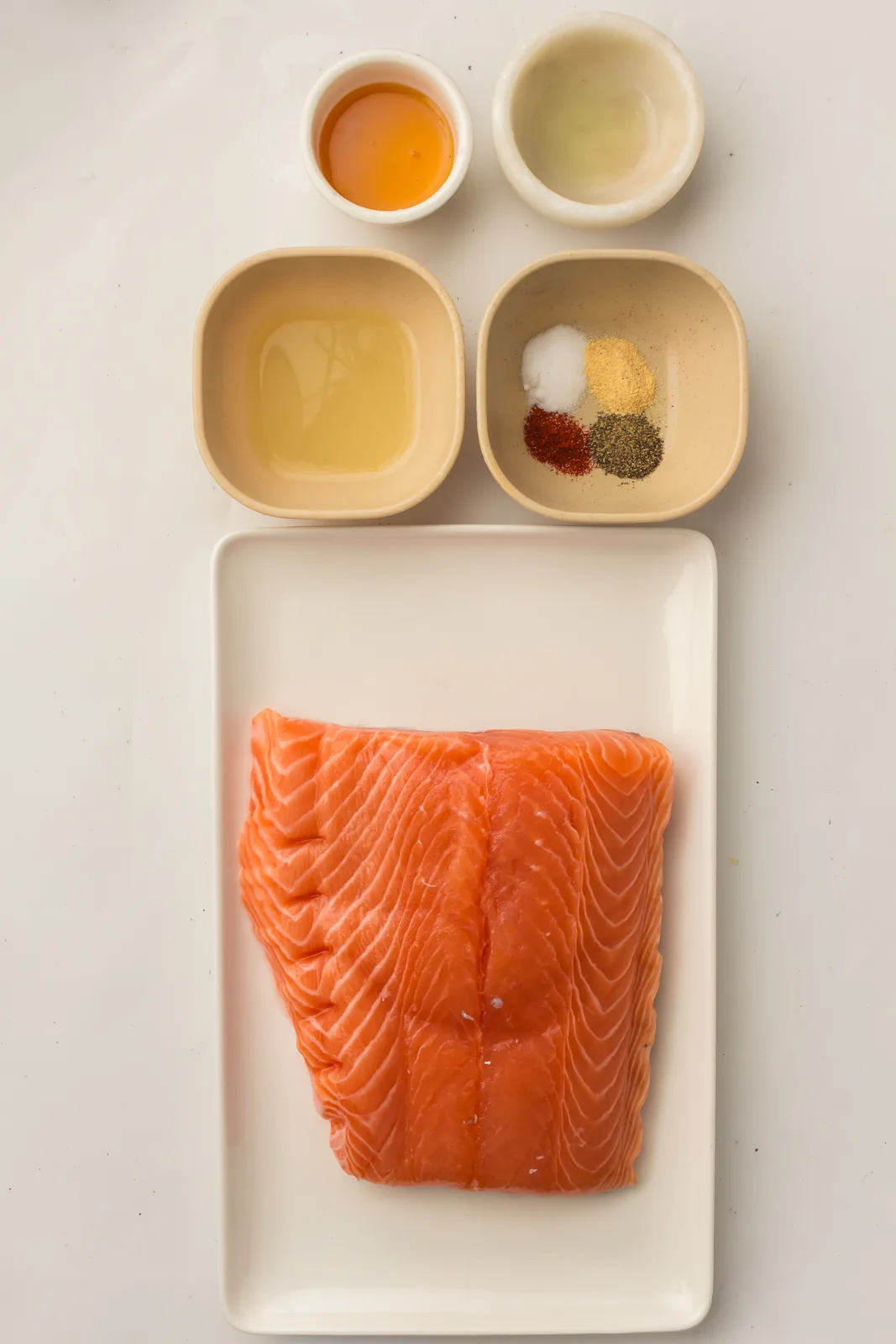
- Salmon fillet. Reach for a skin-on fillet, about 700 g or 1.5 lbs, and pat it very dry. The skin shields the flesh and lifts cleanly off the foil once cooked.
- Avocado oil. A light coat helps the seasoning cling and lets the surface colour up nicely. Any high-heat oil will do.
- The seasoning. Salt, black pepper, garlic powder, and smoked paprika. The paprika deepens both the colour and that gentle smoky note.
- Honey and lemon. A drizzle of honey caramelises slightly at the edges, while fresh lemon lifts everything at the end. If you’re curious why this fish is such a nutritious pick, here is a helpful overview.
What Temperature to Smoke Salmon
On the Woodfire, the Smoke setting gives you gentle heat plus plenty of wood smoke, which is exactly what a moist fillet wants. Here’s the quick reference I keep in my head.
| Setting | Temperature | Time | Pull it at |
|---|---|---|---|
| Smoke mode | 300°F / 150°C | 17 to 20 minutes | 140°F to 145°F (60°C to 63°C) |
Pull the fish once the thickest part hits that window. The flesh should flake easily with a fork and look opaque all the way through. Because it keeps cooking a little as it rests, it’s better to take it out right on temperature than to leave it a moment too long. Keep the internal-temperature guide nearby if you like a reference.
How to Make Smoked Salmon
The whole thing really is season, drizzle, and smoke. Here’s how it goes, and you’ll find the full measurements in the recipe card at the bottom of this post.
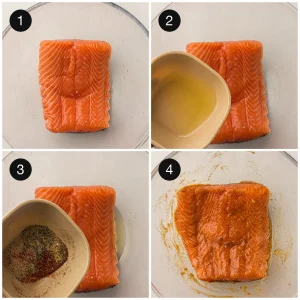
1. Preheat and line. First, set the Ninja Woodfire Grill to Smoke mode and add pellets to the smoke box. While it heats, line the grill tray or plates with a flat sheet of foil.
2. Season the fillet. Next, pat the fish very dry and set it skin-side down on the foil, then rub it all over with the avocado oil. Mix the salt, pepper, garlic powder, and smoked paprika, and scatter it evenly across the top.
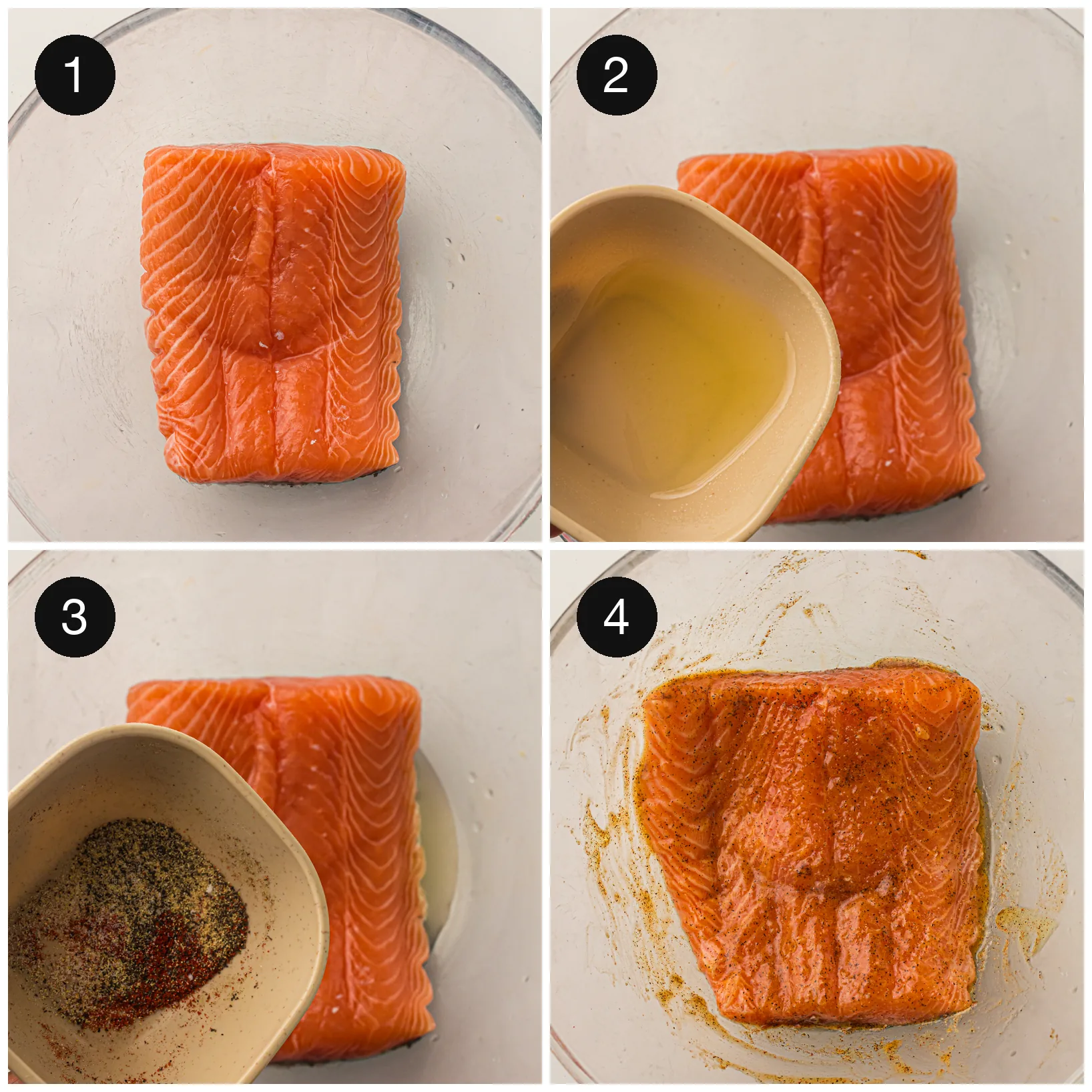
3. Add honey and lemon. Then drizzle the honey over the fillet and squeeze over the juice of half a lemon, letting it run right across the surface.
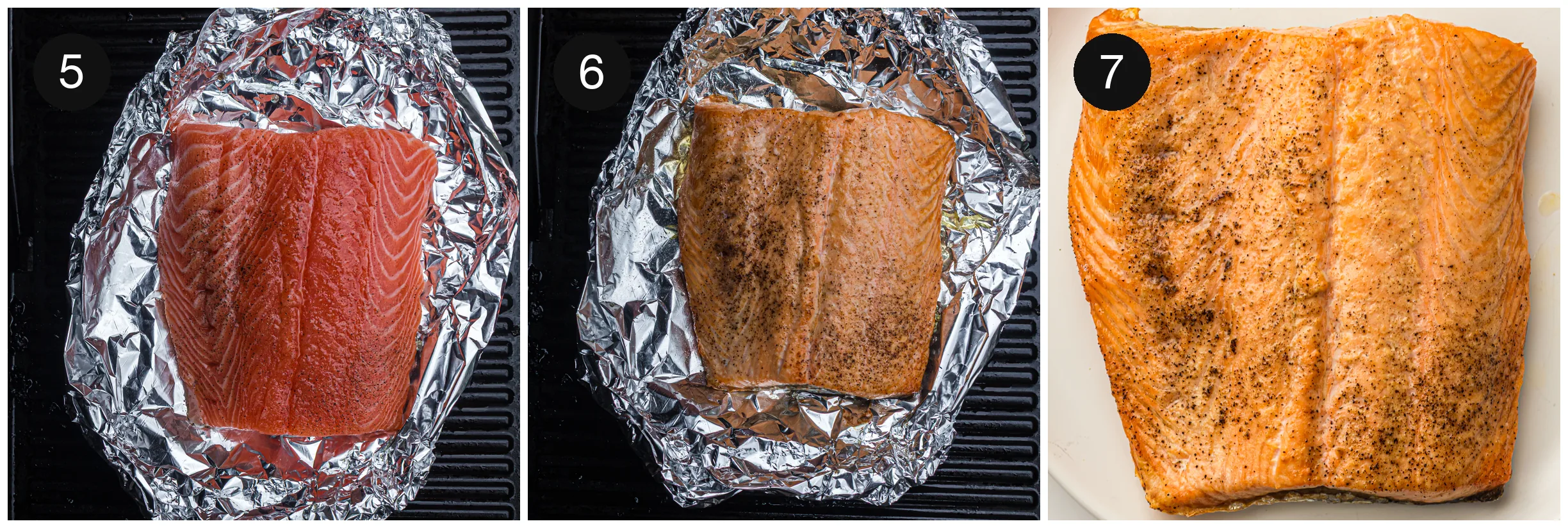
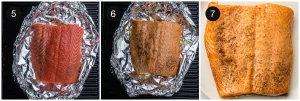
4. Smoke and rest. Finally, slide the tray into the Woodfire and cook uncovered at 300°F (150°C) for 17 to 20 minutes, without turning the fillet. Check that the thickest part reaches 140°F to 145°F, then rest it for 2 minutes before serving.
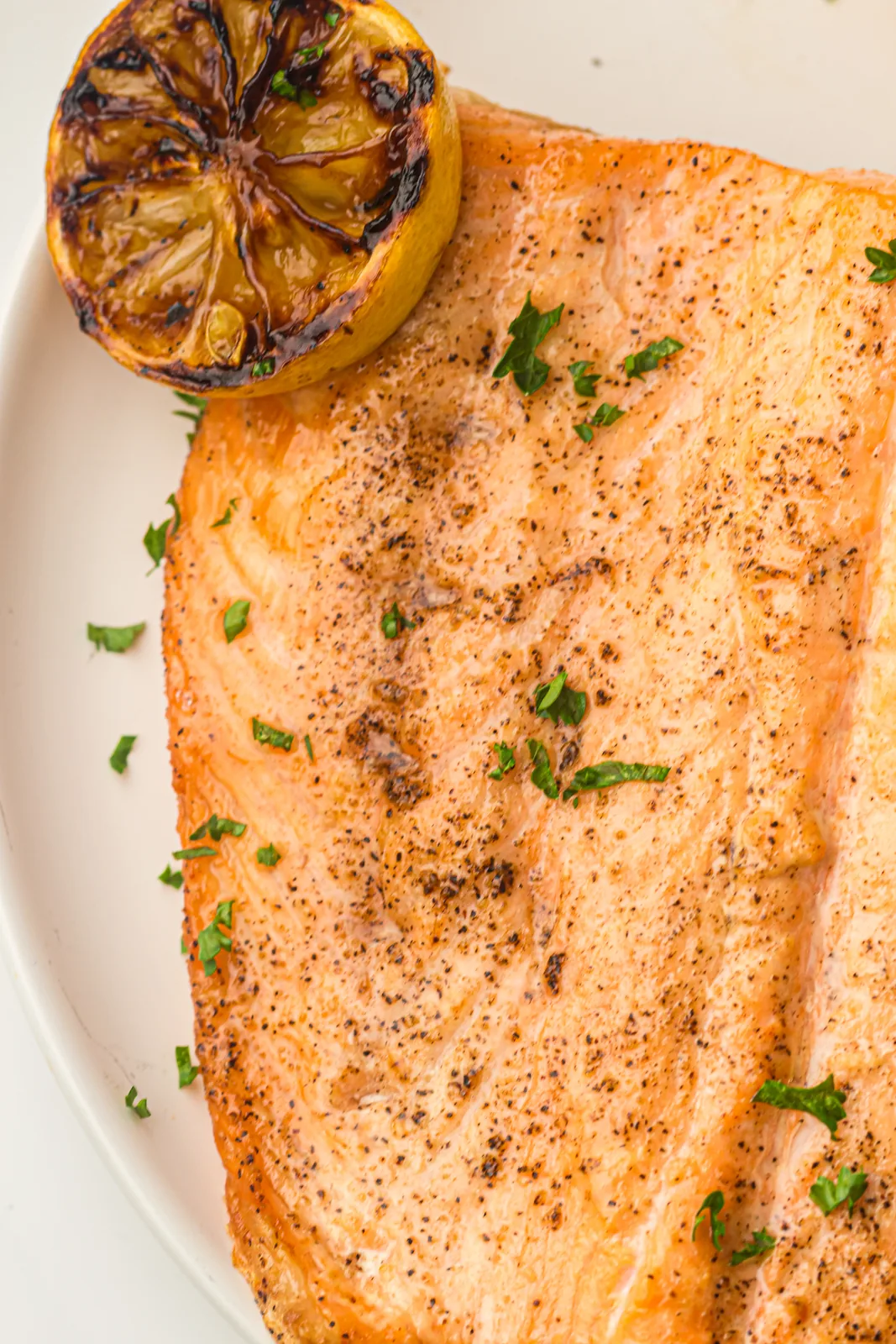
A thin, flexible fish spatula slides between the skin and the foil, so the fillet comes away in one piece.
Biggest Mistakes to Avoid
This is a forgiving recipe, honestly, but a few small slips can throw off the texture. Here’s what to watch for.
- Skipping the pat down. A wet surface steams instead of taking on smoke, and the seasoning slides off. Dry the fillet really well first.
- Flipping it. There’s no need to turn the fish. Leave it skin-side down and let the convection heat cook the top through.
- Overcooking. Pull it right at temperature. A few minutes too long and that silky middle turns dry and firm.
- Losing the skin. Cook skin-side down even if you plan to serve it skinless. The skin holds the fillet together and releases cleanly afterwards.
Tips for the Best Smoked Salmon
- Buy a fattier, thicker cut when you can, since it stays moist and drinks up smoke beautifully.
- Use milder pellets like apple or alder. They suit fish without swamping its delicate flavour.
- Bring the fillet close to room temperature before it goes in, so it cooks more evenly.
- Squeeze the lemon at the very end for the brightest lift.
Variations and Substitutions
The base rub is an easy thing to riff on, so here are a few ways I like to switch it up.
- Sweet and spicy. Add a pinch of cayenne or chipotle to the rub for a gentle kick.
- Herby and fresh. Swap the paprika for dill and a little lemon zest for a lighter, brighter version.
- Teriyaki glazed. Brush on a little teriyaki in the last few minutes in place of the honey.
- More from the Woodfire. The same method works on trout or other firm, skin-on fillets, and if you love this, try these Ninja Woodfire smoked chicken thighs next.
What to Serve With Smoked Salmon
Because this smoked salmon is rich and smoky, it loves fresh, light sides alongside. So build a simple plate with a starch and something green.
- Fluffy rice or roasted baby potatoes for something comforting.
- A crisp simple spinach salad or a pile of grilled greens.
- A bright prawn mango avocado salad if you’re building a proper seafood spread.
Storage and Reheating
Fridge. Store the cooled fish in an airtight container for up to 3 days.
Freezer. Wrap it well and freeze for up to 2 months.
Reheat. Warm it gently in a low 275°F oven, just until heated through, so it doesn’t dry out. That said, leftover smoked salmon is genuinely lovely cold, flaked over salads and grain bowls.
Frequently Asked Questions
Cooking and Doneness
Do I flip the fillet?
No. Cook it skin-side down the whole time. The convection heat cooks it through, so there’s no need to turn it.
What internal temperature should it reach?
Pull it at 140°F to 145°F (60°C to 63°C) at the thickest part. It should flake easily and look opaque throughout. An instant-read thermometer catches that window before the salmon turns chalky.
Why line the tray with foil?
The foil catches drips for easy cleanup and gives the skin a clean surface to release from. It also stops the fillet sticking.
Flavour and Storage
What pellets work best for fish?
Mild woods like apple or alder are ideal. They add smoke without overpowering the delicate flesh.
Can I add more seasoning?
Absolutely. Try dill and lemon zest, a teriyaki glaze, or a pinch of cayenne for heat. The base rub is easy to build on.
Can I use frozen fish?
Yes. Thaw it fully and pat it very dry first, so the seasoning sticks and the fillet cooks evenly.
Ingredients
- 1.5 lb salmon fillet skin-on, patted dry
- 1 tbsp avocado oil or any high-heat oil
- 1 tsp salt
- 1/2 tsp black pepper
- 1 tsp garlic powder
- 1 tsp smoked paprika
- 1 tbsp honey
- 1/2 lemon juiced
Instructions
- First, preheat the Ninja Woodfire Grill to Smoke mode, add pellets, and line the grill tray with a flat sheet of foil.

- Next, pat the salmon dry and set it skin-side down on the foil, then rub all over with the avocado oil.
- Then mix the salt, pepper, garlic powder, and smoked paprika and sprinkle evenly over the top.
- After that, drizzle the honey over the fillet and squeeze the juice of half a lemon across the surface.

- Cook uncovered at 300°F (150°C) for 17 to 20 minutes, without turning the fillet.
- Finally, check that the thickest part reaches 140°F to 145°F, then rest 2 minutes before serving.