 Bity
Bity
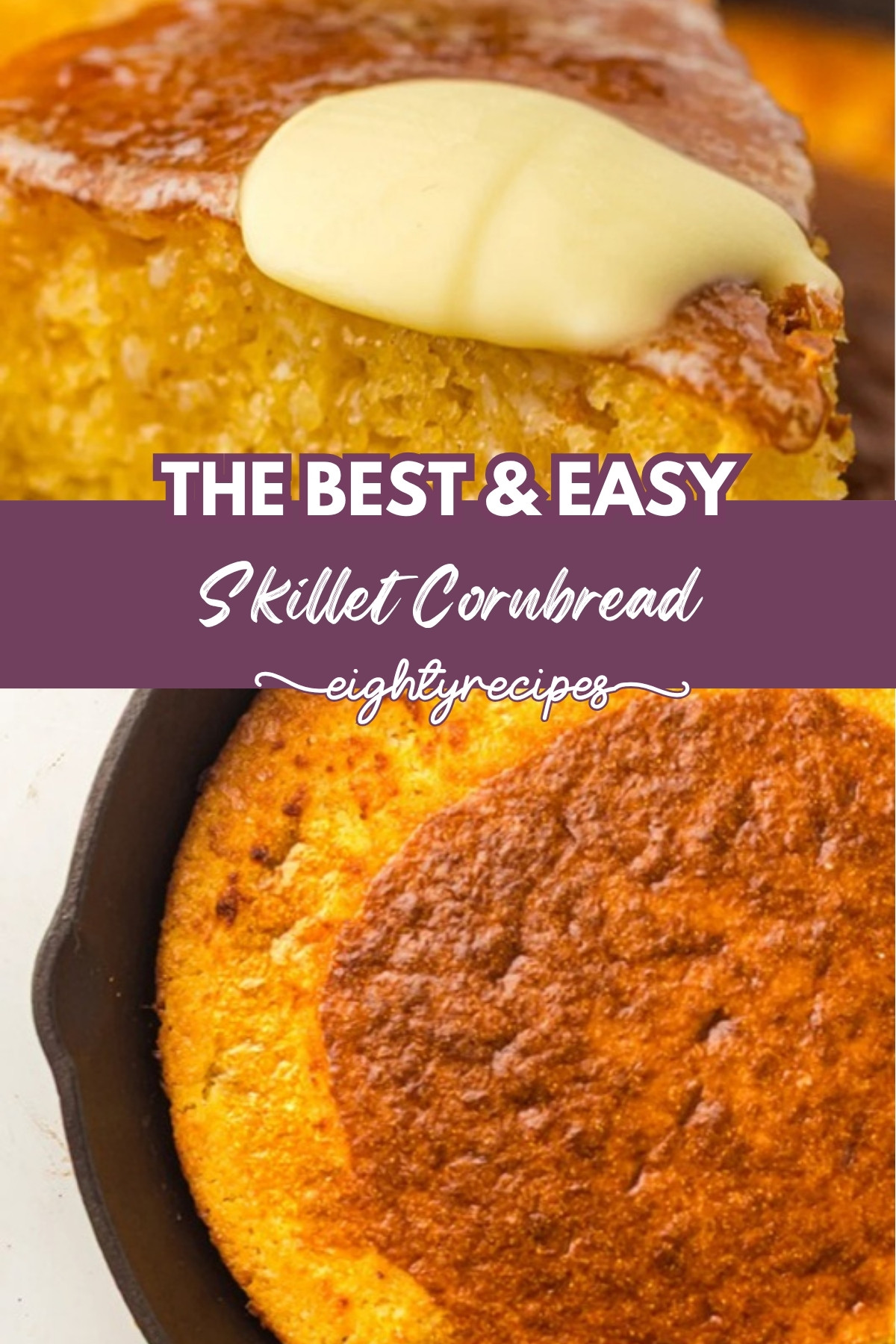
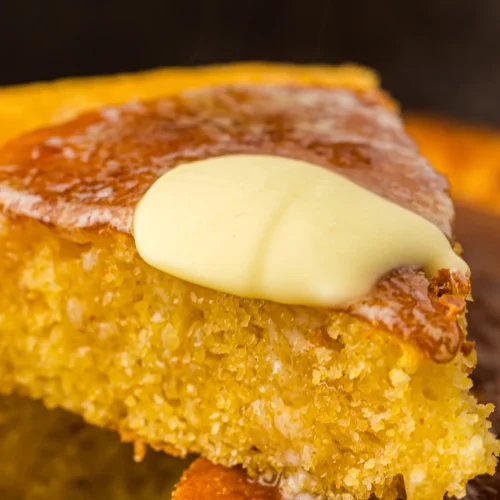
The first time I made skillet cornbread in a properly screaming hot pan, I heard it before I saw it. The batter hit the butter with a hiss, and twenty two minutes later the edges came out the colour of toffee and crunched under the knife.
Before that I had been baking skillet cornbread in a cold square tin like a cake, wondering why mine was pale and a bit sad while everyone else’s had that crust. The pan does it. Nothing else in this recipe changed at all.
Quick Breakdown
Why You’ll Love This Skillet Cornbread
- Crisp edges, soft middle. Because the pan is already hot, the outside fries on contact while the centre stays tender.
- No buttermilk needed. This skillet cornbread runs on ordinary milk and baking powder, so there is nothing extra to buy.
- Seven ingredients, two bowls. One dry, one wet, and they meet for about ten seconds.
- Thirty two minutes. In fact most of that is the oven doing the work.
- Sweet enough to matter. A quarter cup of sugar puts it firmly on the northern side of the argument.
Ingredient Notes
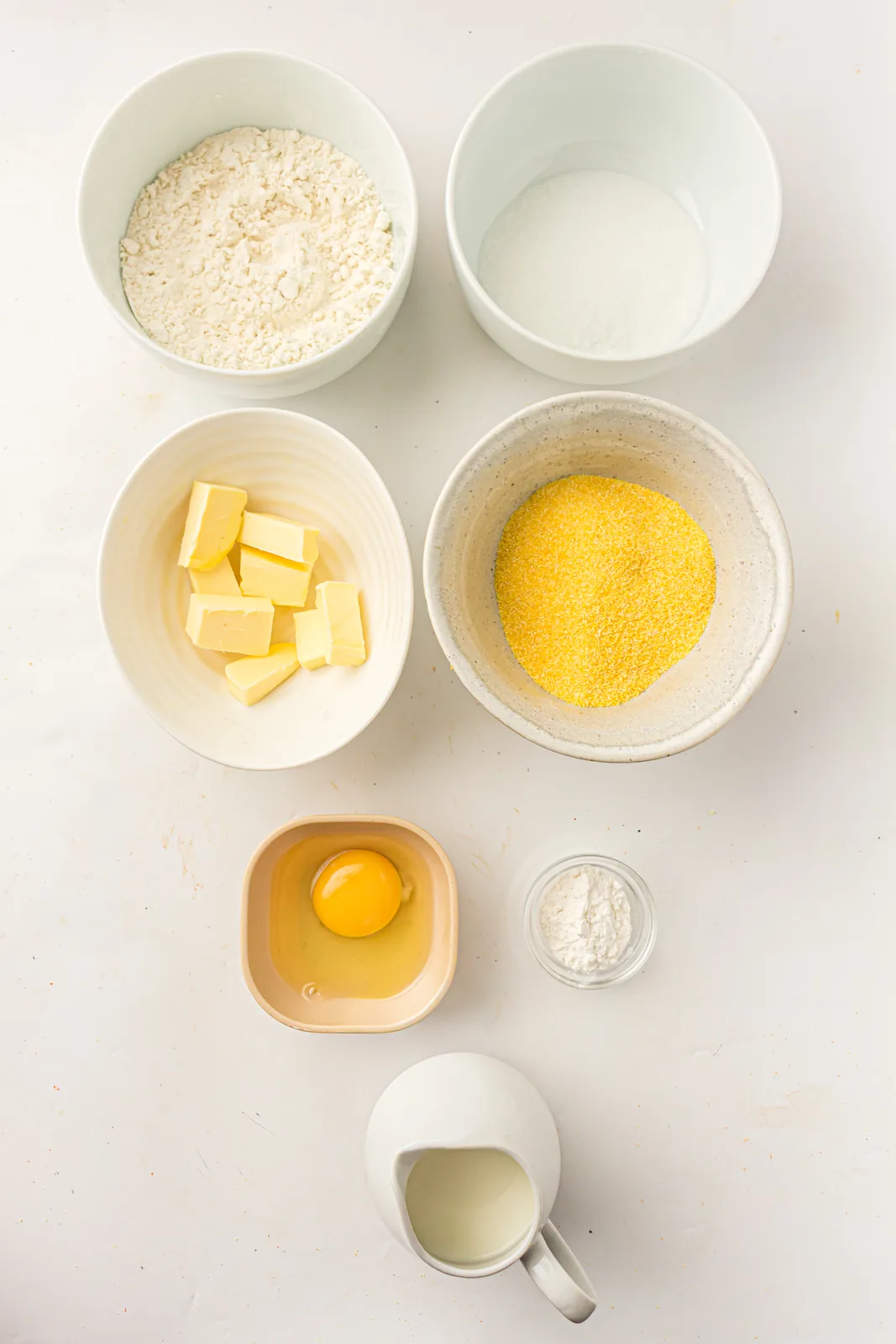
- Cornmeal. Medium grind yellow cornmeal gives the best texture and colour. Whole grain versions bring more fibre with them, and Harvard’s Nutrition Source explains what the bran and germ are actually contributing.
- Plain flour. An equal cup keeps it from crumbling. All cornmeal and no flour makes a bake that falls apart on the plate.
- Sugar. A quarter cup. However, if you grew up in the south and this offends you, drop it to two tablespoons.
- Baking powder. A full tablespoon sounds excessive. Still, cornmeal is heavy and needs the push, and there is no buttermilk here to react with soda.
- Milk. Whole milk for richness. Buttermilk works as a straight one for one swap if you happen to have it.
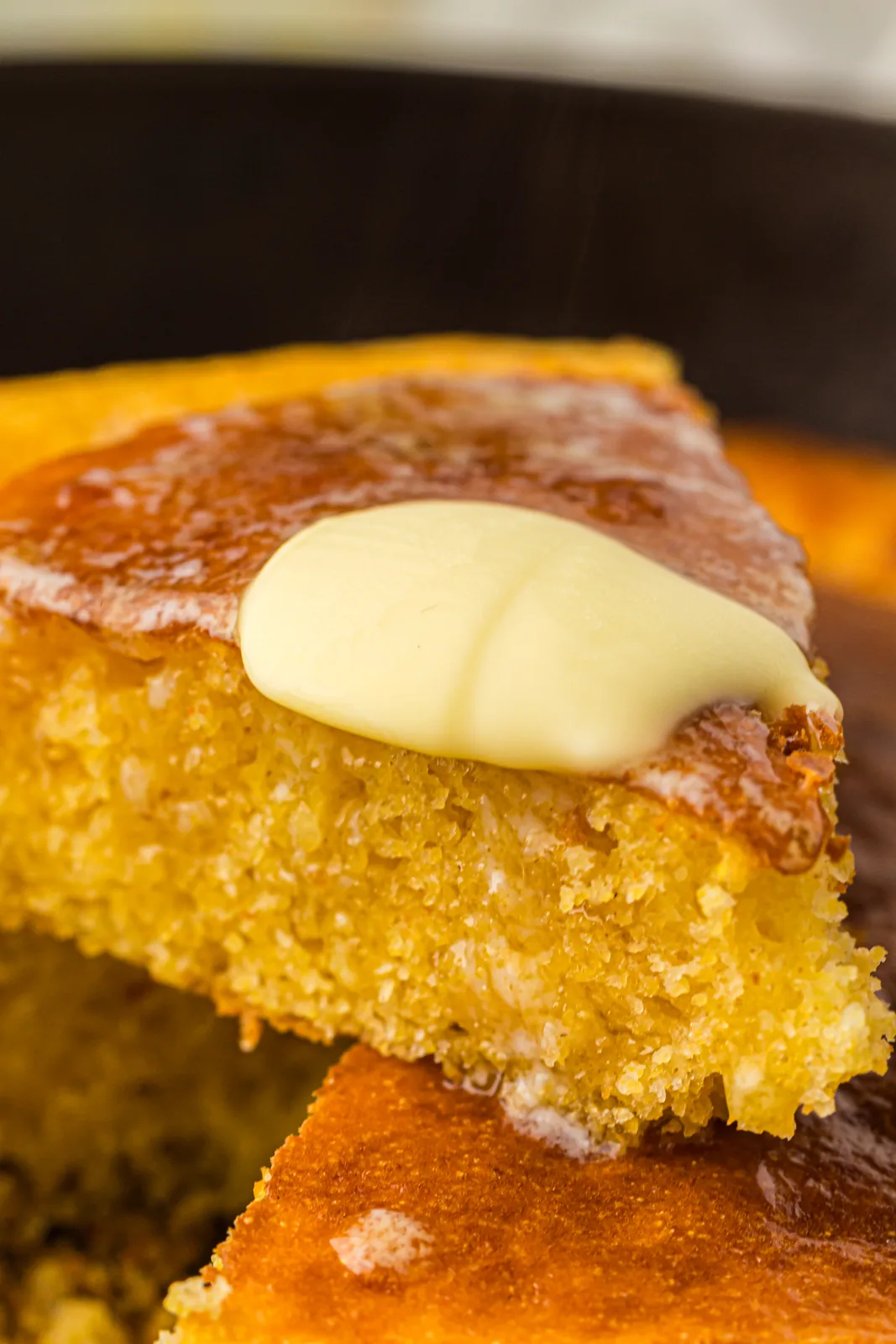
- Butter. A quarter cup melted into the batter, plus a knob for the pan. The pan butter is not optional, since it is what makes the crust.
Why a Hot Pan Gives Skillet Cornbread Its Crust
Batter poured into a cold tin has to warm up before it can brown. During that time it steams, the outside sets soft, and you get the same texture at the edge as in the middle.
Poured into cast iron that has been in a 400 degree oven for ten minutes, the opposite happens. The butter is already sizzling, the batter fries the instant it lands, and a crust forms before the inside has even started to rise.
That mass is why cast iron suits skillet cornbread better than any other pan. It also rewards regular use rather than careful storage, which ThermoWorks covers well in their cast iron guide.
Cornbread Without Buttermilk
Most recipes insist on buttermilk, and the reason is chemistry rather than flavour. Buttermilk is acidic, so it reacts with bicarbonate of soda to make the bake rise. Take the buttermilk away and the soda has nothing to work with.
This version sidesteps that entirely by using a tablespoon of baking powder, which carries its own acid and only needs moisture and heat. As a result you get a full rise from a carton of ordinary milk.
How To Make Skillet Cornbread
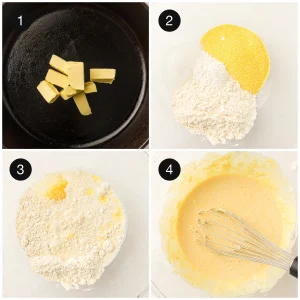
1. Heat the oven and the pan. First set the oven to 400°F (205°C), drop a knob of butter into your cast iron pan and slide it onto the middle shelf while the oven comes up.
2. Mix the dry ingredients. Next stir the cornmeal, flour, sugar and baking powder together in a large bowl.
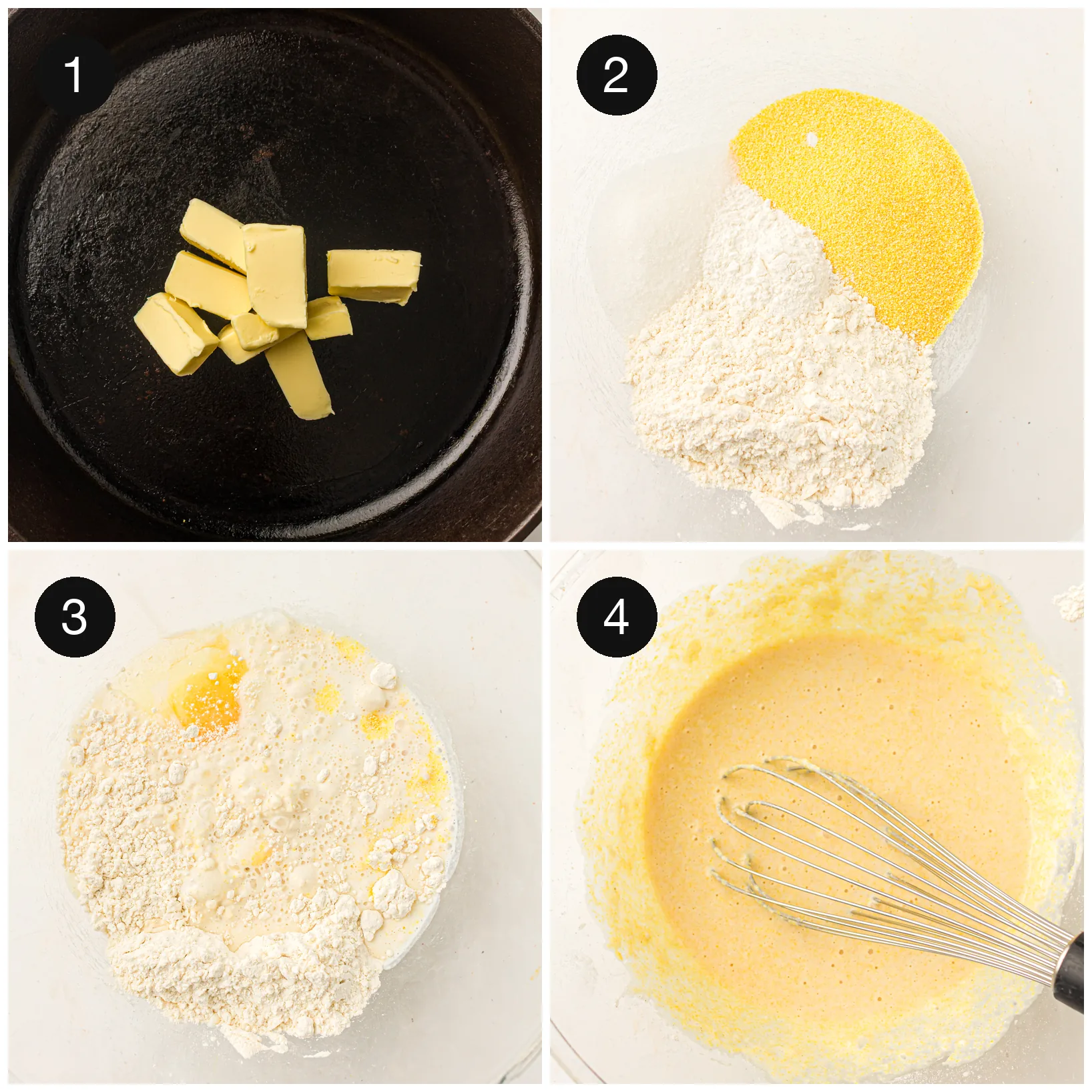
3. Whisk the wet ingredients. Then whisk the milk, egg and melted butter together in a second bowl until the egg has disappeared.
4. Bring them together. After that pour the wet into the dry and stir just until no floury patches remain. The batter should still look slightly lumpy.
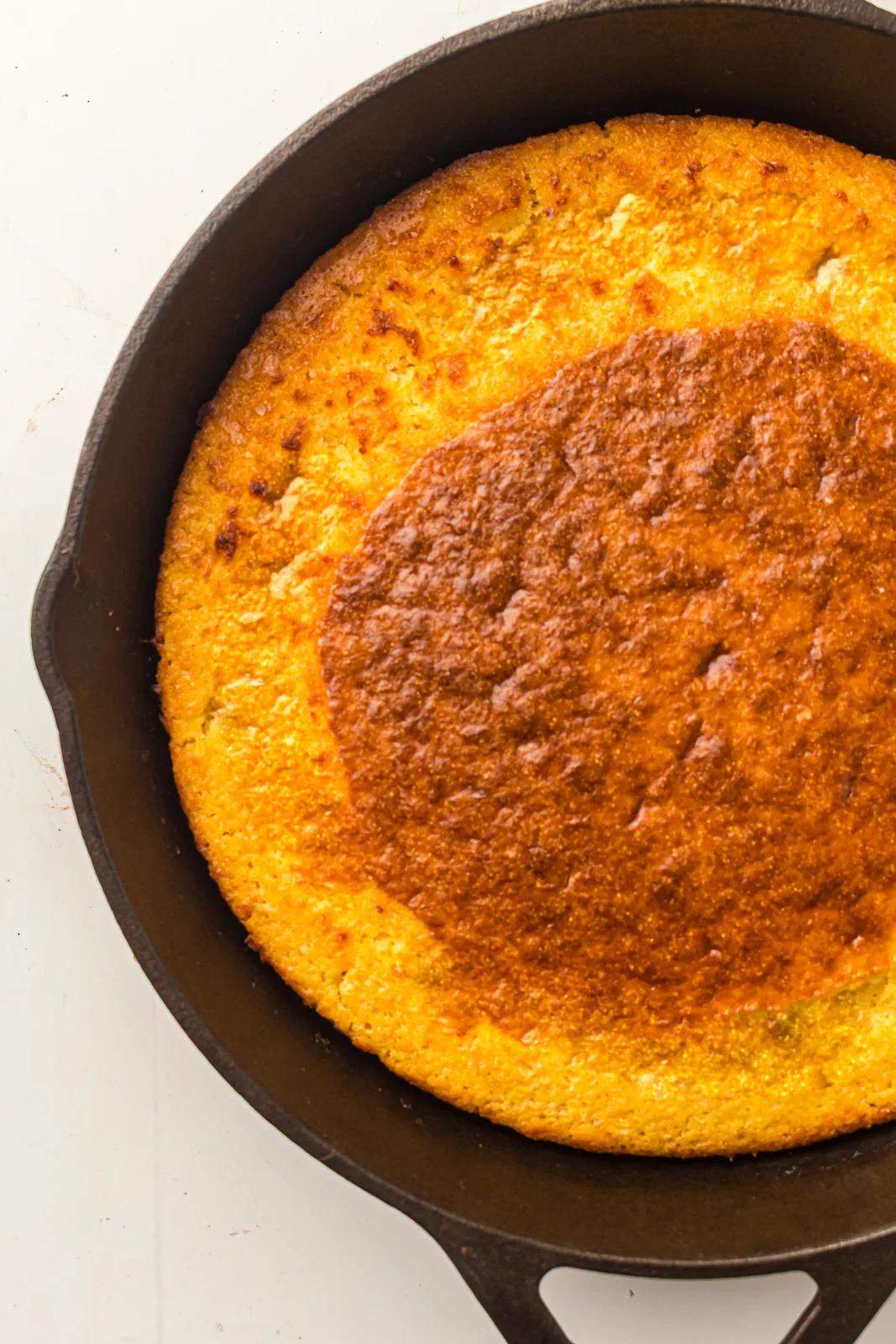
5. Fill the hot pan. Take the pan out carefully, swirl the melted butter up the sides, then pour the batter straight in. It should sizzle audibly.
6. Bake. Finally bake for twenty to twenty two minutes, until the top is deep gold and a skewer in the centre comes out clean.
Biggest Mistakes to Avoid
- Starting with a cold pan. This is the whole recipe. Skillet cornbread baked from cold has a soft pale edge and nothing to crunch.
- Beating the batter smooth. Because flour develops gluten when it is worked, an overmixed bake turns rubbery. Lumps are correct.
- Skipping the pan butter. Without it the bottom sticks and the crust never forms.
- Baking it too long. Two minutes past clean skewer and the crumb dries out. Check at twenty.
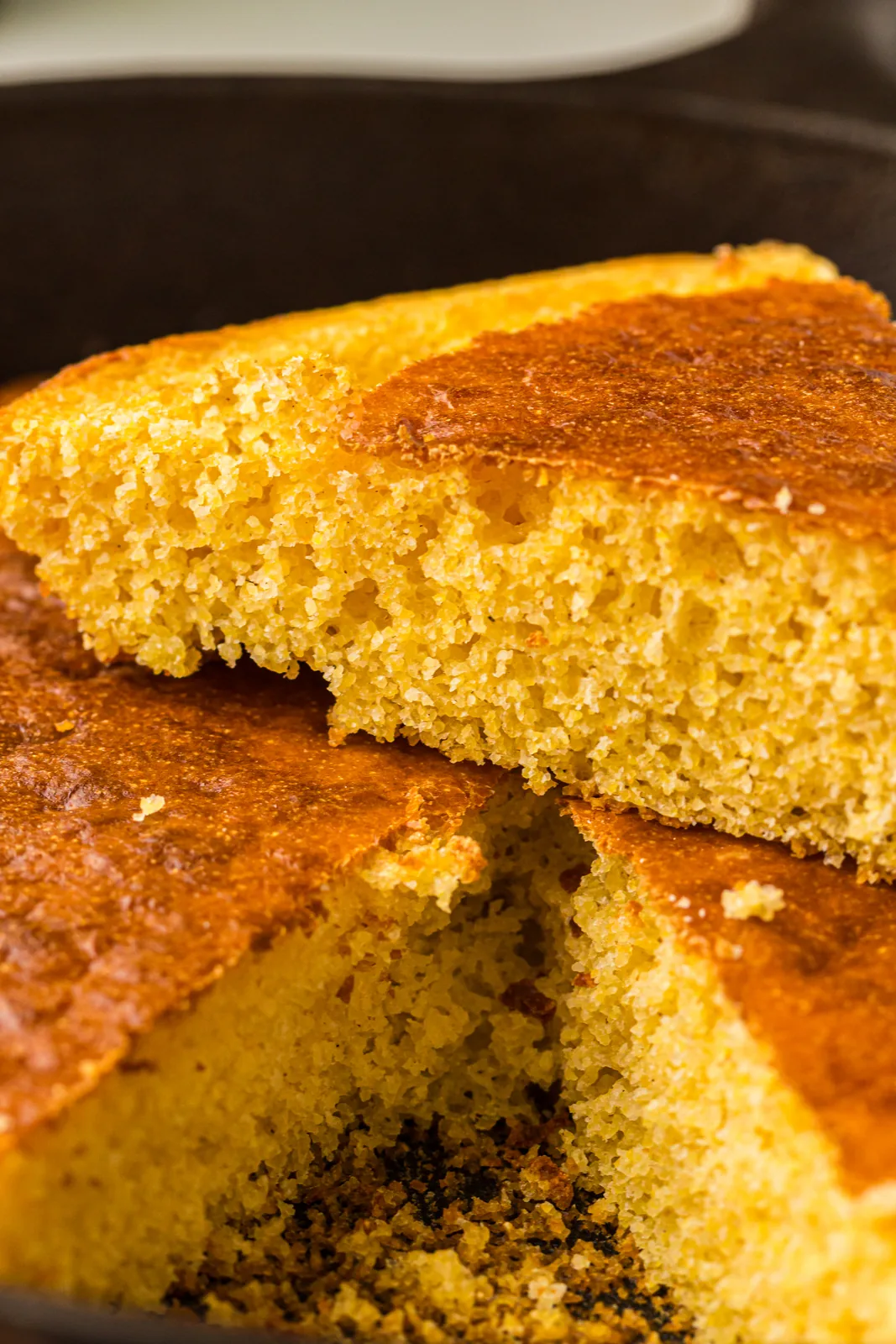
- Cutting it straight away. Give it five minutes to settle. Otherwise the wedges tear rather than lift.
Tips for the Best Skillet Cornbread
- A ten inch pan is the sweet spot. Bigger and it bakes thin, smaller and the middle takes too long.
- Have the batter mixed and waiting before the pan comes out, since the heat starts dropping immediately.
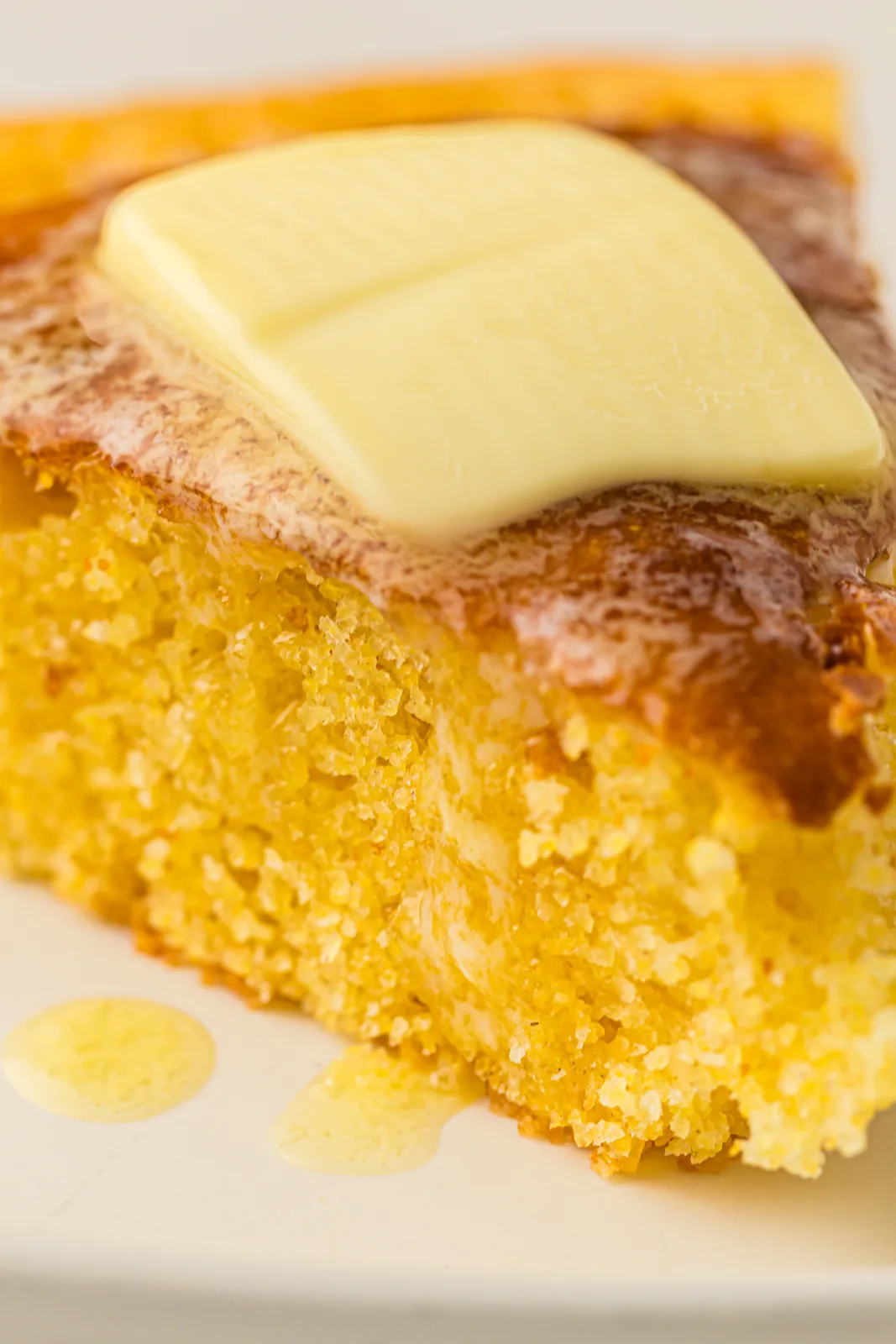
- Brush the hot top with melted butter and a spoonful of honey the moment it leaves the oven.
- For a savoury version, cut the sugar to two tablespoons and add a cup of grated cheddar.
- Meanwhile a handful of sweetcorn kernels folded through adds pops of sweetness and texture.
Storage and Reheating
- Room temperature. Two days wrapped in foil or a tin. Because the crust softens in plastic, foil is the better choice.
- Fridge. Up to five days, though it firms up noticeably. Warm it before serving.
- Freezer. Two months in slices. Meanwhile the best reheat is a hot oven for eight minutes, which brings the edges back to life in a way the microwave never does.
Variations and Substitutions
- Jalapeño and cheddar. Two chopped chillies and a cup of cheese, sugar reduced to two tablespoons.
- Honey butter finish. Equal parts soft butter and honey, whipped, spread on while warm.
- No cast iron? A metal cake tin preheated the same way gets you most of the way there. My soft dinner rolls are the answer if you want bread with no special pan at all.
- Buttermilk version. Swap the milk one for one and cut the baking powder to two teaspoons, adding half a teaspoon of soda.
- Cheesy side. If it is comfort you are after, serve it alongside my baked mac and cheese.
What to Serve With Skillet Cornbread
Chilli is the obvious partner for skillet cornbread, and a wedge dunked into a bowl of my instant pot chili is one of the better weeknight dinners I know. Soups and stews all work the same way.
Otherwise think barbecue. Pulled pork, roast chicken and greens all want something to mop the plate with, much as cheesy garlic bread does beside pasta.
Frequently Asked Questions
Pan and Ingredients
Do I need a cast iron skillet?
No, but it gives the best crisp edge. A preheated metal cake tin is the closest alternative, and a glass dish is the weakest option.
Can I use buttermilk?
Yes, one for one in place of the milk. However, drop the baking powder to two teaspoons and add half a teaspoon of bicarbonate of soda.
Can I reduce the sugar?
Of course. Two tablespoons gives a savoury bake that suits chilli better, and the texture does not change at all.
What grind of cornmeal is best?
Medium. Fine grind makes it cakey and coarse grind leaves it gritty, so medium sits in the right place.
Baking and Storage
Why is mine dry?
Almost always two or three minutes too long in the oven. Start checking at twenty minutes and pull it as soon as a skewer comes out clean.
Why did it stick to the pan?
The pan was not hot enough, or there was not enough butter in it. Both problems disappear once the butter is properly sizzling.
Can I make it ahead?
Bake it the same day if you can. That said, it reheats well in a hot oven, so a day ahead is perfectly workable.
Ingredients
- 1 cup cornmeal medium grind
- 1 cup all-purpose flour
- 1/4 cup sugar
- 1 tbsp baking powder
- 1 cup milk
- 1 large egg
- 1/4 cup butter melted, plus extra for the pan
Instructions
- Preheat the oven to 400°F (205°C).
- Place a cast iron skillet in the oven with a knob of butter and heat until the butter is sizzling.

- In a mixing bowl, combine the cornmeal, flour, sugar and baking powder.
- In a separate bowl, whisk together the milk, egg and melted butter.
- Pour the wet ingredients into the dry and mix until just combined. Do not overmix.
- Carefully remove the hot skillet and swirl the melted butter to coat the base and sides.
- Pour the batter into the hot skillet. It should sizzle as it lands.
- Bake for 20 to 22 minutes, until golden on top and a toothpick in the centre comes out clean.