 Bity
Bity
My daughter showed me a video of a yogurt cheesecake being made with two ingredients and no oven, and I told her it would not work. Then I made it that night to prove my point, and by morning I was quietly eating my words with a spoon.
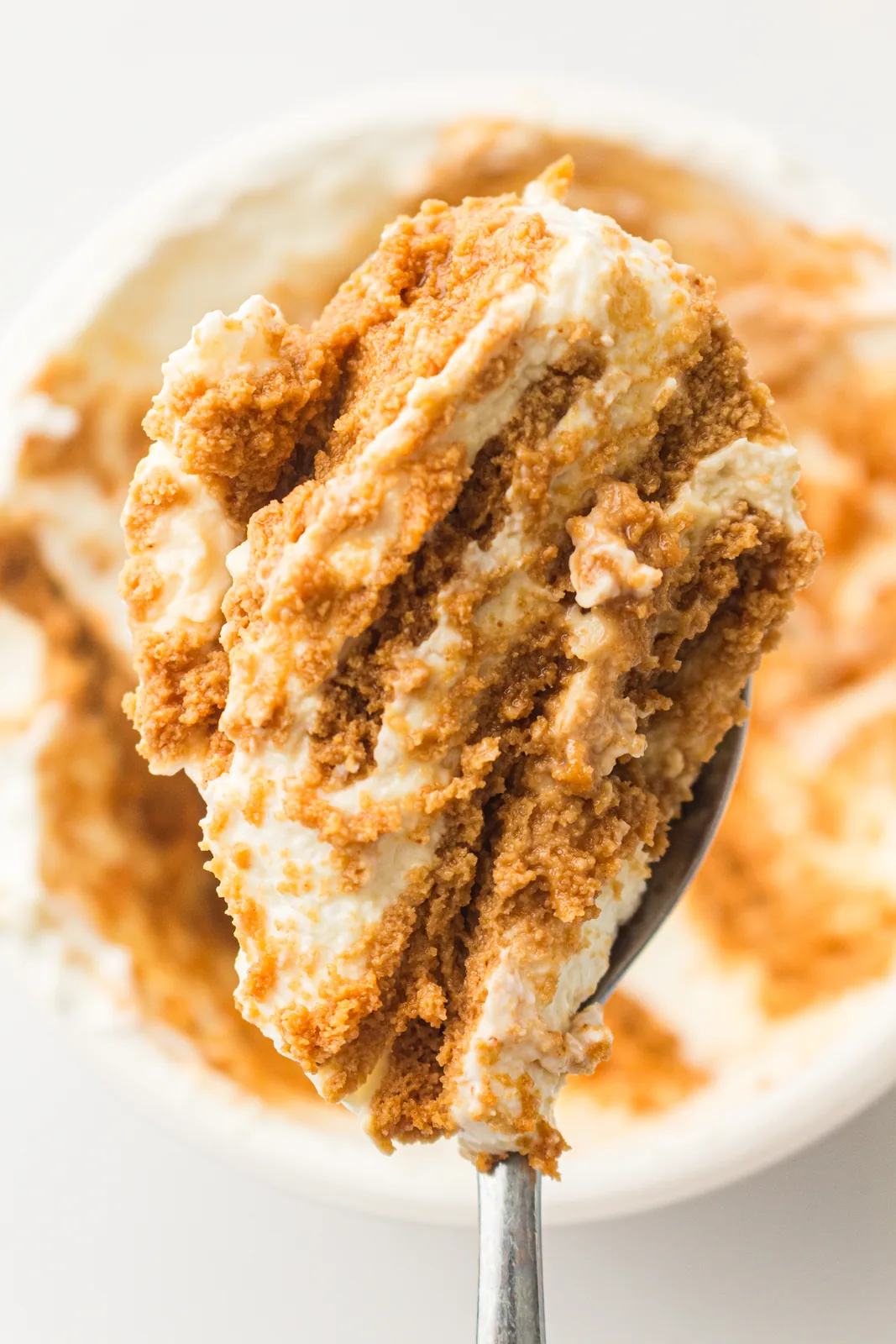
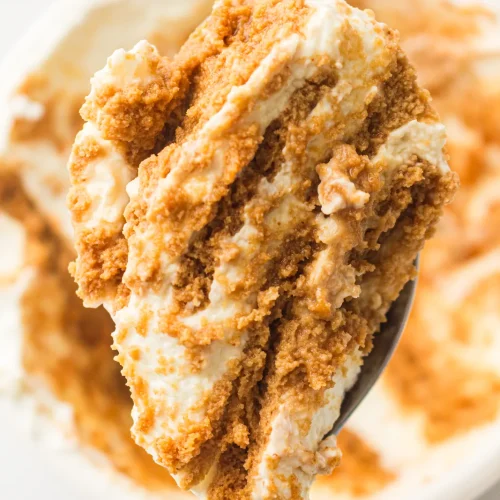
It is thick yogurt with caramel biscuits pushed down into it, left in the fridge overnight. The biscuits soften into something close to sponge, the yogurt firms up around them, and it genuinely tastes like a set cheesecake.

Quick Breakdown
Why You’ll Love This Yogurt Cheesecake
- Two ingredients. A tub of thick yogurt and a packet of caramel biscuits, and that is the whole list.
- Five minutes of work. Because the fridge does everything else while you sleep.
- No oven, no gelatine. There is nothing to set, nothing to whip, and nothing to go wrong.
- Lighter than it sounds. In fact there is no cream cheese in it at all, so it tastes fresh rather than heavy.
- Four to six portions. Meanwhile it works just as well assembled in individual jars.
Ingredient Notes
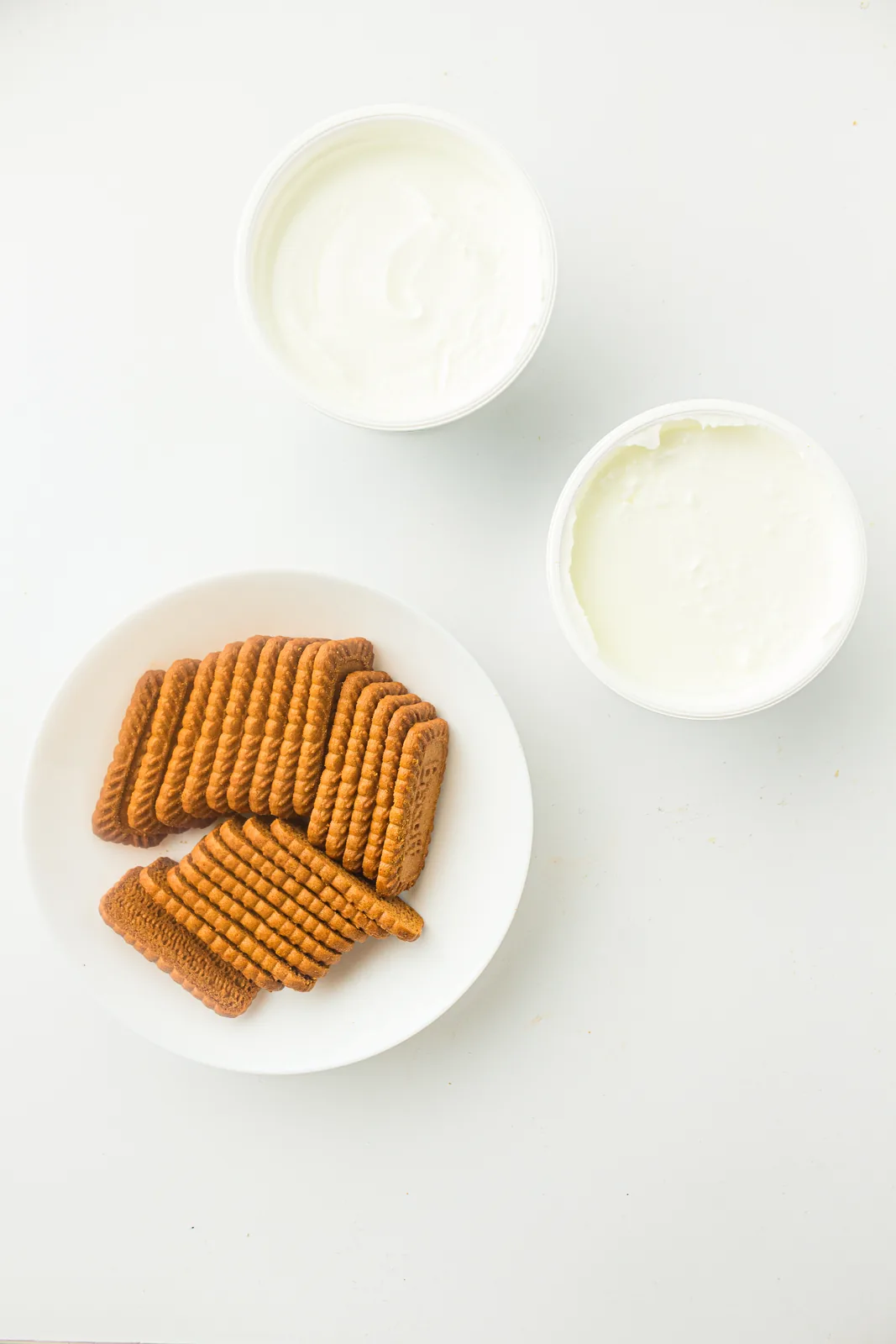
- Thick yogurt. 450g, which is about 16 ounces. Greek or strained natural yogurt, full fat. This is the one decision that makes or breaks the whole thing.
- Caramel biscuits. Ten to twelve Lotus Biscoff, or any similar spiced caramel biscuit. They need to be crisp and dry, because a soft biscuit has nothing left to absorb with.
- Nothing else. No sugar, no cream cheese, no gelatine. The biscuits carry all the sweetness the dessert needs.
- Optional finish. A drizzle of melted biscuit spread, a spoon of berries, or a dusting of icing sugar just before serving. Choosing the right tub genuinely matters here, and Harvard Health walks through how to read a yogurt label.
Is This the Viral Japanese Cheesecake?
Not the one you are probably picturing. Japanese cotton cheesecake is a baked, jiggly, souffle style cake made with cream cheese and whipped egg whites, and it needs a water bath and a careful oven.
This is the two ingredient version that went round social media instead. It borrows the name because the texture of the softened biscuit layer ends up strangely close to sponge, not because the method has anything in common.
So if you came here for the tall wobbly baked one, this is not it. That said, this takes five minutes and never cracks, which is a fair trade on a busy week.
Which Yogurt and Which Biscuits
Use the thickest yogurt you can find. Greek style, strained, or a proper set natural yogurt all work. Runny or low fat yogurt has too much free water, and it turns the biscuits to slurry rather than sponge.
If your yogurt looks loose, strain it through a muslin lined sieve in the fridge for a couple of hours first. It is an extra step, and it transforms the result.
For the biscuits, Biscoff is the standard because the caramel and spice do so much of the flavouring. Digestives, graham crackers or ginger nuts all work too, though each pushes the finished dessert in a different direction.
How To Make Yogurt Cheesecake
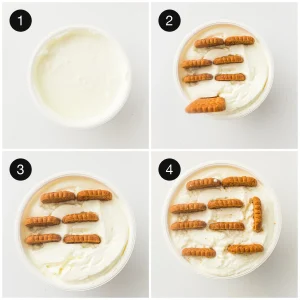
1. Settle the yogurt. First spoon the yogurt into a container, or simply leave it in its own tub if there is room at the top. Level the surface with the back of a spoon.
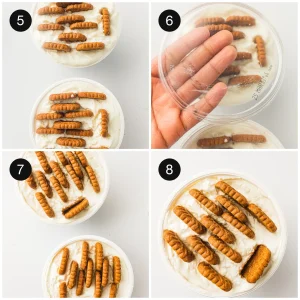
2. Stand the biscuits up. Next push the biscuits in vertically, spacing them evenly across the whole surface rather than clustering them in the middle.
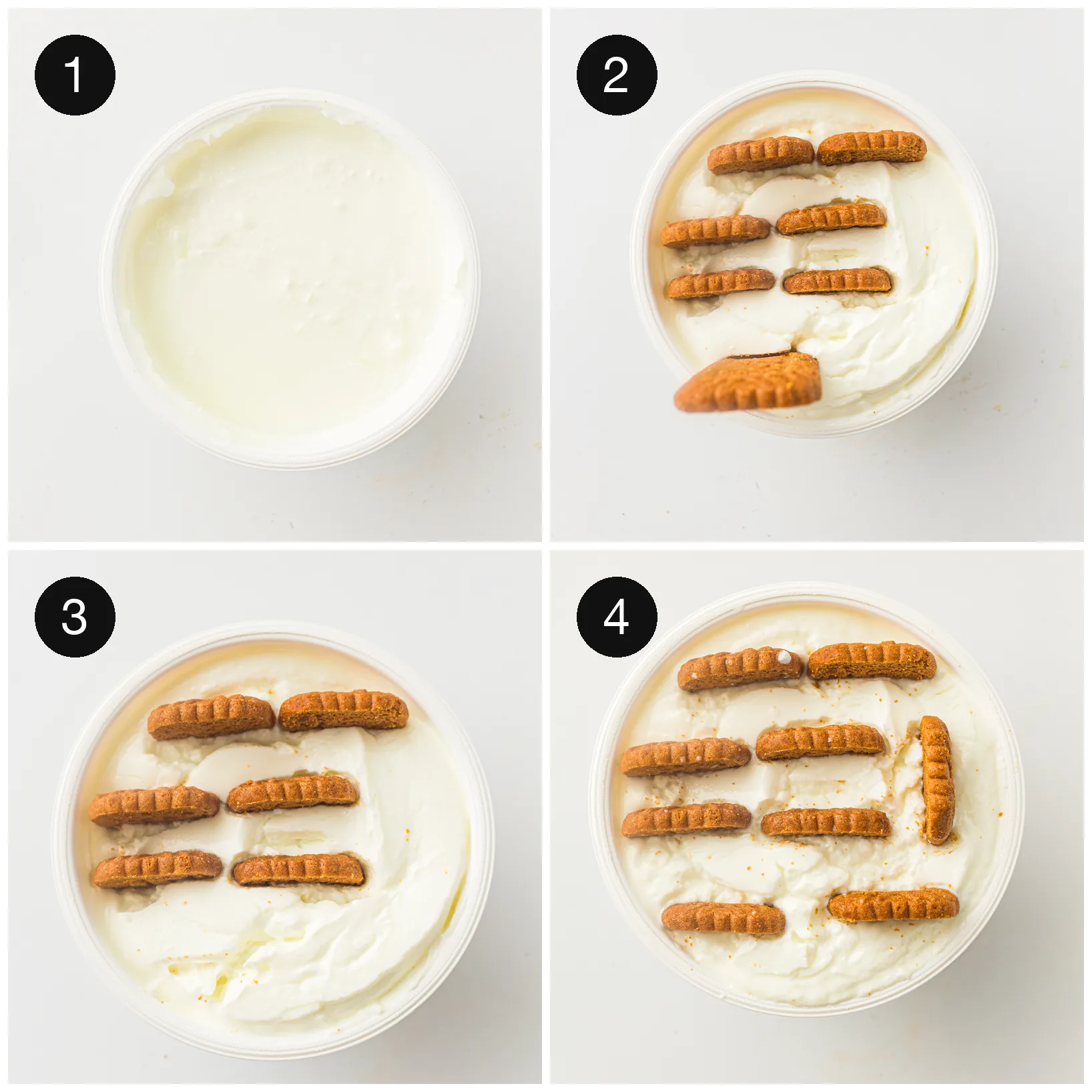
3. Press them down. Then press each one gently until it is mostly submerged. A little edge poking out is fine, since it softens overnight anyway.
4. Cover it well. After that put the lid on, or cover the container tightly with cling film. An open tub picks up fridge smells and dries at the surface.
5. Chill overnight. Refrigerate for at least 8 hours, and up to 12. This is the entire cooking process, so do not cut it short.
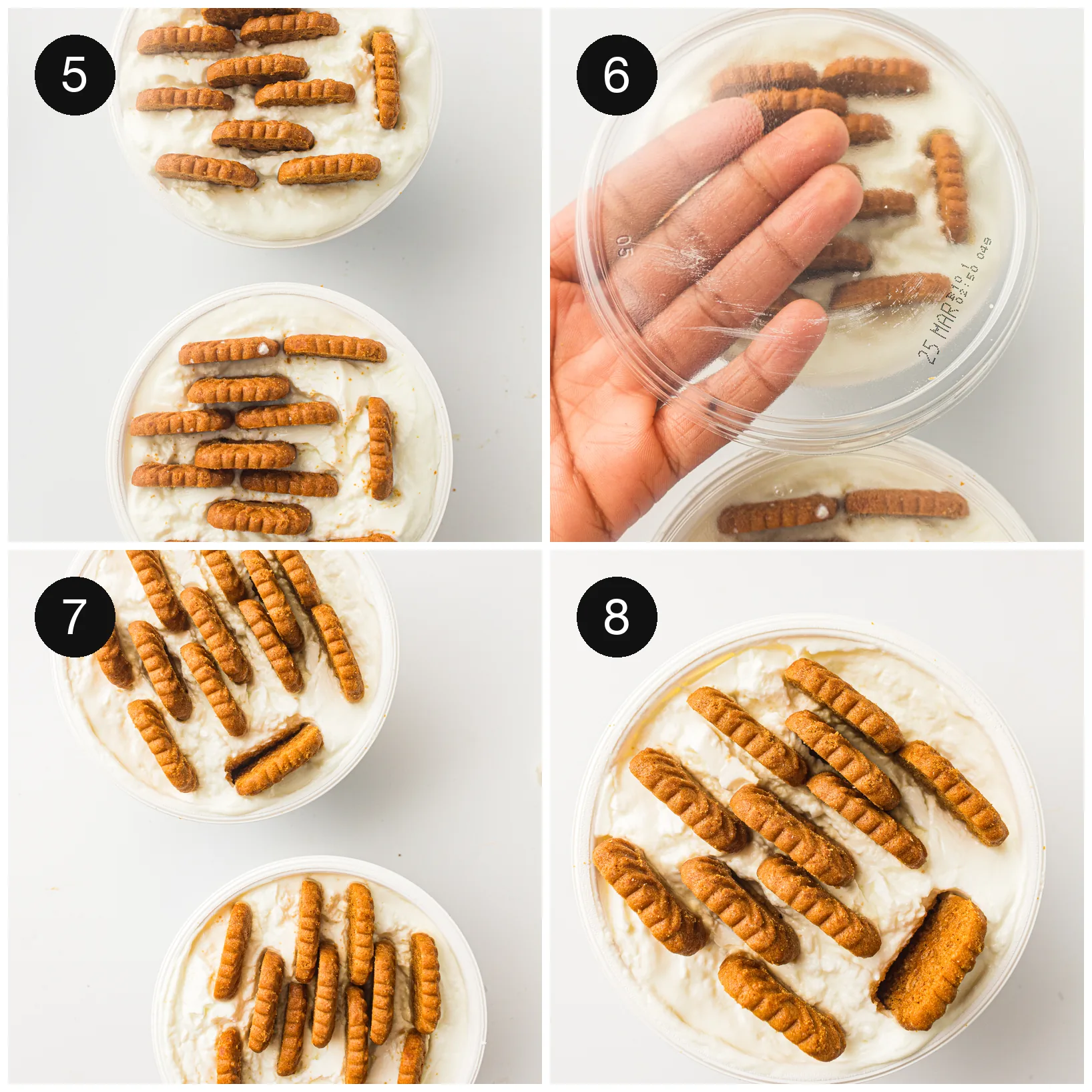
6. Scoop and serve. Finally spoon it straight from the tub. It does not slice like a baked cake, and it is not meant to.
Why Yogurt Cheesecake Goes Watery or Stays Crunchy
- Thin yogurt. The most common problem by far. A watery yogurt cheesecake almost always started with a low fat or unstrained tub.
- Not long enough. Six hours is not eight. The biscuits need the full night to soften all the way through.
- Biscuits too far apart. Leave big gaps and you get plain yogurt in between rather than an even set.
- Stirring it. Mixing everything together gives you a nice biscuit yogurt, and it loses the layers entirely.
- Soft or stale biscuits. A biscuit that has already gone soft cannot absorb anything, so it turns to paste.
Tips for the Best Yogurt Cheesecake
- Strain loose yogurt for two hours first. It is the single biggest upgrade you can make to a yogurt cheesecake.
- Break a couple of biscuits into crumbs and scatter them across the top for texture at serving time.
- Use a wide shallow container rather than a deep one, so every spoonful gets both layers.
- Assemble it in small jars for a dinner party. They look far smarter than a tub and set in the same time.
- Add the toppings just before serving. Do it the night before and everything softens into the surface.
Storage and Make Ahead
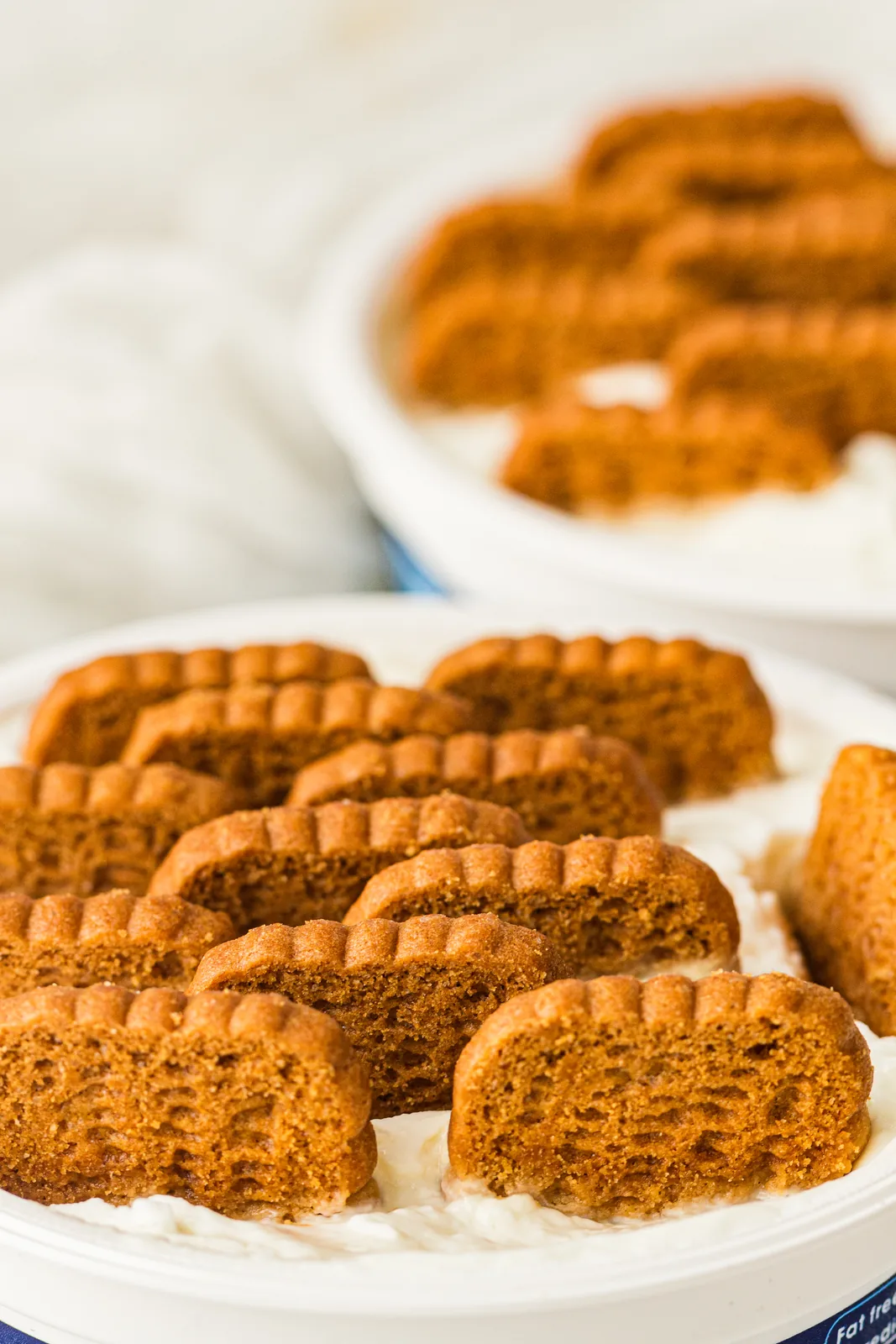
- Fridge. Covered, it keeps for up to 2 days. Honestly though, it is at its best in the first 24 hours.
- After that. The biscuits keep absorbing, so by day three the texture is more pudding than cake.
- Freezing. Not recommended. Yogurt splits when it thaws and the whole thing turns grainy.
- Make ahead. Assemble in the evening for the next day. It is a genuinely useful dessert for a busy weekend.
Variations and Substitutions
- Berries. Layer raspberries or blueberries between the biscuits for something sharper.
- Chocolate. Grate dark chocolate over the top before it goes in the fridge.
- Digestives or ginger nuts. Both work, and ginger nuts in particular are lovely in winter.
- Higher protein. Use a strained high protein yogurt. If you want to make the base yourself, my instant pot yogurt sets thick enough for this, and Harvard’s Nutrition Source explains what live cultures actually do. For a set, sliceable dessert instead, my easy no bake cheesecake is the one to make.
What to Serve With Yogurt Cheesecake
Cold and straight from the fridge is how yogurt cheesecake is meant to be eaten, with maybe a drizzle of melted biscuit spread over the top. Fresh raspberries cut through the caramel beautifully.
For a bigger spread, put out a bowl of no bake energy balls beside it, or serve small scoops with strawberry cheesecake ice cream for people who want both textures at once.
Frequently Asked Questions
Ingredients and Method
Can you make cheesecake with yogurt instead of cream cheese?
You can, and this is the simplest version of it. Thick yogurt plus biscuits gives a soft set dessert with a similar tang, though it is scooped rather than sliced.
Can I use any type of yogurt?
Use the thickest you can find. Greek or strained natural yogurt works best, while low fat and runny yogurts release water and leave the biscuits soggy.
Do I have to use Biscoff biscuits?
No. Digestives, graham crackers and ginger nuts all work. Biscoff simply brings the most caramel flavour, which is why the original version uses it.
Why does it turn cake like?
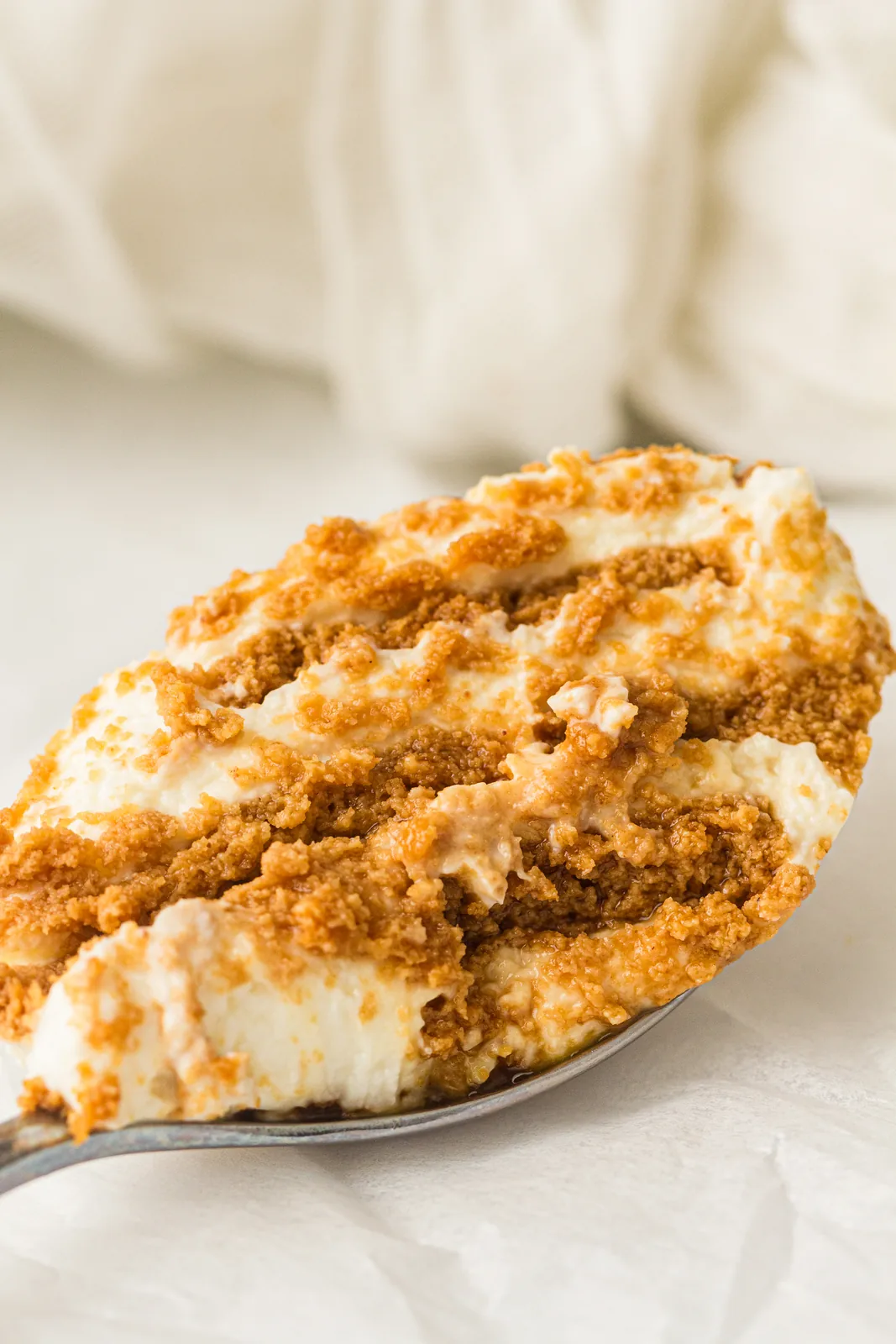
The dry biscuits pull moisture out of the yogurt overnight. As a result they swell and soften into a texture much closer to sponge than to biscuit.
Setting and Storage
Can I make individual portions?
Yes, and they look lovely. Assemble in small jars or glasses, using two or three biscuits each, and chill for the same length of time.
Why is mine watery?
The yogurt was too loose. So strain it through a muslin lined sieve for a couple of hours before you start, and the problem disappears.
How long does it keep?
Two days covered in the fridge, though the texture is best within the first day. Do not freeze it, since yogurt splits on thawing.
Ingredients
- 450 g thick yogurt 16 oz, Greek or thick natural yogurt works best
- 10 Lotus Biscoff biscuits 10 to 12, or similar caramel biscuits
Instructions
- Spoon the yogurt into a container, or leave it in its original tub if there is enough space, and level the surface.
- Insert the Biscoff biscuits vertically into the yogurt, spacing them evenly throughout.

- Gently press the biscuits down so they are mostly submerged but still evenly distributed.
- Place the lid on the container, or cover it tightly with cling film.
- Refrigerate overnight for at least 8 hours, and up to 12.
- By morning the biscuits will have softened and absorbed moisture, creating a soft, cake-like texture.
- Scoop to serve, straight from the fridge.