 Bity
Bity
An artisan sourdough loaf made with four ingredients looks like the sort of thing you need a course to attempt, and it really is not. Flour, water, starter, salt. The oven does the dramatic part, and everything before that is just folding dough every half hour while you get on with your day.
This one is deliberately on the firm side. At around 57 percent hydration it does not slump across the worktop or stick to everything you own, which is exactly what you want the first few times you shape a round.

Quick Breakdown
Why You’ll Love This Artisan Sourdough Loaf
- Four ingredients, no yeast packet. The starter does everything, so there is nothing to buy that you do not already have.
- The dough behaves. Because it is a firm dough, it holds its shape while you learn to fold and shape it.
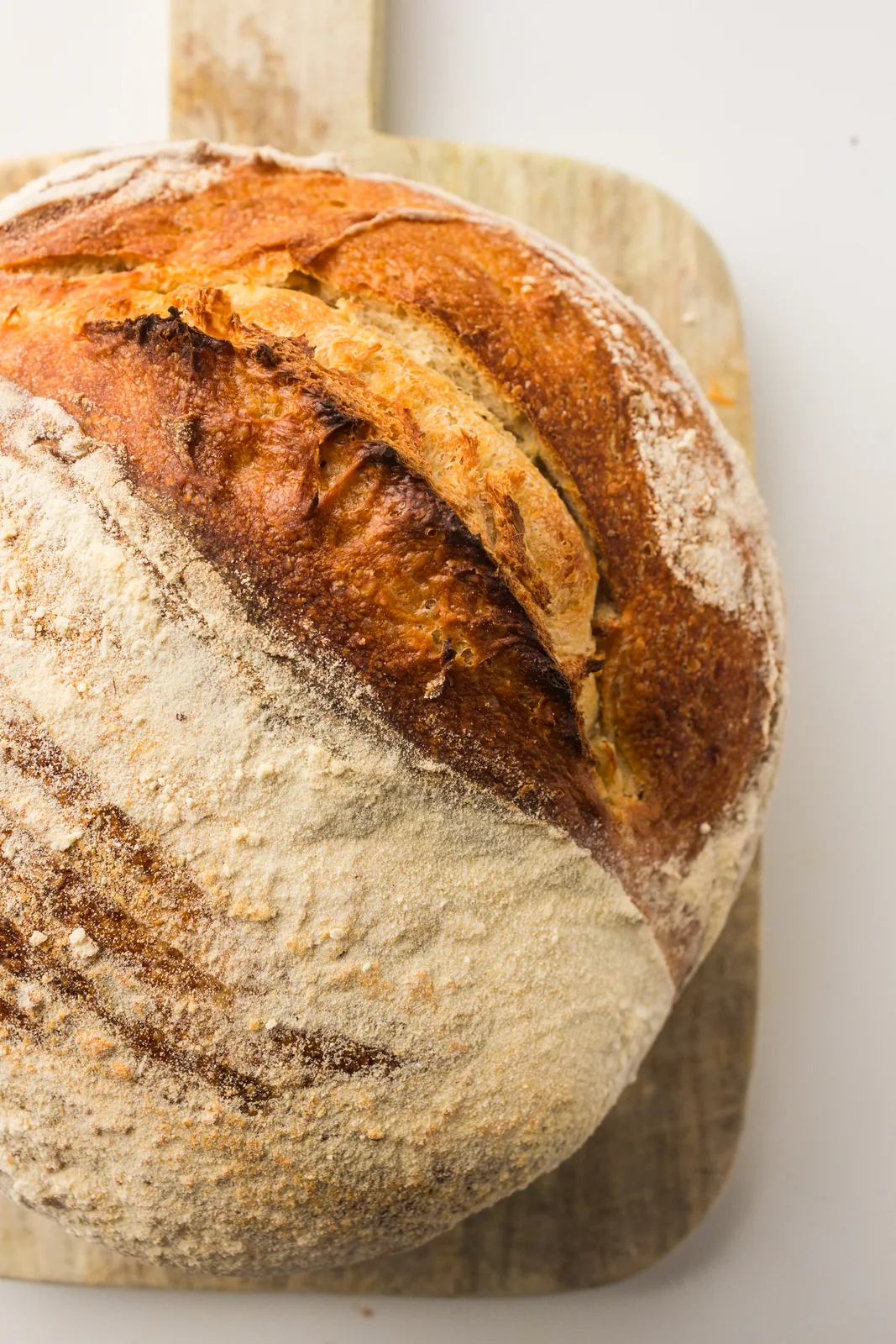
- A Dutch oven does the work. Trapped steam gives you the blistered, crackling crust that home ovens usually cannot manage.
- It fits around real life. Meanwhile the long bulk ferment can happen overnight while you sleep.
- One big round, twelve proper slices. In fact it keeps beautifully for three days wrapped in a cloth.
Ingredient Notes
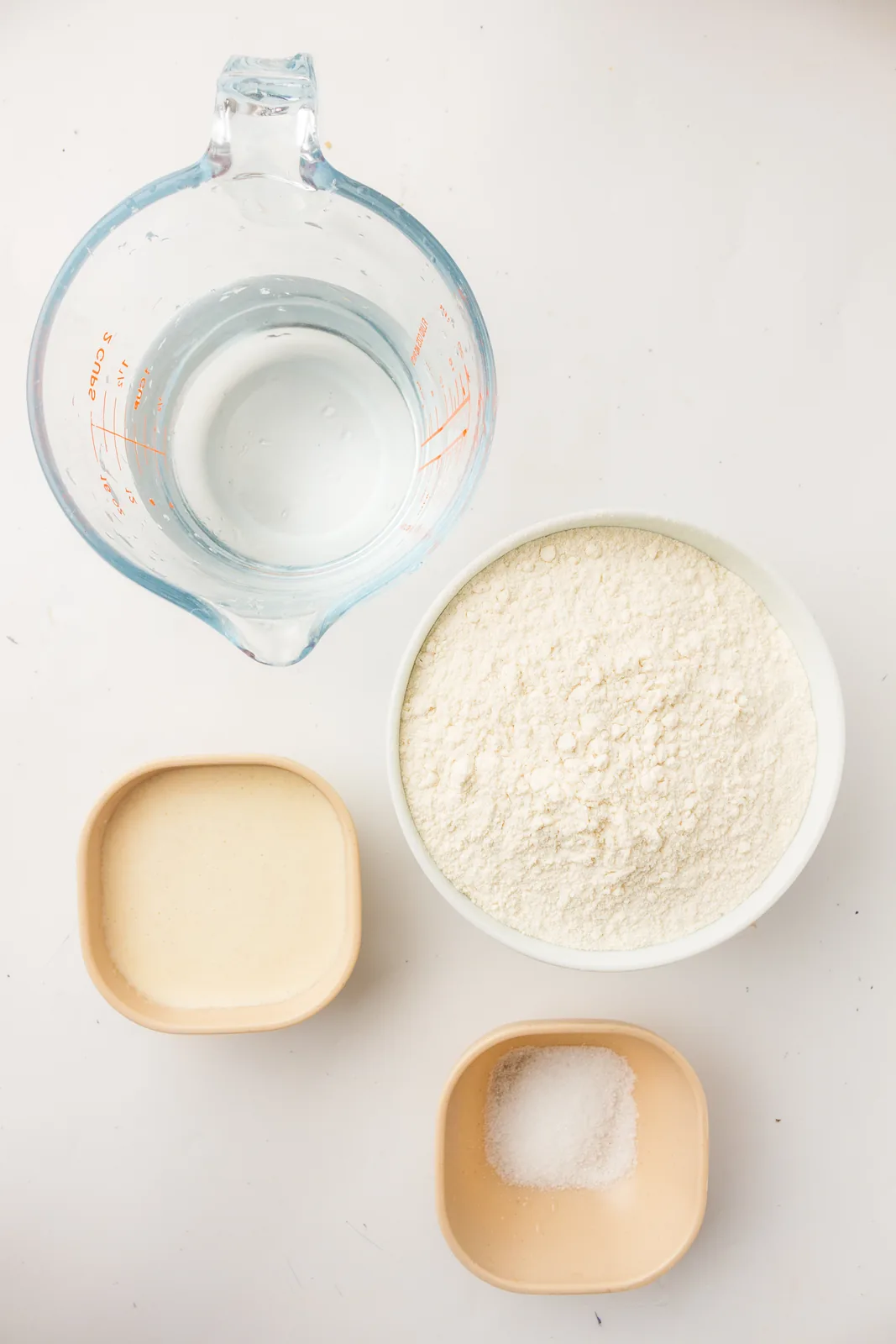
- Bread flour, 720 g. The higher protein content is what builds the gluten net that traps gas. All-purpose works, though the crumb will be softer and the rise a little shorter.
- Water, 380 g. Cool or lukewarm, never hot. Weigh it rather than measuring by volume, since a few grams changes the feel noticeably.
- Active starter, 140 g. It must be lively. Feed it four to six hours before you start and use it when it has roughly doubled and smells sweet rather than sharp.
- Fine sea salt, 14 g. Salt tightens the gluten and slows fermentation, so do not be tempted to cut it.
- Nothing else. No oil, no sugar, no commercial yeast. That is what makes it an artisan sourdough loaf rather than a soft sandwich bread.
Stretch and Folds Are What Give an Artisan Sourdough Loaf Its Structure
There is no kneading here. Instead you perform four sets of stretch and folds, spaced half an hour apart across the first two hours after the salt goes in.
The move is simple. Wet one hand, slide it under one side of the dough, lift until it stretches without tearing, and fold it over the centre. Turn the bowl a quarter and repeat until you have gone all the way round. That is one set, and it takes about twenty seconds.
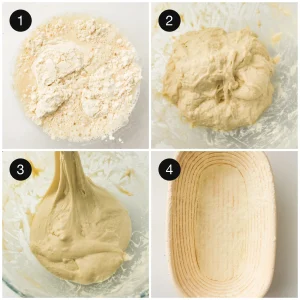
Each set lines up more gluten strands, so the dough goes from a shaggy, torn mess after the first set to something smooth and springy by the fourth. If it resists and tears, you are pulling too hard or too fast. Slow down and it cooperates.
How To Tell When Bulk Fermentation Is Done
Six to eight hours at room temperature is the guide, but the dough decides, not the clock. A warm kitchen might finish in five, and a cold one can take twelve, which is why the recipe suggests overnight in winter.
Look for a rise of about 50 to 75 percent rather than a full double. The surface should look domed and slightly glossy, and you should see a few bubbles at the edges where the dough meets the bowl. Temperature drives all of this, and ThermoWorks maps out how much faster fermentation runs as the kitchen warms up.
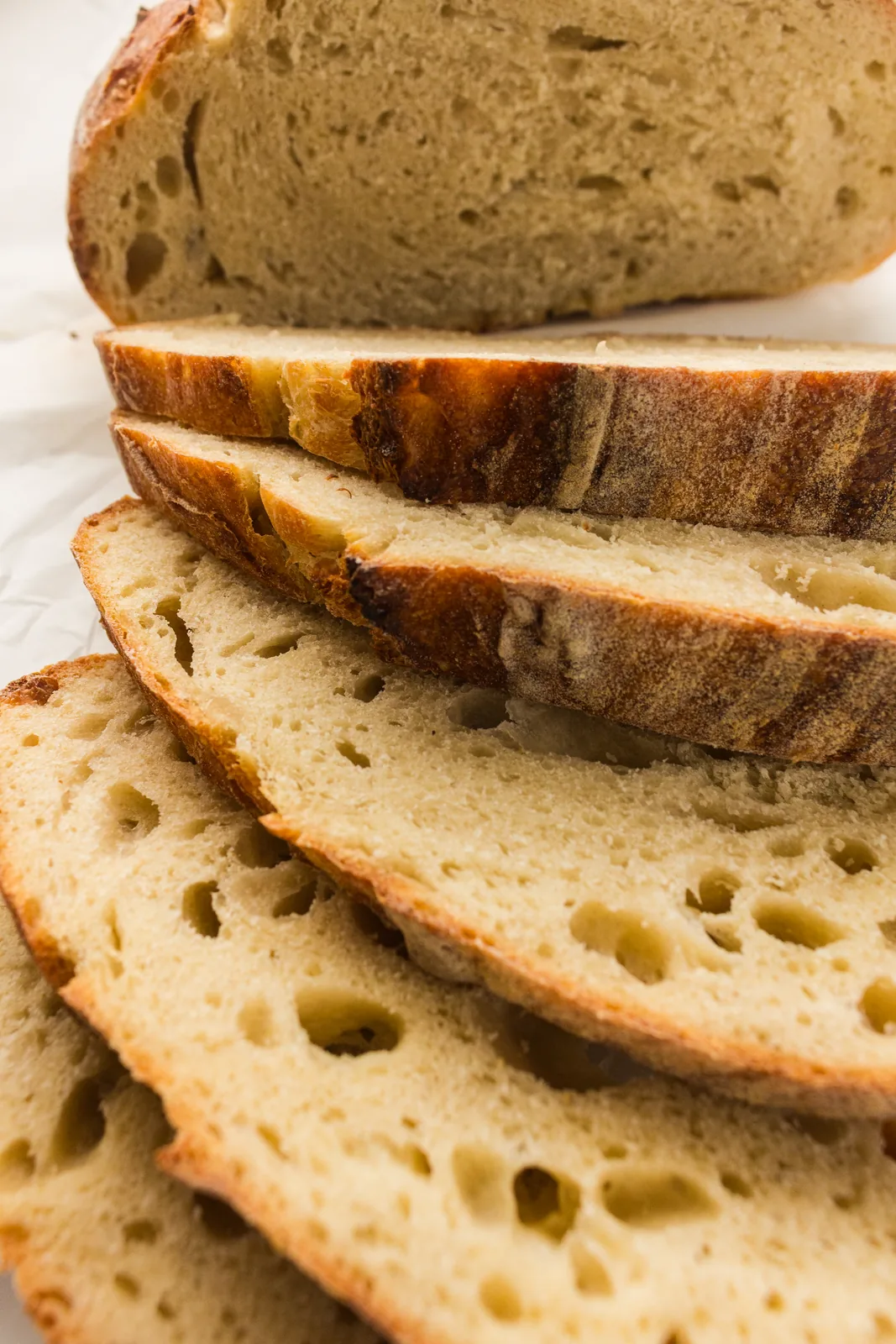
Underdone dough gives you a tight, gummy crumb. Overdone dough spreads into a flat disc when you turn it out. Between those two, there is a generous window where an artisan sourdough loaf comes out well, so aim for the middle and stop worrying.
How To Make an Artisan Sourdough Loaf
1. Mix flour and water. First combine the bread flour and water in a large bowl until no dry flour remains. It will look rough and shaggy, which is correct.
2. Rest for thirty minutes. Then cover the bowl and walk away. This rest lets the flour hydrate fully and makes everything afterwards easier.
3. Add starter and salt. Next work the active starter and the salt through the dough with wet hands until they disappear completely.
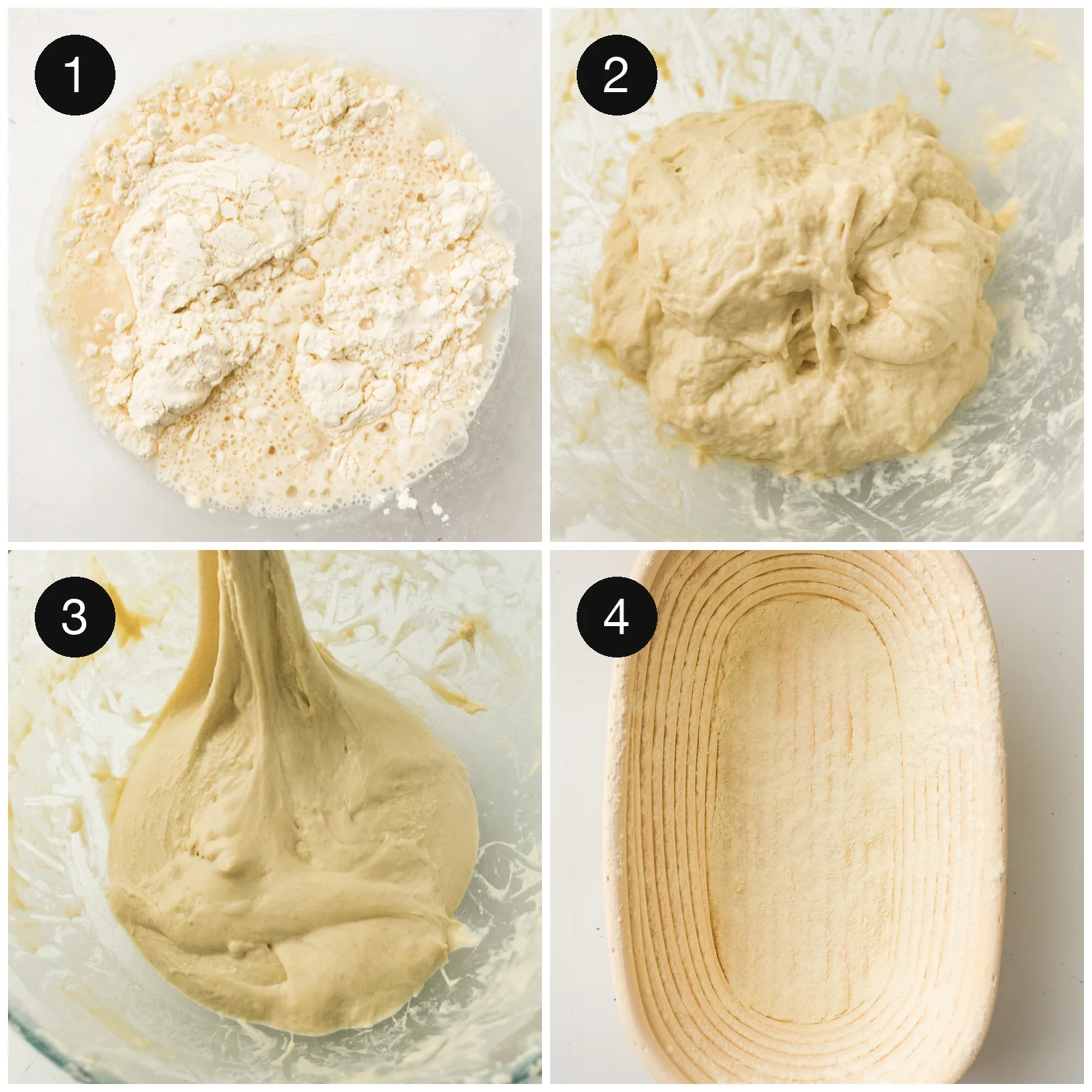
4. Stretch and fold four times. After that, do one set every thirty minutes for two hours. The dough tightens and smooths as you go.
5. Bulk ferment. Cover and leave it for six to eight hours, or overnight if the house is cold. Meanwhile it should rise and look airy.
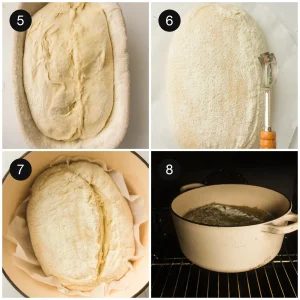
6. Shape a round. Turn it onto a lightly floured surface and pull the edges into the middle, then flip it seam side down and drag it towards you to build tension.
7. Proof in a basket. Then lower it seam side up into a floured banneton or a bowl lined with a floured cloth. One to two hours at room temperature, or overnight in the fridge for deeper flavour.
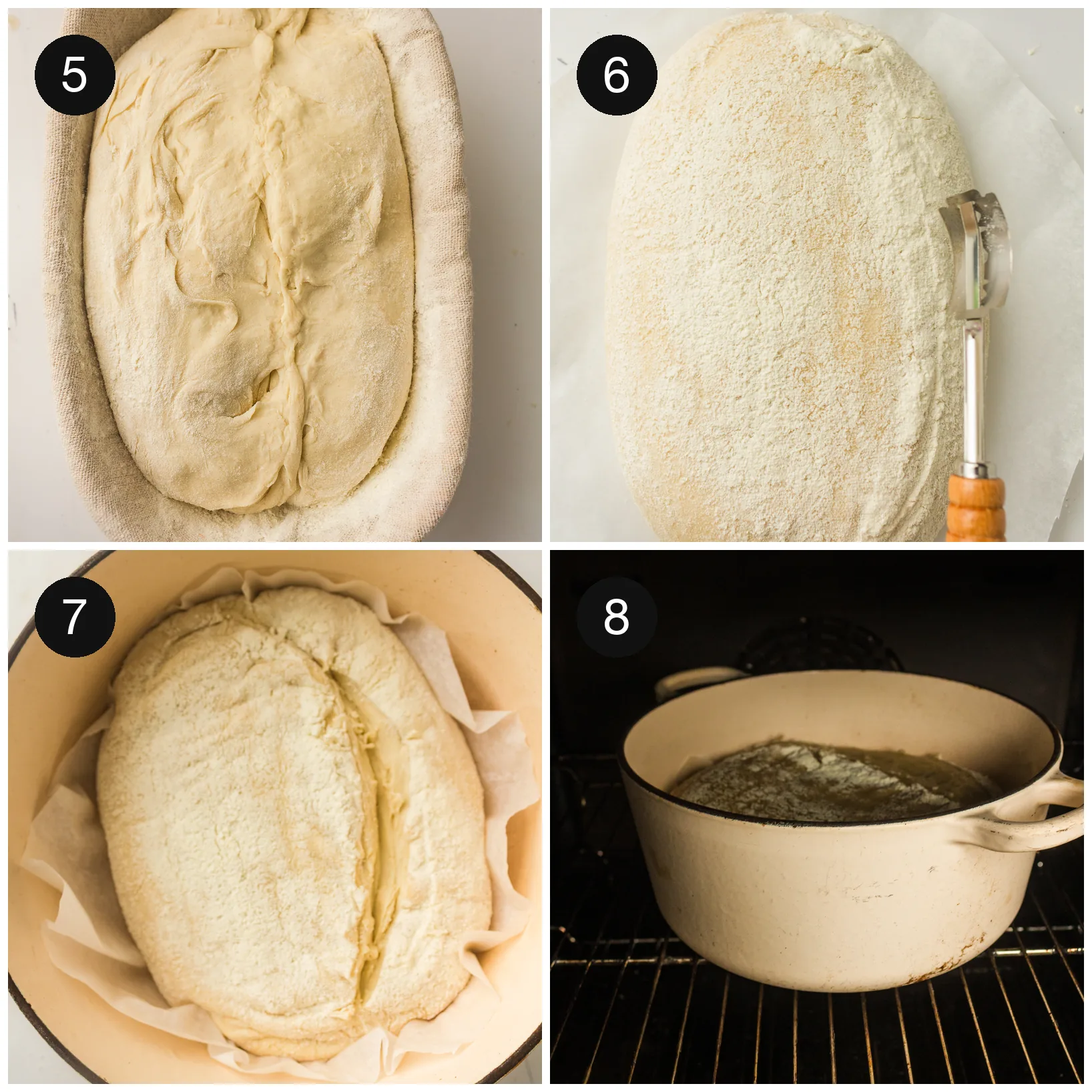
8. Heat the pot. Heat the oven to 465F with the Dutch oven inside for a full hour. The pot needs to be genuinely hot, not merely warm.
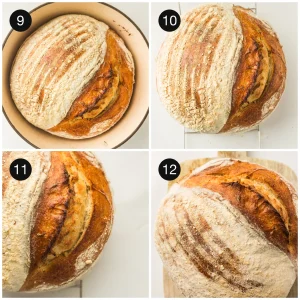
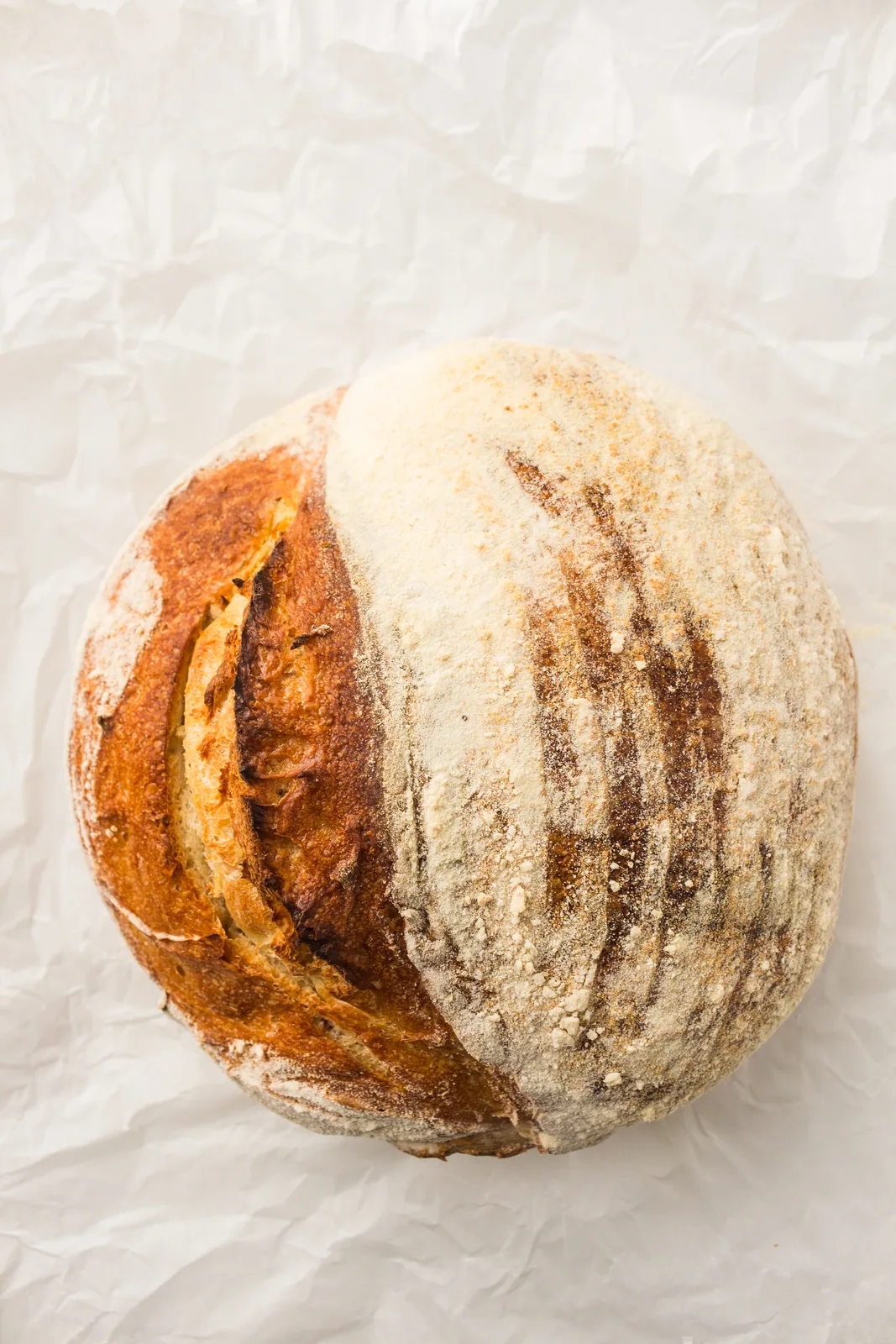
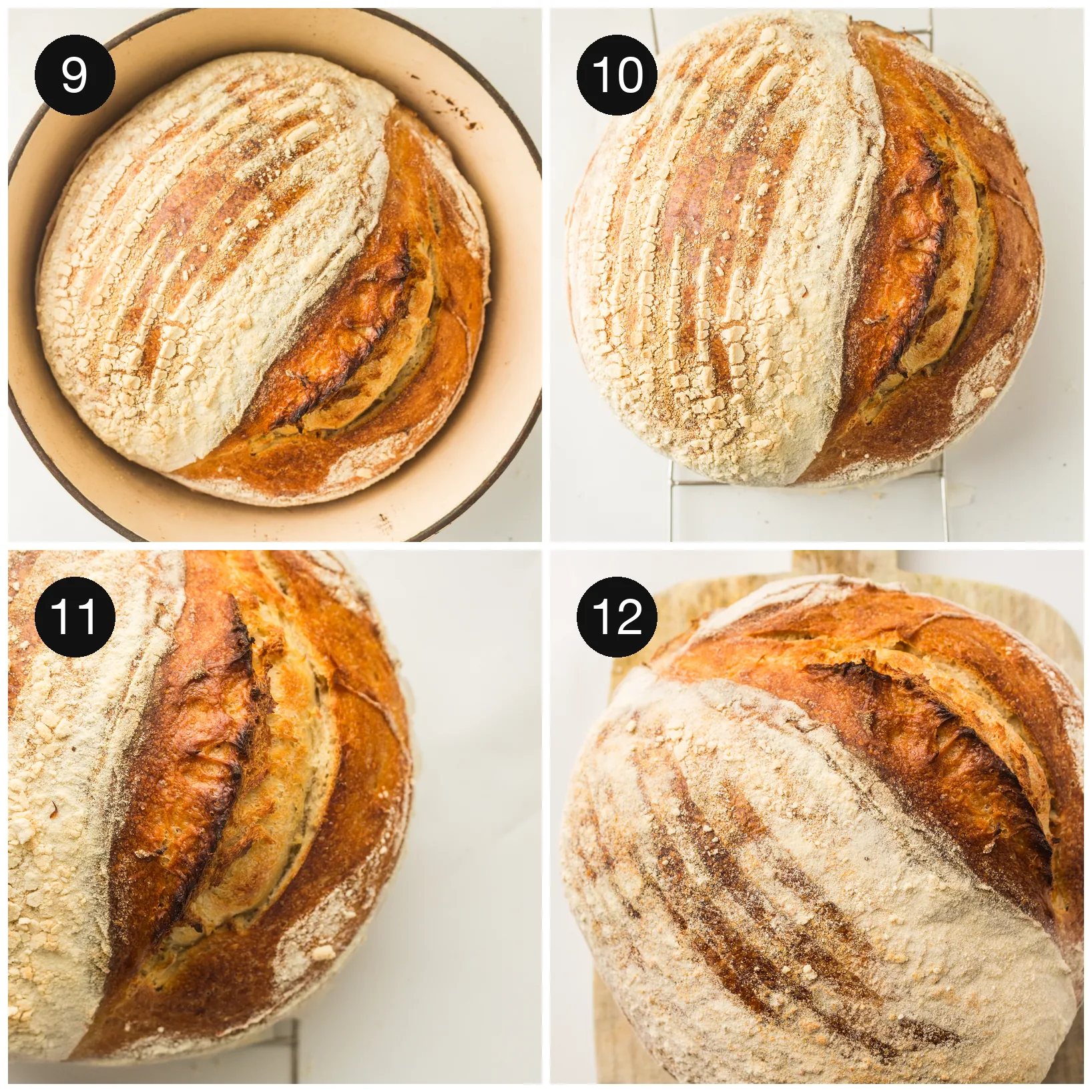
9. Score and bake. Turn the dough onto parchment, slash the top decisively with a blade, and lower it into the pot. Bake covered for 20 minutes, then uncovered for another 20 to 22 until deep brown.
10. Cool completely. Finally let it cool on a rack before slicing. Cutting it warm drags the crumb and turns it gummy, so give it at least two hours.
Why Is My Crumb Dense?
- The starter was not ready. This is the biggest cause by a distance. It should have doubled and be domed, not flat and past its peak.
- Bulk fermentation stopped early. A cold kitchen slows everything down, so judge by the dough, not by the recipe’s hours.
- Not enough tension at shaping. A slack round spreads outward instead of rising upward. Drag it across the worktop until the surface feels taut.
- The pot was not hot enough. Because oven spring happens in the first ten minutes, a lukewarm pot costs you all of it.
- You sliced it warm. The crumb is still setting as it cools, and an early cut makes it look denser than it is.
Tips for the Best Artisan Sourdough Loaf
- Weigh everything, including the water. Sourdough is one of the few places where cups genuinely let you down.
- Do the float test. A spoonful of ready starter floats in water, and a sunken one needs longer.
- Score with a single confident slash rather than several timid ones. Hesitation drags the blade.
- Rice flour in the banneton beats wheat flour. As a result the dough releases cleanly every time.
- If you like a darker crust, leave it uncovered for an extra three minutes and trust your eyes.
Storage and Refreshing
- Room temperature. Keep the artisan sourdough loaf cut side down on a board, or wrapped in a cloth or paper bag, for up to three days. Never in plastic, which softens the crust.
- Freezer. Slice it first, then freeze in a bag for two months and toast straight from frozen.
- Reviving day-three bread. Run the crust briefly under the tap, then bake at 350F for eight minutes. However odd that sounds, it works.
Variations and Substitutions
- Wholemeal. Swap 100 g of the bread flour for wholemeal and add 20 g more water. The fermentation is a bit faster.
- Olive and rosemary. Work a handful of chopped olives in during the last set of folds.
- A softer everyday bread. If you want something for lunchboxes rather than a crusty round, my bread machine brioche is the enriched opposite of this.
- Rolls instead. Divide the dough into twelve and bake for 22 minutes. My soft dinner rolls use the same shaping logic.
- Longer cold proof. Up to 24 hours in the fridge deepens the sour note. Fermented breads have a reasonable amount of research behind them, and Cleveland Clinic sorts the evidence from the hype.
What to Serve With This Bread
An artisan sourdough loaf with salted butter on a warm slice needs no help at all. Beyond that, it is the bread I want next to soup, because the crust holds up to dunking instead of falling apart.
A thick spread of homemade cream cheese turns a slice into lunch. Any leftovers go one of two ways here, either into cheesy garlic bread under the grill, or cubed and dried for croutons.
Frequently Asked Questions
Starter and Fermentation
How do I know my starter is ready?
It should have roughly doubled since feeding, look domed rather than sunken, and float when you drop a spoonful into water.
Can I cold ferment the dough overnight?
Yes, and it improves both flavour and handling. Shape it, put it in the basket, and refrigerate for up to 24 hours before baking.
Can I use all-purpose flour?
You can. Expect a slightly softer crumb and a little less rise, since bread flour has more protein to build structure with.
How long does the whole process take?
An artisan sourdough loaf takes about eleven to thirteen hours, most of it unattended. Roughly twenty minutes of that is actual hands-on work.
Baking and Storing
Why bake in a Dutch oven?
The lid traps the steam coming off the dough, which keeps the crust soft long enough for the bread to expand fully before it sets.
What if I do not have one?
Bake on a preheated tray with a metal dish of boiling water on the shelf below. The crust will be a little less dramatic but still good.
How should I store it?
Wrapped in a cloth or paper bag at room temperature for three days, or sliced and frozen for two months. Avoid the fridge, which stales bread quickly.
Ingredients
- 720 g bread flour about 5 3/4 cups
- 380 g water about 1 2/3 cups, cool or lukewarm
- 140 g active sourdough starter bubbly and roughly doubled
- 14 g fine sea salt about 2 1/2 teaspoons
Instructions
- In a large mixing bowl combine the bread flour and water. Mix until all the flour is hydrated and a shaggy dough forms.

- Cover the bowl and let the dough rest for about 30 minutes.
- Add the active sourdough starter and salt to the dough. Mix thoroughly until fully incorporated.
- Over the next 2 hours perform stretch and folds every 30 minutes. Gently stretch one side of the dough upward and fold it over the centre, then rotate the bowl and repeat until all sides have been folded.
- Cover the dough and allow it to bulk ferment at room temperature for about 6 to 8 hours, preferably overnight if your house is cold, or until the dough has risen and looks airy.
- Turn the dough onto a lightly floured surface and shape it into a round loaf.
- Place the shaped dough seam side up into a floured proofing basket or a bowl lined with a floured towel.
- Cover and allow the dough to proof for 1 to 2 hours at room temperature, or refrigerate overnight for deeper flavour.
- Preheat the oven to 465°F (240°C) with a Dutch oven inside for a full hour.
- Turn the dough onto parchment paper, score the top with a sharp blade, and transfer it into the hot Dutch oven.
- Bake covered for 20 minutes. Remove the lid and bake for another 20 to 22 minutes until the crust is deep golden.
- Remove the loaf from the oven and allow it to cool completely on a wire rack before slicing.