 Bity
Bity
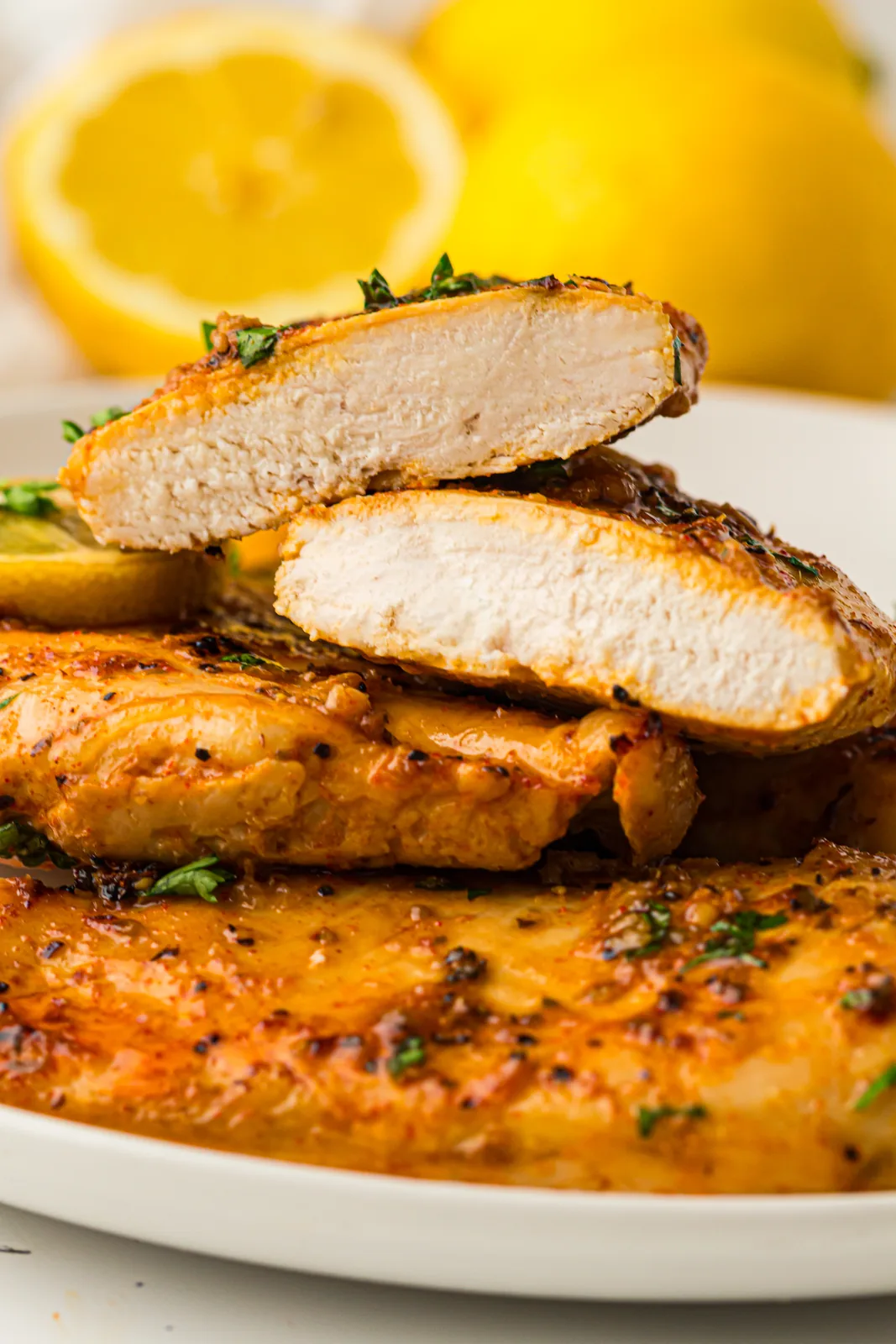
The lemon goes on before the oven, not after. Baked lemon chicken only tastes properly lemony when the juice and the zest sit against the meat while it cooks, because that is when the acid gets into the surface instead of running off a finished breast.
I make this on the sort of Tuesday when nobody has decided what dinner is. Ten minutes of prep, 25 in a hot oven, and the pan fills with a thin garlicky sauce you spoon back over the top.

Quick Breakdown
Why You’ll Love This Baked Lemon Chicken
- Nine ingredients. Chicken, oil, garlic, a lemon, salt, pepper, oregano, paprika, parsley.
- One dish. The marinade is whisked in a bowl and poured straight over.
- It stays juicy. Pounding the breasts flat is the whole trick.
- The sauce makes itself. Juice, oil and chicken fat emulsify in the pan while it bakes.
- Good cold. Sliced over salad the next day it is genuinely better than most meal prep.
Ingredient Notes
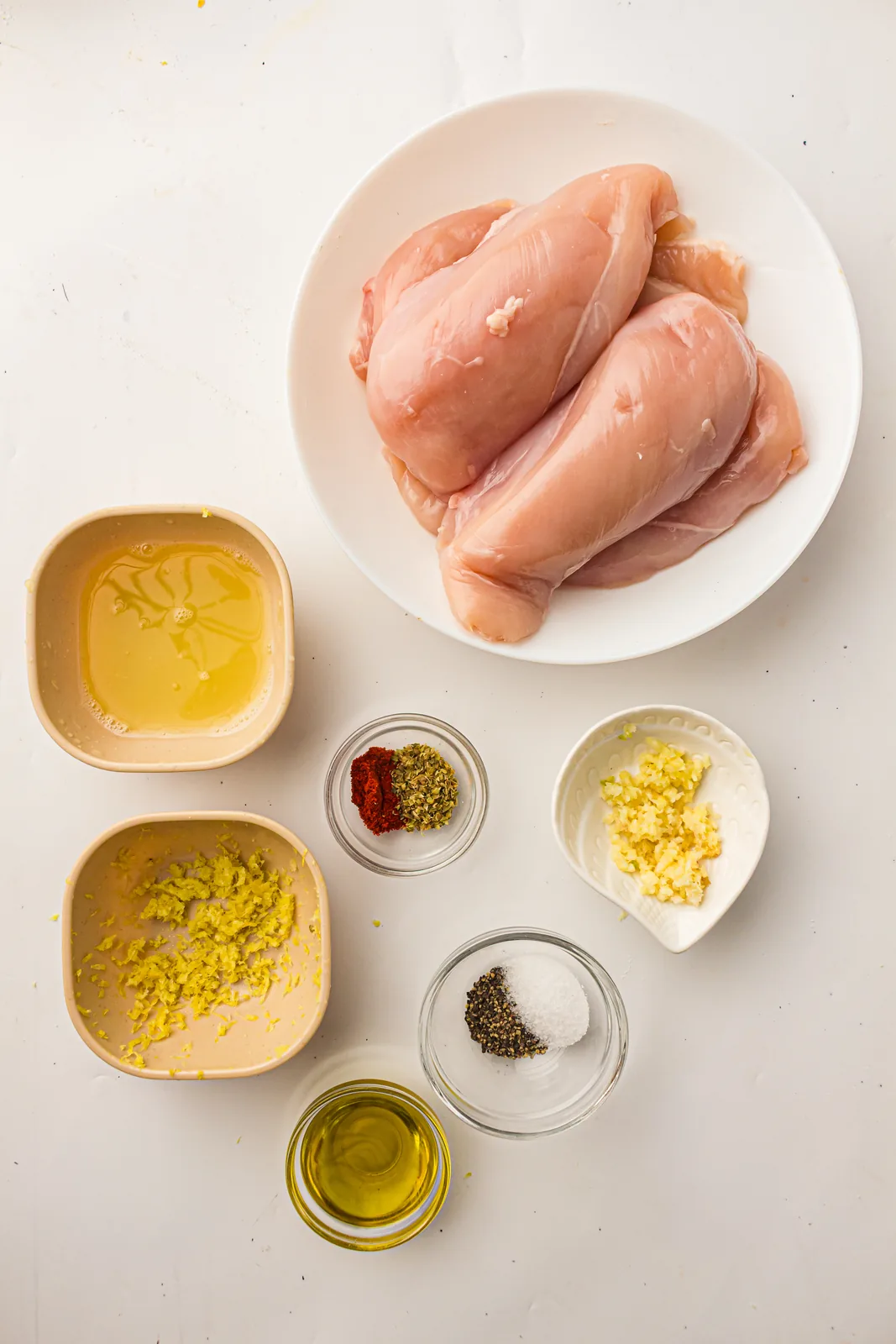
- Chicken breasts. Four boneless and skinless. Buy them roughly the same size or the small one is leather by the time the big one is safe.
- Olive oil. Two tablespoons. It carries the garlic and the dried herbs, which are fat soluble and taste of very little in juice alone.
- Garlic. Three cloves, minced. However, keep it in the liquid rather than sitting proud on top, because exposed garlic catches at 400°F.
- Lemon. The zest of one and a quarter cup of juice, which is about one and a half lemons. Zest carries the perfume, juice carries the sharpness, and you want both.
- Dried oregano and paprika. A teaspoon and half a teaspoon. Paprika is doing colour work as much as flavour work.
- Salt and black pepper. A teaspoon and half a teaspoon. Season the marinade, not the meat, so it spreads evenly.
Of course, the thermometer matters more than the clock. The Academy of Nutrition and Dietetics is blunt about it, noting that all poultry needs a minimum internal temperature of 165°F and that colour and texture are not a reliable guide to doneness. Check the thickest part and stop there.
Why Baked Lemon Chicken Dries Out
A chicken breast is not one thickness. The fat end can be an inch and a half deep while the tail end is barely half an inch, so the thin end passes 165°F several minutes before the middle gets there. That gap is where dryness lives, and no amount of marinade fixes it.
Pounding the breast to an even depth closes the gap. Still, do it gently, between two sheets of parchment, with the flat of a rolling pin rather than a mallet. You are levelling it, not tenderising it.
| Breast thickness | Time at 400°F | What you get |
|---|---|---|
| Even, about 3/4 inch | 20 to 22 minutes | Juicy the whole way through |
| Even, about 1 inch | 23 to 25 minutes | Juicy, slightly firmer edge |
| Untouched, tapered | 25 minutes plus | Dry tail, damp middle |
The second half of the problem is carryover. Meat keeps cooking after it leaves the oven, and a breast pulled at exactly 165°F will drift up another two or three degrees while it sits. Because of that, I take mine out at 162°F and let the resting time finish the job. Five minutes under a loose sheet of foil is enough, and the juices settle back into the fibres instead of flooding the board the moment a knife goes in.
How To Make Baked Lemon Chicken
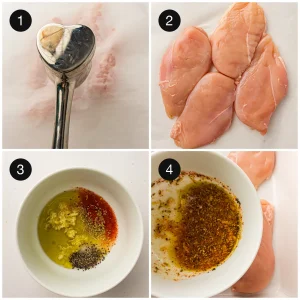
1. Heat the oven and level the meat. First, set the oven to 400°F. Put each breast between two sheets of parchment and press it out to an even thickness with a rolling pin.
2. Whisk the marinade. Next, combine the olive oil, minced garlic, lemon zest, lemon juice, salt, black pepper, oregano and paprika in a small bowl until it looks cloudy and thickened.
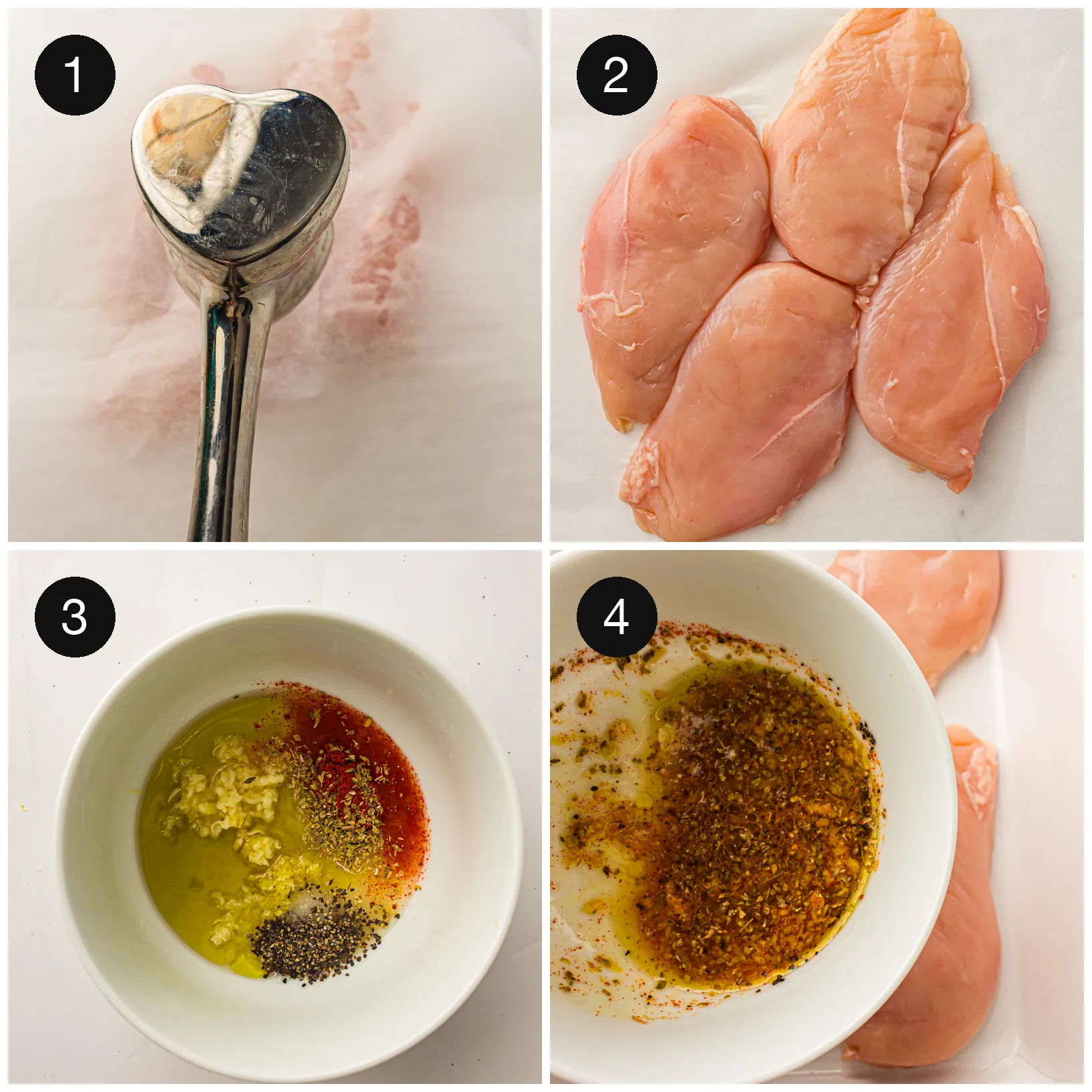
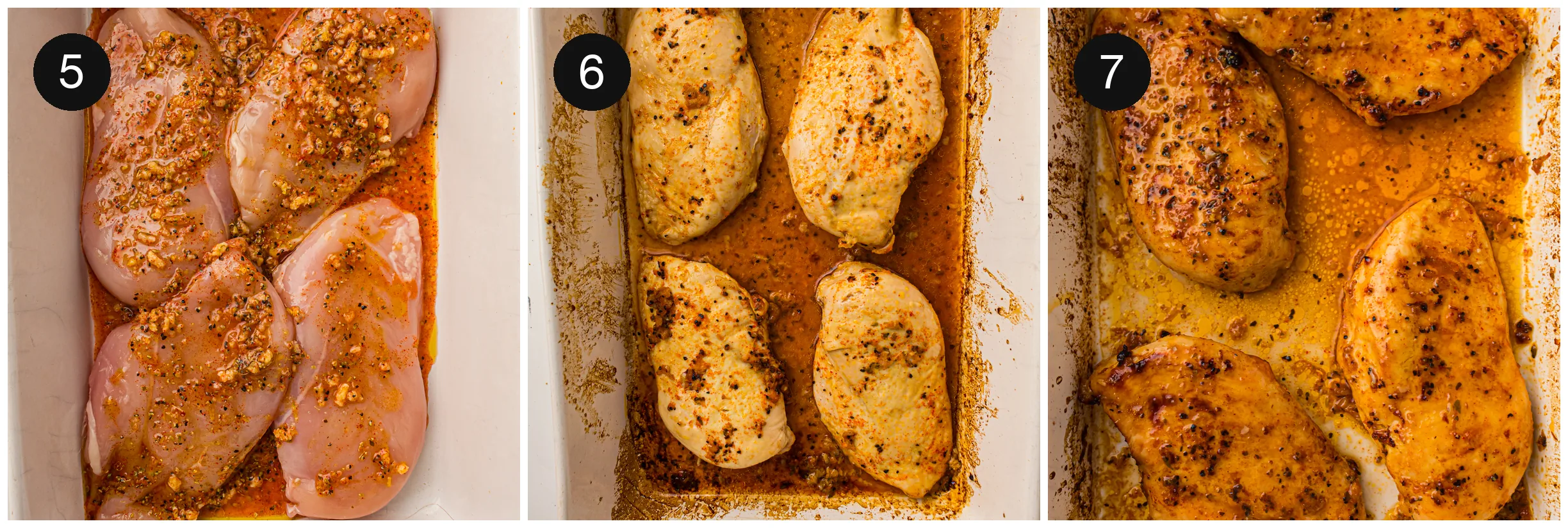
3. Coat and arrange. Then lay the breasts in a baking dish in a single layer and pour the mixture evenly over them. Turn each piece once so both sides are wet.
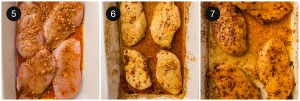
4. Bake uncovered. After that, bake for 20 to 25 minutes, until a thermometer in the thickest part reads 165°F. Leaving it uncovered lets the surface colour instead of steaming.
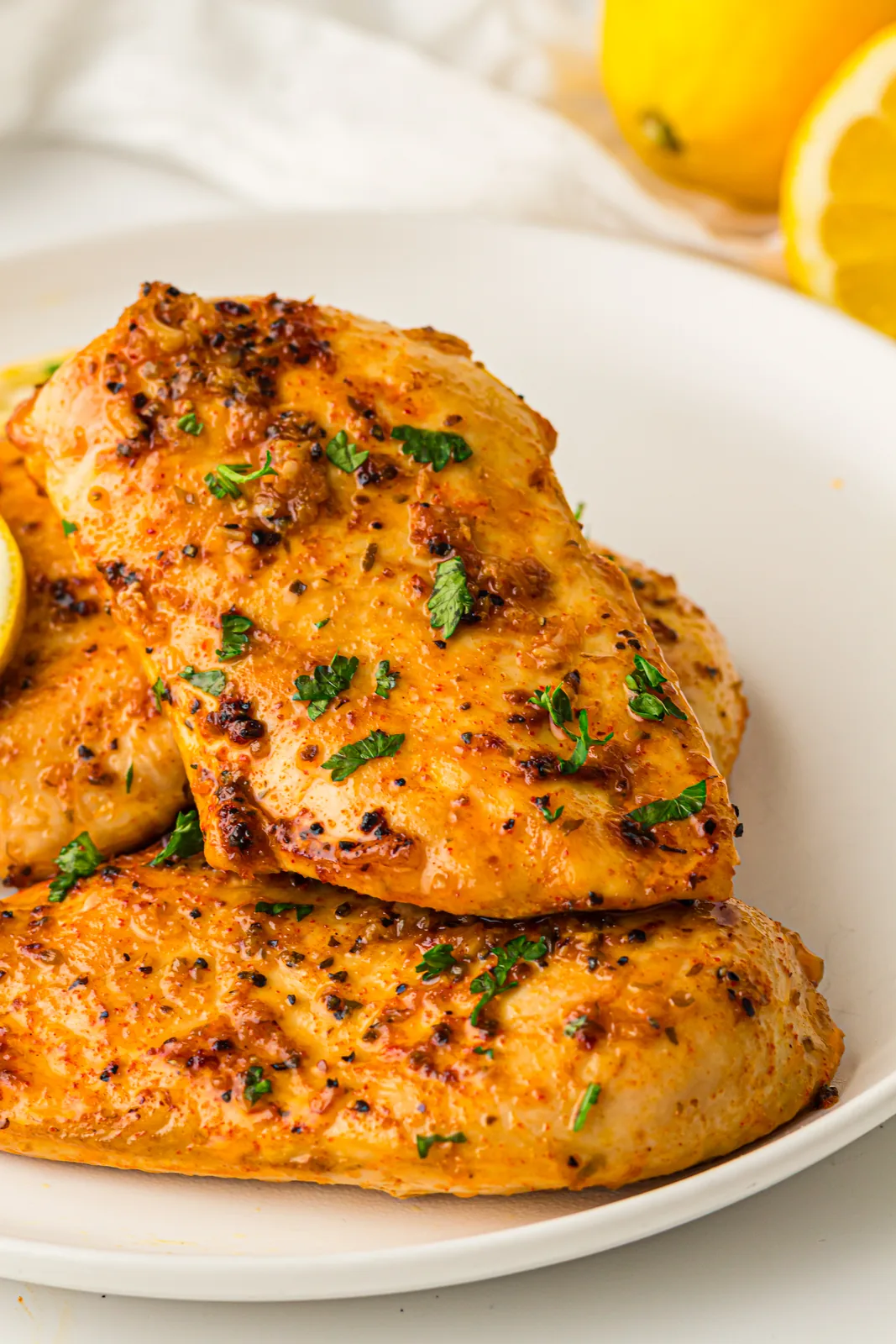
5. Spoon and rest. Finally, spoon the pan juices back over the meat, scatter parsley and lemon slices on top, and leave it five minutes before slicing.
Biggest Mistakes to Avoid
- Marinating overnight. Citrus keeps working. Past about eight hours the acid turns the surface chalky and slightly opaque.
- Covering the dish with foil. That traps steam, so you poach the chicken instead of roasting it and lose all the colour.
- Using bottled juice. It tastes flat and faintly bitter. One real lemon costs pennies and changes the dish.
- Cooking straight from the fridge. Fifteen minutes on the counter first evens out the cooking noticeably.
- Slicing immediately. The juices run onto the board rather than staying in the meat.
- Crowding the dish. Breasts touching each other steam at the join and stay pale there.
Tips for the Best Baked Lemon Chicken
- Zest the lemon before you juice it. Trying it the other way round is a small daily tragedy.
- Meanwhile, warm the plates. This is a dish that goes lukewarm quickly because the sauce is thin.
- If the pan juices look thin at the end, pour them into a small pan and bubble them for a minute.
- A pinch of sugar in the marinade rounds off a very sharp lemon without making it sweet.
- Baked lemon chicken browns better in a metal or ceramic dish than in glass, which insulates the base.
- Broil for the last two minutes if you want more colour, but watch it, because the garlic is right there.
Storage and Reheating
- Fridge. Up to four days in an airtight container. Keep the pan juices with it rather than draining them off.
- Reheating. Cover loosely and warm at 300°F for eight to ten minutes, spooning the juices over halfway.
- Microwave. Works at half power with a splash of water, though the texture goes slightly rubbery.
- Freezer. Up to two months, cooked and sliced, with its sauce. Thaw in the fridge overnight.
- Make ahead. The chicken can sit in the lemon mixture in the fridge for up to eight hours before baking.
Variations and Substitutions
- Thighs. Boneless skinless thighs work well and want an extra four or five minutes. They are harder to overcook, so they suit a distracted cook. If you like them, try baked boneless chicken thighs next.
- Herby. Swap the oregano for thyme, or stir a handful of chopped fresh dill through the pan juices at the end.
- Creamy. Two tablespoons of double cream stirred into the hot juices turns them into a proper sauce.
- Sheet pan. Add halved baby potatoes around the chicken and give them a ten minute head start.
- Air fryer. The same marinade suits air fryer chicken breast at 380°F for about 14 minutes.
What to Serve With It
Because the sauce is thin and sharp, it wants something that will soak it up. Rice, orzo or mashed potato all work. For vegetables, garlic butter green beans are the obvious partner, and in summer a bowl of classic potato salad alongside makes it feel like lunch rather than dinner. Instead of a starch, a plain green salad with a sharp dressing also works, since the chicken is already doing the acidic heavy lifting.
Frequently Asked Questions
Ingredients and Method
Can I use chicken thighs instead?
Yes. Boneless, skinless thighs work well and usually need an extra few minutes of cooking time. Because they carry more fat, they also forgive a slightly longer bake.
Do I need to pound the chicken?
Pounding helps the chicken cook evenly and stay juicy. That said, it can be skipped if the breasts are already even in thickness.
Can I marinate this ahead of time?
Yes. The chicken can be marinated in the lemon mixture for up to eight hours in the refrigerator. Any longer and the acid starts to change the texture of the surface.
Is bottled lemon juice acceptable?
It works in an emergency, but it tastes duller and slightly metallic. Because there are so few ingredients here, the fresh juice is doing a lot of the flavour.
Can I add vegetables to the same dish?
Yes, as long as they are cut small. Halved baby potatoes, courgette or peppers all work, though the potatoes need a ten minute head start in the oven before the chicken joins them.
Storage and Troubleshooting
Why did mine come out dry?
Almost always uneven thickness or too long in the oven. Baked lemon chicken is done the moment the thickest part reads 165°F, and it keeps rising a couple of degrees off the heat.
Why is there so much liquid in the dish?
That is normal and it is the sauce. If it looks too thin, pour it into a small pan and reduce it for a minute over high heat.
How long do leftovers keep?
Four days in the fridge in a sealed container. Store the meat in its juices so it does not dry out while it sits.
Can I double this for a crowd?
Yes, but use two dishes rather than one crowded one. Pieces packed tightly together steam where they touch and never brown properly.
Can I freeze the cooked chicken?
Yes, for up to two months. Slice it first, freeze it in its pan juices, and thaw it overnight in the fridge so the meat rehydrates in the sauce rather than drying out.
Ingredients
Chicken
- 4 boneless, skinless chicken breasts
- 2 tablespoons olive oil
- 3 cloves garlic minced
- 1 lemon zest only
- 1/4 cup fresh lemon juice
- 1 teaspoon salt
- 1/2 teaspoon black pepper
- 1 teaspoon dried oregano
- 1/2 teaspoon paprika
- fresh parsley and lemon slices to garnish
Instructions
- Preheat the oven to 400°F (200°C).
- Place the chicken breasts between two sheets of parchment paper and lightly pound them to an even thickness.

- Arrange the chicken in a baking dish in a single layer.
- In a small bowl, whisk together the olive oil, garlic, lemon zest, lemon juice, salt, black pepper, oregano and paprika.
- Pour the mixture evenly over the chicken breasts, turning each piece once so both sides are coated.

- Bake uncovered for 20 to 25 minutes, until the chicken is cooked through and reaches an internal temperature of 165°F (74°C).
- Spoon the pan juices over the chicken and rest for 5 minutes before serving.
- Garnish with fresh parsley and lemon slices.