
 Bity
Bity
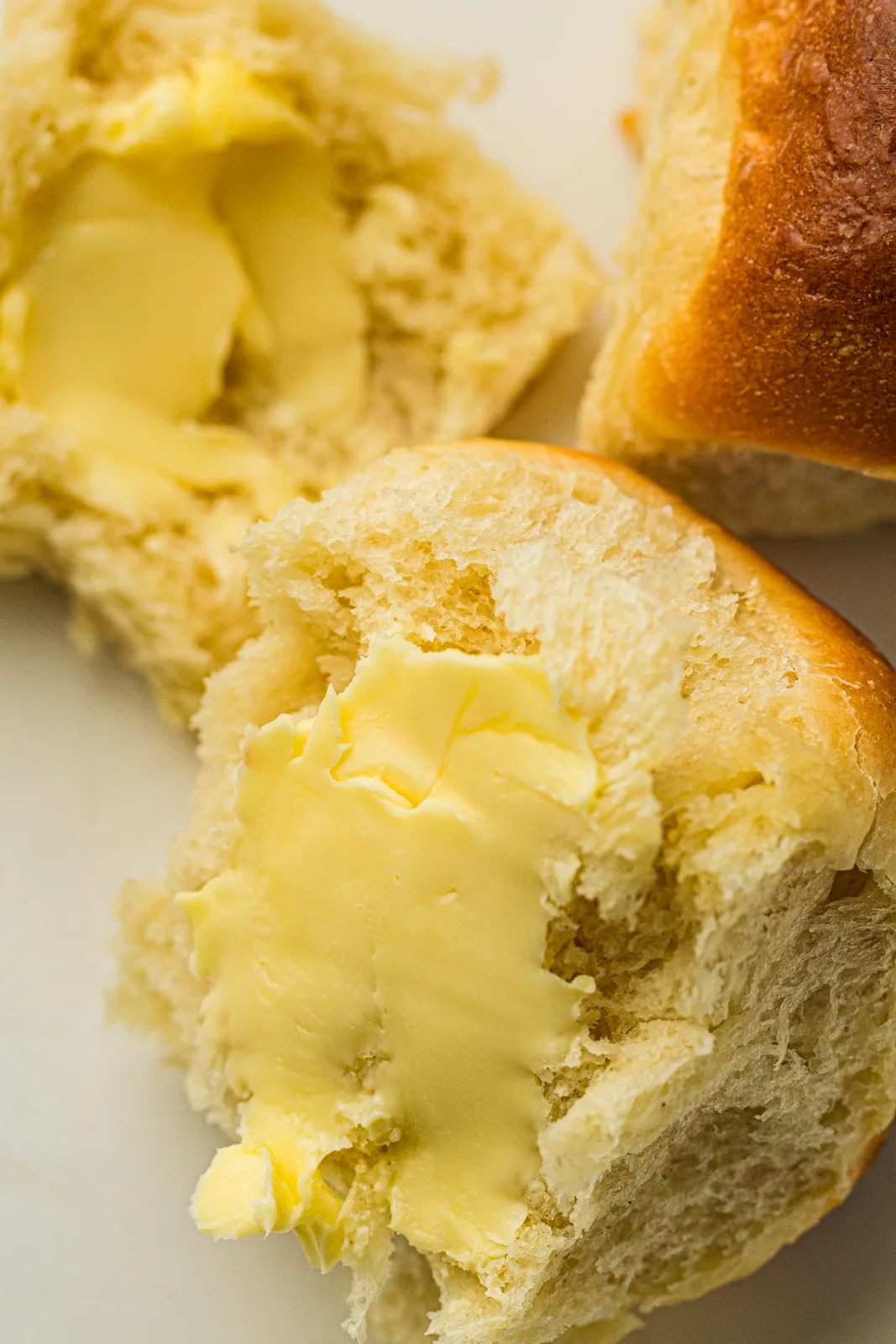
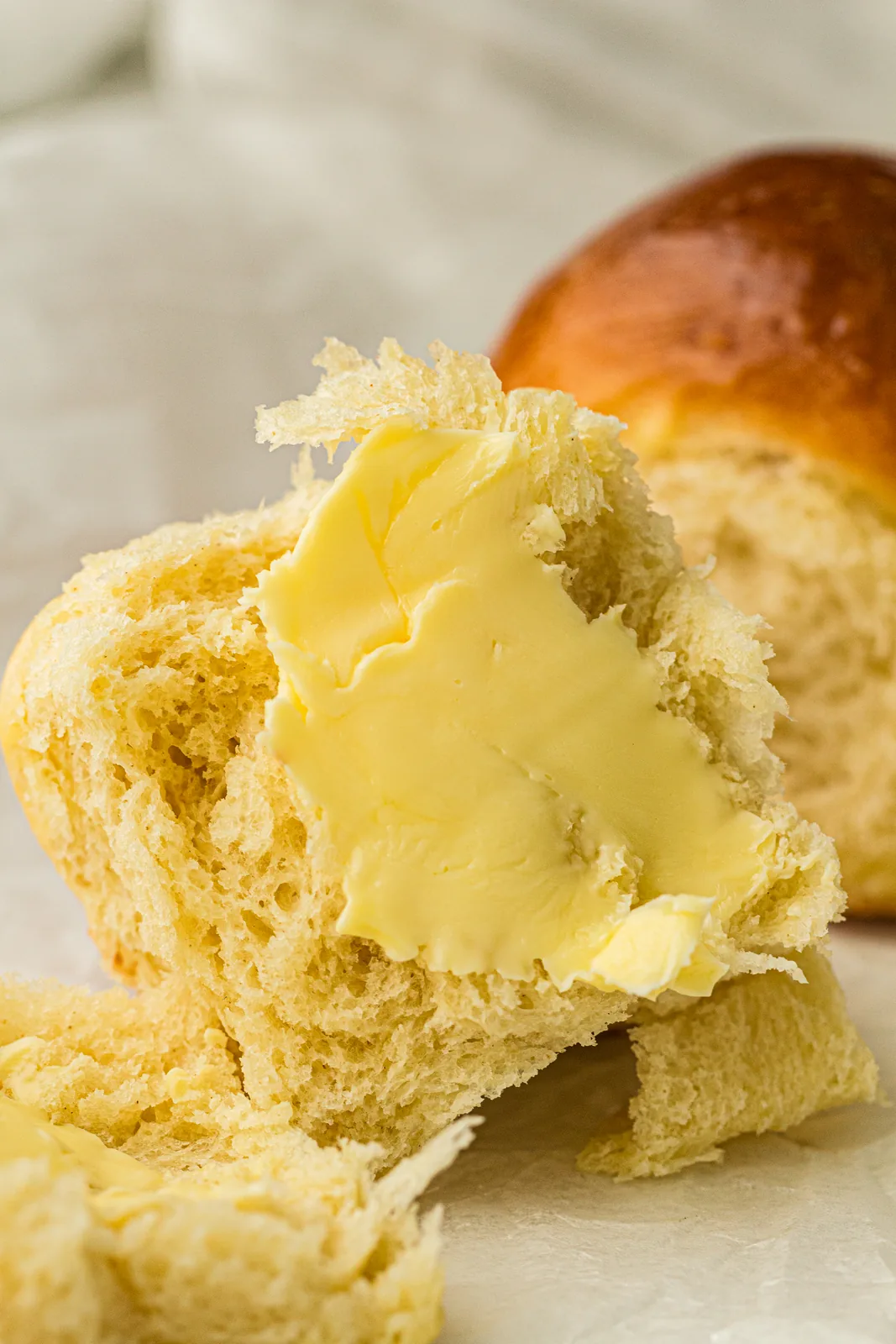
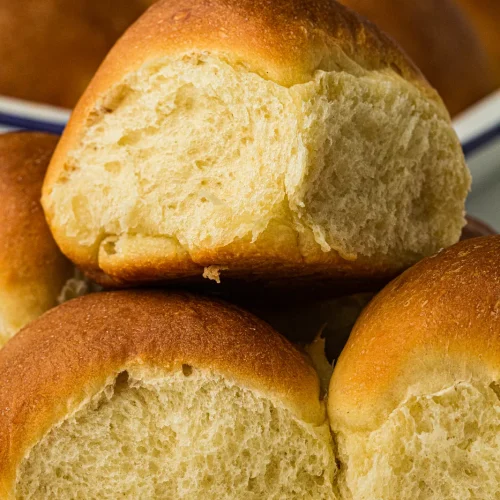
If you have ever wanted to pull a pan of soft, golden dinner rolls out of your own oven, this is the recipe that finally makes it feel easy. The crumb is pillowy, the tops are buttery, and they tear apart in soft little clouds.
I grew up thinking homemade rolls were a special-occasion project, the kind of thing you only attempt at Thanksgiving with a nervous eye on the clock. Then I started letting my bread machine do the kneading, and everything changed. Now I make these on ordinary weeknights, and honestly the smell alone is worth it.

Quick Breakdown
Why You’ll Love These Dinner Rolls
- Two ways to make them. Let the bread machine handle the dough, or knead by hand. Both land in the same soft, fluffy place.
- Simple pantry ingredients. Milk, butter, an egg, sugar, flour, and yeast. Nothing you have to hunt for.
- Reliably soft. The enriched dough, with butter and egg, stays tender for days instead of turning into hockey pucks by morning.
- Freezer friendly. Bake a double batch and stash some away for the next roast dinner or holiday spread.
Ingredient Notes
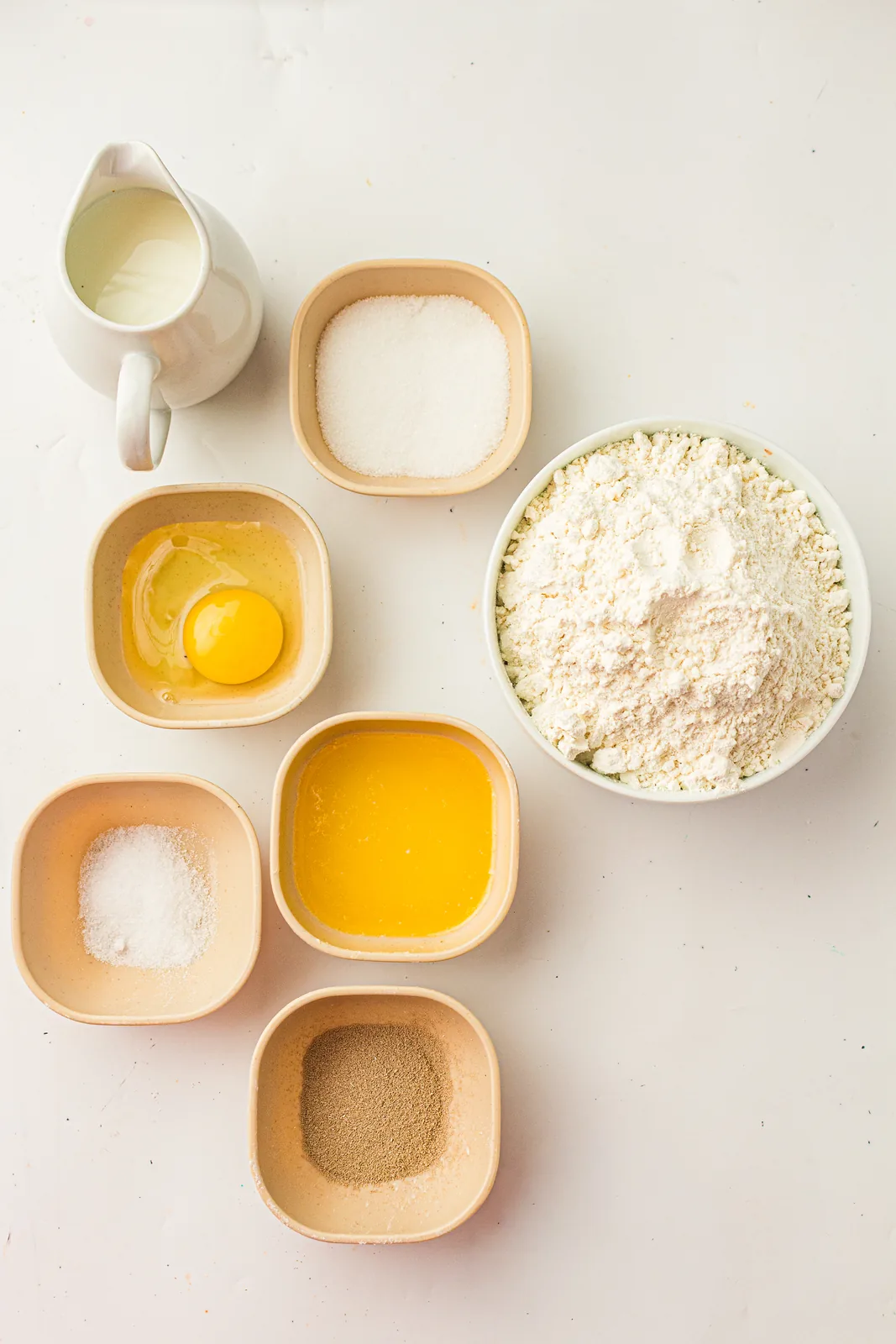
- Warm milk. Warm, not hot. Think comfortably warm bath, around 110°F. Too hot and you will kill the yeast before it gets going.
- Instant yeast. One packet, added on top of the flour so it does not touch the liquid too early in the machine. Active dry works too; see the tips below.
- Butter and egg. These are what make an enriched roll soft and rich rather than lean and chewy like a baguette. Melt the butter and let it cool so it does not shock the yeast.
- Plain flour. Standard all-purpose flour gives a tender crumb. Bread flour works if you want a touch more chew, since it carries more gluten; here is a quick look at how strong flour differs.
- A little sugar. Just enough to feed the yeast and give the tops a gentle golden colour.
Bread Machine Dinner Rolls (the Hands-Off Way)
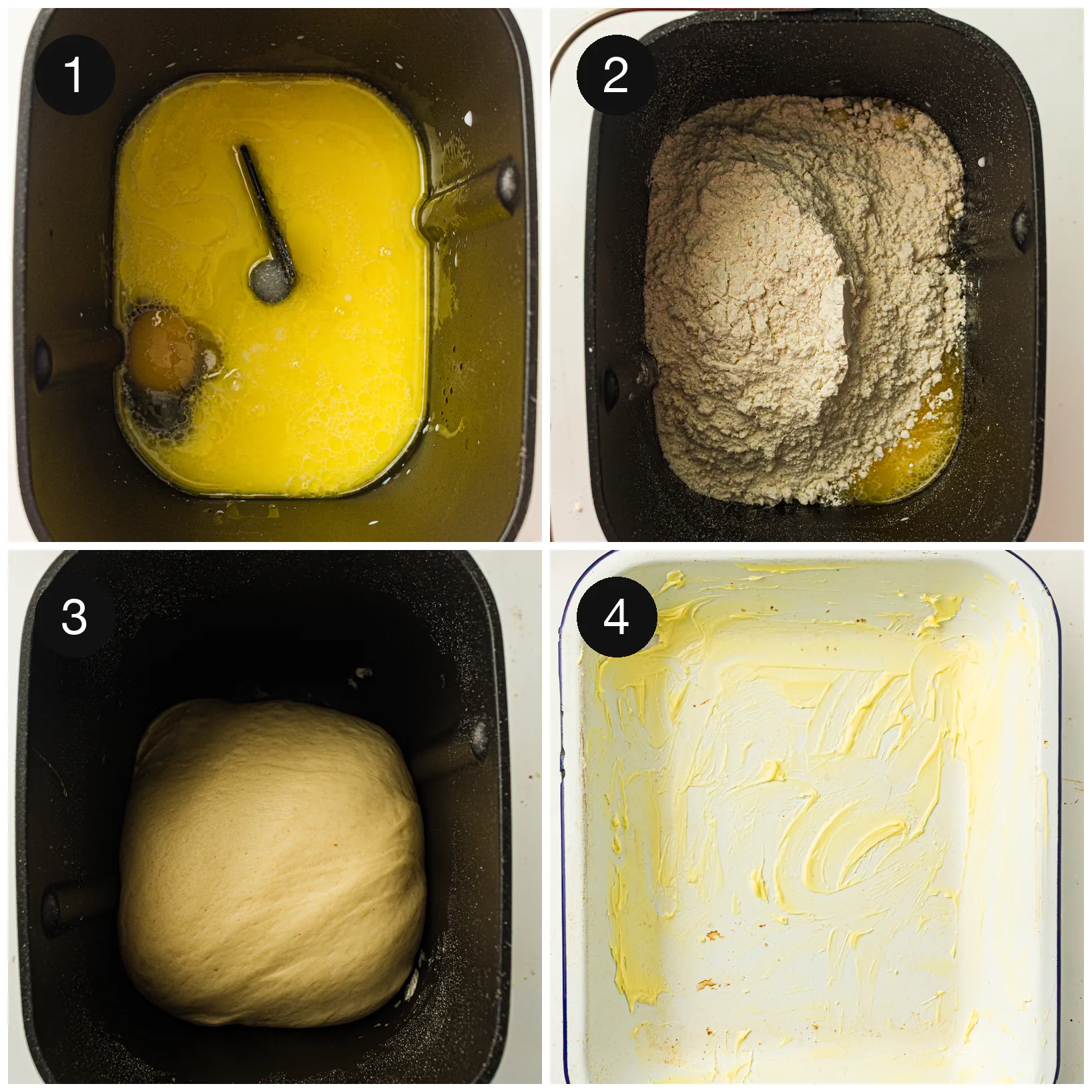
This is my everyday method, because the machine does the kneading while I get on with the rest of dinner. Add everything in the order the machine likes: wet first, then the dry, with the yeast perched on top of the flour so it stays dry until mixing starts.
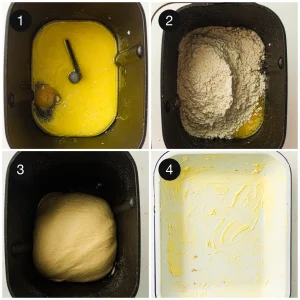
Add the milk, egg, melted butter, sugar, and salt, then the flour, and finally the yeast on top. Select the Dough cycle and walk away. When it beeps, you have a soft, risen dough ready to shape. From there you just divide, shape, do a short second rise, and bake. It really is that simple.
How To Make Dinner Rolls
1. Make the dough. First, add the ingredients to your bread machine in order and run the Dough cycle. Making them by hand? Combine warm milk, yeast, and sugar, let it foam for five to ten minutes, then mix in the egg, butter, and salt, add the flour, and knead until smooth and elastic. Let it rise until doubled, about an hour.
2. Divide and shape. Next, turn the dough onto a lightly floured surface and divide it into 12 equal pieces. Flatten each one, pull the edges into the centre, flip it seam-side down, and roll it under a cupped palm to build surface tension. That little roll is the secret to a smooth, round top.
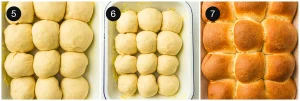
3. Second rise. Then nestle the rolls into a buttered baking dish so they just touch, cover loosely, and let them rise 30 to 45 minutes until puffy. Crowding them a little is a good thing; it gives you those soft, pull-apart sides.
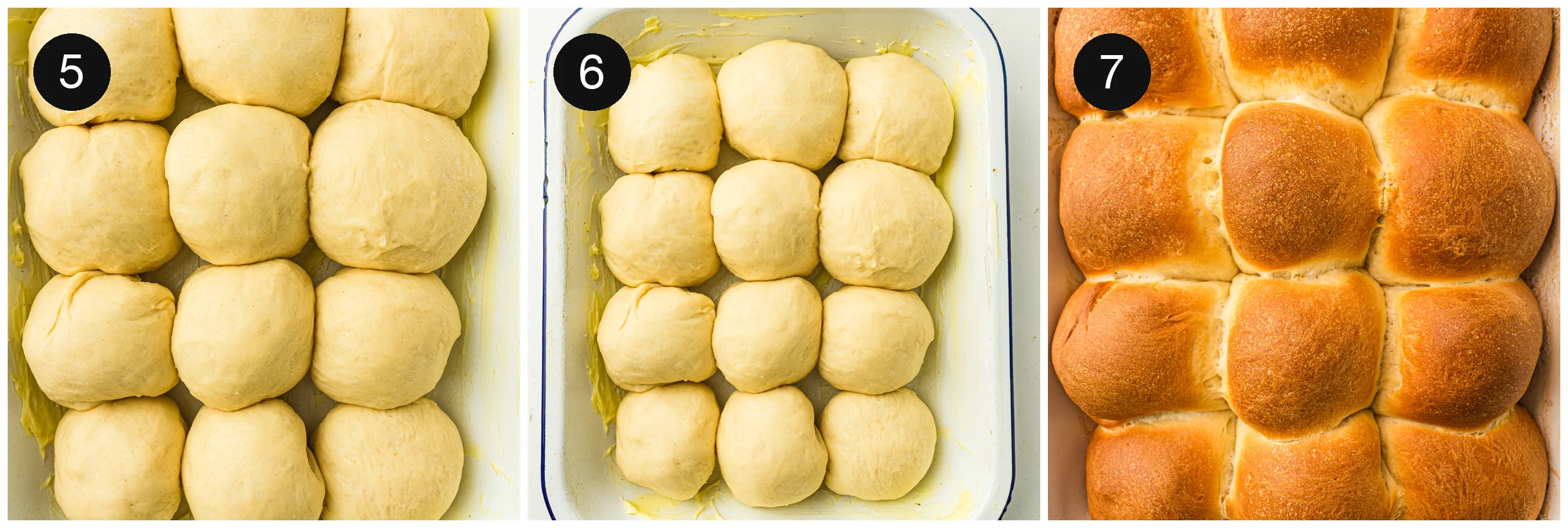
4. Bake and butter. Finally, bake at 350°F (180°C) for 20 to 22 minutes until golden brown. Brush the hot tops with melted butter the moment they come out, then let them cool just slightly before you dive in.
No bread machine? A stand mixer with the dough hook kneads this soft dough in about 5 to 6 minutes and saves your arms.
I divide the dough with a bench scraper, which cuts neat portions and scoops up any sticky bits from the worktop.
Why Are My Rolls Dense?
Dense rolls almost always come down to one of two things. Either the dough was under-kneaded, so it never built enough gluten to trap air, or it was under-proofed and did not get the time it needed to puff up. Give the dough a full rise until it is genuinely doubled, and do not rush that second rise in the pan.
Cold kitchens slow everything down, so on a chilly day let the dough prove somewhere warm. A turned-off oven with just the light on is a lovely little proofing box.
Tips for the Softest Rolls
- Measure your flour gently. Spoon it into the cup and level it off. Scooping packs in too much and dries out the dough.
- Using active dry yeast? Proof it first in the warm milk until foamy, then carry on. It behaves just like instant after that.
- Do not skip the butter brush. That final swipe of melted butter is what gives the tops their soft, glossy finish.
- Warm milk, always. Lukewarm wakes the yeast up gently. Hot milk sets them back before they start.
Make-Ahead and Storage
- Make ahead. Shape the rolls, cover, and refrigerate overnight. In the morning, bring them to room temperature while the oven heats, then bake.
- Room temperature. Store cooled rolls in an airtight container for up to 3 days.
- Freezer. Freeze baked rolls for up to 2 months. Thaw at room temperature.
- Reheat. Warm them in a 325°F (160°C) oven for 5 to 7 minutes and they taste freshly baked again.
Variations and Substitutions
- Honey butter rolls. Stir a spoonful of honey into the melted butter before brushing for a sweet, sticky finish.
- Garlic herb rolls. Add a little garlic and chopped parsley to the butter brush. Lovely alongside a bowl of ham and corn chowder.
- Cheesy pull-aparts. Tuck a small cube of cheese into the centre of each roll before the second rise.
- Slider buns. Shape them a touch larger and split for mini sandwiches.
What To Serve With Dinner Rolls
These belong next to anything with a sauce worth mopping up. They are a natural for a Sunday whole roast chicken or an Instant Pot pork roast, and they earn their keep at a holiday table beside creamy sides and gravy. For a cosy night in, tear one open next to a bowl of Texas cowboy stew. They also make brilliant little buns for leftover sliders the next day.
Frequently Asked Questions
Ingredients and Method
Can I use active dry yeast instead of instant?
Yes. Proof it first in the warm milk with the sugar until it looks foamy, about five to ten minutes, then add the rest of the ingredients as written.
Can I make the dough without a bread machine?
Absolutely. Mix and knead by hand for 8 to 10 minutes, or 5 to 6 minutes in a stand mixer, until the dough is smooth and elastic, then let it rise until doubled.
Can I double the recipe?
Yes, as long as your bread machine can handle the larger volume of dough. By hand there is no limit, just use a bigger bowl and a second baking dish.
Make-Ahead and Storage
Can I make these rolls ahead of time?
Yes. Shape them, cover, and refrigerate overnight. Bring them to room temperature the next day, then bake as usual.
How do I keep them soft after baking?
Brush the tops with melted butter straight out of the oven and store them in an airtight container once cooled. Reheat gently to bring back that fresh-baked softness.
Ingredients
- 240 ml warm milk 1 cup, about 110°F
- 1 large egg
- 60 g butter 1/4 cup, melted and cooled
- 50 g sugar 1/4 cup
- 1 tsp salt
- 480 g plain (all-purpose) flour 4 cups
- 2 1/4 tsp instant yeast 1 packet
- extra melted butter, for brushing optional
Instructions
Bread Machine Method
- Add the milk, egg, melted butter, sugar, and salt to the bread machine pan. Add the flour, then the yeast on top so it does not touch the liquid. Select the Dough cycle.
- When the cycle finishes, turn the dough out onto a lightly floured surface.
Shape and Bake
- Divide the dough into 12 equal pieces. Shape each into a smooth ball and place in a buttered baking dish so they just touch.

- Cover loosely and rise 30 to 45 minutes, until puffy.

- Bake at 350°F (180°C) for 20 to 22 minutes, until golden brown.
- Brush the hot tops with melted butter, cool slightly, and serve warm.
No Bread Machine (By Hand)
- Combine the warm milk, yeast, and sugar and rest 5 to 10 minutes until foamy. Mix in the egg, butter, and salt, then the flour, and knead 8 to 10 minutes until smooth and elastic. Rise 1 hour until doubled, then shape and bake as above.
