 Bity
Bity
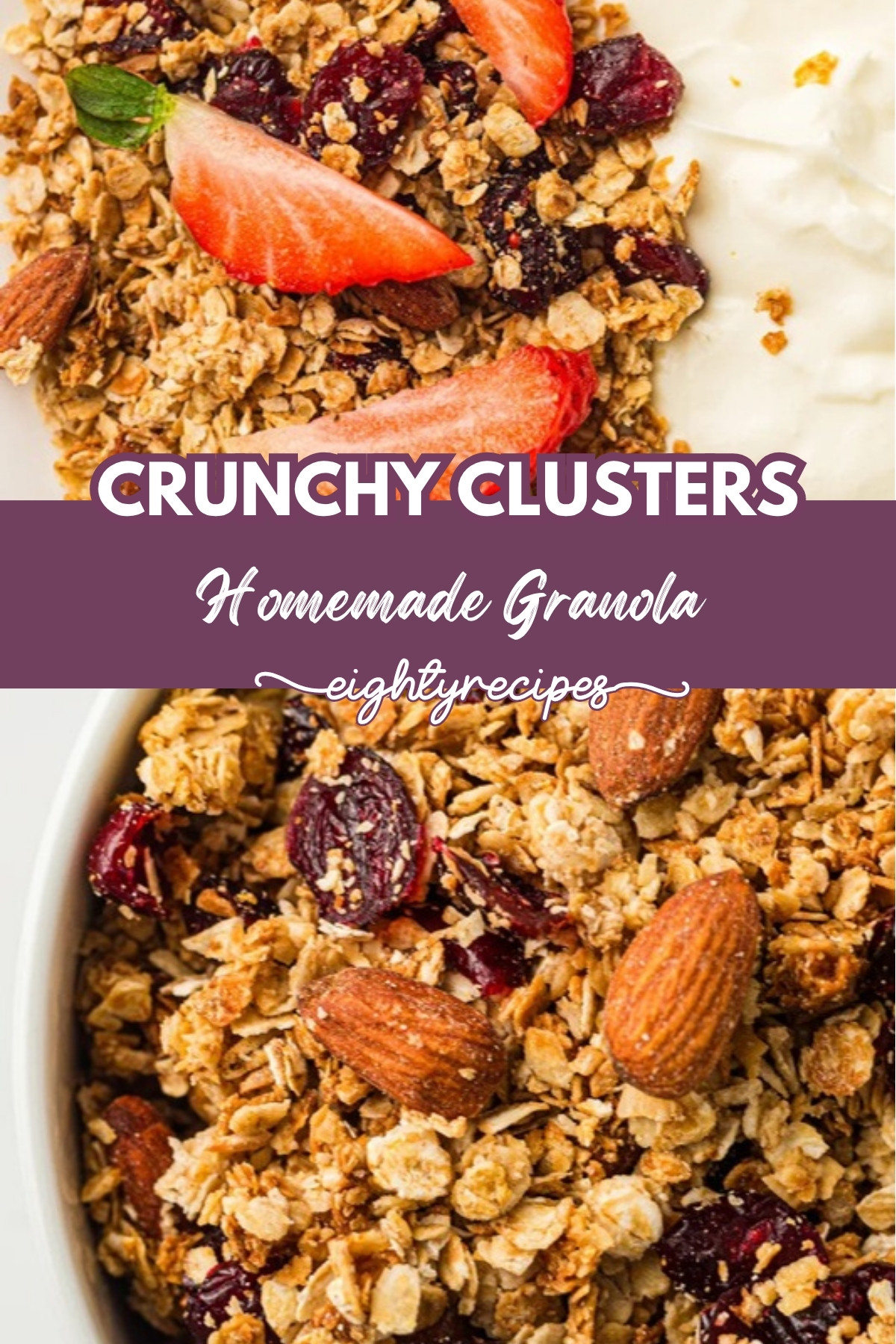
The clusters are the whole point, and almost nobody tells you how to get them. Homemade granola breaks into dust because it gets stirred while it cools, not because the recipe is wrong.
Press the mixture down before it goes in the oven, stir it exactly once halfway, then leave it completely alone on the tray until it is stone cold. That is it. The sugars set as they cool and glue the oats into slabs you can snap with your hands, which is the difference between cereal and something you eat by the handful straight off the tray.
Quick Breakdown
Why You’ll Love This Homemade Granola
- Six cups from one tray. Roughly three shop bought bags, for a fraction of the money.
- Thirty five minutes. Ten of prep, twenty five in the oven, and most of that is hands off.
- Real clusters. Big, snappable pieces rather than loose oats.
- You control the sugar. A third of a cup of maple syrup across six cups is far less than most boxes carry.
- It keeps for a fortnight. Make it on Sunday and breakfast is sorted.
Ingredient Notes
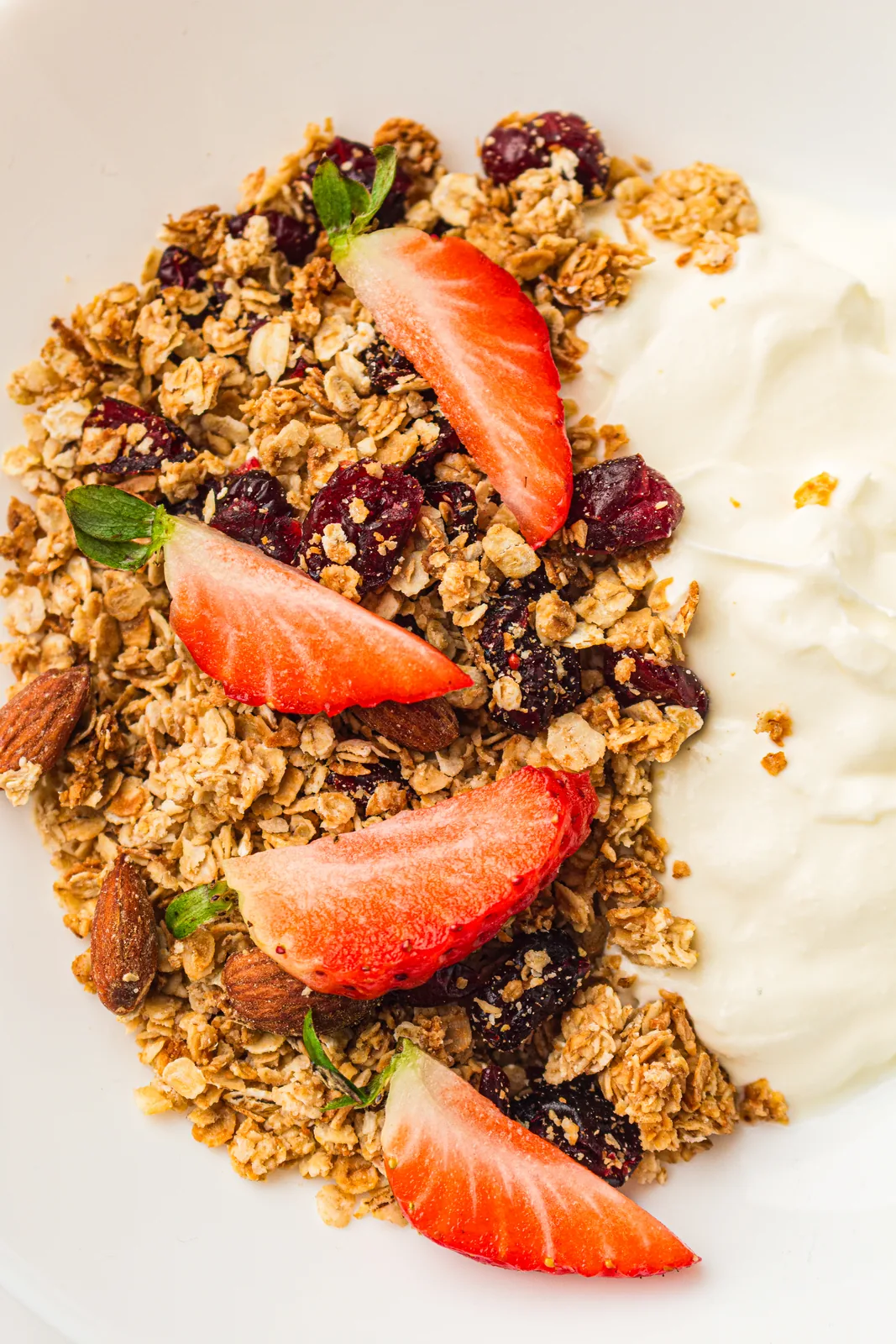
- Old-fashioned rolled oats. Three cups, 270g. Rolled, not quick oats and not steel cut. Quick oats are too thin and turn powdery; steel cut never softens.
- Whole almonds. Half a cup, 70g. Whole nuts stay in the clusters better than chopped ones, though chopped distributes more evenly if you prefer that.
- Shredded coconut. A quarter cup, 20g. It toasts fast, so it browns before the oats do and adds most of the aroma.
- Maple syrup. A third of a cup, 110g. Real maple syrup, because it is the sugar that crystallises on cooling and does the binding.
- Coconut oil. A quarter cup melted, 56g. It sets firm at room temperature, which helps the clusters hold. Melted butter works too.
- Cinnamon, salt and vanilla. Half a teaspoon each of cinnamon and salt, one teaspoon of vanilla. The salt is not optional; without it the whole tray tastes flat.
- Dried cranberries. Three quarters of a cup, 100g, stirred in only after cooling. Bake them and they turn to hard little pellets.
Oats are doing more than bulking this out. Healthline notes that oats are unusually high in beta glucan, a soluble fibre that forms a gel in the gut and is effective at lowering total and LDL cholesterol, which is a decent reason to eat them most mornings.
The Secret to Big Clusters in Homemade Granola
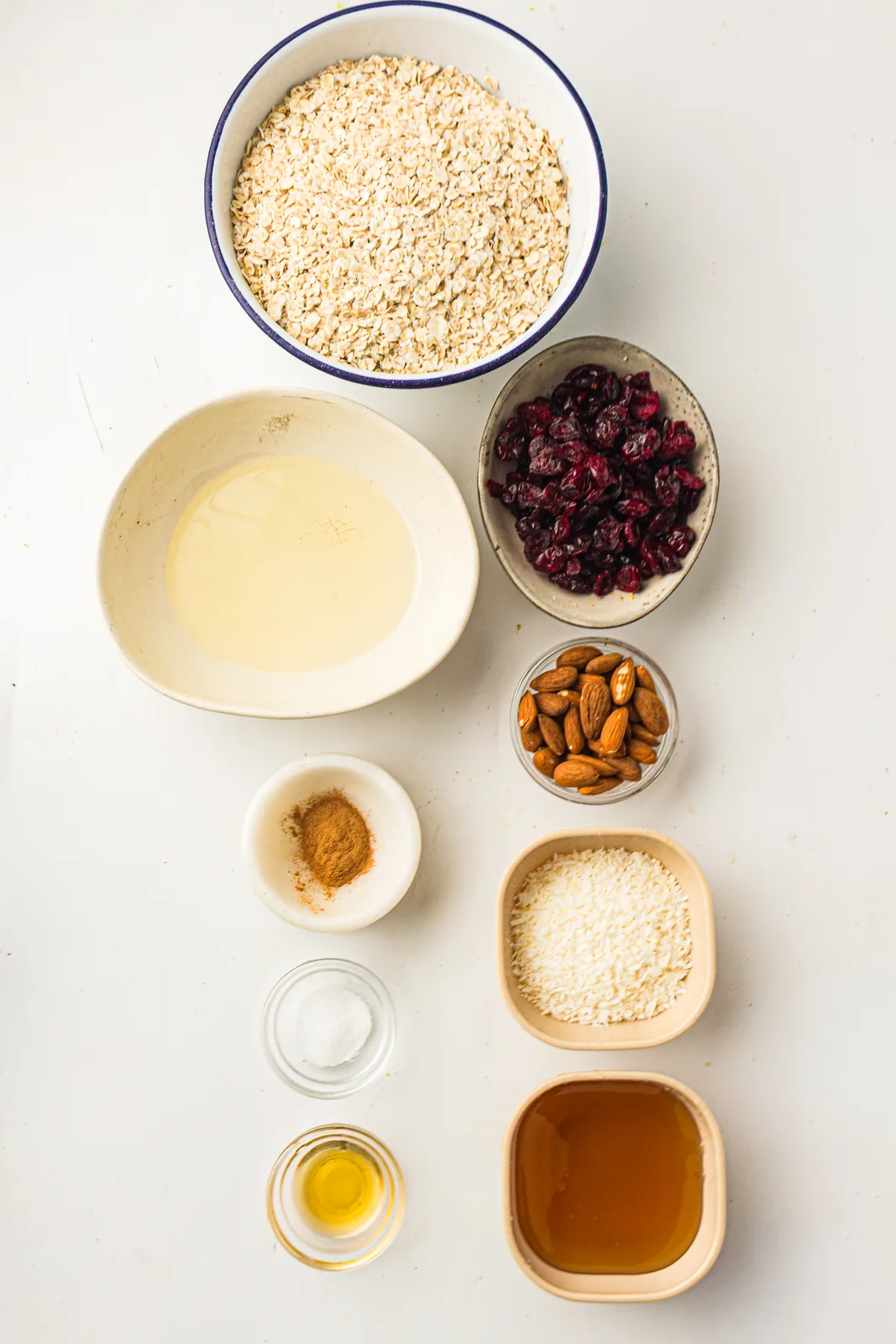
Clusters in homemade granola form when dissolved sugar cools and hardens around the oats. Anything that disturbs that setting stage breaks the bond, which is why the single most common mistake is stirring the tray as it comes out of the oven because it looks soft. It is meant to look soft. It firms up over about forty minutes on the counter.
Compaction matters just as much. Loose oats have air between them and nothing to grip, so press the whole layer down with the back of a spatula until the surface looks flat and slightly glossy. However, do not press so hard that the layer becomes a solid brick, or the middle will never dry out.
| What you do | What you get |
|---|---|
| Press flat, stir once, cool untouched | Large snappable clusters |
| Spread loosely, stir once, cool untouched | Small clusters and loose oats |
| Stir while warm | Loose granola, no clusters at all |
How To Make Homemade Granola
1. Heat the oven and line the tray. First, set the oven to 325°F (160°C) and line a large baking sheet with parchment. Low and slow is deliberate here, since a hotter oven browns the coconut before the oats dry.
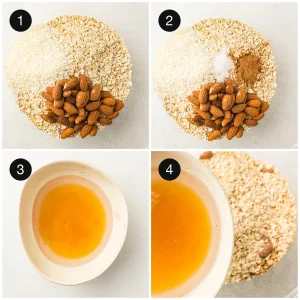
2. Mix the dry ingredients. Next, combine the oats, almonds, shredded coconut, salt and cinnamon in a large bowl and stir them so the spices are not sitting in one corner.
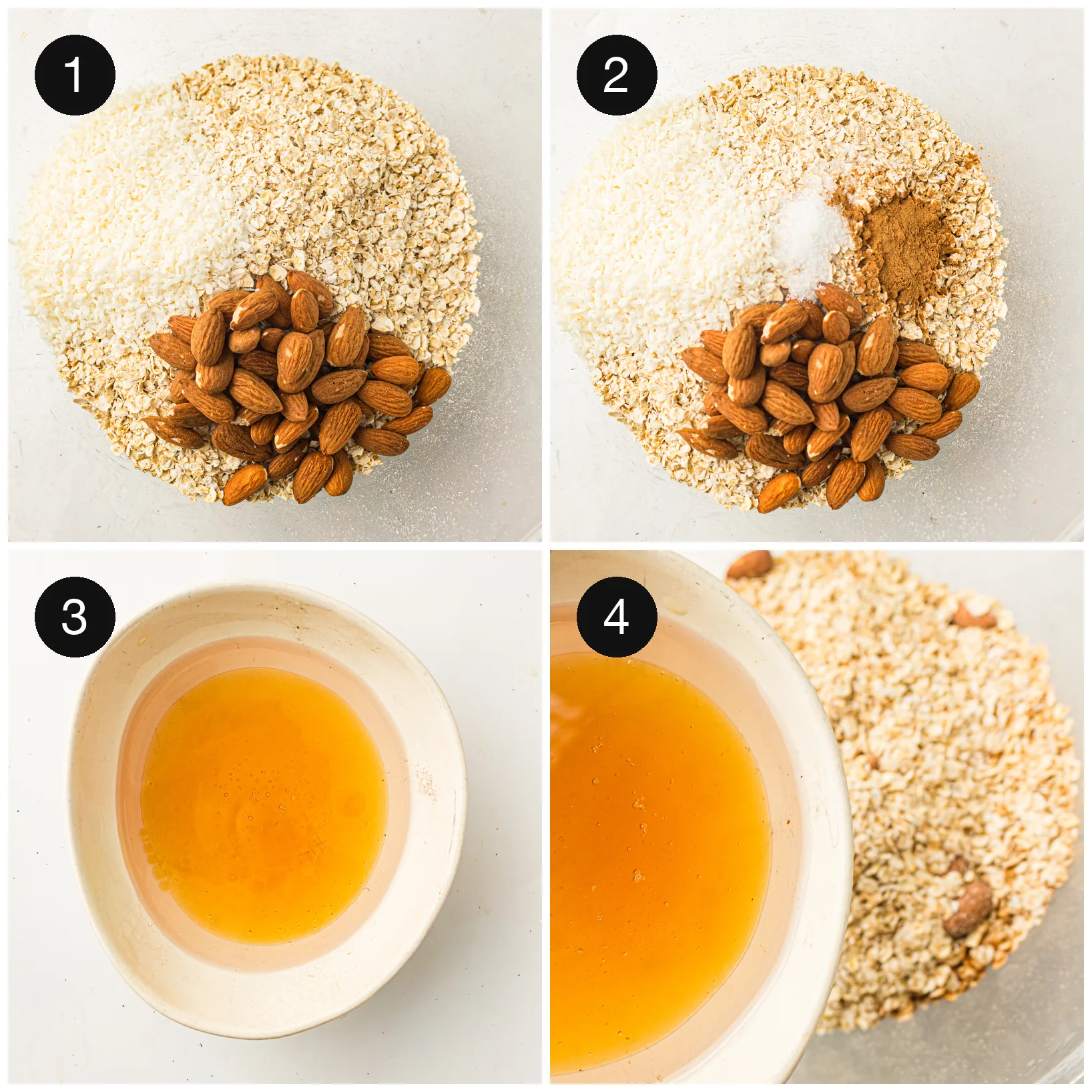
3. Whisk the wet ingredients. Then whisk the maple syrup, melted coconut oil and vanilla together in a smaller bowl until they emulsify into one glossy liquid rather than two layers.
4. Combine and coat. After that, pour the wet over the dry and stir for a good minute. Every flake needs a film on it, because dry patches stay pale and never crisp.
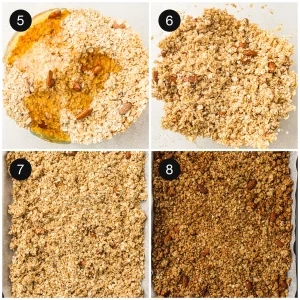
5. Spread and press. Tip it onto the tray, spread it to an even layer and press down firmly with a spatula. Aim for about a centimetre thick, right to the edges.
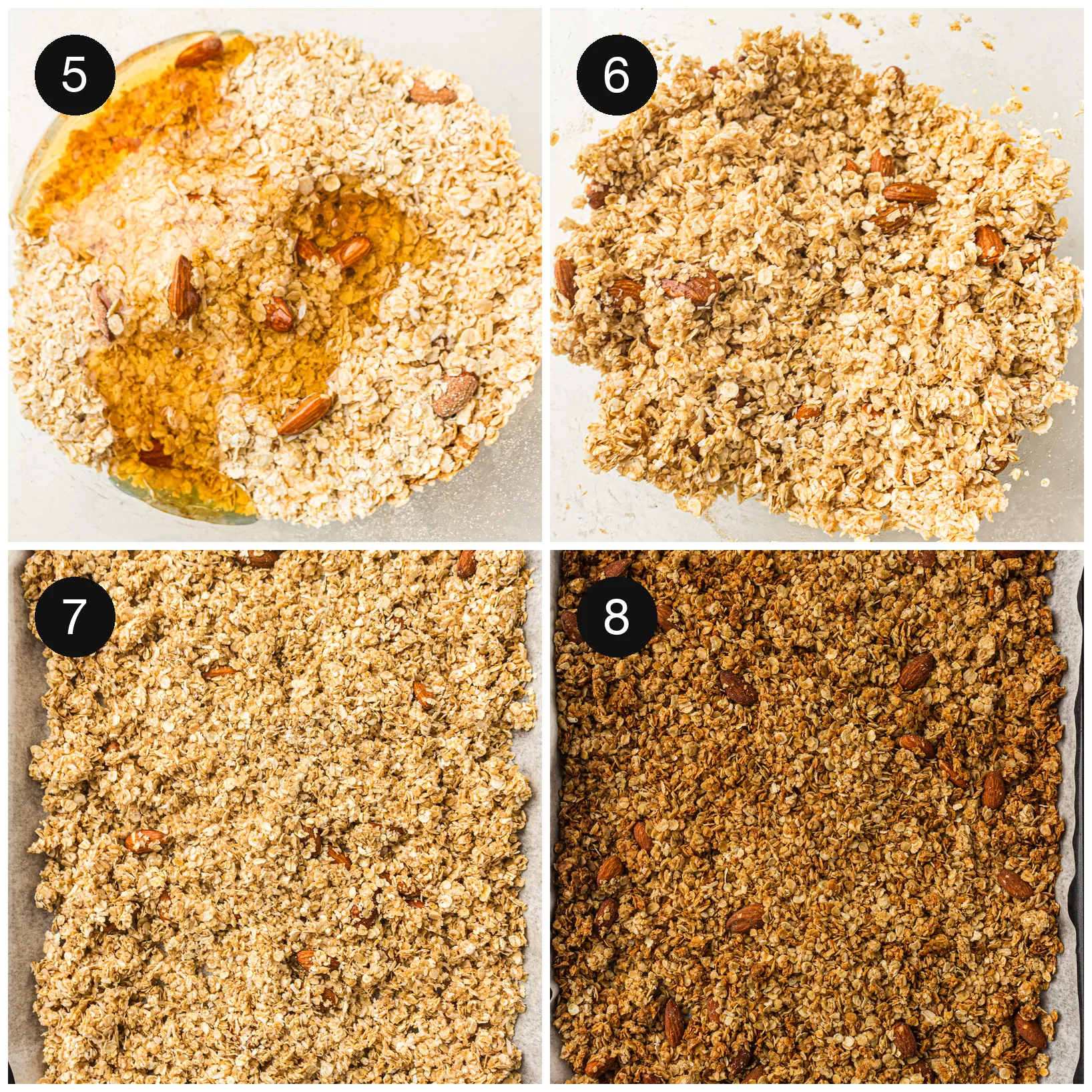
6. Bake and stir once. Bake for twenty to twenty five minutes, stirring once at the halfway mark and pressing the layer flat again afterwards. The edges brown first, so bring them into the middle when you stir.
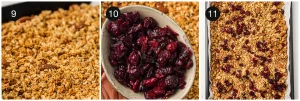
7. Cool completely, then add the fruit. Finally, slide the tray onto a rack and walk away for at least forty minutes. Once it is properly cold, break it into pieces and fold through the dried cranberries.
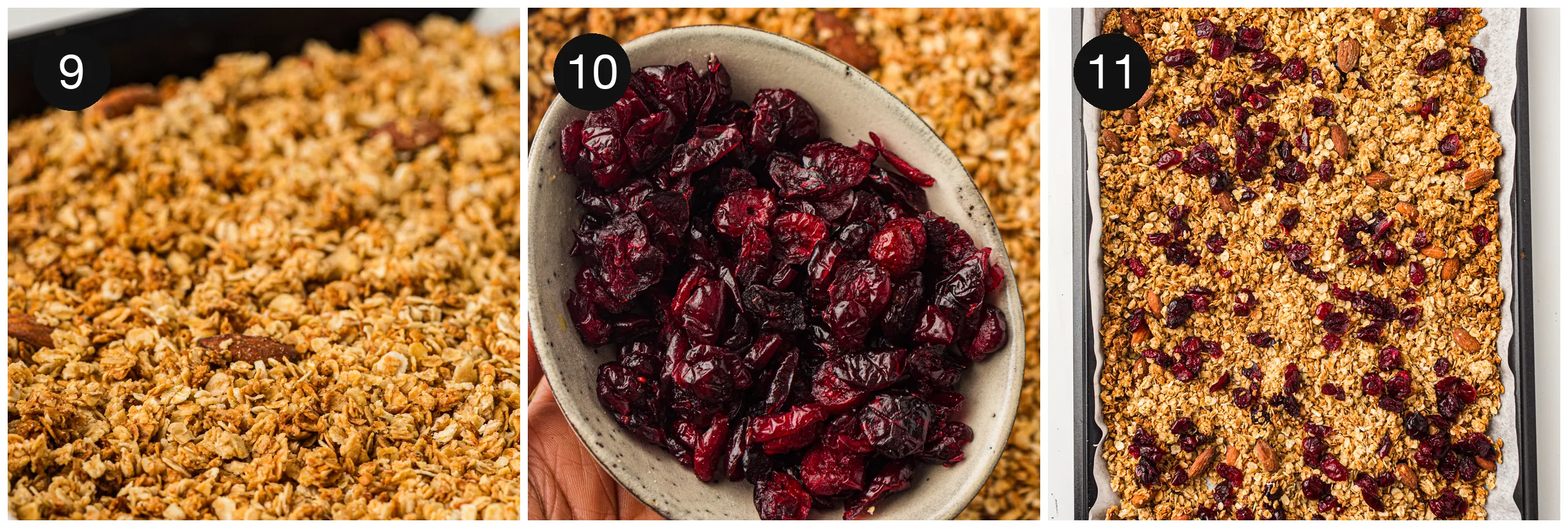
A silicone baking mat can stand in for the parchment if you bake granola often, and the clusters lift off it cleanly once cold.
Biggest Mistakes to Avoid
- Stirring it while warm. The single reason most trays end up as loose oats. Leave it.
- Baking too hot. At 350°F and above the coconut and nuts scorch while the oats are still damp.
- Adding dried fruit before baking. Cranberries go leathery and bitter. They go in cold, at the end.
- Spreading it too thin. A thin layer has nothing to cluster with. Thick and pressed is what you want.
- Judging doneness by colour alone. It carries on darkening on the hot tray for several minutes after it leaves the oven, so pull it a shade lighter than you think.
Tips for the Best Homemade Granola
- Warm the maple syrup and oil together for twenty seconds if the oil is solid. Cold coconut oil seizes into lumps the moment it meets the oats.
- Meanwhile, weigh the oats if you can. Cup measures for oats vary wildly depending on how you scoop.
- Turn the tray around at the halfway stir. Almost every home oven has a hot corner.
- Still soft after twenty five minutes? Give it five more, but check at two minute intervals from then on.
- Break it into deliberately uneven pieces. A mix of big slabs and rubble is far nicer to eat than uniform crumbs.
Storage and Reheating
- Room temperature. Homemade granola keeps up to two weeks in an airtight jar. Glass keeps it crisper than plastic.
- Fridge. Up to a month, though it needs a properly sealed container or it takes on other smells.
- Freezer. Three months. It does not clump when frozen, so you can dig straight in.
- Gone soft? Five minutes at 325°F on a dry tray, then cool completely again. That said, only do this once.
Variations and Substitutions
- Nut swaps. Pecans, walnuts and hazelnuts all work. Chop anything larger than an almond.
- Seeds. A quarter cup of pumpkin or sunflower seeds in place of some of the nuts.
- Honey instead of maple. Same quantity, slightly softer clusters and a rounder flavour.
- Other dried fruit. Raisins, chopped dates or dried cherries, all added after cooling.
- Chocolate. Fold in dark chocolate chunks once the tray is completely cold, never before.
If you like this, the same cupboard of ingredients makes two other things worth having in. Try the no bake granola bars when you want something portable, or roll a batch of peanut butter oat balls for lunchboxes.
What to Serve It With
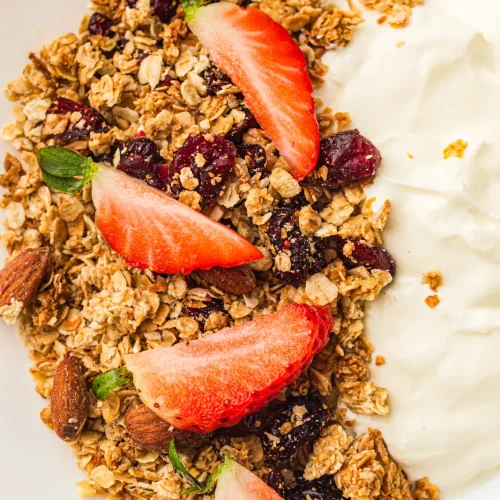
Thick yoghurt and berries is the obvious partner for homemade granola, and it is the right one. Beyond that, scatter it over vanilla ice cream for an instant crumble topping, or serve a bowl of it next to a savoury breakfast like cottage cheese flatbread when you are feeding a crowd. Of course, plenty of it gets eaten dry, straight from the jar, standing at the counter.
Frequently Asked Questions
Ingredients and Method
How do I get bigger clusters?
Press the layer down firmly before baking, press it flat again after the halfway stir, and then do not touch it while it cools. Those three things account for almost all of it.
Can I chop the almonds?
Yes. Chopped almonds spread more evenly through the mixture, although whole ones give you better clusters because they create more surface for the syrup to grip.
Can I swap the cranberries?
Of course. Raisins, chopped dates and dried cherries all work in the same quantity. Add any of them after the tray has cooled.
Can I make it oil free?
You can, but expect a drier, sandier result. The oil is carrying the flavour and helping the clusters set, so at minimum keep half of it.
Storage and Troubleshooting
Why is my homemade granola soft?
Either it needed a few more minutes, or it was jarred while still slightly warm. Trapped steam softens a whole batch overnight, so wait until it is completely cold.
Why did it burn round the edges?
The edges of the tray run hotter than the middle. Pull those areas into the centre when you stir at the halfway point and it evens out.
How long does it keep?
Two weeks at room temperature, a month in the fridge, three months in the freezer. Airtight is the important part in all three cases.
Can I double the batch?
Yes, but use two trays rather than one deep layer. Instead of crisping, a doubled tray steams itself and you lose the crunch entirely.
Ingredients
Dry
- 3 cups old-fashioned rolled oats 270 g
- 1/2 cup whole almonds 70 g
- 1/4 cup shredded coconut 20 g
- 1/2 teaspoon salt 3 g
- 1/2 teaspoon ground cinnamon 1 g
Wet
- 1/3 cup maple syrup 110 g
- 1/4 cup coconut oil, melted 56 g
- 1 teaspoon vanilla extract 5 ml
To finish
- 3/4 cup dried cranberries 100 g
Instructions
- Preheat the oven to 325°F (160°C). Line a large baking sheet with parchment paper.
- In a large bowl, combine the rolled oats, whole almonds, shredded coconut, salt and ground cinnamon.

- In a separate bowl, whisk together the maple syrup, melted coconut oil and vanilla extract.
- Pour the wet mixture over the dry ingredients and stir until everything is evenly coated.
- Spread the mixture evenly onto the prepared baking sheet and press down firmly to encourage clusters.
- Bake for 20 to 25 minutes, stirring once halfway through and pressing the layer flat again, until golden brown.
- Remove from the oven and allow to cool completely without stirring, so the clusters set.
- Once fully cooled, break into pieces and stir in the dried cranberries.