 Bity
Bity
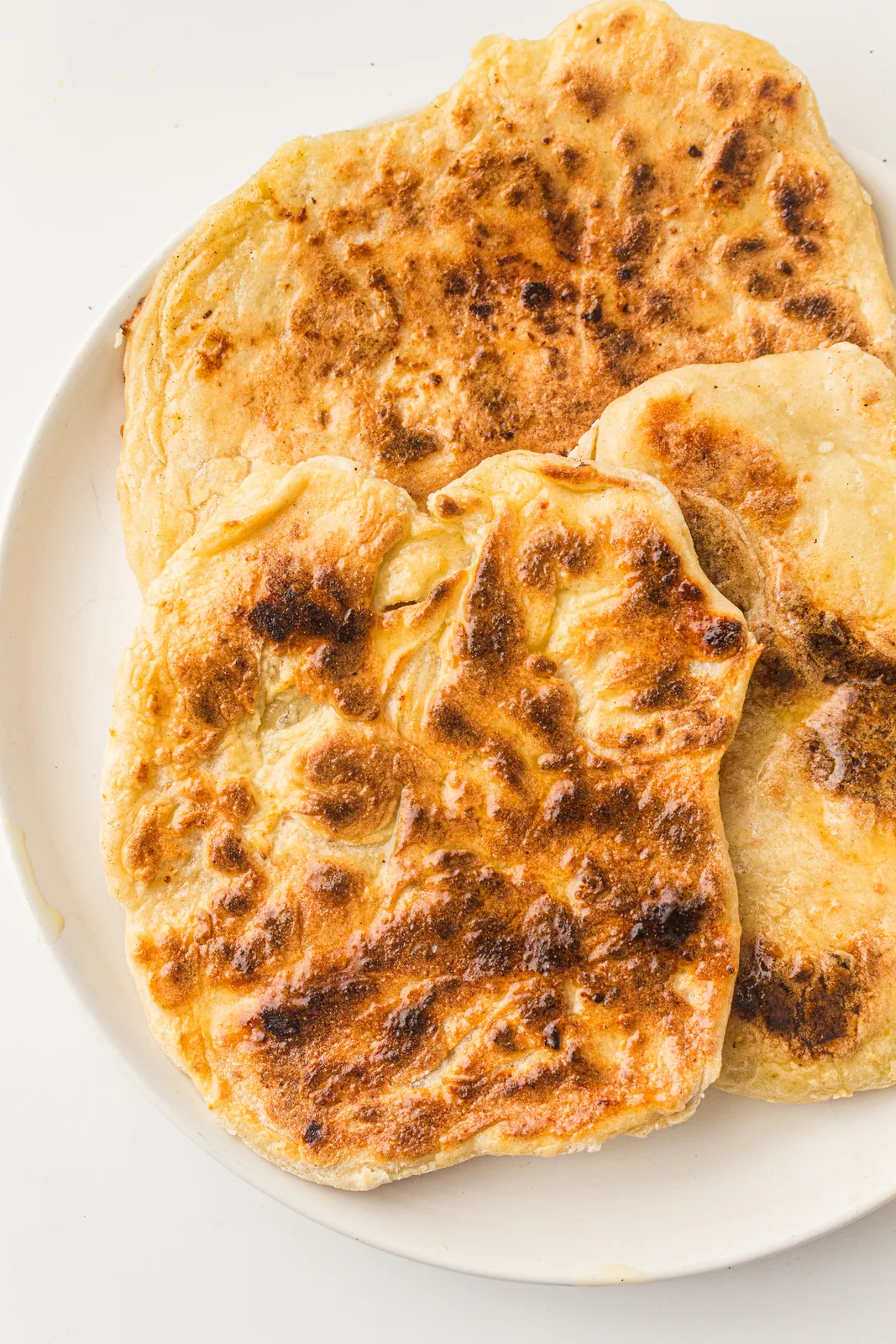
This cottage cheese flatbread is soft, foldable, and quietly packed with protein, and it needs just three ingredients and no eggs. You stir cottage cheese straight into self-rising flour, knead for barely a minute, then cook the rounds in a dry skillet until they turn golden. There’s no blender to drag out and no oven to preheat, so you’re looking at about 15 minutes from tub to plate.
I first started making these when I wanted something with more staying power than a shop-bought wrap, but just as fuss-free. Now a batch lives on constant rotation for our lunches. The kids fold them around scrambled eggs before school, and I lean on them as a speedy pizza base once the evening rush hits. Honestly, if there’s a tub of cottage cheese in the fridge and a skillet on the hob, you’re already most of the way to dinner.

Quick Breakdown
Why You’ll Love This Cottage Cheese Flatbread
Some breads ask for proving and patience. This one, though, is a five minute job with a payoff that feels far bigger. Here’s why it keeps earning a spot in my week.
- Just three ingredients. Cottage cheese, self-rising flour, and salt, plus a pinch more flour for rolling.
- No eggs, no blender. You mix and knead by hand, so there’s barely anything to wash up.
- Genuinely high in protein. The cottage cheese pulls double duty, lending softness and a real protein boost.
- Ready in about 15 minutes. A quick turn in the skillet, no waiting on the oven.
- Endlessly versatile. Wraps, a pizza base, or a soft partner for soups and dips.
Ingredient Notes
Three ingredients, so each one earns its place. Here’s what to know before you start.
- Cottage cheese. Any fat level works here. If your tub looks watery, drain off the excess so the dough doesn’t turn sticky. It’s naturally rich in protein, which is what makes these so filling; for a quick rundown of its nutrition, have a look at this overview of cottage cheese.
- Self-rising flour. This gives the rounds their soft lift. No self-rising flour on hand? Use plain flour with a teaspoon of baking powder stirred through.
- Salt. Just enough to season the dough and wake up the flavour.
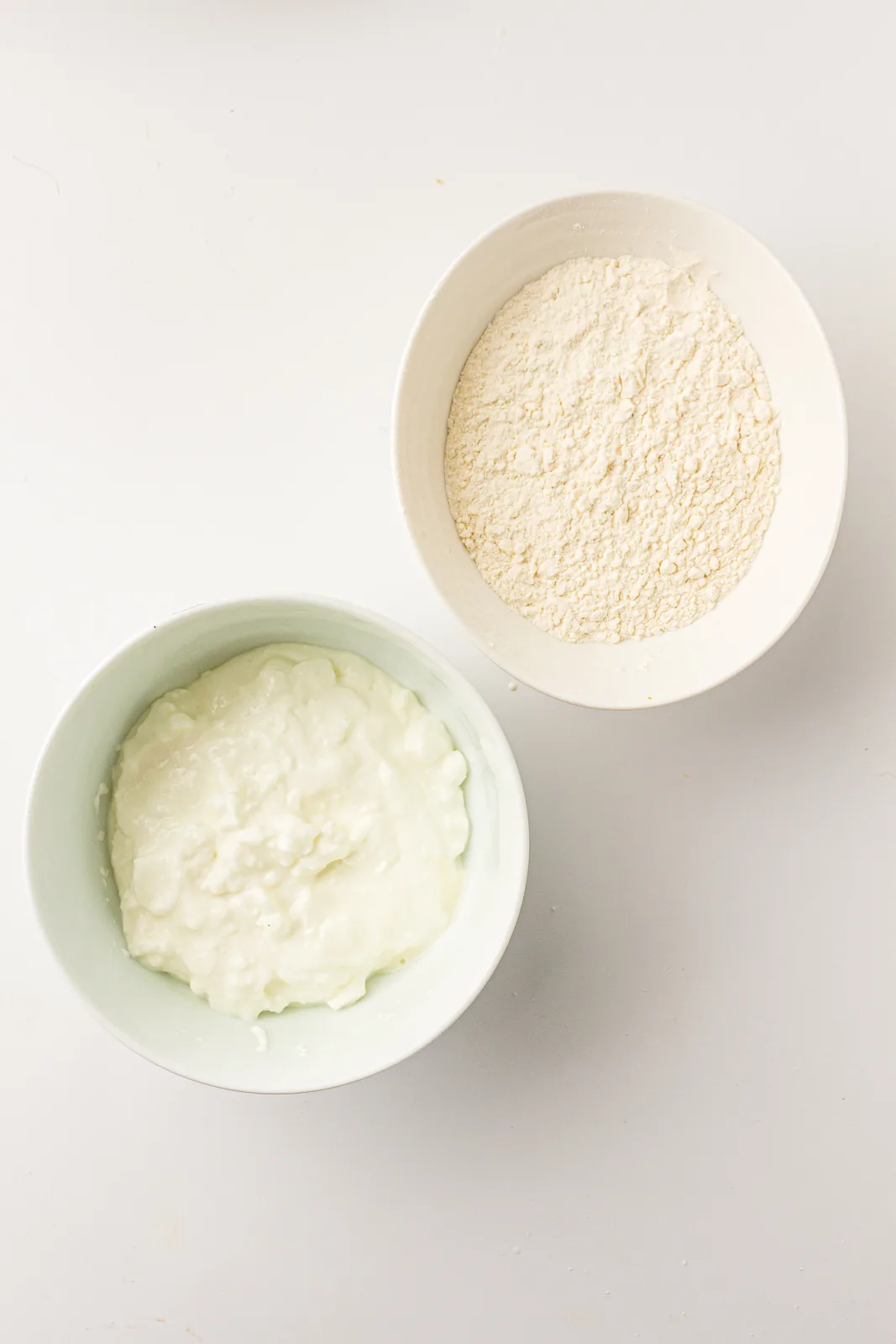
No Eggs, No Blender
Most cottage cheese flatbread recipes you’ll find online blitz cottage cheese with eggs and bake the batter into a soft, tortilla-style wrap. This version takes a different route. Flour stands in for the eggs, so what you get is a proper bread you can fold, roll, and stuff without it tearing. Nothing to blend, nothing to bake, and no gadget to rinse afterwards. If you’re cooking egg-free, short on appliances, or simply pushed for time, this is the one, and it still carries all that cottage cheese protein.
How to Make Cottage Cheese Flatbread
This cottage cheese flatbread really is mix, roll, and cook, and you’ll find the full measurements in the recipe card at the bottom of this post.
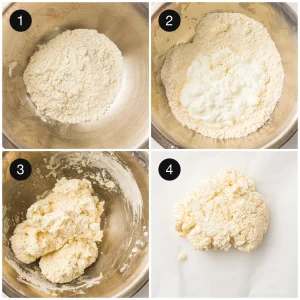
1. Mix the dough. First, tip the cottage cheese, self-rising flour, and salt into a bowl and stir until a soft, shaggy dough forms and starts pulling away from the sides.
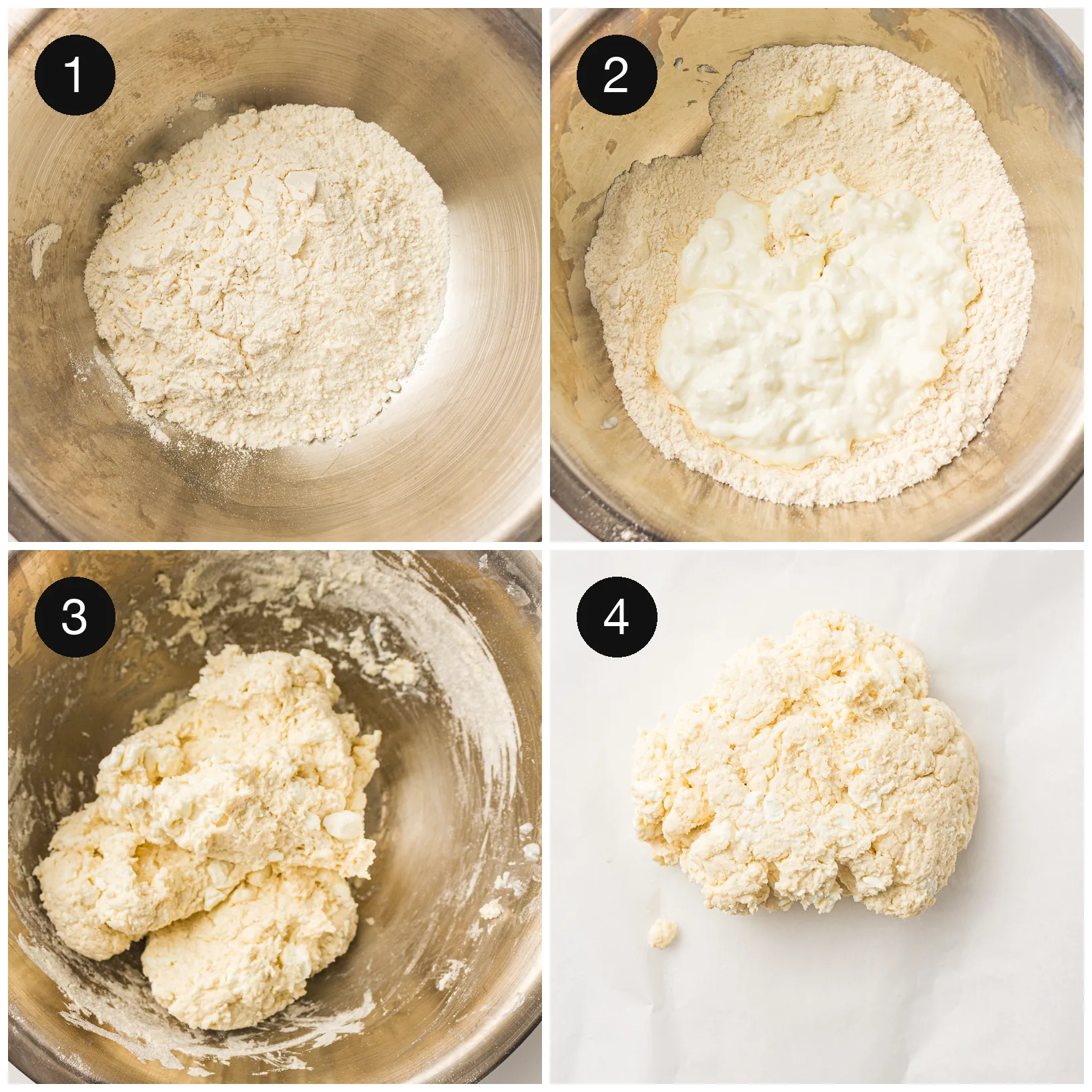
2. Knead until smooth. Next, turn the dough out onto a lightly floured surface and knead gently for about a minute, just until it feels smooth and springy.
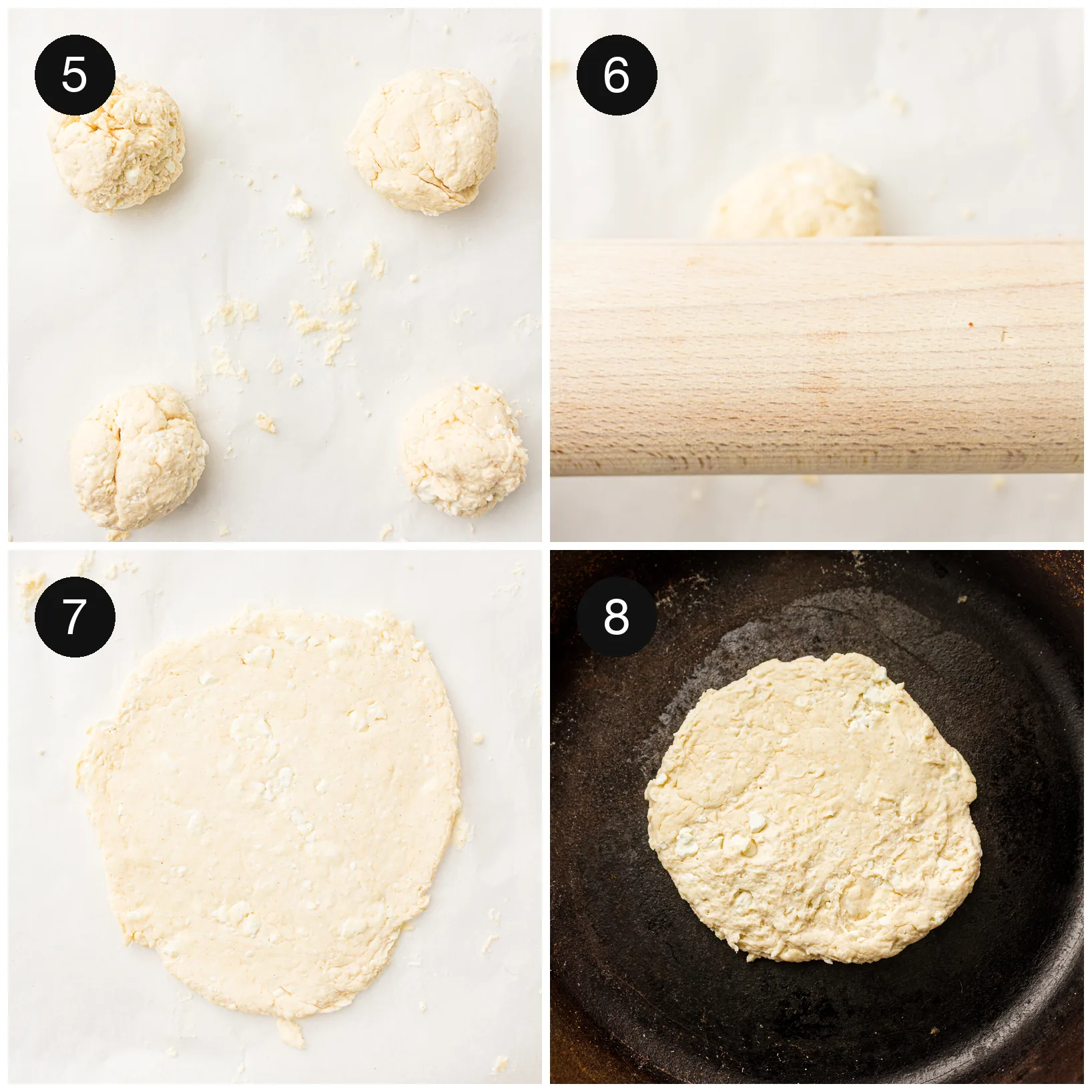
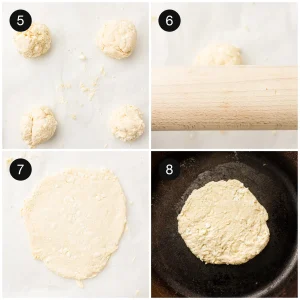
3. Divide and roll. Then split the dough into four equal pieces and roll each one into a thin round, dusting with a little flour if it sticks.
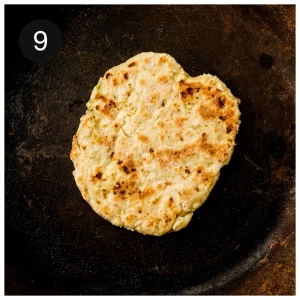
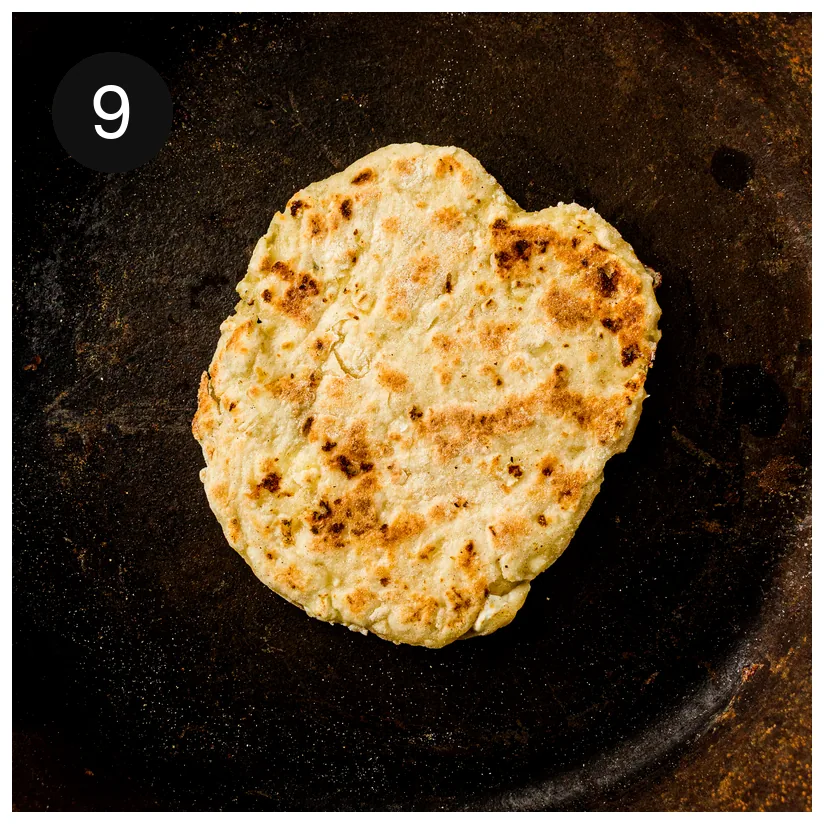
4. Cook in the skillet. Finally, warm a dry or lightly oiled skillet over medium heat and cook each round for 2 to 3 minutes a side, until golden spots appear and the bread is cooked through. Stack them as you go and drape a towel over the top to keep them soft.
Biggest Mistakes to Avoid
This dough is forgiving, but a couple of small missteps can leave you with tough or sticky rounds. Here’s what to watch.
- Skipping the drain. Watery cottage cheese makes a slack, sticky dough. Tip off any pooling liquid first.
- Over-kneading. A minute is plenty. Work it too hard and the rounds turn dense rather than tender.
- Rushing the heat. Too hot and the outside colours before the middle cooks; medium is the sweet spot.
Tips for the Best Cottage Cheese Flatbread
A few things I’ve picked up after making these more times than I can count.
- Roll them thin. Thinner rounds stay flexible and fold without cracking.
- Keep the heat steady. Medium lets the outside take on colour while the centre finishes.
- Cover as you cook. Stacking under a towel traps steam and keeps everything soft.
- Taste your cheese. A well-seasoned tub means you’ll barely need extra salt.
Variations and Substitutions
This is a brilliant base to tinker with, so here are a few swaps I come back to.
- Plain flour swap. No self-rising flour? For every cup of plain flour, whisk in a teaspoon of baking powder and a pinch of salt for the same gentle lift.
- Heartier bite. Trade a portion of the flour for whole wheat; the rounds turn a touch denser but lovely and nutty.
- Herby dough. Fold chopped dill, chives, or a little garlic into the dough before kneading.
- More protein bread. If you’re chasing that high-protein streak, our cottage cheese bread is another easy win.
Ways to Use Cottage Cheese Flatbread
Because these rounds are sturdy yet soft, they slot into all sorts of meals. Keep a batch handy and build from there.
- Wrap them around eggs, chicken, or falafel for a filling, high-protein lunch.
- Spread with sauce and cheese, then grill for a quick personal pizza.
- Serve warm beside soups, curries, dips, or a simple spinach salad.
- Line them up with other savoury bakes, like a batch of cheesy garlic bread.
Storage and Reheating
- Fridge. Store cooled rounds in an airtight container for up to 3 days, with parchment tucked between them.
- Freezer. They freeze well for up to 2 months; layer with parchment, then thaw before reheating.
- Reheat. A minute in a dry skillet or a low oven brings the softness right back. A quick zap in the microwave does in a pinch, though the skillet keeps them best.
Frequently Asked Questions
Ingredients and Method
Can I use plain flour instead of self-rising?
Yes. For every cup of plain flour, whisk in a teaspoon of baking powder and a pinch of salt, and it’ll rise just the same.
Does it taste of cottage cheese?
Not really. Once cooked, the flavour is mild and bready; the cottage cheese mostly lends softness and protein.
Do I need to blend the cottage cheese?
No. This version skips the blender completely. You stir the curds straight into the flour.
Why is my dough so sticky?
Chances are your cottage cheese was watery. Drain it well, then work in a little extra flour, a spoonful at a time, until the dough feels workable.
Serving and Storage
Can I make the dough ahead?
Yes. Keep it covered in the fridge for up to a day, then roll and cook when you’re ready.
How do I keep them soft?
Stack the cooked rounds and cover with a clean towel so the trapped steam keeps them tender.
Can I freeze cottage cheese flatbread?
Yes. Freeze them with parchment between each round for up to 2 months, then thaw and reheat in a skillet.
Is it gluten-free?
Not as written, since it leans on wheat flour. A gluten-free self-rising blend works, though the texture will shift a little.

Ingredients
- 1 cup cottage cheese about 225 g, drained if watery
- 1 cup self-rising flour about 120 g; or all-purpose plus 1 tsp baking powder
- 1/2 tsp salt
- 1 tbsp flour optional, for dusting
Instructions
- First, combine the cottage cheese, self-rising flour, and salt in a bowl and mix until a soft, shaggy dough forms.

- Next, turn the dough onto a lightly floured surface and knead gently for about 1 minute, until smooth.
- Then divide the dough into 4 pieces and roll each into a thin round.
- After that, heat a dry or lightly oiled skillet over medium heat.
- Finally, cook each round 2 to 3 minutes per side until golden spots appear and it is cooked through. Stack and cover with a towel to keep soft.