 Bity
Bity
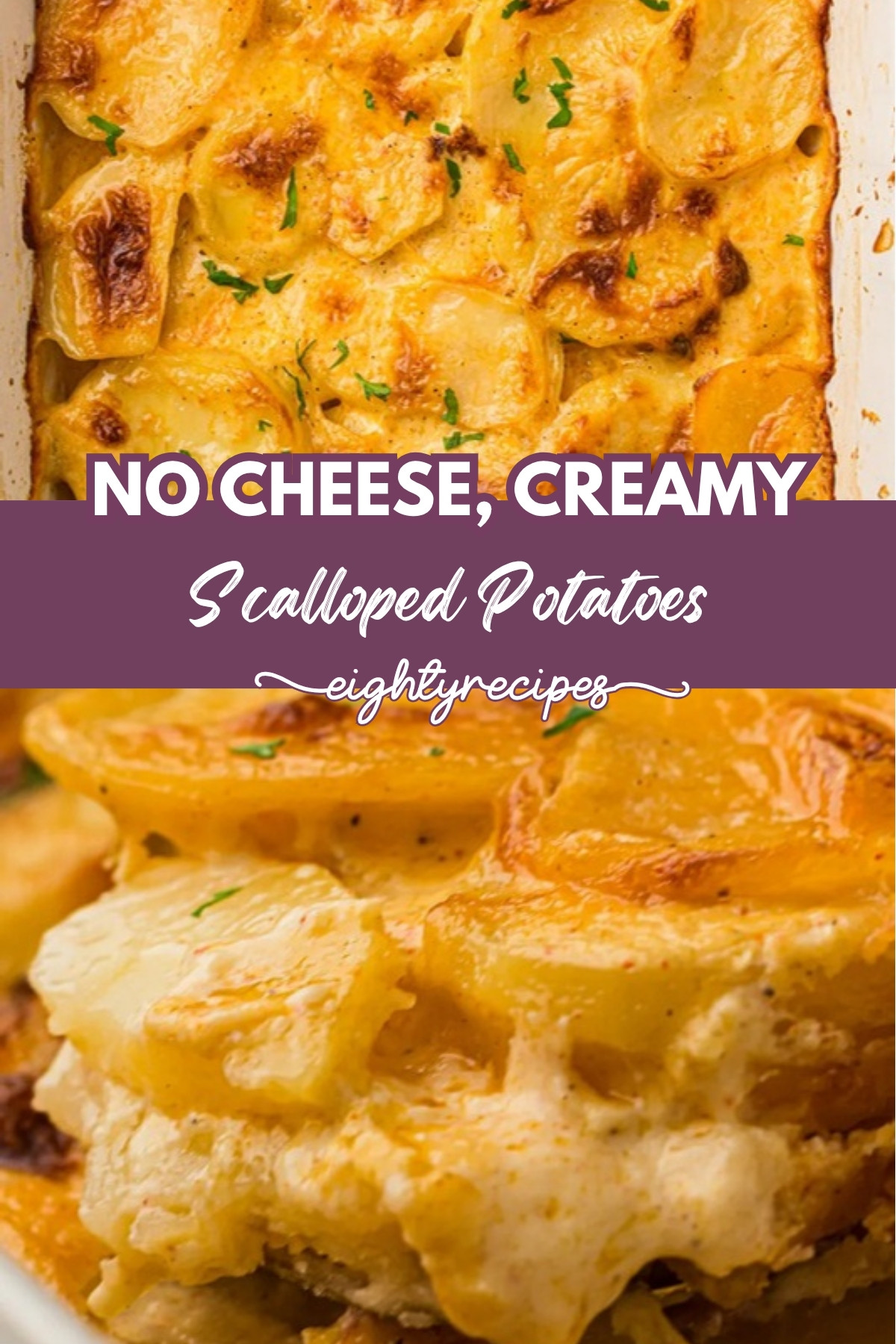
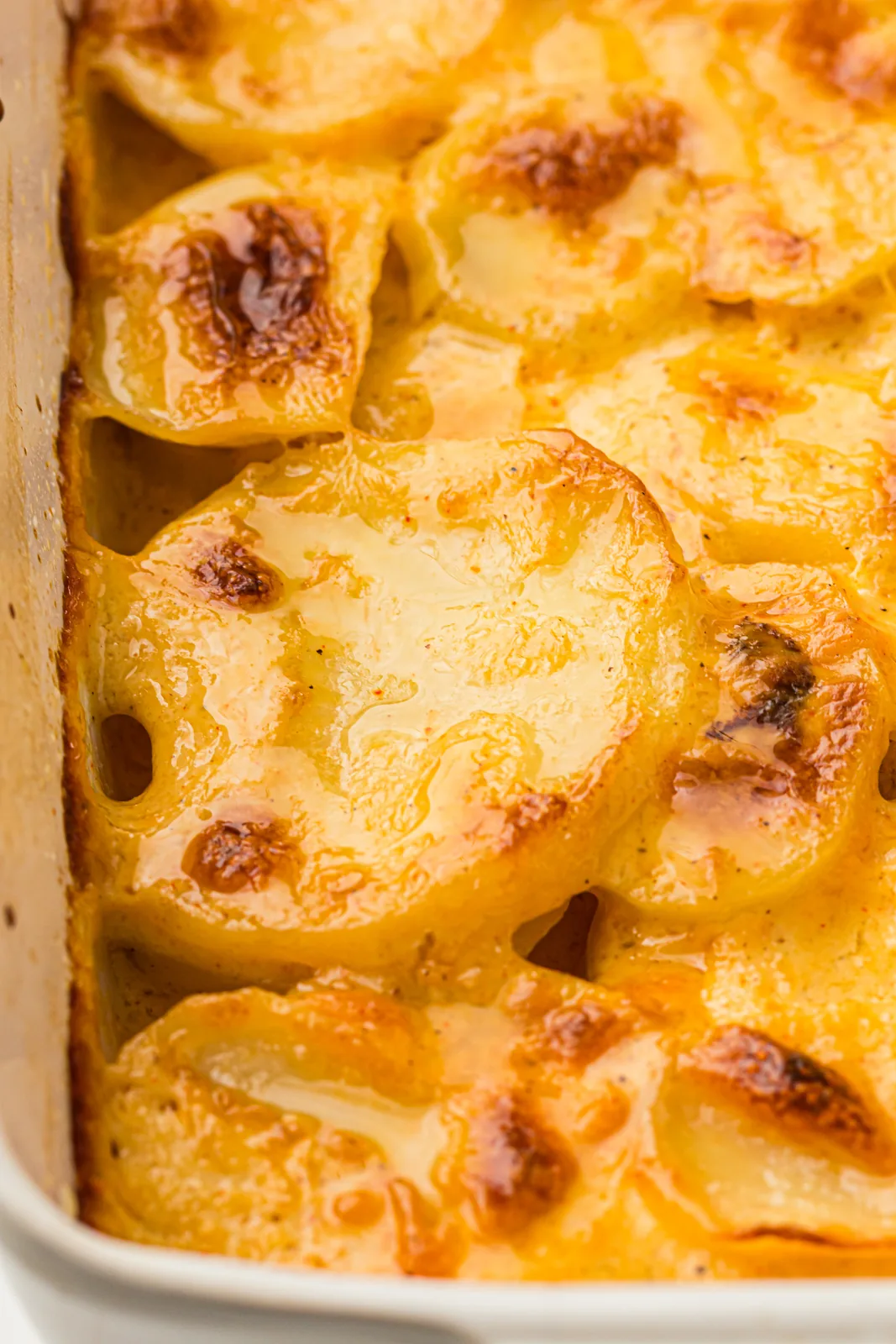
Proper scalloped potatoes without cheese are the version my grandmother made, and for years I assumed she was leaving something out. She was not. Cheese turns the dish into a gratin, and a gratin is a different, heavier thing entirely.
What you get instead is thin potato slices baked slowly in a seasoned cream sauce until the top browns and the middle turns silky. Smoked paprika and garlic powder do the flavouring, and the potatoes taste like potatoes rather than like cheddar.
Quick Breakdown
Why You’ll Love These Scalloped Potatoes Without Cheese
- The potato actually tastes of potato. Because nothing is competing with it, the flavour is clean and buttery.
- It goes with everything. Cheese fights a lot of main courses. This does not, which is why it belongs on a holiday table.
- Nine ingredients, all cupboard staples. In fact, the only shopping you need to do is potatoes and cream.
- Fully make-ahead. Assemble it the day before, keep it covered in the fridge, and bake it when you need it.
- Feeds six to eight. Meanwhile it reheats better than most cream-based sides.
Ingredient Notes
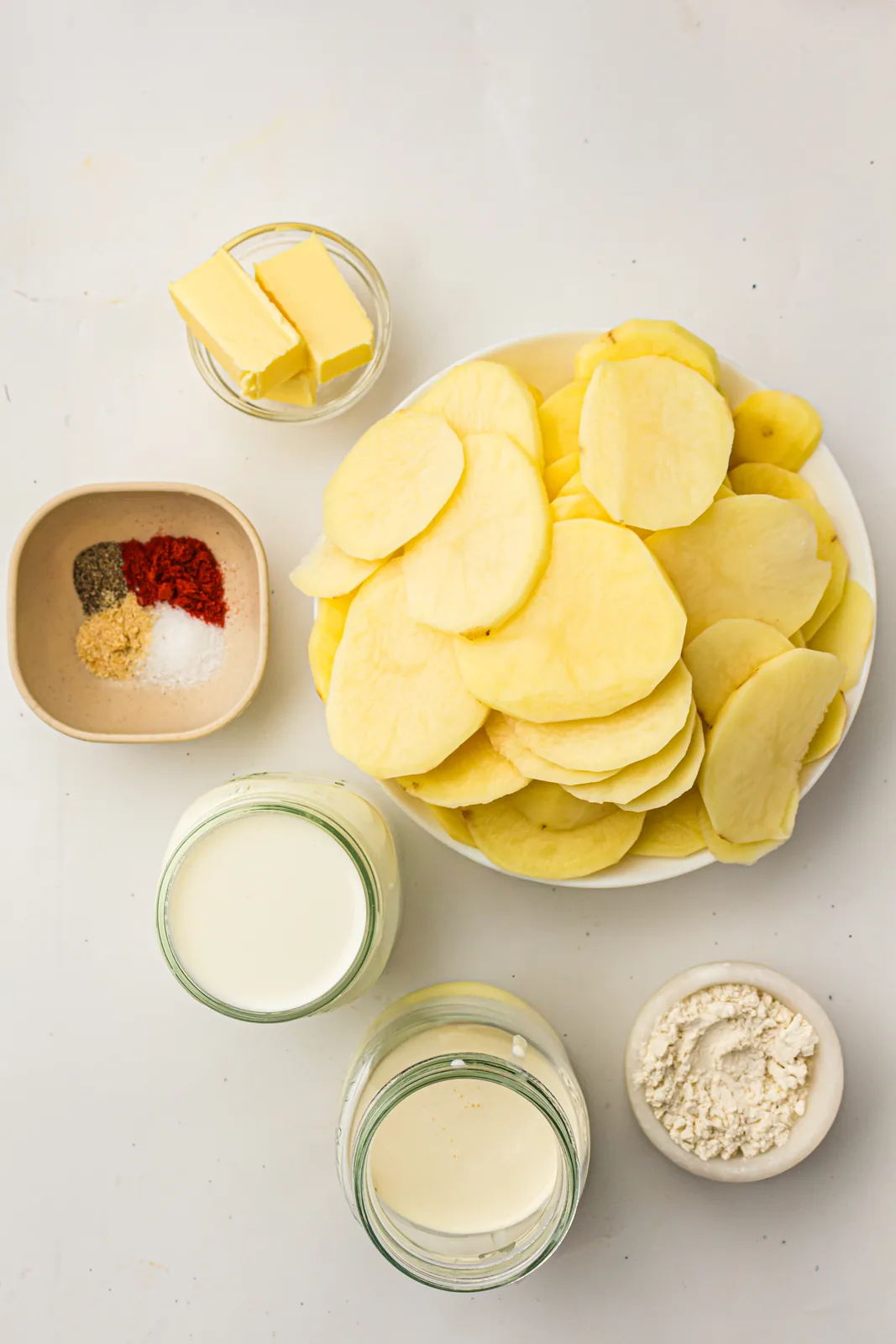
- Potatoes. Yukon Gold or another waxy variety holds its shape through an hour in the oven. However, floury potatoes like Maris Piper will break down into something closer to a mash, which some people actually prefer.
- Heavy cream and milk together. The cream gives richness and the milk keeps the sauce from becoming cloying. Using only milk risks curdling, since it has far less fat to protect it.
- Flour. Just two tablespoons, cooked in butter for a minute. Because a light roux stabilises the dairy, this is your insurance against a split sauce.
- Smoked paprika. This is the ingredient doing the most work. It brings colour and a gentle savoury smokiness that fills the gap cheese would normally occupy.
- Garlic powder. Powder rather than fresh here, so it disperses evenly through the sauce instead of catching and turning bitter.
- Potatoes, storage note. Keep them somewhere dark and cool but never the fridge, and the Academy of Nutrition and Dietetics explains where each food actually belongs.
Which Potatoes to Use and How Thin to Slice Them
For scalloped potatoes without cheese, thickness matters more than variety. Aim for about 3 mm, roughly an eighth of an inch, and be consistent about it. A mandoline gets you there in two minutes and a sharp knife gets you there in ten.
Uneven slices are the single most common reason a dish comes out with hard bits. Thick pieces sit in the middle of the dish still firm while the thin ones around them have collapsed. So take the extra time at the board and the bake looks after itself.
Waxy potatoes such as Yukon Gold or red potatoes keep defined layers. Meanwhile russets give a softer, more melting result and thicken the sauce with their own starch. Both are good, they are simply different dishes. Nutritionally the humble potato gets a mixed press, and the Harvard Nutrition Source lays out where it sits.
What to Use Instead of Cheese for Flavour
Cheese in a potato bake is doing three jobs at once, which is why scalloped potatoes without cheese need a little thought. It adds salt, it adds savoury depth, and it browns on top. So if you remove it, you have to cover all three deliberately.
Salt is the easy one, and this sauce takes a full teaspoon. For depth, smoked paprika and garlic powder work together better than either does alone. For browning, the cream itself caramelises once the foil comes off, which is why the last fifteen minutes uncovered are not optional.
Better yet, a grating of nutmeg or a bay leaf steeped in the warming milk adds another layer. As a result nobody at the table asks where the cheese went.
How To Make Scalloped Potatoes Without Cheese
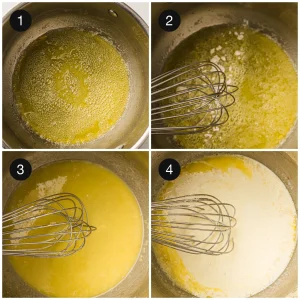
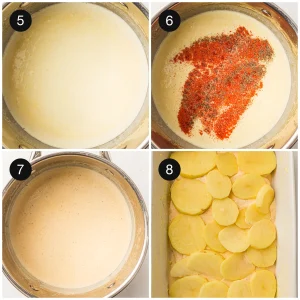
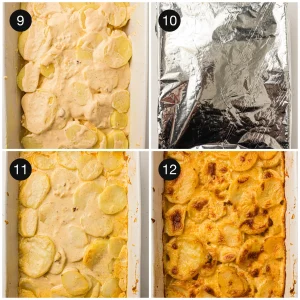
1. Heat the oven and prepare the dish. First set the oven to 180C and grease a baking dish with a little of the butter.
2. Make the roux. Next melt the remaining butter in a saucepan over medium heat, whisk in the flour, and cook it for a full minute to lose the raw taste.
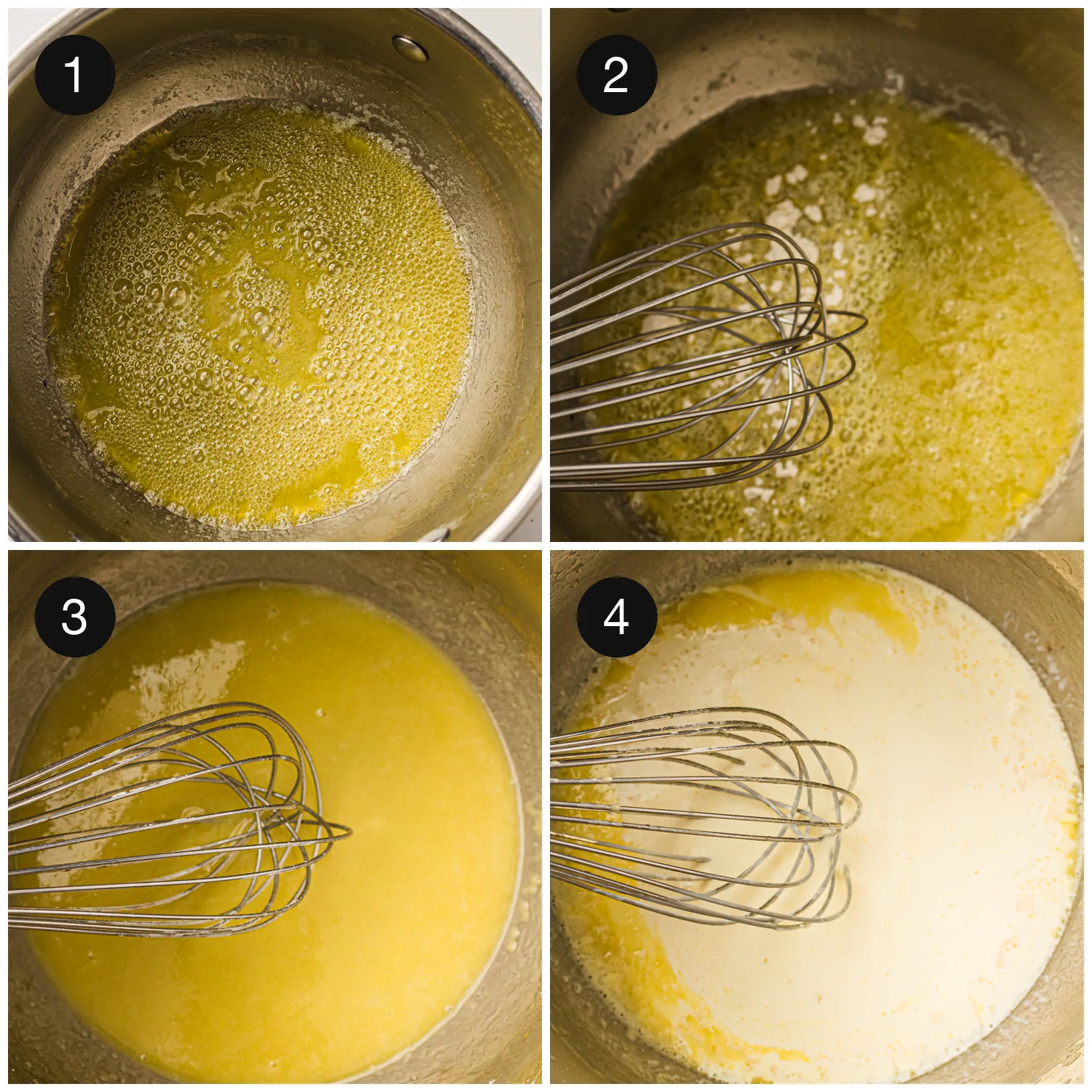
3. Build the sauce. Then pour in the milk and cream gradually, whisking the whole time until smooth. Add the salt, pepper, smoked paprika, and garlic powder.
4. Thicken it slightly. After that cook for 3 to 5 minutes, stirring, until it coats the back of a spoon. It should be pourable rather than thick.
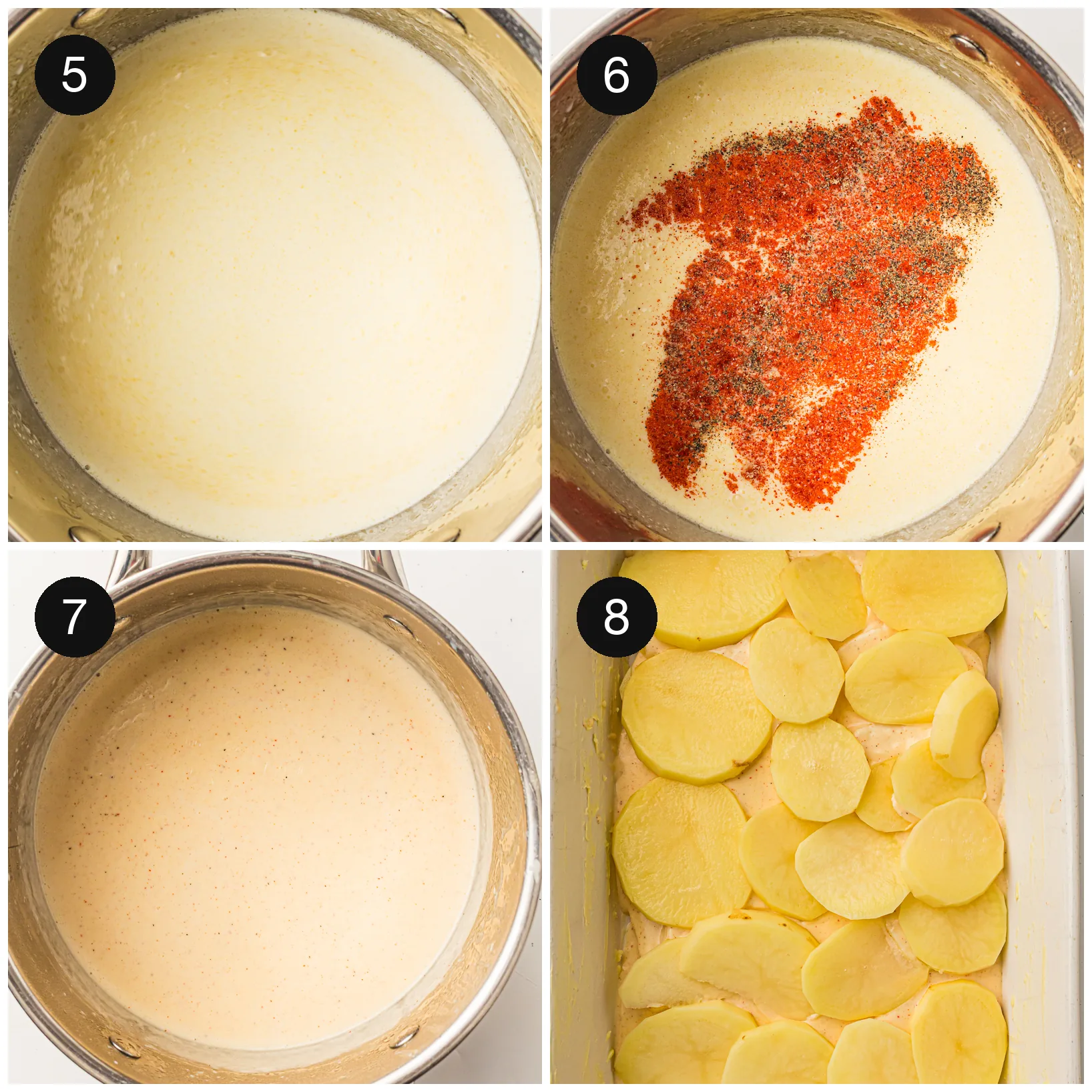
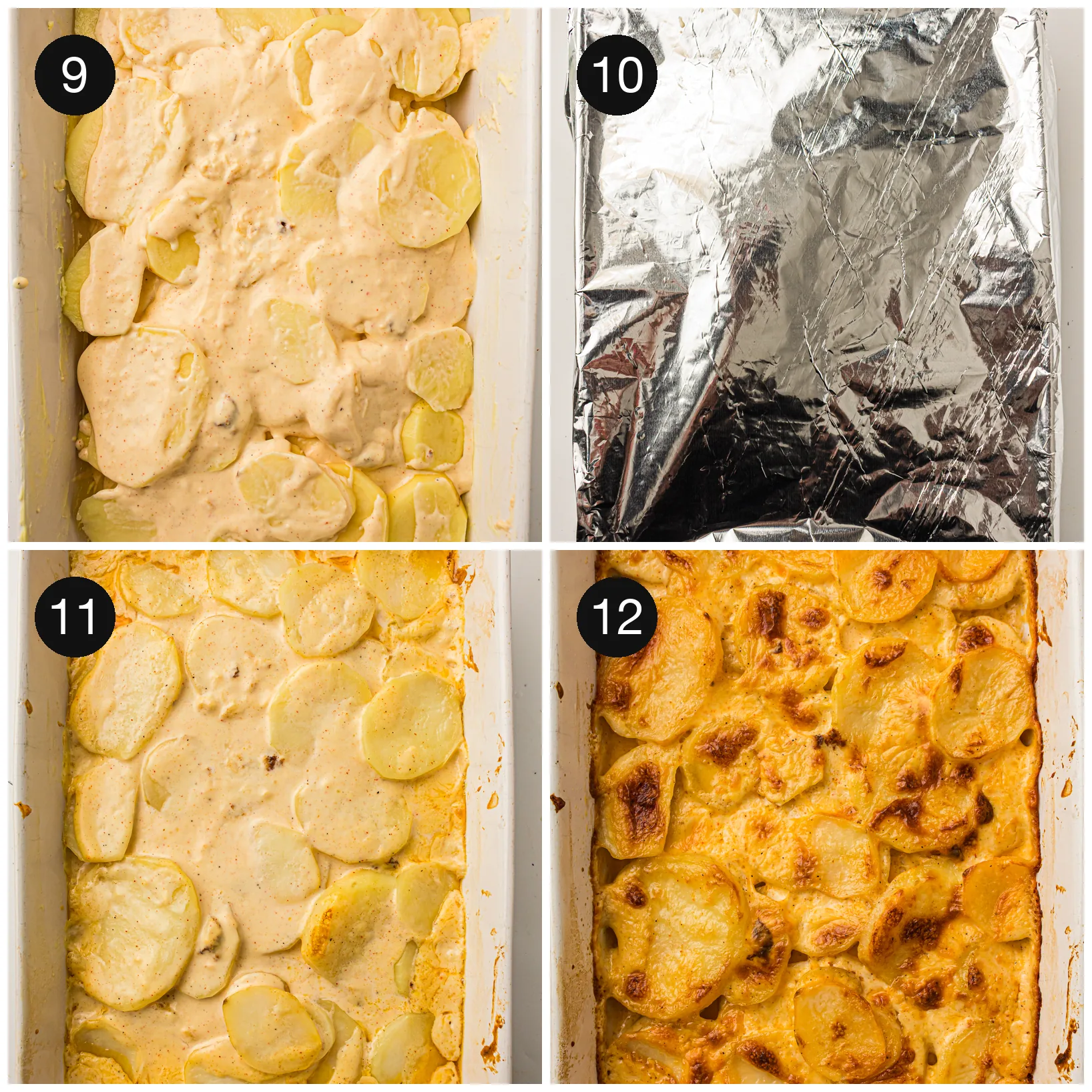
5. Layer and pour. Meanwhile arrange half the sliced potatoes evenly in the dish, pour over half the sauce, then repeat with the rest of both.
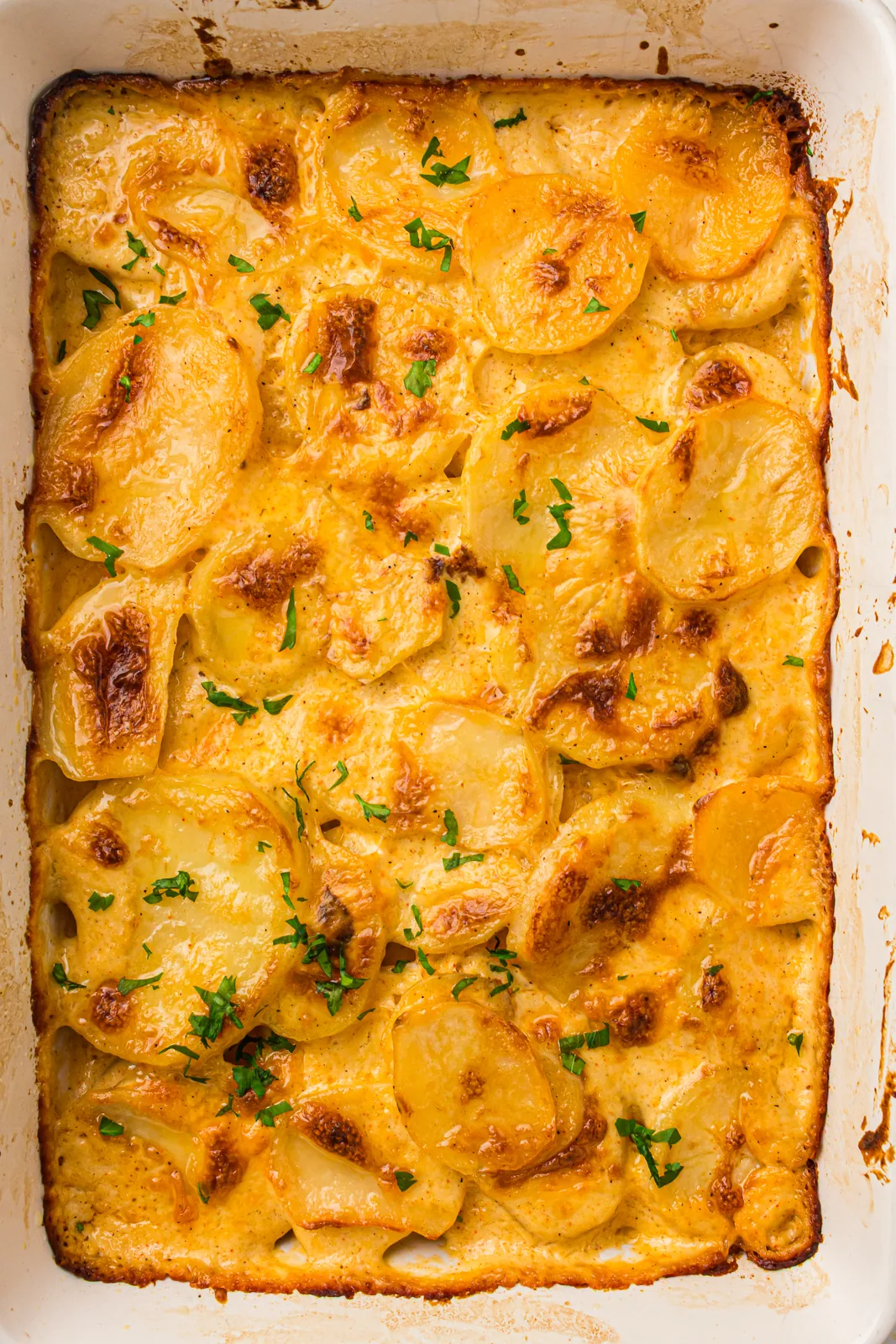
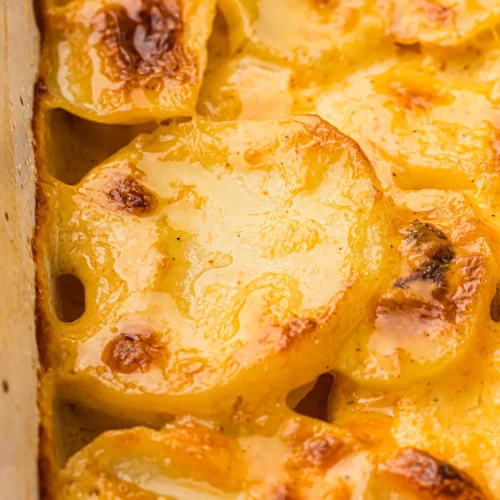
6. Bake covered, then uncovered. Finally cover tightly with foil and bake for 45 minutes, then remove the foil and give it another 15 until bubbling and golden. Rest it for 5 to 10 minutes before serving so the sauce settles.
Why Are My Potatoes Still Hard
- Slices cut too thick. This is almost always the answer. Anything over 5 mm needs far longer than an hour.
- Not enough sauce contact. Because the potatoes cook in the liquid, any slice sitting proud of the sauce stays firm and dries out.
- Foil left loose. Steam does most of the cooking in the first 45 minutes, so seal the edges properly.
- Baking from cold. If the dish came straight from the fridge, add 10 to 15 minutes.
- Sauce that split. A curdled sauce stops conducting heat evenly. Keep it at a gentle simmer and never let it boil.
Tips for the Best Scalloped Potatoes Without Cheese
- Do not rinse the sliced potatoes. In fact, their surface starch helps thicken the sauce as it bakes.
- Warm the milk and cream before they go into the roux. As a result the sauce comes together smoothly with no lumps.
- Layer the slices slightly overlapping, like roof tiles, so every one sits in liquid.
- If the top browns too fast, drape the foil back over loosely. Otherwise the middle will still be firm when the top is done.
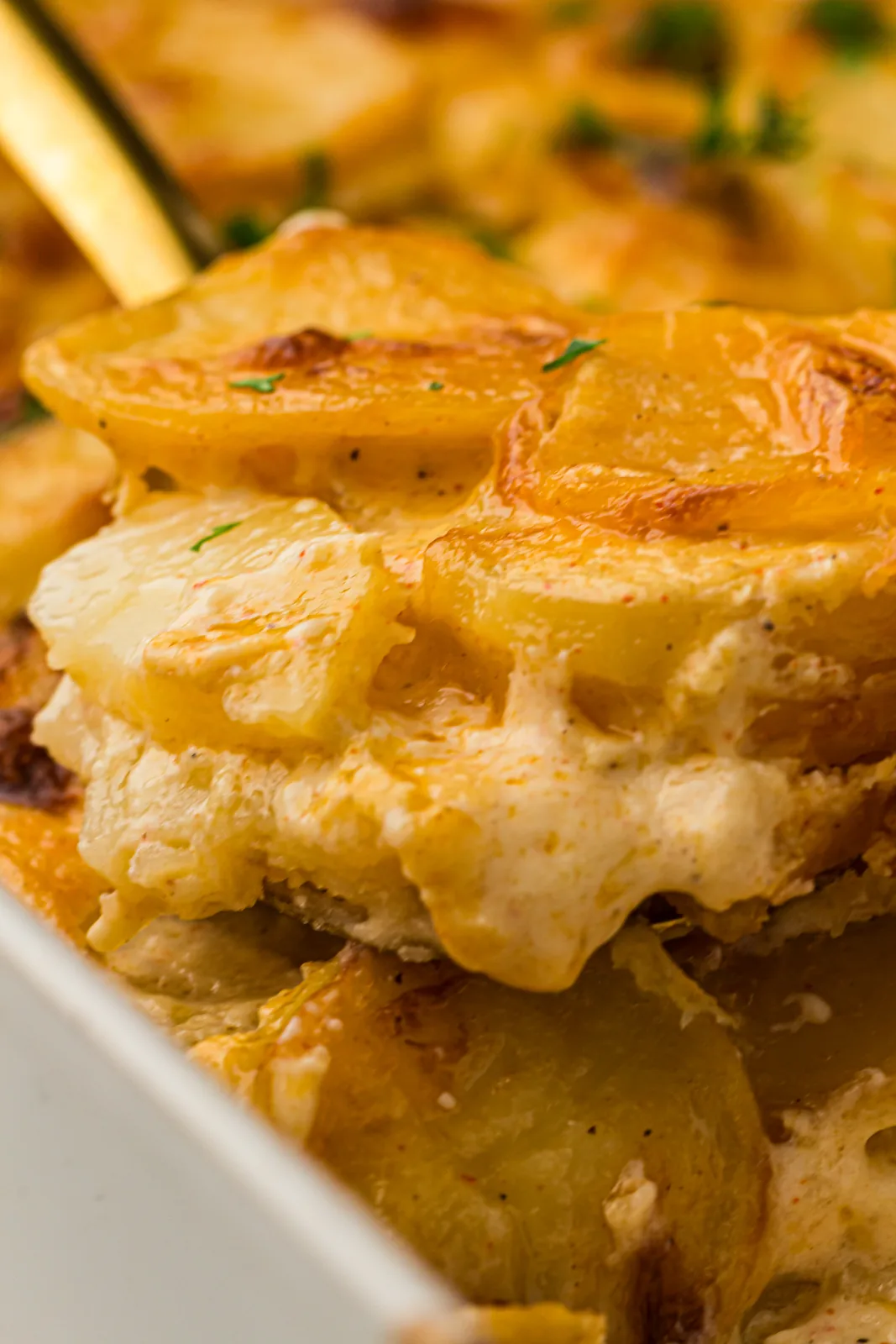
- Rest the scalloped potatoes without cheese properly before serving. Meanwhile the sauce goes from runny to just-set in about eight minutes.
Storage and Reheating
- Make ahead. Assemble the whole dish up to 24 hours in advance, cover, and refrigerate. However, add 10 to 15 minutes to the covered bake time.
- Fridge. Leftover scalloped potatoes without cheese keep for 3 days in an airtight container.
- Reheating. Cover with foil and warm at 160C for about 20 minutes. Meanwhile freezing is not recommended, since the cream sauce separates on thawing.
Variations and Substitutions
- Add onion. A thinly sliced onion layered between the potatoes is the old-fashioned version and adds real sweetness.
- Herbs. Thyme leaves or a bay leaf steeped in the warm milk both work well. Remove the bay before assembling.
- Lighter sauce. Swap one cup of cream for milk. Still, keep at least a cup of cream or the sauce risks splitting.
- If you do want cheese. Then you want a gratin instead, and my baked mac and cheese scratches that itch properly. For a plainer potato side, try air fryer baked potatoes.
What to Serve With These Potatoes
Scalloped potatoes without cheese are a holiday side above all else. It sits beside ham, lamb, or a classic roast chicken without arguing with any of them, which is exactly why leaving the cheese out matters.
You want something green and sharp on the plate too. Garlic butter green beans take ten minutes and cut through the cream. In addition, a simple leafy salad with a mustard dressing does the same job.
Frequently Asked Questions
Ingredients and Method
Do scalloped potatoes always have cheese?
No, and traditionally they do not. Adding cheese makes the dish a potato gratin. Because the two names get used interchangeably, most modern recipes include it anyway.
What can I use instead of cheddar for flavour?
Smoked paprika, garlic powder, and enough salt. Instead of a cheesy top, you rely on the cream browning during the uncovered stage.
Why use both milk and cream?
The cream gives richness and stability, and the milk lightens it. All cream is heavy going, while all milk is likely to curdle.
How thin should the slices be?
About 3 mm. Of course, consistency matters more than the exact number, so use a mandoline if you have one.
Make Ahead and Troubleshooting
Can I make this ahead of time?
Yes. Assemble it, cover, and refrigerate for up to 24 hours, then add 10 to 15 minutes to the covered baking time.
Why did my sauce curdle?
Too much heat, or too little fat. Keep the sauce at a gentle simmer and do not replace the cream entirely with milk.
Can I freeze the leftovers?
Not really. Cream-based sauces separate and go grainy after freezing, so keep leftovers in the fridge and eat them within three days.
Ingredients
- 1.2 kg potatoes 2.5 lbs, peeled and thinly sliced
- 2 tablespoons butter
- 2 cups heavy cream
- 1 cup milk
- 2 tablespoons flour
- 1 teaspoon salt
- 1/2 teaspoon black pepper
- 1/2 teaspoon smoked paprika
- 1 teaspoon garlic powder
Instructions
- Preheat the oven to 350°F (180°C).
- Grease a baking dish with a little of the butter.
- In a saucepan over medium heat, melt the remaining butter.

- Whisk in the flour and cook for 1 minute to remove the raw flour taste.
- Gradually whisk in the milk and cream until smooth.
- Add the salt, black pepper, smoked paprika, and garlic powder.
- Cook for 3 to 5 minutes, stirring, until the sauce thickens slightly.
- Layer half of the sliced potatoes evenly in the prepared baking dish.
- Pour over half of the cream sauce.
- Repeat with the remaining potatoes and sauce.
- Cover the dish tightly with foil and bake for 45 minutes.
- Remove the foil and bake uncovered for a further 15 minutes, until bubbling and lightly golden on top.
- Rest for 5 to 10 minutes before serving.