 Bity
Bity
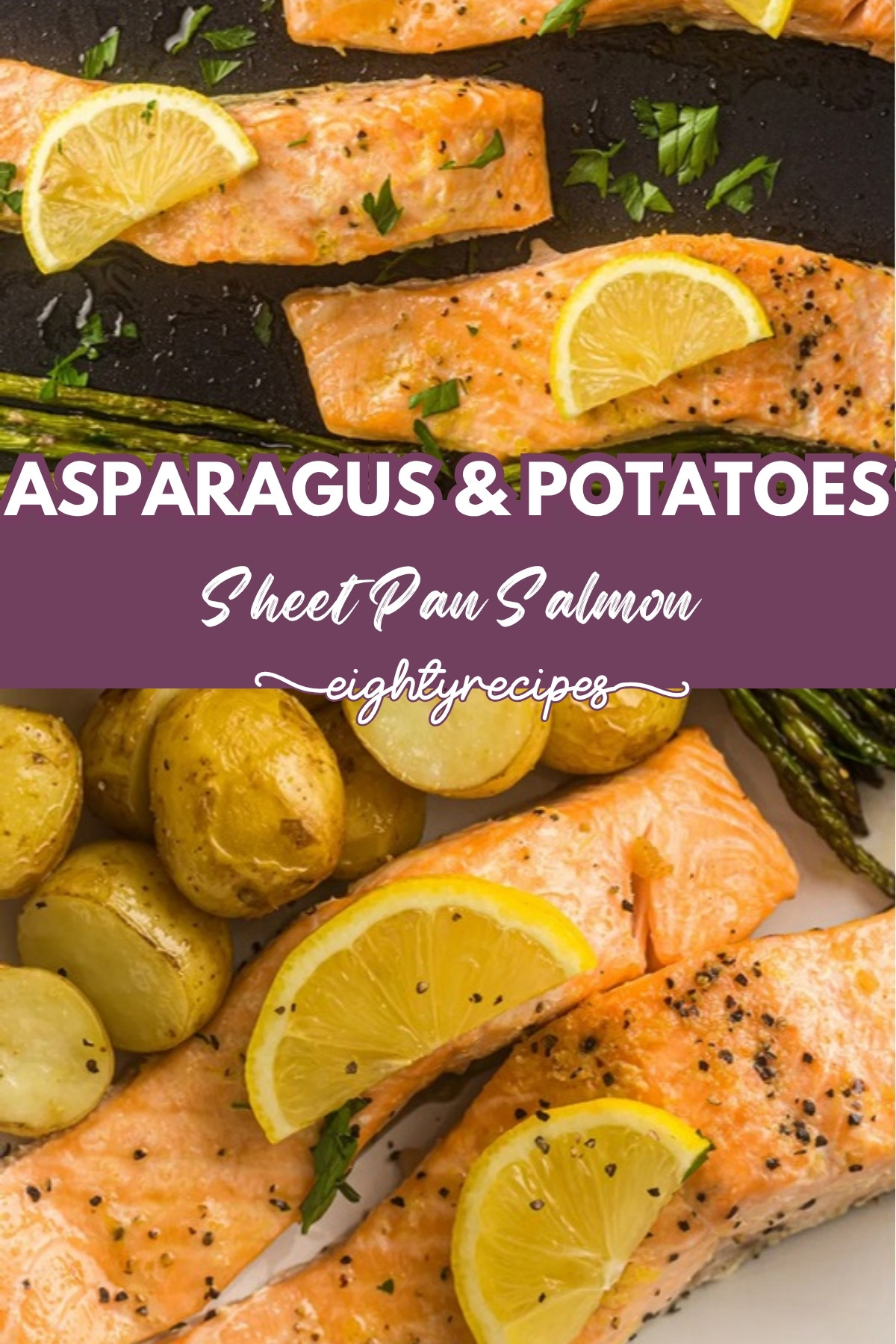
Potatoes first, everything else later. Sheet pan salmon only works as a one pan dinner if you accept that a halved baby potato needs about twenty five minutes and a salmon fillet needs fifteen, so they cannot go in together.
Give the potatoes a ten minute head start, then slide the salmon and asparagus in around them. Everything finishes at the same moment, and the only thing you wash up is the pan.
Quick Breakdown
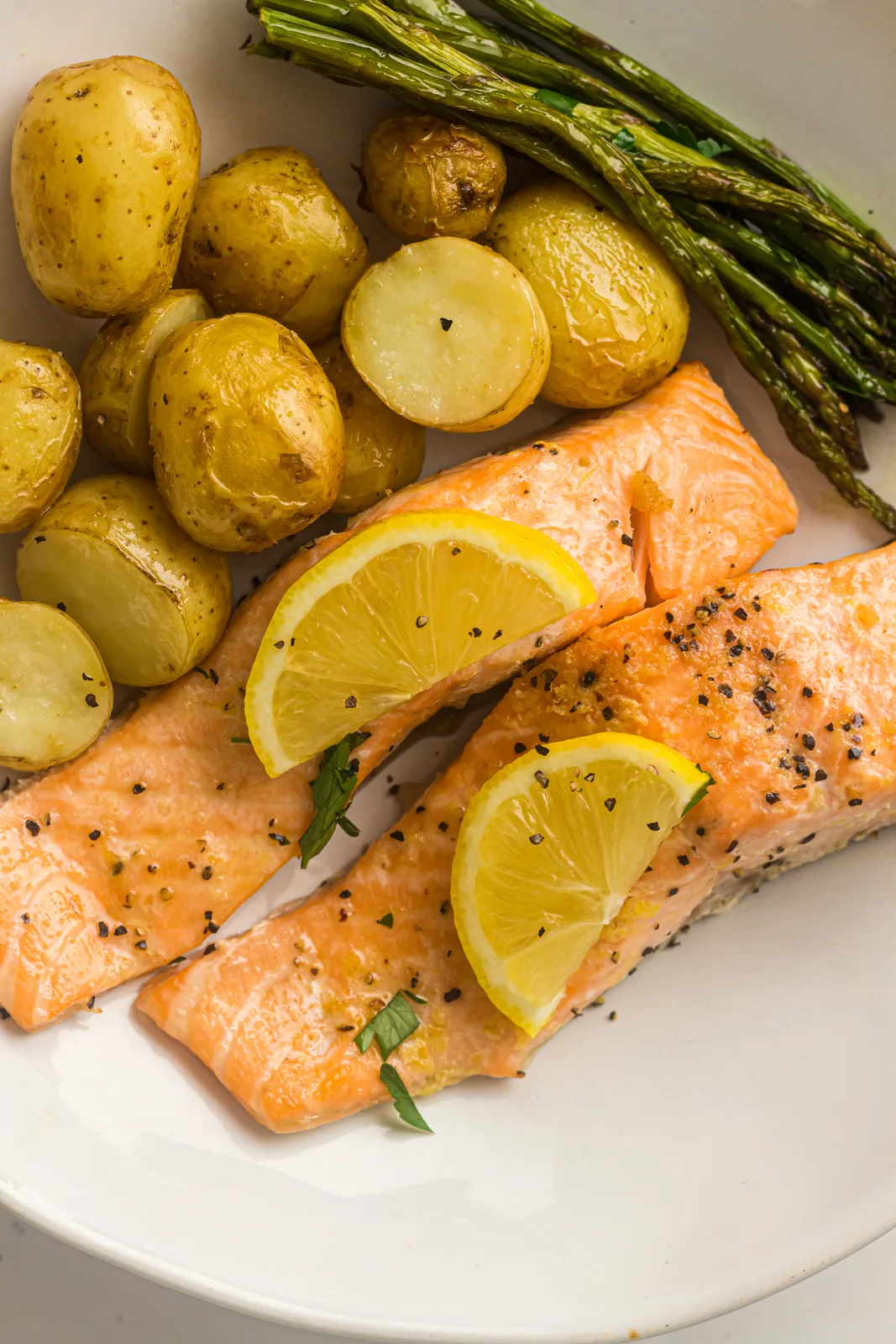
Why You’ll Love This Sheet Pan Salmon
- One pan, three components. Protein, starch and a green vegetable, all in the oven together.
- Thirty five minutes. Ten of prep and twenty five of oven time, most of it unattended.
- Lemon butter, not a marinade. It goes on right before baking, so nothing turns chalky.
- Nothing to time carefully. The staggered start does all the thinking for you.
- It looks like a restaurant plate. For almost no effort, which is not nothing.
Ingredient Notes
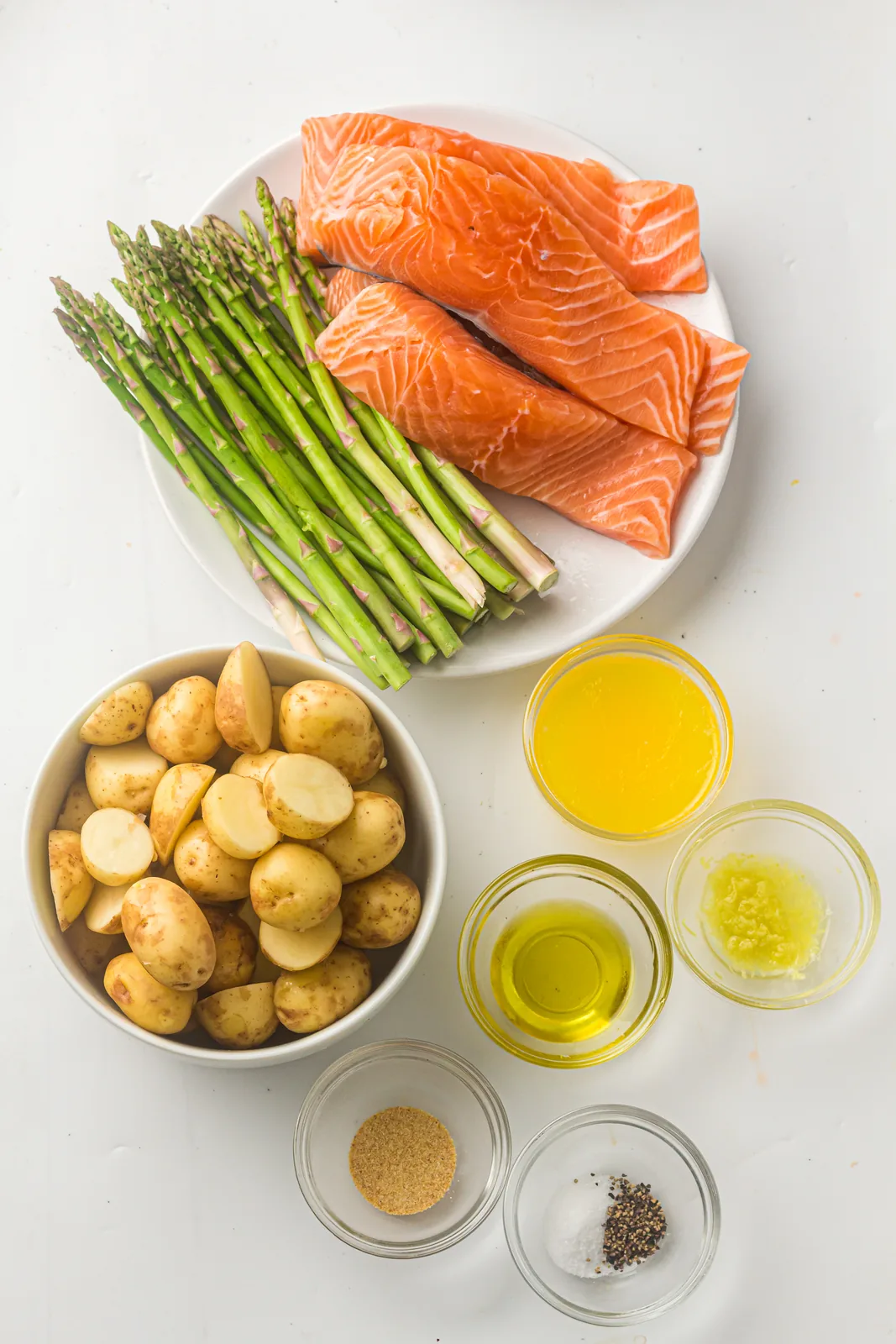
- Salmon fillets. Four, at five to six ounces each. Similar thickness matters more than exact weight, since a thin tail piece overcooks while a thick loin is still translucent.
- Baby potatoes. A pound and a half, halved. Halving is not optional. Whole ones need nearly double the time.
- Asparagus. One bunch, trimmed. Snap one spear and it breaks where the woody part ends, then cut the rest to match.
- Olive oil. Two tablespoons, divided. One for the potatoes at the start, one for the asparagus later.
- Melted butter and lemon. Two tablespoons of butter with the zest and juice of one lemon. Zest for the perfume, juice for the sharpness.
- Garlic powder, salt and pepper. A teaspoon, half a teaspoon and a quarter. Powder rather than fresh garlic, which scorches at this temperature.
There is a decent reason to make this a weekly habit. Harvard’s Nutrition Source reports that eating one to two 3 ounce servings of fatty fish a week, such as salmon, reduces the risk of dying from heart disease by 36 percent, which is a large number for something this easy.
The Timing Problem With Sheet Pan Salmon
Every one pan dinner runs into the same wall. Different foods cook at different speeds, and if you ignore that you either get raw potatoes or dry fish. The fix is not a clever temperature, it is a staggered start.
Ten minutes for the potatoes on their own, then everything together for fifteen to eighteen more. Asparagus is the fast one, so it goes in with the salmon rather than before it. That said, thick spears can take the full time comfortably, while pencil thin ones are better added five minutes in.
| Component | Total time at 400°F | Goes in |
|---|---|---|
| Halved baby potatoes | 25 to 28 minutes | First, alone |
| Salmon fillets | 15 to 18 minutes | After ten minutes |
| Trimmed asparagus | 15 minutes | With the salmon |
Space on the tray is the other half of it. Roasting needs dry heat moving over the surface, and food packed edge to edge releases enough steam to stop anything browning. Keep the potatoes in a single layer with a little room between them, and give the fillets their own stretch of pan rather than tucking them into a gap. If your tray is not big enough for that, use two. A second pan costs you nothing except a slightly fuller dishwasher.
How To Make Sheet Pan Salmon
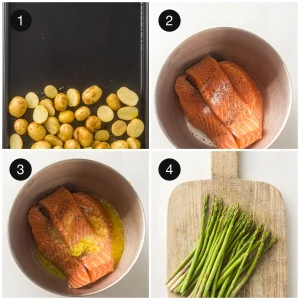
1. Heat the oven and start the potatoes. First, set the oven to 400°F and line a large rimmed pan. Toss the halved potatoes with one tablespoon of oil, a quarter teaspoon of garlic powder, salt and pepper, then spread them across one side.
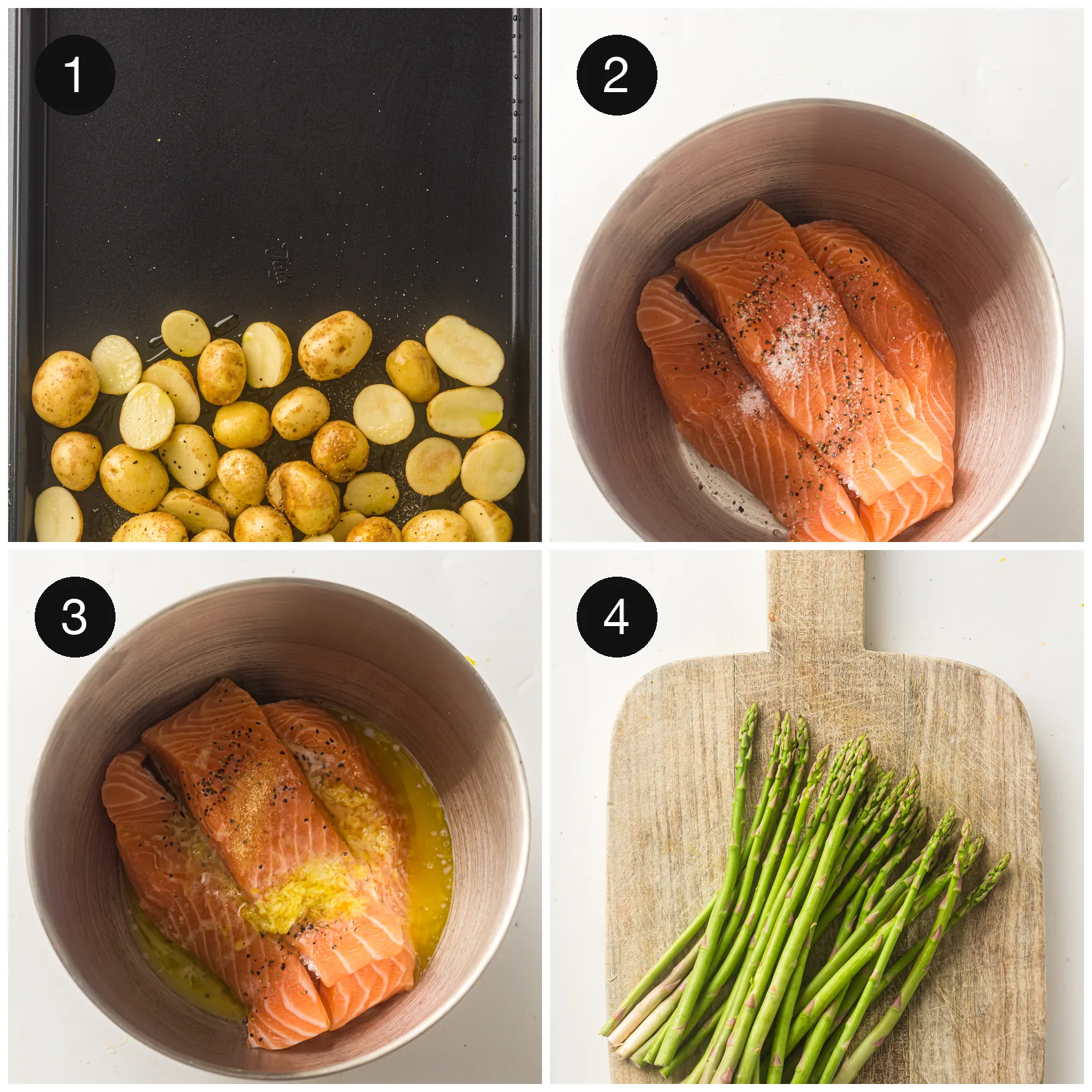
2. Give them a head start. Next, roast the potatoes on their own for ten minutes. This is the step that makes the whole thing work.
3. Dress the fish. Meanwhile, put the fillets in a bowl with the melted butter, lemon juice, lemon zest, a pinch of garlic powder and a light seasoning, and turn them gently to coat.
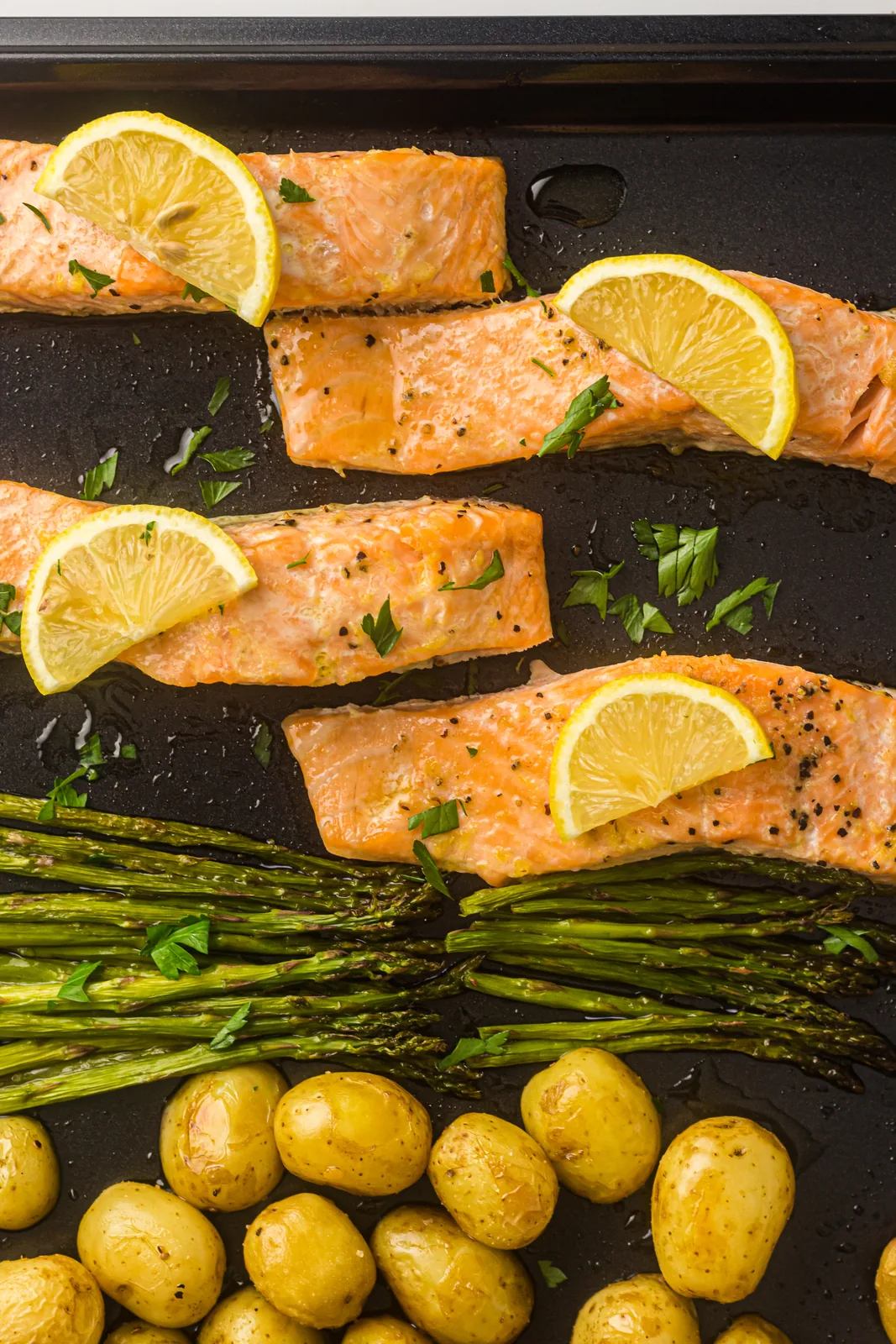
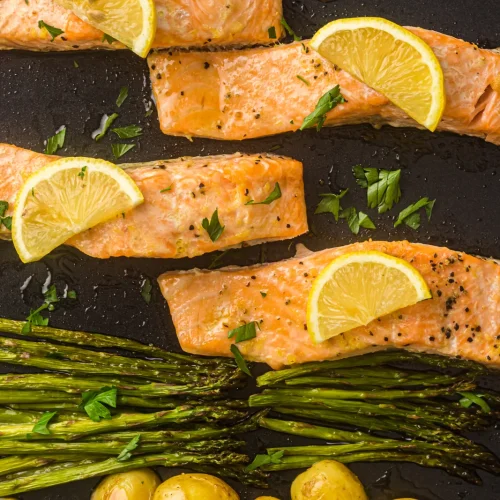
4. Fill the pan. Then pull the pan out, push the potatoes to one side, lay the salmon down and arrange the asparagus alongside.
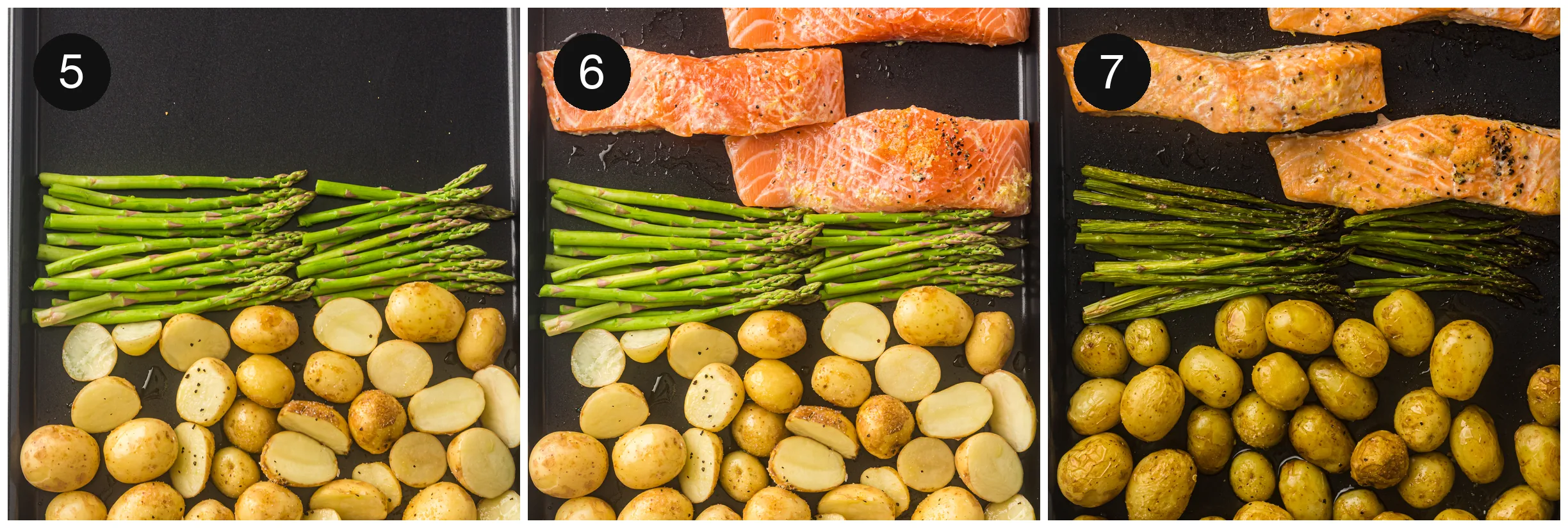
5. Season and spoon. Drizzle the asparagus with the remaining tablespoon of oil, season it lightly, and spoon any lemon butter left in the bowl over the fish.
6. Bake and finish. Finally, bake for 15 to 18 minutes, until the salmon flakes easily with a fork and the potatoes are tender. Broil for two minutes at the end if you want more colour.
Biggest Mistakes to Avoid
- Everything in at once. The classic error, and the reason most one pan dinners come out either raw or overdone.
- Wet fish. Pat the fillets dry before they go in the butter, especially if they were frozen. Water on the surface steams instead of roasting.
- Crowding the pan. Food packed edge to edge steams. Use two trays rather than piling one.
- Fresh garlic. At 400°F for twenty five minutes it turns black and bitter. Powder survives.
- Cooking to a timer alone. Fillet thickness varies enormously. Check the thickest one with a fork.
- Untrimmed asparagus. The woody ends never soften and ruin an otherwise good plate.
Tips for the Best Sheet Pan Salmon
- Cut the potatoes to a similar size. Uneven halves are the main reason some are done and some are not.
- Meanwhile, put the tray in the oven while it preheats. A hot pan starts the potatoes browning immediately.
- Zest the lemon before juicing it, then use the wedges on the plate.
- Sheet pan salmon is done when the flesh flakes but still looks slightly translucent at the very centre. It carries on cooking off the heat.
- Foil is easier to clean than parchment here, since the butter and juices pool.
- A spoon of yogurt with dill and lemon stirred through turns the leftovers into a different meal.
Storage and Reheating
- Fridge. Up to three days in an airtight container.
- Reheating. A low oven at 300°F for eight to ten minutes keeps the texture. Cover it loosely.
- Microwave. Best avoided. It tightens the fish and makes the kitchen smell for hours.
- Cold. Genuinely good flaked over salad the next day, with a squeeze of lemon.
- Freezer. Not recommended for cooked salmon. The texture goes dry and stringy.
Variations and Substitutions
- Other vegetables. Broccolini, green beans or courgette all work. Adjust the roasting time to match.
- Skip the butter. Olive oil and lemon juice alone make a lighter version, though it loses some richness.
- Another fish. Cod and haddock suit the same treatment. Air fryer cod uses a similar lemon butter idea on a smaller scale.
- Faster. For two people, air fryer salmon is done in about ten minutes with no potatoes to time.
- Same format, different protein. Sheet pan BBQ chicken thighs follow exactly this staggered method.
What to Serve With It
It is already a full plate, so anything extra is about mopping or freshness. Quinoa, couscous or crusty bread all round it out. A bowl of garlic butter green beans works if the asparagus has run out of season, and a quick yogurt and dill sauce or tzatziki for dipping is the one thing I would actually recommend adding. Instead of another side, just put out lemon wedges and chopped parsley.
Frequently Asked Questions
Ingredients and Method
Can I use frozen salmon?
Yes, but thaw it completely and pat it dry before roasting. Excess moisture on the surface steams the fillet rather than letting it colour.
Can I substitute another vegetable for asparagus?
Yes. Broccolini, green beans or courgette all work well. Adjust the roasting time, since thicker vegetables need a few extra minutes.
Can I skip the butter?
You can use only olive oil and lemon juice for a lighter option, though the butter adds richness and helps the seasoning cling.
Do I need to peel the potatoes?
No. Baby potato skins crisp up nicely and hold the halves together. Just scrub them and cut them in two.
Skin on or skin off?
Either. Skin on holds the fillet together and crisps a little underneath, while skinless is easier to serve. If you leave it on, lay the fillets skin side down on the tray.
Storage and Troubleshooting
How do I know when the salmon is done?
It flakes easily when you press a fork into the thickest part and still looks faintly translucent right at the centre. Sheet pan salmon keeps cooking for a minute or two after it leaves the oven.
Why were my potatoes still hard?
Either they were cut too large or they did not get their ten minute head start. Halve them properly and roast them alone before anything else joins the pan.
How long do leftovers keep?
Up to three days in the fridge in an airtight container. Reheat in a low oven rather than a microwave to preserve the texture.
Can I double this?
Yes, across two pans rather than one. A single crowded tray steams everything and none of it browns.
Why was my asparagus limp?
Thin spears cannot take the full fifteen minutes. Add pencil thin asparagus about five minutes after the salmon goes in, or buy the thicker stalks, which hold their bite.
Ingredients
- 4 salmon fillets about 5 to 6 ounces each
- 1 1/2 lb baby potatoes halved
- 1 bunch asparagus trimmed
- 2 tablespoons olive oil divided
- 2 tablespoons butter melted
- 1 teaspoon garlic powder
- 1 lemon zest and juice
- 1/2 teaspoon salt
- 1/4 teaspoon black pepper
- lemon wedges and chopped fresh parsley optional, to garnish
Instructions
- Preheat the oven to 400°F (200°C). Line a large rimmed sheet pan with parchment paper or foil.
- Toss the halved baby potatoes with 1 tablespoon of olive oil, 1/4 teaspoon of garlic powder, salt and pepper. Spread them across one side of the prepared pan.

- Roast the potatoes for 10 minutes to give them a head start.
- While the potatoes roast, place the salmon fillets in a mixing bowl. Add the melted butter, lemon juice, lemon zest, a pinch of garlic powder and a light sprinkle of salt and pepper, then toss gently to coat.
- Remove the pan from the oven. Push the potatoes to one side, place the salmon fillets on the pan and arrange the asparagus alongside them.

- Drizzle the asparagus with the remaining 1 tablespoon of olive oil and season it lightly with salt and pepper.
- Spoon any remaining lemon butter marinade from the bowl over the salmon.
- Return the pan to the oven and bake for 15 to 18 minutes, until the salmon flakes easily with a fork and the potatoes are tender.
- Optional: broil for 2 minutes at the end for extra colour and caramelisation.