 Bity
Bity
The thing nobody tells you about pasta primavera is that the vegetables and the sauce want completely different things. The vegetables want to stay bright and squeaky. The cream wants to sit and reduce. Get the order wrong and you end up with olive drab broccoli in a thin puddle.
So I cook the vegetables first, hard and fast, then build the sauce around them in the same pan. That order is the only thing separating good pasta primavera from a grey one. Twenty minutes on the hob, one skillet, and the peas stay green.
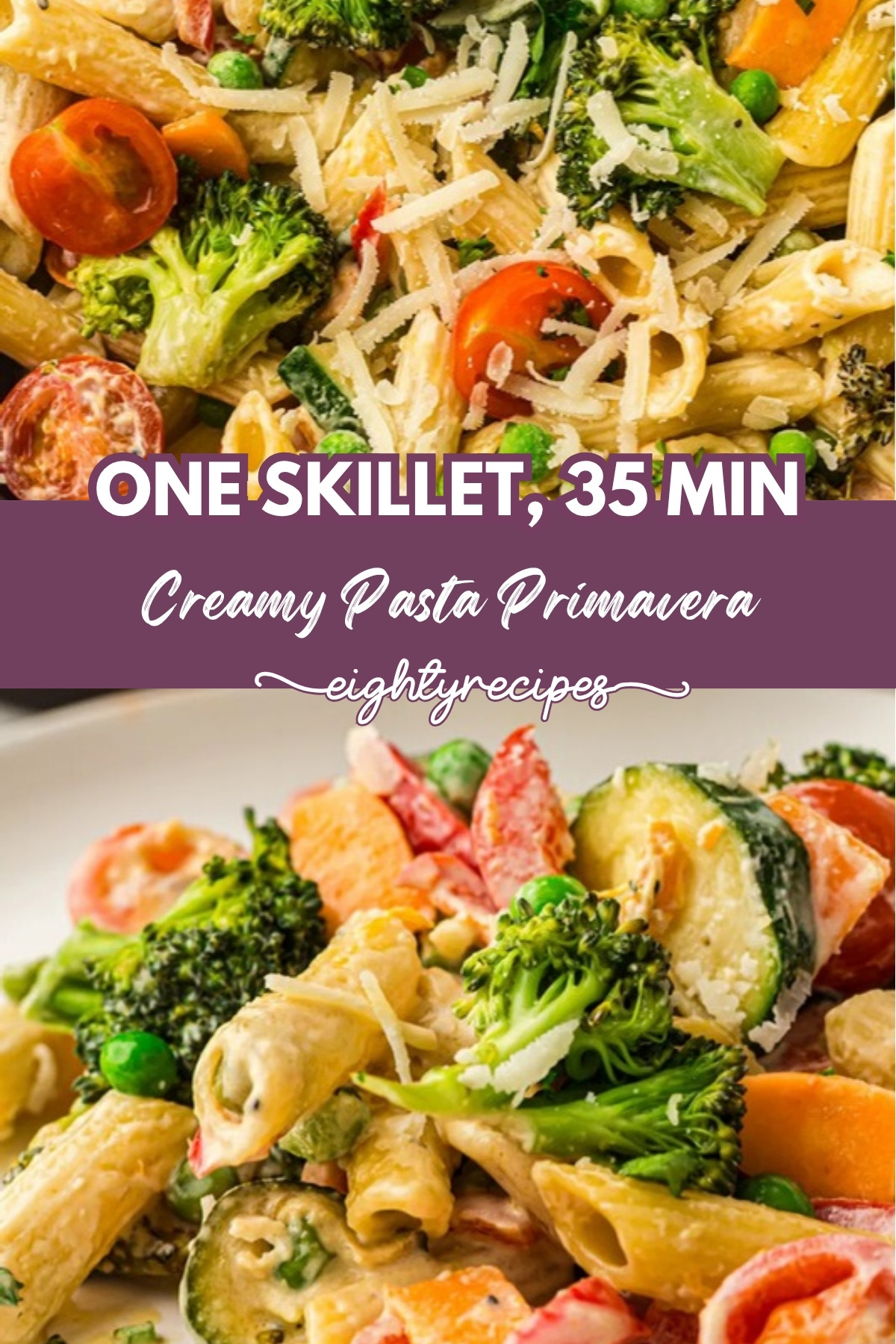
Quick Breakdown
Why You’ll Love This Pasta Primavera
- Thirty five minutes, start to finish. Most of that is the pasta water coming up to the boil.
- One skillet for the sauce. The vegetables season the cream as it reduces, so there is no separate sauce pan to wash.
- Genuinely flexible. Use what is in the drawer. The method does not care which vegetables you pick.
- Feeds four generously, six at a push. It stretches further than you expect because of the vegetable volume.
- Kids eat the broccoli. Cream and Parmesan will do that.
- It reheats. Most pasta primavera is better on day two than people expect.
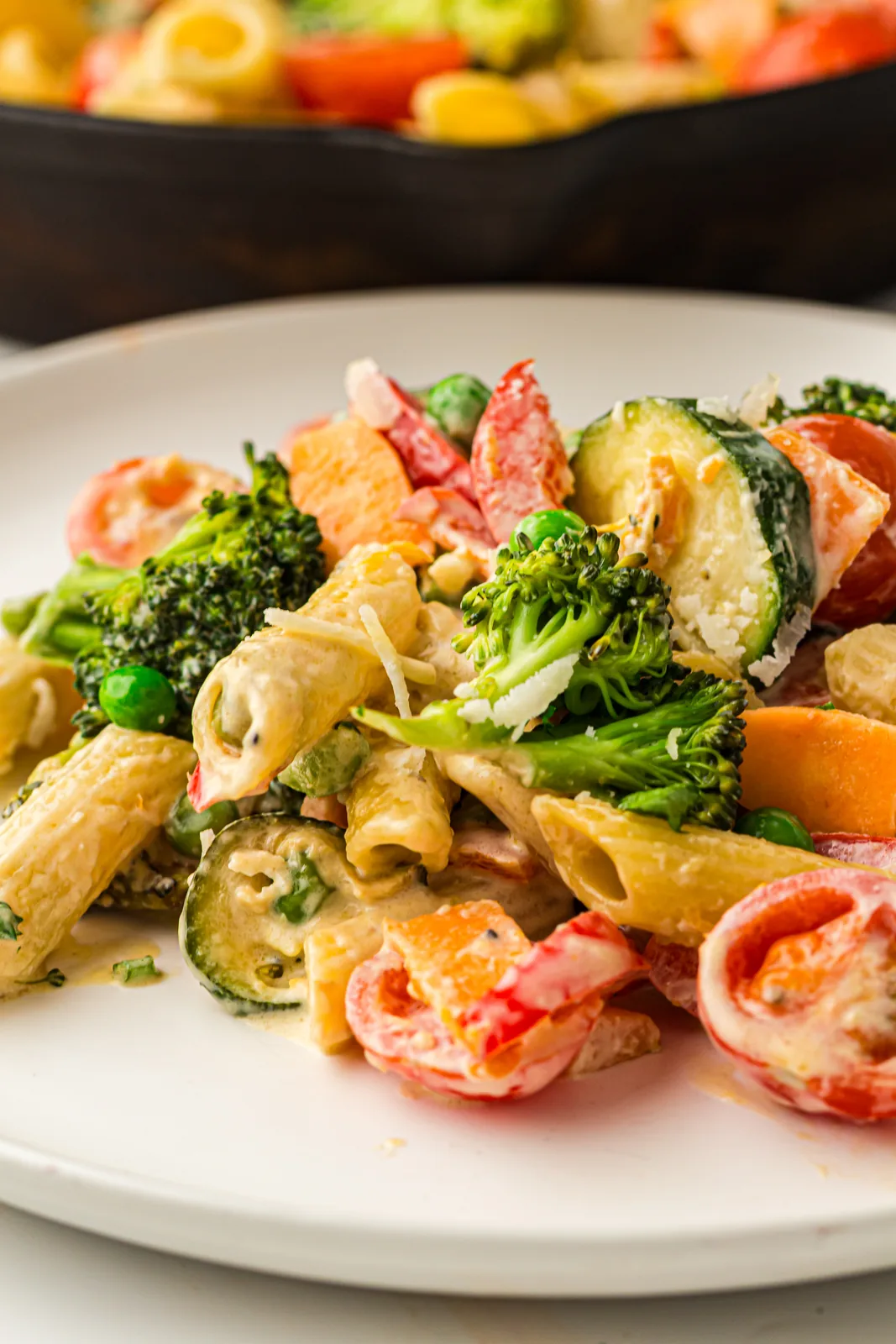
Ingredient Notes
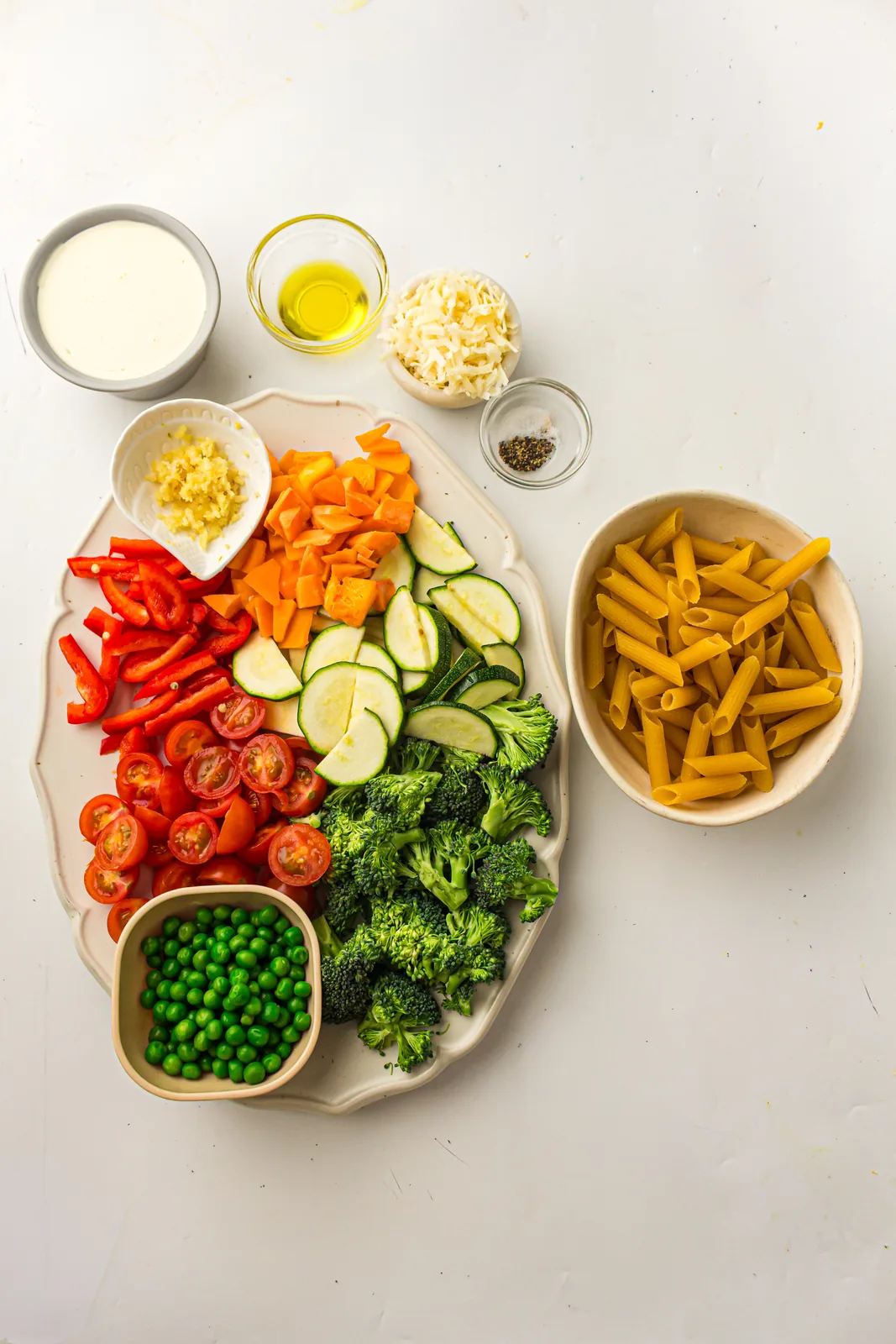
- Penne. Twelve ounces. The ridges and the hollow tube catch cream in a way that long strands never manage. Rigatoni and fusilli work just as well.
- Broccoli florets. One cup, cut small. Small florets cook in the same time as the peppers, which is the whole point.
- Red bell pepper, yellow squash, courgette. One each, sliced. However, keep the slices around a quarter inch so nothing turns to mush while the rest is still raw.
- Peas. One cup. Frozen straight from the bag is fine, and honestly better than tired fresh ones.
- Cherry tomatoes. One cup, halved, folded in off the heat. Cook them and they collapse and thin the sauce.
- Garlic. Three cloves, minced, in for thirty seconds only. Any longer next to hot oil and it turns bitter.
- Heavy cream and Parmesan. One cup and half a cup. Grate the Parmesan yourself, because the anti-caking powder on pre-grated cheese is what makes a sauce go grainy.
There is a reason a plate like this feels good to eat. In fact, Harvard’s Nutrition Source reports that in a study following nearly 110,000 people for 14 years, those averaging eight or more servings of vegetables and fruit a day were 30% less likely to have had a heart attack or stroke than those eating fewer than one and a half.
The Best Vegetables for Pasta Primavera
Primavera means spring, so the traditional line is that anything young and green belongs. In practice the rule that matters is cooking time. Group your vegetables by how long they need and add them in waves, and everything arrives at the table at once.
| Vegetable | Add when | Why |
|---|---|---|
| Broccoli, carrot, green beans | First, 4 to 5 minutes | Dense, need a head start |
| Bell pepper, courgette, squash | With the broccoli | Soften fast but hold shape |
| Asparagus, peas, spinach | Last 2 minutes | Overcook in seconds |
| Cherry tomatoes | Off the heat | Release water and split the sauce |
Still unsure? Aim for three colours and you will not go far wrong.
How To Make Creamy Pasta Primavera
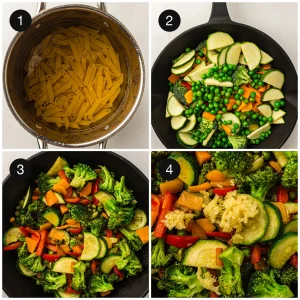
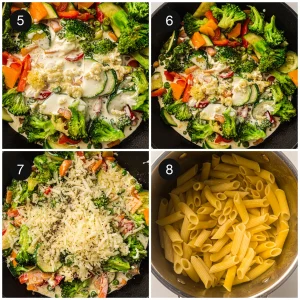
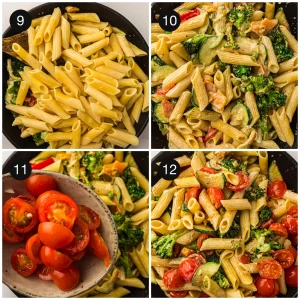
1. Boil the pasta. First, cook the penne in well salted water to the time on the packet, then drain it and leave it in the colander. Save a mug of the water before it goes down the sink.
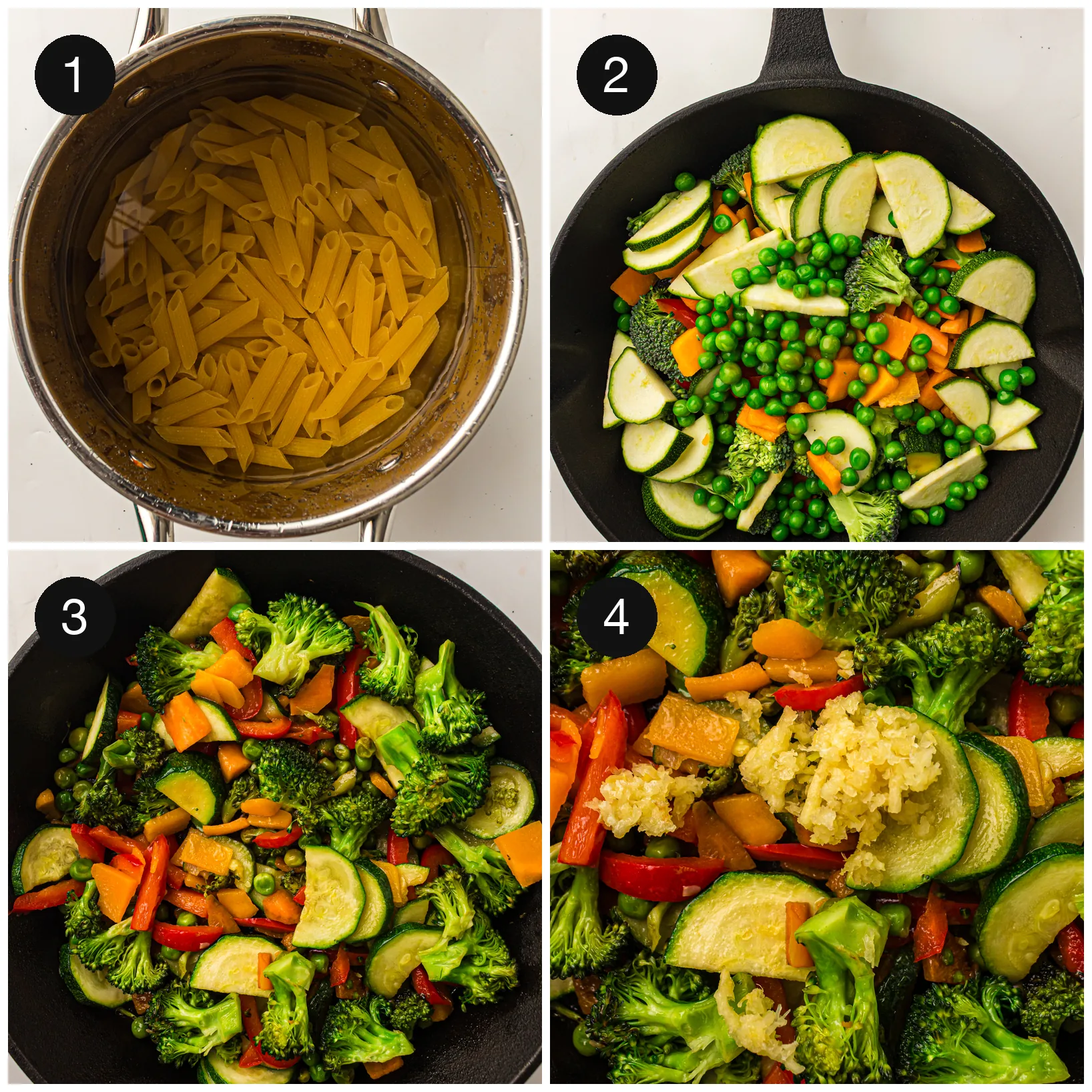
2. Cook the vegetables. Next, heat the olive oil in a large skillet over medium heat and add the broccoli, pepper, squash and courgette. Cook until tender-crisp, which is around five minutes. They should still have some resistance.
3. Garlic, briefly. Then stir in the minced garlic and give it about thirty seconds, just until you can smell it.
4. Build the sauce. After that, pour in the cream and bring it to a gentle simmer. Stir in the Parmesan, salt, black pepper and the chilli flakes if you want them. It will thicken as the cheese melts.
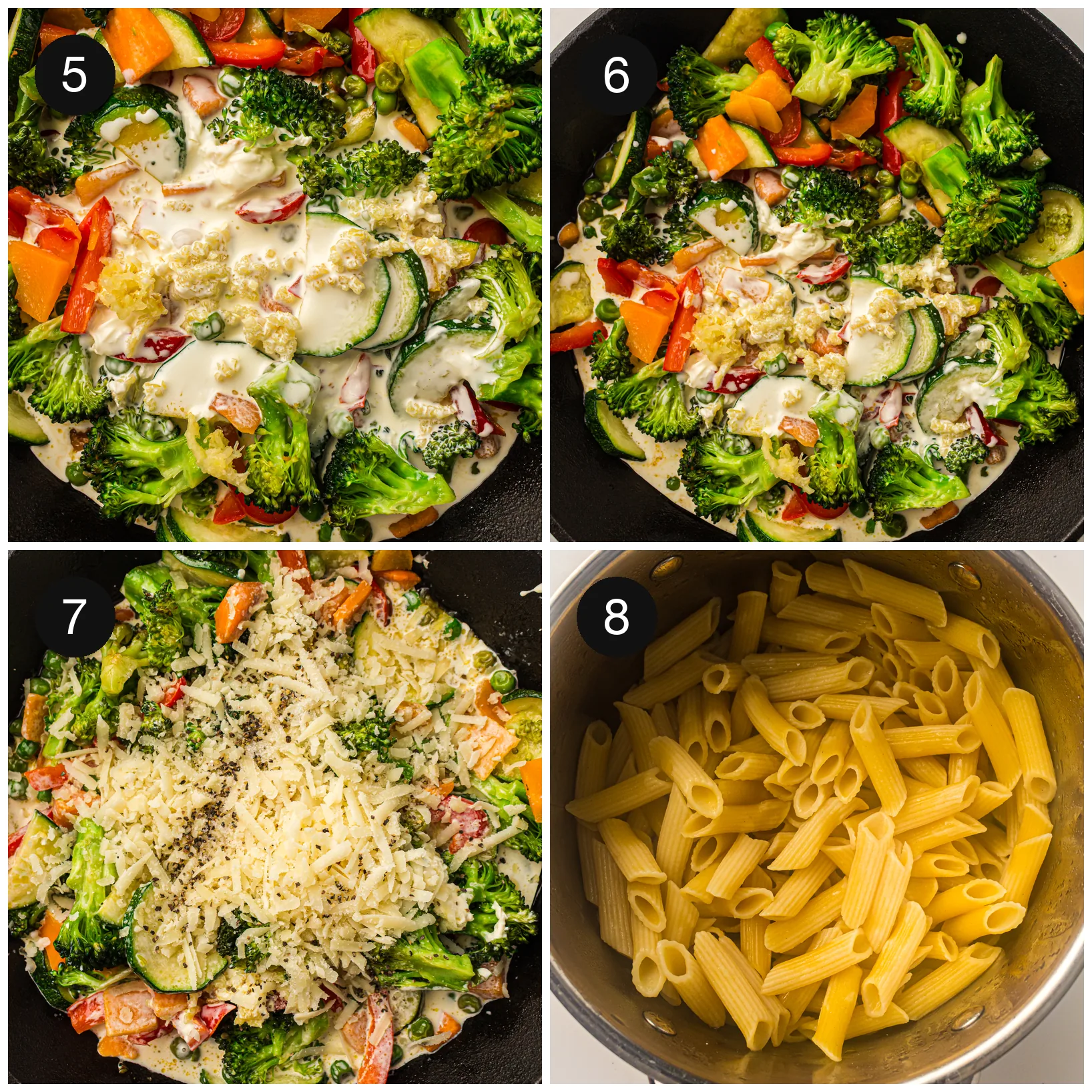
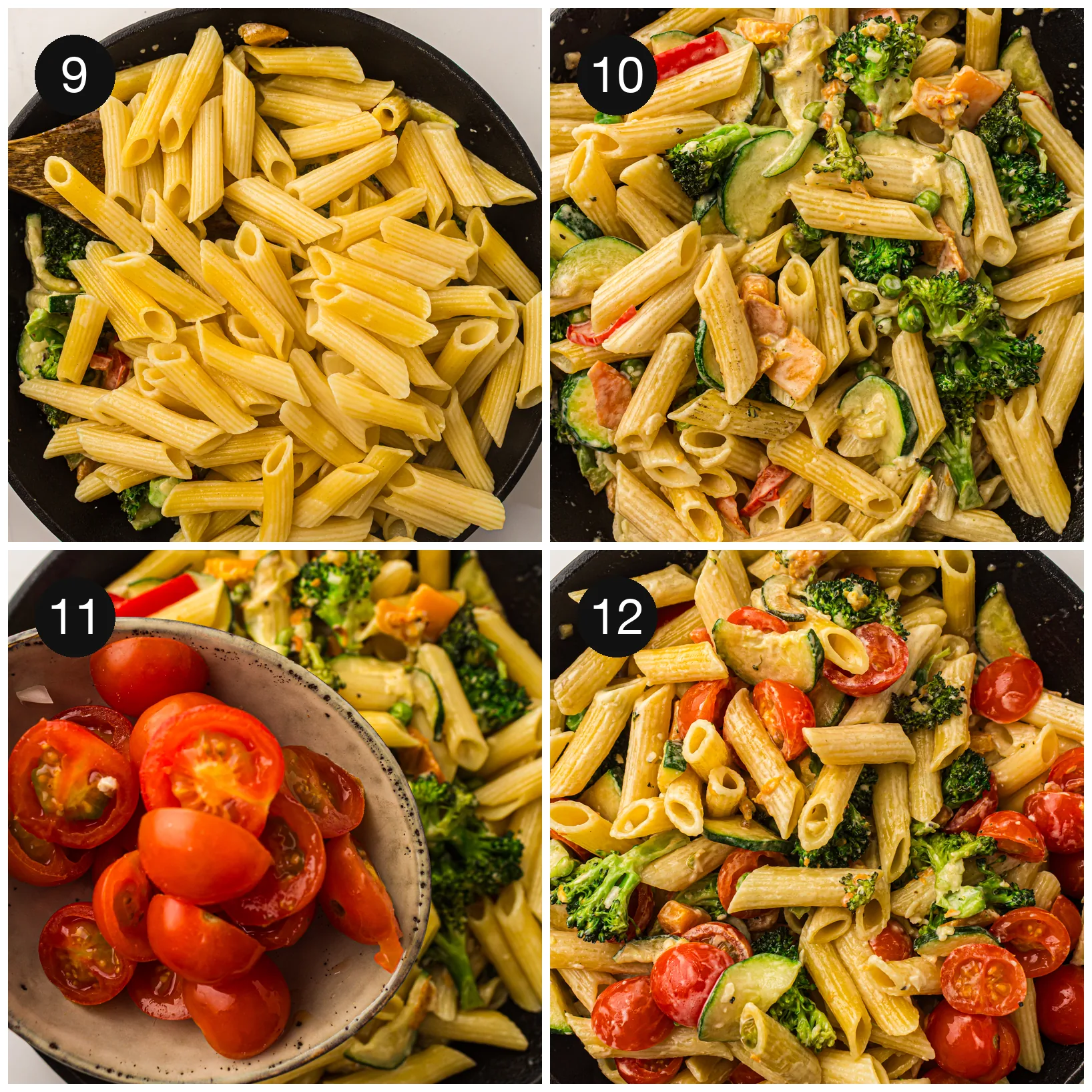
5. Bring it together. Finally, tip in the drained penne and toss until every piece is coated, loosening with the reserved pasta water if it looks tight. Fold in the cherry tomatoes off the heat and finish with more Parmesan and herbs.
Why Pasta Primavera Sauce Splits
A split pasta primavera sauce looks curdled, with little beads of fat sitting on a watery base. It happens for three reasons, and all three are avoidable.
- The heat was too high. Cream boiled hard breaks. Keep it at a lazy simmer where bubbles appear at the edge only.
- Acid went in hot. Tomatoes, lemon and wine all curdle cream if they hit it while the pan is fierce. That said, folding tomatoes in off the heat is perfectly safe.
- The cheese was pre-grated. Cellulose coating does not melt, so it sits in the sauce as grit. Grate a block instead.
If it does split, pull the pan off the heat and beat in a splash of cold cream. It usually comes back.
Tips for the Best Pasta Primavera
- Salt the pasta water properly. It is the only chance the pasta itself gets to be seasoned.
- Meanwhile, cut everything before you turn the hob on. The vegetable stage moves faster than you think.
- Undercook the penne by a minute, because it keeps softening in the hot sauce.
- Keep the pasta water. Starch is what makes the sauce cling instead of slide.
- Of course, taste before you serve. Cream mutes salt, so it almost always wants a little more.
- Serve it in warm bowls. A cold bowl thickens the sauce into paste within a minute.
Can You Make It Ahead?
Partly, and it is worth knowing which parts hold and which do not. The vegetables can be chopped a full day early and kept covered in the fridge, which removes most of the work from the evening itself. The Parmesan can be grated ahead too.
What does not hold is the finished dish sitting warm on the hob. Cream sauces keep reducing, the pasta keeps absorbing, and after twenty minutes you have a thick paste rather than a sauce. So if you are cooking for guests, get everything cut and measured, then do the five minutes of actual cooking once people are sitting down. That said, if you are caught out, a splash of hot pasta water or milk stirred through will loosen it again.
Storage and Reheating
- Fridge. Pasta primavera keeps up to three days in a sealed container. The sauce sets solid when cold, which is normal.
- Reheating. Gently, in a pan, with a splash of cream or milk to loosen it. Because the microwave heats unevenly, it tends to split the sauce.
- Freezing. Not worth it. Cream sauces separate on thawing and the courgette goes to water.
- Make ahead. Chop the vegetables a day early and keep them covered in the fridge.
Variations and Substitutions
- Lighter. Swap half the cream for whole milk. The sauce is thinner, so add a little extra Parmesan to compensate.
- With protein. Sliced air fryer chicken breast stirred through at the end turns this into a full dinner.
- Mushrooms. A handful of air fryer mushrooms adds a savoury depth that the vegetables alone do not have.
- Lemon. Zest only, stirred in at the end. Juice will curdle the cream.
- Cold. Leftovers loosened with a spoonful of mayonnaise become something close to chicken pasta salad.
What to Serve With It
Because pasta primavera is rich, the best partners are sharp or crunchy. A simple green salad with a lemony dressing does most of the work. Otherwise, put out cheesy garlic bread for mopping, or a bowl of garlic butter green beans alongside. Warm dinner rolls work too if you are feeding a crowd.
Frequently Asked Questions
Ingredients and Method
Can I use frozen vegetables?
Yes, though thaw and drain them first. Frozen vegetables release a lot of water, and if that water lands in the cream it thins the sauce out badly.
What pasta shape works best?
Short shapes with texture. Penne, rigatoni and fusilli all trap sauce inside and along the ridges. Spaghetti works but the vegetables slide off it.
Can I make it without cream?
You can build a lighter version with whole milk thickened by the Parmesan, or use half milk and half cream. It will be looser and needs a couple more minutes of reducing.
Do I have to add the chilli flakes?
No, they are optional. A quarter teaspoon adds warmth rather than heat, which is worth having against all that cream.
Storage and Troubleshooting
Why did my sauce turn grainy?
Almost always pre-grated Parmesan. The coating that stops it clumping in the bag also stops it melting smoothly. Grate it from a block and the problem disappears.
My vegetables went soggy. What happened?
They were cooked too long before the cream went in. Tender-crisp means they still snap. Instead, pull them off a minute early, because they carry on cooking in the hot sauce.
How do I reheat leftovers without splitting the sauce?
Low heat in a pan, with a splash of milk or cream stirred in from the start. Rushing it on high heat is what breaks the emulsion.
Can I make this ahead for a party?
Cook the vegetables and chop everything ahead, then finish the sauce and pasta in the last ten minutes. It is not a dish that sits well once assembled.
Ingredients
Pasta and Vegetables
- 12 oz penne pasta 340 g
- 1 tablespoon olive oil
- 1 cup broccoli florets cut small
- 1 red bell pepper sliced
- 1 yellow squash sliced
- 1 zucchini sliced
- 1 cup peas fresh or frozen
- 1 cup cherry tomatoes halved
- 3 cloves garlic minced
Cream Sauce
- 1 cup heavy cream 240 ml
- 1/2 cup grated Parmesan cheese plus extra to serve
- 1/2 teaspoon salt
- 1/2 teaspoon black pepper
- 1/4 teaspoon red pepper flakes optional
Instructions
- Cook the pasta in salted water according to package directions. Drain and set aside, saving a mug of the cooking water.

- Heat the olive oil in a large skillet over medium heat.
- Add the broccoli, bell pepper, squash and zucchini. Cook until tender-crisp, about 5 minutes.
- Stir in the garlic and cook for about 30 seconds, until fragrant.
- Pour in the heavy cream and bring to a gentle simmer.
- Stir in the Parmesan cheese, salt, black pepper and red pepper flakes, if using.
- Add the cooked pasta and toss until fully coated in the sauce, loosening with a splash of the reserved pasta water if needed.
- Fold in the cherry tomatoes off the heat.
- Garnish with extra Parmesan and fresh herbs before serving.