 Bity

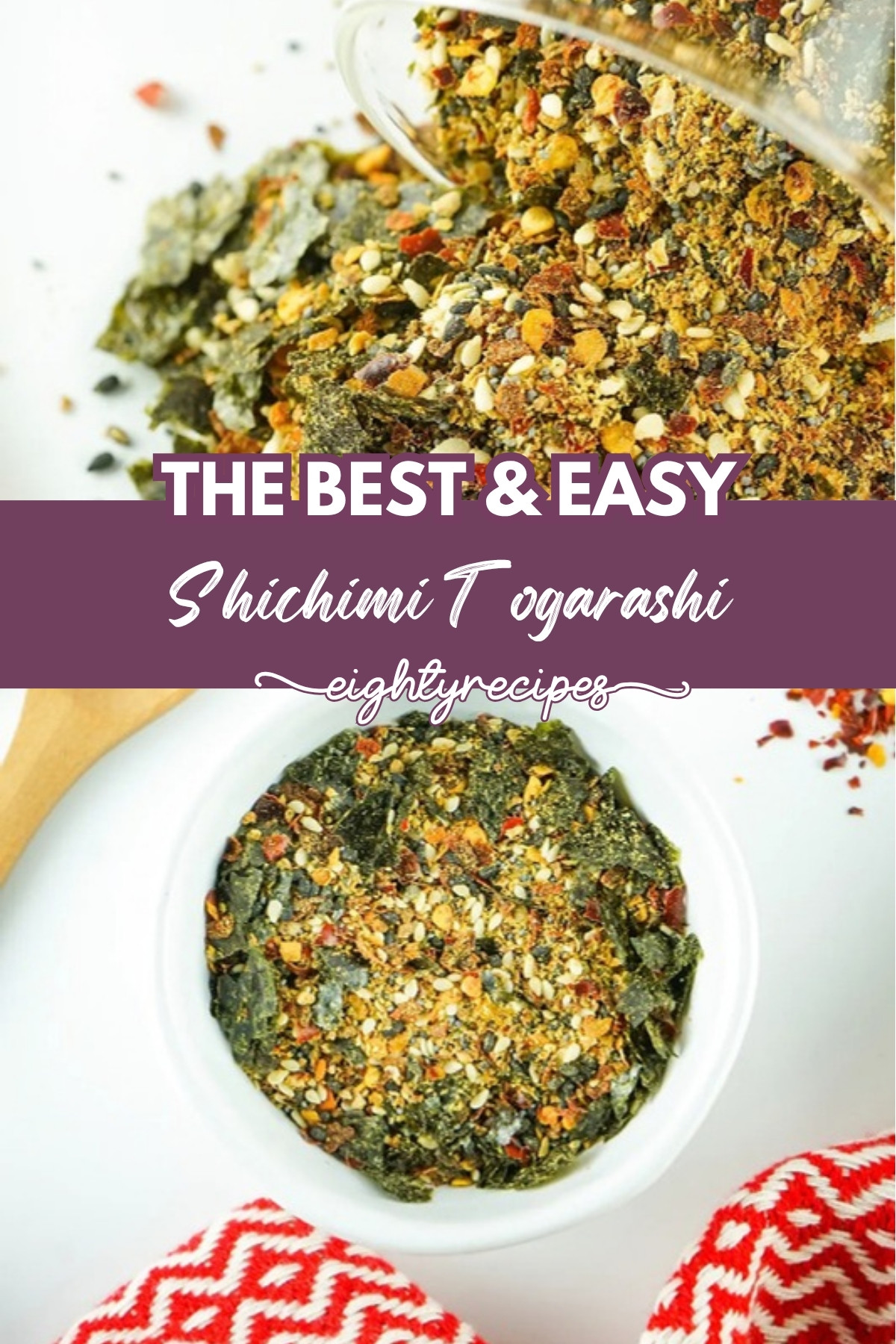
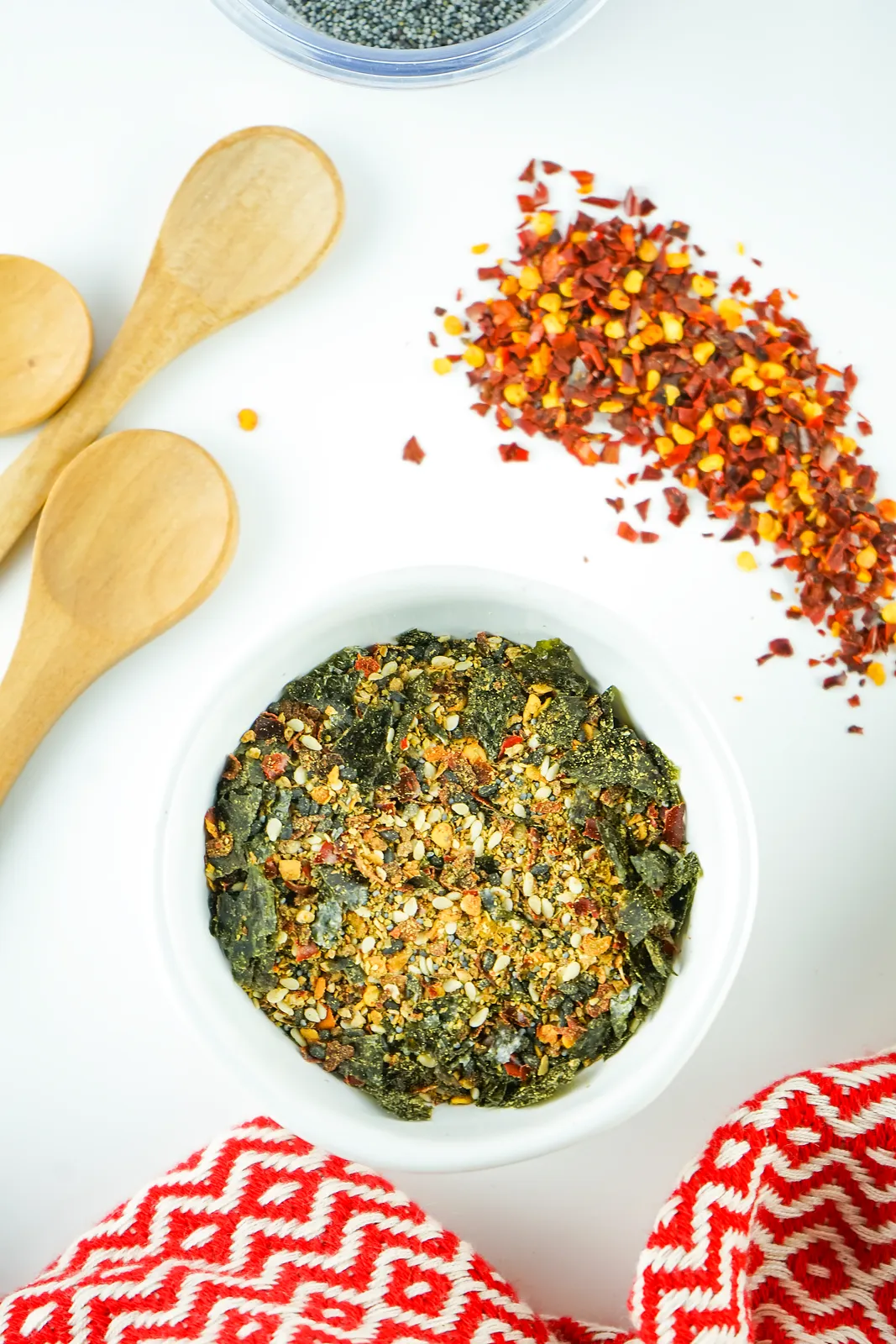
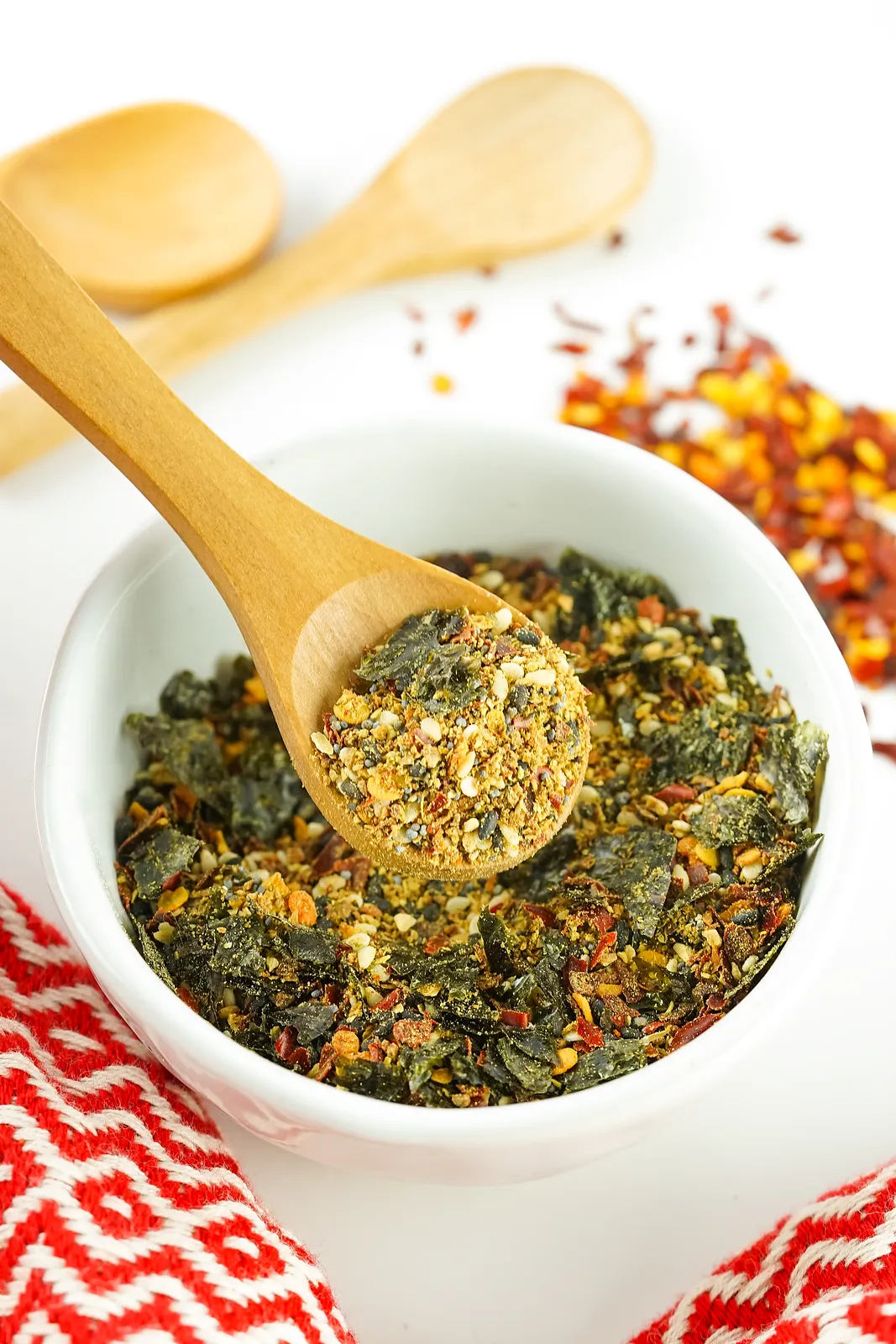
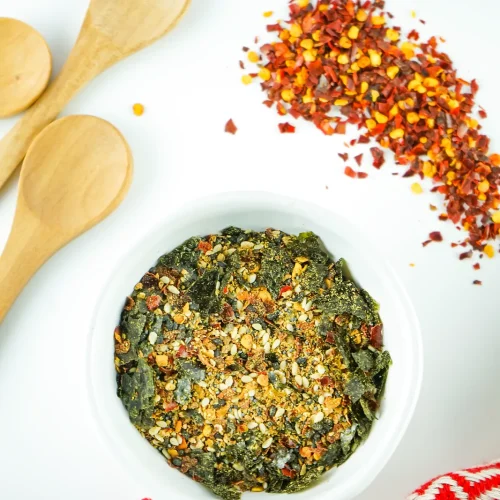
This homemade shichimi togarashi is the little jar I reach for whenever a bowl of noodles, rice or soup needs waking up. It is Japan’s famous seven spice blend: crushed chilli, citrus peel, nori, sesame, poppy seeds, sansho pepper and ginger, stirred together in about two minutes.
In short, this shichimi togarashi is a salt free mix of chilli flakes, sansho pepper, dried lemon peel, nori, sesame, poppy seeds and ginger, stirred in one bowl with no toasting or grinding. It takes about 2 minutes, makes about 7 1/2 tablespoons (22 teaspoons), keeps for up to 2 months in an airtight jar and works out at about 8 calories per teaspoon.
I started making my own after a ramen shop near my old flat put a shaker of it on every table, and I could not stop sprinkling it on everything at home. Shop jars are lovely, but they fade fast. A fresh batch smells of lemon and the sea, it costs pennies, and you can tweak the heat to suit your family.
Quick Breakdown
Why You’ll Love This Shichimi Togarashi
- Two minutes, one bowl. No toasting, no grinder needed. You simply measure and stir.
- Bright and properly spicy. The lemon peel and sansho give it a tingly, citrusy lift that plain chilli flakes never have.
- Salt free. All the flavour comes from spices, seeds and seaweed, so you control the seasoning of the dish.
- Cheaper than a jar. Most of these live in your cupboard already, and half a sheet of nori goes a long way.
- Endlessly useful. In fact, I use it more than black pepper on Asian style dinners: ramen, udon, rice bowls, grilled fish, eggs and even popcorn.
What Is Shichimi Togarashi?
Shichimi togarashi is a Japanese seven spice blend built on chilli pepper, sprinkled over noodles, rice and grilled food as a finishing seasoning. Shichi means seven in Japanese, and togarashi means chilli pepper, so the name simply translates as seven flavour chilli. It has been sold in Japan since at least the 1600s, when spice merchants in Edo (old Tokyo) mixed it to order for customers. Today you will see it on the table in noodle bars, yakitori stalls and family kitchens, much like we keep salt and pepper.
Every brand uses a slightly different seven. Chilli is always the star; after that you usually find sansho pepper, citrus peel, black and white sesame, nori or aonori seaweed, ginger, poppy or hemp seeds. As a result, it tastes hot, citrusy, nutty and faintly savoury all at once. It is a finishing spice, so you sprinkle it on at the end rather than cooking it for a long time.
Ingredient Notes
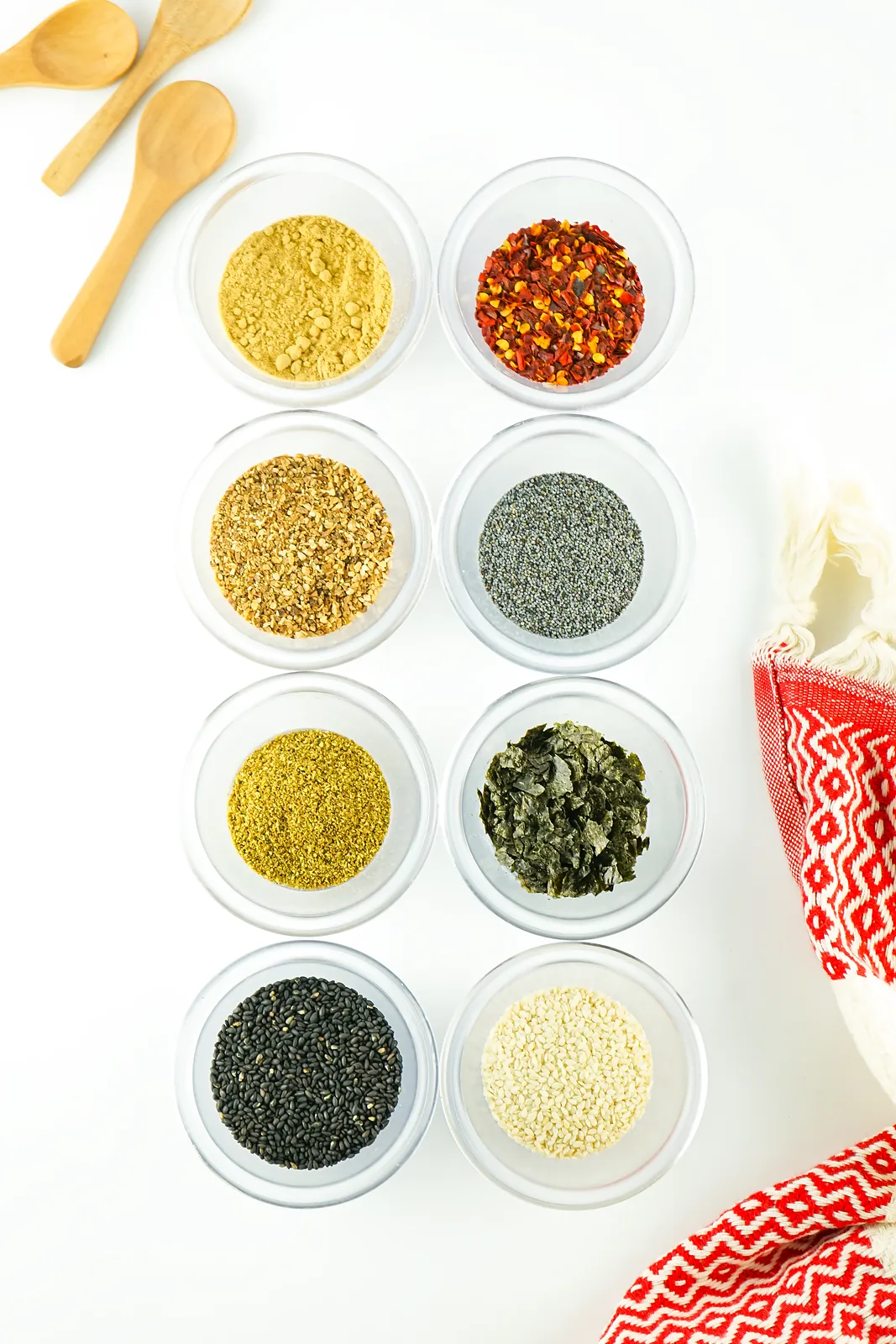
- Dried seaweed flakes (nori). 2 tablespoons. The easiest trick is to crumble half a sheet of roasted nori with your fingers; it is cheaper than buying flakes and the leftover sheets keep for ages.
- Crushed red pepper. 2 tablespoons of ordinary chilli flakes. This is where all the heat lives.
- Dried lemon peel. 1 tablespoon. I like lemon because it is a touch sharper than orange, but dried orange peel or a citrus mix works too.
- Poppy seeds. 1/2 tablespoon, for a gentle crunch.
- Ground sansho pepper. 2 teaspoons. Sansho is the Japanese cousin of Sichuan pepper and gives that lemony, tingling buzz on your lips. Sichuan pepper swaps in at the same amount.
- White and black sesame seeds. 2 teaspoons of each. You can use just one colour as long as you have 4 teaspoons in total.
- Ground ginger. 1 teaspoon, for warmth.
Because the blend has no salt, it is a handy way to add punch without reaching for the salt cellar. The University of Illinois Extension points out that herbs and spices add flavour and variety without adding salt, and that is exactly how I use this jar.
Shichimi vs Nanami vs Ichimi Togarashi
Shichimi and nanami are essentially the same seven flavour chilli blend, while ichimi is pure ground chilli. Nanami is simply another way of saying seven flavours; some makers use it for a version with more citrus. Ichimi means one flavour and is pure ground chilli with nothing else added.
| Blend | What is in it | Taste | Best for |
|---|---|---|---|
| Shichimi | Chilli plus six others (sansho, citrus, sesame, seaweed, ginger, seeds) | Hot, citrusy, nutty | Noodles, rice, grilled meat, everyday sprinkling |
| Nanami | The same seven, often heavier on citrus peel | Brighter and zestier | Fish, salads, cold noodles |
| Ichimi | Ground red chilli only | Clean, straight heat | When you want heat without other flavours |
How To Make Shichimi Togarashi
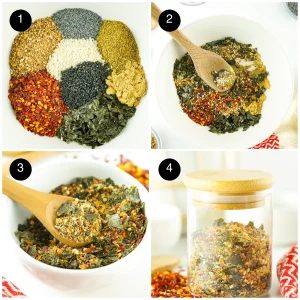
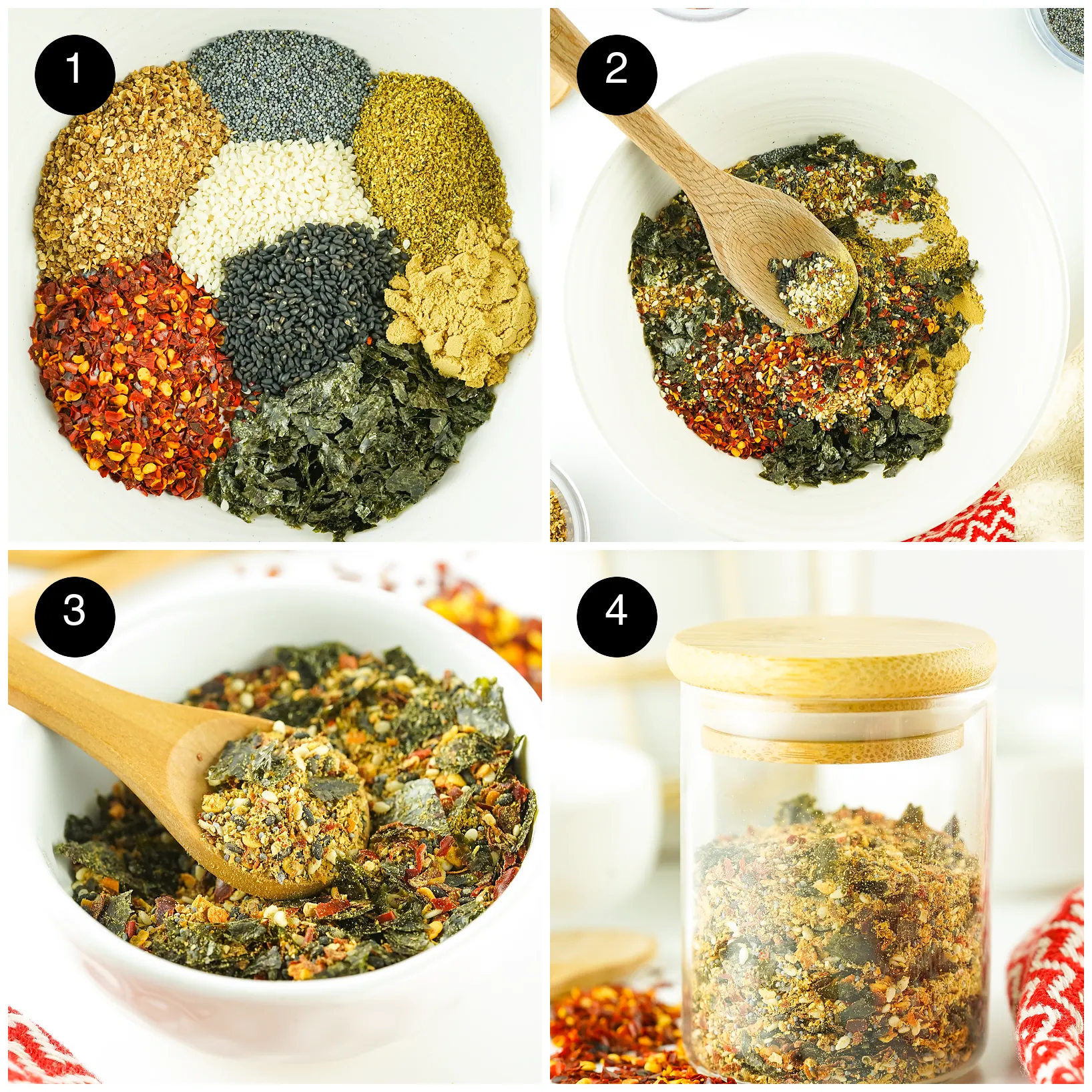
1. Measure everything. First, measure the nori flakes, crushed red pepper, lemon peel, poppy seeds, sansho, both sesame seeds and ginger into a small mixing bowl. If you are using a nori sheet, crumble it straight into the bowl with dry hands.
2. Mix well. Next, stir with a spoon until everything is fully combined and you can no longer see separate piles of each ingredient. The ground sansho and ginger like to clump, so press any little lumps against the side of the bowl.
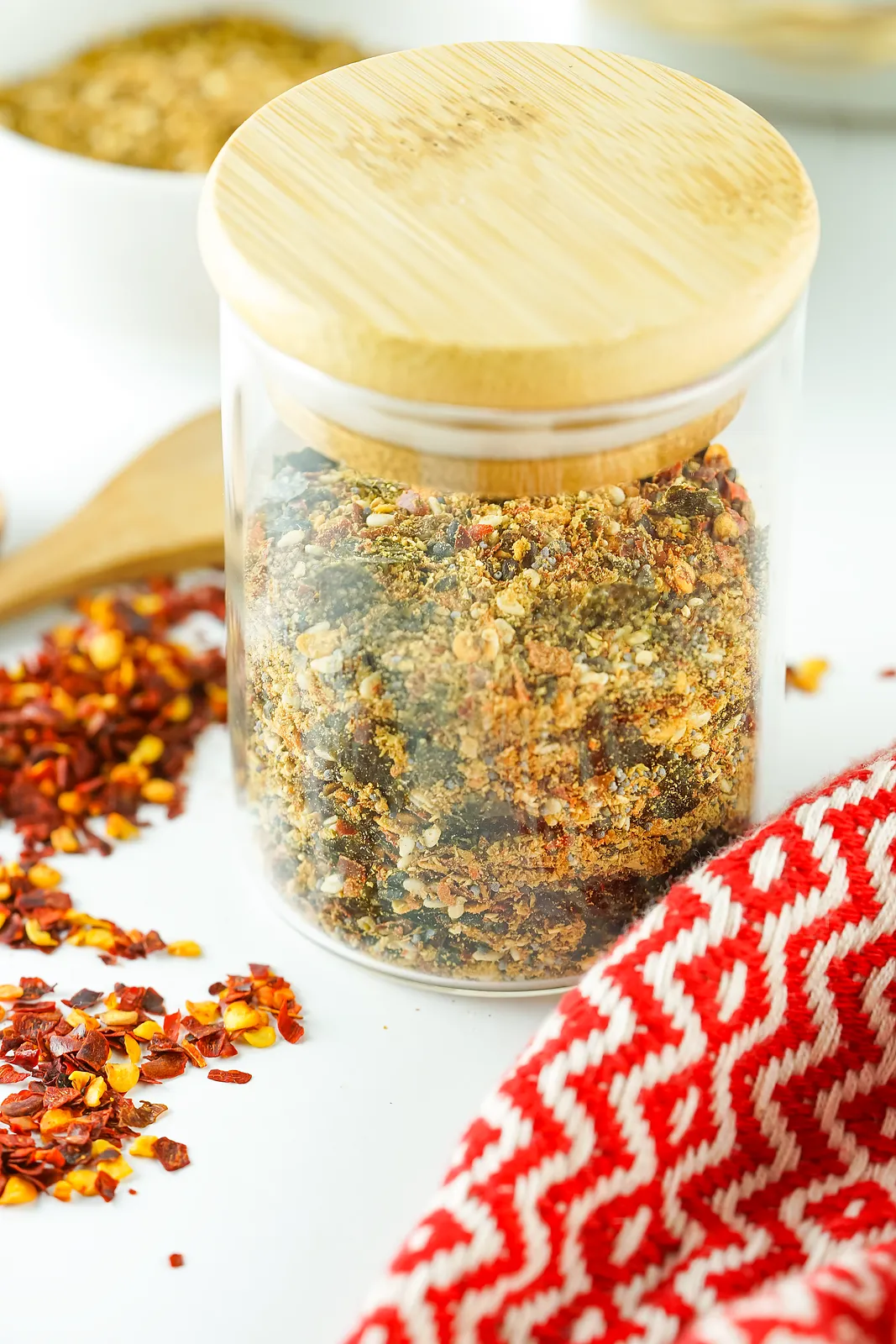
3. Jar it up. Finally, spoon the blend into a small airtight jar. It makes about 7 1/2 tablespoons, which is plenty for a month of sprinkling.
Biggest Mistakes to Avoid
- Expecting it to be mild. Honestly, this blend is very spicy, and there is no way to make it gentle without changing the recipe. If you want less heat, reduce the chilli flakes and add a little more sesame instead.
- Using damp nori or a wet spoon. Moisture makes the seaweed chewy and the ginger clump. Keep everything bone dry.
- Cooking it for ages. The citrus and sansho notes are delicate, so add the blend at the end of cooking or at the table.
- Making a huge batch. It is at its most fragrant in the first few weeks, so small batches win.
Tips for the Best Shichimi Togarashi
- For a rounder, nuttier flavour, you can toast the sesame seeds in a dry pan for a minute or two and let them cool completely before mixing.
- If your lemon peel comes in big pieces, pulse it briefly in a spice grinder so it spreads evenly through the jar.
- Rub a pinch between your fingers before using it. If it smells of lemon and pepper straight away, it is at its best.
- Give the jar a shake before each use; the heavier seeds sink to the bottom.
Storage and Shelf Life
- Pantry. Keep the blend in an airtight container in a cool, dry cupboard for up to 2 months.
- Away from the hob. Heat, light and steam dull spices quickly. The Academy of Nutrition and Dietetics recommends you store dried herbs and spices in airtight containers in a cool, dark cupboard.
- Not the fridge. Condensation makes the nori soft and the seeds clump.
- Check it. If the colour has faded and the smell is weak, it is time for a fresh batch.
Variations and Substitutions
- Sichuan pepper for sansho. Use the same amount. It is a little more floral, but the tingle is very similar.
- Orange instead of lemon. Dried orange or mixed citrus peel gives a sweeter, softer blend.
- One colour of sesame. All white or all black is fine; just keep 4 teaspoons in total.
- Milder family version. Halve the chilli flakes and double the sesame for a nutty sprinkle children enjoy.
- Need a substitute in a hurry? Chilli flakes with a little grated lemon zest and toasted sesame will get you close.
For a weeknight bowl, shake it over my Chinese chicken soup or the sticky glaze of my slow cooker teriyaki chicken; that pop of citrus heat cuts right through the sweetness.
How To Use Shichimi Togarashi
- Noodles and soups. Ramen, udon, soba and miso soup are the classic home for it.
- Rice. A pinch over plain Instant Pot white rice with a fried egg is my favourite lazy lunch.
- Fish and meat. Sprinkle it over sheet pan salmon, chicken skewers, steak or tuna just before serving.
- Vegetables. Roasted broccoli, green beans, edamame and corn on the cob all love it.
- Snacks. Toss it through popcorn, chips or roasted nuts with a little melted butter.
- Mayo and dressings. Stir a teaspoon into mayonnaise for a spicy dip, or into a sesame dressing.
Frequently Asked Questions
About the Blend
What does shichimi togarashi taste like?
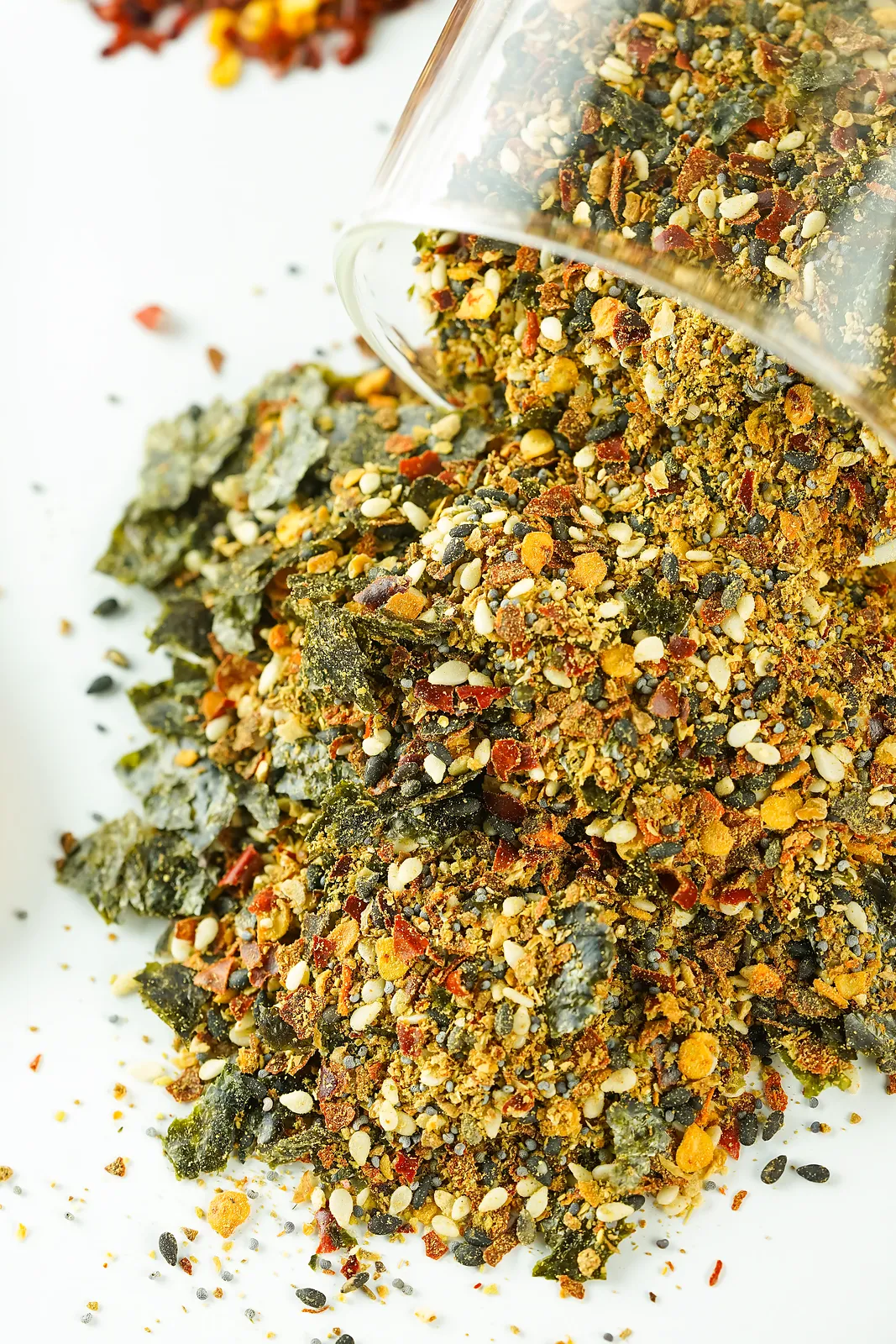
Hot first, then citrusy and slightly numbing from the sansho, with a nutty crunch from the sesame and a faint savoury, sea flavour from the nori.
Is shichimi togarashi very spicy?
Yes, this version is properly hot because two tablespoons of chilli flakes make up a big part of the jar. Start with a small pinch and add more at the table.
Is Japanese 7 spice the same as shichimi togarashi?
Yes. Japanese 7 spice and Japanese seven spice are English names for the same blend.
What can I use instead of sansho pepper?
Sichuan pepper is the best swap, at the same amount. In a pinch, extra lemon peel and a little black pepper will do.
Using and Storing It
Should you cook with shichimi togarashi or add it at the end?
Mostly at the end. Because the citrus and pepper notes fade with long cooking, sprinkle it over finished dishes, or add it to marinades and rubs for quick grilling.
How long does homemade shichimi togarashi last?
About 2 months in an airtight jar in a cool, dry pantry. It is still safe after that, just less fragrant.
Can you make Japanese seven spice without seaweed?
Yes, although you will lose that savoury, ocean note. Leave out the 2 tablespoons of nori and add an extra teaspoon of sesame so the texture stays balanced.
How do you make a milder shichimi togarashi?
Halve the 2 tablespoons of chilli flakes and double the sesame seeds. That gives a nutty, gently warm sprinkle that children enjoy, while keeping the citrus and sansho notes.
Ingredients
- 2 tablespoons dried seaweed flakes (nori) or half a nori sheet, crumbled
- 2 tablespoons crushed red pepper
- 1 tablespoon dried lemon peel
- 1/2 tablespoon poppy seeds
- 2 teaspoons ground sansho pepper or Sichuan pepper
- 2 teaspoons white sesame seeds
- 2 teaspoons black sesame seeds
- 1 teaspoon ground ginger
Instructions
- Combine all ingredients in a small mixing bowl and mix until fully combined.

- Store in an airtight container in a cool, dry pantry for up to 2 months.