
 Bity

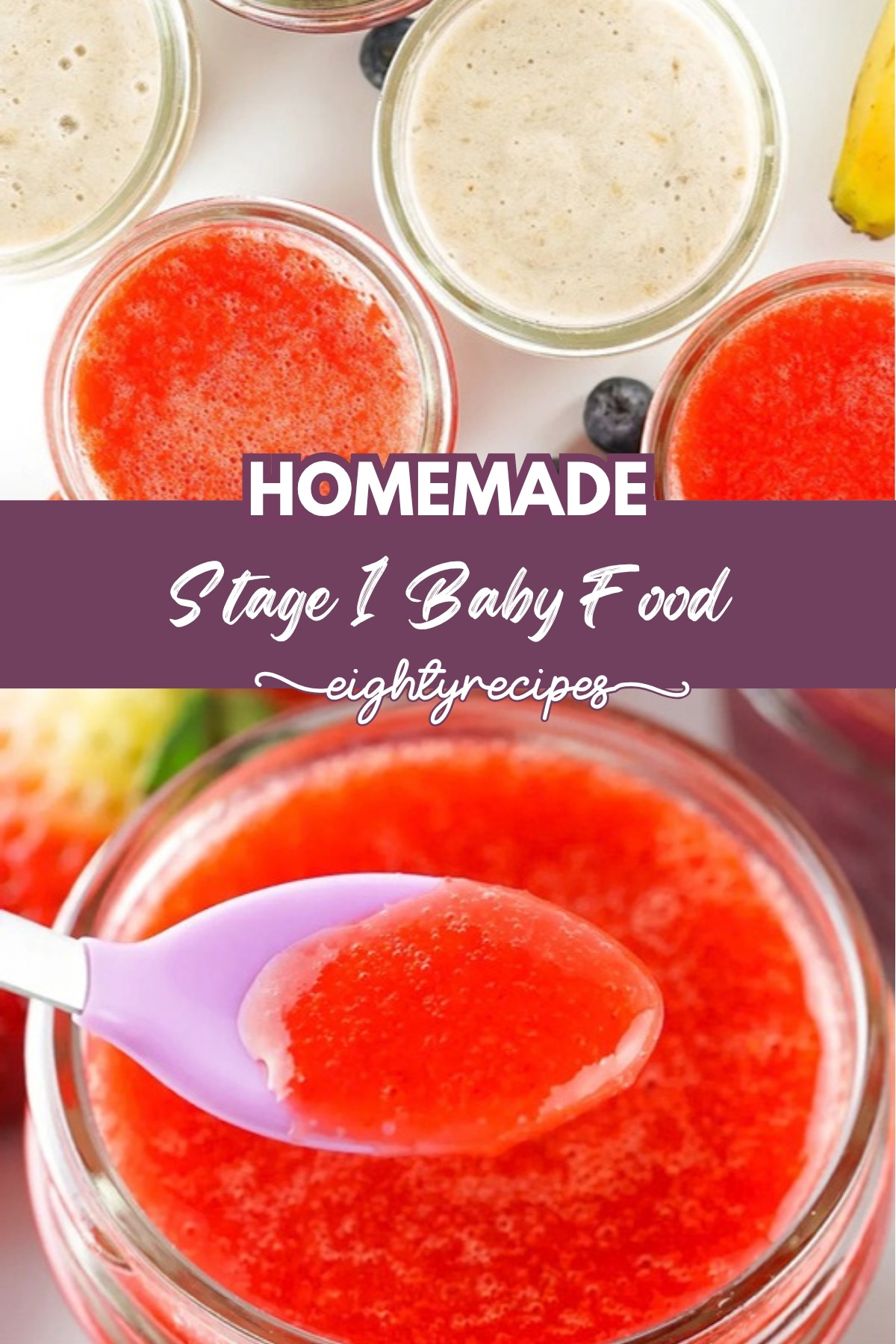
Stage 1 baby food is the very first, silky smooth purée a baby tries when starting solids, usually around 6 months: one single ingredient, blended thin, with no lumps, salt or sugar. Making it at home takes minutes. A ripe fruit and a tablespoon of water go into a food processor, and berries get pushed through a sieve so the texture is completely smooth.
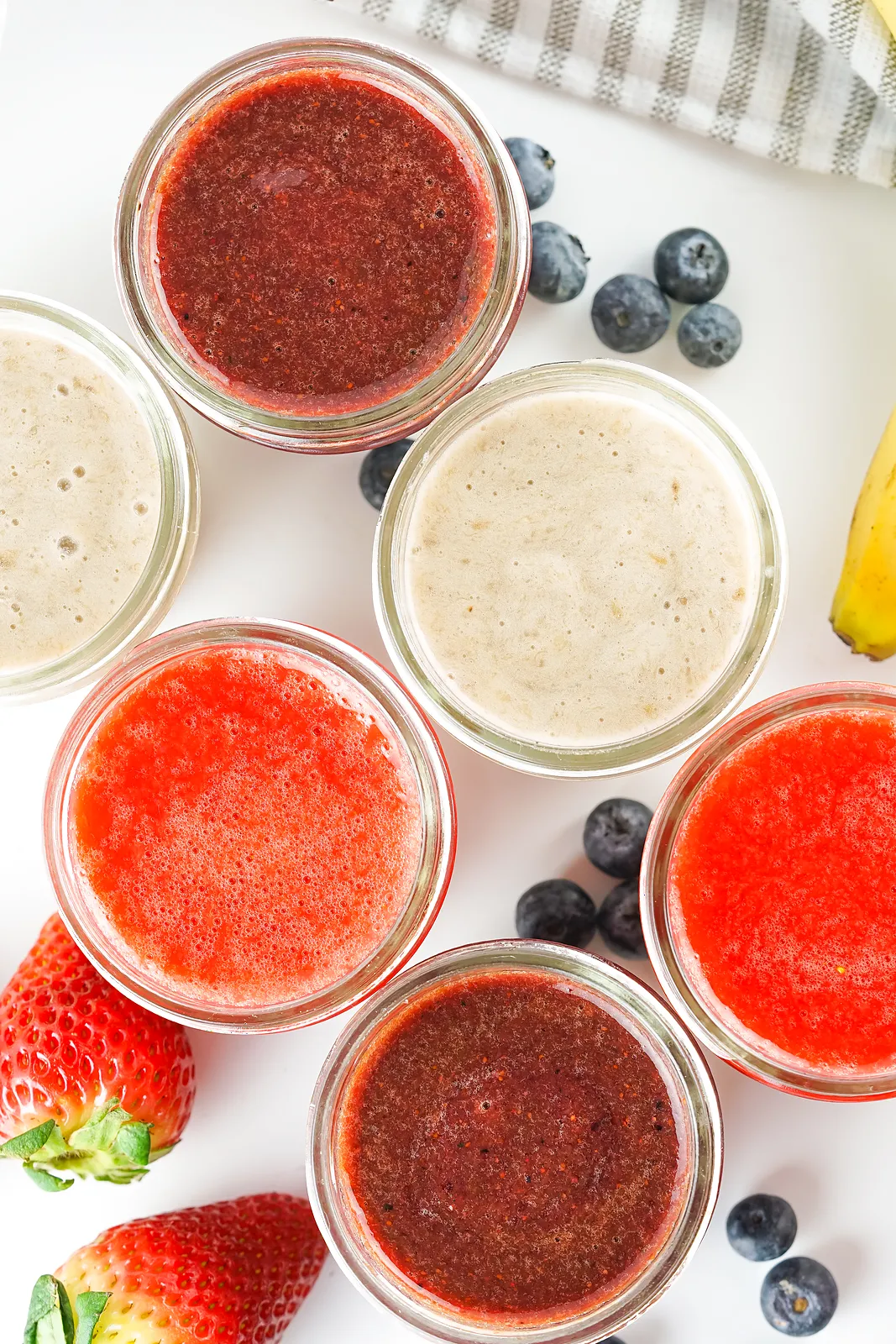
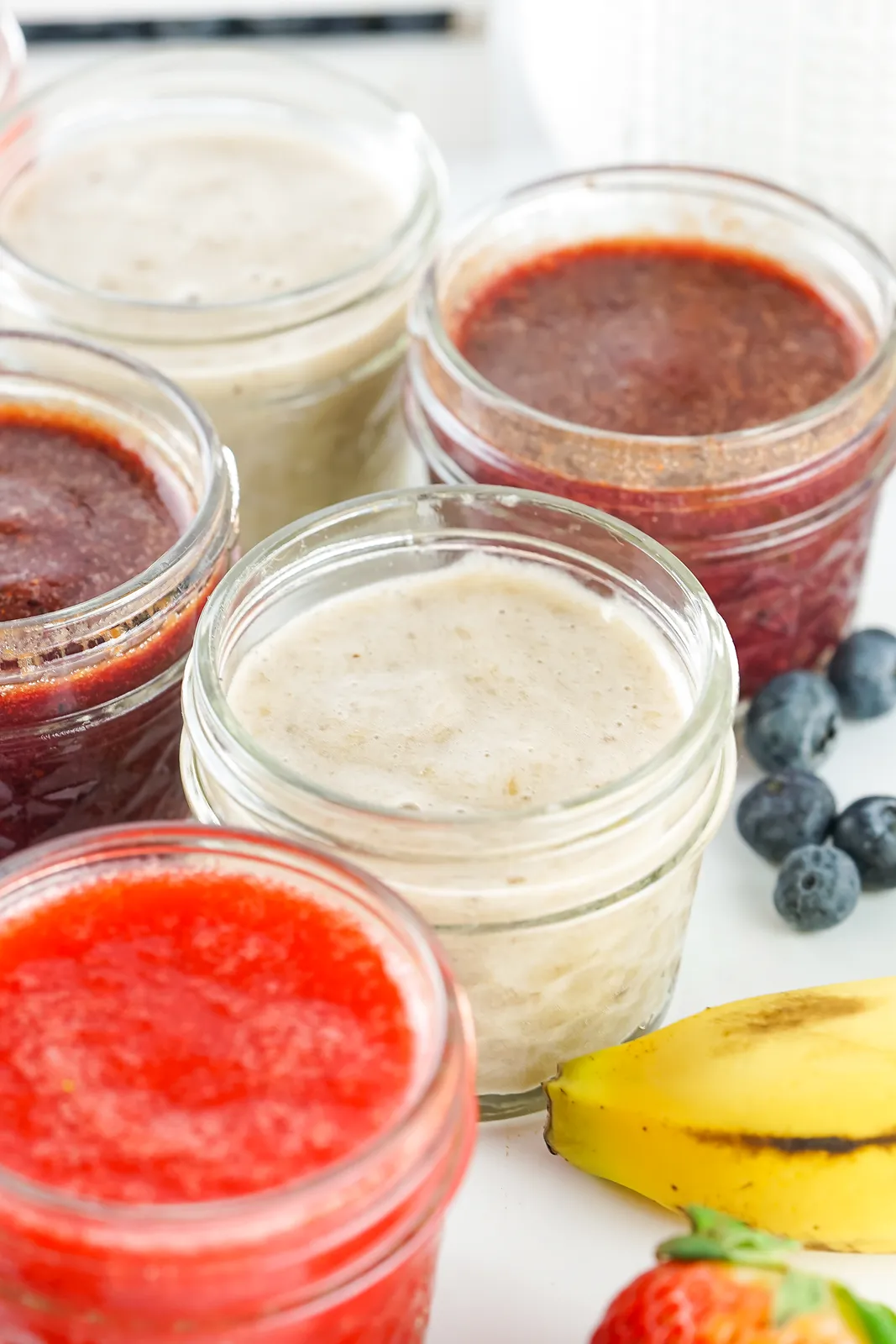
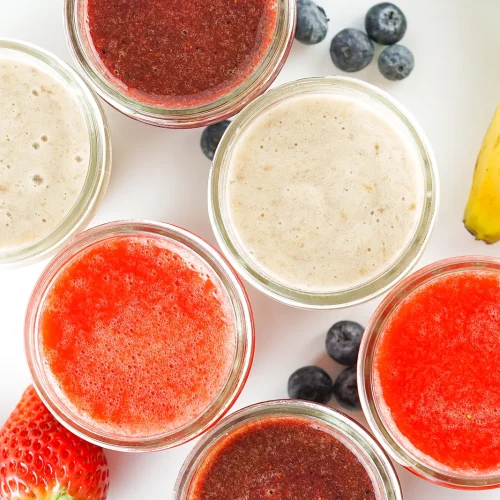
In short, this recipe makes three first purées, strawberry, blueberry and banana, by blending ripe fruit with 1 tablespoon of water each and sieving the berries. All three take about 12 minutes, make about 28 one ounce portions (8 ounces each of strawberry and blueberry, 12 ounces of banana) and work out at about 16 calories per ounce.
When my niece started solids, I made batches of these three for my sister: strawberry, blueberry and banana. They cost a fraction of the pouches, and we knew exactly what was in every spoonful. Below you will find the simple method, plus the practical bits we wished someone had told us: when to start, how thin is thin enough, how to store it safely, and what to try next. A quick note: I am a home cook, not a doctor, so always follow your own paediatrician or health visitor’s advice for your baby.
Quick Breakdown
Why You’ll Love Making Stage 1 Baby Food at Home
- Two ingredients. This stage 1 baby food is just fruit and water. Nothing added, nothing hidden.
- Ready in about 12 minutes. That covers all three purées, and no cooking is needed for ripe banana, strawberries or blueberries.
- Cheaper than jars. Two cups of berries make about 8 ounces, enough for several days of tiny first meals.
- Freezer friendly. Freeze in small portions and you have a ready supply for weeks.
- Real flavour. Babies taste the actual fruit, which helps when you move on to lumpier textures later.
What Is Stage 1 Baby Food?
Stage 1 is the first texture stage of baby food: thin, smooth, single ingredient purées offered from around 6 months. Baby food is often sorted into stages that match how a baby’s eating skills develop. Stage 1 means single ingredient purées with a very smooth, runny texture, so a baby who has only had milk can practise moving food from the front of the mouth to the back and swallowing. The stages are a useful guide rather than a strict rule, so follow your baby’s cues.
| Stage | Typical age | Texture | Examples |
|---|---|---|---|
| Stage 1 | Around 6 months | Thin, smooth, single ingredient | Banana, pear, strawberry, sweet potato |
| Stage 2 | About 7 to 9 months | Thicker, mashed, simple combinations | Apple and blueberry, carrot and lentil |
| Stage 3 | About 9 to 12 months | Soft lumps and finger foods | Soft cooked pasta, small pieces of ripe fruit |
When to Start Stage 1 Baby Food
The American Academy of Pediatrics recommends introducing solids at around 6 months, alongside breast milk or formula. According to HealthyChildren.org, the AAP’s site for parents, signs that a baby is ready include:
- Good head and neck control, and sitting up with support.
- Opening the mouth when food comes towards it.
- Being able to move food to the back of the mouth and swallow, rather than pushing it straight back out.
- Showing real interest in what you are eating.
Milk is still the main source of nutrition at this age, so first meals are about tasting and practice. Start with a teaspoon or less once a day, and offer one new food at a time, waiting a few days before the next so you can spot any reaction. Iron matters a lot from 6 months, so it is worth offering iron-rich foods such as iron-fortified cereal or puréed meat alongside fruit; KidsHealth’s guide to first foods explains this well.
Ingredient Notes
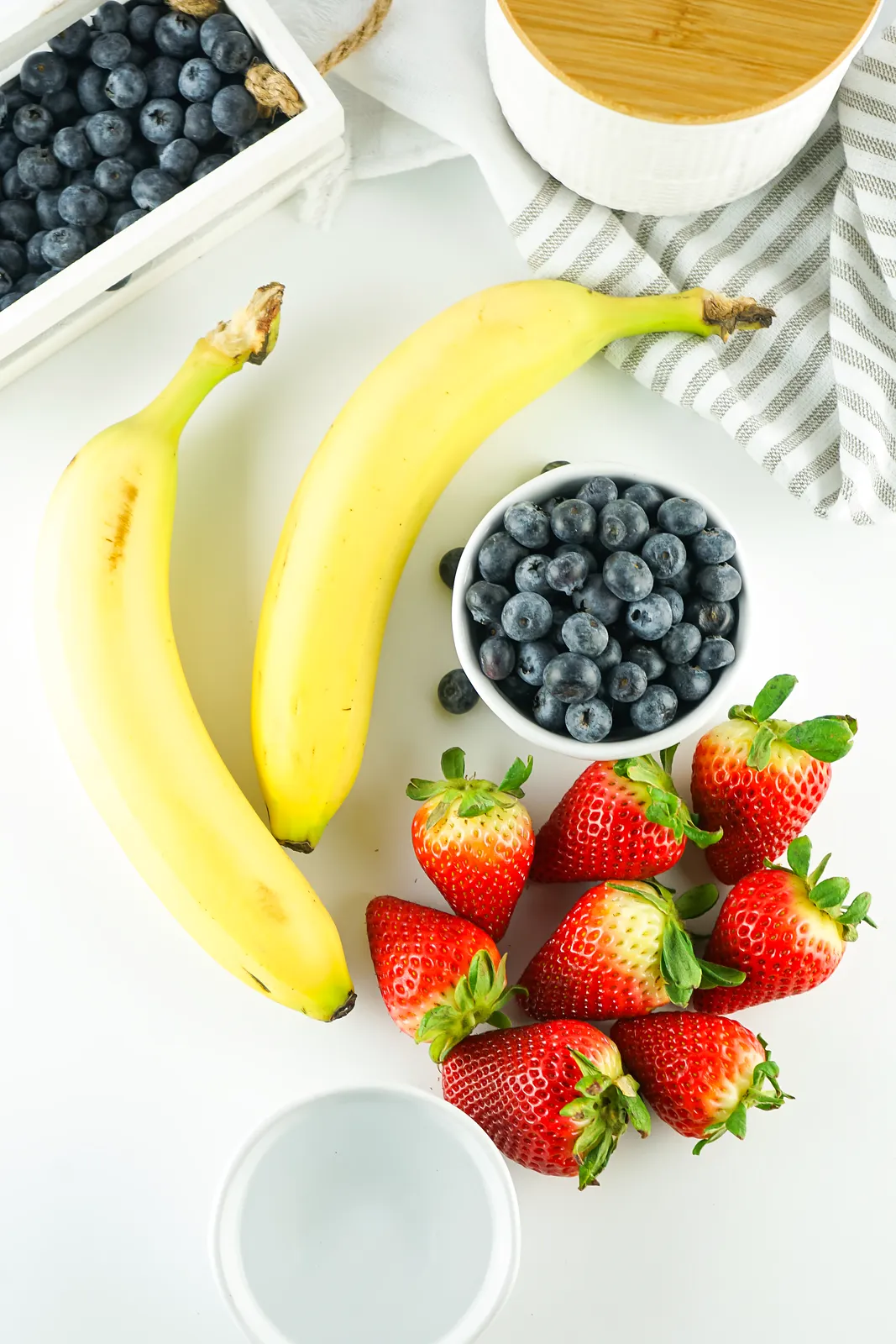
- Strawberries. Two cups of fresh, ripe strawberries, washed and hulled. Choose bright red, fragrant berries; underripe ones are sour.
- Blueberries. Two cups of fresh blueberries, washed. Whole blueberries are a choking hazard for babies, which is exactly why they are blended and sieved here.
- Bananas. Two medium bananas, peeled. Use ones with a few brown freckles; they are sweeter and blend silkier.
- Water. One tablespoon per batch. You can use breast milk or formula instead. Skip juice: the AAP advises no fruit juice for babies under 12 months.
- Tools. A food processor or blender, a fine mesh sieve, a medium bowl and a rubber spatula.
How To Make Stage 1 Baby Food
Before you make any stage 1 baby food, wash your hands, the produce and every tool well. The method is the same for all three fruits; only the banana skips the sieve.
1. Blend the fruit. First, put the strawberries (or blueberries, or banana) in the food processor and start blending.
2. Add the water. Next, with the motor running, add 1 tablespoon of water. Stop to scrape down the sides if needed, then blend until completely smooth.
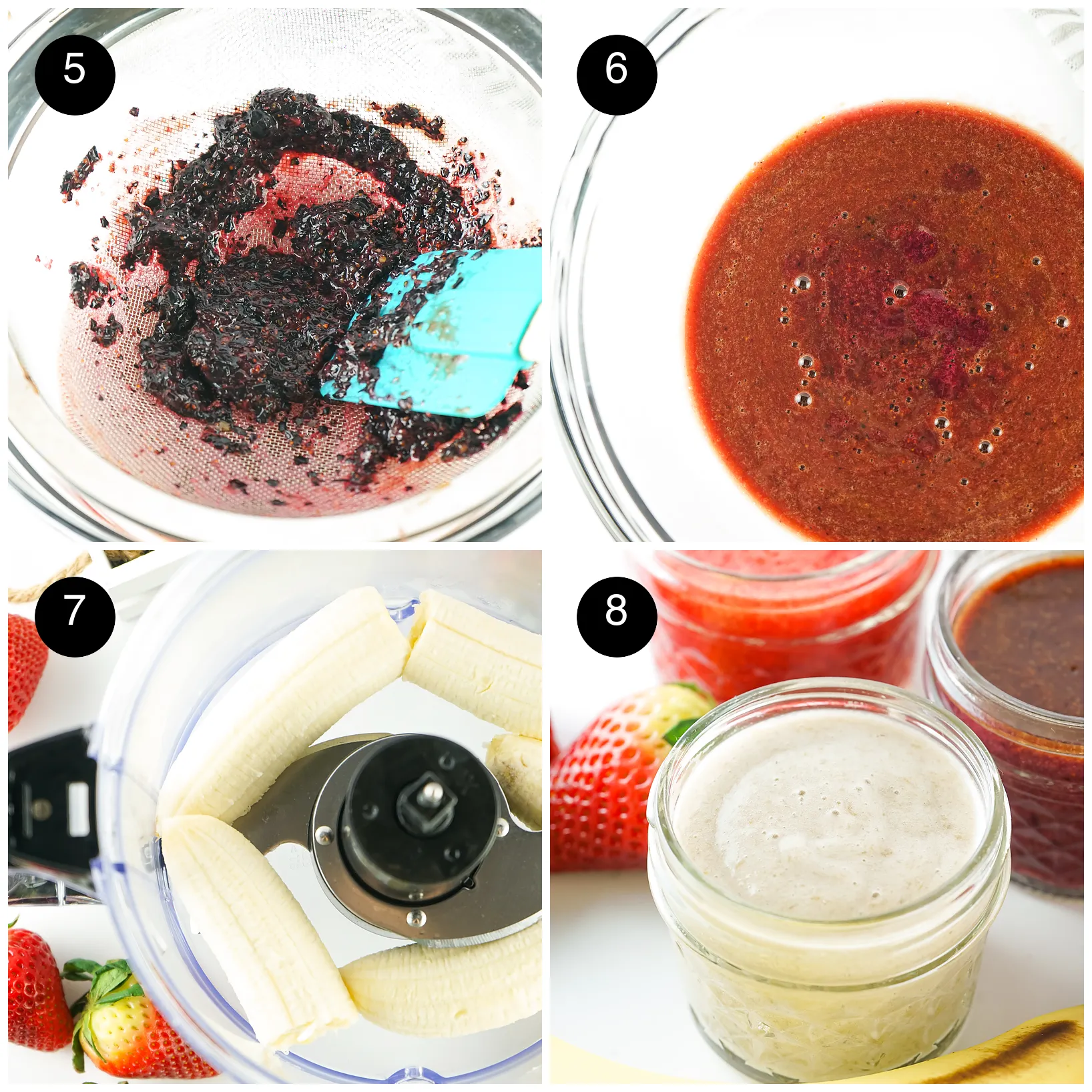
3. Sieve the berries. Then set the sieve over a bowl and pour in the berry purée. Press it through with a spatula until only the seeds and pulp are left behind. Banana does not need sieving.
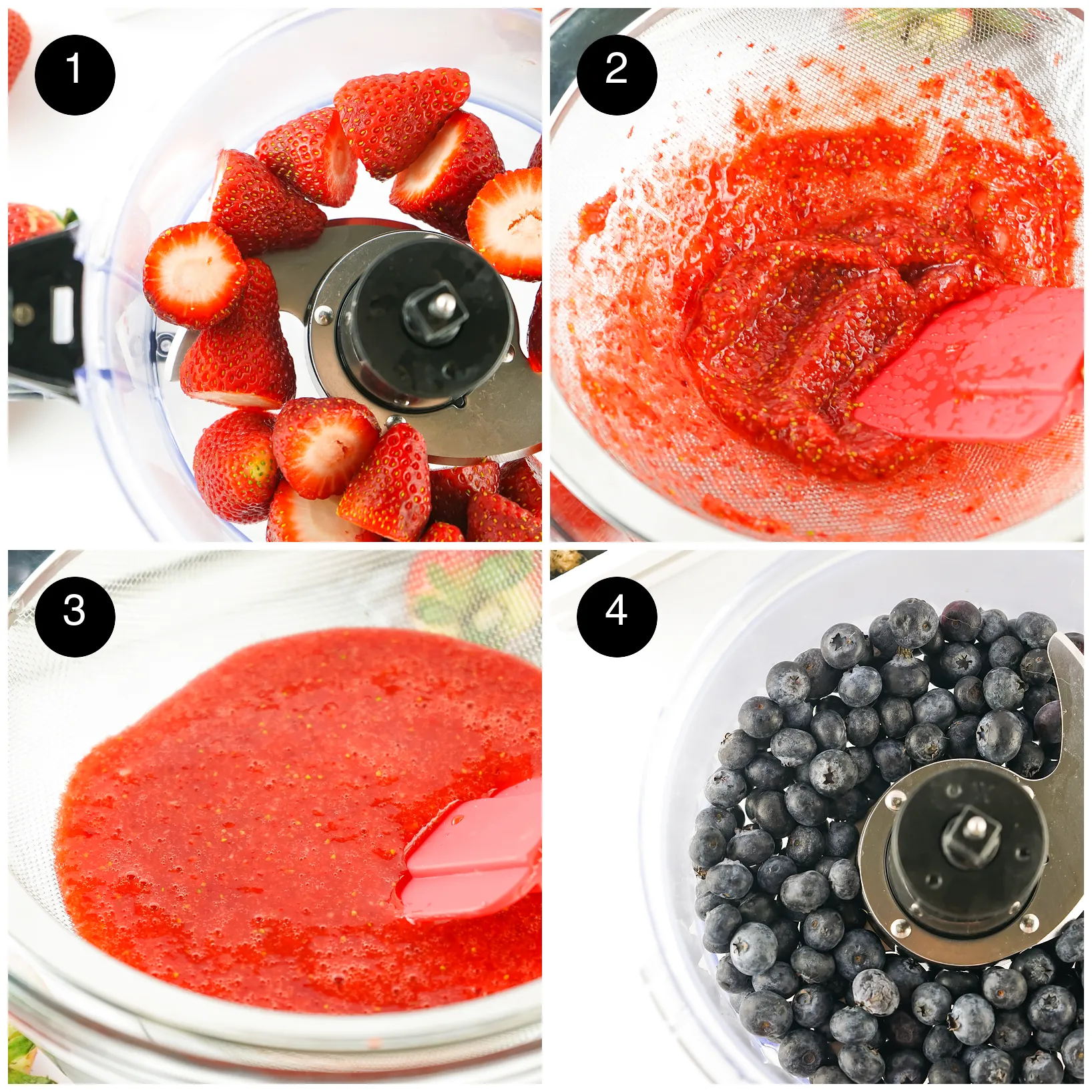
4. Stir and check. After that, stir the purée well. It should drip easily off a spoon. If it seems thick, add a teaspoon more water, breast milk or formula.
5. Serve or store. Finally, spoon a small portion into a bowl for your baby, and refrigerate or freeze the rest straight away.
Safety First: The Golden Rules
- No honey before 12 months. It can carry spores that cause infant botulism.
- No added salt or sugar. Ripe fruit is sweet enough, and babies’ kidneys cannot cope with much salt.
- Serve from a bowl, not the jar. Saliva on the spoon lets bacteria grow, so throw away anything left in the bowl.
- Keep it smooth. No whole berries, seeds or lumps at this stage.
- Watch for reactions. Acidic berries can leave a little redness around the mouth, which is usually just skin irritation. Hives, swelling, vomiting or trouble breathing need urgent medical help.
Every one of these comes from mainstream guidance, and eatright.org’s guide to homemade baby food is a good, practical read if you want more detail.
Tips for the Best Stage 1 Baby Food
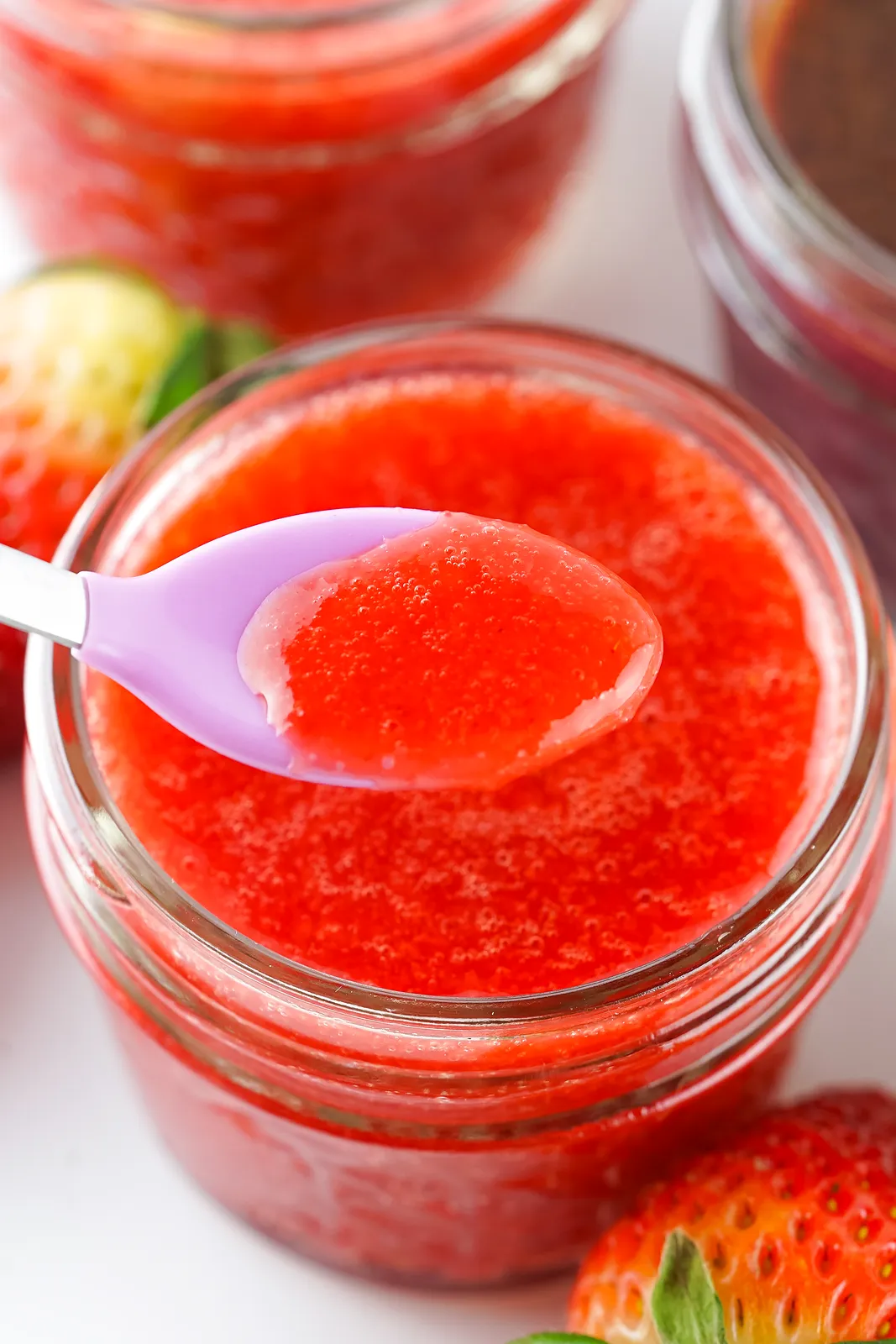
- Berry stage 1 baby food looks thin at first but thickens as it chills, so always stir it before serving.
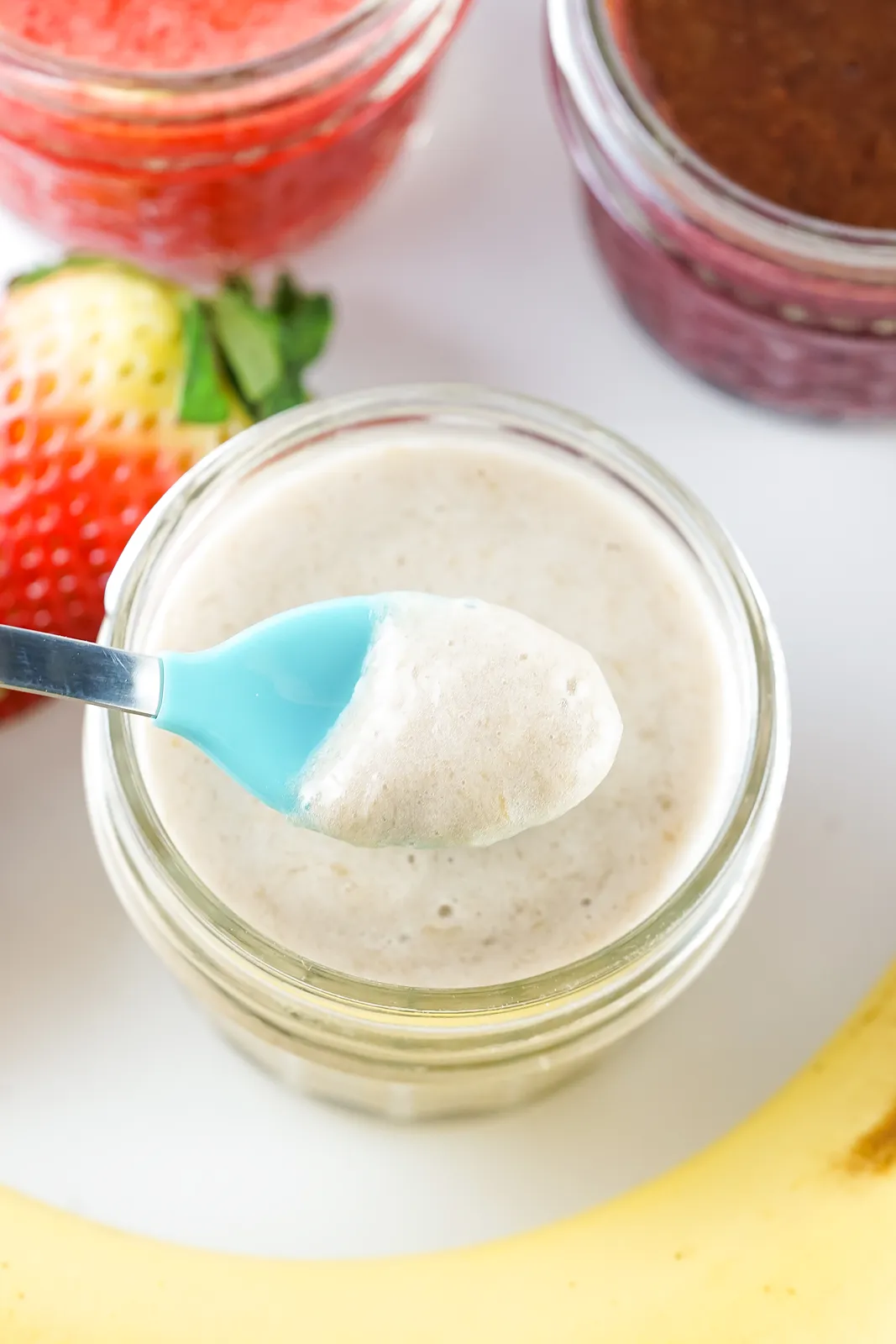
- Banana purée browns quickly because it reacts with air. It is perfectly safe; make small batches and press cling film onto the surface.
- Sieving takes a few extra minutes, but it removes seeds and skins and gives the silky texture young babies manage best.
- Frozen berries without added sugar work well. Thaw them first and use the juice too.
- Offer the purée slightly cool or at room temperature; fruit does not need warming.
Storing and Freezing
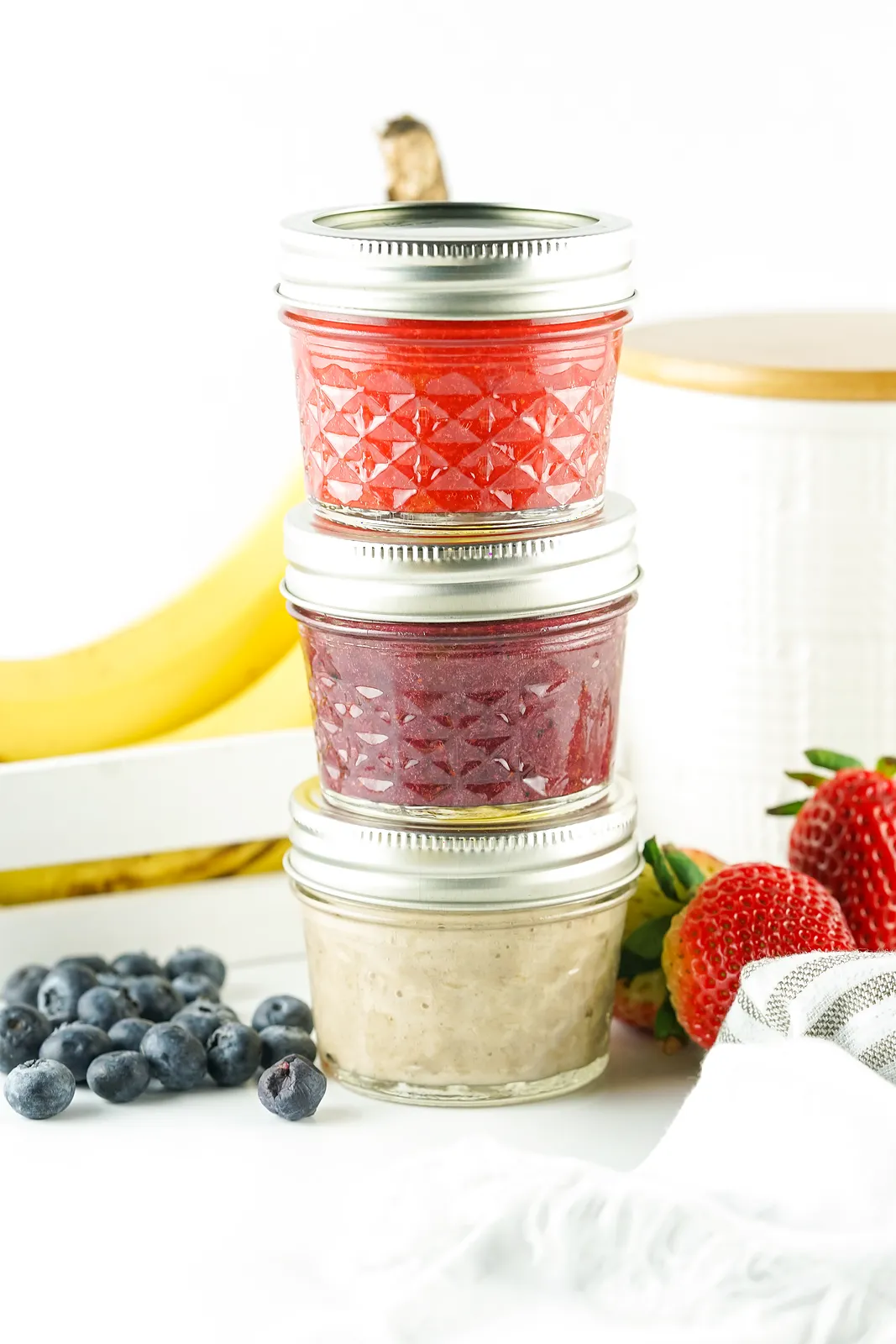
- Fridge. Keep in a clean, covered container and use within 1 to 2 days, which is what eatright.org recommends for homemade baby food. Small 4 ounce jars are ideal.
- Freezer. Spoon into an ice cube tray or flat freezer bags, label and date them, and use within 1 to 2 months.
- Thawing. Defrost portions overnight in the fridge, stir well and use within a day. Never refreeze thawed purée.
- Yield. Each berry batch makes about 8 ounces; the banana batch makes about 12 ounces.
Lidded baby food freezer trays are handy for this, because each small portion pops out on its own and the lid keeps freezer smells away from the purée.
More Fruits to Try
This method works for most soft fruits. Ripe pear, mango, peach, papaya and avocado blend smoothly with no cooking, while firmer fruit like apple and plums are best steamed until soft first. Once your baby has tried a few single fruits happily, you can start mixing them, such as banana and blueberry.
Leftover berries? I freeze them into my smoothie cubes for the grown ups. Very ripe bananas go into my gluten free banana bread, and older children love the same fruit blended into strawberry popsicles.
Serving Ideas for the Whole Family
These purées are not just for babies. A spoonful of strawberry or blueberry swirled through my creamy instant pot oatmeal makes a lovely breakfast for the rest of the family, and it is nice for little ones to see everyone eating the same colours. They also work stirred into plain yogurt or spooned over pancakes.
Frequently Asked Questions
Starting Solids
Can I give my 4 month old stage 1 baby food?
Usually not yet. The AAP recommends starting solids at around 6 months. Some babies start a little earlier on their doctor’s advice, but never before 4 months, so talk to your paediatrician first.
How much fruit purée should a baby eat at first?
Just a teaspoon or two once a day. Most of it may end up on the bib, and that is fine; breast milk or formula is still the main food at around 6 months.
How long do babies stay on stage 1 purées?
Usually a few weeks to a couple of months. When your baby swallows smooth purées easily, start making them thicker and introduce soft mashed textures.
What is the difference between stage 1 and stage 2 baby food?
Stage 1 is thin, smooth and single ingredient, usually from around 6 months. Stage 2 is thicker, often combines two or three foods and typically starts at about 7 to 9 months.
Making and Storing
Do you need to cook strawberries and blueberries for baby purée?
No. Ripe, soft berries can be blended raw after a thorough wash, as in this recipe, then sieved to remove seeds and skins. If you prefer, steam them for 2 to 3 minutes first.
Are strawberries safe for babies starting solids?
Yes, once your baby has started solids. They are not one of the major food allergens, though their acidity can redden the skin around the mouth.
How long does homemade baby food last?
1 to 2 days in a covered container in the fridge and 1 to 2 months in the freezer. Label every container with the date, serve from a separate bowl and throw away anything left in that bowl.
Can I use juice instead of water in homemade baby purée?
No. Use water, breast milk or formula instead; the AAP advises no fruit juice for babies under 12 months. Each batch needs just 1 tablespoon of liquid.
Ingredients
Strawberry Baby Food (makes about 8 oz)
- 2 cups fresh strawberries washed and hulled
- 1 tablespoon water
Blueberry Baby Food (makes about 8 oz)
- 2 cups fresh blueberries washed
- 1 tablespoon water
Banana Baby Food (makes about 12 oz)
- 2 medium bananas peeled
- 1 tablespoon water
Instructions
Strawberry Baby Food
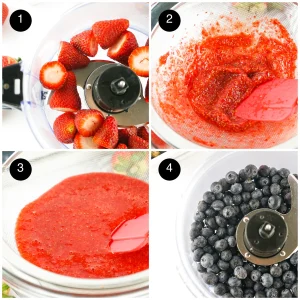
- Place the strawberries in the food processor and blend.

- While blending, add the water.
- Pause to scrape down the sides of the processor if needed. Blend until smooth.
- Place the sieve over a medium bowl and pour the strawberry blend into the sieve.
- Using a rubber spatula, press the strawberry mixture through the sieve until just the seeds and pulp remain.
- Stir the strawberry puree in the bowl before serving or storing.
Blueberry Baby Food
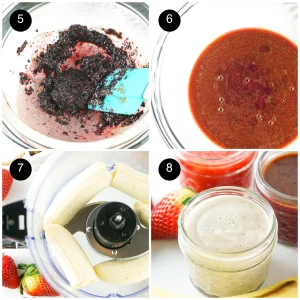
- Place the blueberries in the food processor and blend.
- While blending, add the water.
- Pause to scrape down the sides of the processor if needed. Blend until smooth.
- Place the sieve over a medium bowl and pour the blueberry blend into the sieve.
- Using a rubber spatula, press the blueberry mixture through the sieve until just the skins and pulp remain.
- Stir the blueberry puree before serving or storing.
Banana Baby Food
- Place the bananas in the food processor and blend.
- While blending, add the water.
- Pause to scrape down the sides of the processor if needed. Blend until smooth.
- Serve immediately or store properly until ready to use.
