 Bity
Bity
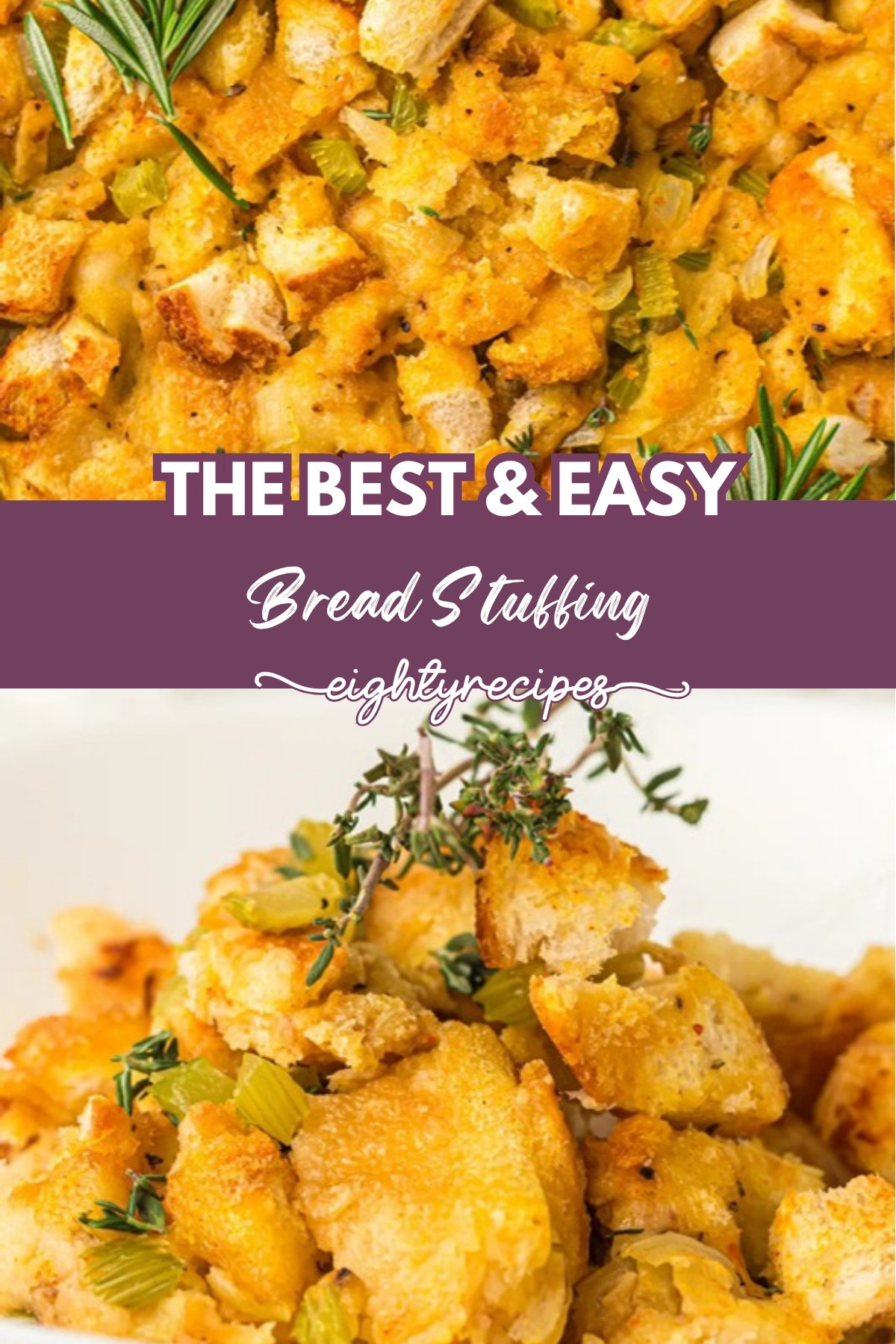
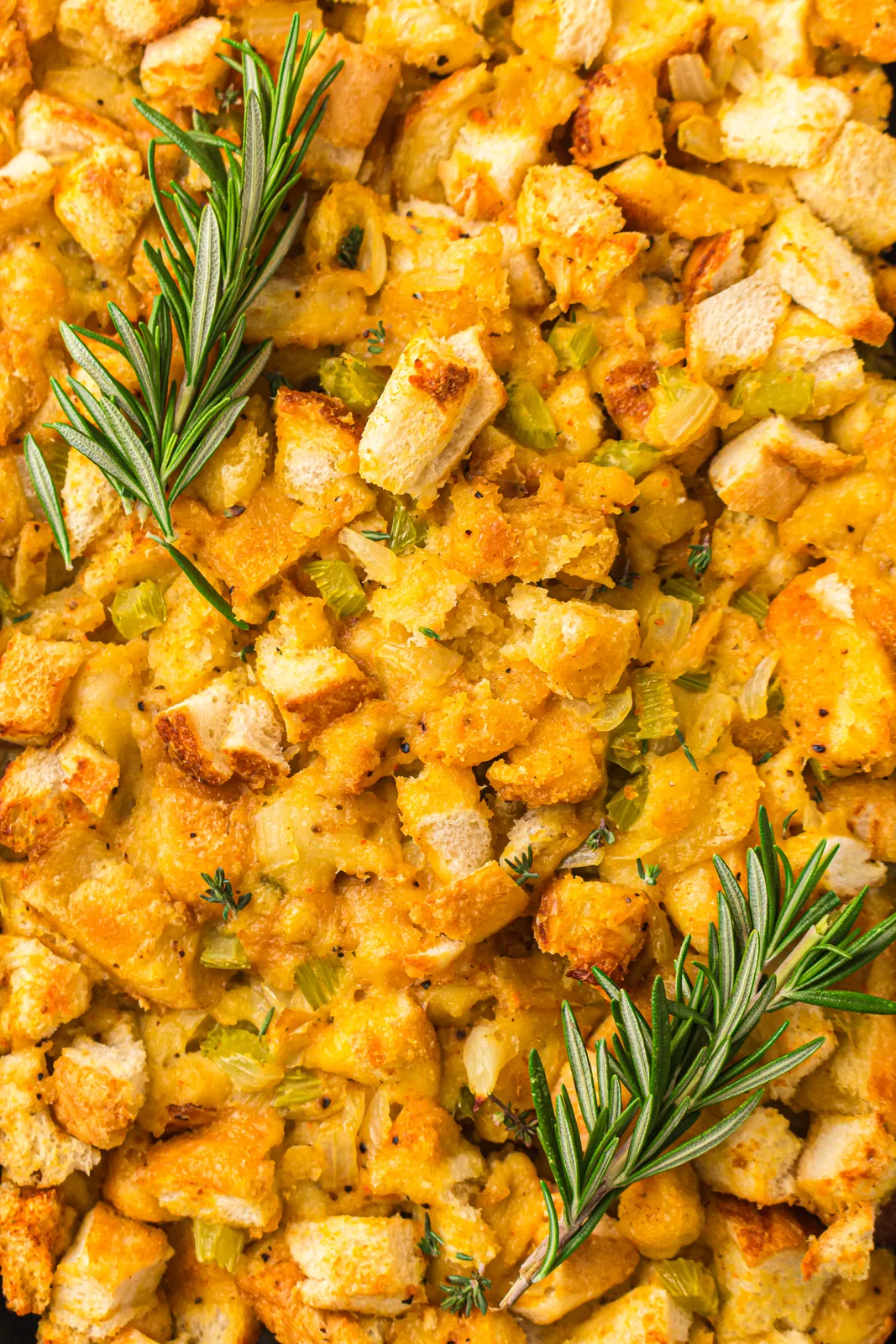
Good bread stuffing lives or dies on two decisions, and neither of them is the herb blend. It is how dry your bread is before the stock goes anywhere near it, and how long you leave the foil on. Get those right and you end up with crisp golden peaks over a soft, savoury middle.
I learned this the year I used a fresh loaf because the shops had sold out of anything older. What came out of the oven was closer to bread pudding, and my aunt has never let me forget it.
Quick Breakdown
Why You’ll Love This Bread Stuffing
- Eight ingredients, all of them ordinary. A loaf, butter, onion, celery, stock, poultry seasoning, salt, pepper.
- It bakes in a dish, not a bird. So it cooks evenly, it is safer, and the top actually crisps.
- Fully make-ahead. Because it assembles cold, you can build it the day before and bake it when the oven is free.
- Feeds six to eight. Meanwhile it stretches further next to a big roast than any other side on the table.
- Crisp top, soft middle. In fact the covered-then-uncovered bake is what creates both at once.
Ingredient Notes
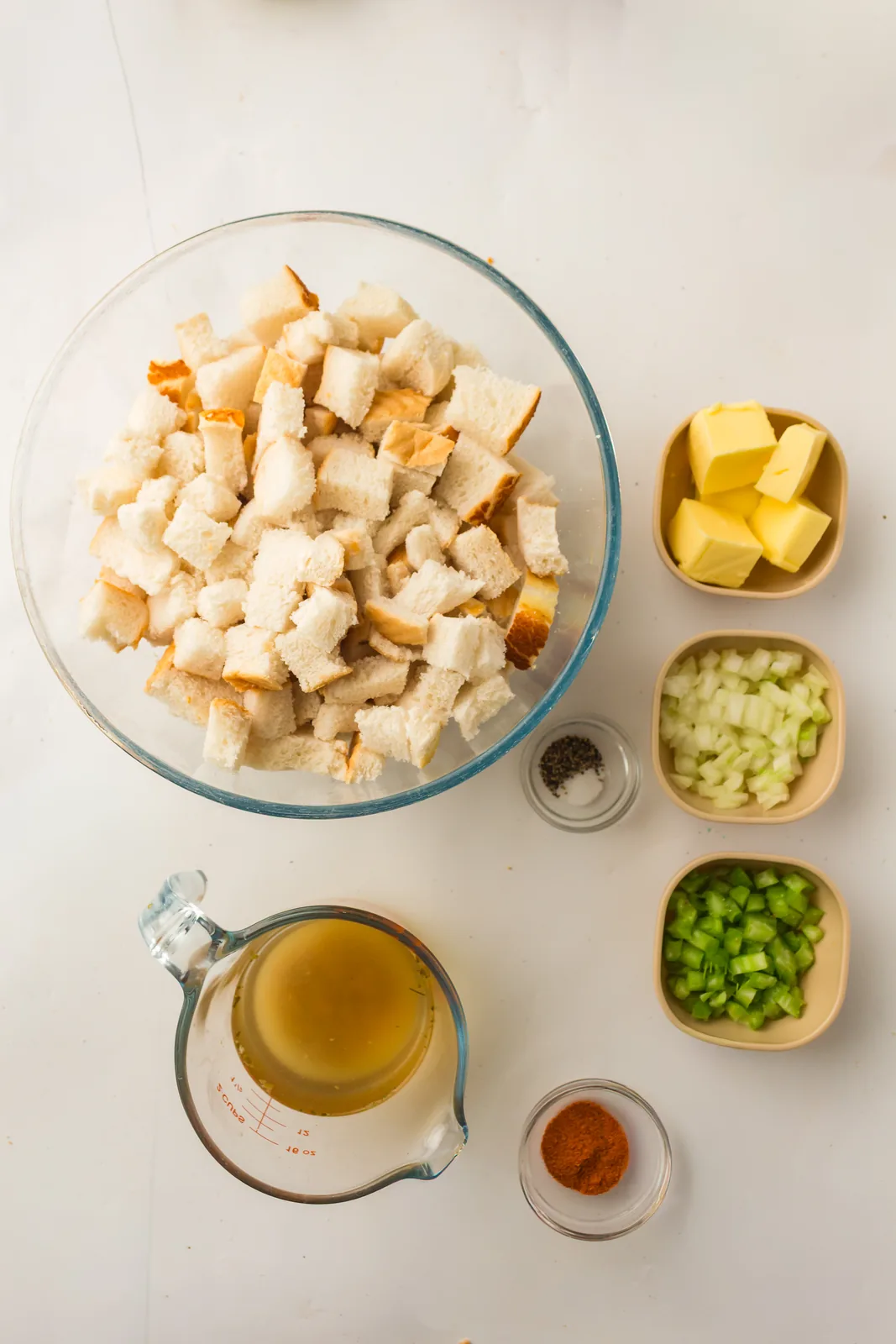
- A dried white loaf. About 450 g, cut into cubes. Dry is the operative word, so leave the cubes out overnight or toast them at 300F for fifteen minutes.
- Butter. Seven tablespoons, and this is not the place to economise. It is what carries the flavour through every cube.
- Onion. One medium, finely diced. Cook it until translucent rather than golden.
- Celery. Two stalks, diced small. It gives the whole dish its background savouriness, and Cleveland Clinic covers what else it brings beyond the crunch.
- Poultry seasoning. Two teaspoons. If you do not have it, use one teaspoon of dried sage with half a teaspoon each of thyme and marjoram.
- Chicken stock. Between 250 and 350 ml. Start low, because you can always add more and you cannot take it back out.
- Salt and pepper. Half a teaspoon and a quarter teaspoon. Taste before you commit, since stock brings its own salt.
What Kind of Bread Makes the Best Bread Stuffing
A plain white loaf with a tight, sturdy crumb is the classic and it works for a reason. It absorbs stock without disintegrating, and it stays neutral enough that the sage and celery come through.
Sourdough gives a chewier result with more character. Brioche or challah make it richer and slightly sweet, which suits ham better than turkey. Whatever you use, the loaf needs to be genuinely stale or deliberately dried, because fresh crumb holds water instead of drinking stock.
Cube size matters too. Aim for pieces around three quarters of an inch. Smaller than that and the bread stuffing goes pasty, larger and the middle of each cube never softens at all.
Stale bread can be stubborn, so I cut the loaf into cubes with a long serrated bread knife rather than tearing it.
Stuffing or Dressing, and Why It Matters
The names describe where it cooks. Anything baked inside the bird is stuffing, and anything baked in its own dish is dressing, though most of us use the words interchangeably.
Cooking it in the dish is the better choice, and not only for the crust. Stuffing packed into a cavity has to reach 165F to be safe, and by the time the centre gets there the breast meat is usually overdone. The Academy of Nutrition and Dietetics spells out why a separate dish is safer.
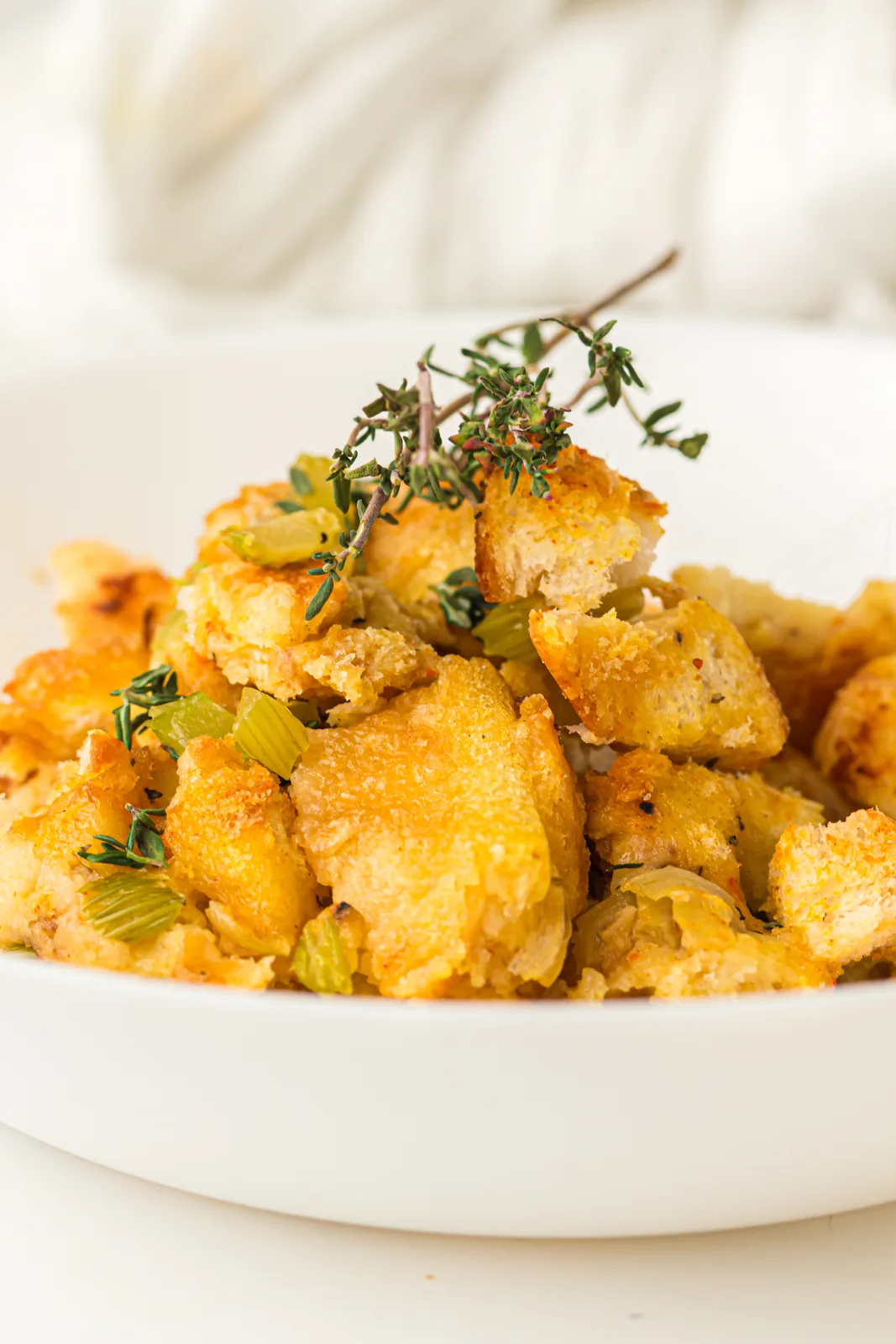
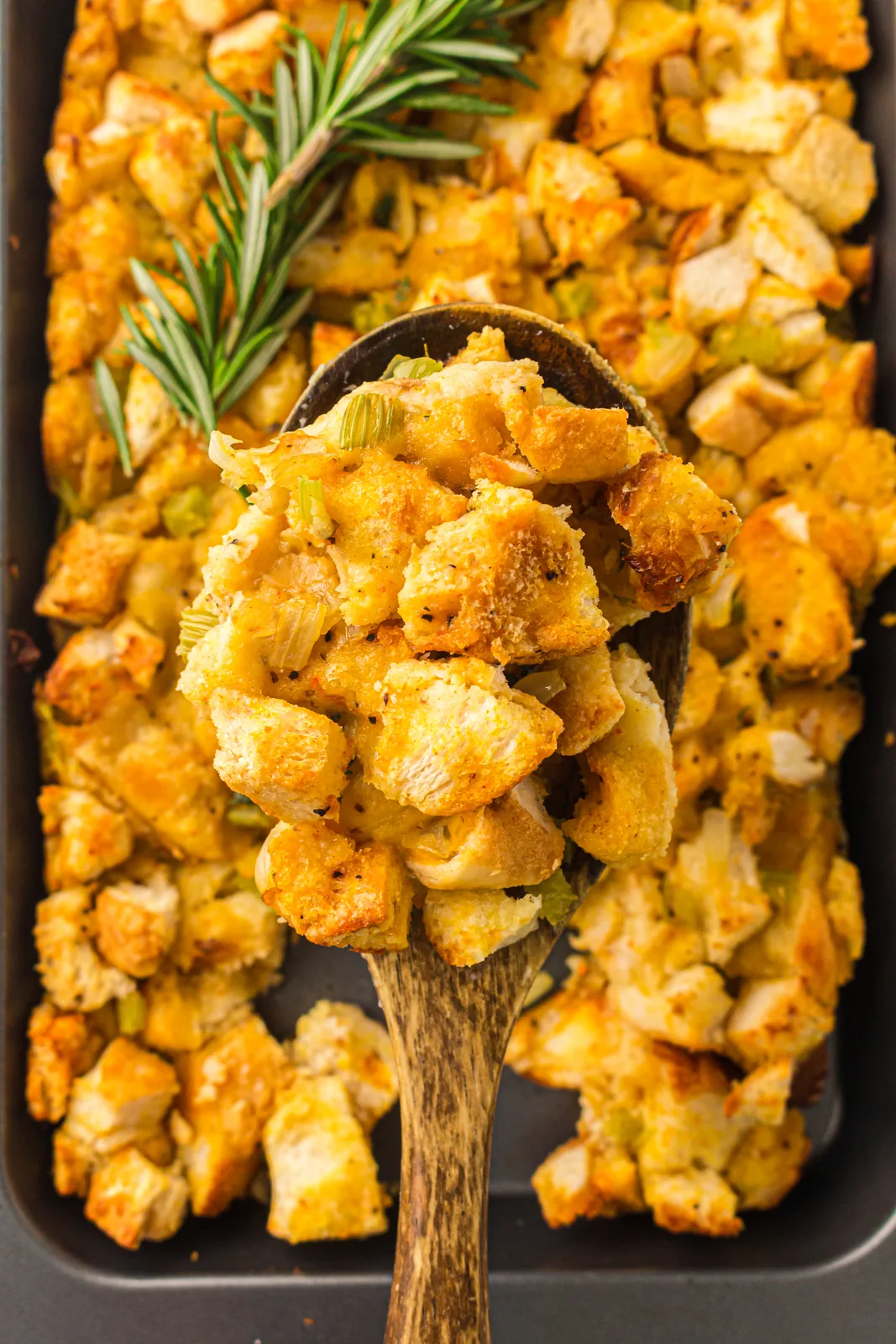
You also lose the best part. Inside a bird, the whole thing steams, so there is no crisp surface anywhere. Baked in a tray, this bread stuffing develops a golden lid that people fight over.
If you do stuff the bird anyway, push an instant read thermometer into the very centre of the stuffing before anyone gets a plate.
How To Make Bread Stuffing
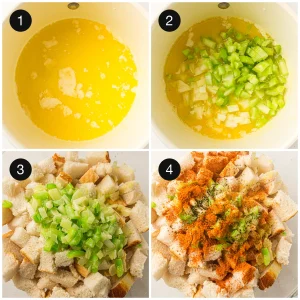
1. Heat the oven. First set it to 350F and grease a baking dish lightly with butter.
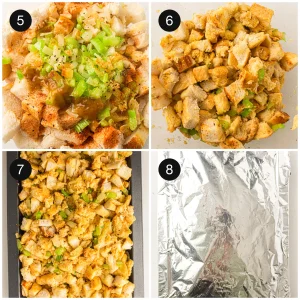
2. Soften the vegetables. Then melt the butter in a large skillet over medium heat, add the diced onion and celery, and cook for five to seven minutes until soft and translucent.
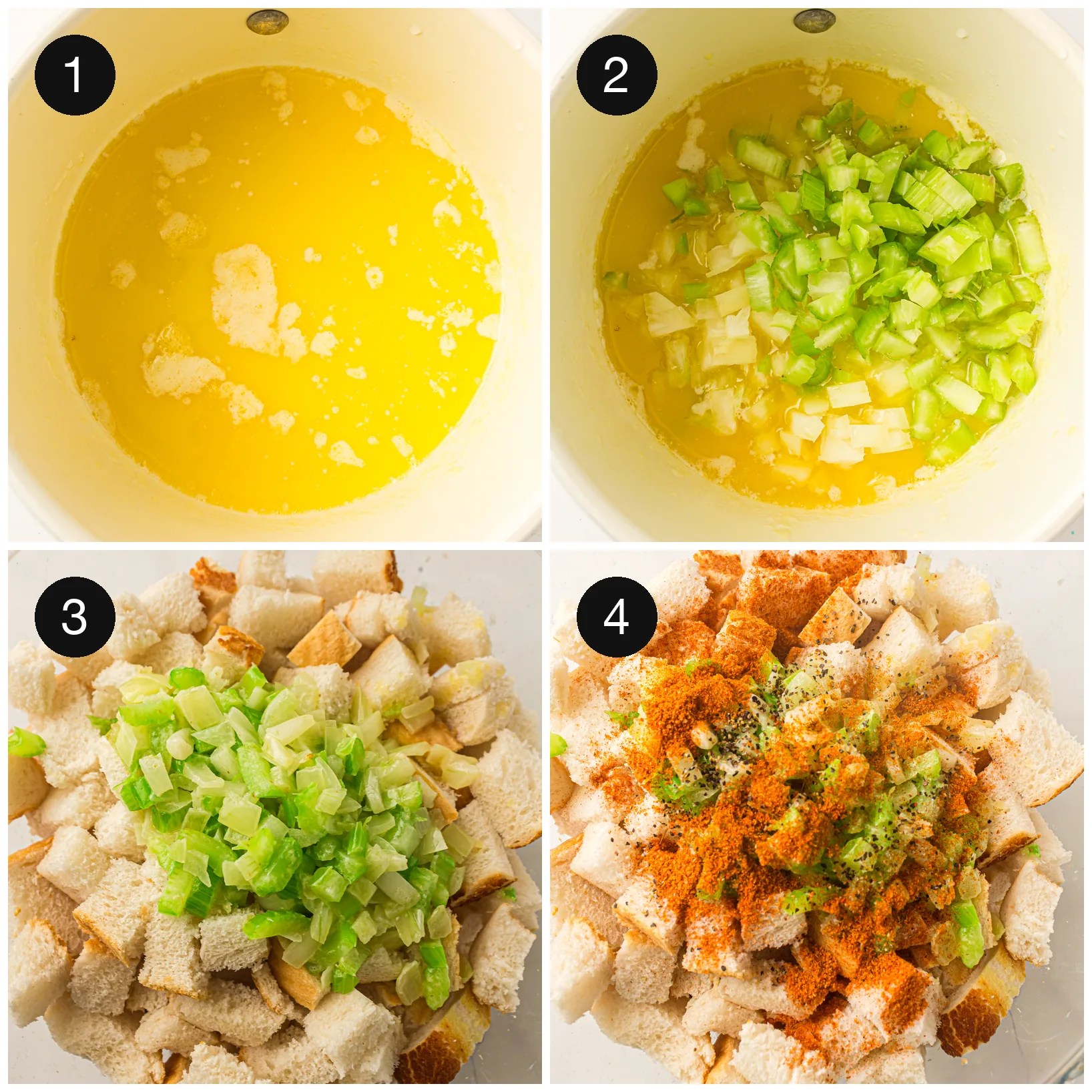
3. Combine in a big bowl. Next tip the dried bread cubes into a large bowl and add the buttery vegetables along with the poultry seasoning. Toss until every cube is coated.
4. Add the stock gradually. After that, pour the stock in a little at a time, folding gently between additions. Stop when the bread is moist but not sitting in liquid, and you may not need it all.
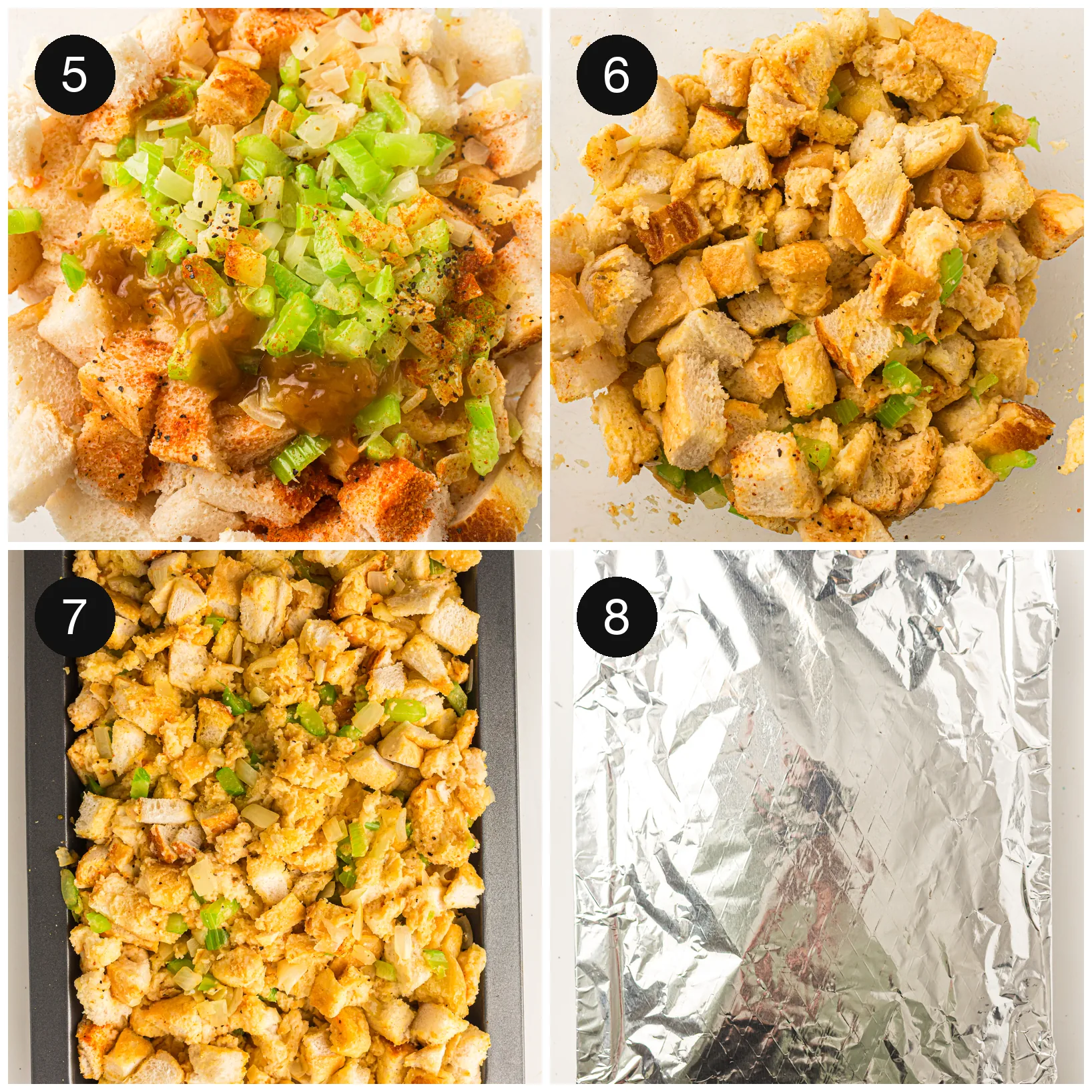
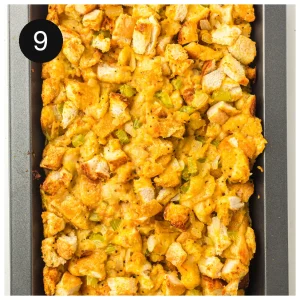
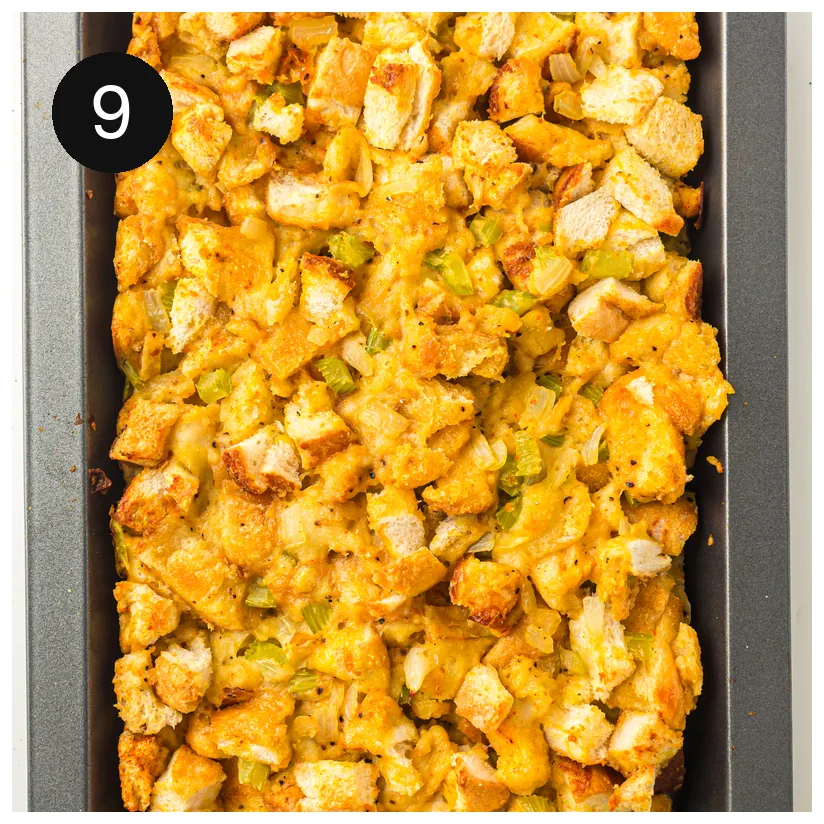
5. Season and spread. Season with salt and pepper, then transfer everything to the dish and spread it in an even layer without pressing it down.
6. Bake covered. Cover tightly with foil and bake for 30 minutes. Meanwhile the trapped steam softens the centre right through.
7. Uncover and finish. Finally remove the foil and bake for another 10 minutes, until the top is lightly crisp and golden.
Why Is Mine Soggy or Dry?
- The bread was fresh. The most common problem by far. Fresh crumb turns to paste the moment stock hits it.
- All the stock went in at once. Add it gradually and stop when the cubes are damp rather than swimming.
- You packed it down. Because pressing squeezes out the air pockets, the middle steams into a dense block. Spread it loosely.
- The foil stayed on. Ten uncovered minutes at the end is what makes the top crisp.
- Too little stock. A dry result usually means you were cautious. Drizzle a few extra spoonfuls over before the foil goes on.
Tips for the Best Bread Stuffing
- Dry the cubes the day before. Of course you can toast them in the oven, but overnight on a tray costs nothing.
- Taste the mixture before it goes in the dish. Under-seasoning is far harder to fix once it is baked.
- Use a wide, shallow dish rather than a deep one. As a result more of the surface crisps.
- Dot a little extra butter over the top before the foil comes off for a richer crust.
- If the top browns too fast, lay the foil back on loosely for the last few minutes.
Storage and Reheating
- Make ahead. Assemble it fully, cover, and refrigerate for up to 24 hours. Let it stand for 30 minutes before baking, then add five minutes to the covered time.
- Fridge. Baked bread stuffing keeps for four days in an airtight container.
- Freezer. Two months, baked or unbaked. Thaw overnight in the fridge first.
- Reheating. Cover and warm at 325F until hot through, then uncover for the last five minutes to bring the top back.
Variations and Substitutions
- Sausage. Brown 250 g of sausage meat and fold it through with the vegetables. This is the version my family asks for.
- Apple and pecan. A diced apple and a handful of toasted pecans make it sweeter and give it crunch.
- Fresh herbs. Chopped sage, thyme, and parsley in place of the dried blend. Use three times as much as you would dried.
- Vegetarian. Vegetable stock and a spoonful of miso in place of chicken stock gives you the same savoury depth.
- A soft roll base. Day-old soft dinner rolls torn into pieces make a lighter, more buttery version.
What to Serve With It
Bread stuffing is a side dish that wants a roast next to it. A classic roast chicken is the easy answer for a smaller table, and if the oven is already busy, a slow cooker whole chicken frees up the space you need.
Beyond that, mashed potatoes and gravy are non-negotiable in this house. Something green cuts through all the butter, and a tray of garlic butter green beans takes ten minutes on the hob while everything else rests.
Frequently Asked Questions
Bread and Assembly
Can I use fresh bread instead of dried?
You can, but toast the cubes first at 300F for about fifteen minutes. Untoasted fresh bread turns to paste as soon as the stock goes in.
What kind of bread works best?
A plain white loaf with a sturdy crumb makes the best bread stuffing. Sourdough gives more chew, and brioche makes it richer, though both change the character.
Can I make this ahead of time?
Yes. Assemble it fully, cover, and refrigerate for up to 24 hours, then bake when you need it with five extra covered minutes.
Can I add sausage or extra herbs?
Absolutely. Cooked sausage, fresh parsley, sage, or thyme are all excellent. Fold them in with the buttery vegetables.
Baking and Safety
How long does bread stuffing take to cook?
Forty minutes at 350F, thirty of them covered with foil and ten uncovered. That split is what gives you a soft middle and a crisp top.
Can I cook it inside the bird?
You can, but it must reach 165F in the centre, which usually means overcooking the breast meat. A separate dish is safer and tastes better.
How long do leftovers keep?
Four days in the fridge or two months in the freezer. Reheat covered at 325F, then uncover briefly to crisp the surface again.
Ingredients
- 1 loaf dried white bread cubed, about 450 g
- 100 g butter 7 tablespoons
- 1 medium onion finely diced
- 2 stalks celery diced
- 2 teaspoons poultry seasoning or 1 tsp sage with 1/2 tsp each thyme and marjoram
- 250 to 350 ml chicken stock 1 to 1 1/2 cups
- 1/2 teaspoon salt
- 1/4 teaspoon black pepper
Instructions
- Preheat the oven to 350°F (180°C) and lightly grease a baking dish.
- In a large skillet over medium heat, melt the butter. Add the diced onion and celery and sauté until soft and translucent, about 5 to 7 minutes.

- In a large bowl, combine the dried bread cubes, the buttery vegetables and the poultry seasoning.
- Gradually pour in the chicken stock, mixing gently, until the bread is moist but not soggy. You may not need the full amount.
- Season with salt and black pepper to taste.
- Transfer the mixture to the prepared baking dish and spread it evenly without pressing it down.
- Cover with foil and bake for 30 minutes.
- Remove the foil and bake for a further 10 minutes until the top is lightly crisp and golden.