 Bity
Bity
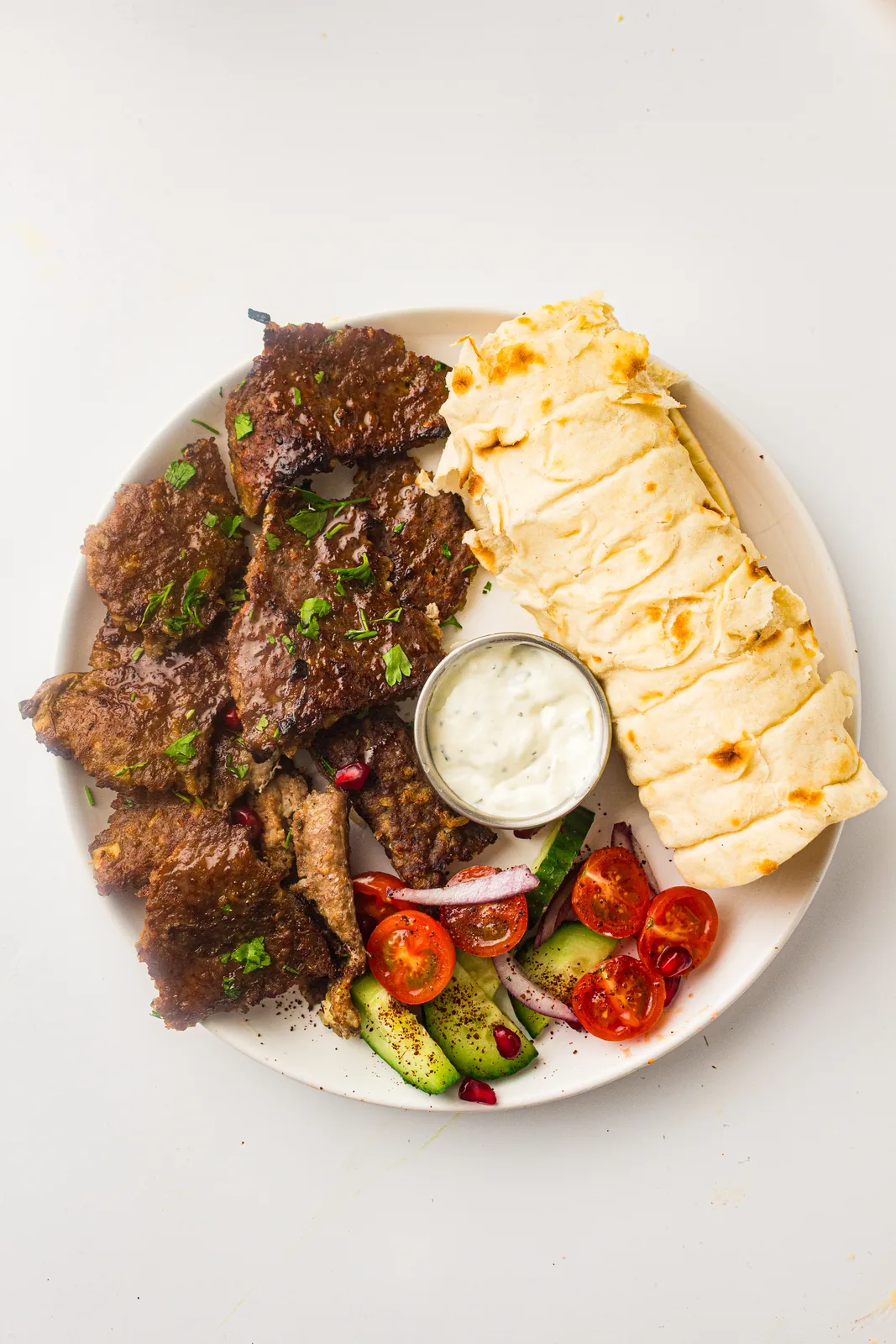
Every recipe for doner kebab at home used to start with the same apology, which was that you cannot get the layered texture without a vertical rotisserie. Then somebody worked out that a rolling pin and two sheets of parchment do most of the job.
The parchment method is now how I make doner kebab at home every time. You roll the seasoned meat flat, then roll it up like a Swiss roll. Baked and broiled, that spiral gives you thin, separable sheets of meat with crisp edges, which is exactly what you are paying for at the takeaway.
Quick Breakdown
Why You’ll Love This Doner Kebab
- Six ingredients plus salt. Meat, onion, garlic, paprika, cumin, oregano, olive oil. That is the whole list.
- Thirty five minutes. Twenty in the oven, then a few minutes under the broiler.
- No special equipment. A rolling pin, parchment paper and a baking tray.
- Proper crisp edges. The second blast under the broiler is what separates this from a meatloaf.
- Feeds four to six. Cheaper than one doner kebab from the takeaway, by a distance.
Ingredient Notes
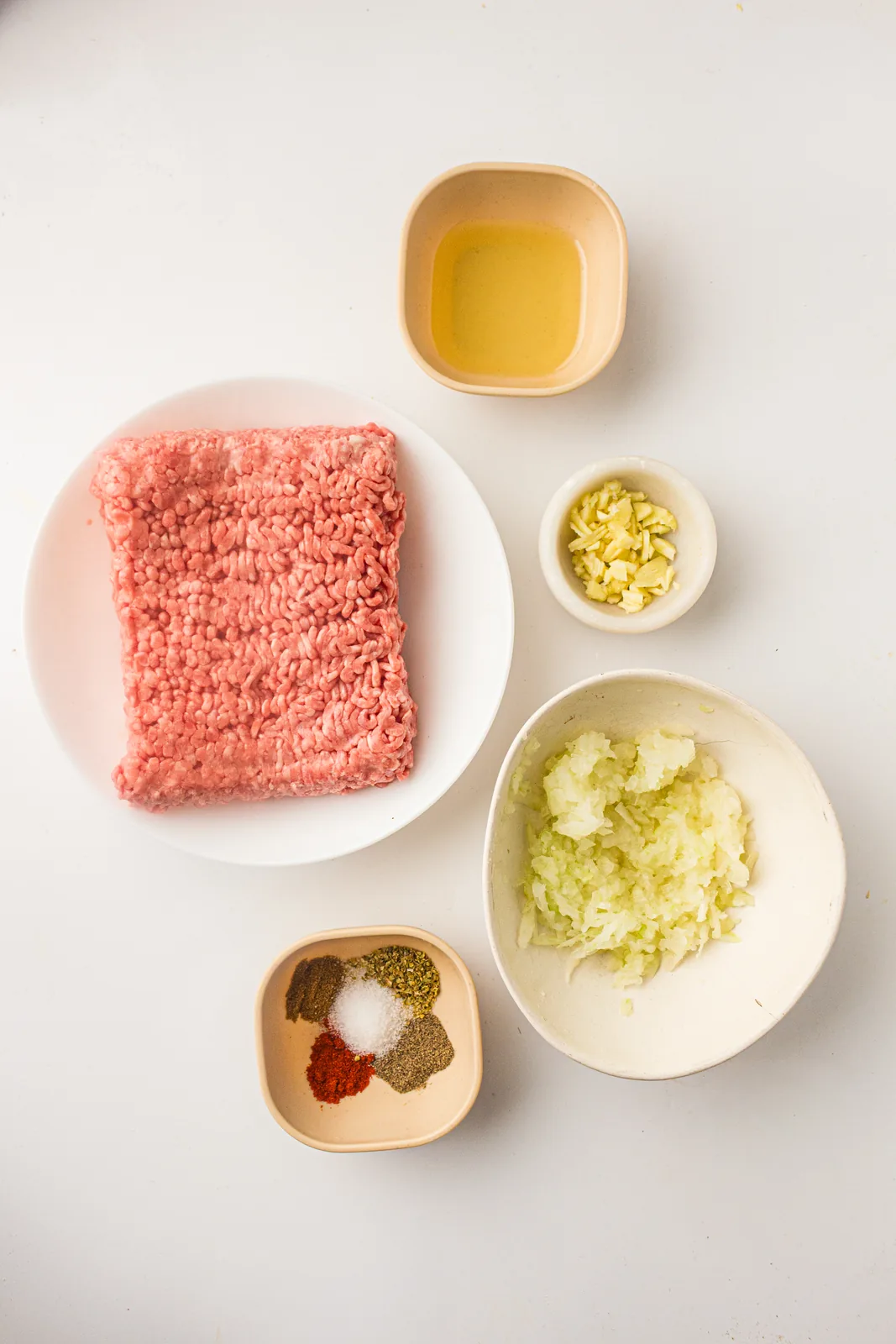
- Ground mutton or lamb. One and a half pounds, or 680 g. Fattier mince is better here. Very lean meat gives you dry shards instead of tender sheets.
- Grated onion. One small one, grated rather than chopped. The juice goes into the meat and keeps it moist, while chunks would just fall out when you slice.
- Garlic. Three cloves, minced fine.
- Paprika, cumin, oregano. A teaspoon each. That trio is what makes it taste like a kebab shop rather than a burger.
- Salt. A full teaspoon. Salt does more than season here, because it helps the proteins bind so the log holds together when you roll it.
- Olive oil. One tablespoon, mixed in, not brushed on.
- Parchment paper. Not foil. Foil creases and sticks, so the log tears as you unroll it.
Lamb sits firmly in the red meat family, and Cleveland Clinic groups it with the meats worth keeping to smaller portions rather than eating daily, which is one more reason this works well as a shared platter with plenty of salad.
Why the Parchment Roll Works
A real doner kebab rotisserie stacks marinated slices onto a spit, so what you shave off is a series of thin layers rather than a lump of mince. The parchment trick fakes that structure.
Rolling the meat into a thin rectangle lines up the fibres in one direction. Rolling that sheet into a log turns those aligned fibres into a spiral, and after baking the spiral tears apart into sheets instead of crumbling. That is why you tear the meat rather than dicing it, and why the broiler stage matters so much: the torn edges are what crisp.
How To Make Doner Kebab at Home
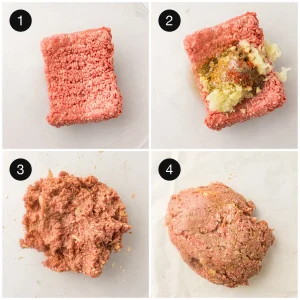
1. Mix the meat. First, combine the ground lamb, grated onion, garlic, paprika, cumin, oregano, black pepper, salt and olive oil in a large bowl. Work it thoroughly until it feels slightly sticky, which is the sign the proteins have started to bind.
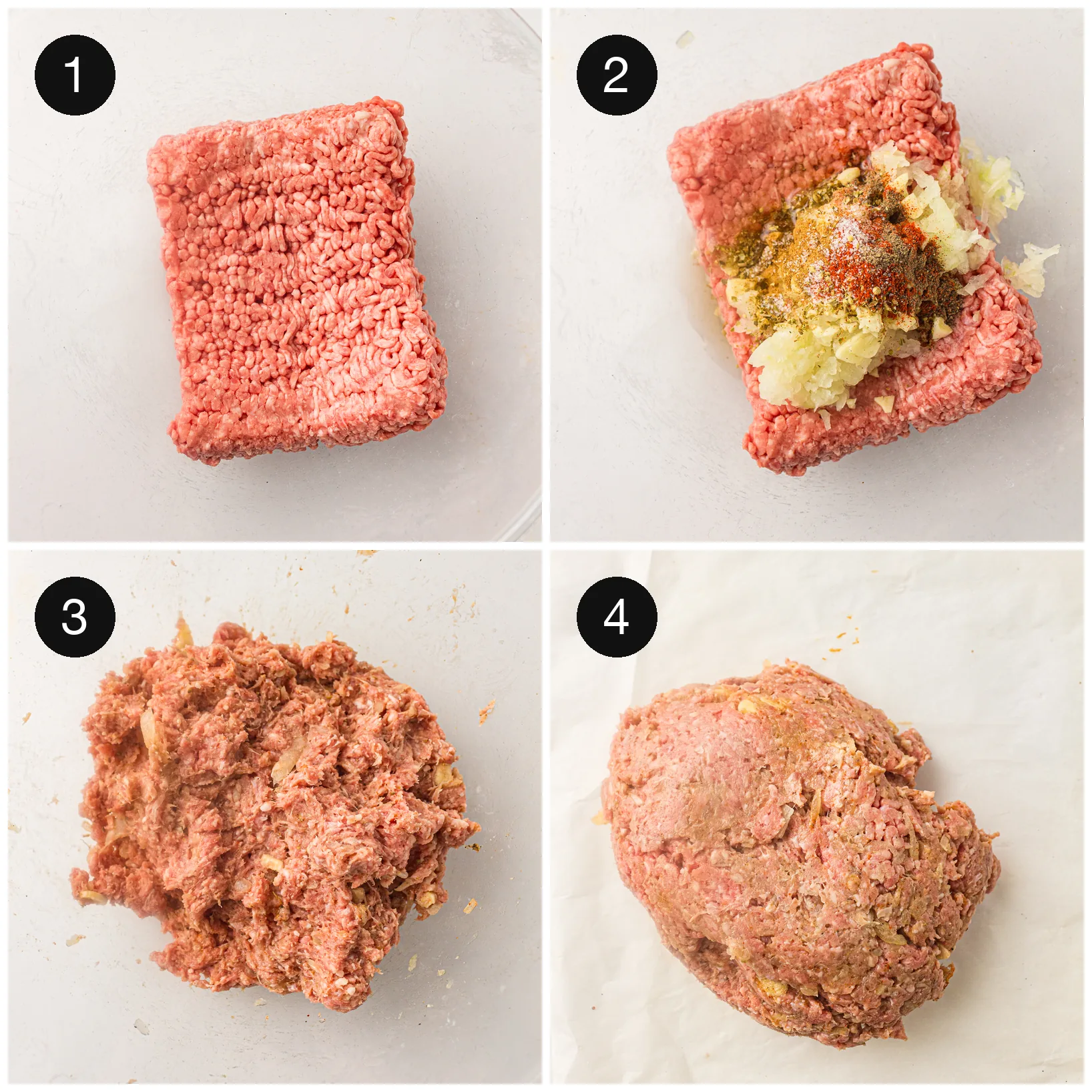
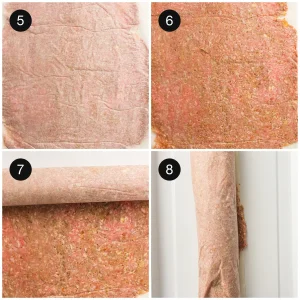
2. Roll it flat. Next, tip the mixture onto a sheet of parchment, lay a second sheet on top, and roll it out with a rolling pin into a thin, even rectangle. Even thickness matters more than a neat shape.
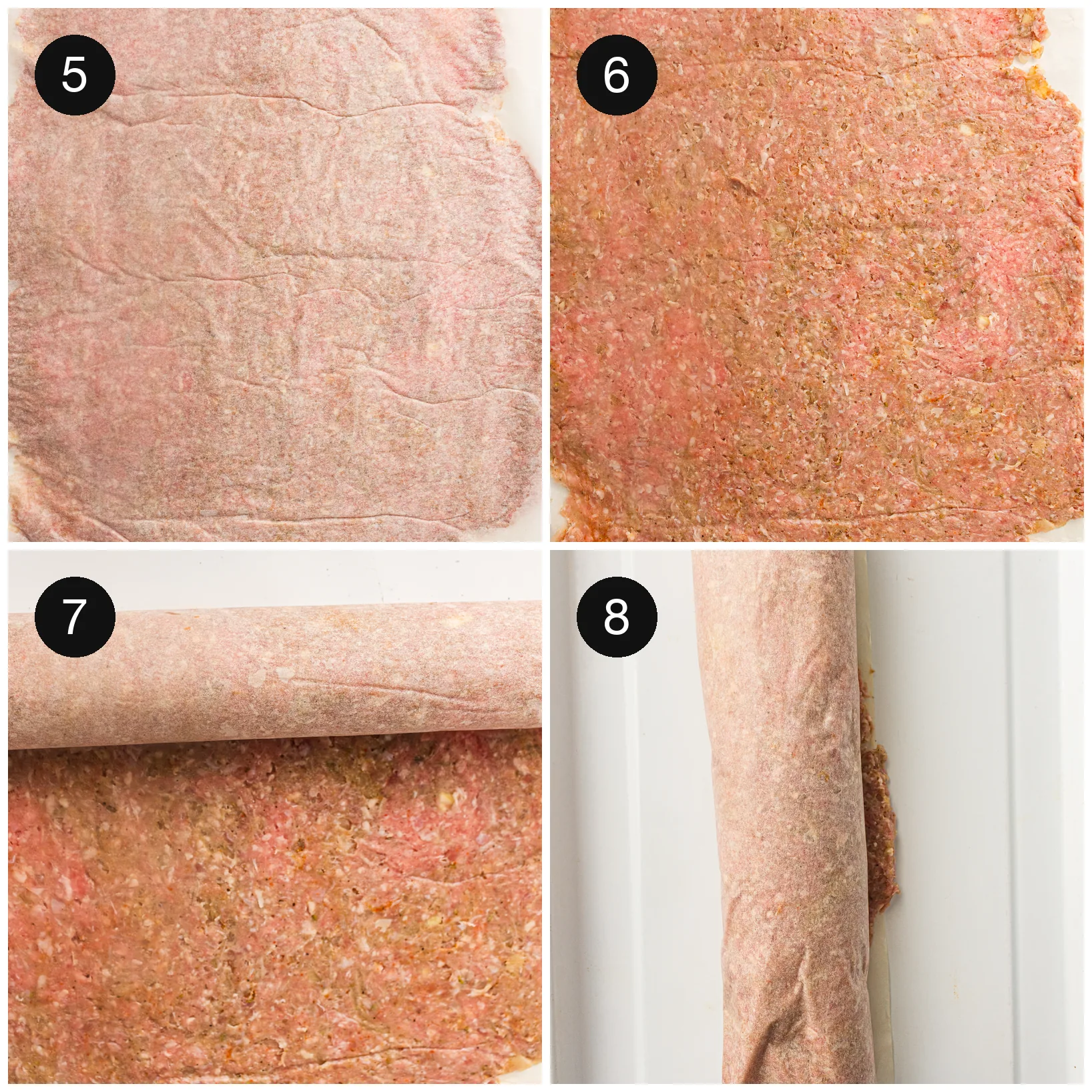
3. Roll it into a log. Then peel off the top sheet and use the bottom sheet to roll the meat up tightly from one long edge, the way you would a Swiss roll. Transfer the log to a baking tray.
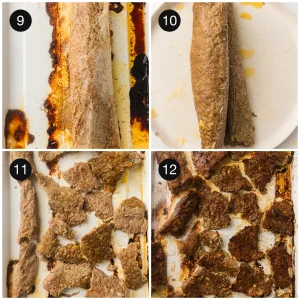
4. Bake. After that, bake at 400°F for 20 minutes, until cooked through. Pour off the juices that collect in the tray and keep them, because they are going back on shortly.
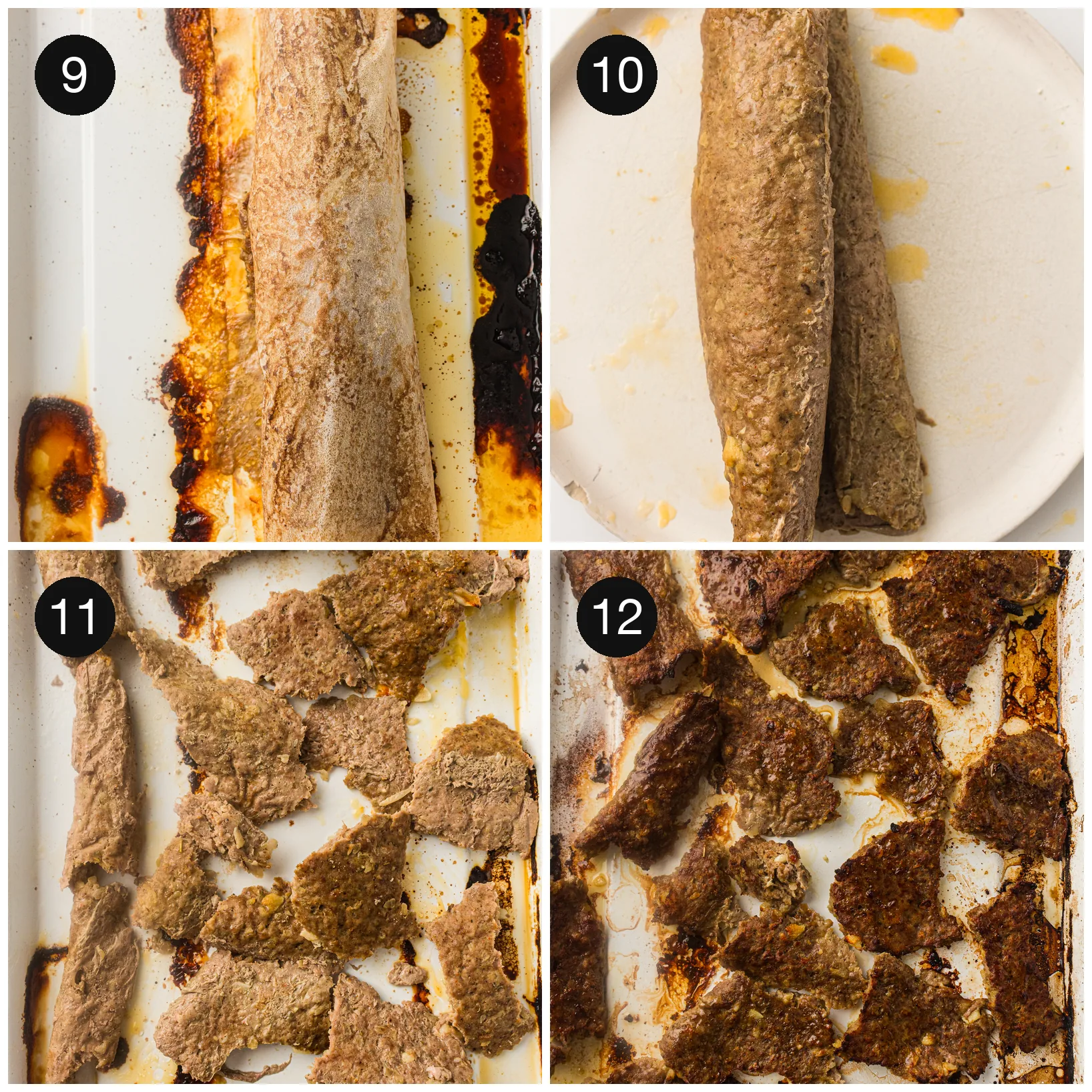
5. Tear, drizzle and broil. Finally, tear or slice the log into thin pieces, spread them out across the tray, drizzle the reserved juices over the top and broil for 5 to 8 minutes, turning as needed. Watch it closely and pull it as soon as the edges crisp.
Biggest Mistakes to Avoid
- Using very lean mince. Fat is what keeps the sheets tender through two rounds of heat. Anything under about 15% fat struggles.
- Chopping the onion instead of grating it. Chunks create weak points and the roll splits along them.
- Rolling loosely. Air pockets in the log become gaps, and the meat falls apart into crumbs rather than sheets.
- Throwing away the pan juices. That liquid is seasoned fat. It is the difference between crisp and dry.
- Walking away during the broil. Five minutes is right, eight is the limit, and ten is jerky.
Tips for the Best Doner Kebab
- Chill the rolled log for twenty minutes before baking if your kitchen is warm. It slices far more neatly.
- Meanwhile, warm the flatbreads. Cold bread makes hot meat feel lukewarm immediately.
- Squeeze the grated onion lightly if it is very juicy, but keep some of that liquid in the mix.
- Of course, taste the seasoning before you roll. Fry a teaspoon of the mixture in a pan and adjust the salt.
- Tear the meat by hand rather than cutting it. Torn edges catch the heat and crisp better than clean knife cuts.
- Instead of the broiler, a very hot dry skillet works well for reheating single portions.
The Garlic Yogurt Sauce
Half the character of a takeaway wrap is the white sauce, and it takes two minutes. Stir a crushed clove of garlic and a pinch of salt into a cup of thick plain yogurt, then loosen it with a squeeze of lemon and a splash of water until it pours slowly off a spoon.
Let it sit for ten minutes before serving so the garlic softens into it rather than hitting you in one raw note. A spoonful of mayonnaise makes it richer and closer to the shop version, and a little dried mint takes it in a Turkish direction. For heat, serve a chilli sauce separately rather than mixing the two, since most people want to choose their own ratio.
Storage and Reheating
- Fridge. Cooked doner kebab keeps three days in an airtight container.
- Freezer. Cooked meat freezes for up to two months. Freeze it in portions so you can pull out one dinner at a time.
- Reheating. A hot skillet or a few minutes back under the broiler brings the crispness back. A microwave will not.
- Make ahead. Bake the log a day early, then tear and broil just before serving. Honestly, this is the better way to feed a crowd.
Variations and Substitutions
- Beef. Works well and is cheaper, though lamb gives the more authentic flavour. A half and half mix is a good compromise.
- Chicken. Use thigh mince rather than breast, and drop the bake to about 15 minutes.
- Hotter. A teaspoon of chilli flakes or a spoonful of harissa in the mix.
- Wrapped differently. Pile it into cottage cheese flatbread for a higher protein wrap.
- As a burger. The same seasoning mix shaped into patties gives you something closer to grilled burgers with a kebab shop accent.
What to Serve With Doner Kebab
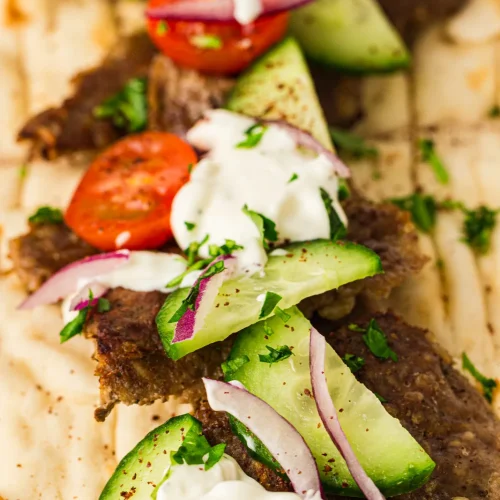
Flatbread, shredded lettuce, tomato, red onion and a garlic yogurt sauce is the standard build, and it is hard to improve on. For a plate rather than a wrap, serve it over rice with salad. Creamy coleslaw is a good cooling side, and a simple spinach salad keeps things light. Chips, pickled chillies and a bowl of classic potato salad round out a proper spread.
Frequently Asked Questions
Ingredients and Method
Can I use beef instead of lamb or mutton?
Yes, beef works well. Lamb gives the most authentic flavour, but plenty of shops use a beef and lamb blend anyway. Just keep the fat content up.
Why roll the meat in parchment?
Rolling flat and then coiling the sheet creates layers, which is what gives you the texture of meat shaved off a spit. Mince pressed into a loaf tin comes out as a solid block instead.
Do I need a food processor?
No. Grating the onion by hand and mixing everything in a bowl is enough. A processor makes the mixture pastier, which some people prefer.
Can I make it ahead of time?
Yes, and it is arguably better. Bake the log in advance, then tear and broil it just before serving so the edges are freshly crisp.
Storage and Troubleshooting
How do I stop the meat drying out?
Keep the reserved pan juices and drizzle them over before broiling. Then watch the clock, because most dryness comes from an extra three minutes under the heat rather than from the recipe.
My log fell apart when I sliced it. Why?
Either it was rolled too loosely or the mixture was not worked enough. Mix until it turns sticky, roll tightly, and chill the log before it goes in the oven.
How long do leftovers keep?
Three days in the fridge, or two months frozen. Reheat in a skillet rather than a microwave so the edges crisp up again.
Can I cook it on a barbecue?
You can, over indirect heat with the lid down, then finish the torn pieces directly over the coals. Watch it carefully, since the fat drips and flares.
Ingredients
- 1 1/2 lbs ground mutton or lamb 680 g
- 1 small onion finely grated
- 3 cloves garlic minced
- 1 teaspoon paprika
- 1 teaspoon ground cumin
- 1 teaspoon oregano
- 1/2 teaspoon black pepper
- 1 teaspoon salt
- 1 tablespoon olive oil
- parchment paper two sheets
Instructions
- Preheat the oven to 400°F.
- In a large bowl, combine the ground meat, grated onion, garlic, spices, salt and olive oil.

- Mix thoroughly until the mixture is well combined and slightly sticky.
- Place the meat mixture onto a sheet of parchment paper, then lay another sheet of parchment on top.
- Use a rolling pin to roll the meat into a thin, even rectangle.
- Remove the top sheet of parchment paper.
- Carefully roll the meat tightly into a log shape, using the bottom sheet of parchment to help.
- Transfer the rolled meat onto a baking tray.
- Bake for 20 minutes, until cooked through.
- Remove from the oven and carefully collect the juices from the tray. Set aside.
- Tear or slice the meat into doner-style pieces.
- Spread the pieces out on the tray.
- Drizzle the reserved juices over the meat.
- Place under the broiler for 5 to 8 minutes, turning as needed, until the edges are slightly crispy but not dry.
- Remove and serve immediately.