 Bity
Bity
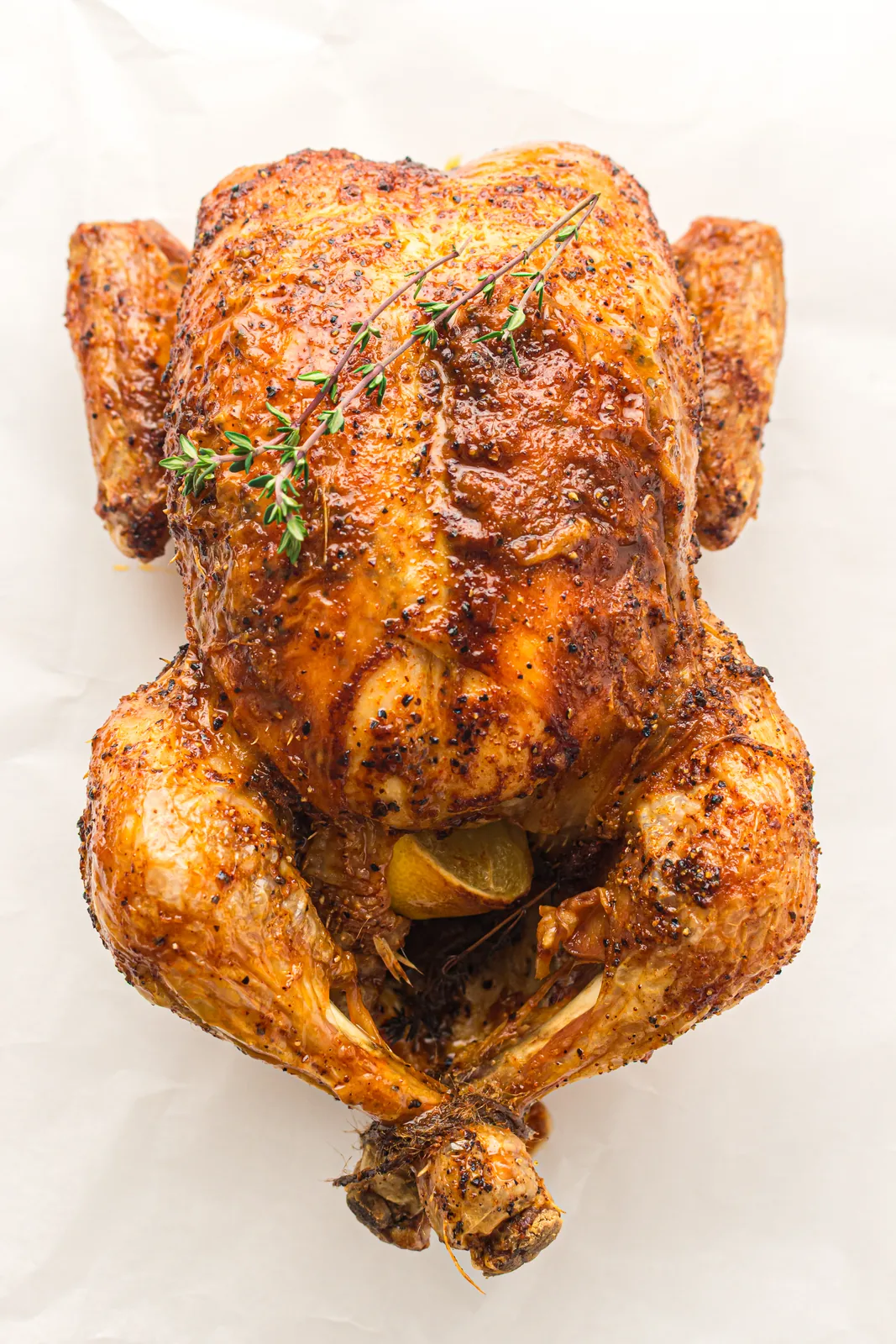
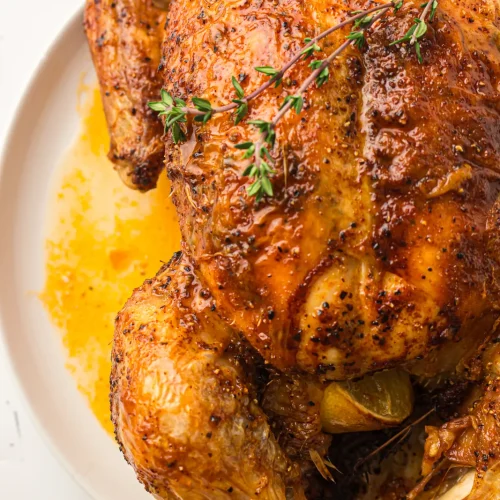
A good roast chicken is not a recipe so much as a handful of small decisions, and the biggest one happens before the oven is even on. Butter goes under the skin, not just on top of it.
On top, butter melts away in the first fifteen minutes and drips into the tin. Underneath, it sits directly on the breast meat and bastes it from the inside for the whole hour and a quarter. Same butter, completely different bird, and it is the one habit that changed my roast chicken for good.

Quick Breakdown
Why You’ll Love This Roast Chicken
- Eight ingredients, most of them already open. Butter, salt, pepper, garlic powder, paprika, a lemon, an onion, a head of garlic.
- Crisp skin without basting. No opening the oven every twenty minutes.
- The breast actually stays juicy. That is the butter under the skin doing its work.
- Leftovers for days. Sandwiches, salads, soup, a curry. The carcass makes stock too.
- It looks like an event. A whole roast chicken on a platter buys you fifteen minutes of effort worth of credit.
Ingredient Notes
- Whole chicken. Around 1.8 to 2 kg, which is 4 to 4.5 lb. Anything much larger needs longer and risks a dry breast before the thighs are ready.
- Soft butter. 60 g, genuinely soft. Cold butter tears the skin the moment you try to spread it underneath, so leave it out an hour beforehand.
- Paprika. One teaspoon. It is mostly there for colour, and it is the reason the skin goes that deep russet rather than pale gold.
- Garlic powder. One teaspoon. Powder rather than fresh, because fresh garlic on the outside of a bird burns long before the hour is up.
- Lemon, onion, whole garlic head. All into the cavity. They perfume the steam inside rather than flavour the meat directly. Do not pack it tight, since air needs to circulate.
- Fresh herbs. Rosemary or thyme, optional. A teaspoon of dried does the same job.
Temperature is where most birds are won or lost. In fact, ThermoWorks explains that dark meat wants to reach around 175°F so its connective tissue breaks down, while breast meat dries out if it climbs much past 155°F. That gap is exactly why the thigh is the place to test.
Roast Chicken Times and Temperatures
Roast chicken cooks at 190°C (375°F) throughout, with no change of temperature partway. Time scales with weight, but the thermometer is the only thing that actually decides when it is done.
| Weight | Approximate time at 375°F | Target in the thigh |
|---|---|---|
| 1.4 kg (3 lb) | 1 hour | 75°C / 165°F |
| 1.8 kg (4 lb) | 1 hour 15 minutes | 75°C / 165°F |
| 2.2 kg (5 lb) | 1 hour 30 minutes | 75°C / 165°F |
| 2.7 kg (6 lb) | 1 hour 50 minutes | 75°C / 165°F |
Push the probe into the thickest part of the thigh without touching bone. The juices should run clear, however a thermometer is far more reliable than looking at juice colour.
How To Make Classic Roast Chicken
1. Bring it to room temperature. First, take the bird out of the fridge 30 to 45 minutes ahead and pat it completely dry with kitchen paper. Dry skin is crisp skin, and a fridge cold centre takes far longer to cook through.
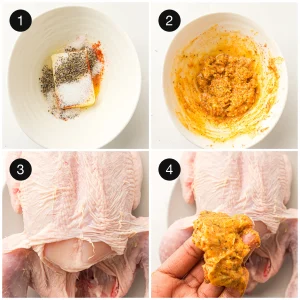
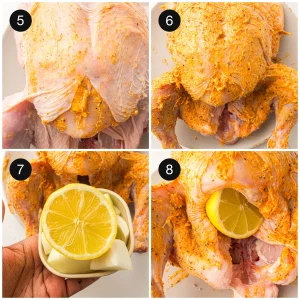
2. Make the butter. Next, mash the soft butter with the salt, black pepper, garlic powder and paprika until it is smooth and evenly orange.
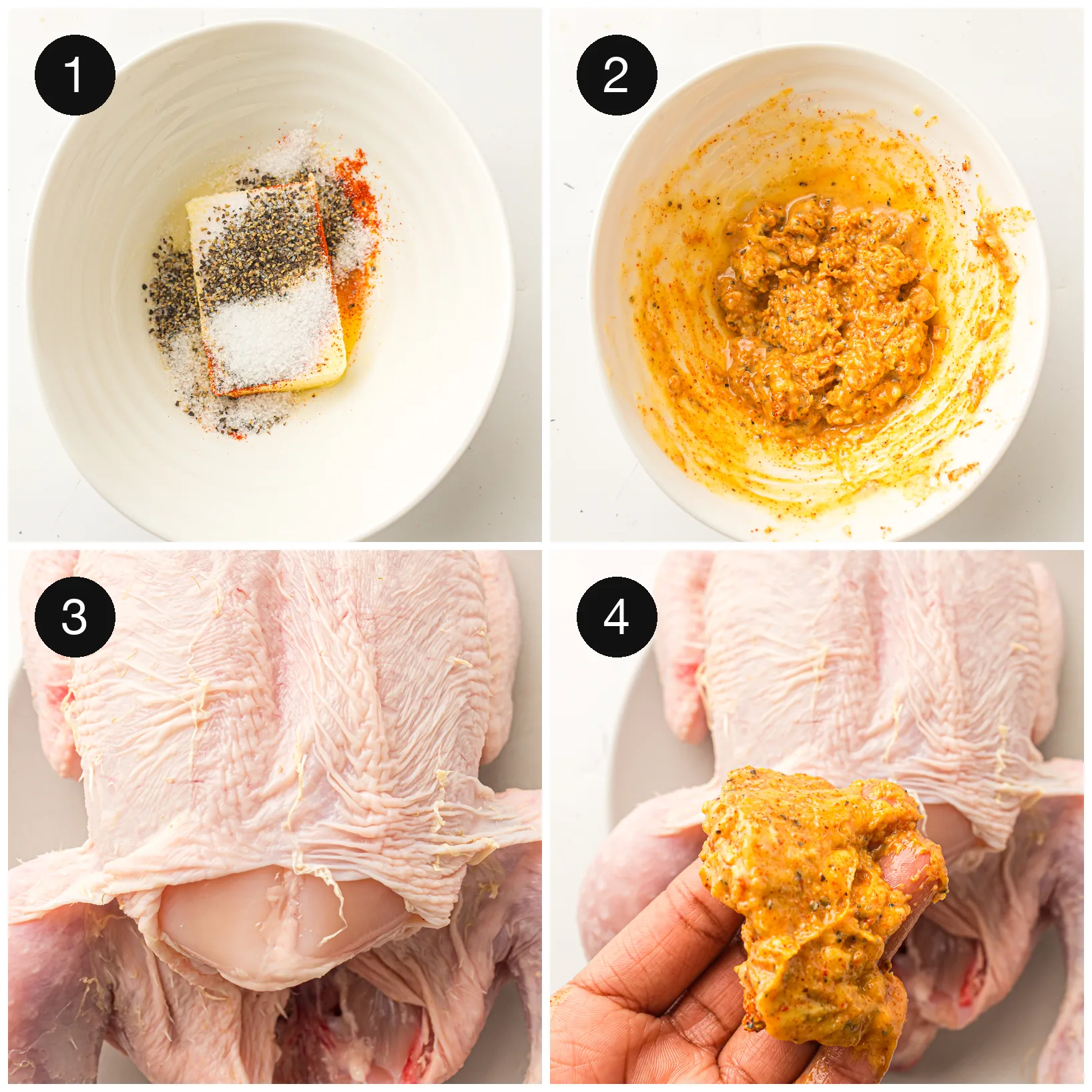
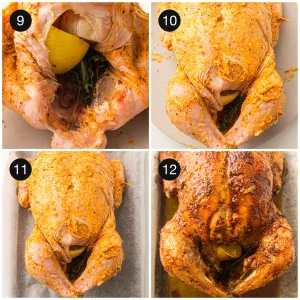
3. Get half of it under the skin. Then slide your fingers between the skin and the breast, working slowly so you do not tear it, and push about half the butter directly onto the meat. Rub the rest over the outside.
4. Fill the cavity. After that, put in the lemon halves, the onion quarters, the halved head of garlic and any herbs. Loosely, not stuffed.
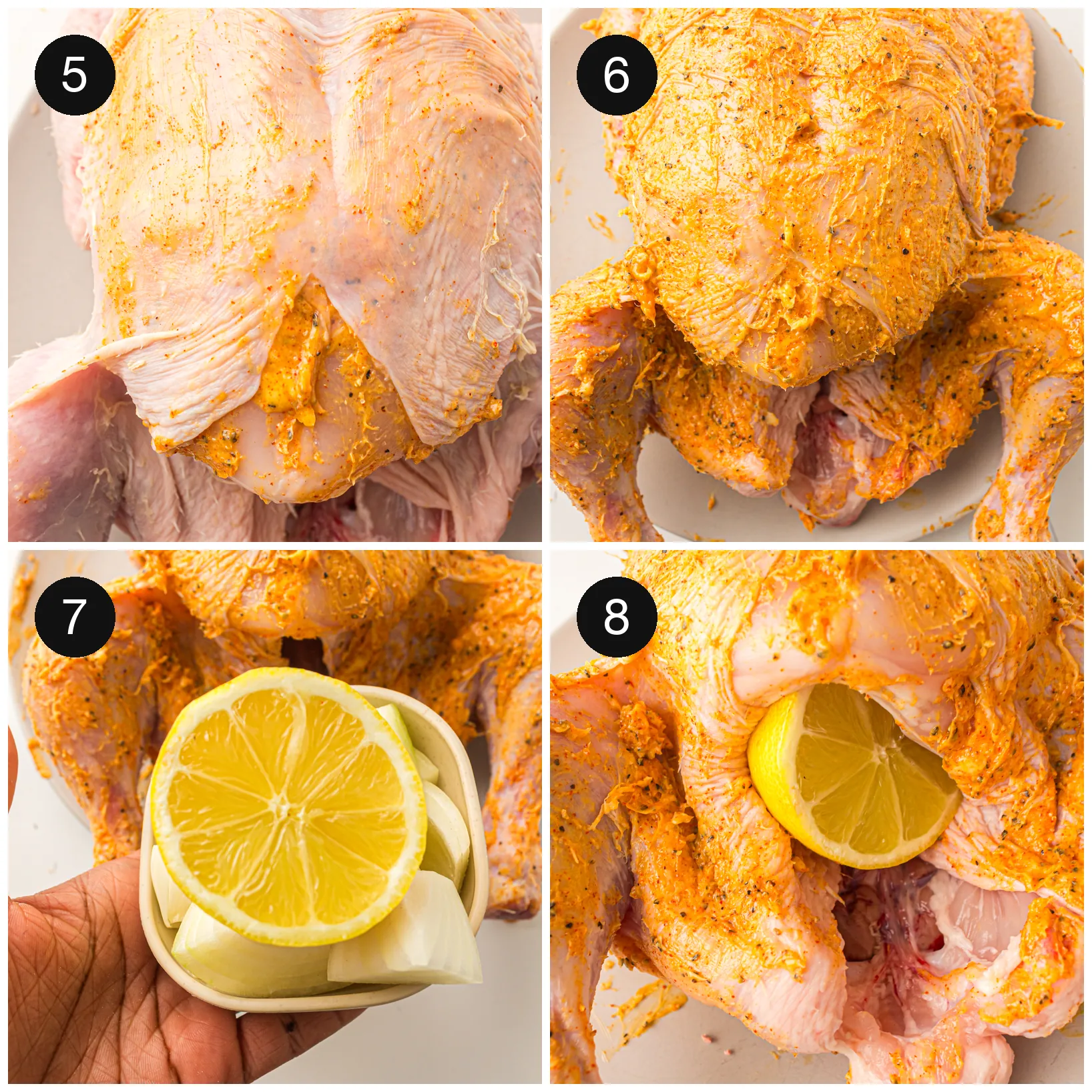
5. Tie and roast. Tie the legs together with string and tuck the wing tips under the body, then set the bird breast side up in a roasting tin. Roast uncovered at 190°C (375°F) for about 1 hour 15 minutes.
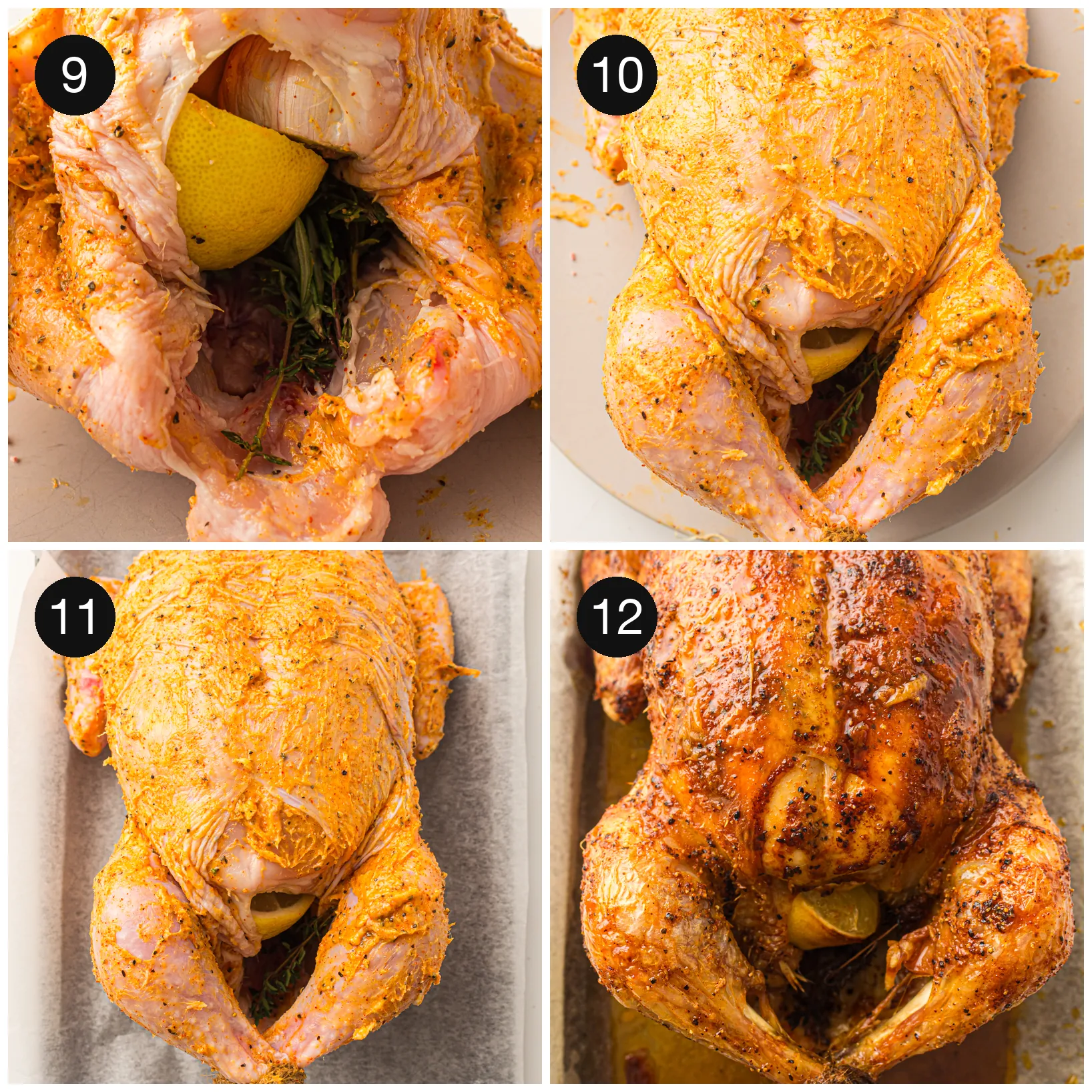
6. Rest it. Finally, take it out at 75°C (165°F) in the thigh and leave it alone for 15 minutes before carving. Cut into it early and the juice you wanted in the meat ends up on the board.
Biggest Mistakes to Avoid
- Roasting it straight from the fridge. The outside overcooks while the middle catches up. Thirty minutes on the counter fixes it.
- Skipping the drying. Wet skin steams. It will never crisp, no matter how much butter is on it.
- Overstuffing the cavity. Packed tight, it insulates the inside and adds twenty minutes without adding flavour.
- Testing the breast instead of the thigh. The thigh is the slowest part. If the thigh is done, everything is done.
- Carving immediately. Fifteen minutes of rest is not optional, it is part of the cooking.
- Covering it with foil the whole time. That is steaming, not roasting. Only tent it if the skin colours too fast.
Tips for the Best Roast Chicken
- Salt the skin the night before if you have time, uncovered in the fridge. It dries the surface and seasons deeper.
- Meanwhile, keep the tin small enough that the juices do not spread thin and burn.
- Lift the bird onto a bed of onion wedges or carrot batons so air moves underneath.
- Of course, keep the tin juices. Whisked with a spoonful of flour they become the gravy.
- Still worried about the breast? Start the bird breast side down for the first 25 minutes, then flip it.
- An instant read thermometer costs less than two chickens and removes all the guesswork.
Storage and Reheating
- Fridge. Carved roast chicken keeps three days in an airtight container.
- Freezer. Up to two months. Cool completely first, then defrost overnight in the fridge.
- Reheating. Gently in the oven with a splash of stock, covered, until piping hot. Because reheated chicken dries out fast, moisture in the dish matters more than time.
- The carcass. Simmer it with an onion and a carrot for stock. That said, do it within a day.
Making Gravy From the Tin
The tin is the best part and most people pour it down the sink. While the bird rests, tip off most of the clear fat, leaving the darker juices and any browned bits stuck to the base.
Set the tin over a low flame, scatter in a tablespoon of flour and stir it into the fat for a minute so it loses its raw taste. Then pour in stock a little at a time, scraping the base as you go, until it is the consistency you want. Season it at the end, because the pan juices are already salty. If it turns lumpy, push it through a sieve and nobody will ever know.
Variations and Substitutions
- Herb butter. Chopped rosemary, thyme or tarragon worked into the butter before it goes under the skin.
- Vegetables in the tin. Carrots, potatoes and onions around the bird, cut evenly, roast in the same time.
- Spiced. Swap the paprika for smoked paprika and add half a teaspoon of cumin.
- On the barbecue. Instead of the oven, try grilled whole chicken, which uses indirect heat and takes about the same time.
- Smaller portions. If a whole bird is too much, baked boneless chicken thighs give you the same flavours in half an hour.
What to Serve With Roast Chicken
Roast potatoes and a green vegetable is the classic answer and it is classic for a reason. Garlic butter green beans take five minutes while the bird rests. In summer I swap the potatoes for classic potato salad and a leafy salad. Warm dinner rolls are useful for the pan juices, and the leftovers are excellent in chicken pasta salad the next day.
Frequently Asked Questions
Ingredients and Method
How do I know when it is fully cooked?
The thickest part of the thigh should read 75°C (165°F) and the juices should run clear when you pierce it. Keep the probe off the bone, which reads hotter than the meat around it.
Do I have to put butter under the skin?
No, but it is the single biggest thing you can do for the breast meat. Butter on the outside mostly ends up in the tin. Underneath, it bastes the meat for the whole roast.
Can I use dried herbs instead of fresh?
Yes. Around a teaspoon of dried herbs replaces the fresh sprigs. Work them into the butter rather than laying them on the skin, where they scorch.
Can I roast vegetables in the same tin?
Absolutely. Carrots, potatoes and onions all work. Cut them to a similar size so they finish together, and expect them to take on a lot of the buttery juices.
Storage and Troubleshooting
Why was my skin soft rather than crisp?
Usually moisture. Pat the bird properly dry before the butter goes on, and roast it uncovered. Covering with foil traps steam against the skin.
The breast was dry but the thighs were fine. What went wrong?
The bird was in too long, or it went in fridge cold so the outside overcooked while the middle caught up. Pull it the moment the thigh hits temperature, then rest it.
Can I cook it ahead of time?
You can roast it earlier in the day and reheat gently, though the skin will never be as crisp as it was in the first ten minutes. It is a dish best timed for the table.
How long do leftovers keep?
Three days in the fridge, or two months in the freezer. Cool it completely before it goes in either, and defrost overnight in the fridge rather than on the counter.
Ingredients
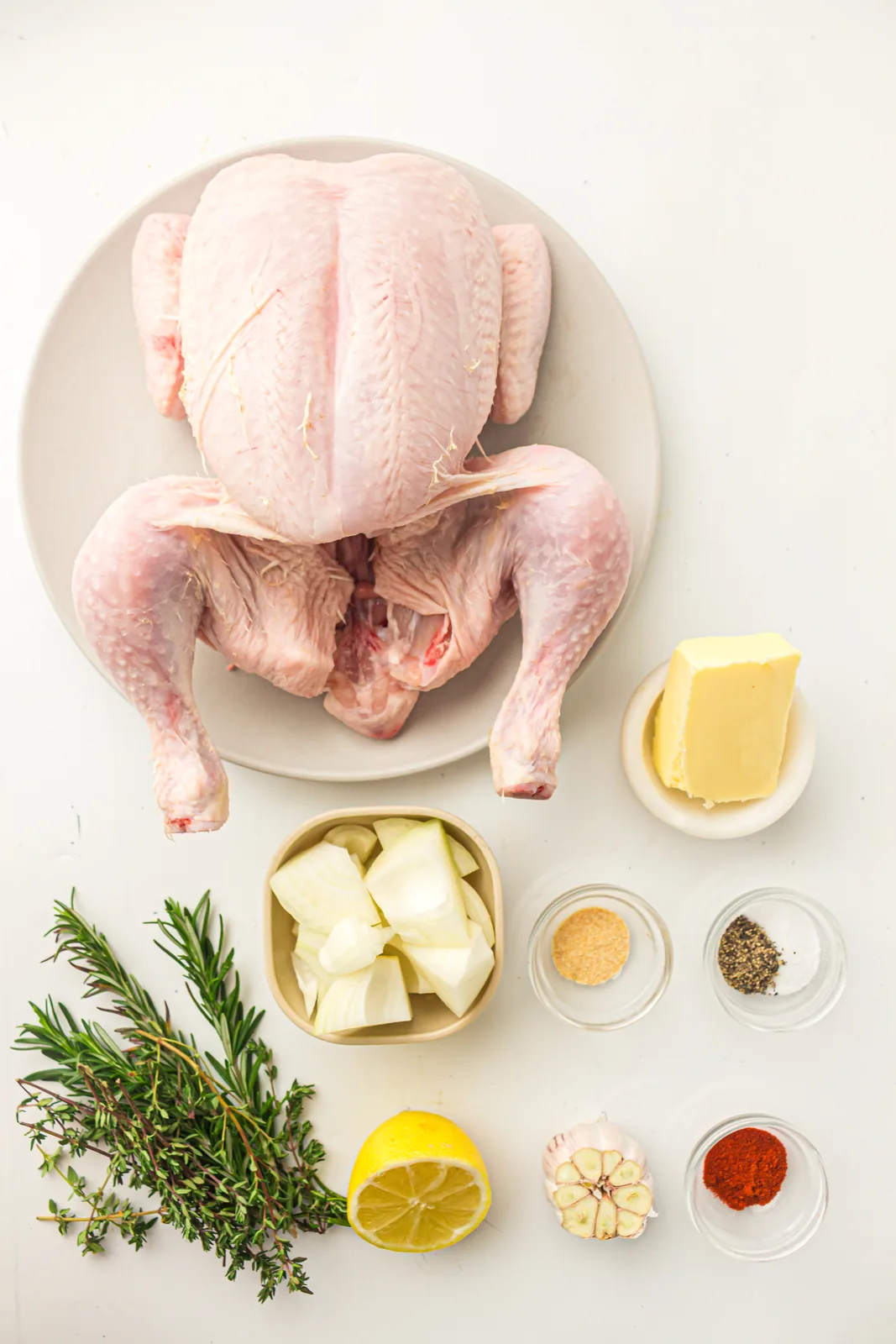
- 1 whole chicken 1.8 to 2 kg / 4 to 4 1/2 lb
- 60 g butter 1/4 cup, very soft
- 1 teaspoon salt
- 1/2 teaspoon black pepper
- 1 teaspoon garlic powder
- 1 teaspoon paprika
- 1 lemon halved
- 1 small onion quartered
- 1 head garlic halved
- fresh rosemary or thyme optional
Instructions
- Remove the chicken from the fridge 30 to 45 minutes before roasting so it can come to room temperature. Pat completely dry with paper towels.
- Preheat the oven to 190°C (375°F).
- In a small bowl, mix the soft butter with the salt, black pepper, garlic powder and paprika until smooth and fully combined.

- Gently loosen the skin over the chicken breast with your fingers, taking care not to tear it. Rub about half the butter mixture underneath the skin directly onto the breast meat, then rub the rest evenly over the outside.
- Place the lemon halves, onion, garlic and any fresh herbs inside the cavity. Do not overstuff.
- If desired, tie the legs together with kitchen string and tuck the wing tips underneath the body.
- Place the chicken breast side up in a roasting tin. Roast uncovered for approximately 1 hour 15 minutes, or until the internal temperature reaches 75°C (165°F) at the thickest part of the thigh and the juices run clear.
- Remove from the oven and allow the chicken to rest for 15 minutes before carving, which helps the juices redistribute.
- Carve and serve.