 Bity
Bity
The first time I served a honey glazed ham I brushed the glaze on at the start, walked away, and came back to a joint with a burnt black shell and a cold middle. My mother in law was very kind about it, which somehow made it worse.
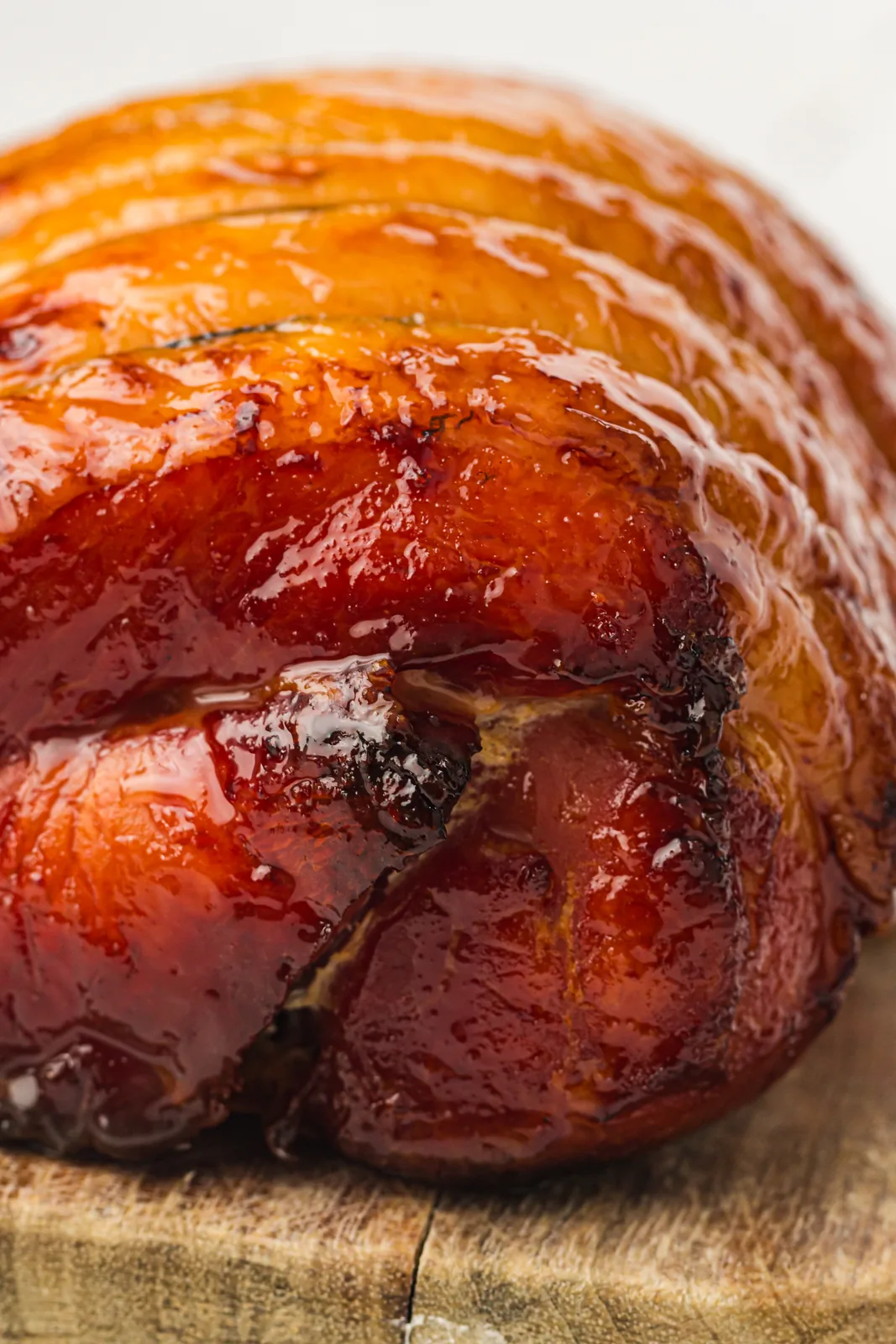
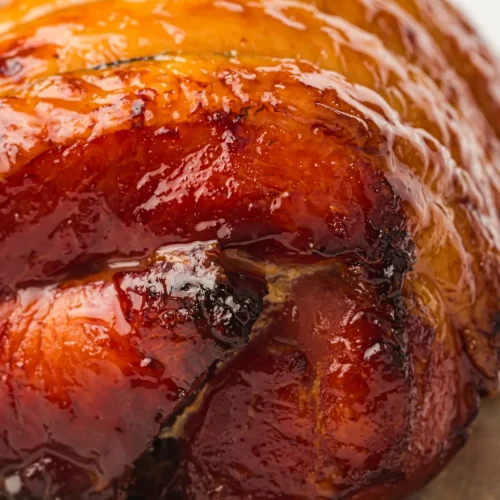
So now the foil goes on first and the glaze comes later, and the result is that deep lacquered crust you see in shop windows. Four ingredients in the glaze, about an hour in total, and it feeds ten people without any stress.

Quick Breakdown
Why You’ll Love This Honey Glazed Ham
- Four ingredients in the glaze. Honey, brown sugar, Dijon and garlic powder, melted into butter.
- It stays juicy. Because the joint warms wrapped in foil, it never dries out before the glaze goes on.
- No carving skill needed. A cooked joint slices cleanly once it has rested.
- Leftovers are the best part. In fact I plan sandwiches into the week before the ham even goes in.
- Serves eight to ten. Meanwhile the oven is free for everything else until the last half hour.
Ingredient Notes
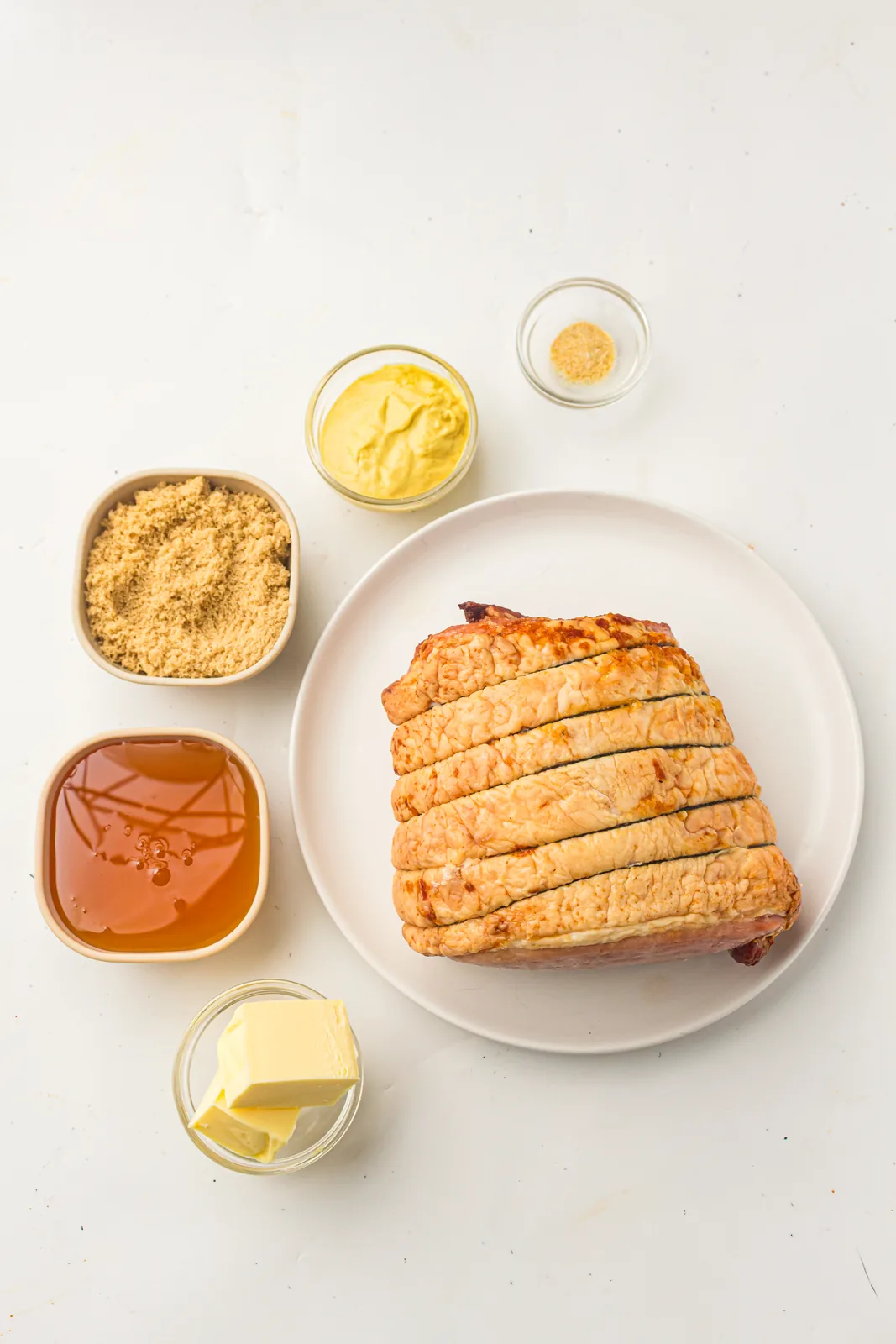
- A cooked ham joint. Between 2 and 2.5kg, which is roughly 4 to 5 pounds. Buy it unglazed, since the pre glazed ones are sweeter and give you no control.
- Honey. Half a cup. A runny honey behaves best. However, a set honey works too once it is warmed with the butter.
- Brown sugar. A quarter cup. It brings the caramel note that honey alone cannot manage.
- Dijon mustard. Two tablespoons. This is the balance. Without it the glaze is simply sweet.
- Garlic powder. Half a teaspoon, and powder rather than fresh here, because fresh garlic catches and turns bitter under the grill.
- Unsalted butter. Three tablespoons, to carry the glaze and help it cling. Ham is already well salted, and ThermoWorks explains how curing and cooking temperatures interact in a joint like this.
How To Make a Honey Glaze for Ham
Melt the butter over low heat first, then stir in the honey, brown sugar, mustard and garlic powder. Keep the heat gentle and stir until the sugar has dissolved and the mixture looks glossy rather than grainy.
It should coat the back of a spoon but still pour easily. If it thickens too much while the joint is warming, add a teaspoon of water and warm it again.
Do not boil it. Once honey and sugar go past a simmer they start to caramelise on the hob, and you lose the glossy finish you want on the meat.
What Temperature Should a Ham Reach?
A cooked joint only needs reheating, not cooking. Aim for 135F to 140F in the thickest part, which is around 57C to 60C, and pull it out there.
Anything higher and the muscle fibres tighten and squeeze out moisture, which is how a perfectly good ham turns dry and stringy on the platter.
An instant read thermometer is worth more here than any timing chart, since joints vary in shape as much as in weight.
How To Make Honey Glazed Ham
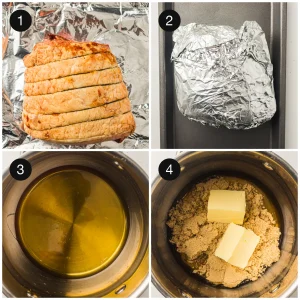
1. Heat the oven low. First set it to 325F, or 170C. Low and slow protects the meat while it comes up to temperature.
2. Wrap and warm. Next sit the joint in a roasting tray, wrap it tightly in foil, and bake for 20 to 30 minutes until it is warmed through.
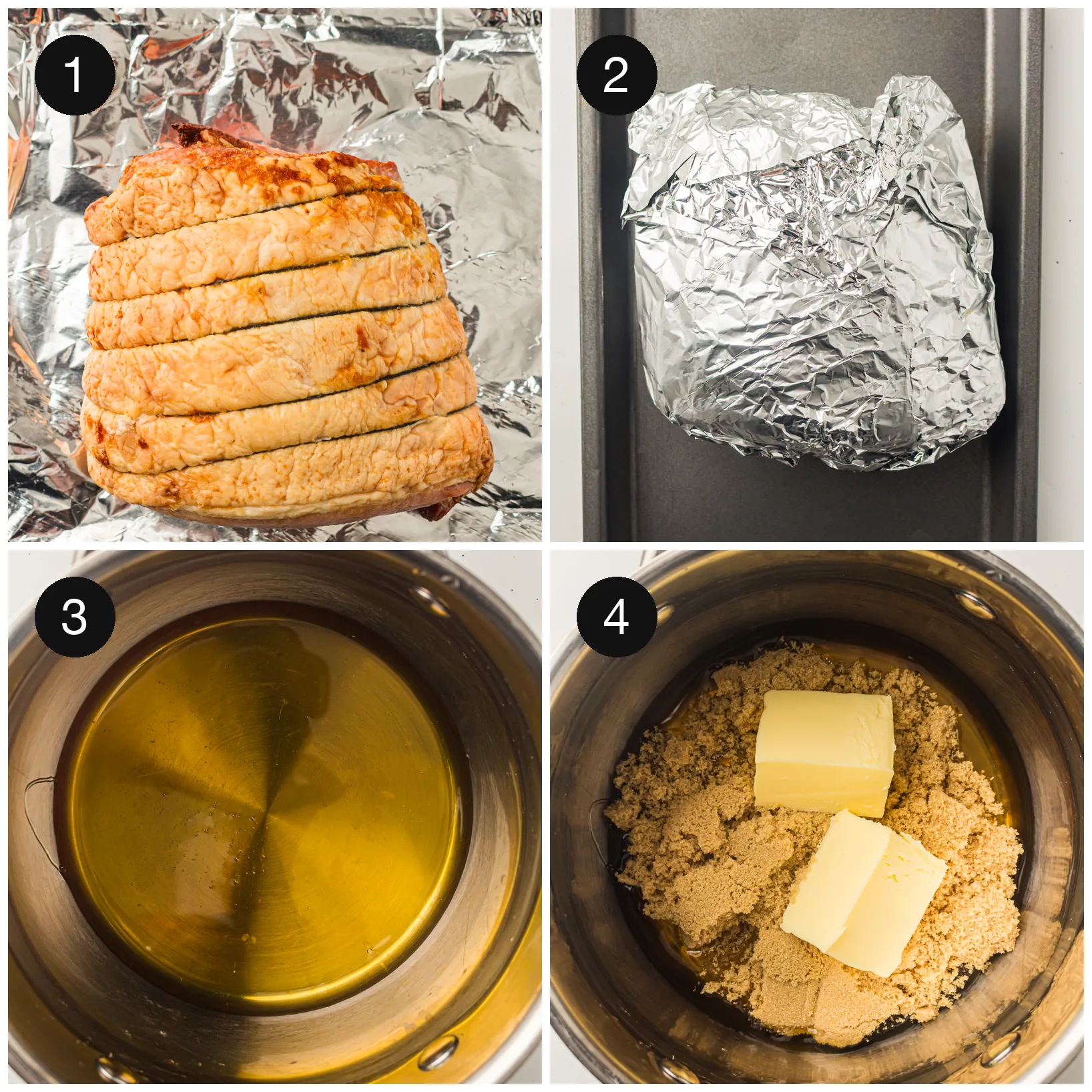
3. Melt the glaze. Meanwhile melt the butter in a small pan over low heat and stir in the honey, brown sugar, Dijon and garlic powder until smooth.
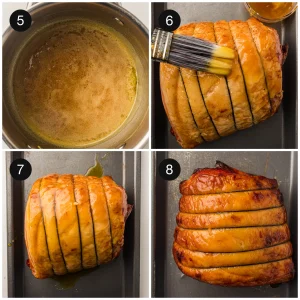
4. Unwrap and brush. Then take the tray out, fold back the foil, and brush the glaze generously over the whole surface. Get into the scored lines, where it pools and sets.
5. Bake uncovered. After that return it to the oven with no foil for 25 to 30 minutes, brushing once more halfway through if you want a heavier crust.
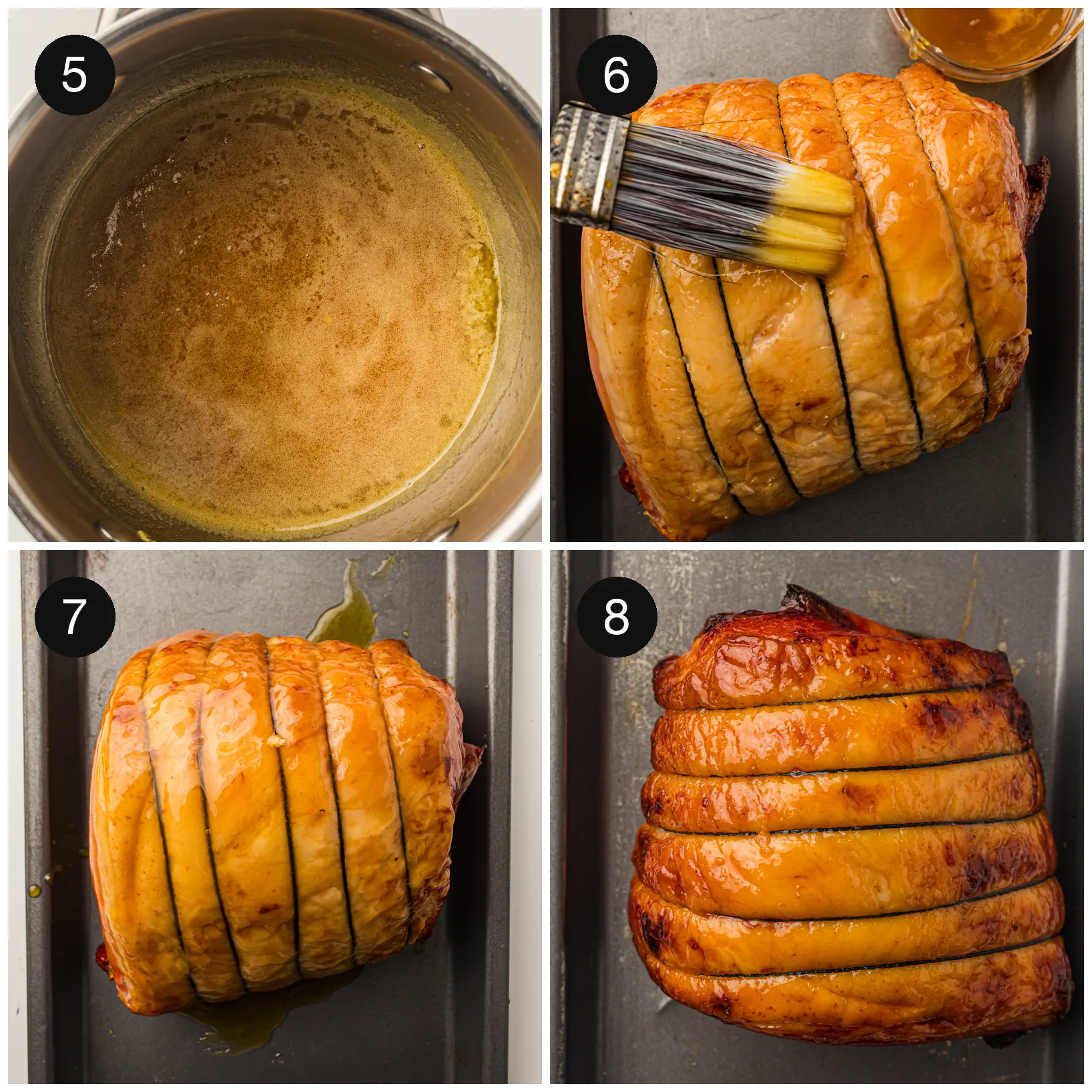
6. Rest before slicing. Finally let it stand for 10 minutes on a board. The juices settle back into the meat, and the glaze firms into a proper shell.
I use a silicone basting brush for the glaze, because it reaches right into the scored lines and never leaves stray bristles in the crust.
Honey Glazed Ham Mistakes to Avoid
- Glazing from the start. Sugar burns long before a large joint is warm. This is the single most common way a honey glazed ham goes wrong.
- Skipping the foil. Uncovered heating dries the outer inch before the centre catches up.
- Cooking to 165F. That number is for raw meat. A cooked joint is done at 140F.
- Walking away under the grill. If you finish it on a high heat for colour, stand there and watch. Thirty seconds is the difference.
- Carving straight away. Slice it hot and the juices run onto the board instead of staying in the slices.
Tips for the Best Honey Glazed Ham
- Take the joint out of the fridge 30 to 60 minutes before it goes in. A cold centre adds unpredictable time.
- Score the fat in a shallow diamond pattern if it is not scored already, about a quarter inch deep, no deeper.
- Pour a cup of water into the tray before wrapping. The steam keeps the honey glazed ham from drying at the edges.
- Save every drop of tray juice. Reduced for a few minutes it makes a glossy sauce for the table.
- Buy about half a pound per person if you want leftovers, and a third of a pound if you do not.
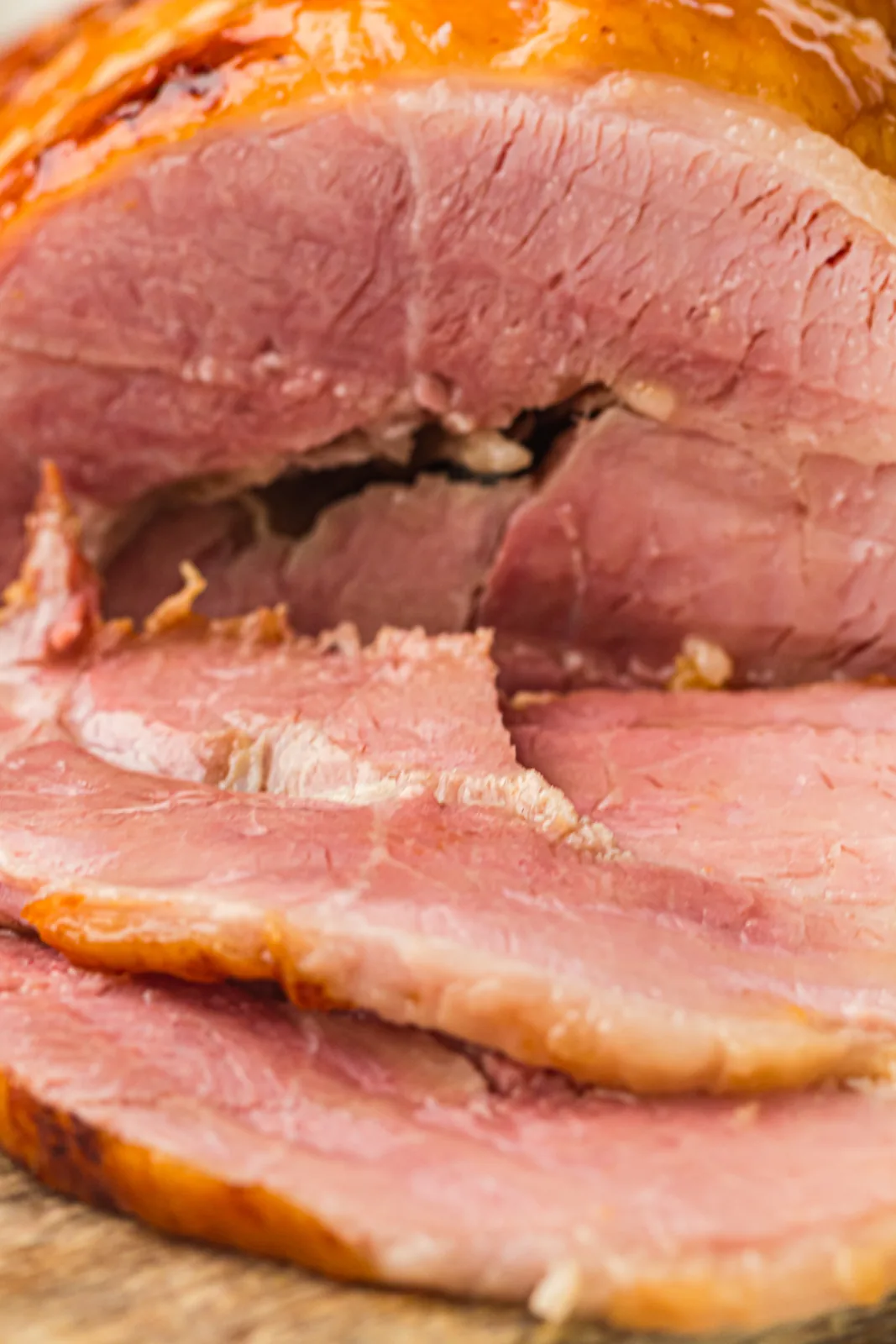
Once the joint has rested, a long carving knife and fork make it easy to take off thin, even slices for the platter.
Storage and Leftovers
- Fridge. Sliced and sealed with a little of the tray juice, it keeps for up to 4 days.
- Freezer. Portion the slices and freeze for up to 2 months. Thaw overnight in the fridge.
- Reheating. Warm gently, covered, at 300F or 150C. High heat is what makes reheated ham rubbery.
- Best use. Honestly, cold in a sandwich with sharp mustard, standing at the fridge, the night after.
Variations and Substitutions
- Maple instead of honey. Swap it one for one for a slightly darker, less floral glaze.
- Pineapple juice. Add two tablespoons to the pan for a brighter, more traditional finish.
- Slow cooker. Sit the joint in the pot, pour over half the glaze, and cook on low for six hours, then finish under the grill.
- Feeding a buffet. Serve it at room temperature rather than piping hot. The Academy of Nutrition and Dietetics has sensible rules for how long food can safely sit out. My ham and corn chowder is where the bone and trimmings end up in my kitchen, and there are more ideas in this collection of leftover ham recipes.
What to Serve With Honey Glazed Ham
A honey glazed ham wants something creamy and something sharp beside it. Scalloped potatoes cover the first, and a spoonful of mustard or pickled red cabbage covers the second.
For a full holiday plate, add fresh green bean casserole and a tray of french onion stuffed potatoes. Still, warm bread rolls and butter would be enough on an ordinary Sunday.
Frequently Asked Questions
Cooking and Glazing
Do you put glaze on ham before or after cooking?
After the joint has warmed through. Glaze applied at the start burns, so wrap the ham in foil first and brush the glaze on for the final half hour.
Why wrap the ham in foil first?
Foil traps steam, which brings the joint up to temperature without drying the outside. As a result the meat is still moist when the glaze goes on.
Is it better to cook a ham at 325 or 350?
325F. The lower oven gives the centre time to warm before the surface overcooks, which matters most with a joint over four pounds.
Can I make the glaze ahead?
Yes. Make it up to three days early and keep it covered in the fridge, then warm it gently until it pours again.
Serving and Storage
How much ham per person?
About a third of a pound each for a boneless joint, or half a pound if you want proper leftovers for sandwiches.
How long does it keep?
Four days sliced in the fridge, or two months in the freezer. Store it with a spoonful of the tray juices so it does not dry.
Why did my glaze slide off?
Usually the surface was wet or the glaze was too thin. Pat the joint dry when you unwrap it, and let the glaze reduce slightly before brushing.
Ingredients
- 1 cooked ham joint 2 to 2.5 kg / 4 to 5 lbs
- 1/2 cup honey
- 1/4 cup brown sugar
- 2 tablespoons Dijon mustard
- 1/2 teaspoon garlic powder
- 3 tablespoons unsalted butter
Instructions
- Preheat the oven to 325°F (170°C).
- Place the ham in a large roasting tray and wrap it tightly with foil.

- Bake the wrapped ham for 20 to 30 minutes, until warmed through.
- While the ham warms, melt the butter in a small saucepan over low heat.
- Stir in the honey, brown sugar, Dijon mustard, and garlic powder until smooth.
- Remove the ham from the oven and carefully fold back the foil.
- Brush the glaze generously over the surface of the ham, working it into the scored lines.
- Return the ham to the oven uncovered.
- Bake for a further 25 to 30 minutes, brushing once more with glaze halfway through if you want a heavier crust.
- Remove from the oven and rest for 10 minutes before slicing and serving.