 Bity
Bity
The secret is ten minutes in a saucepan before anything goes near the blender. Good hummus is not about better tahini or more olive oil, it is about how soft the chickpeas are when you blend them.
Cold chickpeas straight from the tin give you grainy hummus that no amount of processing will fix. Warm ones collapse into a paste that goes silky in about ninety seconds.
Quick Breakdown
Why You’ll Love This Hummus
- Twenty minutes, most of it hands-off. Ten of those are just a pan bubbling away.
- Seven ingredients. Six if you skip the cumin, which is optional anyway.
- A tin of chickpeas, not dried. No soaking overnight and no planning ahead.
- Genuinely smooth. Not the slightly sandy texture most homemade versions land on.
- Cheaper than the tub. Homemade hummus costs a fraction of the shop version, and you control the salt and the garlic.
Ingredient Notes
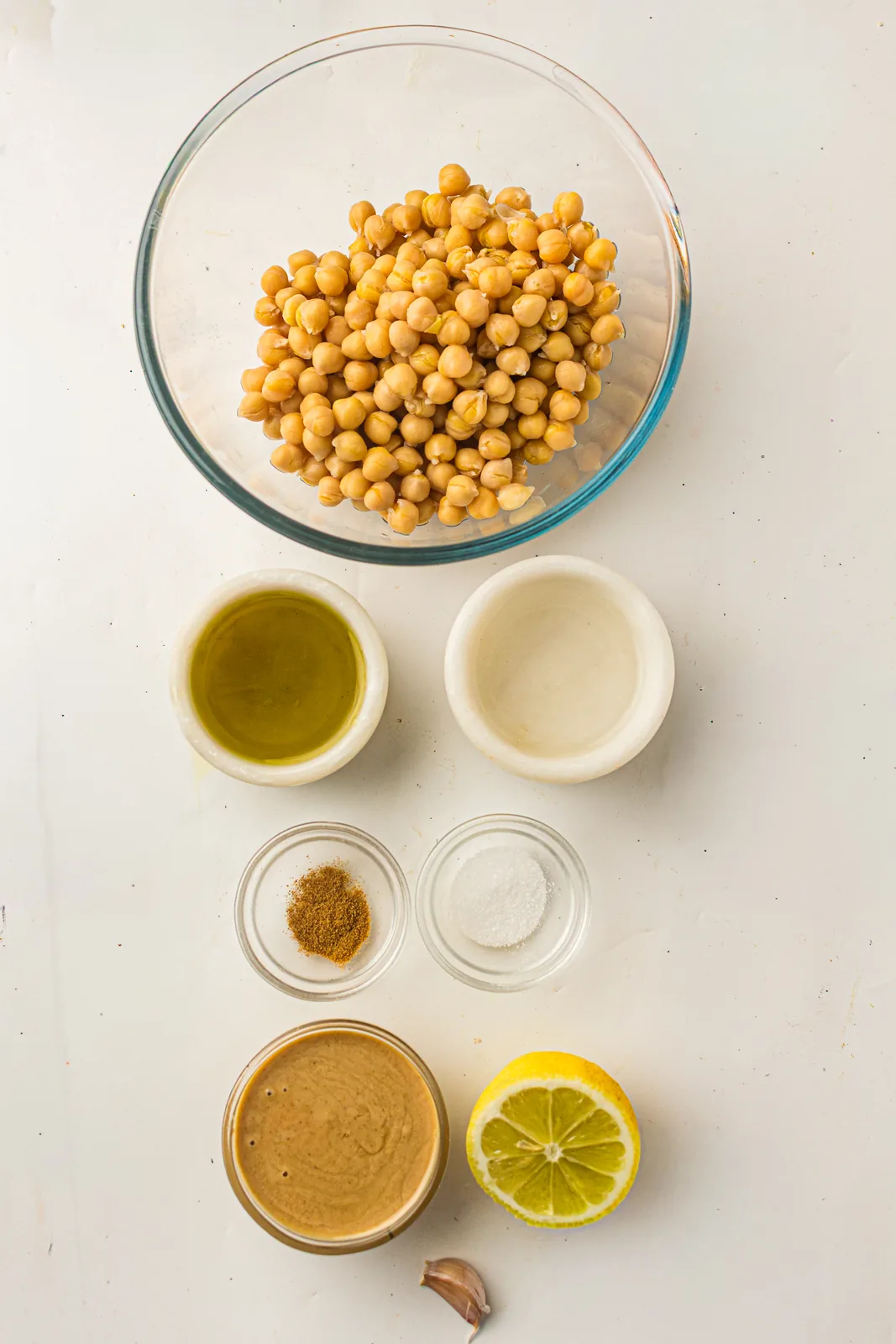
- Canned chickpeas. One 15 ounce tin, drained and rinsed, which is about 240g once drained. Rinsing matters, because the canning liquid tastes tinny.
- Tahini. A quarter cup. Buy a runny, pourable one. Stiff tahini from the bottom of an old jar makes hummus heavy and bitter.
- Lemon juice. Two tablespoons, fresh. Bottled juice reads as flat and slightly metallic in hummus, and there is nowhere for it to hide.
- Garlic. One small clove. Raw garlic gets stronger as it sits, so a clove that seems shy today will be assertive tomorrow.
- Olive oil. Two tablespoons in the blend, plus more for the top.
- Cold water. Two to four tablespoons, added slowly. This is what turns a thick paste into something light.
- Cumin. A quarter teaspoon, optional. It adds warmth rather than flavour you can name.
Chickpeas are doing more than holding it together, too. In fact, the Academy of Nutrition and Dietetics notes that one cup of drained and rinsed canned chickpeas has about 210 calories, 4 grams of fat, 10 grams of dietary fibre and nearly 16% of the daily value for folate.
Why You Simmer Canned Chickpeas First
Canned chickpeas are cooked, so the simmer is not about making them safe or edible. It is about softening the skins and pushing the insides past the point where they hold their shape.
Each chickpea wears a thin, papery skin that will not break down in a food processor. Blitz it cold and those skins shear into tiny flecks, which is what you feel on your tongue as grit. Ten minutes at a simmer swells them, loosens them, and lets the blade turn them into part of the paste instead. Meanwhile, warm chickpeas emulsify with the tahini far more willingly than cold ones do, which is half of what makes hummus taste rich rather than dusty.
You can slip the skins off one by one if you have the patience. Honestly, the simmer gets you 90% of the way there for a tenth of the effort.
How To Make Hummus
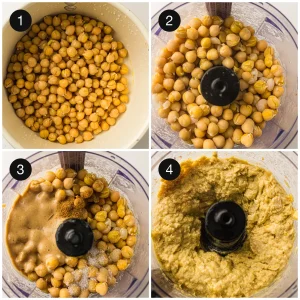
1. Simmer the chickpeas. First, tip the drained chickpeas into a saucepan, cover them with fresh water and simmer for 10 minutes. They should look slightly swollen and give easily when pressed. Drain them.
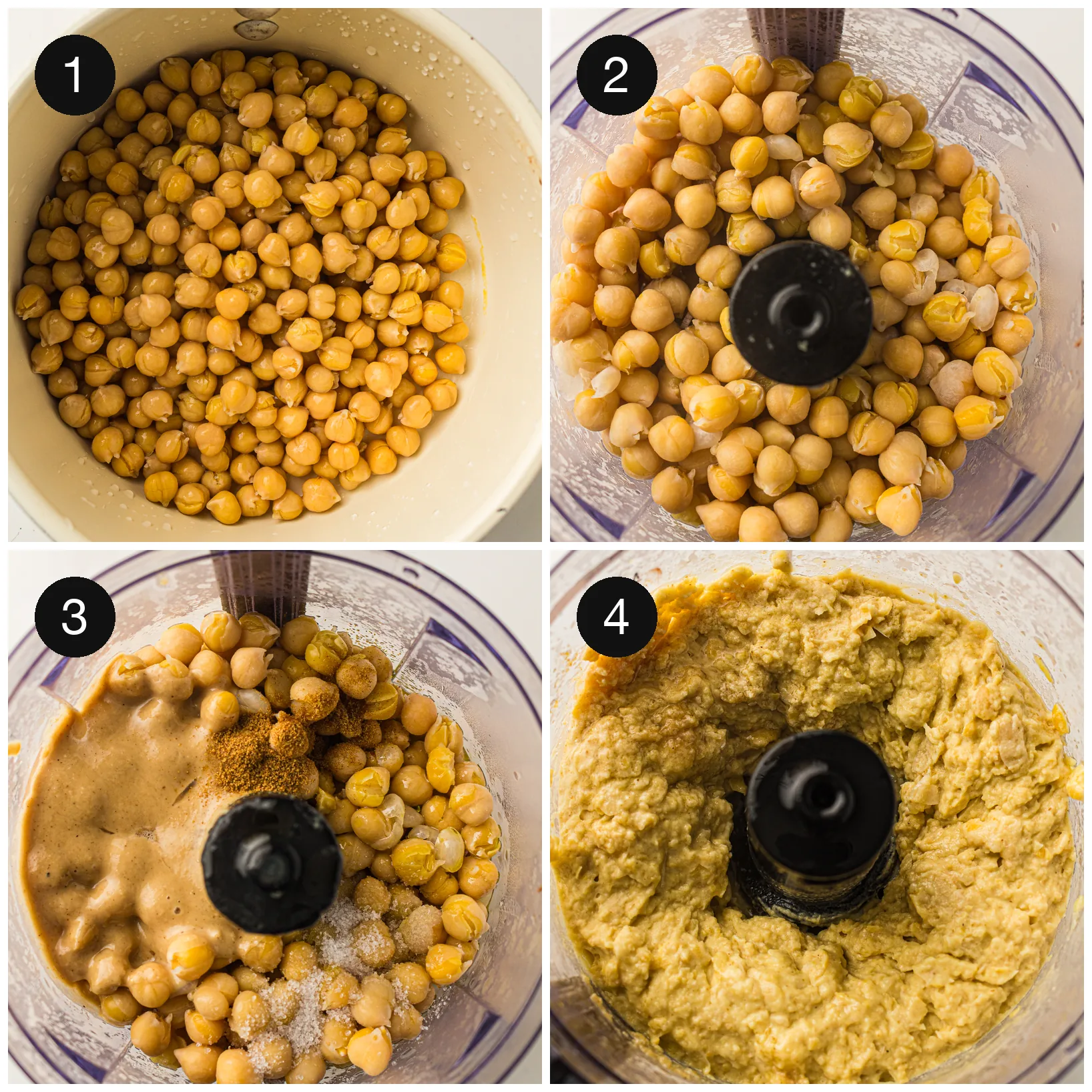
2. Everything into the processor. Next, add the warm chickpeas, tahini, lemon juice, garlic, olive oil, salt and the cumin if you are using it. Do not wait for the chickpeas to cool, since the heat is part of the method.
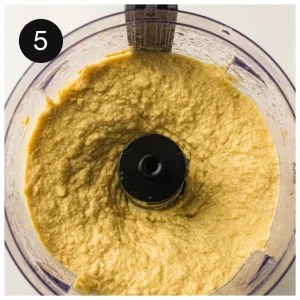
3. Blend for longer than feels right. Then run it for a full 1 to 2 minutes. Most people stop after twenty seconds. Scrape the sides down once and keep going.
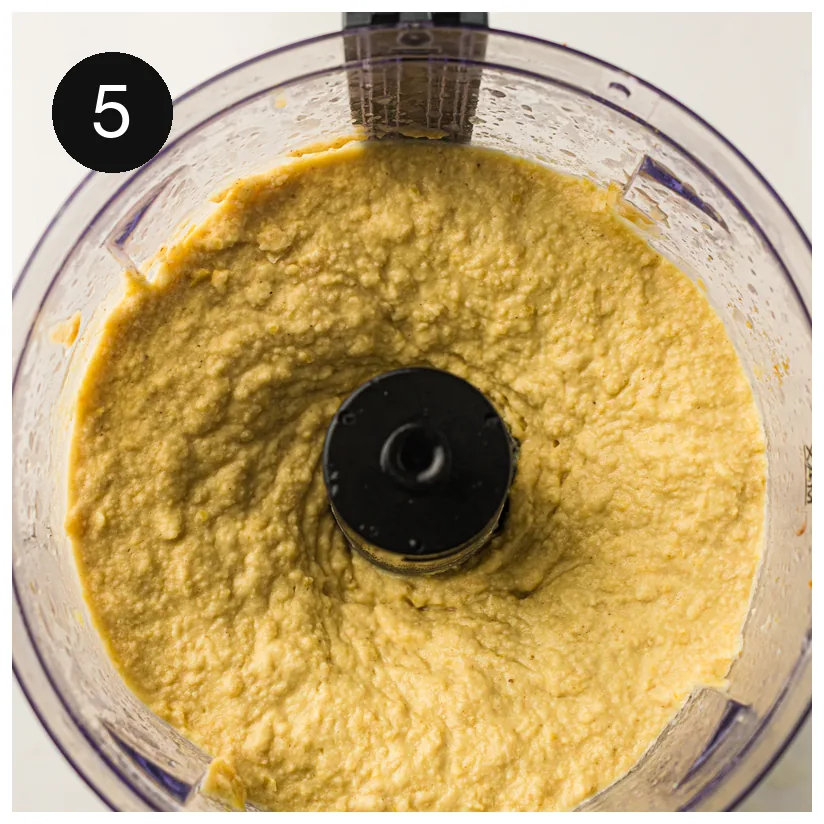
4. Loosen it with cold water. After that, add cold water one tablespoon at a time with the motor running, up to four. The hummus will lighten in colour and start to look whipped. That change is what you are waiting for.
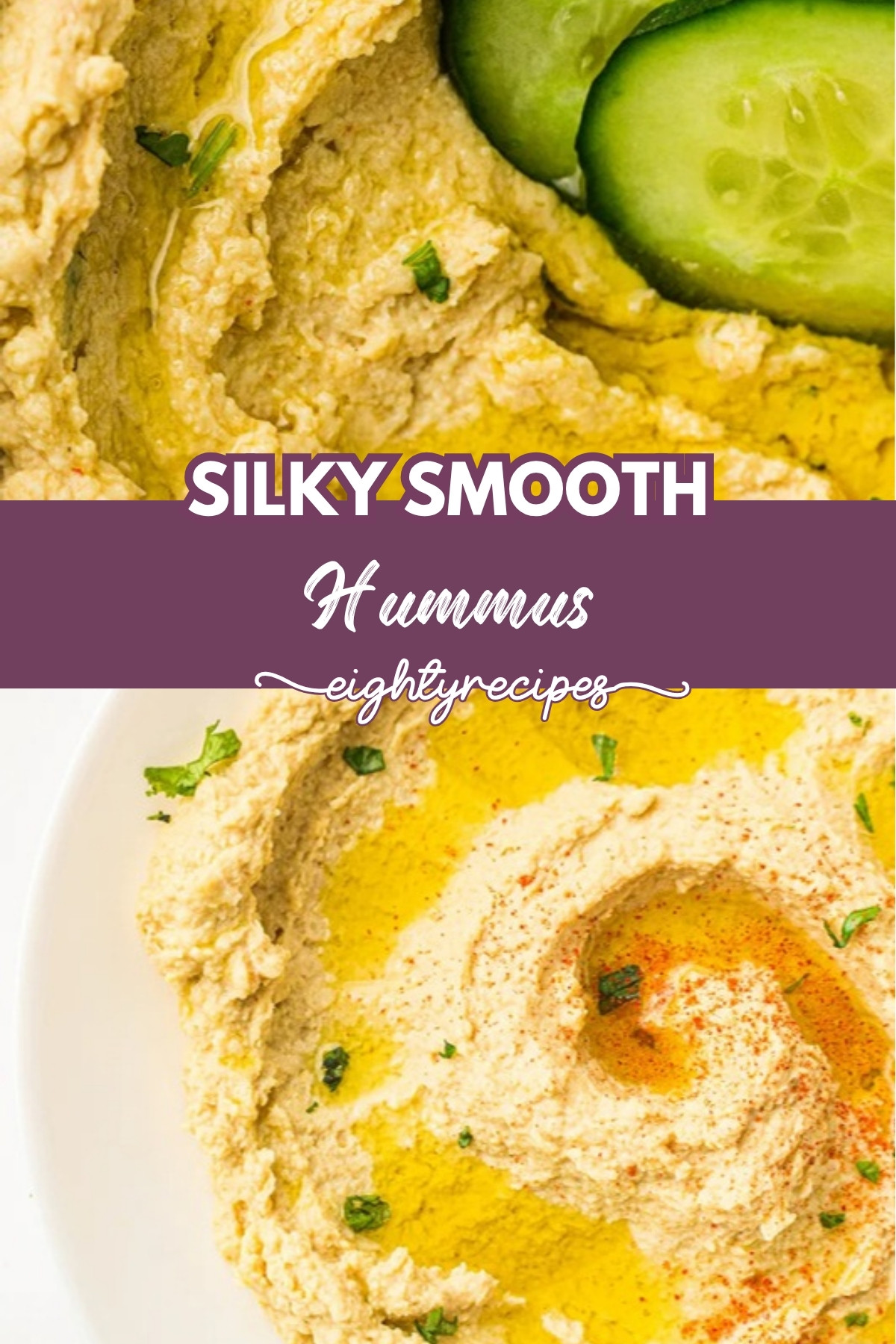
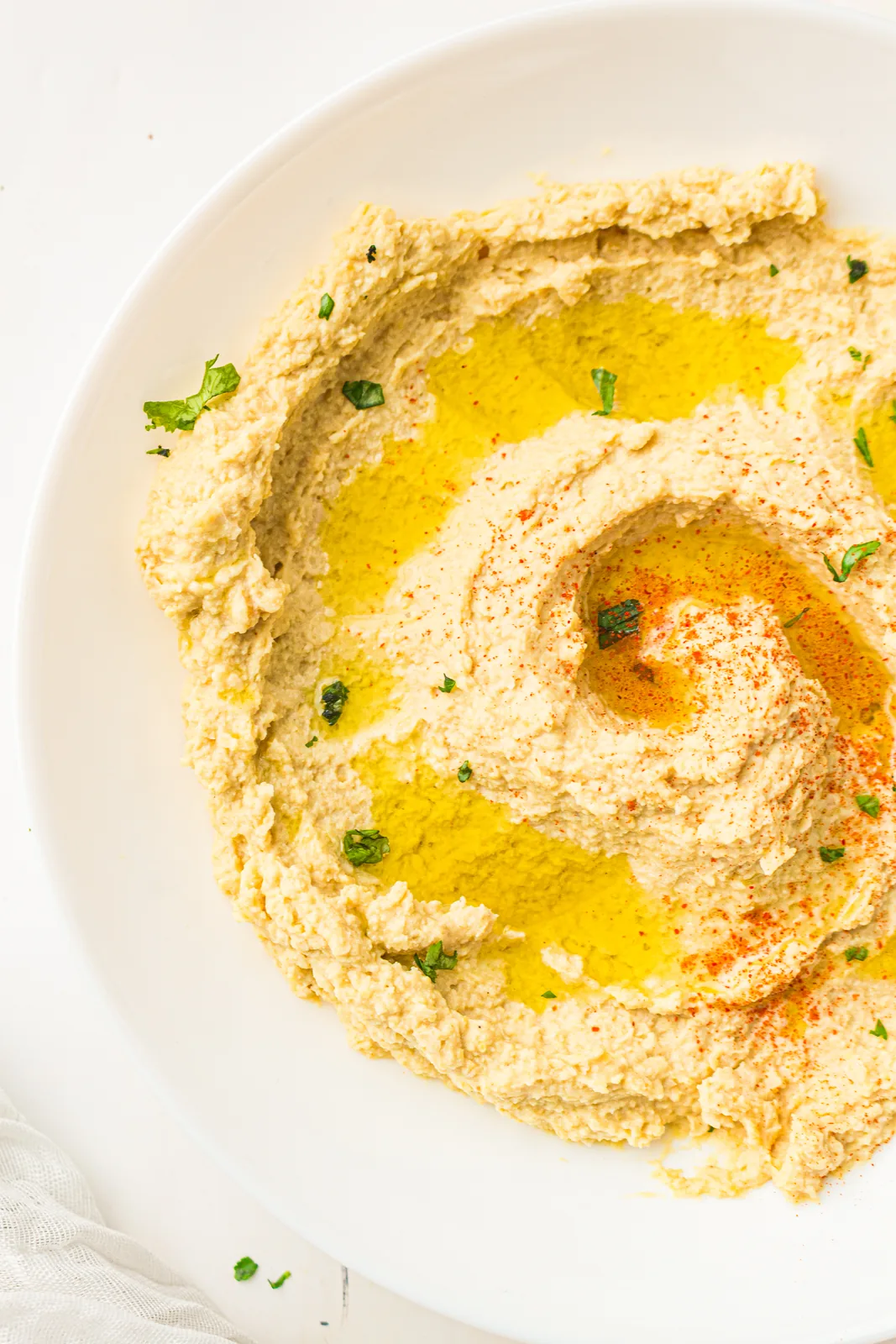
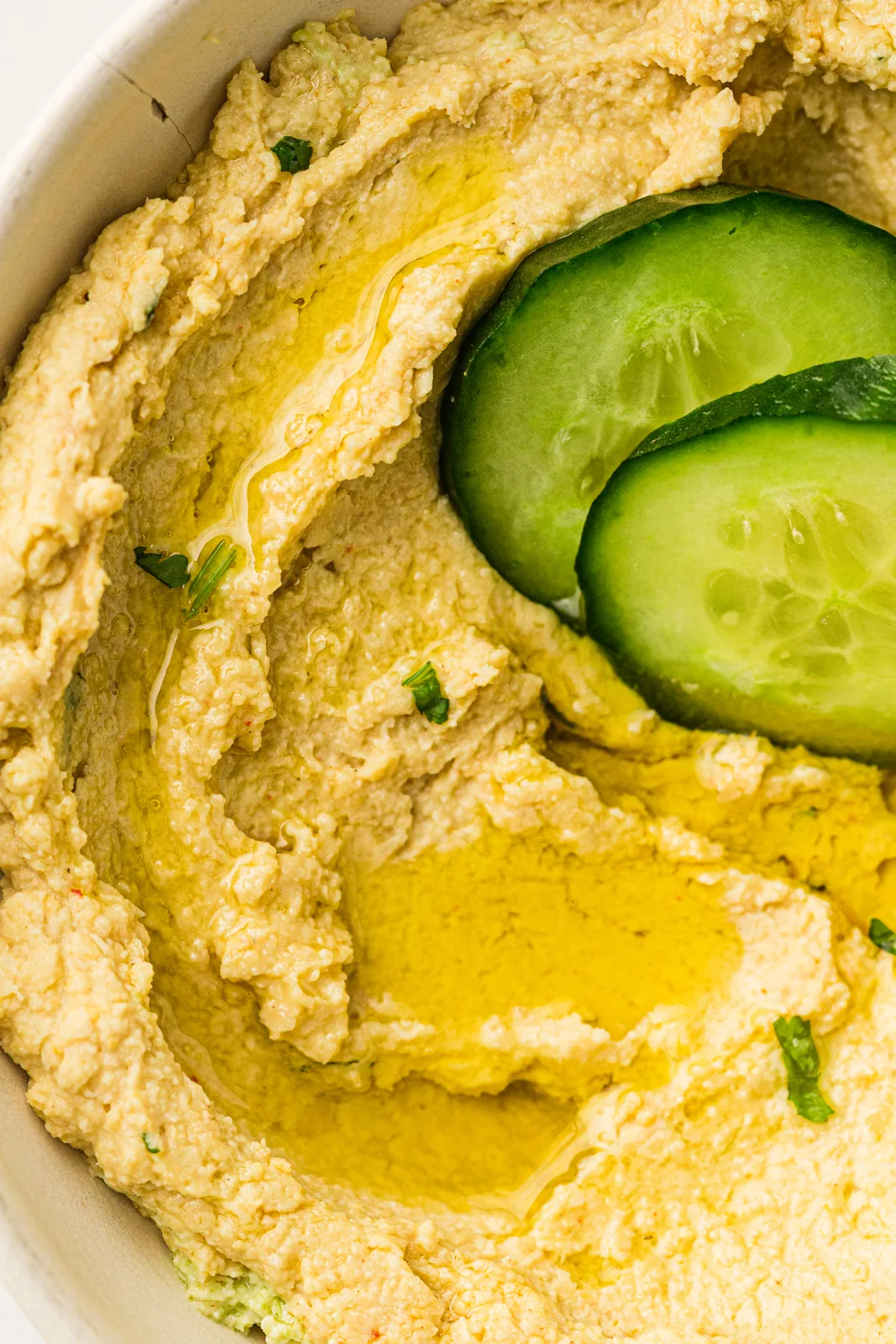
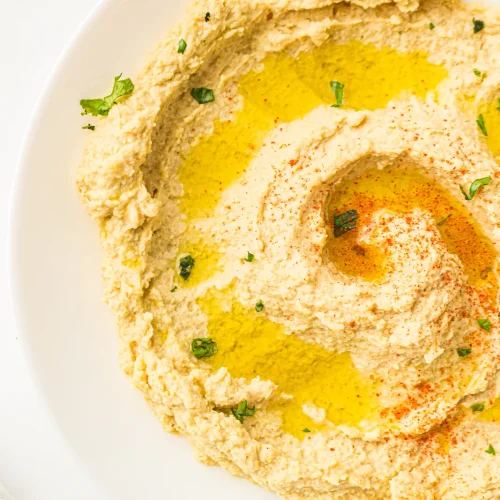
5. Taste, then serve. Finally, check the salt and the lemon and adjust. Spoon it into a bowl, push a spiral through the middle with the back of the spoon and pour olive oil into the groove.
Why Is My Hummus Grainy?
Three things cause it, and they are all fixable. The first is skipping the simmer, which leaves those papery skins intact for the blade to shred rather than dissolve.
The second is stopping the processor too early. A grainy paste at forty seconds often turns smooth at ninety, so give it the time. The third is not enough liquid. However, that does not mean more oil. Oil past a certain point makes it heavy and greasy rather than light, and cold water is what actually opens the texture up.
The garlic is worth one more word of warning. Raw garlic keeps developing in an acidic mixture, so a batch that tastes gentle on Monday afternoon can be genuinely fierce by Tuesday morning. One small clove is deliberate. If you love garlic, roast it first instead of adding more raw.
Tips for the Smoothest Hummus
- Use cold water, not warm. The temperature shock helps the hummus whip up paler and fluffier.
- Add the lemon and garlic to the processor early so the acid softens the garlic’s raw bite.
- Stir the tahini jar right down to the bottom before measuring. The oil separates and the solids at the base are bitter.
- That said, taste it at room temperature. Straight from the fridge everything reads under-seasoned.
- A small food processor beats a large one for this quantity. In a big bowl the mixture just climbs the walls.
- Make it a day ahead if you can. The garlic settles and the flavours knit together overnight.
- Reserve a spoonful of the chickpea cooking water. It loosens the mixture without diluting the flavour the way plain water can.
- Serve it in a wide shallow bowl rather than a deep one, since the ratio of olive oil to dip is what makes each scoop taste good.
Storage
- Fridge. An airtight container for up to 5 days. A thin layer of olive oil on top keeps the surface from drying.
- Separation. A little liquid on top is normal. Stir it back through before serving.
- Freezing. Not suitable. The emulsion splits on thawing and never comes back together properly.
- Serving. Take the hummus out 20 minutes before you want it, because cold flattens the flavour.
Variations and Substitutions
- Roasted red pepper. Blend in half a jarred pepper, patted dry so it does not water the hummus down.
- Extra lemon. Some people want a third tablespoon. Add it at the tasting stage rather than at the start.
- No tahini. It works, though the result is looser and sweeter. A spoonful of smooth peanut butter is the nearest stand-in.
- Roasted garlic. Mellow and sweet instead of sharp, and you can use three cloves without it shouting.
- Herby. A handful of parsley or coriander blended at the very end, which turns it pale green.
For a brighter, greener take on the same idea, our edamame hummus swaps the chickpeas for soy beans and comes out lighter and grassier.
What to Serve With It
Warm flatbread and raw vegetables are the obvious pairing, and cottage cheese flatbread is the one we make most often for scooping. On a mezze table it sits well beside watermelon salad and a bowl of garlic butter green beans. Instead of mayonnaise, a spoonful also works stirred through chicken pasta salad.
Frequently Asked Questions
Ingredients and Method
Why simmer chickpeas that are already cooked?
Warming them softens the skins and pushes the insides past the point of holding their shape, which is what gives you a smooth texture rather than a sandy one.
Do I need to remove the skins?
You can, and it does help a little. Because the simmer already softens them, though, peeling every chickpea is a lot of work for a small gain.
Can I make it without tahini?
Yes. The flavour and texture change noticeably, since tahini is what gives the classic nutty backbone. Expect something looser and milder.
Can I use dried chickpeas?
Of course, if you soak and cook them first. Use roughly 240g of cooked weight, and you can skip straight to the blending stage while they are still warm.
Storage and Troubleshooting
Mine is too thick. What now?
More cold water, a tablespoon at a time, with the processor running. Thick hummus almost always just needs liquid rather than longer blending. Resist adding oil instead, which makes it heavier rather than lighter.
Why does it taste bitter?
Usually the tahini. Old jars go bitter, and so does the thick sediment at the bottom. Stir the jar thoroughly or open a fresh one.
How long does it keep?
Five days in a sealed container in the fridge. The garlic gets stronger over that time, so day four tastes noticeably punchier than day one.
Can I double the batch?
Yes, though a small processor will struggle. Simmer both tins together, then blend in two goes rather than filling the bowl past halfway.
Ingredients
- 1 can chickpeas, drained and rinsed 15 oz / 425 g; about 240 g drained
- 1/4 cup tahini 60 g
- 2 tablespoons fresh lemon juice 30 ml
- 1 small garlic clove 5 g
- 2 tablespoons olive oil 30 ml, plus extra for serving
- 1/2 teaspoon salt 3 g
- 2 to 4 tablespoons cold water 30 to 60 ml
- 1/4 teaspoon ground cumin 1 g, optional
Instructions
- Place the chickpeas in a saucepan, cover with water, and simmer for 10 minutes to soften the skins. Drain.

- Add the warm chickpeas, tahini, lemon juice, garlic, olive oil, salt and cumin if using to a food processor.
- Blend for 1 to 2 minutes until smooth, scraping the sides down once.
- Add the cold water 1 tablespoon (15 ml) at a time, blending between additions, until light and creamy.
- Taste and adjust the salt or lemon as needed.
- Spoon into a bowl, make a spiral with the back of a spoon, drizzle with olive oil and serve.