 Bity
Bity
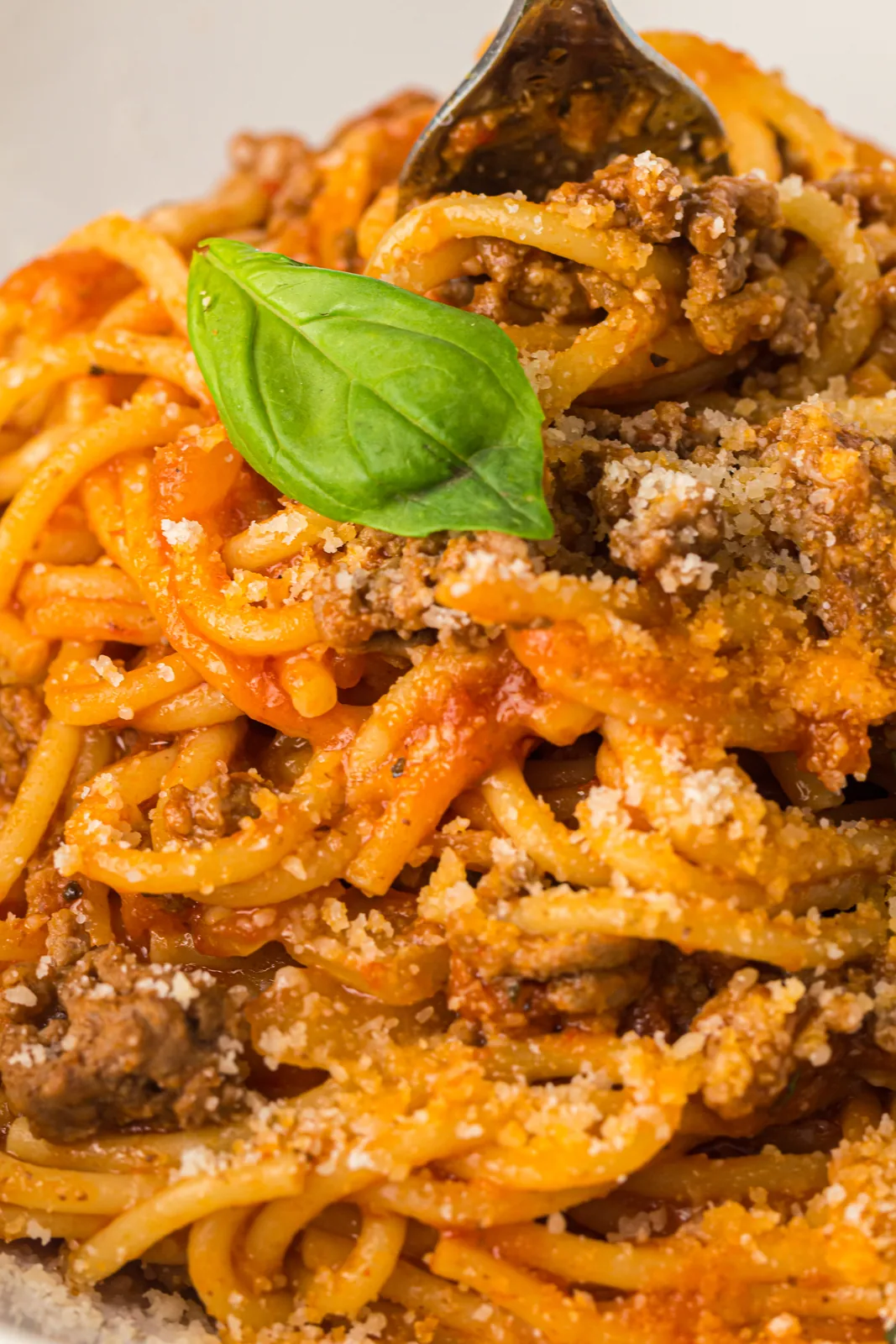
One pot, no colander, and the pasta cooks in the sauce rather than in water you pour down the sink. Instant pot spaghetti is the weeknight dinner my family asks for by name, mostly because it appears twenty five minutes after I decide to make it.
There is one rule that decides whether instant pot spaghetti works, and it is not the timing. It is how you lay the dry spaghetti into the pot before the lid goes on.

Quick Breakdown
Why You’ll Love This Instant Pot Spaghetti
- One pot, start to finish. You brown the beef and cook the pasta in the same insert.
- Twenty five minutes. Including the time the pot spends coming up to pressure.
- The starch stays in. Because you never drain it, the sauce thickens and clings on its own.
- A jar of sauce is fine. Plain passata or marinara does the job here.
- Almost no washing up. Instant pot spaghetti uses one insert and one spoon.
Ingredient Notes
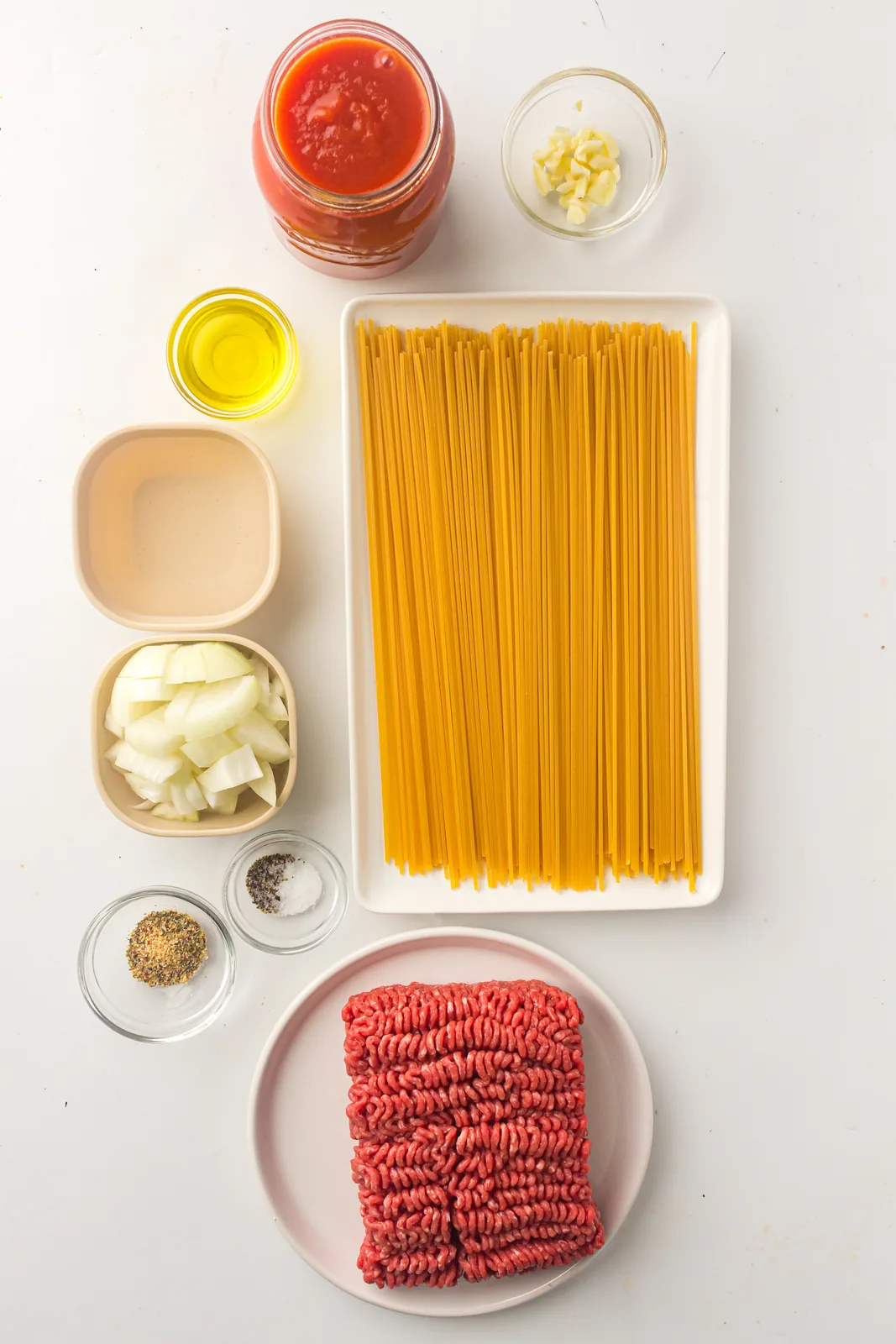
- Ground beef. Half a pound, about 225g. Enough to flavour the whole pot without turning it into a meat sauce.
- Dry spaghetti. Eight ounces, broken in half. Full-length strands will not lie flat, and anything sticking above the liquid cooks unevenly.
- Pasta sauce. One 24 ounce jar of a plain sauce. Chunky vegetable sauces sink and are more likely to catch on the base, which is the usual cause of a failed batch.
- Water. Two cups. It looks like too much, and it is exactly right once the pasta has drunk its share.
- Onion and garlic. One small diced onion and two cloves. Both go in during the sauté stage so they soften properly.
- Italian seasoning. A teaspoon, technically optional. That said, the pot tastes noticeably flat without it.
Pasta is worth thinking about in terms of what goes with it rather than avoiding it. Healthline points out that adding protein such as chicken or fish and vegetables like broccoli, bell peppers or tomatoes turns a bowl of pasta into a balanced meal, which is essentially what the beef and sauce are doing here.
The Criss-Cross Trick That Stops Instant Pot Spaghetti Clumping
Drop a handful of broken spaghetti into the pot in one direction and the strands lie flat against each other like a stack of paper. Water cannot get between them, so the outside cooks while the middle of the raft stays chalky, and the whole thing fuses into a brick.
Instead, lay the pasta down in two or three layers, turning the bundle roughly ninety degrees each time. The gaps this creates are what let the liquid circulate. It takes about ten seconds and it is the single biggest difference between good instant pot spaghetti and a sad clump. Nothing else you do to instant pot spaghetti matters half as much.
| How you load it | What you get |
|---|---|
| All strands one way | A fused raft, chalky in the middle |
| Criss-crossed layers | Separate strands, evenly cooked |
| Stirred before cooking | Starch on the base and a burn warning |
How To Make Instant Pot Spaghetti
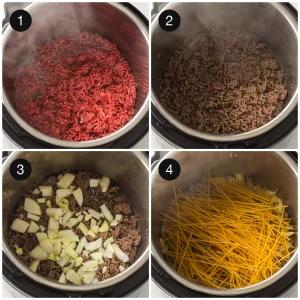
1. Brown the beef. First, set the pot to Sauté, add the olive oil and cook the ground beef for 4 to 5 minutes, breaking it up as it goes. Then stir in the diced onion and garlic for another minute or two until fragrant.
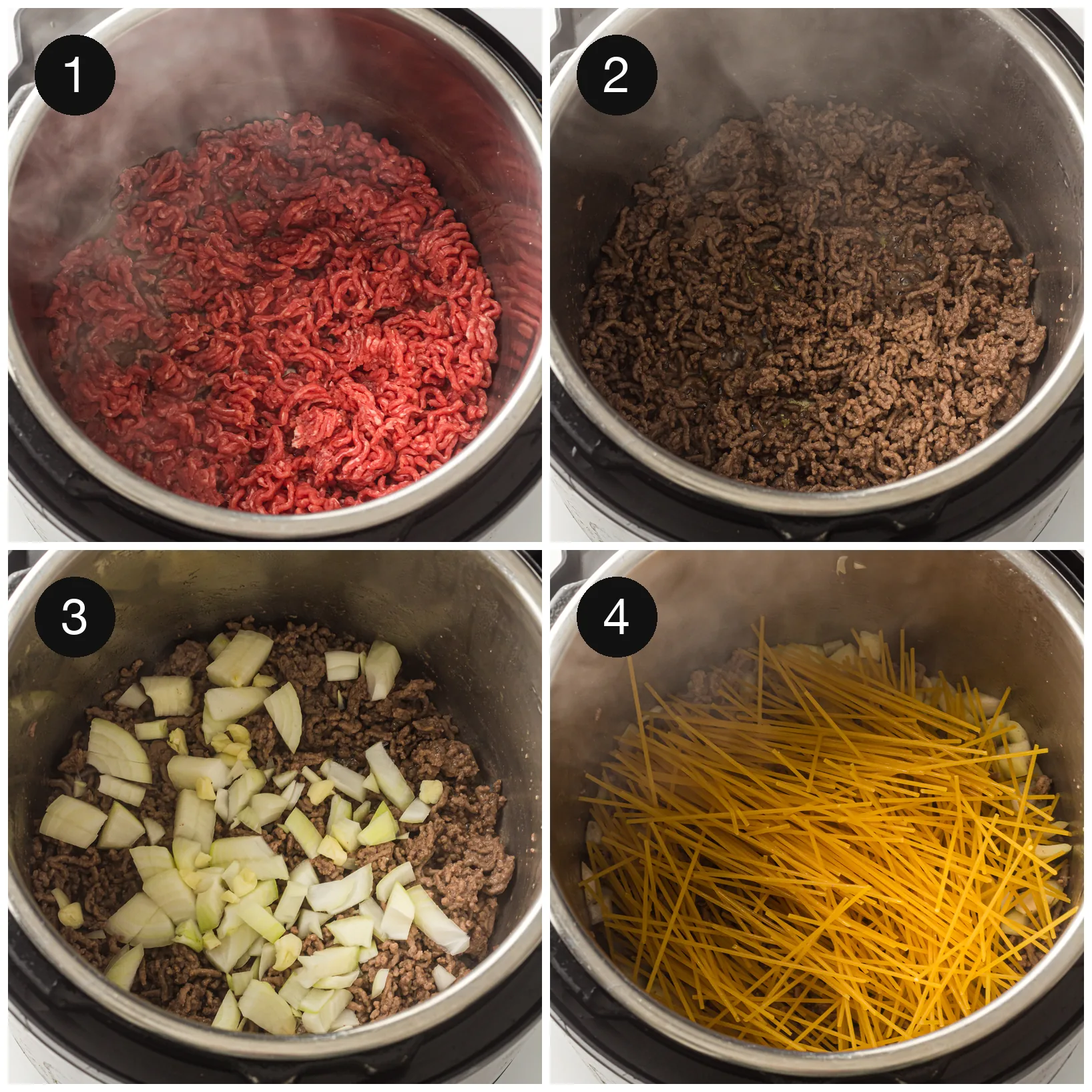
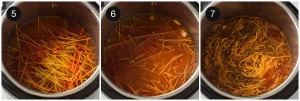
2. Cancel, then layer the pasta. Next, press Cancel to turn the heat off. Spread the broken spaghetti over the meat in a criss-cross pattern, in two or three turned layers rather than one pile.
3. Pour, season, and leave it alone. Then pour the jar of sauce and the two cups of water evenly over the pasta so the strands are covered. Add the salt, pepper and Italian seasoning. Do not stir. Stirring now drags starch onto the hot base and that is what sets off a burn warning.
4. Eight minutes on High. After that, close the lid, set the valve to Sealing and pressure cook on High for 8 minutes.
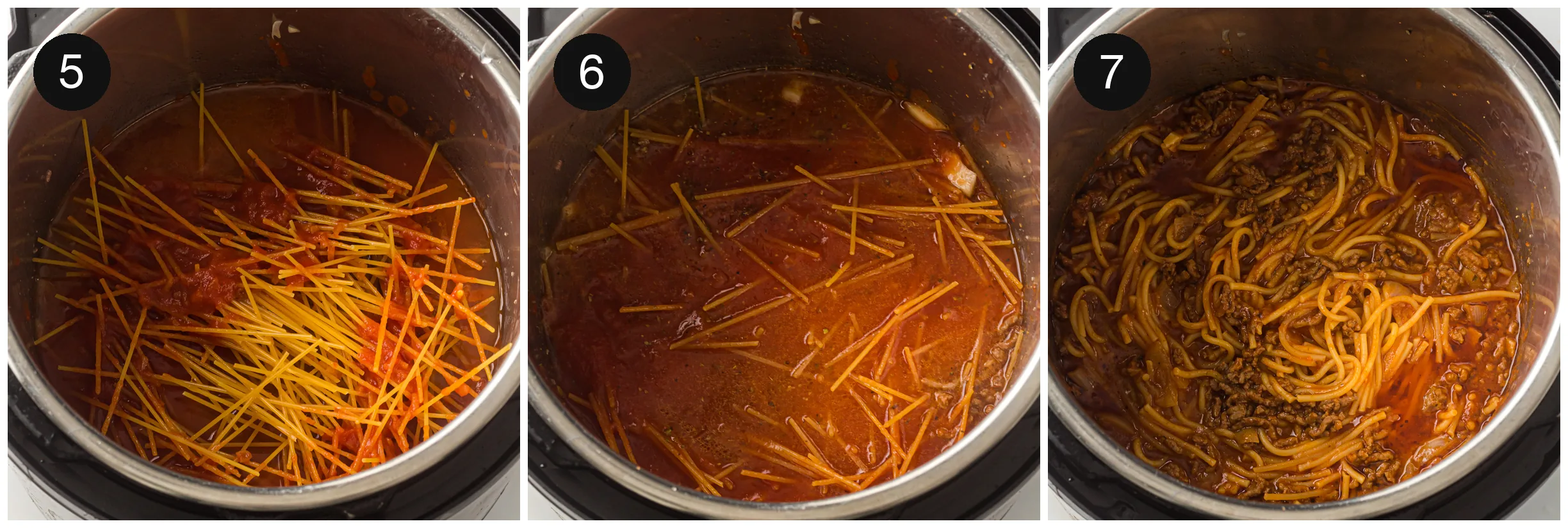
5. Quick release, then stir. Finally, do a quick release as soon as the timer ends and open the lid carefully. Stir everything together gently and let it sit for a minute or two, which is when the sauce thickens around the pasta.
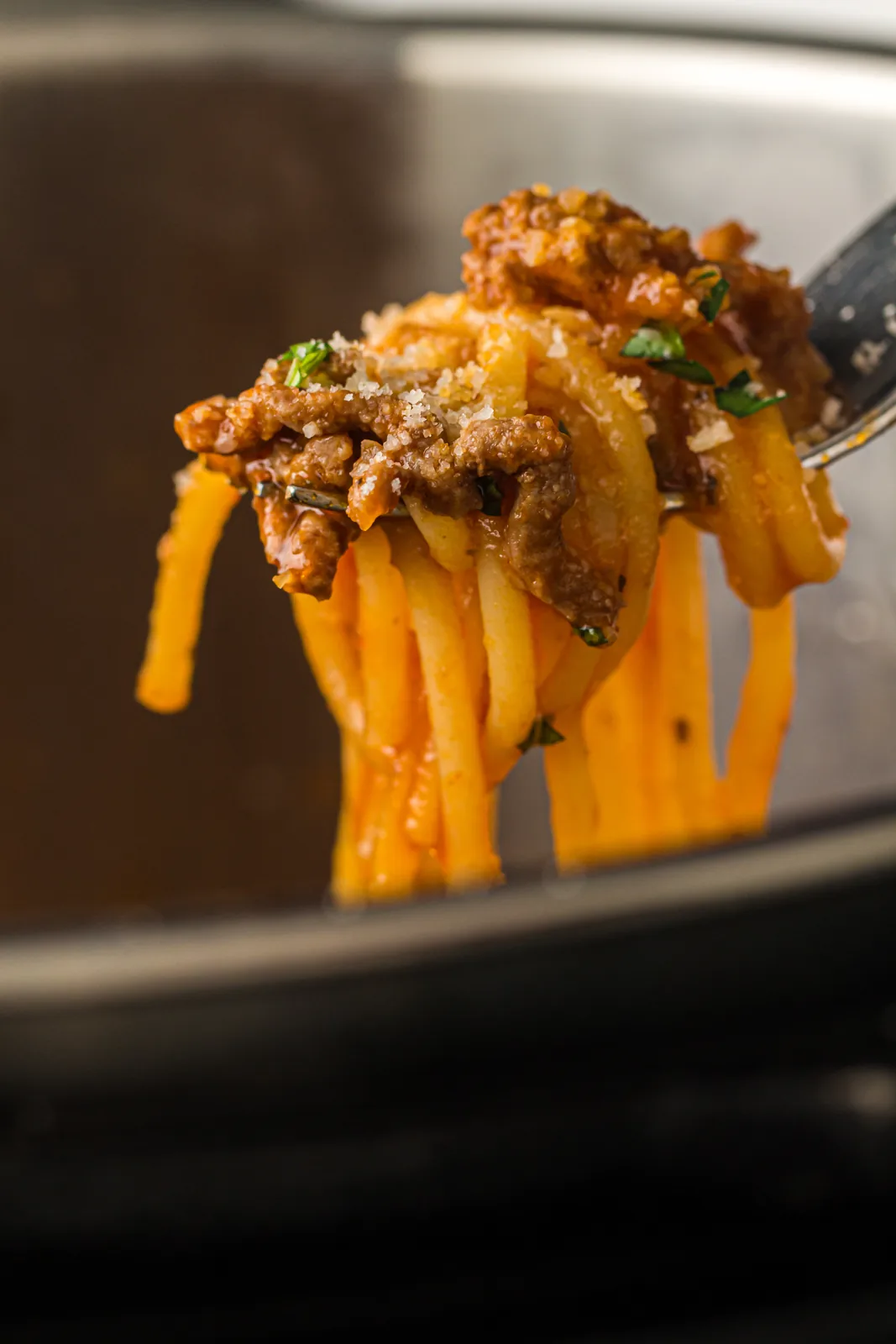
Snapping the strands in half is what lets them lie flat in a 6 quart Instant Pot, so none of the pasta pokes above the sauce.
For the beef, a meat masher breaks the mince into small, even pieces in the insert, so there are no big lumps hiding under the pasta.
Why Did I Get a Burn Warning?
The sensor sits under the base of the insert and reads temperature, not smell. Anything thick and starchy touching that base while the pot heats will read as scorching, and the machine stops mid-cook.
Three habits cause almost all of it. Stirring before cooking pulls starch down through the liquid. Skipping the deglaze leaves browned beef stuck to the metal. Using a thick or chunky sauce means the heavy solids settle rather than circulate. However, if you brown, layer, pour and then leave it completely alone, the problem mostly disappears.
Tips for the Best Instant Pot Spaghetti
- Break the spaghetti over the pot so the shards fall in rather than across the worktop.
- Season at the end as well as the start, since instant pot spaghetti absorbs salt into the pasta as it sits.
- Of course you can drain the beef fat first. With a lean mince there is barely any, so I usually leave it.
- Push any stray strands under the liquid before sealing. Anything above the waterline stays hard.
- Let it rest a couple of minutes after stirring. It looks watery at the lid and thickens fast.
- Still too loose? Meanwhile, set the pot to Sauté for a minute with the lid off and stir constantly.
- Grate the parmesan at the table rather than into the pot, since it clumps in the residual heat.
- Rinse the empty sauce jar with a little of the measured water and tip it in. It gets the last of the sauce out and costs nothing.
- Check the pasta before you serve. If a strand is still firm, put the lid back on for two minutes off the heat.
Storage and Reheating
- Fridge. Cool completely, then an airtight container for up to 4 days.
- Reheating. One minute bursts in the microwave, stirring between, or a pan over medium heat with a splash of water to loosen the sauce.
- Freezing. Not ideal. Cooked pasta goes soft and mealy after thawing.
- Make ahead. Instant pot spaghetti is better cooked fresh, though the beef and onion base can be browned earlier in the day.
Variations and Substitutions
- Ground turkey or chicken. Both work, and both need a little more seasoning to make up for the milder flavour.
- Meat free. Skip the beef, sauté the onion and garlic in the oil, and stir in a tin of drained lentils at the end.
- Extra greens. Frozen spinach or peas stirred in after cooking wilt in the residual heat.
- Creamy version. A splash of cream or a spoonful of cream cheese stirred through at the end.
- Different shapes. Penne and rigatoni work, but the timing changes with the shape, so treat this as a spaghetti method.
If you want the same flavours baked rather than pressure cooked, our baked ziti covers that ground, and air fryer frozen meatballs can be dropped in at the end for something more substantial.
What to Serve With It
Instant pot spaghetti wants garlic bread beside it, and cheesy garlic bread is the version we make. Soft dinner rolls do the same job for mopping the plate. A sharp green salad on the side keeps it from feeling heavy, and for a summer version of the same table, grilled burgers and this pasta feed a crowd between them.
Frequently Asked Questions
Ingredients and Method
Do I really have to break the spaghetti?
Yes, for a standard pot. Whole strands stand proud of the liquid and the exposed ends stay hard, however long you cook it.
Why can’t I stir before cooking?
Because stirring drags starch and sauce down onto the hot base, which is what the burn sensor reacts to. Pour, then leave it.
Can I use homemade sauce?
Of course. Keep it fairly smooth and thin it slightly, since thick sauces settle on the base and increase the chance of scorching.
Can I double it?
In an 8 quart pot, yes, and the time stays at 8 minutes. Do not go past the halfway line, because pasta foams as it cooks.
Storage and Troubleshooting
The pasta came out mushy. Why?
Usually a natural release instead of a quick one. Instant pot spaghetti keeps cooking during those extra minutes at heat. Release the pressure the moment the timer ends.
It looks watery when I open the lid.
That is normal. Stir it through and give it two minutes. Instant pot spaghetti thickens as the starch settles into the sauce.
How long do leftovers keep?
Four days in the fridge in a sealed container. Add a splash of water when reheating, since the pasta keeps absorbing sauce as it sits.
Can I use gluten free pasta?
You can, but it is far more fragile under pressure. Start by cutting the time and expect a softer result than wheat pasta gives.
Ingredients
- 1/2 pound ground beef 225 g
- 1 tablespoon olive oil
- 1 small onion, diced
- 2 cloves garlic, minced
- 8 ounces dry spaghetti 225 g, broken in half
- 1 jar plain pasta sauce 24 oz / 680 g
- 2 cups water 480 ml
- 1 teaspoon salt
- 1/2 teaspoon black pepper
- 1 teaspoon Italian seasoning optional but recommended
Instructions
- Turn the Instant Pot to Saute mode. Add the olive oil and cook the ground beef until browned, breaking it up as it cooks, about 4 to 5 minutes. Add the diced onion and garlic and saute for 1 to 2 minutes more until fragrant.

- Press Cancel to turn off Saute mode. Spread the dry spaghetti over the meat in a criss-cross pattern to prevent clumping.
- Pour the jar of pasta sauce and the 2 cups of water over the pasta, covering the noodles as evenly as possible. Add the salt, pepper and Italian seasoning. Do not stir.

- Close the lid and set the valve to Sealing. Cook on High Pressure for 8 minutes.
- When the cook time is up, perform a quick release of pressure. Open the lid carefully.
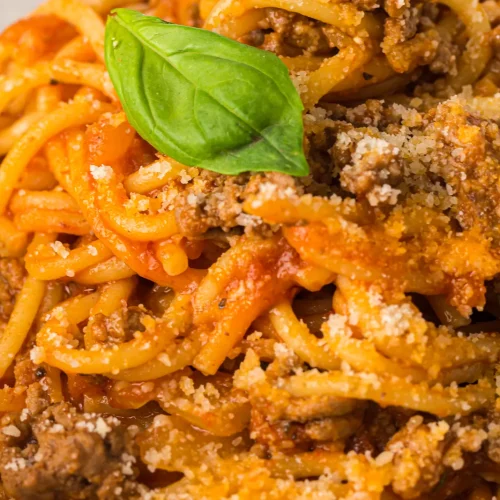
- Stir the pasta and sauce together gently to combine. Let it sit for a minute or two to thicken slightly before serving.