 Bity
Bity
I bake sourdough dinner rolls most Sundays now, mostly because they turn a jar of starter I would otherwise feel guilty about into twelve soft, buttery buns. They are enriched with milk and butter, so they stay tender for days rather than going crusty by teatime.
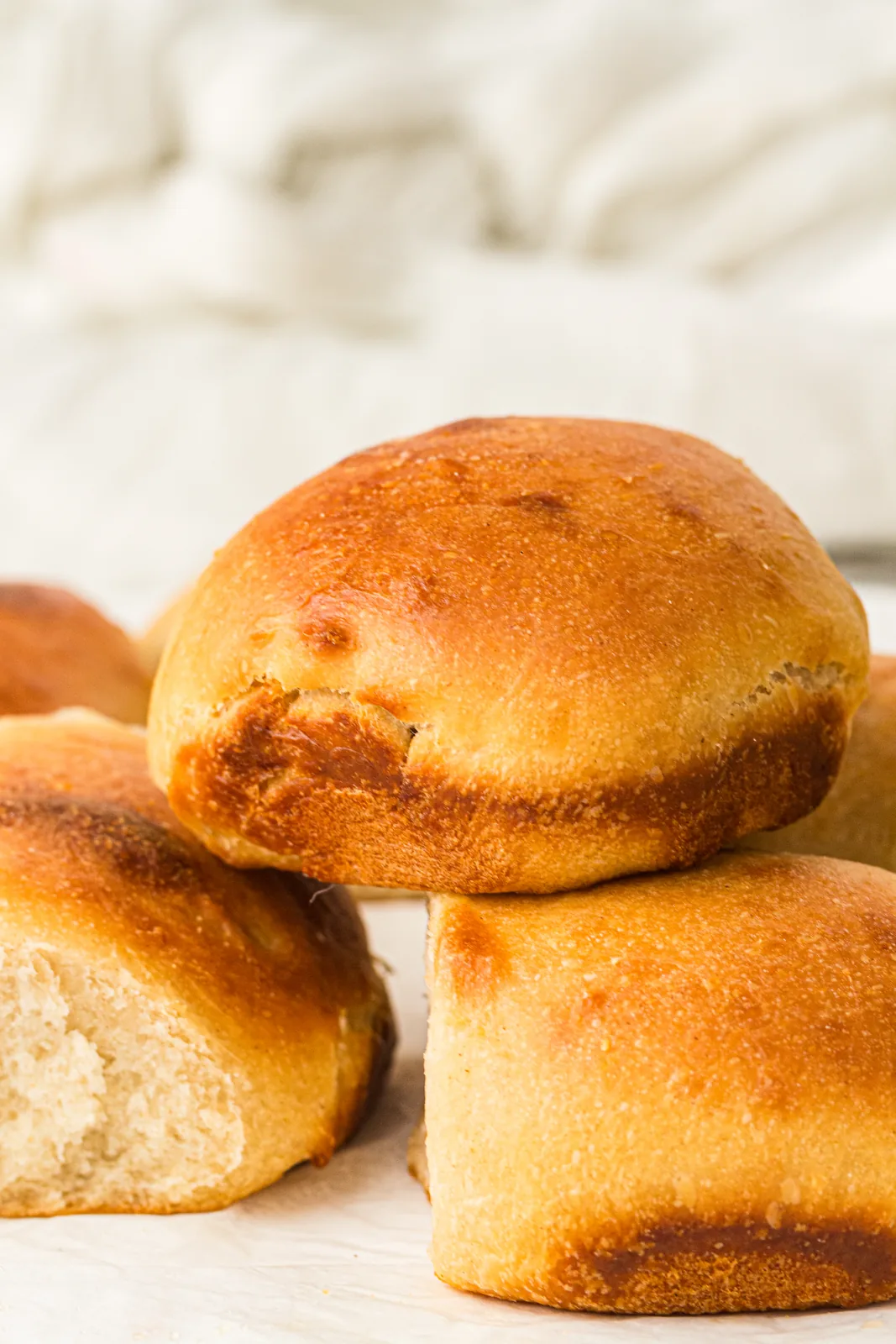
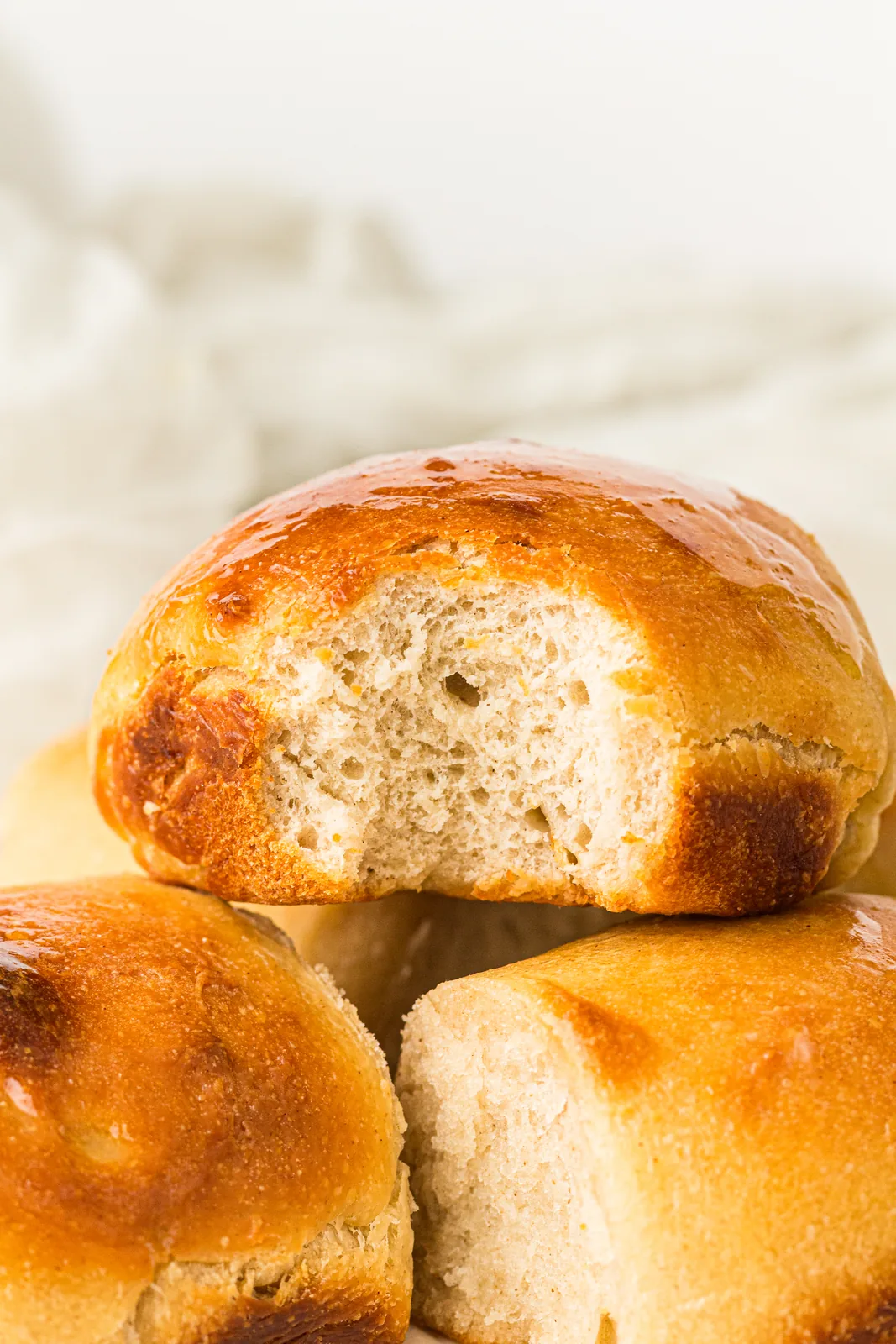
Sourdough dinner rolls also taste like proper bread. There is a faint tang under the sweetness from the honey, the crumb pulls apart in strands, and the tops go deep gold from a brush of melted butter straight out of the oven. My family eats four of them before they have cooled.

Quick Breakdown
Why You’ll Love These Sourdough Dinner Rolls
- No commercial yeast at all. An active starter does the whole job, which is why they taste of something.
- Soft and enriched. Because there is milk, butter and honey in the dough, the crumb stays tender rather than chewy.
- They keep for three days. In fact, they make excellent sliders on day two.
- The timing is flexible. A long rise means you can start in the morning and bake before dinner, or fridge the shaped rolls overnight.
- Twelve from one bowl. Meanwhile the only equipment you need is a 9×13 dish.
Ingredient Notes
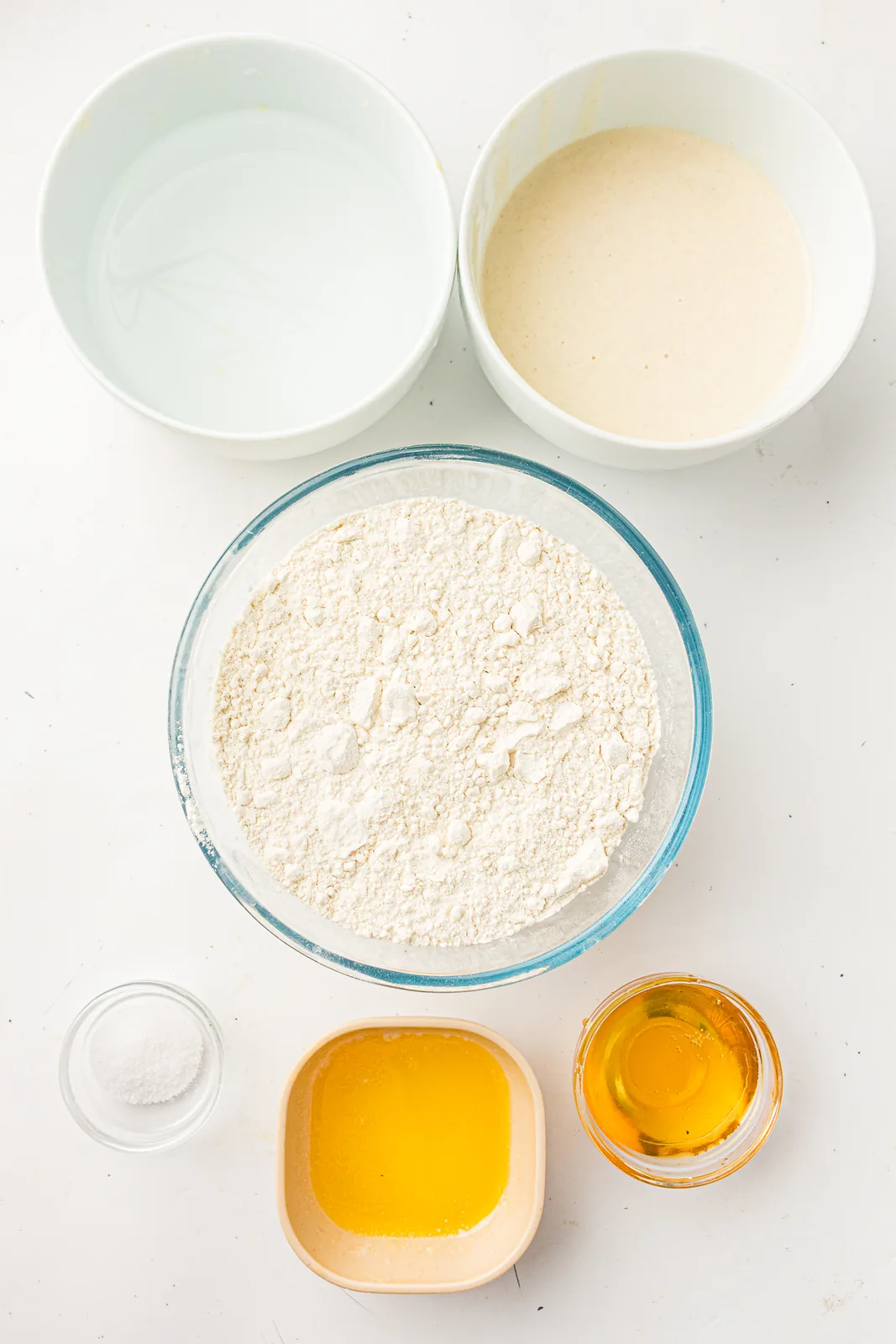
- Active sourdough starter. One cup, and it must be bubbly and roughly doubled. Discard straight from the fridge will not raise an enriched dough like this one, though it can work with a much longer rise.
- Warm milk. One cup, at about bath temperature. However, if it is fridge cold the starter takes hours longer to get going.
- Bread flour. Three and a half to four cups. The extra protein gives you the strands you want when you pull a roll apart, and Harvard’s Nutrition Source explains what the bran and germ add if you want to swap some for wholemeal.
- Melted butter. Three tablespoons in the dough and two more for brushing. That second lot is what keeps the tops soft.
- Honey. Two tablespoons. It feeds the starter slightly and gives the crust its colour.
- Fine sea salt. A teaspoon and a half. Add it with the flour rather than straight onto the starter.
How To Tell Your Starter Is Ready
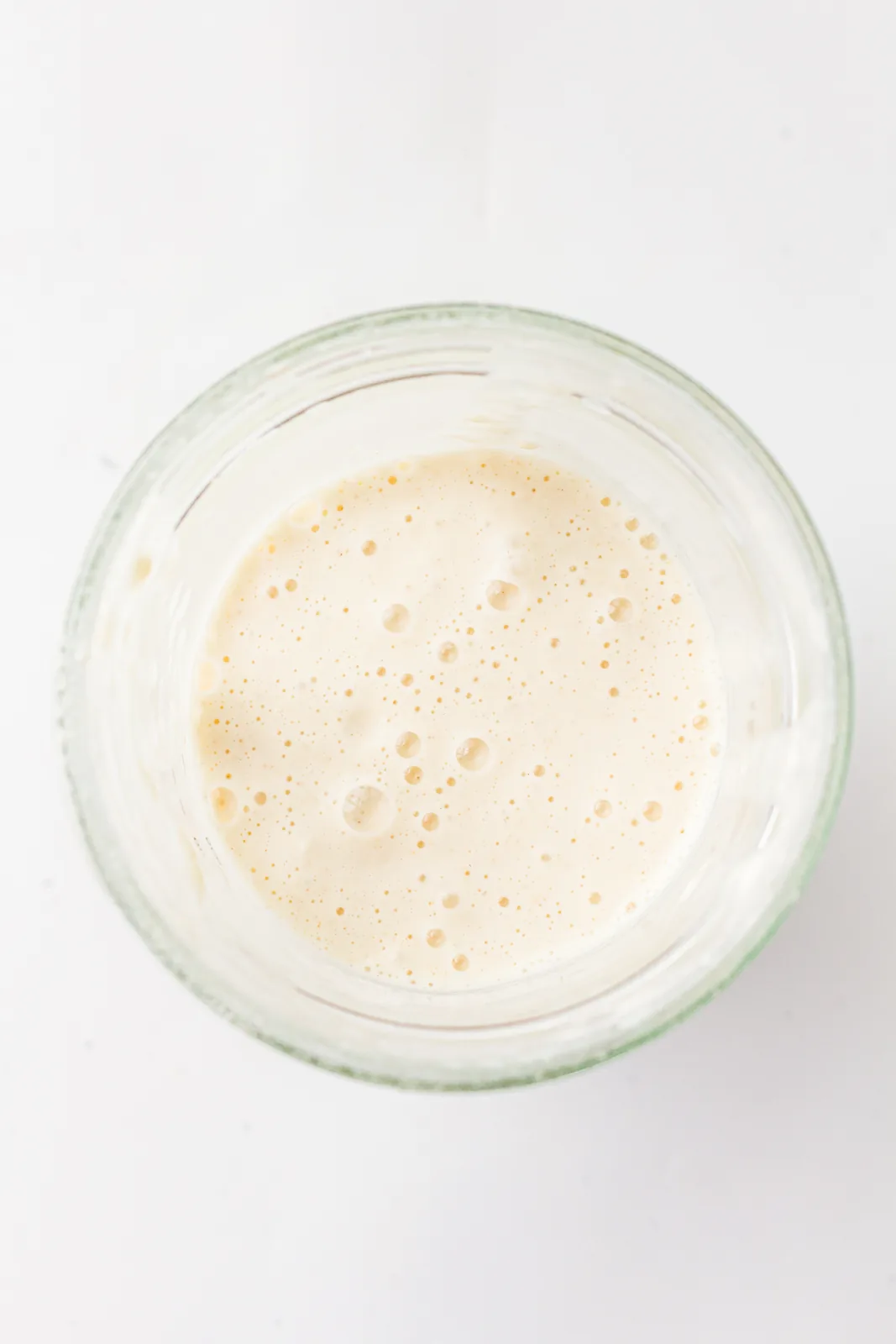
This is the step that decides everything, and it is where most dense sourdough dinner rolls come from. An enriched dough is heavy with fat and sugar, so it needs a genuinely lively starter to lift it.
Feed your starter four to six hours before you want to mix, then watch it rather than the clock. It is ready when it has at least doubled, the surface is domed rather than sunken, and it smells sweet and yoghurty instead of sharply acidic.
The float test is a decent backup. Drop a teaspoon into a glass of water; if it floats, there is enough gas in it to raise your dough. If it sinks, feed it again and wait.
A Baker’s Schedule That Actually Fits a Day
The rise times look intimidating written down, so here is how I fit them around real life. Feed the starter at 7am, mix and knead at noon, bulk rise until about 6pm, shape, then a second rise of two to three hours and bake at nine.
If that lands too late, shape the rolls and put the covered dish in the fridge overnight instead. Then bring them out in the morning, let them come to room temperature and finish puffing for an hour or two, and bake for lunch.
Warm kitchens speed everything up considerably. In a room at 24C the bulk rise can finish in four hours rather than six, so judge by the dough rather than the timer.
How To Make Sourdough Dinner Rolls
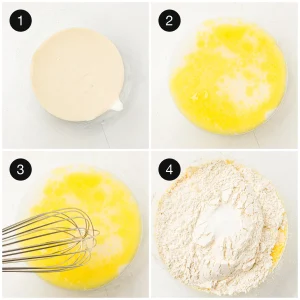
1. Mix the wet. First stir the active starter, warm milk, melted butter and honey together in a large bowl until smooth.
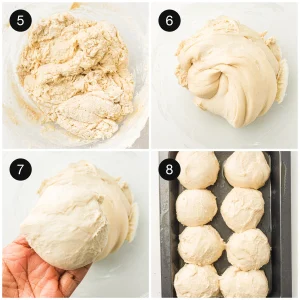
2. Add flour and salt. Next add three and a half cups of bread flour and the salt, and mix to a soft, shaggy dough, adding more flour a tablespoon at a time if it is unmanageably sticky.
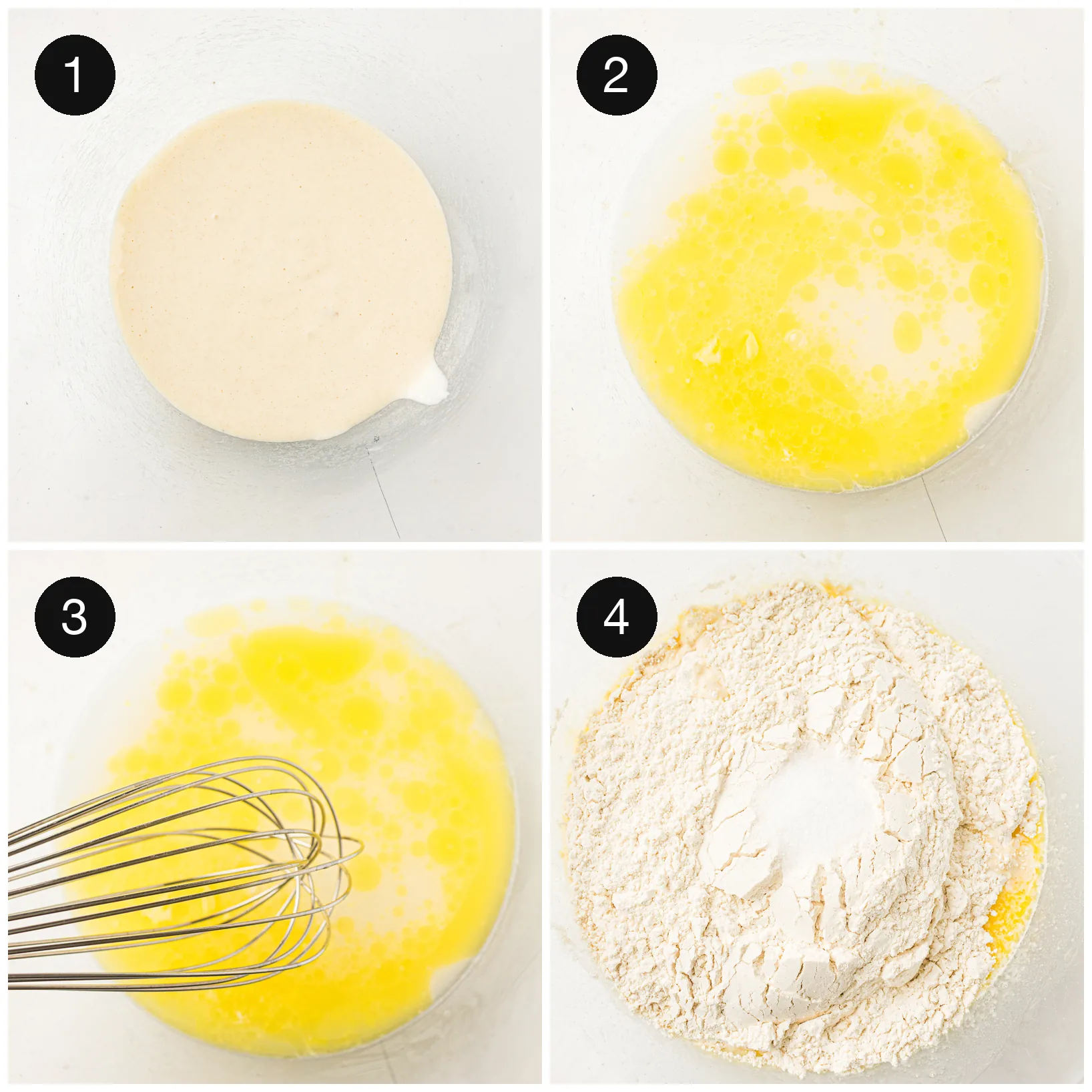
3. Knead it properly. Then turn it onto a lightly floured surface and knead for 8 to 10 minutes, until it is smooth and slightly tacky but not wet.
4. Bulk rise. After that put the dough in a buttered bowl, cover it, and leave it at room temperature for 4 to 6 hours until it is puffy and up by half again.
5. Divide and shape. Meanwhile butter a 9×13 dish. Divide the dough into 12 pieces, tuck the edges under each one and roll it into a smooth ball on the counter.
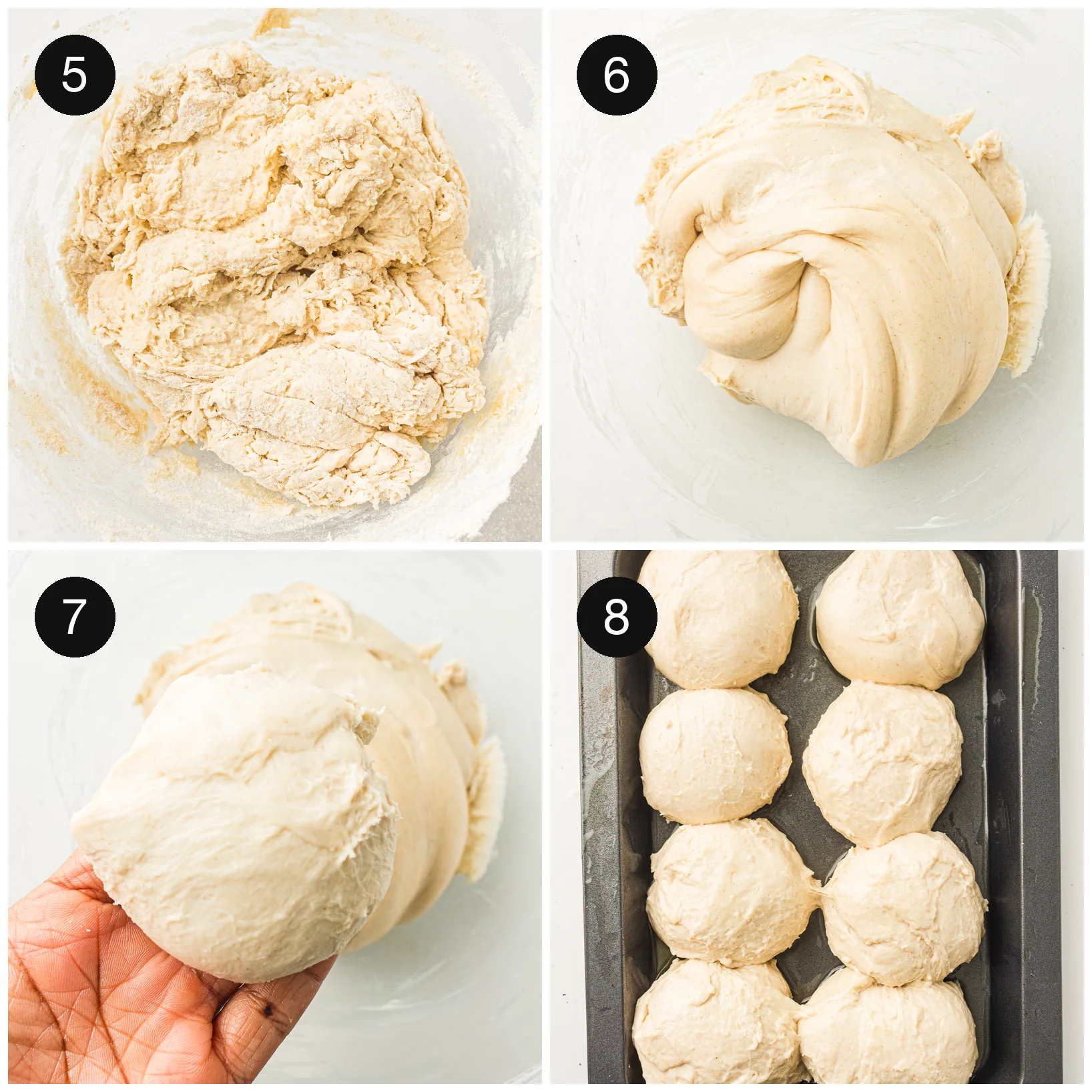
6. Second rise. Space them slightly apart in the dish, cover loosely, and leave for 2 to 3 hours until they are touching and visibly puffy.
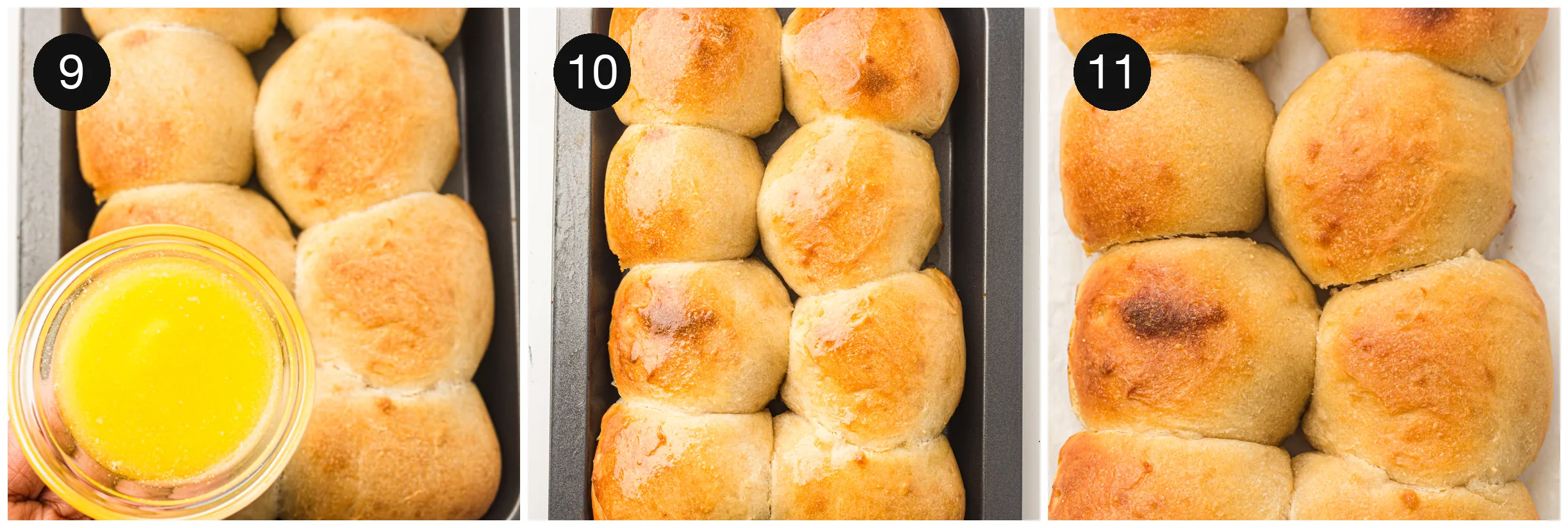
7. Bake and butter. Finally bake at 375F for 20 to 25 minutes until deep golden, then brush the tops with melted butter the moment they come out.
Sourdough Dinner Rolls Mistakes to Avoid
- Using a sluggish starter. This is the number one cause of dense rolls. It must be doubled and domed before you mix.
- Adding too much flour. Because the dough should stay slightly tacky, a dry dough bakes into tight, crumbly buns.
- Baking too early. They should be touching each other and jiggle slightly when you nudge the dish.
- Skipping the butter brush. Still, it takes five seconds and it is the difference between soft tops and leathery ones.
- Cutting the knead short. Eight to ten minutes builds the gluten that gives you a pull apart crumb.
Tips for the Best Sourdough Dinner Rolls
- Weigh the flour for your sourdough dinner rolls if you can. As a result you avoid the scooped cup that quietly adds fifty extra grams.
- Shape each ball by dragging it towards you on an unfloured patch of counter. That tension is what makes them rise upward rather than outward.
- Cover the second rise with a damp cloth so the tops do not dry and crust.
- Sprinkle flaky salt or chopped parsley over the buttered tops. In addition, garlic butter turns them into something else entirely.
- A skewer through the centre roll should come out clean. Otherwise give them another three minutes.
Storage and Reheating
- Room temperature. Keep the sourdough dinner rolls in an airtight tin or a bread bag for up to 3 days. However, do not refrigerate them, since the fridge stales bread faster than the counter.
- Freezer. Freeze baked rolls for up to 2 months. The Academy of Nutrition and Dietetics covers wrapping and freezer burn, which matters more with bread than most things.
- Reheating. Cover with foil and warm at 300F for 10 to 15 minutes. Meanwhile stale ones make very good croutons.
Variations and Substitutions
- Dairy free. Swap the milk for oat milk and the butter for a vegan block, one for one.
- Part wholemeal. Replace up to 40 percent of the bread flour with wholemeal for a nuttier roll and a slightly tighter crumb.
- No starter to hand. My soft dinner rolls use commercial yeast and are ready in a couple of hours instead.
- Richer still. For a properly buttery enriched loaf from the same family, try bread machine brioche.
- Use the discard instead. Save the unfed starter for sourdough discard cookies, which is where mine usually ends up.
What to Serve With Sourdough Rolls
Sourdough dinner rolls want soup, first and always. They were built for dunking, and I make them most often alongside slow cooker minestrone soup on a cold evening.
They also make excellent sliders, split and filled with something rich. A tray of mississippi pork roast piled into split rolls with the buttery juices is one of the better sandwiches I know. Otherwise just salted butter, while they are still warm.
Frequently Asked Questions
Starter and Method
Can I use sourdough discard instead of active starter?
You can, but give the dough much longer to rise. Active starter is what lifts an enriched dough properly, so discard alone will need patience and may still bake tighter.
Can I refrigerate the dough overnight?
Yes, and it is the most practical way to do it. Shape the rolls, cover the dish and chill it overnight, then let them come to room temperature and finish rising before baking.
Do I need bread flour?
Not strictly, though it does make a difference. All purpose works and gives a softer, slightly less chewy roll, so use what you have.
How is sourdough different from regular bread?
It rises on wild yeast and bacteria from a starter rather than commercial yeast. Because that fermentation is slower, the flavour is deeper and faintly tangy.
Troubleshooting and Storage
Why are my rolls dense?
Usually an underactive starter, or baking before the second rise finished. They should be touching each other and visibly puffy before they go in the oven.
How do I keep them soft?
Brush them with melted butter the moment they leave the oven, then store them in an airtight tin once cool. That butter layer is doing the work.
Can I freeze sourdough dinner rolls?
Yes, for up to two months. Freeze them baked and cooled, defrost in the fridge, then warm covered at 300F for ten to fifteen minutes.
Ingredients
For the Dough
- 1 cup active sourdough starter 240 g, bubbly and doubled
- 1 cup warm milk 240 ml
- 3 tablespoons unsalted butter melted, 42 g
- 2 tablespoons honey or sugar 30 g
- 3 1/2-4 cups bread flour 440 to 500 g
- 1 1/2 teaspoons fine sea salt 9 g
For Brushing
- 2 tablespoons melted butter 28 g
- 1 pinch flaky salt or chopped parsley optional
Instructions
- In a large bowl, combine the active sourdough starter, warm milk, melted butter and honey. Stir until smooth.

- Add 3 1/2 cups of flour and the salt. Mix until a soft dough forms, adding more flour a tablespoon at a time if it feels unmanageably sticky.
- Turn the dough onto a lightly floured surface and knead for 8 to 10 minutes, until smooth and slightly tacky but not dry.
- Place the dough in a lightly buttered bowl and cover.
- Let it rise at room temperature for 4 to 6 hours, until puffy and increased by about half again.
- Turn the dough out and divide it into 12 equal pieces, or 15 smaller rolls.
- Shape each piece into a smooth ball by tucking the edges underneath and rolling gently on the counter.
- Place the rolls into a buttered 9x13 baking dish, spaced slightly apart.
- Cover loosely and let rise for 2 to 3 hours, until the rolls are touching and visibly puffy.
- Preheat the oven to 375°F (190°C).
- Bake for 20 to 25 minutes, until the tops are golden brown.
- Immediately brush the rolls with melted butter for shine and softness.

- Sprinkle with flaky salt or parsley if desired.
- Allow the rolls to cool slightly before serving.