 Bity
Bity
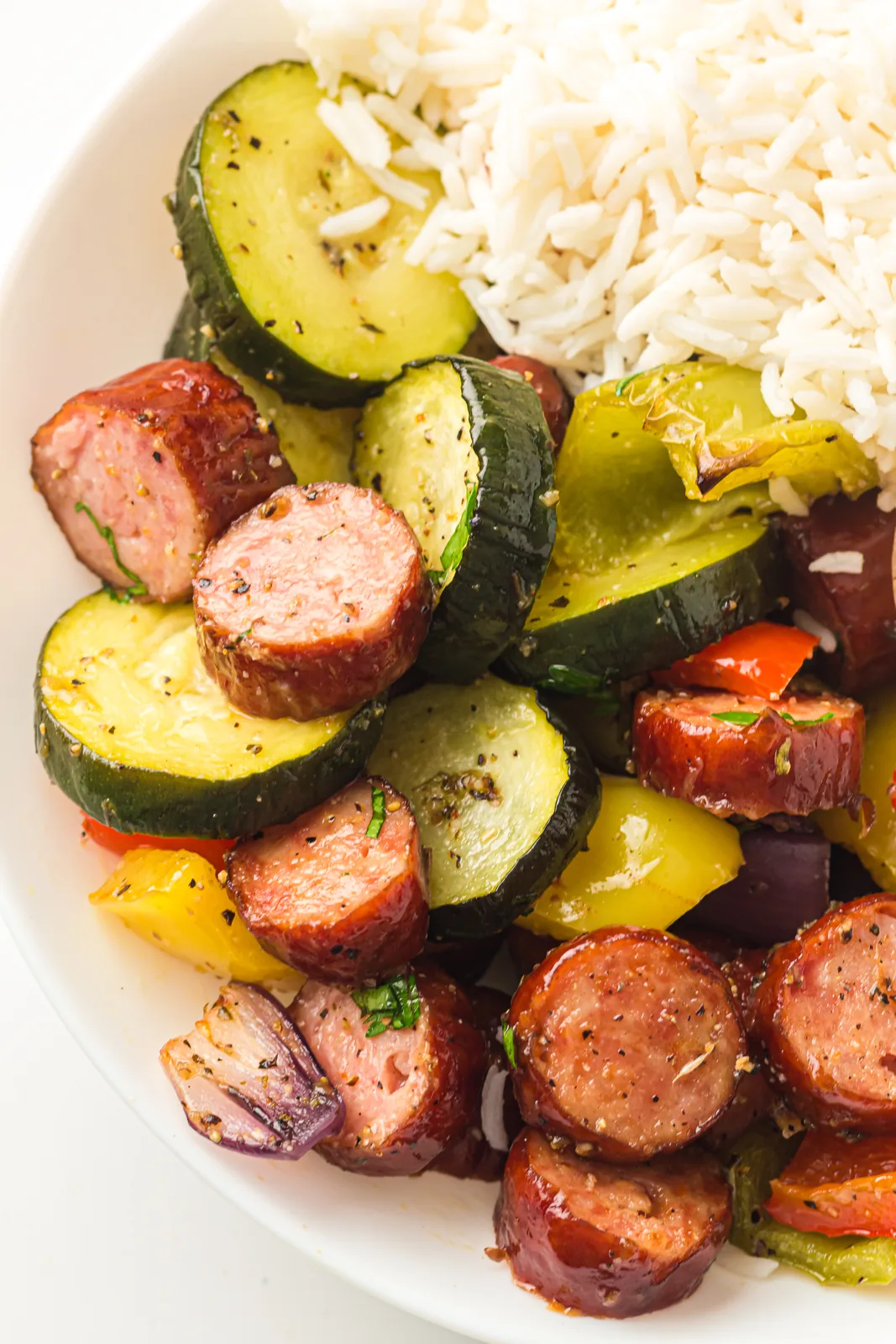
I came to sheet pan sausage and vegetables the way most people do, which is by running out of energy on a Tuesday. One tray, one knife, forty minutes, and dinner turns up looking like somebody tried.
The only real skill in sheet pan sausage and vegetables is spacing. Crowd the tray and everything sweats. Give the pieces room and the sausage browns, the pepper edges char, and the courgette holds its shape instead of collapsing.
Quick Breakdown
Why You’ll Love This Sheet Pan Sausage and Vegetables Dinner
- Ten minutes of chopping. After that the oven does everything.
- One tray to wash. Line it with parchment and even that is barely a wash.
- Naturally gluten free and low carb. Depending on your sausage, of course, so check the packet.
- Meal prep gold. It keeps four days in the fridge and reheats without turning sad.
- Endlessly adaptable. Swap the vegetables for whatever the drawer is hiding.
- Good cold. Sheet pan sausage and vegetables is one of the few roasted dinners that works straight from the fridge.
Ingredient Notes
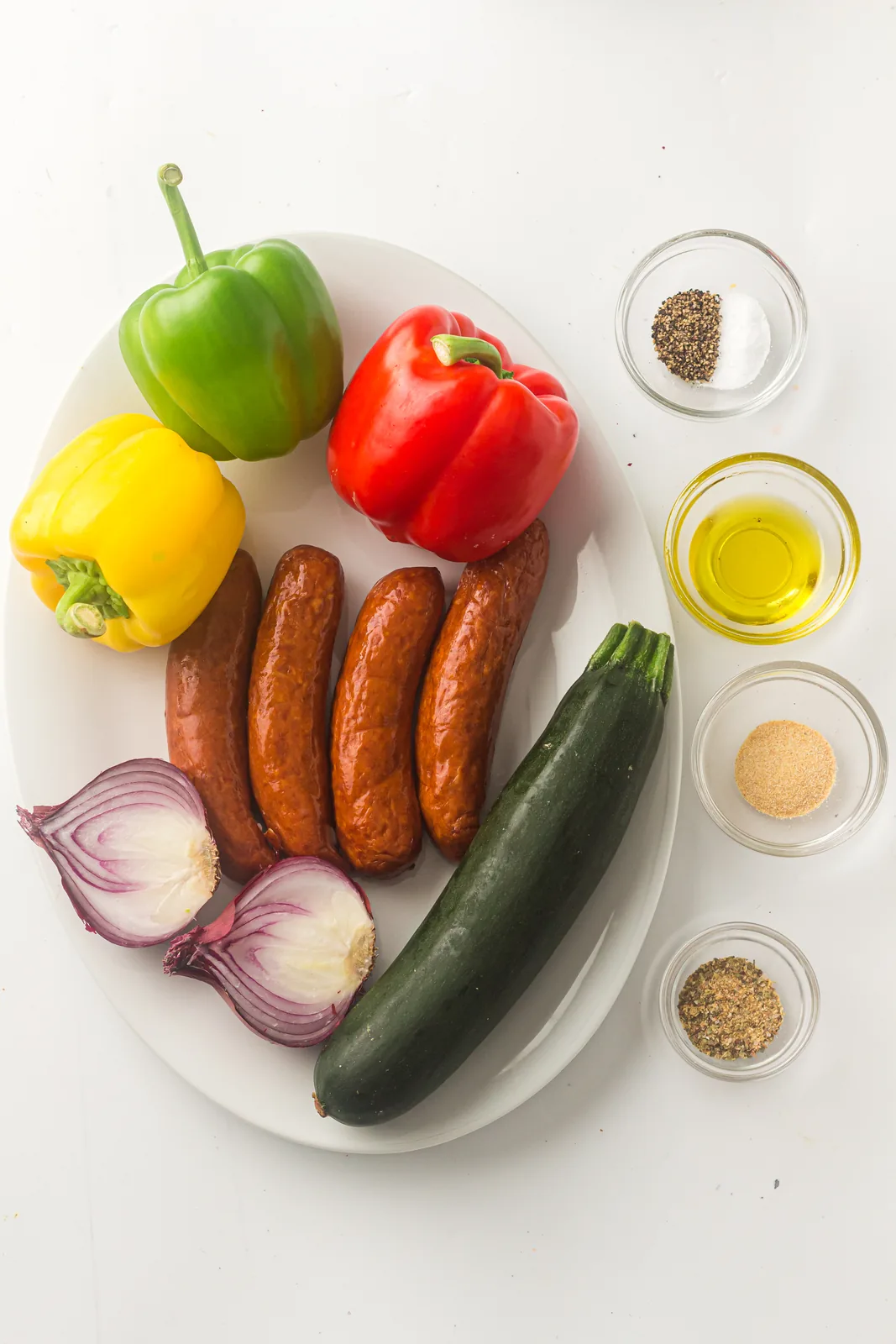
- Cooked sausage. One pound, sliced into half inch rounds. Smoked pork, turkey or chicken all work. Because it is already cooked, you are only browning it, which is why the timing follows the vegetables rather than the meat.
- Three bell peppers. Red, yellow and green. The green one is sharper and stops the tray tasting only sweet.
- Courgette. One, cut into thick coins. Thin slices disappear. Half inch or nothing.
- Red onion. One, in wedges rather than rings, so the layers stay together and caramelise at the edges.
- Olive oil. Two tablespoons, and do not be shy. Oil is what conducts heat into the surface of the vegetables.
- Italian seasoning, garlic powder, salt, pepper. Dried herbs beat fresh here, since fresh leaves scorch at 400°F.
- Parmesan and parsley. Optional, added after roasting. Cheese on the tray just burns onto the parchment.
The courgette earns its place nutritionally as well as visually. Cleveland Clinic notes that one medium courgette has around 33 calories with 2 grams of fibre and 2.3 grams of protein, which is a lot of bulk for very little.
Which Tray to Use
Pan size decides the result of sheet pan sausage and vegetables more than anything else. You want a large rimmed tray, because a small one forces the pieces together and they steam in their own moisture.
| Measure | Size |
|---|---|
| Imperial | 16 x 11.3 inches |
| Metric | 41 x 28.8 cm |
| US name | Half sheet pan |
| UK equivalent | Large roasting or baking tray |
That size comfortably feeds four to six. If your biggest tray is smaller, split everything across two and swap their shelf positions halfway through.
How To Make Sheet Pan Sausage and Vegetables
1. Heat the oven. First, set it to 400°F (200°C) and line a large rimmed tray with parchment or foil. A hot oven from the start matters, because a slow climb steams the vegetables before it roasts them.
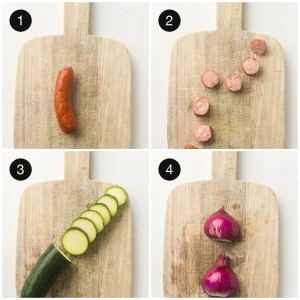
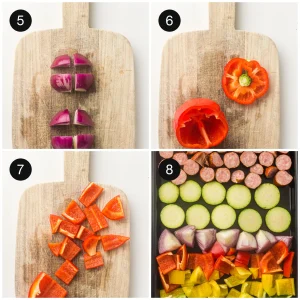
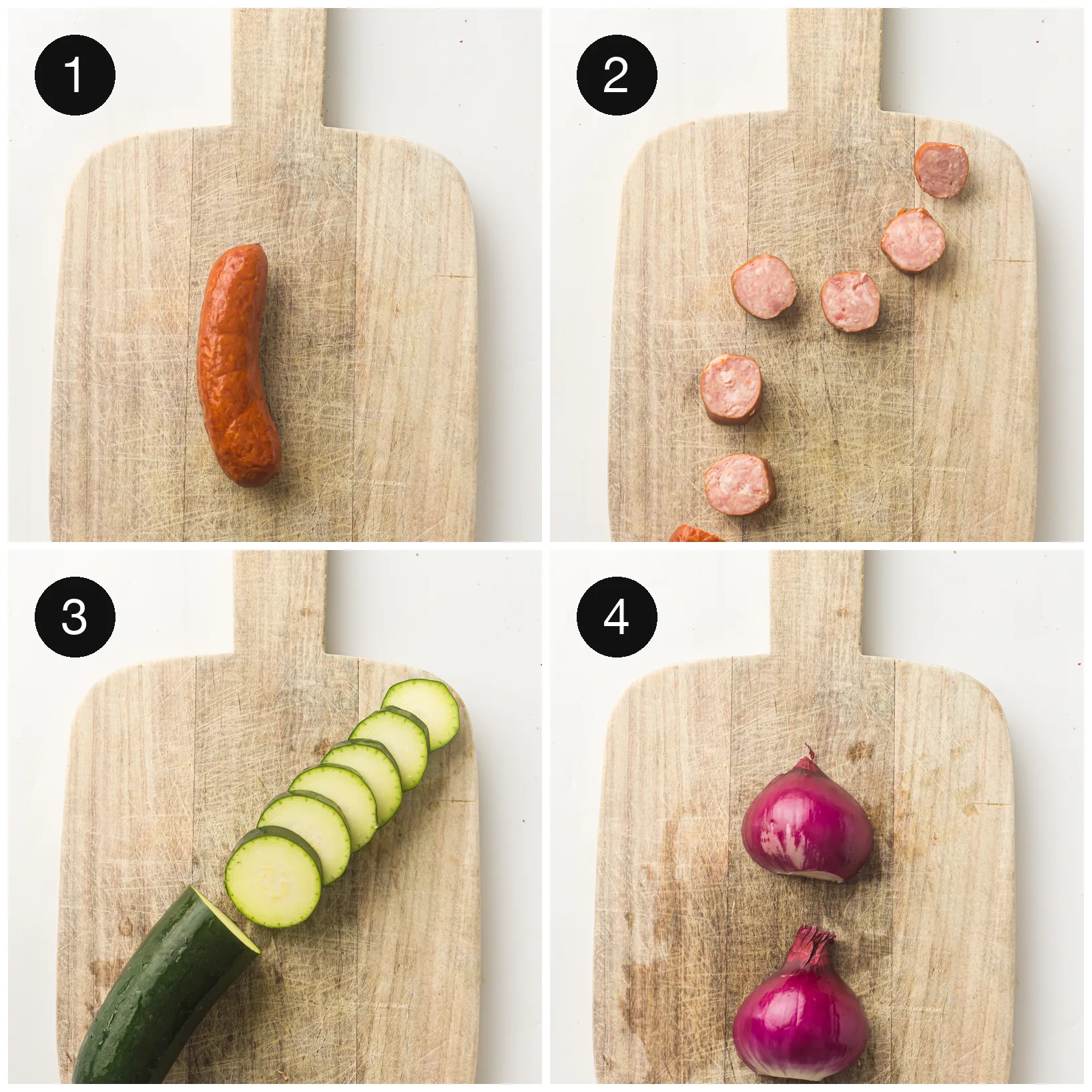
2. Cut everything. Next, slice the sausage into half inch rounds, chop the three peppers, cut the courgette into coins and the onion into wedges. Similar sizes mean similar cooking times.
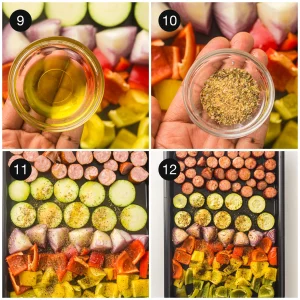
3. Season on the tray. Then spread the vegetables out, drizzle over the olive oil, and scatter on the Italian seasoning, garlic powder, salt and pepper. Toss it all with your hands directly on the tray, which saves a bowl.
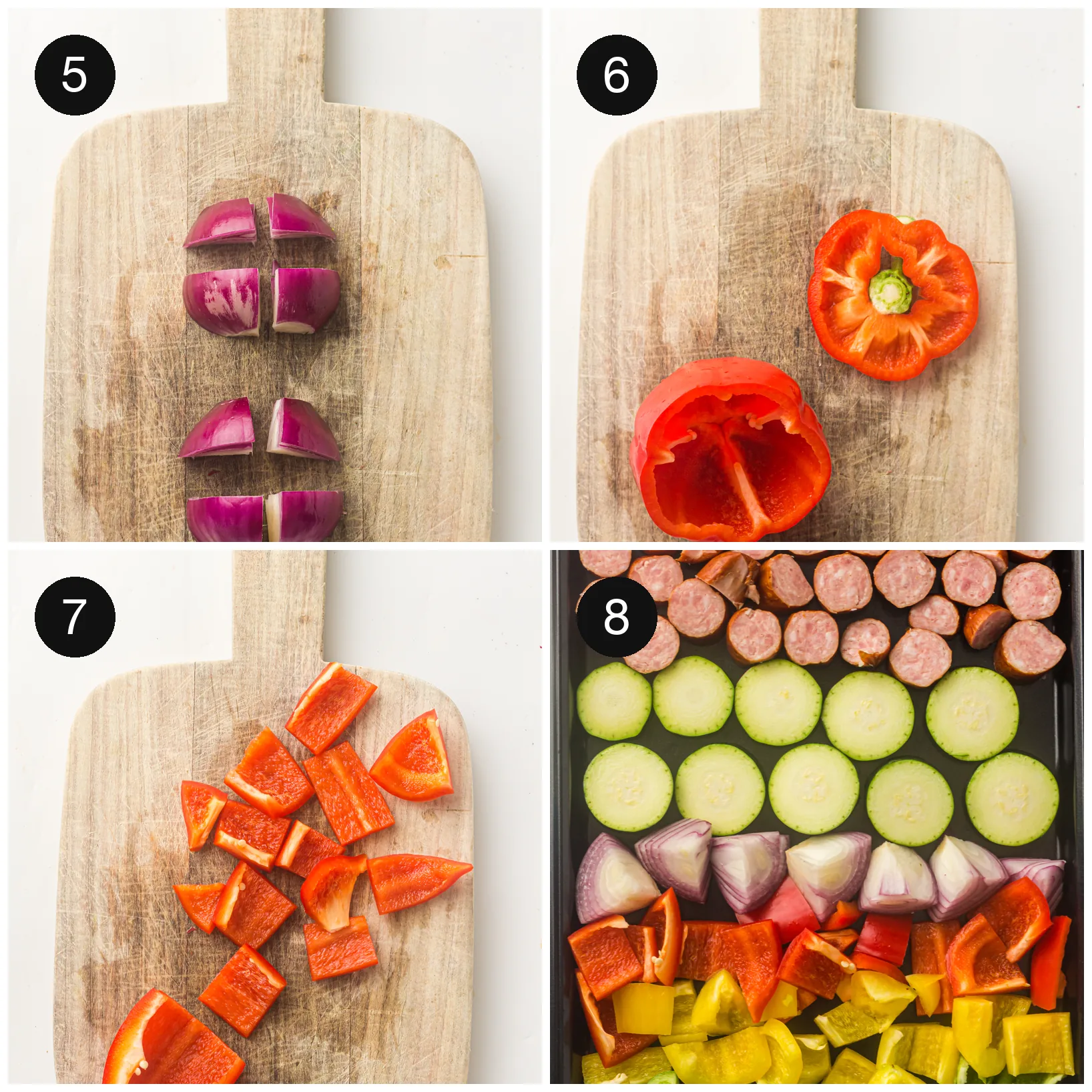
4. Tuck in the sausage. After that, add the rounds, pushing them in between the vegetables rather than piling them in one corner. Contact with the hot tray is what browns them.
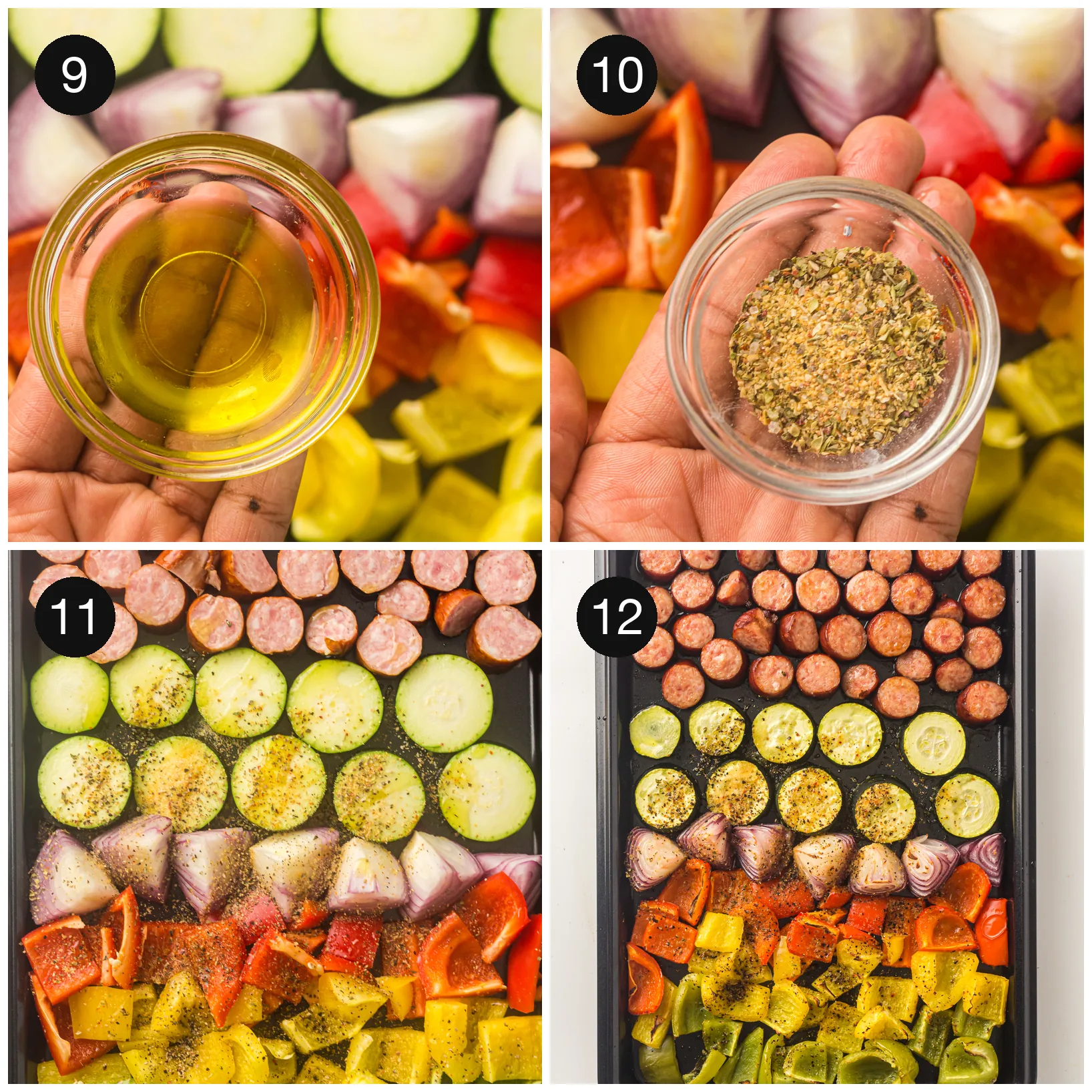
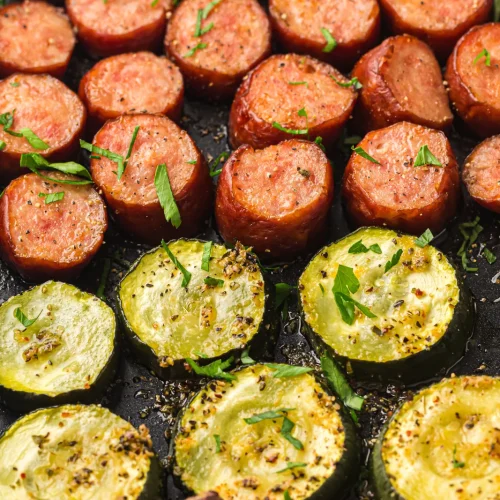
5. Roast and stir. Finally, bake for 30 to 35 minutes, stirring once at the halfway mark, until the sausage is browned and the vegetables have golden edges. Scatter on Parmesan and parsley just before serving.
Why Sheet Pan Sausage and Vegetables Steam Instead of Roasting
Roasting needs dry heat touching a dry surface. Anything that puts water between the two turns the tray into a steamer, and that is where pale, floppy trays come from.
- Overcrowding. The most common cause by far. Moisture leaves each piece and has nowhere to go, so it hangs around as steam.
- Wet vegetables. Pat everything dry after washing. Water on the surface has to boil off before browning can even begin.
- Too little oil. Oil carries heat into the surface. Two tablespoons across a full tray is the minimum.
- A cool oven. Below about 375°F the vegetables release their water faster than it evaporates.
Tips for the Best Sheet Pan Sausage and Vegetables
- Preheat the empty tray for five minutes if you want a deeper sear. Food hitting hot metal browns immediately.
- Meanwhile, keep the pieces roughly the same thickness so nothing is raw next to something burnt.
- Stir once, not three times. Every stir loses heat and interrupts the browning.
- Use the top third of the oven, where the heat is fiercest.
- That said, if the vegetables are done before the sausage has colour, give it two minutes under the grill.
- Salt at the start, not the end. It draws moisture out early, when there is still time to evaporate it.
Turning It Into Meal Prep
This is one of the few dinners that genuinely improves as a packed lunch, mostly because the vegetables have had time to soak up the sausage fat and the seasoning.
- Undercook slightly. Pull the tray two or three minutes early if you know it is going into containers, because reheating finishes the job.
- Cool before sealing. Steam trapped in a warm container condenses and makes everything soggy by morning.
- Split it four ways. One tray fills four lunch containers almost exactly.
- Add the starch separately. Rice or couscous underneath goes gluey if it sits in the juices for three days.
- Hold the cheese. Add Parmesan when you eat it rather than when you pack it.
Storage and Reheating
- Fridge. Sheet pan sausage and vegetables keeps up to four days in an airtight container. It is one of the better keepers.
- Reheating. A 350°F oven or a hot dry skillet for a few minutes. Microwaving works but softens the edges.
- Freezing. Possible for up to a month, though the courgette suffers. Reheat from frozen in the oven rather than thawing.
- Lunchboxes. It is genuinely good cold, which is not true of most roasted dinners.
Variations and Substitutions
- Uncooked sausage. Slice it thinner and check it reaches 165°F inside. Add roughly five minutes.
- Other vegetables. Broccoli, carrots, mushrooms and sweet potato all work. Cut the denser ones smaller.
- Spicier. Chorizo instead of smoked sausage, plus a pinch of chilli flakes.
- Different tray dinner. The same method underpins sheet pan BBQ chicken thighs if you would rather have chicken.
- Add a starch. Cubed potato goes in fifteen minutes before everything else, or serve with an air fryer baked potato on the side.
What to Serve With Sheet Pan Sausage and Vegetables
Rice, quinoa or couscous underneath turns it into a bowl and catches the pan juices. For something greener, add garlic butter green beans. A cold, sharp side also works well against all that roasted sweetness, so creamy coleslaw is a good shout, and dinner rolls handle the leftover juices.
Frequently Asked Questions
Ingredients and Method
Can I use uncooked sausage?
Yes. Slice it a little thinner and make sure it reaches 165°F in the middle. The bake time usually goes up by around five minutes.
What other vegetables work here?
Broccoli, carrots, mushrooms and sweet potato are all good. Just cut the dense ones smaller so they finish at the same time as the peppers.
Do I need to line the tray?
Not strictly, but parchment saves a lot of scrubbing where the sausage fat catches. Foil works too and gives slightly crisper undersides.
Can I prepare it in advance?
Chop everything up to a day ahead and keep it covered in the fridge. Season and oil it only when it goes on the tray, because salt sitting on raw vegetables draws out water.
Storage and Troubleshooting
Why did mine come out pale and watery?
Overcrowding, nearly always. Use two trays instead of one, and make sure there is visible tray between the pieces before it goes in the oven.
Is it freezer friendly?
It is best fresh, but leftovers freeze for up to a month. Reheat from frozen in the oven, since thawing first makes the courgette very soft.
How long does it keep in the fridge?
Four days in an airtight container. Honestly, it is one of the few roasted dinners that tastes as good on day three.
Can I double it?
Yes, across two trays on separate shelves. Swap their positions halfway through so both get the hotter top of the oven.
Ingredients
- 1 pound fully cooked sausage pork, turkey or chicken
- 1 red bell pepper chopped
- 1 yellow bell pepper chopped
- 1 green bell pepper chopped
- 1 zucchini sliced into coins
- 1 red onion cut into wedges
- 2 tablespoons olive oil
- 1 teaspoon Italian seasoning
- 1/2 teaspoon garlic powder
- 1/2 teaspoon salt
- 1/2 teaspoon black pepper
- shredded Parmesan and chopped parsley optional, to serve
Instructions
- Preheat the oven to 400°F (200°C). Line a large rimmed sheet pan with parchment paper or foil for easy cleanup.
- Slice the sausage into 1/2 inch rounds. Chop the red, yellow and green bell peppers, slice the zucchini into coins and cut the red onion into wedges.

- Spread all the chopped vegetables on the sheet pan. Drizzle with olive oil and sprinkle with Italian seasoning, garlic powder, salt and pepper, then toss together on the pan until evenly coated.
- Add the sliced sausage to the sheet pan, tucking the pieces in between the vegetables for even browning.
- Bake for 30 to 35 minutes, stirring once halfway through, until the sausage is browned and the vegetables are tender with golden edges.
- Sprinkle with shredded Parmesan and chopped parsley just before serving, if using.