 Bity
Bity
Brioche has a reputation for being fussy, and by hand it earns it. Bread machine brioche quietly removes the hardest part, which is twenty minutes of beating soft butter into a dough that does not want it.
The paddle just keeps going. All you have to do is drop the butter in at the right moment, a piece at a time, once the dough has already come together. Everything else about bread machine brioche is the machine’s problem.
Quick Breakdown
Why You’ll Love This Bread Machine Brioche
- Seven ingredients. Milk, eggs, sugar, salt, flour, butter, yeast.
- Ten minutes of your attention. The other three hours belong to the machine.
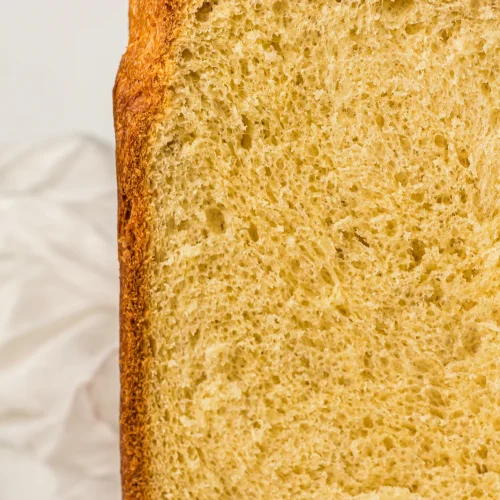
- A proper enriched crumb. Soft, faintly sweet, pale gold, and it pulls apart in strands.
- No stand mixer needed. Which is the usual barrier with this dough.
- It makes exceptional French toast. Honestly, that alone justifies a loaf of bread machine brioche.
Ingredient Notes
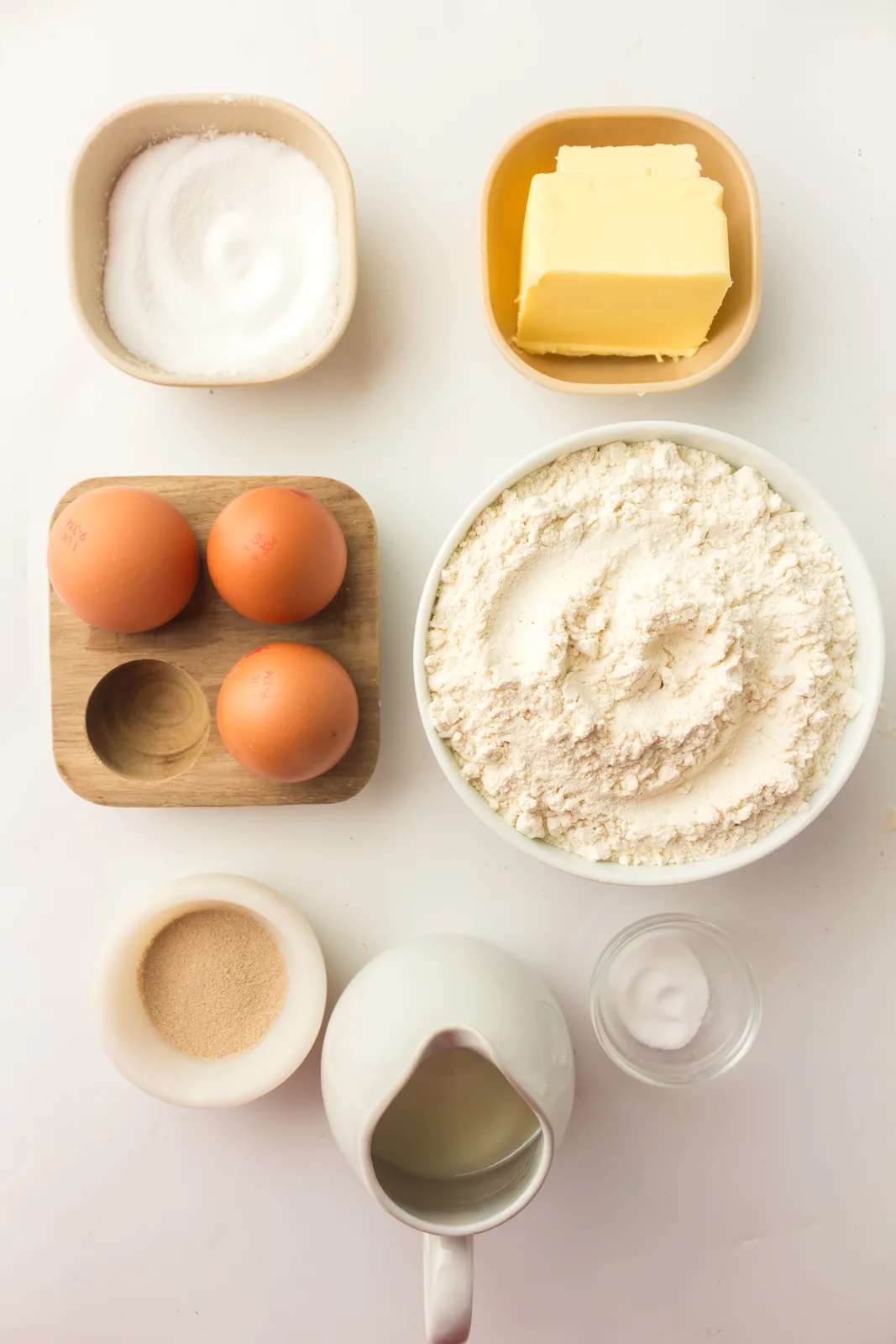
- Warm milk. Half a cup, 120 ml, warm rather than hot. Around body temperature is right. Anything above 50°C starts killing the yeast.
- Eggs. Three large, at room temperature. They are most of the richness here, and cold ones slow the first rise noticeably.
- Sugar. A quarter cup, 50 g. Enough to feed the yeast and to make the crust brown deeply.
- Strong white bread flour. Three and a half cups, 450 g. Brioche is heavy with fat, so it needs the extra gluten to hold its shape.
- Softened butter. Half a cup, 115 g, cut into pieces. Genuinely soft, not fridge cold, and added after the dough forms.
- Yeast. Two and a quarter teaspoons, instant or active dry, kept in a well in the flour away from the salt and liquid.
- Salt. One teaspoon. It controls the yeast as much as it seasons the loaf.
The eggs are what make this different from a sandwich loaf. According to Harvard’s Nutrition Source, a single large yolk carries around 200 mg of cholesterol and roughly 5 grams of fat, most of it unsaturated, which is exactly the fat that gives brioche its tender, close crumb.
When to Add the Butter
This is the whole recipe in one decision. Fat coats flour particles and stops them linking up into gluten, so butter added at the start gives you a soft, greasy dough that never develops any strength.
Wait until the machine has kneaded for a few minutes and the dough has pulled into a rough ball. Then drop the butter in one piece at a time, letting each one disappear before the next goes in. The dough will look broken and slippery for a minute or two. That is normal, and it comes back together.
How To Make Bread Machine Brioche
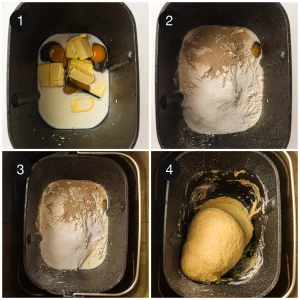
1. Liquids in first. First, pour the warm milk into the bread pan, then add the eggs, sugar and salt.
2. Flour over the top. Next, tip in the bread flour so it covers the liquid completely. Make a small well in the middle and add the yeast there, or use the dispenser if your machine has one. Keeping yeast and salt apart until mixing matters.
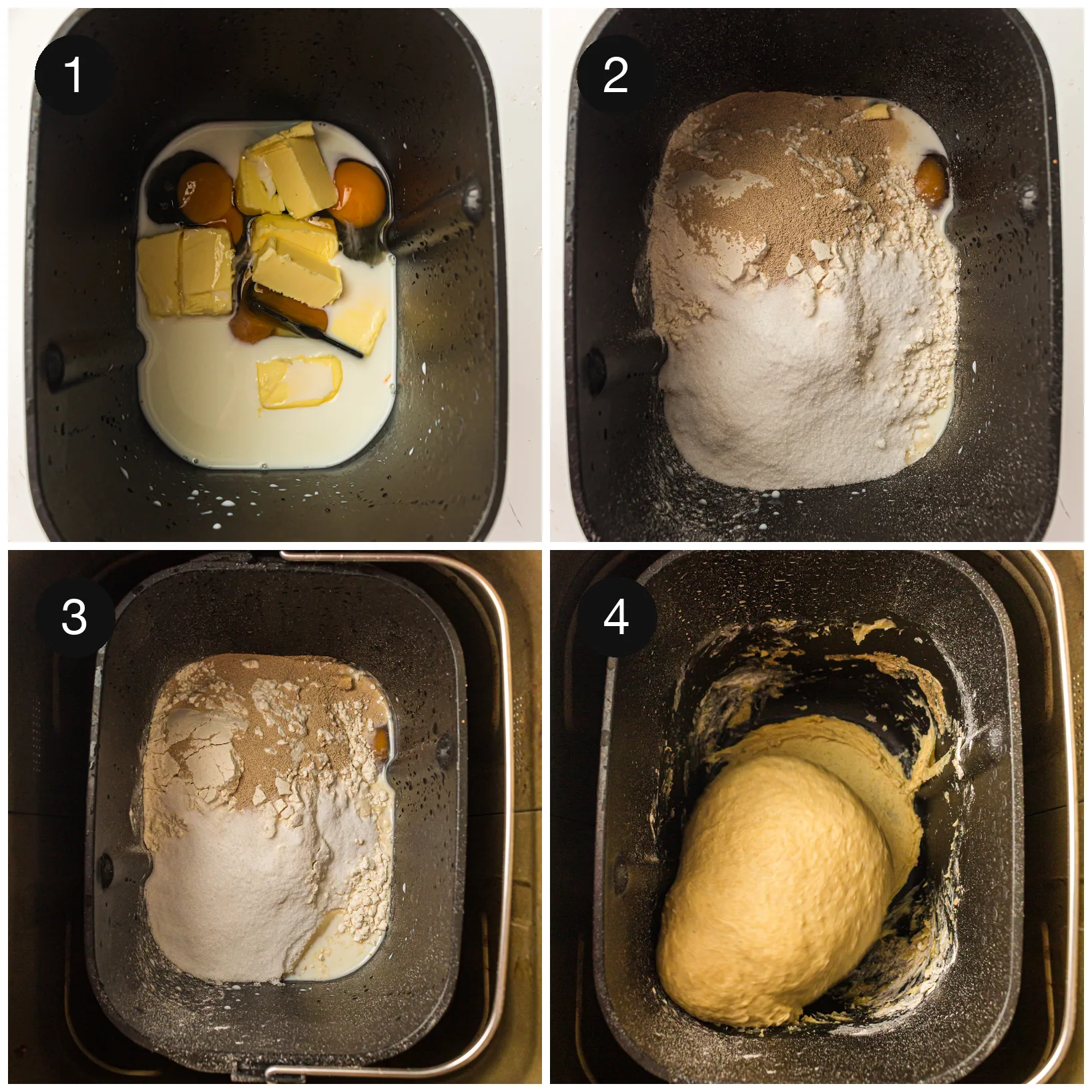
3. Start the cycle. Then select Basic, White Bread or Sweet Bread and press start. Let it knead until the dough has come together into a ball.
4. Add the butter piece by piece. After that, drop in the softened butter one piece at a time, waiting for each to be worked in before adding the next. Do not tip it all in at once.
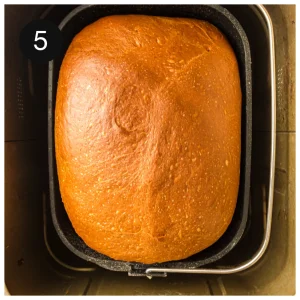
5. Leave it alone. Let the machine finish the kneading, rising and baking without interference. Opening the lid during the rise costs you height.
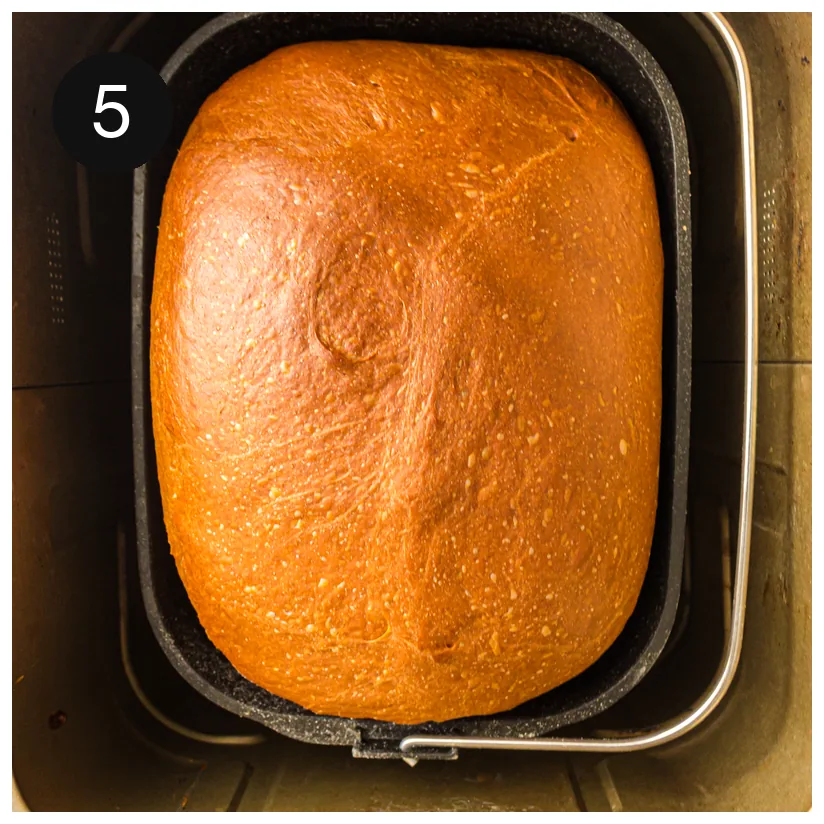
6. Cool before slicing. Finally, turn the loaf out onto a wire rack and give it at least 45 minutes. Enriched dough is still setting while it is hot, so an early slice compresses the crumb.
Why Bread Machine Brioche Comes Out Dense
A heavy, tight loaf is almost always a butter problem or a yeast problem, and both are easy to diagnose after the fact.
- Cold butter. It never fully incorporates, so it sits in the dough as pockets and weighs it down. Leave it out for an hour first.
- Butter added too early. The gluten never develops properly, so there is nothing to trap the gas.
- Yeast that touched the salt or the milk before mixing. Direct contact damages it. The well in the flour exists for a reason.
- Milk too hot. If it is uncomfortable on your wrist it is too hot for yeast.
- Plain flour instead of strong. It will work, but the loaf sits lower and the crumb is tighter.
Tips for the Best Bread Machine Brioche
- Weigh the flour. Cup measures for 450 g of flour vary by up to 50 g, which is a lot in an enriched dough.
- Meanwhile, take the eggs and butter out of the fridge before you start anything else.
- Check the dough five minutes into kneading. It should be tacky but hold a ball. Add a spoonful of flour if it is soup.
- Of course, use the lightest crust setting available. All that sugar and egg browns fast.
- Remove the paddle before the final rise if your machine permits it.
- Still warm and impatient? Slice it thickly rather than thinly, since thick slices survive a hot crumb far better.
What Actually Makes It Brioche
The line between a rich white loaf and a true brioche is a ratio, not a technique. Brioche is defined by how much butter and egg it carries relative to the flour, and that fat is what gives the crumb its short, tender, almost cake like bite.
This recipe sits at roughly a quarter of the flour weight in butter, plus three whole eggs, which is a comfortable middle ground. Classic French bakery brioche can run to half the flour weight in butter, and at that level the dough genuinely does need a mixer and a long cold rest. A bread machine cannot manage that much fat without the loaf collapsing. So this version trades a little richness for the fact that it works, unattended, on a Tuesday morning.
Storage and Freezing
- Room temperature. Bread machine brioche keeps three days in a bread bag or wrapped in a tea towel.
- Freezer. Slice first, then freeze for up to two months. Slices toast from frozen without thawing.
- Fridge. Avoid it. Cold air stales enriched bread faster than the counter.
- Day three. That said, slightly stale brioche is the best possible French toast, so this is not a loss.
Variations and Substitutions
- Chocolate chips. Add them at the knead beep or when the machine prompts, so they are not pulverised.
- All purpose flour. It works, with a softer and slightly shorter crumb. Strong flour gives better structure.
- Orange or lemon zest. A teaspoon in with the sugar. Barely detectable as citrus, but it lifts everything.
- Sweeter still. A teaspoon of ground cinnamon in the flour and a handful of raisins at the knead beep turns this into a breakfast loaf.
- No yeast at all. For a quick loaf on the same appliance, try bread machine banana bread, which mixes and bakes in under two hours.
What to Serve With It
Butter and good jam, thickly, is the classic French breakfast and it is hard to beat. Thick slices make outstanding French toast, and it is very good torn alongside fruit and cream on a brunch board. For a savoury spread, put out dinner rolls and cottage cheese bread as well, or serve slices with easy scones for an afternoon tea that looks like far more work than it was.
Frequently Asked Questions
Ingredients and Method
Can I use all purpose flour?
Yes, though bread flour gives noticeably better structure. With all purpose the loaf sits a little lower and the crumb is softer, which some people actually prefer for toast.
When exactly do I add the butter?
Once the dough has come together into a ball during the first knead, usually five to ten minutes in. Add the pieces one at a time and let each one disappear before the next.
Can I add chocolate chips?
Yes. Add them at the knead beep, or when the machine prompts for extras. Adding them at the start means the paddle breaks them up completely.
Which cycle should I use?
Basic, White Bread or Sweet Bread all work. Sweet Bread is gentler on the crust, which suits a dough this rich in sugar and egg.
Storage and Troubleshooting
My brioche came out dense. Why?
Almost always cold butter, or butter added before the dough formed. Both stop the gluten developing, so there is nothing to hold the gas the yeast produces.
The crust went very dark. What should I change?
Use the light crust setting. Enriched doughs brown far faster than a plain white loaf because of the sugar, milk and egg on the surface.
How long does it keep?
Three days wrapped at room temperature, or two months sliced and frozen. Do not refrigerate it, since that stales the crumb quickly.
Can I use the dough cycle and bake it in the oven?
Yes. Run the dough cycle, shape the dough into a tin, prove until doubled, then bake at 180°C for around 30 minutes. You get a better shaped loaf that way.
Ingredients
- 1/2 cup warm milk 120 ml
- 3 large eggs room temperature
- 1/4 cup sugar 50 g
- 1 teaspoon salt
- 3 1/2 cups strong white bread flour 450 g
- 1/2 cup softened butter 115 g, cut into pieces
- 2 1/4 teaspoons instant or active dry yeast
Instructions
- Add the warm milk, eggs, sugar and salt to the bread machine pan.

- Add the bread flour, ensuring it fully covers the liquid.
- Make a small well in the flour and add the yeast, or place it in the yeast dispenser if your machine has one.
- Select the Basic/White Bread or Sweet Bread cycle.
- Press start and allow the machine to begin kneading.
- After the dough comes together, drop in the softened butter pieces one at a time and let the machine knead them in fully.
- Let the machine complete the kneading, rising and baking cycle.
- When the cycle ends, remove the loaf from the pan and cool on a wire rack for at least 45 minutes before slicing.